EDINBURGH Leisurecan confirm that, due to late unforeseen circumstances, the reopening of Wester Hailes High School will be delayed.
The previous information issued regarding the reopening date is no longer correct and should be disregarded.
Edinburgh Leisure had previously announced that refurbished leisure facilities at the school would reopen Tuesday 1 September, giving people in the surrounding area increased local access to sport, leisure and wellbeing.
Delivered by the City of Edinburgh Council as part of its wider investment in the community campus, the refurbishment will improve a valued local facility and provide expanded access through a seven-day programme of gym, swimming and fitness activities.
The refurbishment forms part of the wider City of Edinburgh Council project to deliver a new Passivhaus-standard secondary school adjacent to the existing site, which is due to open later this year.
Positive progress is being made on in tackling Edinburgh’s housing emergency, according to updates considered by the Housing, Homelessness and Fair Work Committee on Tuesday (25 August 2026).
Since the Housing Emergency Action Plan was agreed in 2024, 1,473 affordable homes have been completed by the Council and partners, 1,144 sites started and 866 additional suitable temporary accommodation properties purchased.
There has also been a significant reduction in the number of families with children living in unsuitable temporary accommodation.
In addition the Ask and Act pilot scheme has been launched in Wester Hailes, which aims to prevent people from becoming homeless at the earliest opportunity by working with partners across the public and third sector.
Members also agreed to end the suspension of the Council’s allocations policy, put in place to prioritise people facing homelessness, following progress in reducing the number of void Council homes alongside an increase in the supply of suitable temporary accommodation. This follows the commitment of the Council to invest £1.6bn in affordable housing.
A new grant scheme will also provide eligible owners of empty homes with up to £20,000 to bring properties up to a lettable standard. In return, owners will be required to make the property available for Private Sector Leasing for a period of three or five years.
The grant scheme is intended to allow empty home owners who do not have the financial means to address necessary works to bring the home into use. In turn, this will contribute to the number of suitable temporary homes available, easing pressure on the current housing emergency. Overall up to £600k is to be granted through the scheme.
Councillor Tim Pogson, Housing, Homelessness and Fair Work Convener, said: “I’m encouraged by the progress being made to tackle Edinburgh’s housing emergency, with significantly fewer people not being provided with temporary accommodation, and a reduction in the number of children living in unsuitable accommodation.
“Everyone has the right to a safe and suitable place to call home. The pause on housing allocations has helped us prioritise those facing homelessness, while we work to increase the supply of temporary accommodation across the city.
“Bringing empty homes back into use is another important part of increasing the supply of housing. This funding will help owners meet the costs of essential works while, in return, making these homes available for private sector leasing for a 3 or 5 years.
“If you or a friend or relative own an empty home, I would urge you to find out more about how the support available.
“There is still much to be done, but I’m encouraged by the progress being made on the Housing Emergency Action Plan, which demonstrates tangible improvements being made.”
Efforts to increase suitable temporary accommodation include bringing houses back into use, purchasing properties and commissioning new temporary accommodation.
While in place, the suspension of the allocations policy allowed more than 350 households, including 200 families, to be moved out of unsuitable temporary accommodation and directly into a settled tenancy.
We have been located within the Wester Hailes Baptist Church for the last 13 years. There has recently been a change in their leadership, and with that, their vision for the future of their church has been under development.
Unfortunately, it doesn’t include us.
We have now been given 12 months’ notice to quit the premises. This has understandably been a huge shock for us.
We are therefore urgently seeking new premises for our services which include our own day services but also transport and catering services to many organisations within Edinburgh. We currently provide day care, catering and transport services to around 400 people per week. The repercussions of this decision could be truly devastating to our whole community if we cannot secure alternative accommodation.
We would kindly ask everyone to help us in our search for new premises and share this post far and wide! We are grateful for any support you can give us. We know that our organisation is truly valued in our community and we will do our utmost to preserve services going forward.
This is a stressful time for the Dove Centre but we are resilient and committed to all our users and will not let this decision by the Wester Hailes Baptist Church defeat us.
It should be said that we are thankful for those in the church who have wholeheartedly supported us during the last few years. You have our eternal gratitude for standing with us against this decision.
Please contact us if you have any knowledge of possible accommodation.
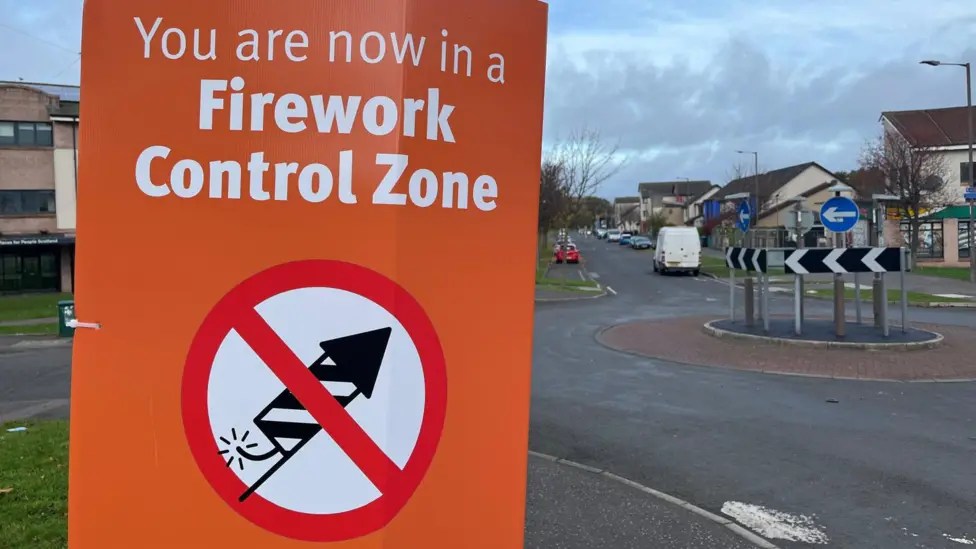
Residents are being encouraged to have their say on proposed Firework Control Zones (FCZs) for autumn 2026 as a public consultation gets underway across Edinburgh.
The consultation is seeking views on continuing Firework Control Zones in Corstorphine, Longstone, Sighthill/Broomhouse, Mordeun and The Murrays, as well as introducing new zones in Liberton Grange, Lochend, Stenhouse/Gaskell Street, West Pilton and Wester Hailes.
Firework Control Zones prohibit the use of fireworks within designated areas for a limited period and form part of a wider package of measures designed to improve public safety, reduce anti-social behaviour and support local communities during the fireworks season.
Earlier this year, community groups were invited to apply for Firework Control Zone status in their neighbourhoods. Applications highlighted concerns about the misuse of fireworks, anti-social behaviour, and the impact on animals, older people and other vulnerable residents.
The proposals build on the positive results seen in recent years, with Edinburgh experiencing significantly lower levels of firework-related anti-social behaviour compared with previous years.
Councillor Margaret Graham, Convener of Culture and Communities, said: “We want to hear directly from residents and communities about the areas being considered for Firework Control Zones again this year.
“They are just one of the measures we’re using to improve safety and reduce firework-related anti-social behaviours to make sure our communities can enjoy Bonfire Night in a safe and responsible way.
“I’d encourage everyone to take part in the consultation and help shape our approach for the 2026 fireworks season.”
The consultation will run from Wednesday 24 June until Wednesday 5 August on the Council website.
Up to 40,000 disabled people and people with health conditions will benefit from expanded access to personalised support, as the government rolls out Support Conversations across a further 27 Jobcentres taking the total number of sites to 33
Support Conversations expanding to a further 27 Jobcentres across Great Britain, bringing the total to 33 sites.
Disabled people and those with health conditions on out of work benefits are being offered a one-to-one, voluntary, hour-long conversation to discuss their support needs and identify extra help. This support is personalised and could link people to help with their health, debt, skills, employment and housing.
Part of the government’s wider £3.5 billion investment to help disabled people and those with health conditions into work over the Parliament.
Support Conversations are voluntary, hour-long sessions designed to help people identify and overcome the barriers stopping them from moving into work or into meaningful activity (such as volunteering) and is part of the commitment the Government made in last year’s Pathways to Work Green Paper
Unlike standard Jobcentre appointments, Support Conversations take a holistic approach, covering not just employment, but housing, debt, skills, and drug and alcohol rehabilitation services. Support Conversations are delivered by Healthcare Professionals, Pathways to Work Advisers, and Disability Employment Advisers, and are available face to face, by video, or by telephone.
They are open to those who are awaiting a Work Capability Assessment and people furthest away from the labour market – assessed as having Limited Capability for Work and Work-Related Activity (LCWRA).
These are people who for too long were written off and denied support. But the government’s expansion of Support Conversations is giving people they help they need and builds on the landmark deployment of 1,000 Pathways to Work Advisers, who have already helped more than 65,000 sick and disabled people get one step closer to work.
Minister for Employment Dame Diana Johnson said: “Too many disabled people and people with health conditions face barriers that stop them from accessing the support and opportunities they deserve.
“That is why we are expanding the number of sites delivering Support Conversations from 6 to 33 Jobcentres across Great Britain, giving up to 40,000 people personalised help tailored to their circumstances.
“Getting more people into good work is central to our Plan for Change and Support Conversations will help us do exactly this.”
This expansion builds on testing already live in six sites where support conversations are being delivered by healthcare professionals and disability employment advisers. Early testing indicates customers feeling “listened to” and “supported.”
Neil, a Disability Employment Adviser in Bournemouth said: “Support Conversations are a great opportunity to spend an hour focused on the claimant and their needs.
“We all know that many people face a whole range of challenges which need to be overcome as part of their individual journey back to work and talking through those challenges with a DEA is an important first step.
“Support Conversations confirm that the most valuable resource we have is the time that we spend with our claimants.”
Saimha, a Healthcare Professional in Preston said: “Support Conversation is about providing compassionate, informed, holistic, person-centred support to disabled people and those with health conditions. Every interaction is an opportunity to make someone feel heard, safe, and supported.
“Every person’s health journey is unique and support conversation is an opportunity to identify the range of barriers people are facing in their day to day life and signposting them to the relevant services that can help, encouraging people to take positive steps towards improving their lives.”
This expansion forms part of the UK government’s Pathways to Work offer and its broader £3.5 billion employment support package, which includes:
Connect to Work, which delivers tailored, personalised, local support that will help 300,000 people into work by the end of this parliament.
The national expansion of WorkWell, backed by £259mn, helping up to 250,000 people with health conditions to stay in or return to work.
Allowing sick or disabled people to try work without the immediate fear of reassessment through the Right to Try.
The deployment of 1,000 Pathways to Work advisers who’ve already helped tens of thousands of people the previous Government wrote off.
The government will continue to test the success of Support Conversations through healthcare professionals and disability employment advisors as part of this expansion, with Pathways to Work Advisers also carrying out these Support Conversations for the first time. 27 sites have been confirmed so far, with a further six sites to be confirmed shortly.
The expansion directly supports the government’s Plan for Change and its mission to raise living standards across the UK by helping more people into work and ensuring everyone has the opportunity to thrive.
Additional Information:
Support Conversations are currently offered to people awaiting a Work Capability Assessment (WCA) who have registered a health condition or disability that impacts their ability to work and those assessed as having Limited Capability for Work and Work-Related Activity (LCWRA).
The conversations are entirely voluntary.
List of confirmed sites (note 6 further sites to be confirmed shortly):
WE are getting closer to deciding the slogan for our banner!
Have you voted for your favourite?
If you live in the locality, pop in to our cafe and let us know your preference from the shortlist.
Better still; come along TODAY Thursday 18th – 2pm for a studio visit as well – to see how Sarah-Jane has developed the banner design from workshops with Art for Grown Ups, Royston Wardieburn Community Centre and Wester Hailes’ Art group members.
The Message – choose from:
We All Come From Somewhere
Love This Place
Love & Respect Make it Better
Let’s Create Something Together
We All Belong Here
The final decision will be made on Friday 19th 5pm, from the votes of well over 120 local residents and workers who’ve considered the shortlist so far – ADD YOURS BEFORE THE DEADLINE!
The banner will eventually hang in the cafe; as a welcome to everyone who comes through the doors to get involved in creating community here at North Edinburgh Arts
(Picture (top) shows artist @SarahJaneembroidery experimenting with paper cut-outs for design purposes – not the final words!)
Five more centres to open in first 100 days of new government
A new GP walk-in service will open in the centre of Aberdeen later this month, Health Secretary Angela Constance has announced.
Based within Aberdeen Health Village on Frederick Street, the new clinic will open on 23 June for any member of the public to attend, with no appointment necessary.
The service will be open on a phased basis initially, run by GPs, Advanced Nurse Practitioners and nurses, offering same day care and treatment for minor illnesses.
The Aberdeen city centre site will be the seventh GP walk-in service across Scotland to open since the start of the year, and the first of the five centres the Scottish Government has committed to open in its first 100 days.
Walk-in centres have opened in Edinburgh, Dundee, Western Isles, Stranraer, Lerwick and Hawick in just over four months and speaking on a visit to the site of the Aberdeen GP walk-in service, Health Secretary Angela Constance said: “The new walk-in centre in the heart of Aberdeen city centre will be an asset to local health services in the area and plans are progressing at pace to welcome patients from the 23rd June.
“We know that accessing GP services on the day, when you need urgent care, can be a source of frustration. That’s why we have opened GP-led walk-in services across the country to support with on the day care to address the ‘8am rush’ and relieve pressure on GP surgeries – freeing up capacity to focus on complex and long-term care.
“We value the key role and expertise that GPs have to play in people’s care. We are underpinning that by increasing investment in general practice by £531 million over three years to significantly boost recruitment from this year, helping to deliver the capacity needed to improve services for patients.”
Emma King, Primary Care Lead for Aberdeen City Health & Social Care Partnership, said: “We are pleased to welcome the Cabinet Secretary to the Aberdeen GP walk-in centre as we make the final preparations for opening to the public later this month.
2We are looking forward to getting to work and testing this new approach to improving access to same-day care.”
16 GP walk-in services were planned initially, backed by £36 million of investment. Five of these, including the one in Aberdeen, are due to open within the first 100 days of this government.
A process to identify 14 more sites, to a total of 30, is currently underway.
Initial 16 planned GP walk-in sites
Phase One
Wester Hailes, Edinburgh – NHS Lothian
Lochee GP Practice, Dundee – NHS Tayside
Benbecula – NHS Western Isles
Stranraer – NHS Dumfries and Galloway
Lerwick – NHS Shetland
Hawick – NHS Borders
Invergordon – NHS Highland
Dunoon – NHS Highland
Aberdeen – NHS Grampian
Cardonald, Glasgow – NHS Greater Glasgow and Clyde
Moray – NHS Grampian
Aberdeenshire – NHS Grampian
Sauchie, Alloa – NHS Forth Valley
Phase Two
East Ayrshire, NHS Ayrshire and Arran
Clydesdale, NHS Lanarkshire
Central Fife, NHS Fife
Locations for an additional 14 additional GP walk-in sites, taking the total number of planned services to 30, will be announced within the first 100 days of the new Scottish Government.
Supporting families with the cost of living and eradicating child poverty will be a key focus of the Scottish Government, First Minister John Swinney has said.
Ahead of a visit to meet parents and children at a Bookbug session in Wester Hailes the First Minister said tackling the cost of living, ensuring people get support before reaching a crisis, and helping children and parents in the early years will be key priorities for the new Cabinet.
In March, the Scottish Government set out plans to drive further reductions in child poverty. This includes committing an additional £500,000 over two years to expand Bookbug, supporting a further 20,000 low-income families across Scotland.
Mr Swinney said: “Every child in Scotland deserves a future free from the scourge of poverty. It will be the defining mission of my government to support families with the cost of living and eradicate child poverty.
“Our policies are already helping to keep an estimated 100,000 children out of relative poverty this year – but we are determined to deliver truly ambitious change to reduce the cost of living.
“This includes expanding all year round childcare to all children from nine-months to the end of primary school, introducing a £2 nationwide cap on bus fares, increasing the Scottish Child Payment to £40 for under-ones and delivering comprehensive ‘Whole Family Support’ that wraps around families in their communities, helping break the cycle of poverty.”
Social Justice and Housing Secretary Shirley-Anne Somerville said: “I am delighted to take on the role of Cabinet Secretary for Social Justice and Housing.
“I look forward to driving further progress on the work started in the last parliamentary term to eradicate child poverty, tackle the cost of living and accelerate the delivery of more affordable homes.
“Reducing child poverty in Scotland is at the heart of this government’s ambitious agenda for change and we will work across government, the parliament and with our much-valued third sector, to give families the safety and security they need.”