BBC Scotland’s Tom English to host marquee discussion featuring two of rugby’s greatest captains at The George Hotel
Sandy Young/scottishphotographer.com
Watsonian Football Club has announced that former All Black captain and World Cup winner Sean Fitzpatrick and Scottish rugby icon Gavin Hastings will headline ‘The Hoodoo Lunch’ at The George Hotel on Friday, 6th November 2026.
Taking place on the eve of Scotland’s Nations Championship test match against New Zealand, the event brings two of world rugby’s most legendary figures together on stage.
Chaired by BBC Scotland chief sports writer Tom English, the feature discussion will examine rugby’s ultimate rivalry, shared memories of battling the All Blacks, and Scotland’s ongoing quest to break the “Hoodoo”.
Gavin Hastings is the only Scot to captain a winning test match side against the All Blacks, in the second Lions test in 1993, and the afternoon will also feature contributions from Watsonian internationalists who took on New Zealand over the decades.
Watsonian Football Club president John McLellan said: “New Zealand don’t seem to be getting any weaker, but we hope our first Hoodoo lunch will also be the last if Scotland score a historic victory the day after.
“We’re looking forward to hearing from Gavin and Sean about how it might be achieved.”
The lunch is in aid of Maggie’s Centre, in memory of Scott Hastings, the British Heart Foundation and Watsonian Football Club.
Final planting of endangered lion plant marks momentous completion of half decade renovation
TODAY (Friday 2 October 2026), the Royal Botanic Garden Edinburgh is reopening its historic Palm Houses to visitors. This completes a landmark point in the most ambitious restoration project in the Garden’s 356-year history, ensuring the protection of a unique and globally important plant collection.
Amongst the top four botanic gardens in the world, the Royal Botanic Garden Edinburgh and its iconic Palm Houses have long been at the forefront of global science and conservation horticulture, working to save species at risk of extinction since the 19th century.
However, by 2021, substantial restoration was required to safeguard the buildings’ ironwork, stone and glass, along with the priceless plants housed within.
As part of the extensive restoration work, all 5,750 panes of glass were replaced, 600 m² of ironwork was fully restored or updated, and 500 m² of sandstone repairs were completed with replacement stones weighing up to a quarter of a tonne.
Featuring the tallest traditional stone-built Palm House in the world, on reopening the Palm Houses will be home to almost 600 of the more tender plant specimens in Scotland’s National Botanic Living Collection, spanning 13,500 species from 152 countries.
Stories of the plants will be shared through an engaging new visitor experience which will include innovative multimedia and multisensory digital tours.
The opening was marked by the planting of the endangered lion plant (Valdivia gayana) from Chile. The Scottish Government’s Cabinet Secretary for Climate Action, Gillian Martin MSP, joined Professor Julia Knights, Regius Keeper of Royal Botanic Garden Edinburgh, to mark this important moment as the final specimen was planted in the restored Palm Houses.
Experts from the Garden are playing a leading role in the propagation and cultivation of this species to ensure its future survival, following collection of seeds from a cave in Chile in collaboration with local partners.
Known as planta del león in its native Chile, there are estimated to be fewer than five natural populations in the wild, with the specimens growing at the Botanics thought to be the only ones in cultivation.
The renovated Palm Houses are a vital refuge for a number of rare and endangered species of plants from across the globe. Examples include the Three Kings vine (Tecomanthe speciosa) from New Zealand, one of the rarest plants in the world, and the Catkin yew (Amentotaxus argotaenia), a critically endangered conifer.
The protection of these plants reflects the wider work of the Garden to preserve critical biodiversity for generations to come.
Professor Julia Knights, Regius Keeper of the Royal Botanic Garden Edinburgh, said:“This is a truly historic moment for the Royal Botanic Garden Edinburgh as we welcome visitors to explore our magnificent Palm Houses once again. Over the last five years they have been painstakingly restored to protect our incredible Living Collection for future generations.
“Visitors now have the opportunity to see this unique collection of some of the world’s most fascinating plants, some endangered in the wild, underneath the breathtaking glass-domes of the Palm Houses.
“The reopening of the Palm Houses is a major milestone in the 356-year history of the Garden. As the guardians of one of the world’s most biodiverse Living Collections of plants on Earth, we are working at pace to tackle the impacts of biodiversity loss and climate change, and to save species from extinction in partnership with institutions and scientists from across the globe.
“The next phase of this vital work will transform our Research Glasshouses to protect 3,000 more priceless plants, some of which are now extinct in the wild, and all of which are key in driving forward our globally leading work in scientific discovery, conservation, and horticultural innovation.”
This work was supported by investment from the Scottish Government and a significant fundraising campaign, with over £10.6m raised from major donors including The National Lottery Heritage Fund alongside generous donations from supporters, members and the public.
Gillian Martin MSP, Cabinet Secretary for Climate Action and Rural Affairs at the Scottish Government commented: “For generations the iconic Palm Houses at Royal Botanic Garden Edinburgh have inspired visitors from Scotland and around the world. The restoration of these heritage glasshouses helps to safeguard the globally important plant collections here for the future, ensuring vital work in conservation, education and scientific discovery can continue.
“At a time when the impacts of biodiversity loss and climate change are being felt around the world, the work undertaken at the Royal Botanic Garden Edinburgh to save species from extinction is critical. The reopening of the Palm Houses is a powerful reminder of the value of investing in our natural and cultural heritage, and I congratulate everyone involved in this extraordinary restoration project.”
For more information and to book tickets please go to the RBGE website at rbge.org.uk/palm-houses. With high interest, RBGE recommends pre-booking in advance to avoid disappointment.
Members and Patrons of the Royal Botanic Garden Edinburgh go free.
With one week to go until the reopening of Royal Botanic Garden Edinburgh’s historic Palm Houses on 2nd October, some of the organisation’s students and partners have brought back to life archive photographs of staff working in the Garden and Palm Houses in the early 1900s.
Digging into the Garden’s historic archive, they retraced the images by stepping into the same spaces where their predecessors once tended and studied the Garden’s rare and exotic collection over a century ago. As the new generation of horticulturists and scientists, they are ready to care for and research nearly 600 plant specimens returning to the Palm Houses.
The photo series is a fitting tribute as the Palm Houses near completion of the most ambitious restoration and development programme in the Garden’s 356-year history.
The original Georgian and Victorian structures have undergone five years of meticulous restoration as part of the £58 million Edinburgh Biomes project, including funding from the Scottish Government and The National Lottery Heritage Fund amongst others.
Scotland Chair of The National Lottery Heritage Fund, Dr Heather Reid, joined the collective of students to celebrate the history of the Palm Houses, recreating an image featuring a sunshine recorder positioned on the outer balcony.
Restoring the Palm Houses to their former glory has involved replacing all 5,750 panes of glass, fully restoring or replacing 600 m² of ironwork, and carrying out 500 m² of sandstone repairs.
Photograph 1 –
Then: James Douglas McKenzie worked in RBGE’s Glass Department as a probationer gardener between 1903 and 1907.
Now: Liam McMenemie (HN in Horticulture (Plantsmanship) tends to the newly rehomed plants within the renovated Palm Houses.
Photograph 2 –
Then: David Sydney Fish on the roof of the Temperate Palm House checking the Campbell-Stokes sunshine recorder, captured around 1904 – 1906. The recorder works to record sunshine, with any direct sunlight being magnified by the sphere and scorching a recordable trail on the card behind it.
Now: Still in use today, Dr Heather Reid, Scotland Chair of The National Lottery Heritage Fund, checks on the sunshine recorder on the roof of the newly renovated Palm Houses, which have now been unified as one temperate zone.
Photograph 3 –
Then: An unnamed gardener tending to RBGE’s Order Beds in front of the Glasshouse Range. Taken around 1905.
Now: Chase Mathey (MSc in Biodiversity and Taxonomy of Plants) tending to the paths outside the research glasshouses and renovated Palm Houses, preparing the walkway for guests to once again experience this area of the Gardens.
Photograph 4 –
Then: An unnamed member of the Herbaceous Department attending to an errand in the potting shed around 1905.
Now: Jessica Thomson (HN in Horticulture (Plantsmanship)) working in the modern-day potting shed. Jessica is one of many female students and staff members employed in the Gardens nowadays, whereas the first female horticulture students only began their studies in 1897.
Photograph 5 –
Then: Andrew R. Cosh was a probationer gardener at RBGE between 1907 and 1910, before emigrating to work at an estate in Massachusetts.
Now: Charlie Smith (MSc in Biodiversity and Taxonomy of Plants) watering the various palms and ferns that have been planted within the renovated Palm Houses.
Botanis chior perform a song written by Karine Powart (white top, glasses) to mark the reopening of the Royal Botanic Garden Edinburgh Palm Houses,
Connecting the community to the power of nature was the theme at a special event at the Royal Botanic Garden Edinburgh, as around 800 guests gathered for a Community Celebration at the newly restored Palm Houses, prior to their public reopening.
The event was the joyous finale of the Garden’s 2026 Creative Programme for communities. Supported by The National Lottery Heritage Fund, the scheme brought together community groups from across Edinburgh to explore ways of connecting with nature – empowering individuals to develop their own relationship with the natural world.
The five groups involved this year – Pilton Community Health Project, Headway East Lothian, Score Scotland Women’s Group, ELREC New Scots Group and ELREC Polish Group – took part in a series of 21 creative sessions at the Garden between March and August.
Working alongside artists, musicians and specialists from the Botanics, participants explored the connections between communities across Edinburgh and the Palm Houses, helping to inspire and engage individuals new to the Garden in the beauty and creativity on offer right on their doorstep.
As well as exhibiting textile banners, ceramic vessels and a Palm House tea blend created by the community groups throughout the project, the event also welcomed award-winning musician and songwriter Karine Polwart, whose new composition, Māmāku, was inspired by the black tree fern (Sphaeropteris medullaris) native to New Zealand now growing at the centre of the Palm Houses.
Exploring themes of repair, renewal, healing and resilience, the new composition was performed for the occasion by the Botanics Choir, made up of both members of staff and people from the local community.
Chiormaster Amy Leach (dark blue dress) Karine Polwart and NLHF Diane Gray (light blue dress)
Professor Julia Knights, Regius Keeper of the Royal Botanic Garden Edinburgh said: “The Palm Houses have always been places of wonder, discovery and connection. Now, with the support of The National Lottery Heritage Fund, this project has brought new people, stories, creativity and perspectives into these historic spaces. We are delighted to celebrate that work together.
“At the Royal Botanic Garden Edinburgh, our role goes far beyond science and horticulture. As well as being a global institution tackling biodiversity loss and climate change, we also deliver education and engagement programmes to inspire and engage learners.
“We work with over 120 community groups and welcome visitors from across the world; our Gardens are a place where everyone can come together, share experiences and be inspired.”
The National Lottery Heritage Fund awarded £4.8 million to help save the Palm Houses, helping to support both the renovation of the historic buildings and community engagement work that is already bringing new audiences into the Palm Houses.
Caroline Clark, The National Lottery Heritage Fund Director for Scotland, said: “Thanks to National Lottery players, we have helped support the restoration of these magnificent 19th century Palm Houses, securing the future of the precious plant collection housed within them.
“This has been an extraordinary heritage project, but it’s also brought together people from communities across Edinburgh and beyond. It has given them the opportunity to share new experiences, develop their creative skills and helped shape how this special place will be understood and enjoyed for generations to come.”
The Palm Houses will reopen to the public on Friday 2 October 2026 following a major restoration project which has seen all 5,750 panes of glass replaced, 600m² of ironwork fully restored or replaced and 500m² of sandstone repairs carried out, alongside the return of nearly 600 precious plant specimens to their historic home.
New Science and Innovation Centre to be built on campus at Fettes College
Fettes College has revealed plans to build a new world-class hub for science, technology and innovation following a multi-million-pound donation.
The Science and Innovation Centre will provide students with access to best-in-class modern laboratories, collaborative learning spaces, and cutting-edge technology that will support hands-on scientific exploration and creative thinking.
Designed by award-winning Edinburgh architects Reiach and Hall, the centre will sit in the heart of the school’s city centre campus and replace the existing 1970s facility that is reaching the end of its planned lifespan.
The plans have been unveiled shortly after the opening of the school’s Allardice Centre, a specially designed and sustainable on-campus hub to cater for the physical and mental wellbeing of all students and staff.
New Head of Fettes College, Richard Girvan, joined the school in August. On the new Science and Innovation Centre, he said: “This is a hugely exciting development made possible thanks to a very generous donation.
“The new centre will be world-class and reflect our dedication to fostering a culture of creativity, inquiry and achievement in these vital fields of study. It builds on our vision for Fettes.”
Libby Heathcote, Associate Director, Reiach and Hall Architects, said: “We are thrilled to have been chosen to design the new Science and Innovation Centre at the heart of Fettes College’s stunning and historic campus.
“Our design focuses on simplicity, adaptability, and sustainability, using a rigorously organised plan to deliver modern laboratories and generous classrooms connected by open and inviting communal spaces.”
The facility reflects the growing importance of science and innovation to Fettes College and its curriculum, catering for both GCSE/A Level and International Baccalaureate (IB) pathways, and will create a focal point for science, technology, robotics and engineering education.
RIBA Stage 3 Design is now underway and once planning approval has been obtained, a full timescale for construction will be determined.
The institution recently celebrated a record-breaking year for A Level and IB results. The only school in Scotland to offer both IB and A Level pathways in Sixth Form, August’s results were its best ever for combined A Level and IB results.
The combined A Level and IB results saw 22% of students achieve A*/7; 63% achieve A*-A/7-6; and 89% achieve A*-B/7-5. At GCSE level, nearly a fifth of all grades were at Grade 9 with 40% at Grades 9–8 (A*).
Fettes is the top IB school in Scotland and a top 10 IB school within the UK.
Historic illustrations from the Royal Botanic Garden Edinburgh’s archive collection will be brought to life in a new way this winter as Christmas at the Botanics returns for its landmark 10th anniversary.
Running from 19 November to 30 December, the much-loved trail will celebrate its milestone year by bringing together the Garden’s rich history and living collections. Historic illustrations will be brought to life through art and animation, while 10 remarkable trees from the living collection will be highlighted along the trail to mark 10 years of Christmas at the Botanics.
Returning favourites will also feature, including the iconic Christmas Cathedral and the man of the moment, Father Christmas himself.
At the heart of this year’s trail will be a breathtaking projection across Inverleith House, created by innovative design studio NOVAK. The installation will incorporate botanical illustrations from the Garden’s archive, reimagining the images as luminous forms at scale through light and animation.
The projection will feature illustrations from the work of Pierre-Antoine Poiteau and Joseph Jacob von Plenck, offering visitors a chance to experience part of the Garden’s rich botanical heritage in an entirely new way.
Adam Finlay, Director of NOVAK, said: “Working with the Botanics’ archivist team to source the illustrations for this year’s projection has been a fascinating and hugely rewarding experience.
“Through our experimental creative process, we’ve discovered new techniques to present the illustrations in a memorable way for the audience that complements Inverleith House and celebrates the winter season.”
Regius Keeper of the Royal Botanic Garden Edinburgh, Professor Julia Knights, said: “This year’s trail is a wonderful opportunity to celebrate 10 years of Christmas at the Botanics while shining a light on the extraordinary plants, collections and stories that make the Garden so special.
“From seeing historic botanical illustrations brought to life across Inverleith House to discovering some of the remarkable trees growing here, visitors will be able to experience the Garden from a completely different perspective this winter.”
Visitors who have made a trip to the Botanics during the festive season a tradition over the last decade will also be excited to see several reimagined ‘crowd-pleaser’ installations, including:
Pealit Tree – Embellishing the Garden’s impressive Japanese Wingnut, in frosty white pea lights that glisten against the velvet winter night sky. Created by Culture Creative.
Flowing Stream of Light – depicting a sweeping stream of dynamic colour-changing pixels that illuminate a ripple effect against the pathway. Created by Culture Creative.
Light Sphere – With its luminous colours reflecting off the Pond, this dazzling orb will mesmerise visitors with glowing geometric shapes. Created by Studio Vertigo.
Zoe Bottrell, Managing Director of the trail’s organisers, Culture Creative, said: “Having worked collaboratively with the Garden for 10 years to create a memorable Christmas trail, it is such an honour to be a part of this milestone anniversary.
“Over that time, we’ve built a strong relationship with the Garden and the artists we work with, finding new ways each year to create a festive experience for visitors while reflecting the Garden’s important work.”
For those looking to make an evening at Christmas at the Botanics even more memorable, Signature Festive Dining Packages will also be available to book. Hosted in the Garden’s demonstration kitchen, visitors can indulge in a special festive menu before setting off to explore the trail.
Tickets for Christmas at the Botanics are on sale now. With peak weekend and pre-Christmas dates expected to sell out quickly, visitors are encouraged to book early to avoid disappointment.
Chris Murray MP has welcomed the official opening of the Edinburgh Innovation Hub at Queen Margaret University, a major new centre for innovative businesses which has received £28.6 million in UK Government funding.
Chris Murray MP attended the launch of the new Hub, opened by Parliamentary Under Secretary of State for Scotland Melanie Ward and Scottish Cabinet Secretary for Economy, Tourism and Transport Stephen Flynn.
The £40 million Edinburgh Innovation Hub is a joint venture between East Lothian Council and Queen Margaret University (QMU), and forms the first phase of the planned Edinburgh Innovation Park.
It is part of the Edinburgh and South East Scotland City Region Deal. It is supported by £28.6 million from the UK Government,£1.4 million from the Scottish Government and £10 million from East Lothian Council.
The new facility provides specialist laboratory, office, meeting and conference space for innovative businesses, with a particular focus on life sciences, food and drink, technology, start-ups and related sectors.
The Hub has already welcomed companies including Forge Minerals, Aurora Avionics and Riverwood Ecology, with a further life sciences company recently signing a lease to move around 40 employees into the facility.
The opening represents a significant investment in Edinburgh and the region’s innovation economy and is intended to support the growth of high-value businesses and create highly skilled employment.
Chris Murray MP said:“It was fantastic to be at the opening of the Edinburgh Innovation Hub and to see the businesses already making use of this impressive new facility.
“This part of Scotland has been short-changed for too long, with not enough Government support to create the jobs of the future.
“So as the local MP, I am delighted to see such significant UK Government investment, driven by our brilliant Scottish Labour Ministers. This money will help to create opportunities for innovative businesses to scale up and deliver high-skilled jobs right here in Edinburgh and East Lothian.
“Andy Burnham and the Labour Government are determined to deliver growth and invest in good jobs in the industries of the future, and the Edinburgh Innovation Hub is a great example of what that ambition looks like in practice.
“We have an enormous amount of talent and potential across Edinburgh and Musselburgh, across life sciences, technology, aerospace, environmental innovation and more. This Hub will allow this talent to build the businesses of the future right here in Musselburgh.
“I look forward to working with the Hub, Queen Margaret University, the Scottish Government, East Lothian Council and the UK Government to make sure that potential is realised.”
UK Government Minister for Scotland Melanie Ward MP said:“The opening of the Edinburgh Innovation Hub is a vital step in backing Scottish innovation and building a modern, resilient economy.
“Significant UK Government investment of over £28 million is giving start-ups the specialised lab space they need to accelerate breakthroughs, scale up quickly, and create high-skilled jobs across the region.
“This project shows the tangible impact of targeted UK Government support. While the Hub acts as a flagship engine for the regional economy, its impact links directly into communities right across Scotland.
“By connecting cutting-edge innovation with national supply chains – from Scotland’s space sector to freshwater ecology – we are using targeted regional investments to bring growth, high-skilled jobs, and economic opportunities to every postcode across Scotland.”
Come and join other parents and carers at the Parent Council AGM on Thurs 17 September in the school staffroom. We’ll have snacks and chatting from 5.30, with the meeting from 6 to 7.30ish.
You’ll hear from Susan Bennett, one of our acting heads, plus a report on attainment and the latest SQA results.
We are looking for new committee members, but very happy to see people who just want to come along occasionally.
Inverleith Pétanque Club will fly the flag for Scotland at the 28th European Cup in France in November.
The Edinburgh outfit locked horns with Newtongrange, Perth and Fochabers in the EuroCup qualifiers at Carnoustie at the weekend for the right to represent Scotland at the major continental tournament, which brings together top club teams from across Europe.
After a tense two days of competition at Auld Alliance Park, Inverleith came out in a head-to-head decider against Fochabers and will now prepare to travel to Sin-Le-Noble, Douai in the north of France where they will take on the cream of Europe from 5-8 November.
Shena Whelan, Treasurer of Inverleith, said: “The IPC team, and the whole of Inverleith Pétanque Club, are extremely proud to have the opportunity to be representing Scotland again at the European Cup for Clubs (‘Eurocup’) in Douai, France in November.
“It was a hard-fought win against formidable clubs we consider to be our friends. Thanks must go to Carnoustie Pétanque Club for hosting and supporting us all over two long days of play in the Eurocup qualifier.”
Scottish Pétanque Association (SPA) president David Moxham said: “Congratulations to Inverleith, who now carry Scotland’s colours to France in November.
“It was a terrific weekend of competition and it was fitting it all came down the final two games.
“Beyond the competition itself, the weekend showed clubs coming together to support national pétanque.
“Carnoustie Pétanque Club provided a warm welcome, with players, coaches and officials well looked after throughout. The club’s home on the old curling rink at Maule Street – the Auld Alliance Park – provided a distinctive setting for the qualifier, and the SPA thanks everyone at Carnoustie who gave their time and effort to hosting the event.”
Colin Sinclair, Carnoustie Pétanque Club chairperson, said it was a real honour to be asked to host this important event in the SPA calendar: “Our committee and members got enthusiastically involved in helping plan the event, and in return were treated to a very high standard of play that we hope to aspire to.
“We were very grateful to both Carnoustie Gala committee and Carnoustie Bowling Club for the use of equipment and facilities. The event ran very smoothly and positive feedback was received from both the SPA and the clubs involved.”
Anyone in the local area interested in trying out Pétanque, can contact the club for more details by emailing carnoustiepetanqueclub@gmail.com.
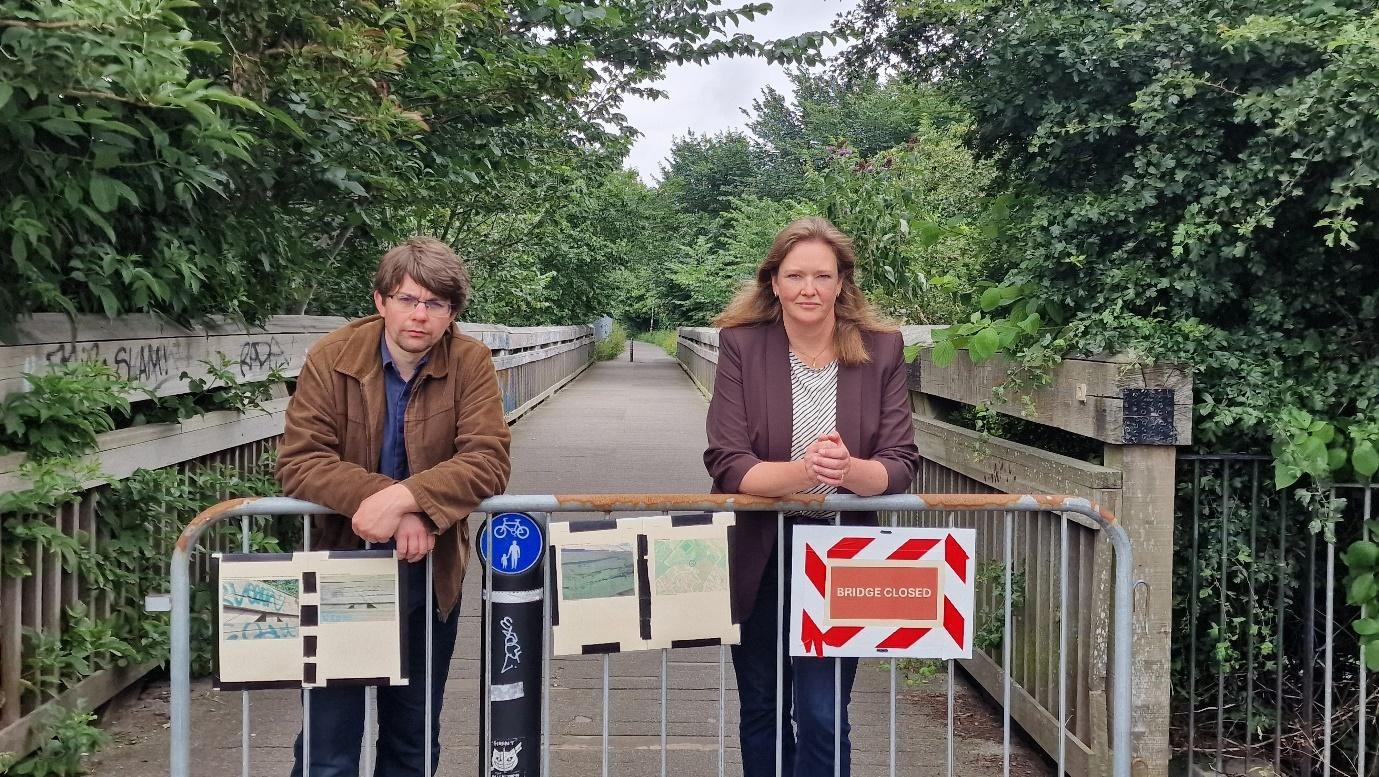
Edinburgh’s Liberal Democrats are calling for the Council to prioritise re-opening the closed bridge at St Mark’s Park, which is a vital and very popular route for pedestrians and cyclists everyday.
The bridge, which links St Mark’s Park to Broughton Road, was suddenly closed by the Council at the end of June when an inspection report indicated that it wasn’t safe to remain open. However, many residents and businesses have made clear the negative effect that the ongoing closure is having on them.
Yesterday (Thursday, 27th August), Edinburgh’s Liberal Democrat Councillors tabled a call for an urgent re-opening and lodged several questions to the Council Administration on how it’s being handled.
Local MSP for Edinburgh Northern, Sanne Dijkstra-Downie said “A huge number of residents from either side of the bridge have raised this matter with me. Many have commented on how far and accessible the closest diversion is while it remains closed.
“While the inspection lays bare why the Council have closed the bridge, we now need to look at solutions to get access back to the route.”
Speaking on the Motion tabled before Councillors, Leith Walk ward councillor Jack Caldwell said “This bridge is vital for residents, local businesses, Broughton Primary School, commuters, and visitors alike.
“For many residents in the Broughton area, an area with very limited private garden access, residents have effectively been cut off from their local park. Access to nature is one of the things that Edinburgh prides itself on, and that should also be true for residents who live near the city centre.
“The fantastic police box coffee shop by the entrance has also seen footfall significantly down, for reasons completely outwith their control.”
Inverleith ward councillor and city transport committee member Hal Osler commented: “A sudden closure like this wouldn’t have been possible on many bridges across the city.
“This bridge is a vital link for the many people who walked, wheeled and cycled across it daily. If we as a Council are serious about our commitment to sustainable forms of transport, then this is our opportunity to show it.
“It won’t be good enough if we shrug our shoulders. Hopefully we can get cross-party support to prioritise this important project.”
PICTURED: Cllr Jack Caldwell and Sanne Dijkstra-Downie MSP
Further information including statements and the inspection report from the local authority available upon request.
Speeches from the meeting will be available at Home – City of Edinburgh Council Webcasts at agenda item 8.9, including an amendment from the Green Group by Councillor Booth.