Like most of us, I don’t think twice before hopping on a bus or train to go to work, meet friends or do a spot of shopping.
However, for millions of people across the country who are deaf or have hearing loss, barriers on public transport can make even every day journeys feel impossible.
Challenges like inaccessible live travel information and a lack of deaf awareness from transport staff can cause huge amounts of stress and anxiety and even force people with hearing loss to stop using public transport altogether.
These are the shocking findings in Clear Signals, a major new report from RNID which found widespread accessibility barriers on public transport in the UK, including buses, trains, trams, underground services and ferries.
It’s unacceptable that in 2026, people with hearing loss are facing these barriers, simply because they want to get from A to B.
As our report makes clear – solutions do exist but it needs a coordinated response. We’re calling on the Government and transport sector to take action, so everyone has access to the safe and independent travel they deserve.
As we mark the 86th anniversary of Battle of Britain Day on 15 September, we remember the courage, sacrifice and resilience of the remarkable generation known as ‘The Few’.
During the summer and autumn of 1940, they fought and won against incredible odds in the skies over southern Britain, helping to defend our nation in one of its darkest hours and secure the freedoms we enjoy today.
Their legacy continues to inspire generations that have followed.
This commemoration carries a deeply personal meaning for me. As a former RAF Sergeant and parachute jumping instructor, I know first-hand the challenges military service can bring. During a routine exercise, my main parachute failed and my reserve became tangled, resulting in a 6,000ft fall that left me paralysed.
With the support of the RAF Benevolent Fund, the RAF’s longest-standing charity, I was able to rebuild my life, regain my independence and find a new purpose. Today, I am proud to serve as an ambassador, helping others understand that support is available when they need it most.
The men and women who fought during the Battle of Britain faced extraordinary pressures and uncertainty. While the nature of military service has changed over the decades, the demands placed on those who serve remain significant. Around the world, members of the RAF continue to deploy and operate wherever they are needed, often at considerable personal cost to them and their families.
That is why it is so important that we continue to honour our commitment to those who serve. No one who has served their country should face life’s challenges alone. Just as the RAF Benevolent Fund was there to support RAF personnel and their families during and after the Second World War, it remains committed today to providing support when need arises and to strengthen the resilience and wellbeing of the RAF Family, enabling individuals, families, and communities to thrive through all stages of life.
The Battle of Britain provides a poignant reminder not only of what was achieved through courage and determination, but also of our responsibility to look after those who have served. It is a responsibility that spans generations and remains as relevant today as it was eighty-six years ago.
If you know anyone who could benefit from the life-changing services the Fund provides, you can find more details at rafbf.org, or you can call on 0300 102 1919.
Yours sincerely,
Bob Greig
RAF veteran and RAF Benevolent Fund Ambassador
Bob Greig picture by Ollie Dixon
Battle of Britain crew picture: MOD Crown Copyright
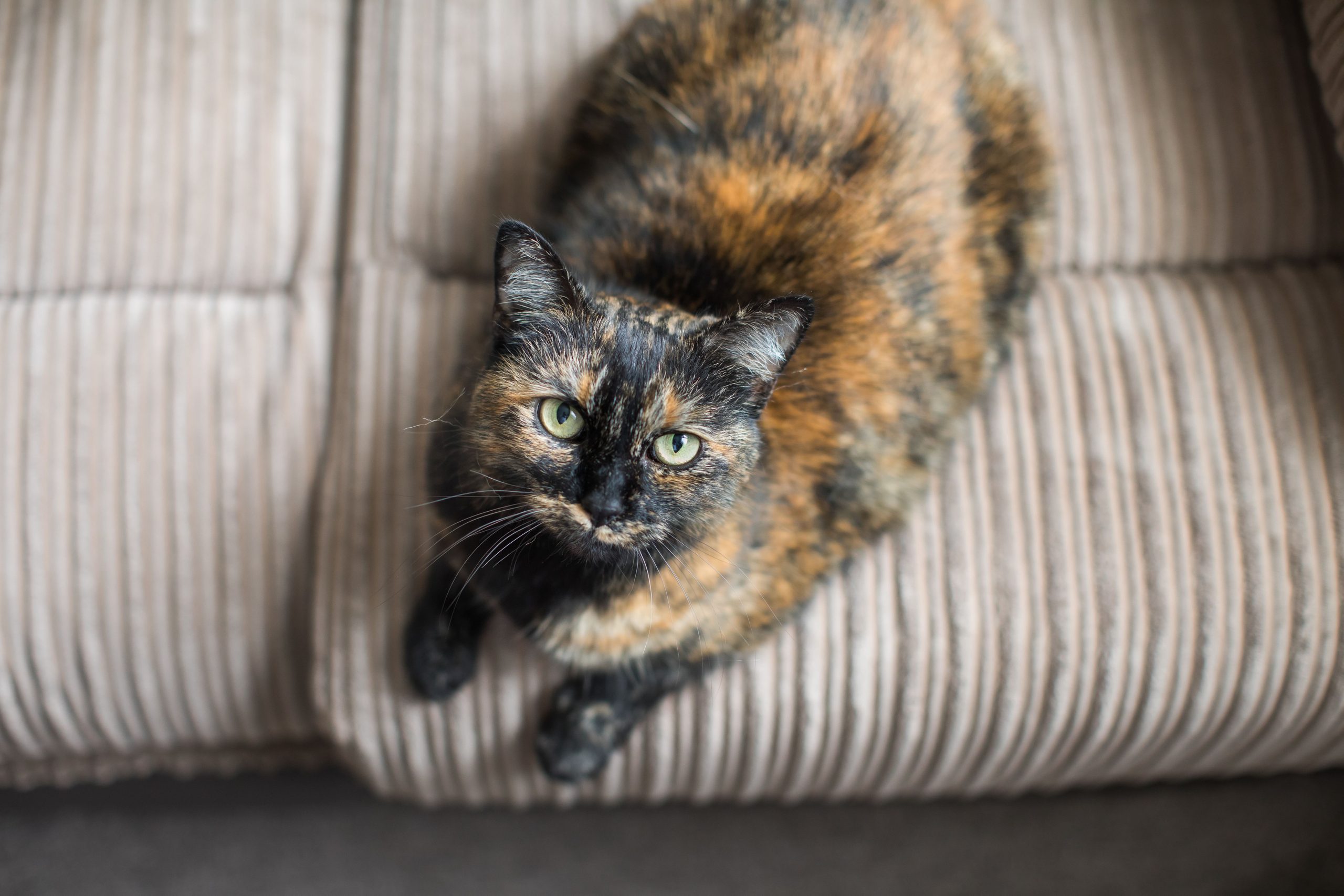
29/08/2-17 – Ciaran McCrickard Photography – Tink, Hero Cat of the Year, from Shrewsbury
Students packing for university aren’t just anxious about Freshers’ Week or locating the best all-day breakfast in a new town. Many face a lesser-known emotional hurdle; parting ways with the family cat.
Leaving home is a massive milestone and feeling a sense of loss when saying goodbye to a companion you’ve shared your teenage years with is a genuine form of homesickness.
Pack a cherished cat photo, a familiar toy or a blanket your cat sleeps on to make your new room feel more like home.
Remember, you won’t be the only one missing a pet. Sharing stories and photos with flatmates is a great way to make friends and support each other. Video calls are another good way to stay in touch, especially since cats love to screen-bomb.
Back at home, cats can be unsettled by change, but a few simple steps can help. Cats thrive on routine and leaving a worn t.shirt in your cat’s favourite sleeping spot provides a comforting scent.
Families should watch for subtle signs of distress, such as changes in appetite or grooming habits, and consult a vet if concerned. But don’t worry, your cat won’t forget you. They’ll probably get over your absence faster than you will.
So, enjoy student life and look forward to the ultimate homecoming. Few things beat a warm, purr and head-bump greeting when you return for the holidays.
Arthritis and other musculoskeletal (MSK) conditions affect 1.7 million people in Scotland – around one in three of us.
Yet despite the enormous impact these conditions have on people’s health, independence and ability to work, Scotland has no dedicated national strategy for MSK health. That needs to change.
Arthritis UK is calling on First Minister John Swinney to deliver Scotland’s first-ever MSK Action Plan, providing the national leadership needed to improve diagnosis, treatment, rehabilitation and support.
Behind the statistics are people living every day with pain, fatigue and disability – some waiting years for a diagnosis or treatment that could transform their lives.
Our “Don’t Turn Your Back on Arthritis” campaign gives those people, their families, and supporters the opportunity to make their voices heard.
We are urging people across Scotland to send a simple message to the First Minister: arthritis affects too many people to remain an afterthought.
It is time to face arthritis head-on and give MSK health the priority it deserves.
September is Blood Cancer Awareness Month, and as part of our Let’s talk lymphoma campaign, Lymphoma Action is inviting people affected by lymphoma to write to their MP, MSP or MS and ask them to raise important issues about lymphoma treatment and care in Parliament.
The campaign aims to make it easier for decision-makers to understand the realities faced by people affected by lymphoma, and to encourage practical action to improve diagnosis, treatment and care.
Lymphoma is officially categorised as a rare or less common cancer. The recent National Cancer Plan recognised that people affected by rare and less common cancers often face major challenges with diagnosis and care. Lymphoma is the most common type of blood cancer, but too many people still experience delays in diagnosis, limited access to treatment and unequal care.
For the first time, the National Cancer Plan gives rare and less common cancers dedicated focus and commits to improvements in treatment and care. It recognises that people with these cancers must receive the same priority as those with more common cancers. But making promises is only the first step – they need to become reality.
This September, we want to hold the government to account and make sure the plan is put into action, leading to meaningful change for people affected by lymphoma and other cancers. If you are affected by lymphoma, you can write to your representative this September and ask them to raise lymphoma in Parliament.
Together, we can push for the improvements people affected by lymphoma deserve and help make sure the National Cancer Plan delivers real change.
The Scottish Government’s failure to include a Learning Disabilities, Autism and Neurodivergence (LDAN) Bill in its Programme for Government is hugely disappointing.
A recent Scottish Parliament committee report highlighted the stark reality facing families, with children and adults frequently waiting years for ADHD and autism assessments. It called for urgent action to ensure clear and consistent pathways to support across Scotland.
Yet the Government has failed to introduce the legislation that could help deliver this. An LDAN Bill could tackle inequalities through national and local strategies and mandatory training for health, social care and education staff.
After years of discussion and consultation, warm words are no longer enough. Thousands of children, adults and families need action.
Service improvements are welcome, but without clear targets and timescales there is no guarantee they will deliver the lasting change that children, adults and families desperately need.
The Government itself acknowledges that legislation can drive accountability and change. It should therefore set clear, measurable timescales for improvement – and commit to introducing an LDAN Bill if these are not met.
Some of life’s best moments come with a soundtrack – whether it’s at a music event, a festival or a night out with friends. It’s how many people connect, celebrate, and make memories. To keep it that way it’s really important to protect your hearing health.
Our new research found that a startling 83% of young people aged 20-29 have experienced ringing, buzzing or muffled hearing after listening to loud music or attending an event, and 10% experience it regularly. This could be you, your children or your grandchildren.
While these effects can initially be temporary, repeated exposure to loud sounds can risk hearing damage becoming permanent, leaving people to manage hearing loss or invasive tinnitus for the rest of their lives.
Despite this, only 7% of young people said they wore earplugs at music events in the last 12 months, and just one in five said they wear them often.
The good news is that protecting your hearing doesn’t have to be complicated. Small actions such as wearing good quality earplugs, which also make a thoughtful gift for festival lovers, stepping away from the speakers, or taking listening breaks can make a big difference and improve their experience.
By following these simple steps, you can enjoy music more safely while keeping sound quality clear.
RNID’s ‘Don’t Lose the Music’ campaign is helping music lovers understand the risks of loud music and take simple steps to look after their hearing.
With the summer holiday season coming to an end, many of us will be familiar with the strict rules on what we can bring home to the UK from a foreign trip. Whether it’s cheese from France or exotic fruits from more far-flung countries, there are a host of restrictions on what travellers can bring through customs.
So it may come as a shock to readers that hunting trophies – made from the body parts of hunted animals like lions, elephants and cheetahs – can still be legally bought into the country simply by being granted a licence by Government.
This is despite repeated promises from the Government to ban hunting trophy imports, and research consistently showing that more than four in five Brits believe hunting trophy imports should be illegal*.
Whether they live in our gardens or on another continent, wild animals belong in the wild, not on display as souvenirs. That’s why we’re calling on the Government to finally bring in a ban on trophy hunting imports so we can make 2026 the last summer this abhorrent practice is allowed.
Readers can help by signing up to support the campaign being run by Humane World for Animals UK, Born Free and Four Paws UK at:
The NHS is one of Britain’s greatest achievements (writes FOYSOL CHOUDHURY MBE). Every day, it cares for millions of people regardless of who they are, where they come from or what they believe. It is built on the principles of compassion, dignity and equality.
Yet new research has once again exposed an uncomfortable truth. Too many NHS staff continue to experience unacceptable levels of racism and discrimination.
That should concern every one of us.
The NHS depends on the dedication and professionalism of staff from Black, Asian and minority ethnic communities. They are our doctors, nurses, consultants, pharmacists, porters, receptionists, cleaners, ambulance crews and carers. They work around the clock, often under immense pressure, caring for patients with compassion and professionalism.
Quite simply, without them, our NHS would not function.
Yet many continue to face racist abuse from patients, discrimination from colleagues and barriers to career progression. No one should ever have to endure abuse because of the colour of their skin, their ethnicity, their faith or their background while simply doing the job they were trained to do.
The recent findings reported by Sky News should serve as a wake-up call. Racism in our public services is not just unacceptable. It damages lives, harms staff wellbeing, affects recruitment and retention, and ultimately impacts the quality of care patients receive. When talented professionals feel isolated, undervalued or forced to leave because they are not treated fairly, we all lose.
This is an issue I have dedicated much of my public life to addressing.
As a former Member of the Scottish Parliament, I consistently used my platform to challenge racism, promote equality and press for stronger action against discrimination. I spoke in parliamentary debates on race equality, hate crime and community cohesion, worked with ministers and colleagues across political parties, and supported organisations committed to building a fairer Scotland.
Alongside my parliamentary work, I have been proud to work with the Edinburgh and Lothians Regional Equality Council (ELREC), an organisation that has spent decades supporting people who experience discrimination, promoting good relations between communities and helping employers and public bodies become more inclusive. Through ELREC, I have worked with schools, local authorities, Police Scotland, NHS organisations, universities, charities, faith groups and community organisations to tackle racism, challenge prejudice and promote equality.
Throughout my career, I have firmly believed that combating racism requires more than statements of support. It requires action, leadership and a willingness to stand alongside those who experience discrimination. Equality should never be viewed as an aspiration. It should be a reality that every person experiences in their daily life.
While Scotland has made significant progress, recent years have also seen a worrying rise in racism and hate incidents across the UK. We have witnessed increasing hate speech online, abuse directed at public figures, hostility towards migrants and refugees, and discrimination affecting people simply because of their race, religion or ethnicity. These attitudes do not remain online. They spill into our workplaces, schools, hospitals and communities.
The NHS should be a place where every member of staff feels safe, respected and valued. Healthcare workers should never have to choose between protecting their dignity and providing care for others.
Creating truly inclusive workplaces requires more than policies sitting on shelves. It demands strong leadership, effective reporting systems, proper support for victims, accountability when racism occurs and ongoing education that challenges prejudice and unconscious bias. Every employer has a responsibility to create an environment where discrimination is challenged immediately and where diversity is recognised as one of the organisation’s greatest strengths.
Our diversity is one of the greatest strengths of modern Britain.
People from different cultures, languages, faiths and backgrounds enrich every aspect of our society. They bring skills, ideas and experiences that strengthen our economy, improve our public services and enrich our communities. Diversity should never be viewed as a problem to manage. It should be celebrated as one of our greatest national assets.
Tackling racism cannot be left solely to governments, employers or public bodies. Every one of us has a responsibility to speak out when we witness discrimination, support those who experience it and refuse to remain silent. Real change happens not only through legislation but also through everyday acts of courage, kindness and respect.
A fair NHS benefits every patient.
Fair workplaces create stronger public services.
Inclusive communities build a stronger Scotland and a stronger United Kingdom.
Racism has no place in our NHS.
It has no place in our workplaces.
It has no place in our politics.
And it has no place in our society.
If we truly believe in fairness, dignity and equality, then we must move beyond simply condemning racism whenever headlines appear. We must commit ourselves to eliminating it wherever it exists.
That is the kind of Scotland and the kind of United Kingdom that we should all strive to build. It is a future where everyone, regardless of their race, ethnicity or faith, can contribute, succeed and feel that they truly belong.
No one should leave their place of worship fearing they may not make it home safely (writes FOYSOL CHOUDHURYMBE). Yet that is the reality members of Edinburgh’s Muslim community faced following the recent series of appalling attacks that left innocent people injured simply because of their faith.
These attacks were not only an assault on those individuals. They were an attack on the values that define Edinburgh and Scotland: respect, equality, freedom of religion and the belief that everyone should be able to live their lives without fear.
They also serve as a reminder that racism, religious hatred and prejudice have not disappeared. Across the United Kingdom, we have seen a worrying rise in hate crime directed at people because of their race, religion, ethnicity or background.
We must never become complacent. Every act of hatred, regardless of who it targets, is an attack on the values of fairness, equality and mutual respect that bind our society together.
My thoughts remain with those who were injured, their families and everyone who has felt fear, anxiety and uncertainty as a result of these deeply disturbing events. I also commend the courage of those who came forward to assist the victims and support the police investigation.
During my five years in the Scottish Parliament, I made community safety, equality and tackling hatred central to my work. I consistently raised issues relating to policing, hate crime, racism, Islamophobia, protecting vulnerable communities and ensuring that our emergency services had the resources they needed to keep people safe. I questioned ministers on community safety, challenged the rise in racism and anti-Muslim hatred, and consistently argued that prevention, engagement and visible policing are essential to building safer communities.
In March 2025, I raised the issue of rising Islamophobia directly with the First Minister following reports that anti-Muslim hate incidents had reached record levels across the United Kingdom. During Ramadan, I reminded Parliament that it is a month of peace, compassion and reflection, and I asked what further action could be taken to ensure that Muslim communities across Scotland felt safe and protected. Sadly, those concerns remain just as relevant today.
My work did not stop inside Parliament. Before, during and after my time as an MSP, I worked closely with the Edinburgh and Lothians Regional Equality Council (ELREC), Police Scotland, local authorities, faith leaders and community organisations to tackle racism, promote equality, strengthen community cohesion and encourage dialogue between people of different faiths and backgrounds.
Through ELREC and many other partnerships, I have supported initiatives that bring communities together, challenge discrimination and build trust between public services and the people they serve.
As Chair of the Cross Party Group on Challenging Racial and Religious Prejudice, I brought together Police Scotland, equality organisations, academics, faith representatives and community leaders to address racism, religious hatred and discrimination. Those discussions reinforced my belief that tackling hatred requires long term commitment, education, partnership and leadership.
Screenshot
Throughout my time in Parliament, I also argued that Police Scotland should be properly funded. Our officers are expected to deal with increasingly complex challenges, including terrorism, organised crime, hate crime, cybercrime, violence against women and girls and the protection of vulnerable people. They cannot continue to be asked to do more with fewer resources. Proper investment in policing is an investment in safer communities.
The professionalism shown by Police Scotland throughout this investigation deserves the highest praise. Officers responded swiftly, carried out a thorough investigation and worked tirelessly to identify and arrest a suspect.
The involvement of specialist counter terrorism officers demonstrated that every available resource would be used to investigate these serious allegations thoroughly. Their dedication and professionalism should give reassurance to every community across Edinburgh and Scotland.
I know from my own experience working alongside Police Scotland over many years that officers put themselves in harm’s way every day to keep the public safe. They deserve our gratitude, our respect and the resources necessary to carry out their responsibilities effectively.
I would like to thank every officer involved in this investigation for their commitment, professionalism and compassion during what has been an extremely difficult time for those affected.
What has also given me hope is the response from the people of Edinburgh.
In the days following these attacks, faith leaders, community organisations, charities, volunteers, elected representatives and residents from every background stood alongside the victims and their families. They demonstrated that the values of compassion, respect and solidarity are stronger than hatred.
This is the true character of Edinburgh. We are a city built on diversity, where people from different cultures, faiths and backgrounds live, work, study and contribute together. The Muslim community has made an enormous contribution to our city’s success through business, healthcare, education, public service, charity and civic life. An attack on one community is an attack on us all.
We must continue to challenge racism, Islamophobia, antisemitism, anti Sikh hatred, anti Hindu hatred, prejudice against Christians and every other form of discrimination wherever it appears.
Hatred does not begin with violence. It often begins with harmful language, stereotypes and intolerance. If we are serious about building a safer Scotland, we must challenge prejudice at every stage before it escalates into acts of violence.
Education, community engagement and early intervention are just as important as strong law enforcement. Building trust between communities and public institutions is one of the most effective ways of preventing hatred from taking root.
Throughout my public life, whether serving in the Scottish Parliament or working with organisations such as ELREC, I have believed that diversity is one of Scotland’s greatest strengths. We must never allow those who spread hatred to undermine the progress we have made in building a fairer, more inclusive and more compassionate nation.
Scotland has earned an international reputation as an open, welcoming and inclusive nation. We must never take that reputation for granted. It requires continued leadership, properly funded public services, strong policing, active community organisations and a collective determination to protect the values that unite us.
Hatred seeks to divide. Edinburgh chose unity.
Violence seeks to create fear. Our communities responded with compassion.
Extremism seeks to isolate people because of their faith. Scotland responded with resilience.
I commend Police Scotland for their professionalism, determination and reassurance throughout this investigation. I remain convinced that they must continue to receive the funding, officers and specialist resources they need to protect every community across our country. Supporting our police is not simply about law enforcement. It is about safeguarding the values of justice, equality and security that define Scotland.
The true measure of a society is not whether hatred exists, but how people respond when it appears. Edinburgh’s response has shown the very best of our city. Our police, our community organisations, our faith leaders and our residents stood together. They refused to allow hatred to divide our city.
That is the Edinburgh I have always worked to serve.
That is the Scotland I believe in.
Foysol Choudhury MBE
Former Member of the Scottish Parliament & Shadow Minister for Culture, Europe and International Development.