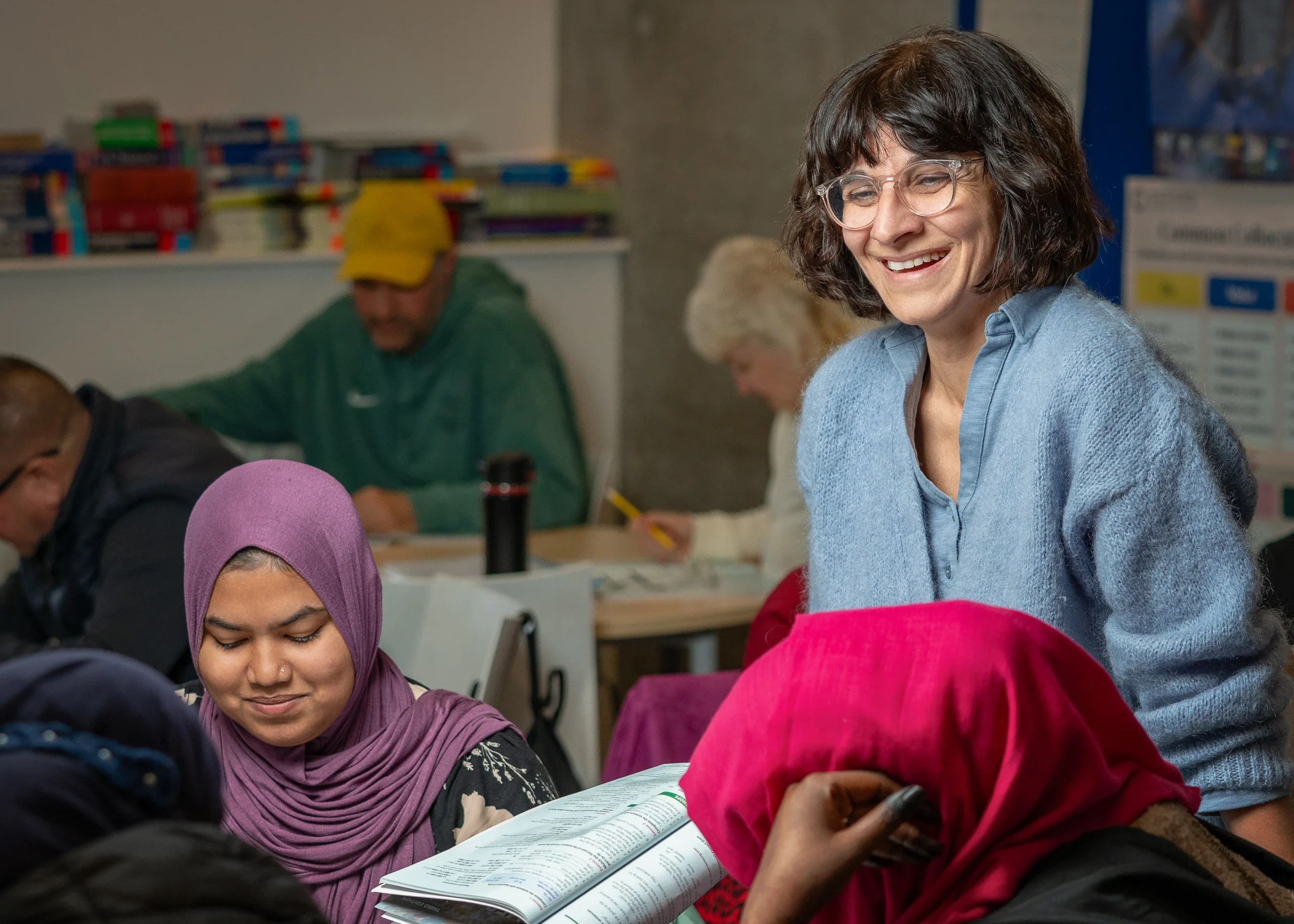
Cruden tackles construction skills gap with hands-on schools programme
Leading 5-star housebuilder, Cruden has developed a new schools initiative in East Lothian, aimed at tackling the construction skills shortage, with pupils at Knox Academy taking part in hands-on sessions designed to bring careers in the industry to life.
Delivered as part of a community benefit activity linked to Cruden’s Herdmanflat development in Haddington for East Lothian Council and Hub South East, the Employability Strengthening Programme (ESP) focuses on building practical skills, boosting confidence and highlighting clear routes into employment.
with pupils at Knox Academy taking part in hands-on sessions designed to bring careers in the industry to life.
Delivered as part of a community benefit activity linked to Cruden’s Herdmanflat development in Haddington for East Lothian Council and Hub South East, the Employability Strengthening Programme (ESP) focuses on building practical skills, boosting confidence and highlighting clear routes into employment.
In Scotland, around a quarter of the construction workforce is aged 50 or over, highlighting a growing succession challenge. Across the UK, more than 225,000 additional workers will be needed by the middle of the decade, with employers continuing to report skills shortages. Initiatives such as ESP aim to engage young people and help build a more sustainable pipeline of talent.
The first session, held in February, introduced pupils to careers in construction, alongside practical employability advice and guidance. Developing the Young Workforce (DYW) and East Lothian Works also attended, providing insight into further training opportunities and Construction Level 4 and 5 courses.
A second session in March took a more practical approach, with pupils completing a STEM-based measurement activity, replicating a real-world quantity surveying task, giving them insight into the skills used on live construction projects.
Additional sessions included CV and interview advice, as well as a ‘meet the experts’ event, allowing pupils to engage directly with industry professionals.
Elaine Gorman, DYW School Coordinator at Knox Academy, said the sessions generated strong engagement from pupils and helped raise aspirations around careers in construction. She said: “The pupils responded enthusiastically and engaged well with all sessions, particularly the quantity surveying tasks.
“It gave them a real sense of achievement while bringing construction careers to life in a very practical way.”
Michael Palethorpe, Community Benefit Manager at Cruden, says: “There is a real need to inspire the next generation into construction and that starts in the classroom.
“Through our Employability Strengthening Programme, we’re giving young people practical, real-world insight into the industry, showing them the opportunities available and building their confidence to take that next step.”
The programme forms part of a wider series of four sessions, designed to support pupils in understanding career options, developing employability skills and connecting with further education opportunities.
Cruden continues to roll out the programme across its developments, in partnership with schools, local authorities and employability organisations to support young people into long-term careers in construction.
Children at Bright Horizons Cramond Early Learning and Childcare are enjoying weekly visits to the nearby beach and woodland areas, supporting learning through exploration, conversation and shared experiences outdoors.
The visits give children time to explore their surroundings at their own gentle pace, encouraging curiosity and helping them build confidence beyond the nursery environment. Experiences from their adventures are then revisited back at nursery through discussion, further exploration and play.
The approach comes amid growing national discussion about screen use in the early years. Recent UK research reported by Nursery World has highlighted the increasing role screens play in very young children’s daily routines, prompting renewed focus across the sector on real-world, hands-on experiences.
Yvonne, Nursery Manager at Bright Horizons Cramond, said: “Exploring the local area together supports children’s sense of belonging and helps them make sense of the world around them.
“When they return from visits to the beach and forest, they collect natural materials such as shells, leaves and pinecones, alongside ideas and questions to talk through back at nursery.
“This reflects our Nurture Approach, where emotional wellbeing, strong relationships and shared reflection are at the heart of how children learn.”
Practitioners use children’s observations and conversations from these outings to shape learning back at nursery, supporting communication skills, emotional wellbeing and meaningful connections with the world around them.
By prioritising outdoor exploration, time for talk and shared reflection, the nursery aims to offer young children rich learning experiences rooted in relationships and real environments, rather than digital distractions.
Bright Horizons Cramond Early Learning and Childcare is holding an Open Day on 13 June, giving families the opportunity to visit the setting, meet the team and find out more about early education and childcare.
Registrations are now being taken for 2027. Further details are available via the Bright Horizons website.
Ahead of this summer’s Commonwealth Games in Glasgow, the British Council has joined forces with children’s charity Youth Sport Trust to produce a new classroom resource pack for schools.
Designed to support learning and activities for young people, the pack celebrates the return of the Commonwealth Games to Glasgow this summer from 23 July – 2 August and the work of the Commonwealth to improve the lives of its citizens.
The resource forms part of the Glasgow 2026 Schools Programme and is inspired by All In – the nationwide call to action for this year’s Games, inviting communities to celebrate the Games in their own ‘altogether brilliant’ way.
The pack was launched yesterday at St John Paul II School in Castlemilk, Glasgow, where teacher and former Glasgow 2014 ceremony cast member, Jacqueline Hart and her pupils were visited by gymnast Cameron Lynn who, following his appearance at Birmingham 2022, is aiming to represent his country again at Glasgow 2026; and Glasgow 2026’s official mascot Finnie, the sport-loving unicorn.
Featuring a series of interactive learning activities and materials, teachers can use the resource pack to raise awareness of the Commonwealth and its values and help young people feel connected to the Games, their local community, country and the wider Commonwealth.
Schools can find out more and download the pack here.
Pupils will be introduced to the Games’ values of Humanity, Destiny and Equality through sessions exploring connection, fairness and inclusion. This echoes the British Council’s work building connections, understanding and trust between people in the UK and other countries through arts and culture, education and English language.
Designed for pupils aged between 7 and 11, the activities in the pack are flexible and adaptable. Teachers can use them as starting points for individual lessons or to form part of a larger cross-curricular project with a partner school overseas.
The British Council is also inviting any schools wishing to participate with an overseas partner to use their PartnerFinder database free of charge, to search for like-minded schools around the world.
The classroom resource builds on the British Council’s Schools Connect programme, which supports young people in the UK and around the world to build the skills, knowledge and attitudes they need to respond to global challenges and develop international understanding.
Glasgow 2026 is set to be ‘the most inclusive, community-driven and connected Commonwealth Games yet’, with 3,000 athletes from 74 nations and territories set to compete in an 11-day programme of 10 sports and six Para sports across four iconic venues.
Beyond its credentials as a major historical sporting event, The Commonwealth Games is also a chance for people from around the world to come together, celebrate their cultures and learn from each other.
Claire de Braekeleer, Director, British Council Scotland, said:‘The Commonwealth Games 2026 is not just a sporting event, it is a chance for people from around the world to come together, celebrate their cultures and learn from each other.
“This classroom resource pack will enable children and young people to connect internationally on critical themes, such as equality and fairness, and celebrate the Game’s focus on inclusion and sustainability.
“While we proudly shine a light on Glasgow and Scotland as this year’s hosts, the pack is available for all and we hope that teachers and pupils across the whole of the UK will benefit from the resources available.’
Emily Reynolds, Director, Youth Sport Trust, added:‘The Youth Sport Trust are delighted to be working in partnership with the British Council and Glasgow 2026 to bring this engaging resource to schools and teachers.
“The Commonwealth Games offer a powerful opportunity to connect young people to Glasgow, the values that unite the Commonwealth, and the wide range of sports that make the Games so special.
“Multi-sport events like the Commonwealth Games can inspire children and young people of all backgrounds, helping them to discover new sports, develop curiosity, and build a lifelong relationship with physical activity.
“This resource is designed to support teachers to bring that inspiration into the classroom and empower young people to learn through sport.’
Phil Batty OBE, Chief Executive, Glasgow 2026, said:“‘The Glasgow 2026 Schools Programme is helping to bring the Games to life in classrooms across Glasgow and Scotland, ensuring that young people feel genuinely connected to what these Games represent. It’s vital that young people across the country see themselves reflected in Glasgow 2026, and this programme plays a key role in making that happen.
“Developed with the support of partners including the British Council and the Youth Sport Trust, the programme gives pupils the opportunity to explore the cultures that make up the Commonwealth, increase participation in sport and develop positive, healthy habits that can last a lifetime.
“The resources have been carefully designed to be inclusive and adaptable for all learners and educational settings, while reflecting the vision and values at the heart of these Games.
“With Glasgow 2026 set to deliver the largest-ever Para sport medal programme in Commonwealth Games history, it’s especially powerful to see that same ambition and commitment to inclusion championed through the Schools Programme.’
Young people across Scotland studying for Senior Phase qualifications will have access to free online Easter Study Support.
The webinars provided by e-Sgoil are delivered by secondary teachers covering multiple subjects over National 4, National 5, Higher and Advanced Higher levels.
Registration for the extensive programme of webinars is now open, with sessions scheduled to run throughout the week beginning 6 April.
The Easter programme, now in its fifth year, has been developed as part of the Scottish Government-funded National e-Learning offer and continues to grow in both reach and impact.
Cabinet Secretary for Education and Skills, Jenny Gilruth, said: “I welcome the continued success of e‑Sgoil’s Easter Study Support programme, and I’m pleased the Scottish Government has been able to continue to support the provision of high‑quality revision opportunities for senior phase pupils at a crucial point in the school year.
“Last year’s participation and overwhelmingly positive feedback show the real value of this national offer in building confidence and reducing anxiety ahead of exams. The programme reaches young people in every local authority and strengthens the wider support available in Scotland’s schools.”
Last year 4,287 registered for a total of 18,100 webinar places, representing an increase of 689 learners on the previous year.
Commenting, e-Sgoil Study Support Programme lead Rhona Johnstone added: “We are delighted to offer the Easter Study Support programme to Senior Phase learners across Scotland yet again this session and pleased to see the programme reaching more learners year on year.
“The evidence of the impact that both the Easter and Evening Study Support programmes has on the learners ahead of assessments and exams can be seen in the feedback received from those who have participated in previous years.”
Clear progress is being made across all 20 actions set out in out in a national plan aimed at improving relationships and behaviour in schools, according to a newly-published report.
The second annual progress report on the joint action plan details the work undertaken in the last 12 months to address areas including guidance on consequences and on risk assessments for schools.
Updated Scottish Government guidance has also been published on attendance, along with new guidance on substance use, now covering vapes, and on a whole school approach to tackling racism. These were among the recommendations of the 2024-27 blueprint to improve relationships and behaviour in schools.
Work is also ongoing on to provide future guidance in other areas, including the recording and monitoring of violent incidents.
Education Secretary Jenny Gilruth said: “Scotland’s schools should be safe and consistent learning environments for everyone and clearly the vast majority of children and young people behave well.
“However, we know there has been an impact on behaviour as a result of issues including the COVID-19 pandemic and the cost of living crisis. So I am heartened to see the clear progress being made to implement the measures set out in the action plan to address this.
“The challenges of the post-COVID-19 generation of young people is reflected in the updated guidance on attendance to deal with the use of part-time timetables, long-term, persistent absence, as well as young people who are in school but absent from classes.
“Vaping has also been identified as an emerging trend among some young people at school, so the new guidance on substance use will allow local authorities and Head Teachers to develop or update local policies to deal with this. Taken together this newly-published package of guidance addresses all the all emerging patterns of behaviour identified in our Behaviour in Scottish Schools Research.
“The action we are taking will help ensure that teachers and schools can deal with issues in ways that are appropriate and also respond to the needs of each individual child.”
Delivering better experiences for learners, teachers and practitioners to thrive
A rapid review of Additional Support for Learning (ASL) has set out recommendations to ensure young people’s evolving needs continue to be met across Scotland.
Professional Education Advisor Janie McManus’ expert review of ASL said that clearer expectations, stronger pathways to support across education, health and social care, and early interventions should underpin the next steps in delivering Additional Support Needs (ASN) provision in schools.
Education Secretary Jenny Gilruth welcomed publication of the review outcomes and accepted the recommendations in a speech to practitioners – the first in a series of national events on ASL convened by the Scottish Government.
In her address, Ms Gilruth also confirmed that an app to streamline administrative tasks and free up teachers’ time to focus on pupil needs would be rolled out more widely later this year, backed by £700,000 government funding, subject to the success of ongoing pilots in six council areas.
Ms Gilruth said: “I am grateful to MSPs from across Parliament for their constructive engagement on the additional support needs review. I am also thankful to Janie McManus for leading this short, sharp review into ASN, with clear recommendations for the next Scottish Government to address.
“The pandemic was an undoubtedly challenging time for schools, but none more so than for our additional support needs pupils. It is with the needs of those young people in mind, that we have come together to work collegiately to drive the improvement we all want to see in Scotland’s inclusive schools.
“Across the country our teachers and school staff display extraordinary commitment working with pupils with ASN to provide a nurturing, supportive environment. Through our investment in the CivTech programme, we are seeing how technology can be harnessed to cut the time spent on paperwork and free up valuable time for teaching and learning, helping ensure teachers and school staff have the time to focus on what matters most – their pupils.”
COSLA Children and Young People Spokesperson Cllr Tony Buchanan said: “We welcome the final progress report on the Additional Support for Learning Action Plan.
“Six years after Angela Morgan’s review, progress has been made, though more remains to do. We now better understand the needs of children and young people, supported by new tools and stronger partnerships.
“Local and Scottish Government must continue working together with a shared vision that enables local and individualised approaches. We note Janie McManus’s report and will consider it jointly with Scottish Government.”
A spokesperson for the Scottish Children’s Services Coalition commented: “While we welcome the outcomes of the expert review on additional support for learning (ASL), including the call for timely access to specialist services across education, health and social care, and early intervention, there needs to be adequate resourcing in place to turn this vision into a reality.
“Across the last decade, spending per pupil on ASL has declined by almost a third, and there have been cuts in the like of specialist ASN teacher numbers, which have been slashed by 240 over the same time period. We are facing a lost generation of vulnerable children and young people who are not getting the care and support they so vitally need.
“We would urge the Scottish Government to prioritise the windfall that will come from proposed increased spending on those with special educational needs and disabilities (SEND) in English schools, on those Scottish pupils with ASN.
“With more than two out of five pupils identified with additional support needs, and the Scottish Parliamentary elections forthcoming, we would additionally urge the political parties to concentrate on this issue as they draft their manifestoes and for the public to focus on what these parties intend to do if voted into office.”
As the conflict in Ukraine enters its fifth year, pupils across Scotland are forming friendships with Ukrainian classmates through the UK-Ukraine School Partnerships programme.
Pupils at Elgin Academy in Moray and Papa Westray primary school in Orkney are among 130 schools from across the UK and Ukraine taking part in the British Council initiative, funded by the UK Government, which connects schools through shared reading, creative projects and regular online exchanges designed to build empathy, resilience and global awareness.
At Elgin Academy, the S2 class of 29 pupils, aged 13–14, is now collaborating with a school in the Poltava region. The partnership has special significance at Elgin, located near RAF Lossiemouth, Scotland’s largest RAF base where many pupils come from military families.
The classes have exchanged letters, researched Remembrance Day traditions in both countries, created giant sunflowers with messages, and in January, introduced their Ukrainian friends to Robert Burns.
The class voted to share the novel “Ghost” by Jason Reynolds, only later realising the main character loves sunflower seeds, Ukraine’s national symbol. The partnership has been particularly meaningful for two Ukrainian pupils in the class, who have enjoyed speaking their own language with the Ukrainian students during video calls.
School librarian Shelagh Toonen applied for the programme following a conversation at the Edinburgh Book Festival, when a Ukrainian pupil spoke about family losses during the war.
She said: “From that experience, I thought we could probably do an awful lot more. When I saw the opportunity through the British Council, I thought it would be a great way to develop a working relationship with Ukraine and share our love of reading.”
Shelagh travelled to Poland last September to meet partner teacher Katia.
She explained: “When I met Katia, I realised they don’t have a library the way that we do.She was nearly in tears when she saw that I was gifting her some books, they have to rely on sponsors to buy books for them at the moment.”
Image: (Pupils from Elgin Academy S2 class working with their chosen book ‘Ghost’ for their Ukraine school partnership)
The video sessions have been tempered with difficulties including air raid sirens and power cuts, moments that have brought the reality of war into the Elgin classroom. Shelagh explained that their partner school is on the front line, operating under a “three bells warning” system – when sirens sound, pupils must move to shelter for online learning.
“Our pupils have definitely developed a lot of empathy throughout the project,” Shelagh said. “They’ve had a kind of gradual awakening and have come to realise what a privilege coming into school every day is.”
Neil Johnson, Head Teacher at Elgin Academy added: “In Scotland, young people’s exposure to current affairs now is very limited, and the conflict has been going on for so long that for many of them, it’s just background noise.
“This partnership makes it real and gives it a focus for our pupils.”
On Papa Westray, one of Orkney’s most remote islands and Scotland’s smallest school in the programme, Head Teacher Tim Ross leads weekly Friday morning video calls between his six pupils, aged 6–8, and eight children at Voinivskyi Lyceum in Ukraine.
The programme comes at a meaningful time for the Papay school, which after welcoming another family late last year, currently has two Ukrainian families within the school community. For them, learning about the partnership was a welcome surprise.
Tim said: “It’s been lovely to tell them about the close link we now have with the Ukrainian school. You could see their faces light up when I mentioned the project, and it demonstrates our support and interest in their experience and background.
“The children in the school have already developed a strong, supportive kindness toward Ukraine because of their friends at the school.” He said, “Even at this young age, they recognise that we’ve got friends here who’ve had to leave their home because of the war.”
Tim Ross (R), Head teacher at Papa Westray Primary School, meeting with Ukrainian counterpart Svitlana from their Ukrainian partner school during their meeting in Poland, in 2025
As part of the partnership, Tim has invited one of the Ukrainian parents to teach the whole class some basic Ukrainian phrases, using an approach that links to their daily phonics learning. He said: “It’s a great exercise for the children in experiencing another culture, listening, and sharing language, it’s also been a great way to connect the programme to our wider community.”
“The calls work best when we’re sharing fun visual learning and finding out about our shared experiences and interests,” Tim said.
“We’re proud of our friendship with Ukraine. This whole programme is about being supportive, none of these children are at fault for what’s happening, and we want to give them something positive to look forward to each week.”
Power cuts on Papa Westray can knock out electricity for six hours at a time, giving the island community an unexpected understanding of the disruptions faced by their Ukrainian partners.
Tim said: “We’ve had to miss some planned activities because of the difficulties they’re facing in Ukraine with power cuts, and the air raids. It really brings home the challenges they’re dealing with.
“But what’s been amazing is how energised both classes are about the Friday sessions. I think this regular connection has become as important for the class in Ukraine as it has for ours.”
The school has matching sets of picture books from Scotland’s Read Write Count with the First Minister scheme, which Tim gifted to the Ukrainian school during his training trip to Poland. Each week, both classes pick a book, read it in their own classrooms, and share creative activities on their video call.
Since January 2025, the UK-Ukraine School Partnerships programme has involved 130 schools across the UK and Ukraine, supporting approximately 23,400 young people. It is now expanding to reach a further 300 schools, with an estimated 54,000 pupils expected to benefit.
Speaking about the programme, Claire de Braekeleer, Director, British Council Scotland said: “With the conflict in Ukraine now entering its fifth year, this programme has helped build something very important, lasting connections between young people in Scotland and Ukraine, grounded in shared stories and friendship.
“These partnerships are a wonderful example of what the programme is all about, and the children are discovering that despite the distance and the challenges, they have far more in common than they might have imagined.
“Applications for the next round of the programme are now open, and I’d encourage schools across Scotland to get involved; it’s a meaningful opportunity to build international connections that will stay with young people for the rest of their lives.”
Schools and teachers interested in joining the programme can apply before the deadline on 2 March. To find out more, please visit:
Heriot-Watt University has appointed Professor Nola Hewitt-Dundas as its next Principal and Vice-Chancellor.
Professor Hewitt-Dundas joins Heriot-Watt from Queen’s University Belfast, where she serves as Pro Vice-Chancellor (Transnational Education) and Professor of Innovation Management and Policy. She is also an internationally recognised academic in innovation and science policy and currently serves as a non-executive Board member of UK Research and Innovation (UKRI).
Professor Hewitt-Dundas will join the University on 1 September 2026, with Professor Richard A. Williams remaining in post as Principal and Vice-Chancellor until the end of September ensuring a smooth and effective transition.
Bruce Pritchard, Chair of Court at Heriot-Watt University, said: “I am thrilled to welcome Professor Hewitt-Dundas to the Heriot-Watt community. She is joining at an exciting time, as we embark on the realisation of Strategy 2035.
“Nola brings the vision, drive and leadership experience needed to lead Heriot-Watt into this next chapter. Her academic credentials, a strong alignment with our University’s values and a track record of delivering transformational change programmes makes her a perfect fit to lead the organisation in the coming years.
“We look forward to working with Professor Hewitt-Dundas to inspire and engage our staff, students, alumni and partners, and to shape a bold, sustainable and globally connected future for the University. I would also like once again to thank and pay tribute to Professor Richard Williams, who is leaving us at the end of September after a very successful 11 years in the role.”
Commenting on her appointment, Professor Hewitt-Dundas said: “I am honoured to be appointed as the next Principal and Vice-Chancellor of Heriot-Watt University. Heriot-Watt is a distinctive global university, renowned for its excellence in science, engineering and business, its strong industry connections, and its international reach.
“I look forward to engaging with colleagues across the University’s campuses to support our staff and students, deliver Strategy 2035, and build a sustainable and successful future together.”
Heriot-Watt University is a global institution with campuses in Scotland, Dubai and Malaysia, as well as a growing cohort of online learners.
The University is internationally recognised for its industry-focused education, research excellence, and real-world impact across science, engineering, business and the built environment.
Professor Hewitt-Dundas was appointed following a highly competitive international search. She brings extensive experience in senior university leadership, global engagement, governance, innovation and research.
She will be the first woman to serve as Principal and Vice-Chancellor of Heriot-Watt University, marking a significant milestone as the University celebrates the 60th anniversary of its Royal Charter.
Local nursery children in Edinburgh were treated to a special visit from Road Safety Scotland character Ziggy this week, to remind them of the importance of staying safe on our roads.
Ziggy visited children at three local nurseries; Pentland Nursery, Wester Coates Nursery School and Little Learners Nursery.
The visits were part of a road safety tour of Early Learning & Childcare Centres (ELCs) designed to equip young children with skills, knowledge and attitudes to help keep them safe on our roads now and later in life.
Together with Ziggy – an alien visiting Earth to learn about road safety – children enjoyed an interactive performance which brings to life road safety messages combining song, role play and crafts.
Multiple immersive learning activity stations, including card games, tested children on their understanding of road safety symbols, noises they’d hear on the roads, and steps to take to cross the road safely. A playmat featuring a town-scape including traffic lights and a zebra crossing also reinforced road safety skills through imaginative play.
Alison Hawkins, Head at Wester Coates Nursery school, said: “The children were very delighted to welcome Ziggy to Wester Coates Nursery School.
“Visits such as these reinforce our own road safety programme, strengthening the important road safety messages we teach and practice. Having fun with Ziggy was a great reminder about safety.”
Debbie Nicol, Assistant Director, Road Safety Scotland, said: “It is important that children are immersed in positive road safety attitudes from a young age, both in the classroom and at home, and we know that early experiences shape children’s future behaviour.
“Ziggy is a fun character with an important message and visits like these help create lasting memories about road safety.”
The Ziggy tour will include visits to Early Learning & Childcare Centres across Glasgow, Edinburgh, Fife, Inverclyde, North Lanarkshire, South Ayrshire, East Ayrshire, Dundee and Renfrewshire.
Written by children’s author Lynda Kennedy and illustrated by Lynn Taylor, the Go Safe with Ziggy books are a free resource available to all Early Learning and Childcare centres and Primary 1 classes in Scotland, and parents, carers and teachers have access to online resources and activity ideas. The Ziggy series is also available in Scots and Gaelic.
Books can be ordered for free on roadsafety.scot/ziggy-order.
For more information about Go Safe with Ziggy, visitroadsafety.scot/ziggy-online.
Details are also available on Road Safety Scotland’s social media channels: Facebook @roadsafetyscotland and X @RoadSafetyScot.