Recent statistics indicating that 12,402 pupils have missed at least half of the school year—enough to fill almost 400 classrooms—should concern us all.
While we support mainstream education wherever appropriate, it can only succeed if schools have the staff and specialist support to make inclusion for those with additional support needs (ASN) meaningful.
More than two out of five (43 per cent) of Scotland’s pupils are now identified as having an additional support need, with numbers more than doubling over the past decade. Yet the number of specialist ASN teachers has fallen. Additionally, as the number of those with ASN experiencing greater complexity of need increases, special school provision may be required, yet the number of such schools has declined.
The link between unmet additional support needs and poor attendance is clear. Too many families are waiting for support while schools struggle with shortages of specialist teachers, classroom assistants, educational psychologists and mental health professionals.
Identifying children with ASN is only the first step. They must receive the timely support needed to attend school, achieve their potential and avoid poorer educational and mental health outcomes.
Scotland urgently needs greater investment to deliver genuinely inclusive education. Without it, we risk failing not only children with ASN and their families, but every pupil and teacher in Scotland’s classrooms.
With Argentina marching into the World Cup final after defeating England, and led by superstar captain Lionel Messi, let us not forget the key role that Scots played in forging this success.
Beyond current Argentine player Alexis MacAllister, whose ancestry can be traced back to Fife, it was two Scots, Alexander Watson Hutton and Alex Lamont, who were responsible for developing the game in the country. Indeed, Watson Hutton is considered “the father of Argentine football”.
Born in the Gorbals in 1853, he emigrated to Argentina in 1882, where he taught at St Andrew’s Scots School in Buenos Aires and then went on to found the Buenos Aires English School.
In 1891, the Association Argentine Football League was established by another Scot, Alex Lamont, who was headteacher at St Andrew’s school. It is recognised as the first football league in the country and outside the British Isles. It lasted only one season and was won by a team of Scots from St Andrew’s.
Two years later, Watson Hutton established the Argentine Association Football League and restarted the tournament. In 1898 his school formed a football team which went on to become the most decorated team in Argentine football until its dissolution in 1911.
So, when witnessing the ecstatic scenes in Argentina following the win over England, spare a thought for the critical role Scots played in that nation’s footballing success!
The latest Public Health Scotland figures on waiting times for musculoskeletal (MSK) services should be a cause for concern.
Between August 2025 and March 2026, only 52.4 per cent of patients were seen within the Scottish Government’s four-week waiting time target. Meanwhile, the number of people waiting for care increased to 75,128 by the end of March 2026.
Behind these figures are people living with arthritis and other MSK conditions who are experiencing pain, reduced mobility and uncertainty while waiting for support. MSK conditions affect around 1.7 million people in Scotland and are the leading cause of pain and disability. Timely access to services such as physiotherapy is often critical to helping people manage their condition and maintain their quality of life.
Arthritis UK is calling for a national MSK Action Plan to improve access to diagnosis, treatment and support. We are also urging the Scottish Parliament’s Health, Care and Sport Committee to undertake a dedicated inquiry into musculoskeletal health, an area that has never been the subject of a parliamentary inquiry despite its significant impact on individuals and the health service.
These latest figures highlight the need for urgent action to improve outcomes for people living with arthritis and other musculoskeletal conditions across Scotland. People living with this cannot afford to wait any longer.
Alan McGinley
Policy and Engagement Manager (Scotland) Arthritis UK
Edward House 199 Sauchiehall Street Glasgow, G2 3EX
I am writing as both a concerned member of the public and a loyal customer of UPS regarding what appears to be a significant and rapidly developing issue of UK workforce and one that deserves far more attention than it is currently receiving.
Reports and growing concerns from within the company suggests widespread restructuring across UK operations including depot closures and substantial job losses. It has been claimed that in some areas over 40% of the work force could be affected, with experienced, long serving staff being placed at risk of redundancy.
In addition, there are reports of drivers being offered relatively small one of payments reportedly in the region of 3000 to 5000 as part of redundancy ‘sweeteners’ after many years of service. For workers who have spent decades representing the company on the frontline, this has understandably caused anger, disappointment, and uncertainty.
What makes this situation particularly concerning is that these drivers are not just employees behind the scenes – they are the public face of UPS. They are the final point of contact with customers, the people who build trust in the brand every single day on Britain’s streets.
There is also growing unease that this restructuring signals a wider to shift away from secure employment towards self-employed or contractor-style arrangements, a trend that is increasingly affecting workers across the logistics sector. While companies will argue the need to modernise and remain competitive, the human cost of these decisions appears to be significant.
As a customer, I am genuinely shocked by what has been reported. These are professional, reliable drivers who have delivered a consistent service for years, and the way this transition is being handled raises serious questions about fairness, loyalty, and the long-term impact on service quality and brand reputation.
This is not a workplace issue- it is a public-facing change affecting thousands of workers, countless communities, and the standards we expect from major international companies operating in the UK. I believe this is a far bigger story than is currently being treated, and I hope you will consider bringing wider attention to it.
The latest Public Health Scotland figures on waiting times for musculoskeletal (MSK) services should be a cause for concern.
Between August 2025 and March 2026, only 52.4 per cent of patients were seen within the Scottish Government’s four-week waiting time target. Meanwhile, the number of people waiting for care increased to 75,128 by the end of March 2026.
Behind these figures are people living with arthritis and other MSK conditions who are experiencing pain, reduced mobility and uncertainty while waiting for support. MSK conditions affect around 1.7 million people in Scotland and are the leading cause of pain and disability. Timely access to services such as physiotherapy is often critical to helping people manage their condition and maintain their quality of life.
Arthritis UK is calling for a national MSK Action Plan to improve access to diagnosis, treatment and support. We are also urging the Scottish Parliament’s Health, Care and Sport Committee to undertake a dedicated inquiry into musculoskeletal health, an area that has never been the subject of a parliamentary inquiry despite its significant impact on individuals and the health service.
These latest figures highlight the need for urgent action to improve outcomes for people living with arthritis and other musculoskeletal conditions across Scotland. People living with this cannot afford to wait any longer.
Alan McGinley
Policy and Engagement Manager (Scotland) Arthritis UK
The attempted murder of an Irish citizen by a Sudanese national is a horrific crime that has rightly shocked our community to its core. There is absolutely no place in our society for such brutal violence, and the public is right to expect that the perpetrator will face the full, unyielding force of the law.
Speaking to people across our communities, I completely understand the deep anger, fear, and tension currently felt by the public. People are anxious about their safety. However, turning to overnight unrest and violence on our own streets is simply not the answer. If people wish to make their voices heard and demand better from our authorities, peaceful protest is the only acceptable way forward in a democratic society.
Crucially, in the midst of this tension, we must hold on to our sense of perspective. We cannot let the vile actions of one individual be weaponised to fuel blanket hostility. We must remember that Scotland is home to many migrants who make a deeply valuable, everyday contribution to our country.
They work tirelessly in our schools, our healthcare system, our hospitality sector, and keep our essential services running. We depend on them, and they are part of our communities.
We cannot allow this tragedy to be used by those who wish to divide us and tear our social fabric apart. Let us stand together, firm on law and order, but united for justice, safety, and peace.
Autistic people and their families across Scotland continue to face significant barriers, including long waiting times for diagnosis, a lack of support in schools and low employment rates.
Too often, children are missing out on education or are excluded from the classroom, while many people are left without support until they reach crisis point.
We and others have long campaigned for the Learning Disabilities, Autism and Neurodivergence (LDAN) Bill – a Bill which the SNP committed to as far back as 2021. This would provide an opportunity to address the challenges facing autistic people and deliver real change.
Legally binding national and local strategies would improve support and accountability, while mandatory training across public services such as health, education and criminal justice would ensure autistic people’s needs are recognised and supported earlier.
Years of consultation have shaped these proposals, with many in the autistic community sharing difficult and traumatic experiences in the hope of having their voices heard.
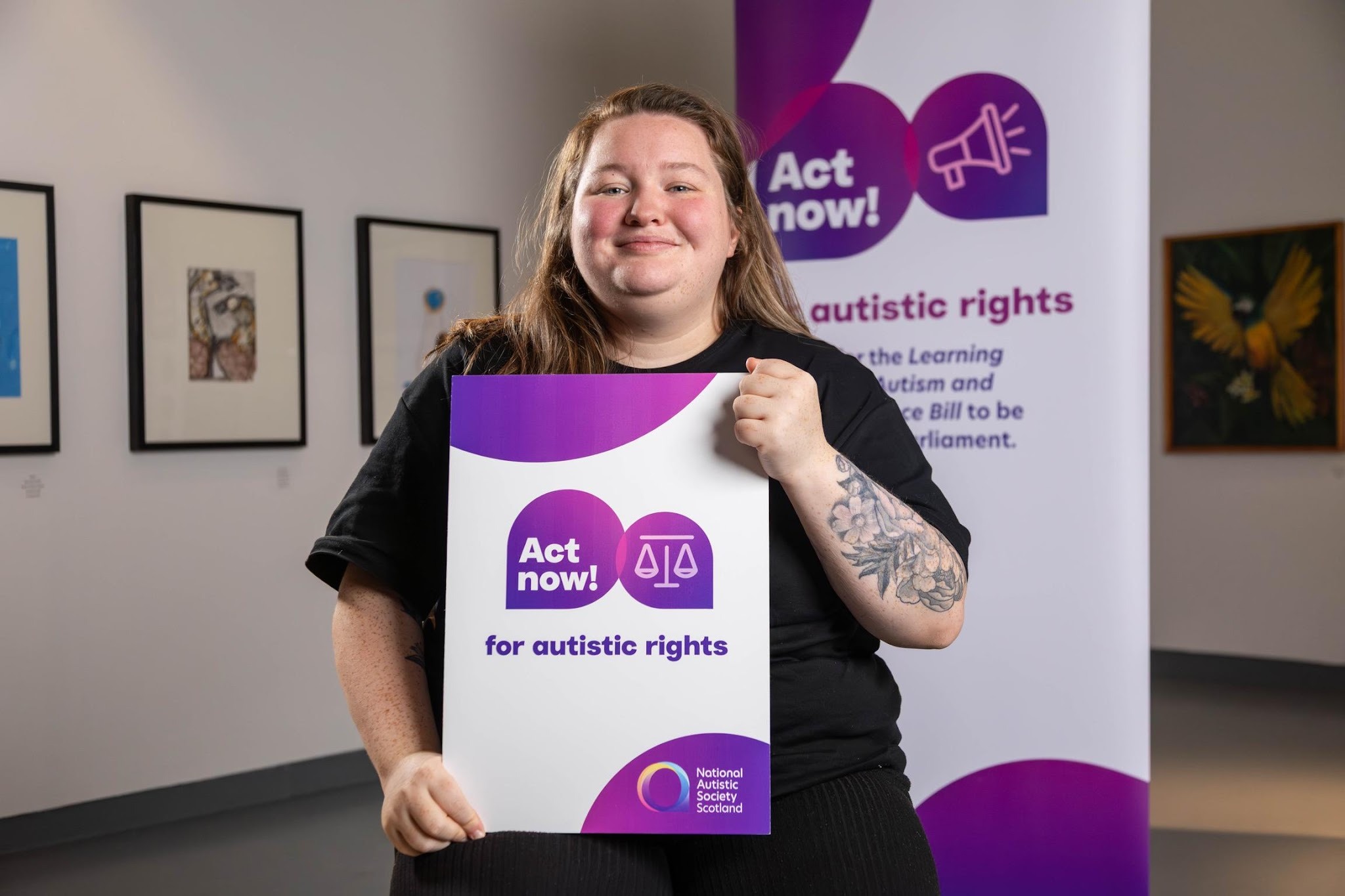
As part of the Act Now for Autistic Rights campaign, our charity has launched a petition urging the First Minister, John Swinney, to include the LDAN Bill in September’s Programme for Government, which will set out the Scottish Government’s key priorities and legislative programme for the coming year.
In the lead up to the recent election in Scotland, more than 5,500 letters were sent by supporters urging party leaders to commit to this legislation. This momentum must now be matched with action. Without a clear commitment from the First Minister, autistic people risk being left behind.
Rob Holland, Director of the National Autistic Society Scotland, said: “Our campaign had a fantastic response during the election period. Thousands of letters were sent urging all parties to commit to the Learning Disabilities, Autism and Neurodivergence (LDAN) Bill, demonstrating a significant level of support for legislation long overdue in helping secure the rights of autistic people and their families.
The importance of the LDAN Bill in tackling the inequalities faced by autistic people and their families cannot be underestimated and this legislation is a vital opportunity to improve outcomes and recognise the rights of some of our most marginalised communities.
“With the election behind us and attention now turning to the first Programme for Government, we need everyone who wants to see urgent change to sign our petition and ensure this vital piece of legislation is introduced as early as possible in the new term.”
Becca, NAS Scotland Campaigner, said: “The LDAN bill is vital for the wellbeing, safety and equality of autistic and neurodivergent people in Scotland.
“Access must be granted, training must be given and voices must be heard to ensure that autistic and neurodivergent people have equal access and opportunity as anybody else.
“The LDAN bill must be included in the Programme for Government to ensure this change happens and lives are improved.
“As an autistic person, it is a struggle to ensure my voice is heard and my opinions are taken into account, so by committing to the inclusion of the LDAN Bill in the Programme for Government, I matter.
“My voice and many others across the country matter.“
You can call on the First Minister to Act Now for Autistic Rights by signing the petition here.
As we mark Volunteers’ Week (1–7 June 2026), I wanted to take this opportunity to celebrate the outstanding volunteers whose dedication and commitment are vital to the work of RNID.
Their time, skills and compassion make a real difference to the 18 million people in the UK who are deaf, have hearing loss or tinnitus.
Through our community activities across the UK, around 600 incredible RNID volunteers take part in a diverse range of activities, helping us make life fully inclusive for people who are deaf or have hearing loss.
Our dedicated volunteers not only provide hearing aid maintenance, information on hearing loss and tinnitus at our RNID Near You drop-in sessions across the country, they also act as ambassadors by giving talks to local groups and organisations, helping to raise awareness of our work.
Over the past year alone, RNID volunteers have given more than 18,000 hours of their time, helping us to reach more than 47,000 people across the UK – which is a truly remarkable achievement, and we sincerely thank them for their invaluable contribution.
This Volunteers’ Week, we’re inviting anyone who wants to make a valuable difference to the lives of people who are deaf, have hearing loss or tinnitus to sign up to volunteer with us by visiting rnid.org.uk/volunteer.
Here at The Royal National Institute of Blind People (RNIB), we’re gearing up for our biggest volunteering opportunities of the year so far.
This June, we’re asking people to take just an hour of their time to help make a vital difference for blind and partially sighted people in their local areas.
Reading and books are absolutely crucial to children with vision impairment and blind and partially sighted adults. Books in accessible formats like audio and large print help to open up a world of information and learning and open doors to the imagination which would otherwise remain hidden.
As RNIB’s Library Services Manager, I am writing to encourage you to take part by visiting your local library between 1-14 June to check what books are available for blind and partially sighted readers.
It only takes a few minutes to ask the library staff and find out whether their library shelves include large print, braille or audiobooks.
We’d then love you to share what you find with us using our quick online form, or by calling our Library Team.
This simple action will help RNIB build a far clearer picture of accessible library services across the UK and support our work to ensure everyone can enjoy reading in a format that works for them.
I would be grateful if readers who would like to take part could complete our quick form online at https://tinyurl.com/7xh99ppz, or if you are unable to do so online, contact our Library Team byy calling 0303 123 9999.
For this opportunity RNIB is working alongside The Big Help Out – a UK-wide event which runs from 5-8 June and sees millions of volunteers turn out to help community causes.
The first two weeks of June also marks Hi-Vis Fortnight – an event organised by charities Share The Vision and RNIB; this celebrates library services for blind and partially sighted people and highlights the importance of books in accessible formats.
By taking just a little time to support us, you will be helping improve access to vital reading resources for blind and partially sighted people in communities right across the country. Thank you!
Today (22nd May) marks the anniversary of the worst rail disaster in British history, the Quintinhsill Rail Disaster, which will be marked at an annual Memorial Service at Rosebank Cemetery in Edinburgh on Saturday.
Taking place on 22nd May, 1915, at the height of the First World War, the event occurred at the Quintinshill signal box near Gretna Green. A train packed with nearly 500 members of the Leith Battalion of the Royal Scots, travelling from Larbert, collided with a local passenger service at Quintinshill.
Straight afterwards, a Glasgow-bound express train smashed into the wreckage at Quintinshill, setting off a devastating fire which engulfed the troop train. In total, around 226 people were killed (215 of whom were soldiers) and a further 246 people were injured.
Some bodies were never recovered, having been wholly consumed by the fire, and when the bodies of the men of the Royal Scots were returned to Leith, they were buried together in a mass grave in Rosebank Cemetery.
As we mark the 111th anniversary of this disaster, it is heartening to see continued recognition of this event, which I suspect few are aware of.