Following warnings that hospitals and GP services are being stretched beyond capacity NHS Lothian is explaining how relatives and carers can help.
Calum Campbell, Chief Executive of NHS Lothian, said that ongoing delays in discharging patients who no longer need clinical care is continuing to intensify pressure across the whole healthcare system but there are ways that people can help.
He said: “Our services have been experiencing unprecedented demand for some time and we are doing everything that we can to increase capacity, provide essential care for patients and relieve pressure on staff.
“As we move into the New Year, we’re asking people to play their part in easing this sustained pressure by helping to care for loved ones at home, managing illnesses properly and reducing the spread of infections, which can result in increased hospital admissions.”
To help reduce waiting times and free up beds for new patients, NHS Lothian has been appealing to relatives and carers of patients who could be discharged to provide interim care for them at home.
Dr Tracey Gillies, Medical Director of NHS Lothian, explains: “Many of our patients no longer require hospital treatment but can’t go home until an appropriate care package is in place or a care home placement becomes available.
“We are urging families of these patients to please consider how they can help look after a loved one at home on a temporary basis. Our teams will be on hand to provide support and discuss their needs and will only allow patients to go home after a robust clinical assessment.”
“People can also help by arranging to collect friends and family who have been discharged as early as possible.”
After much needed time to relax with family and friends over Christmas, getting back into your routine in the new year can be quite the challenge, specifically when it comes to working out. In fact, research shows that one third of Brits admit to doing no exercise at all in December, so it’s vital to start the preparation early.
However, it doesn’t need to be so difficult – experts at Fitness Volt have highlighted five tips to ease yourself back into a workout routine after the festivities.
Set specific times
Scheduling your workout time is a simple yet effective step. Getting back into the right frame of mind after the Christmas buzz is just one of the ways you will have to readjust, and it can certainly take its toll on you. So, without a gym schedule, it’s likely that you will make plenty of excuses to not partake in any exercise. Consider your day-to-day schedule and choose your workout slot based on where you have the most free time – this way, you can mentally prepare yourself as well as avoid any excuses that you are too busy. Plus, a planned exercise slot will ensure that your workload won’t take over, as it’s a given that you will be getting back into a busy work routine, too.
Don’t overexert yourself
While pushing yourself is usually encouraged in fitness, it’s sensible to not push yourself to the extreme, particularly after some time away from exercise. Whether it’s weightlifting or cardio, doing too much exercise can lead to overuse injuries including muscle strains and tendon injuries, thus making you a lot less capable of meeting your fitness goals. After some time off, it’s natural to not be able to lift as heavy or run as far – so it’s crucial to not let it discourage you, as you will soon gain your ability if you stay consistent with your exercise. As well as this, overdoing it can lead to a burnout in the early stages and make you dread a workout as opposed to enjoy it. If you feel yourself giving up, try to commit to five minutes and finish your workout if you don’t feel capable of doing anymore; but with this five-minute rule, it will likely motivate you to do more.
Personalise your workout
Fitness lovers aren’t necessarily all gym-goers. In fact, there’s plenty of ways to workout which don’t involve the gym – and this is key for making it an enjoyable part of your routine again. If you’re a nature enthusiast and wish to do more cardio exercises, go for a run – or even a walk – at your local beach, local park, or even around your neighbourhood. Alternatively, if you’re into strength training but don’t enjoy the gym atmosphere, invest in equipment such as dumbbells and kettlebells to work out from the comfort of your own home.
Partner up
Finding a friend with similar fitness goals is beneficial for many reasons, one being that it acts as motivation after some time away. For the days that you don’t feel like exercising, a fitness partner can motivate you to get ready and get it done – plus, during a workout, your partner can even push you to take it to the next level, such as lifting a slightly heavier weight or increasing the incline setting on the treadmill. Having a partner can also keep you accountable to stay on track of your fitness plan, and recognise any goals that are yet to be met. Better yet, it makes it a time to socialise so that you look forward to it more, not to mention your partner can spot you to make your workout safer.
Set short term goals too
It’s always important to think of the long-term result; doing so allows you to plan your workout and figure out which exercises are best suited to your needs. However, having only a long-term goal can become frustrating when you aren’t seeing progress straight away, and can even result in you to give up completely – which is especially easy to do when you’re trying to get back into your routine. Therefore, it’s vital to set goals over shorter timeframes that are manageable, as well as not just focusing on your appearance. For example, you may wish to become stronger, so a short-term goal for the end of a month could be to increase your squat load by 20 kilograms.
A spokesperson from Fitness Volt has commented: “When it comes to Christmas, the last thing that needs to be on our minds is working out – it’s a time that we wish to be spending with family and friends, and it’s important to make the most of that. However, it can be difficult to find our motivation to get back into it from some time off.
Thankfully, there are simple steps that can increase your ambition again as well as make your workout more enjoyable to ensure that you can stick to your fitness routine in the new year and, as a result, enjoy the Christmas festivities without feeling guilty.”
The research was conducted by Fitness Volt which is a comprehensive online resource dedicated to Strength Sports, from healthy eating to exercise and everything in between.
One in seven (17%) UK adults – estimated as 8.8 million people – plan to go alcohol-free for 31 days in January, with three in 10 looking to cut down generally in 2023
One in four say they have drunk more in 2022 than 2021, while for one in six the cost of living crisis was a reason for the increase in their drinking
Of those planning to go alcohol-free, one in three said they would prefer to take part in Dry January with Alcohol Change UK
Those who take on Dry January using the charity Alcohol Change UK’s free Try Dry app and/or daily motivational emails are twice as likely to have a month totally alcohol-free and experience many more benefits
New research1 published by Alcohol Change UK, the charity behind Dry January®, shows that almost 9 million people in the UK are planning to have a month off drinking in January 2023 – up from an estimated 8 million UK adults last year.
Of those, one in three (33%) said they would prefer to take part in Dry January® with Alcohol Change UK, rather than trying to go alcohol-free in January on their own.
The survey, commissioned by Alcohol Change UK, shows that the cost of living crisis has impacted on drinking habits over the last six months. One in six (16%) people who drink alcohol said this had led to them drinking more to cope with worries around the crisis, and one in seven (14%) have prioritised purchasing alcohol over essential items, such as groceries.
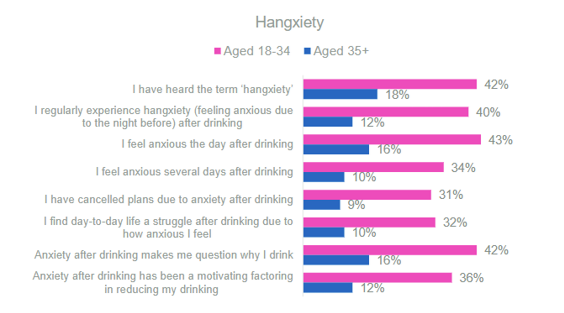
For one in three young adults who drink (36%), anxiety after drinking has also been a factor in them deciding to reduce their alcohol consumption.
Hangxiety – a term used to describe the experience of feeling anxious the day after drinking – appears more prevalent amongst drinkers aged 34 and under, with two in five (40%) experiencing it regularly, compared to a tenth (12%) of those aged 35 and over. For those aged 18-34, over a third (36%) said it was a contributing factor in their decision to reduce their drinking.
Over the course of a typical week, British drinkers, on average, drink 13.7 units of alcohol. However, one in three (30%) drinkers typically drink more than the 14 units a week maximum recommended by the UK’s Chief Medical Officers, with twice as many men doing so compared to women (39% versus 22%).
Three in 10 (30%) drinkers said they would like to reduce how much they drink in 2023 (compared to 25% a year ago). Across all drinkers, half claim to already have taken measures to manage their drinking. The most common being having alcohol-free days (25%), drinking less on occasions where they are drinking alcohol (16%), having alcohol-free weeks or months (15%), or an alcohol-free night out (10%).
January 2023 marks the 10th anniversary since the launch of Dry January. Dry January® offers the perfect opportunity to manage your drinking for the longer term and a chance to get some amazing benefits along the way.
Research shows that those who do Dry January® with Alcohol Change UK double their chances of success, and have more energy, improved concentration, boosted mood, save money and so much more. A month off alcohol also leads to lower blood pressure, cholesterol and diabetes risk, as well as lower cancer-related proteins in the blood.
Over the past 10 years, Dry January® has continued to grow in popularity with record numbers of drinkers signing up to take part both in the UK and elsewhere.
First launched in 2013, Dry January® was the brainchild of Emily Robinson from Alcohol Change UK (formerly known as Alcohol Concern).
Speaking about its launch, Emily Robinson, now CEO of London Sport, said: “The idea of the Dry January® campaign first came to me after I decided to sign up for my first half-marathon.
“I wanted to be fitter and healthier, and I knew that alcohol makes it harder to get up every day and train. So I decided, just for one month, to give up alcohol in January.
“The mental and physical results were amazing. I slept better, had more energy, lost weight, and saved money.
“I also found that friends and colleagues were completely fascinated by my experiment, and more and more people wanted to speak to me about it. So, when I joined Alcohol Change UK (formerly Alcohol Concern) in 2012, I shared the idea with colleagues asking everyone to join in with taking a month off booze in January.
“Ten years on, it’s wonderful to see how Dry January® has become the huge phenomenon it is today. I’m incredibly proud of the campaign and would encourage anyone who’s interested in feeling happier and healthier to give it a try.”
Dry January® officially launched in January 2013. For that first year, 4,000 people signed up to take part. Since then, Dry January® has grown in popularity with over 130,000 people signing up to take part with Alcohol Change UK in 2022.
Evidence shows that Dry January® is an effective and lasting way to cut down. Research by the University of Sussex2 published in 2020 found that those signing up to take part in Dry January® using Alcohol Change UK’s free Try Dry app and/or coaching emails are twice as likely to have a completely alcohol-free month, compared to those who try to avoid alcohol on their own in January, and have significantly improved wellbeing and healthier drinking six months later.
Ailar Hashemzadeh, Director of Research and Public Affairs at Alcohol Change UK, said: “Over the past few years, things have been incredibly tough for so many people and the cost of living crisis is making things even tougher. This has led to more and more of us finding our drinking creeping up, particularly for those of us who were drinking more heavily to start with.
“Since its launch 10 years ago, Dry January® has provided a brilliant opportunity for hundreds of thousands of people to take a break from drinking and have a total reset.
“It helps you break habits you’ve fallen into and make long-term changes for the better. It can help to relieve anxiety and helps you remember that you don’t need alcohol to have fun, relax, celebrate, unwind or anything else. It puts you back in control of your drinking.
“If you’d like to reset your relationship with alcohol, give Dry January® a try by downloading the free Try Dry® app or sign up at dryjanuary.org.uk. It could be the spark you need for a happier and healthier 2023.”
Those taking part in Dry January® get access to all of the free tools and resources from Alcohol Change UK, from its Try Dry app to its daily motivational emails.
We’d encourage anyone who’s interested in resetting their relationship with alcohol to download the free Try Dry® app. You can use it year-round to check your units, calories and money saved, and earn badges as you go.
Alcohol Change UK is proud to be partnering with Lyre’s, Mocktails and Lucky Saint for Dry January 2023.
How to take part in Dry January®
Download the free Try Dry® app via the App Store or Google Play. Via Try Dry® you will be able to receive optional daily coaching emails. Alternatively, you can sign up for just the email coaching programme at dryjanuary.org.uk.
Try Dry® allows people to track their units, calories and money saved not drinking, plus set personalised goals and earn badges year-round. People who take part in Dry January®, whether online or via Try Dry®, are twice as likely to spend the whole the month alcohol-free, despite being heavier drinkers to start with (de Visser and Nicholls, 2020).
“Housing concerns make up over a quarter of my casework – the Scottish Government urgently needs to start prioritising housing for Scotland”
Over the past year, housing issues have made up a significant amount of my casework – currently, approximately 25% of casework is concerned with housing issues (writes Labour Lothian list MSP FOYSUL CHOUDHURY).
Most housing issues that constituents are writing to me about relate to the lack of suitable council accommodation, with many having to live in temporary accommodation.
Recently, a coroner reported that the tragic death of two-year-old Awaab Ishak was a direct result of the black mould in the flat he lived in and constituents have, understandably, been concerned about black mould in their properties.
The Tory Government has inflicted chaos on the country this year, with a staggering display of financial mismanagement. However, funding for local authorities in Scotland is set by the Scottish government, and it is SNP-inflicted austerity that has left Scotland’s local services under threat.
There has been a cut of more than a quarter to the house building budget. This is a disgraceful dereliction of the duty of this Government to solve our ongoing housing crisis and will lead to less homes being built for those families stuck in temporary accommodation, people sleeping on the streets, or languishing on social housing waiting lists for year after year.
Rapid rehousing transition plans and homelessness prevention are flat, meaning that there will be no more support available for local authorities to deal with the continuing crisis of homelessness, made worse by the supply of new homes being cut off.
NHS waiting times, health issues (including delayed discharge), continue to be a major problem in Lothian, with approximately 11% of my casework being related to these issues.
In Scotland, the length of time that people are having to wait for hospital procedures, outpatient appointments and diagnostic tests has shot up to 776,341 – equivalent to 1 in 7 Scots. Figures have revealed that at the end of September 2022, 2,114 people referred for an outpatient appointment and 7,612 patients waiting for a day case, or inpatient procedure had already been waiting for over two years.
These shocking figures have been reflected by the high number of constituents who have contacted me about the length of time that they are having to wait for appointments, hospital procedures, or the length of time they have had to wait in A&E.
For example, some in Lothian are being told that they may have to wait approximately 70 weeks for some eye laser treatments and over 110 weeks for some exploratory gynaecological operations.
The stress and anxiety caused by such long waits can lead to other mental and physical problems or exacerbate conditions that are already present. Constituents have also contacted me about delayed discharge from hospital due to the lack of social care available, or places in care homes.
Despite the SNP promises to end delayed discharge back in 2015, this practice has soared and in October 2022, an average of 1,898 bed days were lost every day – the worst figure on record.
I will continue to press the Scottish Government on these and other important issues, like the cost of living crisis, and will continue to make representations on behalf of my Lothian constituents as we head into the new year.
The EIS is calling upon the Scottish Government to reverse its decision to delay roll-out of free school meals to all children in Primaries 6 and 7.
The commitment was originally due to be delivered by last August, but a previous decision by the Scottish Government delayed the roll-out. This year’s Scottish Budget, published recently, revealed that the universal roll-out of free school meals for P6 and P7 will now be delayed by a further two years, until 2024.
Commenting, EIS General Secretary Andrea Bradley said, “Delaying the roll-out of free school meals to all primary school children was a shameful decision, which runs contrary to the Scottish Government’s stated commitment to tackling child poverty.
“This is now the second time that the roll-out of this hugely important policy has been delayed, with serious consequences for thousands of children and families across Scotland. It is also extremely disappointing how this change in policy came to light – not announced in Parliament, but obscured within the detail of the budget document itself.
“In a country where more than 1 child in 4 lives in poverty, and with the cost-of-living crisis pushing ever more families into financial difficulty, it is more important than ever that universal free school meals should be a priority.”
Ms Bradley added, “Although a watered-down, means-tested policy is being implemented for P6 and P7, this will miss many young people who will just fail to qualify for a free meal, placing great strain on families already struggling with the soaring cost of living.
“Means-testing of entitlement also does nothing to reduce the stigma families and young people often feel in claiming a free meal, which leads to many young people declining to take a free meal in order to avoid unwanted scrutiny from others or being isolated from friends if they do go to the school canteen for their meal when their friends not entitled to free meals go elsewhere to eat.
“Universal free meals remain the best way to ensure that all young people have access to a healthy and nutritious meal at school, without any stigma being attached. The Scottish Government claims that practical barriers to universal roll-out are the problem. The EIS view is that young people should not be hungry, stigmatised or left out whilst adults dither over dining chairs, tables and cutlery.
“Direct cash payments to cover the cost of food at school could be made as was done during the pandemic when schools were closed.”
The EIS has long called for the roll-out of universal free school meals for all young people. In addition to completing the roll-out to all primary pupils, the EIS believes that all secondary school pupils should also receive free school meals.
General Secretary Andrea Bradley is a long-standing member of the STUC Women’s Committee, which has also been active in the campaign for free school meals to combat the impact of poverty.
‘Sticking our heads in the sand – or using the NHS as a political football to exchange snappy soundbites – will not cut it anymore‘
The number one “quick fix” priority for Scotland’s NHS as we move into 2023 must be the retention of our invaluable healthcare professionals, the chair of BMA Scotland said today (Wednesday, Dec 28th).
Dr Iain Kennedy said any plan for further recruitment, investment in the systems and aspirations of improvement will “fall flat on its face” unless there is a laser like focus on keeping the experienced staff our NHS already has.
Dr Kennedy, who was speaking as he delivered his annual festive message for doctors, added that the need for an open discussion on the NHS is now greater than ever.
His renewed call for a national conversation on the future of the health service comes as BMA Scotland shares more than 100 testimonies from doctors about what working in the NHS is like at the moment and their concerns for what the future holds.
Comments included:
“There have been a number of critical incidents in the last six months involving unsafe staffing levels. The acuity of the workload has increased. Patients are generally getting sicker and more complex, but we have less resources or time to care for them. It’s hard to keep them safe. I wouldn’t want to be an inpatient at the moment, and hope everyone in my family remains well for the foreseeable.”
“It feels unsafe – because it is. It’s not safe for patients, and it’s not safe for staff either. I have gone from being a passionate committed GP to being a shadow of my former working self. I want to leave the profession and I am devastated by this.”
“Things are very bad. Chemotherapy can only be delivered four weeks after seeing a consultant because of a chemotherapy nurse shortage. Radiotherapy preparation scans can only be done two weeks after seeing a consultant because of lack of radiotherapy staff/physicists – and it’s another two or more weeks before radiotherapy can actually be delivered.”
Dr Kennedy said: “The NHS is haemorrhaging crucial staff – staff who we urgently need now more than ever before – and the government must step up to stop it. They can talk as much as they want about recruitment of staff, of investment in the system or of plans for improvement, but every single one will fall flat on its face unless there is a laser like focus on keeping the staff we have.
“That is why the retention of healthcare professionals – keeping them in the service – needs to be the number one priority in terms of the quick fixes to help us just make it through this winter with the NHS in Scotland somehow intact.
“I desperately want to be optimistic and forward looking, to set out some hope for the future – for the medical profession that I am so proud to be a part of, and the Scottish health service that I am equally proud to work in.
“But it’s not easy to find that indication of a brighter future – especially after reading the, frankly, harrowing comments from some of my NHS colleagues about what they are experiencing day in, day out. No one working in the health service would give me any credibility if I gave an upbeat description of the way our NHS will, or can, get better and how the working conditions of those caring for the people of Scotland will miraculously improve.
“All the statistics tell us that it’s a desperate state of affairs. Things are as bad, or worse, than they have ever been. Winter is a meaningless term now – this entire year has been winter.
“But looking beyond the statistics, looking at the people behind the statistics, the picture being painted is even more grim and concerning. The experiences my colleagues have shared speak louder than anything I could say, and anything any official stats could imply.
“We face crises across workload, workforce, working conditions, pay and pensions – all of these are hitting efforts to retain doctors, which we are already short of across both primary and secondary care. Hospitals have too many vacancies – indeed the current vacancy rate for consultants alone is 14.32% – and GP practices are falling over, with the Scottish Government not even close to being on target to deliver their promised 800 additional GPs by 2027.
“In the face of everything else pay and pensions are – incredibly – fairly quick fix issues. The government can make a decision to improve pay for NHS workers. And the UK Government can finally once and for all sort out the pension taxation issues that penalise senior doctors across primary and secondary care and force them to cut hours or face massive and unexpected bills.
“These two things will make a difference in staff retention – junior doctors will feel more valued and be more likely to stay in the NHS instead of looking to move abroad where they will be paid more and have a better work life balance.
“Senior doctors will be less likely to reduce their hours and more likely to work waiting list initiatives if they know they won’t receive a huge tax bill for doing so. We are beyond crisis point now – urgent action is needed to save our NHS and that simply must focus on investing in the workforce.
“Looking beyond that, of course we need to finally get a proper long-term workforce plan in place. But even more fundamentally we need, as a whole society, to grasp the nettle, face up to hard truths that have been brushed under the carpet for too long, and have a proper grown up, depoliticised national conversation about the future of the NHS in Scotland.
“Sticking our heads in the sand – or using the NHS as a political football to exchange snappy soundbites – will not cut it anymore.
“It’s clear we need to reflect on what we ask of our NHS and the levels of funding we, as a country, are prepared to provide to meet those asks, and to ensure the health service stays true to its founding principles and remains free at the point of delivery. The current approach of pushing insufficient resources harder and harder, then blaming staff when standards fall has failed and is failing patients every single day. I know doctors across Scotland are suffering moral injury as a result.
“Let’s stop putting healthcare workers in the impossible and insidious position of having to constantly be apologising and being the bearer of bad news.
“We need politicians on all sides to be brave and act – by bringing us together and finally actually properly talking about a plan for a future NHS we can all confidently get behind. And a better NHS will be better not just for Scotland’s doctors, but for the many people who rely on it for care.”
A kidney cancer drug has been accepted for use within NHS Scotland and across the UK thanks to an international study, with NHS Lothian and Edinburgh University leading the UK part of the trial.
The treatment, pembrolizumab, is an antibody delivered intravenously as an immunotherapy to reduce the chances of a relapse after kidney cancer surgery.
Thanks to the research, the Scottish Medicines Consortium (SMC) has advised that the drug will now be made available to treat eligible adults with renal cell carcinoma (RCC).
In Scotland, about 1000 patients are diagnosed with RCC each year, and the incidence of the disease has been increasing over time.
Surgery carries the hope of cure if disease is caught early, but about a quarter to half of patients who undergo a nephrectomy (whole or partial kidney removal) have disease recurrence at different sites within three to five years of this.
RCC is generally resistant to chemotherapy and radiation therapy so, until now, there have been no additional treatments that reduce this risk of relapse.
The study showed that, for patients with a raised risk of relapse, pembrolizumab reduced the risk of kidney cancer coming back by a about a third and there are early indications that this is leading to patients living longer.
This has led to the SMC recommending the drug for NHS use and the first non-trial patients are now receiving this new treatment in Edinburgh.
Dr Stefan Symeonides, Senior Lecturer at the University of Edinburgh and Oncology Consultant at the Edinburgh Cancer Centre, said: “Research continues to explore which people might benefit most from this treatment, as pembrolizumab is not always effective or suitable for every patient.
“However, this represents a significant breakthrough in the treatment of kidney cancer as confirmed by UK approvals from the SMC in Scotland and NICE in England and Wales, as well as its incorporation in treatment guidelines from the European Society for Medical Oncology (ESMO).
“Approval of pembrolizumab is welcome news to many RCC patients, who otherwise had no treatment options available to them to prevent or reduce the risk of relapse of the cancer following nephrectomy.”