Chickenpox is a common and usually mild illness, especially in children
It causes an itchy rash of spots that turn into blisters before crusting over. You or your child may also feel unwell, have a fever or aches before the rash appears.
Most children get better at home without seeing a GP, but it’s important to keep them off nursery or school until all spots have crusted over to help stop the spread.
There is no treatment for chickenpox. But, you can get remedies from your pharmacy that can help symptoms. These include:
– paracetamol to help bring down a fever
– calamine lotion and cooling gels to ease itching.
In most children, the blisters crust up and fall off naturally within 1 to 2 weeks.
Find out more about symptoms, what to expect and when to get advice at #NHSinform
People should follow NHS inform guidance before calling 111 or 999
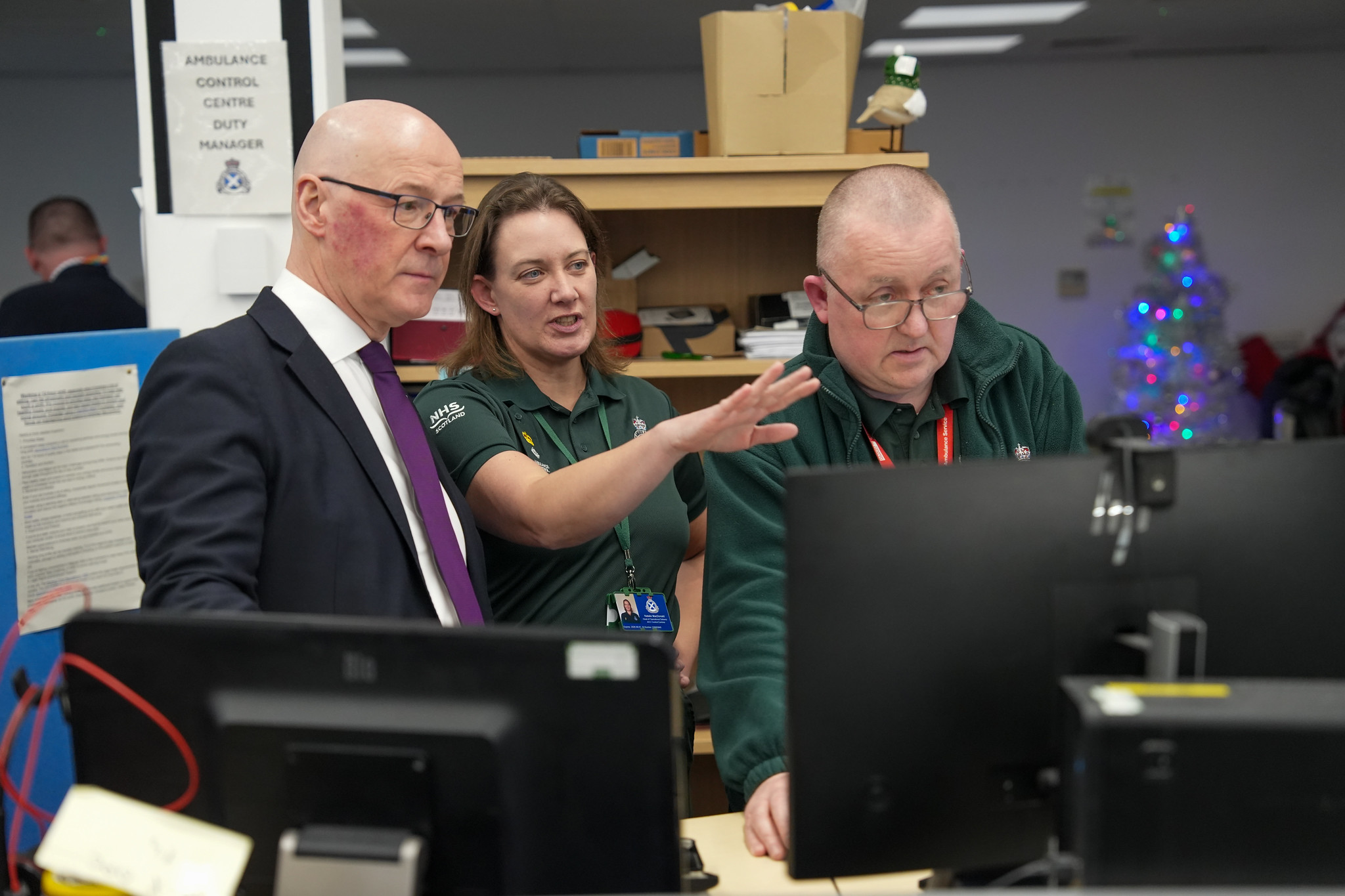
First Minister John Swinney has urged people to ensure they get the Right Care at the Right Place by checking the NHS inform website in the first instance if they become unwell.
During a visit to NHS 24 and the Scottish Ambulance Service (SAS), the First Minister thanked staff for their commitment to keeping the public as safe and informed as possible ahead of the busy festive period.
The guidance in the NHS Winter Preparedness plan sets out that anyone feeling unwell should:
check the NHS inform website for guidance and advice on symptoms. Around a quarter of 111 calls result in self-care advice, checking the website instead of calling ensures people can safely treat their symptoms without calling for help
call 111 if anyone thinks they need A&E but it is not a life-threatening emergency, support for mental health distress, or advice when the GP, pharmacy, or dental practice is closed
only attend A&E for genuine emergencies that cannot wait
call 999 immediately for life-threatening emergencies
Get the right care at the right place.
First Minister @JohnSwinney has urged people to check the NHS inform website in the first instance if they become unwell.
Follow NHS inform guidance before calling 111 or 999.
First Minister John Swinney said: “We know that demand for the NHS increases quite substantially over the festive period and there are a number of steps you can take to help yourself if you become unwell.
“In the first instance, check the symptom checkers on the NHS inform website – it can help you decide what to do next. If you still require medical help, NHS 24’s 111 service is there for you and dedicated professionals can provide advice.
“A&E is expected to be exceptionally busy in the coming weeks so only attend if you have a genuine emergency that requires urgent medical treatment.
“Our dedicated NHS staff will continue working throughout the festive period to provide support and care for the people of Scotland. I’m extremely grateful for their hard work and my thanks go out to all of you.”
Scottish Ambulance Service Chief Executive Michael Dickson OBE said: “Winter is always an exceptionally busy period and as demand on our service increases, we’re asking the public to use our service responsibly by only phoning 999 in a life-threatening emergency.
“Currently over 50% of our calls are managed without having to take patients to A&E. However, for those who do need hospital treatment, system-wide pressures, including lengthy handover times in key areas, are having a direct impact on our ability to get crews back on the road to reach other patients.
“Our fantastic staff are working extremely hard and we continue to prioritise those patients who are most critically ill. For those patients who are not critically ill, they may have to wait longer for an ambulance than usual and we thank the public for their patience; we will try to get to them as quickly as we can.”
NHS 24 Executive Medical Director Dr Ron Cook said: “With public holidays limiting access to GP and pharmacy services for four consecutive days across both festive weekends, NHS 24 is forecasting a significant rise in demand for our services as other primary care services take a well‑earned break.
“We plan carefully to ensure we have the right staff in place so people can access the right care in the right place. Our teams bring a wide range of skills, and every practitioner and clinician will play a vital role in supporting patients and each other to stay well during this busy period.
“We realise it’s not possible to cover every health eventuality, but we encourage everyone to plan ahead if possible. Make sure you have your prescription medicines, have over‑the‑counter remedies available at home, and check in on vulnerable friends or family. By preparing now, you can protect your festive time and avoid unnecessary interruptions.”
NHSGGC encourages people to wear masks when visiting hospitals
As is the case throughout the UK, hospitals across NHS Greater Glasgow and Clyde are currently seeing rising numbers of patients with symptoms of flu.
While all our staff are doing all they can to address these challenges, we are asking visitors to help us reduce the spread of the virus and to minimise the risk to vulnerable patients.
In response to advice from our Infection Prevention and Control Teams, and in line with other Health Boards across Scotland, we are encouraging all visitors to our hospitals, and all clinical staff, to wear Fluid Resistant Surgical Masks – similar to those used during the COVID pandemic – at all times while they are on our premises.
We will keep this situation under review and we will advise of any changes as soon as we can.
In addition, we are asking people who have mild to moderate flu-like symptoms not to attend A&E or visit friends and family in hospital – and to follow a few simple suggestions:
Think before you go out. Use our online self-help guides to manage symptoms safely at home. Go to NHS Inform or download the NHS 24 app.
Seek local support. If you need medical advice, call your GP surgery. Alternatively, you can drop in to your community pharmacist without an appointment. They can review your symptoms and direct you to further care if necessary.
Call 111. If you think your condition is urgent, or if it is out of hours, NHS 24 is available 24 hours a day and will be able to give you the help you need, or arrange an appointment if required. It’s better to wait in the comfort of your own home and reduce the risk of spreading flu.
Professor Angela Wallace, Executive Director of Nursing at NHSGGC, said: “Flu season is here, and we want to ensure that you, your loved ones, and those who are the most vulnerable stay protected.
“By wearing a mask when you visit a hospital, or by following our simple suggestions if you are experiencing symptoms, you are doing your bit to help reduce the spread of the virus.”
However, we are also reminding people that the best thing they can do to maximise protection from flu is to get the vaccine if they are eligible.
If you are eligible, you will receive an invitation to get your vaccine, and we would encourage people to take up their appointment.
Alternatively, or if you have missed your appointment, many community pharmacies are administering the vaccine if you check availability in advance, while mobile vaccination clinics are operation throughout NHSGGC, where eligible patients can drop in without an appointment.
Advice on how to get the right healthcare in the right setting this winter is the focus of an annual campaign launching today (Monday).
This year’s Right Care Right Place Campaign will run across TV, radio, press and digital platforms. It aims to ensure people can get the right care, while also reducing pressures on frontline health services.
As the weather turns colder, Scotland’s NHS and social care services get busier and the awareness campaign helps the public decide whether they should contact their GP or pharmacy, call NHS 24 on 111 or use self-help guides on the NHS Inform website. It reminds everyone that hospital emergency departments should only be visited for critical emergencies.
Health Secretary Neil Gray said: “Pressure on the healthcare system increases in winter months, and the Right Care Right Place campaign helps everyone know where they can go for advice or care for any health concerns during this busy period.
“Of course, people can also help by making sure they receive their Respiratory Syncytial Virus (RSV), Covid-19 and flu vaccinations if they’re eligible. This is even more important this year, as early evidence suggests it could be a particularly challenging flu season.
“We are taking a range of measures to ensure our health service is as resilient as possible over the next few months and that our committed health and social care staff are supported.
“We know that staff members work tirelessly to provide excellent care to all those who need it and as always, I’d like to thank them for their continued dedication.”
Glasgow woman’s mission to tell others: ‘Never miss your breast screening appointment
A retired member of NHS Greater Glasgow and Clyde staff, Liz Thomas (71) from Pollock, has been photographed as part of an exhibition to celebrate the resilience, beauty, and strength of women affected by breast cancer.
Liz and three other women chosen for the photoshoot have recently had or are undergoing treatment for breast cancer. They were chosen to be part of Pink Ribbon Foundation’s BOLD Scotland Exhibition.
This extraordinary project, captured by award-winning photographer Caroline Sikkenk, is currently displayed in Glasgow’s Princes Square by M as part of Breast Cancer Awareness Month.
In addition to taking part in this project, Liz is also using this month to share an important message. She said: “Go for your breast screening when you’re invited.”
In November 2024, Liz attended her routine breast screening appointment at NHSGGC’s Breast Clinic in Nelson Mandela Place. Within a week, she was recalled and asked to bring someone with her.
“I wasn’t expecting good news,” Liz said. “They told me two lumps had been found. I had a biopsy and scans there and then. It turned out I had two Stage 3 tumours.”
Within four weeks, Liz underwent a mastectomy at Gartnavel Hospital, followed by chemotherapy and radiotherapy in early 2025.
“The treatment was tough, physically and mentally, but I met wonderful people along the way. The staff were incredible. We even managed to laugh during chemo. One time, the nurses joked they had to separate me from the other ladies because we were giggling so much. Laughter got us through.”
Liz credits her daughter Jourdana, also an NHSGGC staff member, as her rock throughout the journey. “I have a good life and a great life ahead. Who knows if I’d have that if I hadn’t gone for screening?”
Now, Liz is on a mission. She said: “I tell everyone, my daughter, my friends, even the girl who does my nails, never miss your breast screening appointment. And if you’re over 70, you won’t automatically get a letter. You need to contact the breast screening centre yourself.”
Women aged between 50 and 70 will be invited for breast screening every three years. Those eligible, will be invited by NHSGGC via letter to the address registered with their GP, and people are advised to ensure this is up to date.
Anyone over the age of 70, can make an appointment for breast screening directly via the breast screening service.
The BOLD Scotland exhibition is on display at Princes Square by M. Entry is free, giving everyone the opportunity to witness this inspiring and empowering project.
Your eyes matter. Whether it’s a minor irritation or a serious condition, knowing where to turn for trusted advice is key.
NHS inform offers clear, reliable guidance on a wide range of eye conditions—from conjunctivitis and diabetic retinopathy to deafblindness and eye cancer.
If you or someone you know is waiting for treatment or support, RNIB Scotland ’s Waiting Well service is also available to provide advice.
Check out the links in our comments and explore symptoms, treatments, and when to seek help!
The Scottish Government, in partnership with COSLA, recently launched a new campaign to challenge the stigma surrounding dementia. The drive encourages people to continue doing the things they always did with friends or relatives diagnosed with dementia, highlighting that these everyday activities can help them stay well for longer.
Staying connected to communities can also play a key role in helping people with dementia remain socially active and engaged. Across Scotland, there are numerous services, groups and activities designed to provide enjoyment and support.
For people in Edinburgh and the Lothians, opportunities and events include:
Deepness Dementia-Friendly Arts Festival in Edinburgh – taking place from Monday 11 November to Thursday 14 November, the Dementia Arts Festival, will showcase the best of music, theatre, poetry and film, all produced by those diagnosed with dementia. For more information, visit: deepnessdementiaarts.co.uk/
Museum Socials at the National Museum of Scotland – each month a different museum theme is explored through interactive activities, including curator talks and creative crafts. For more information, visit: nms.ac.uk/events/museum-socials
The Royal Botanic Garden Edinburgh, Dementia Friendly Garden Social – monthly meetings in the purpose-built Garden of Tranquility with refreshments and activities provided. It’s an opportunity for guests to find out about how the garden works. For more information, visit: rbge.org.uk/whats-on/dementia-friendly-garden-social/57082
Dementia-friendly East Lothian –a community organisation which supports social groups and activities for people living with dementia including care-partners, families and friends. They hold regular workshops, activities and trainings. For more information, visit dfel.org.uk/
Singing For Health, Whitburn Bowling Club, West Lothian – fortnightly informal sing-a-long with refreshments as part of a partnership between Alzheimer Scotland and the Ageing Well project. For more information, visit: roseberycentre.org.uk/
The Heart Dementia Meeting Centre, Newhaven – a weekly social club on a Wednesday at 10.30am, for people living with mild to moderate dementia including those newly diagnosed or curious about cognitive decline. An opportunity to get creative whilst speaking to like-minded people. For more information, visit: heartofnewhaven.co.uk/The-Heart-Dementia-Meeting-Centre.php
This is just a selection of the creative opportunities and activities available. For more ideas of things to do or places to visit, search dementia friendly at aliss.org (A Local Information System for Scotland).
Dementia affects an estimated 90,000 people in Scotland and 3,000 of whom are under the age of 65. Created in collaboration with a National Dementia Lived Experience Panel, the Rethink Dementia campaign emphasises the importance of maintaining relationships with those living with dementia.
Research has shown that making this effort to stay in contact with individuals and include them in social activities can help alleviate symptoms of depression, agitation, sleep disturbance, anxiety and apathy that can often come with dementia.
Dr Tom Russ, an NHS Consultant Old Age Psychiatrist and Researcher at The University of Edinburgh, said,“Over the past 20 years, I’ve engaged with hundreds of people who have been diagnosed with dementia, and it’s often the case that those individuals will withdraw from social activities, which can negatively impact their overall wellbeing.
“If you know of a friend or relative who has been diagnosed with dementia, it’s really important to stay in touch and help your loved one to maintain their usual social activities, or even try something new together.
“The Rethink Dementia campaign is sharing such a crucial message around the importance of social connection and I hope it provides positive action steps for family and friends of those living with dementia.”
For more information around supporting someone with a dementia diagnosis, please visit NHSInform.scot/RethinkDementia.




 National Eye Health Week | 22–28 September
 Check out the links in our comments and explore symptoms, treatments, and when to seek help!

 Rest and get plenty of sleep
 Take paracetamol alongside flu remedies that also contain paracetamol


