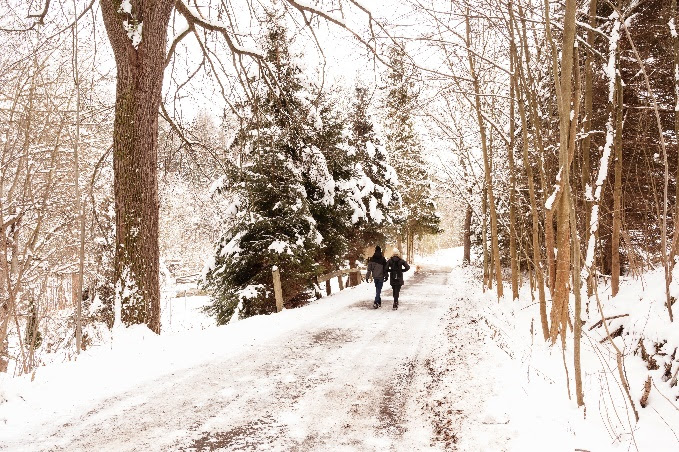
Pandemic paved way for more walking and connecting to nature

More people recognise the wellbeing benefits of walking are encouraged to spend more time outdoors due to their experiences during the Covid-19 pandemic according to new findings.

The research was commissioned by natural heritage body NatureScot in the aftermath of three waves of the Coronavirus crisis to better understand outdoor visit behaviour and how people engaged with nature.

The survey looked at the behaviour of more than 3,000 people who revealed details of how they spent time outdoors as coronavirus restrictions relaxed.

The survey found that people will encourage their children to spend more time outdoors, make more use of local green space, and try to walk more, have been welcomed by Scottish walking charity Paths for All who, along with other partners, supported these 3 studies.

Evidence gathered from respondents following the 2021 third wave found that 68% of people agreed they will encourage their children to spend more time outdoors, 62% will minimise non-essential travel and the same figure will make more use of local greenspace.

The survey also found almost two-thirds (64%) of people will try to walk, wheel or cycle more in favour of using a car, more than half would like to do more to look after local nature and wildlife, while more than one-third (36%) would be willing to volunteer time to help nature.

Kevin Lafferty, chief executive of Paths for All – which champions everyday walking to create happier and healthier lives – welcomed the survey and believes the impact of the pandemic has reset people’s views on how they can interact with nature and enjoy more active lifestyles.

He said: “The negative impact of the wholly necessary Covid-related restrictions on our movements and ability to get out and about cannot be underestimated and it caused great stress and anxiety for all age groups and social classes living throughout Scotland.

“But this survey is hugely encouraging and offers some very positive messages on how people are more willing to incorporate walking and getting closer to nature in their post-lockdown lives.

NatureScot has delivered an impressively comprehensive insight into what is motivating people to embrace nature more, be that on their urban doorsteps or by taking advantage of our vast array of rural landscapes.”

Seventy three percent of those questioned said spending time outdoors after Wave 3 helped them to destress, relax and unwind, while 66% stated that it made them feel energised and revitalised – an increase on both 2020 waves.

Almost three in five (58%) agreed that since the pandemic began nature had become more important to their health and wellbeing, up from 49% in the first survey – but their enjoyment was curtailed by a number of issues.

Litter was a bugbear on visits to the outdoors for almost half of respondents (48%), while nearly one-third cited a lack of public toilet facilities as a factor, followed by pavement cyclists (26%) and cars parking on pavements (25%).

Frequency of participation in outdoor visits remained high during all three waves – between 71-80% – and the survey revealed a marked decrease in the number of adults who took no outdoor visits – down from 19% in May 2020 to only 10% in the final period last September.

More than half of those surveyed said their outdoor activity after Wave 3 consisted of walking under two miles, 43% walked between two and eight miles, a healthy 15% said they walked more than eight miles, with a further 11% taking part in hillwalking.

Kevin Lafferty added: “Everyday walking is key to improving the health and wellbeing of the Scottish people so it is heartening to see such high numbers of people shaking off the restrictions of lockdown and getting out into the fresh air to walk and enjoy the abundance of nature all around us.

“The research indicates a marked drop in the number of people who latterly were not managing to get outdoors at all – probably due to vaccination uptake and rising confidence that Covid-19 is more controlled – and we hope those people have continued to enjoy all the benefits of the great outdoors.”

More than one-third (37%) of respondents reported taking more visits to the outdoors after Wave 3 than pre-pandemic. The key reasons given for the increase were a “pent up demand” following the easing of lockdown restrictions, increased levels of appreciation of the outdoors acquired during the pandemic, seeking to get fit or exercise, and having increased amounts of free time.

However, those who spent less time outdoors during this period, put it down to continued adherence to rules, general health or old age issues and/or continued nervousness about going outside due to the risks of infection or transmission.

Kevin added: “A third of us in Scotland are not active enough and walking is by far the best way for many of us to be more active.

“A brisk 30-minute walk five days a week can prevent illness, improve physical and mental health and improve our connections with our community and the environment.

“This report is important in understanding how Covid-19 impacted the daily habit of taking a walk that many of us take for granted, and hopefully one of the benefits to come out of this global health crisis is that more of us now have a stronger connection to the outdoors.”

Green spaces improve wellbeing – welcome to the East Cairngorms

In celebration of spring, the Ballater Business Association (BBA) and Braemar Tourism Group (BTG) have launched the East Cairngorms Wildlife and Nature Trail as part of their Imagine More campaign to encourage visitors to immerse themselves in nature and nurture their wellbeing.

A recent study by the Mental Health Foundation revealed that nearly half of people in the UK found a marked improvement in their wellbeing during lockdown when visiting green spaces, such as national parks.

The BBA and BTG aim to encourage more people to undertake memorable outdoor experiences that positively impact their lives by visiting the East Cairngorms’ abundance of wildlife and nature.

Dan and Rachel Brown, both avid naturalists and professional ecologists, run Wild Discovery based in Crathie which provides custom-made experiences which focus on helping visitors engage with nature, wildlife and conservation projects.

They explained: “The ancient Caledonian forest and woodlands which sprawl the East Cairngorms boasts unique enigmatic wildlife including pine martens, red squirrels, golden and white-tailed eagles, capercaillie, and red deer.

“Our guests always feel a sense of connection and leave inspired and reinvigorated after meeting with local projects and people who are doing wonderful work to protect the area.”

Annie Armstrong runs Wild Braemar, bespoke experiences that allow visitors to explore, discover and connect with Scottish wildlife, culture and the local history.

She said: “Our Scottish landscape is emersed with wildlife and nature, and what we often take for granted is new and interesting to those who join our tours.

“The smallest elements of nature such as fungi, flora and trees all have a story to tell. One of my recent tours included a family who spent hours just identify birds in the woodland.

“We can all be inspired by nature. Wild learning brings with it new thinking and a chance to step away from our busy lives, connecting to the sounds, sights and smells that surround us.”

Annie’s tours include wild walking and swimming, and are designed to suit any level of fitness. The majority last two hours or less, allowing visitors to make the most of their time in Braemar and Ballater.

Annie said: “Lots of people want to try wild swimming but are nervous and want support to enjoy a truly immersive experience. I have always enjoyed the Braemar rivers and wanted to share my knowledge with others.

“The moment you enter the water it is like a “reset” with your body, all you can think about is the water and nature around you.”

The East Cairngorms Wildlife and Nature Trail is part of a series of five which aim to inspire visitors to explore the East Cairngorms as a year-round destination for outdoor activity. Each trail includes a website, promotional video, digital trail map, and trip planner.

For more information on the East Cairngorms Wildlife and Nature Trail, head to: https://www.visitballater.com/east-cairngorms-the-jacobite-whisky-trail/

Dobbies launches Helping Your Community Grow initiative

Helping Your Community Grow initiative in Edinburgh

Dobbies, the UK’s leading garden centre, is helping green spaces and indoor areas across Edinburgh and the Lothians blossom this spring with the return of its much-loved Helping Your Community Grow initiative, with an enhanced sustainability focus for 2022.

Launched in 2010, the initiative encourages people across Edinburgh to take care of their green spaces. For 2022, Dobbies is seeking local groups striving to help their community space flourish in a sustainable way.

Both the Dobbies and little dobbies stores are offering the opportunity to get involved. Whether it’s a community allotment project to get kids eating more fruit and vegetables, a wildflower garden with pollinating flowers for bees and insects or a calming outdoor space for boosting mental health, Dobbies wants to help communities transform their space. 

Helping Your Community Grow is calling for local groups from all over the Lothians to get in touch through an application form via Dobbies’ website, showcasing their community space that needs some attention and what they plan to do if they receive Dobbies’ support.

Successful groups will be given advice, products and time to help transform their outdoor spaces using Dobbies’ sustainable products where possible.

This could include peat-free compost, recycled and recyclable pots, UK-sourced plants and safer pest control products. The team at the little dobbies store in Stockbridge are looking to transform an indoor space with air purifying houseplants that will breathe life into a community space.

Graeme Jenkins, CEO of Dobbies said: “Community is at the forefront of what we do at Dobbies and we’re proud to be relaunching our Helping Your Community Grow initiative in our Edinburgh stores this spring.

“We had a brilliant variety of applications last year and it was great to see local community spaces, school vegetable patches and memorial gardens benefit from our support.

“We are particularly keen to hear from projects in Edinburgh who have a sustainable focus to their work and our teams will share their knowledge of sustainable products and practices, to ensure a truly eco-friendly approach.”

In addition to the regional winners, one national winner will receive further support.

Claire Blowers from Noadswood PSA, the national winner from 2021 said: “We really benefitted from entering Helping Your Community Grow in 2021.

“We had invaluable support and advice from the team, along with products that enabled us to transform our space. I would highly recommend community projects submitting entries for this year’s initiative.”

Getting involved couldn’t be easier. Eligible projects must be located within 20 miles of Dobbies’ Edinburgh store or 5 miles of the little dobbies’ Stockbridge store.

Applications are open until 25 March 2022.

For more information on how to take part, visit:

www.dobbies.com/helping-your-community-grow.

Research reveals Brits are much more appreciative of the great outdoors since pre-pandemic

  • New research shows Brits have become much more appreciative of the great outdoors since before the pandemic and will continue to enjoy nature even through winter
  • More than half of us are prioritising wellbeing & mental health much more than pre-COVID times
  • 88% of us believe that connecting with the natural world improves wellbeing & mental health
  • We value rural holidays because they help us to unwind, rest and destress, spend time outdoors, discover new places and bond with friends or family
  • Almost three quarters of Brits are looking to holiday in the UK between now and the end of 2022, with over a fifth of us planning not one, but three or more staycations in that time  
A picture containing tree, snow, outdoor, trail

Description automatically generated

During the pandemic, we’ve had little choice but to holiday at home, discover local green spaces and landscapes and appreciate nature. As we adjust to our new and ever changing ‘normal’ it seems the need to enjoy the outdoors is here to stay – even through the winter months.

Research by Yonder.com – new travel brand offering responsible, authentic, nature-rich stays and experiences – reveals that more than half of Brits (52%) have become much more appreciative of the great British outdoors over the last 18 months, with 45% of the population planning on making the most of the UK’s natural beauty this winter by getting outside for a walk, hike or cycle.

A hardy one in ten (11%) say they’ll be braving icy waters for some paddle boarding or wild swimming and nearly a fifth (18%) will enjoy outdoor fitness throughout the winter season.

Yonder wellbeing expert and chartered psychologist, Suzy Reading, believes that for many of us, the great outdoors provided some solace and respite from unwelcome news, unfamiliar restrictions, and the loneliness of periods of lockdown or isolation.

Suzy says: “At such a bleak time, nature offered us all the perfect escape from everything going on. It gave us space, a change of scene, and an opportunity to reconnect, not only with our loved ones, but with the natural world around us.

“It also gave us a powerful antidote to the sensory overload we were all feeling after being glued to technology – whether for work, home-schooling or socialisation.”

What Brits love most about the colder months especially, are autumn colours (66%), fresh air (61%), winter landscapes (52%), long walks (43%) and frosty mornings (43%). And our commitment to outdoor living is evidenced by confirmation from nearly 50% of respondents that they’re investing more in outdoor kit (thermals, coats, waterproofs, camping gear, boots, wetsuits) than in previous years.

The survey also shows how more than half of Brits (55%) are now prioritising wellbeing and mental health much more than they were pre-pandemic.

“After the last two years, we’re acutely aware of the importance of protecting and prioritising our mental health”, says Suzy. “The collective experience we’ve all been through has drastically changed the way we look at our wellbeing and shown us how the outdoors plays a huge role in helping us maintain balance in such hectic world.”

So it makes sense that what we most value about rural holidays is the opportunity to unwind, rest and destress (46%), spend time outdoors (45%), discover new places (40%) and bond with friends or family (30%).

It’s clear that being outdoors makes us feel good. A whopping 88% of Brits believe that connecting with the natural world improves wellbeing and mental health. Benefits include feeling more positive, rejuvenated, energised, inspired, and/or less stressed.

Suzy says: “It doesn’t have to be a full-on itinerary or programme. Even a 15-minute stroll through a woodland or along the coast can do wonders to restore our equilibrium, instil a sense of calm and reap the benefits nature can bring to us.”

Other positives of being outdoors are being able to enjoy ‘me time’ to gather thoughts and reflect (29%) and connecting or reconnecting with friends & family (20%).

Results show we’ll continue to nurture our wellbeing in the coming year via wholesome and outdoorsy getaways. Almost three quarters (72%) of Brits are looking to holiday in the UK between now and the end of 2022 – with over a fifth of us planning not only one, but three or more staycations in that time.

As for where we’ll be headed; the coast (46%), rural destinations (32%), small towns and villages (30%) and national parks (28%) top Brits’ staycation location favourites.

With so much beauty on our doorstep and the opportunity that the pandemic has provided to help us discover it, nature in Britain has clearly become a compelling and year-round attraction.

Bulb planting session at West Pilton Park with ELGT

Join us to plants woodland summer flowers in West Pilton Park!

Fun & friendly FREE event

Tools, Gloves & bulbs provided

Please dress for the weather

Meet at entrance to the park by West Pilton Gardens

For further details contact Emily: emily@elgt.org.uk or telephone 0794353086

Inverleith Neighbourhood Network to meet on Tuesday

Dear Inverleith Neighbourhood Network (NN)

The next meeting of this group is Tuesday 17th August at 6pm on Teams (link below)

Please find attached:

  • Minute of previous meeting of 24th June 2021
  • Agenda for meeting of 17th August 2021
  • NEP report (Roads and Housing Revenue Account HRA)
  • Transport Infrastructure Investment report

We have no Community Grants applications to consider at this meeting, but Cllr Barrie is still looking for volunteers to join a Funding Panel that will consider any applications in future.

We are particularly keen to have anyone representing projects in the Drylaw Telford area.

Please get back to me if you are willing to assist in this.

Click here to join the meeting

Elaine Lennon

North West Lifelong Learning Development Officer, City of Edinburgh Council

8 West Pilton Gardens, Edinburgh, EH4 4DP

Tel: 0131 529 5270 / 35270

Older people invited to participate in University nature walks study

This Edinburgh University Dept of Clinical Psychology project aims to evaluate the impact of nature walks for older adults who would otherwise be restricted in their ability to access nature. 

The University of Edinburgh are looking for participants who are:

• 65 and over

• Fluent in English

• Unable to access nature based outdoor spaces

Participation involves taking part in an online survey and watching a short video clip. This should take around 40minutes.  

To take part visit www.tinyurl.com/outdoorwalks.

For more information contact lead researcher: Sarah Montrose at:

s2007876@sms.ed.ac.uk 

Information for Participants:

Edinburgh’s volunteers are working to keep our parks green

Councillor Amy McNeese-Mechan, Culture and Communities Vice Convener, writes about Love Parks Week and thanks the Friends of the City’s parks:

Throughout the last 18 months, our parks and green spaces have been a vital lifeline to many of us during the pandemic (writes Cllr Amy McNeese-Mechan).  

As we hopefully continue to enjoy the summer weather, Keep Britain Tidy’s annual Love Parks Week provides the opportunity to send a rallying cry; to Love, Respect, and Protect our parks throughout the summer of 2021 and beyond.

With an increase in number of visitors our green spaces have been under immense pressure, I would like to use this opportunity to thank not only our parks and greenspaces team for their continued hard work but all those volunteers and friends group whose support has been invaluable. 

For example, the Water of Leith Conservation Trust and team of volunteers have helped maintain the entire length of the Water of Leith Walkway.

Over the last year Friends of Hermitage of Braid and Blackford Hill funded and installed five picnic benches on their site and Friends of Burdiehouse Burn Valley Park have been fully redeveloping their bothy into a volunteer centre and base with facilities for groups to use.

Our friends have also helped us tackle litter. The Pentland Hills Litter Watch group was created during the pandemic when a group of local residents took it upon themselves to litter pick various locations in the Regional Park.

The Craigmillar and Niddrie Litter Busters was formed online in February and brought together a small group of local people who wanted to help inspire, advise and organise events for community clean ups whilst campaigning and promoting environmental concerns in the Craigmillar area.

They also help to co-ordinate solo or family group litter picks and tidy up local parks and streetscape areas during the COVID lockdown and ongoing pandemic. Our team support their efforts, providing equipment and advice, it’s a fantastic working partnership between the community and Council. 

Friends of Little France Park are a relatively new group, but they were keen to help the parks site officer during lockdown in keeping a close eye on activities in the park and provided feedback to staff working from home.

Regular communications with staff managing the park helped hugely to allow us to be informed and manage what was happening. The passion of the communities driven by local knowledge and love of their greenspaces made this a useful and genuine partnership between council parks officers and the community connected to the park. 

This week we’ll be highlighting more of this amazing work on our social media accounts but I would like to thank them all again. 

I am very proud of all our award-winning parks and of those who work all year round, and in all weathers to keep our parks beautiful. The parks belong to the people of Edinburgh and we’re so grateful for the support from our citizens. 

This article first appeared in Edinburgh Evening News

A digital exhibition imagining Edinburgh’s new green spaces

British Ecological Society is presenting a new digital exhibition as part of this year’s Science Festival.

They teamed up an artist with a scientist and each pair was asked to imagine a greener future for Edinburgh and demonstrate how problems like carbon emissions, drought, heatwaves and even social justice can be tackled with nature-based solutions in our most familiar green spaces.

https://www.sciencefestival.co.uk/event-details/british-ecological-society-online-exhibition-six-predictions-for-edinburghs-future-green-spaces-

What they’ve come up with is very impressive – Leith on Sea (rising sea levels), tree-lined Nicolson Street (the most polluted street in Edinburgh and second-most in Scotland).

These visions – as well as audience’s own ideas – will directly inform the City of Edinburgh Council plans for Edinburgh’s future green spaces: Thriving Green Spaces project (see below).

As part of this year’s Edinburgh Science Festival, the British Ecological Society (BES), in collaboration with SMASH-UK, are presenting a virtual gallery of art created by local artists and ecologists, predicting the green future of Edinburgh – these visions will directly contribute to work by the City of Edinburgh Council in envisioning the future of the city’s green spaces.

This free event, running from 26 June to 11 July 2021 transports visitors to a fully explorable 3D virtual gallery overlooking the iconic Arthur’s Seat, displaying visions for Edinburgh’s future green spaces.

Exhibition artworks include a vision of Leith, successfully defending against sea level rises and extreme rain events (now ‘Leith-on-Sea’), to a resilient and renovated tree covered Nicolson St, known to the most polluted street in Edinburgh and second-most polluted in Scotland.

Local artists have collaborated with ecologists from Scottish Wildlife Trust, the City of Edinburgh Council, Nature Scot, Architecture & Design Scotland, Forest Research and Bangor University to imagine a greener future for Edinburgh and demonstrate how problems like carbon emissions, flooding, heatwaves and even social justice can be tackled with nature-based solutions in our most familiar greens spaces.

Read more about the people involved here.

Visitors to the digital exhibition will also be able to contribute their own ideas for future green spaces, which will be displayed alongside the artwork in the gallery. Their visions will also inform the Council’s plans for the future of Edinburgh’s green spaces.

Dr Chris Jeffs, Senior Education & Engagement Officer at the British Ecological Society and curator of the exhibition said: “This cutting-edge exhibition is the first-time local artists and ecologists have been brought together to envisage the future of Edinburgh’s green spaces.

“It offers a way for the residents of Edinburgh and beyond to have their say on how green spaces should look like in future, and how they can tackle environmental challenges in their local area.

“Ecologists are on the front lines in our battle against climate change, and nature-based solutions in our green spaces, like those depicted in the exhibition, offer enormous hope. We want everyone to understand the climate crisis and the role ecology and nature-based solutions can play in a greener, sustainable future.”

On the interactive element of the exhibition, where visitors can contribute their own ideas, Chris Jeffs said: “It’s important that we give people a voice in shaping their green future, so we are delighted to be working with the Scottish Wildlife Trust and the City of Edinburgh Council, giving all our exhibition visitors the chance to share their ‘visions of future green spaces’ directly with the council to help them in their ‘Thriving Green Spaces’ project.” 

Donya Davidson, Ecologist and Project Development Officer at Scottish Wildlife Trust for the ‘Thriving Green Spaces Project’ in Edinburgh’ said: “Working with local artists has been incredible.

“I think communicating through the medium of art is a really impactful way to demonstrate the work we are doing as ecologists. This exhibition has opened my eyes to how beneficial and exciting it can be to collaborate with artists and those outside of the environmental sector.

“Our work at the Scottish Wildlife Trust with the City of Edinburgh Council has shown that our existing green spaces already provide so many benefits to both people and wildlife and the right interventions in the right places can improve even more areas to provide these benefits.

“The artwork I collaborated on, Leith Walk on the Wild Side, shows Leith Walk, but not as people know it now! It is thriving with wildlife and residents are out enjoying all the new greenspace they now have on their doorsteps.

“The nationally scarce northern brown argus butterfly, previously only found in Holyrood Park, now moves freely down the street from planter to planter. Although it is an aspirational vision, I hope it is something we can see in the not-so-distant future, for a connected, biodiverse and sustainable Edinburgh.”


Sarah Hannis, illustrator of ‘Leith Walk on the Wild Side’ said“It was great working with Donya and learning about all the green initiatives in Edinburgh. At a time when so much news is negative it has been really uplifting to be involved in this project – learning about connecting up habitats in urban areas, and the small but significant ways that local residents can contribute.

“Leith Walk is currently one of the least green parts of Edinburgh so I re-imagined it totally green! Green paths with wildflower areas lie to either side.

“Building eves are lined with swift nesting boxes and each window has its own planter with pollinator-friendly plants. Nest boxes and bug hotels hang on every wall and there’s even a small pond.

“The whole street becomes a thriving green wildlife corridor, boosting biodiversity and all the human wellness benefits that come from immersing ourselves in nature and coexisting alongside it.”

Diane Cassidy, Green Spaces Development Officer for Edinburgh’s Thriving Green Spaces Project at the City of Edinburgh Council said: “We’re excited to be part of this fantastic exhibition with the British Ecological Society.

“The artworks’ inspiring visions of nature-based solutions, combined with the voices of visitors to the exhibition will be incredibly valuable to us in our ongoing ‘Thriving Green Spaces’ project which aims to improve Edinburgh’s green spaces and ultimately the lives of local people.”

BES is planning to introduce the idea in other UK cities later this year and present the exhibition as part of COP26.


Other BES events at the Edinburgh Science Festival

Alongside the virtual gallery, the BES will be hosting five other online events and contributing to an outdoor photography exhibition, all completely free to attend.

  • 12 June – 21 July. Human Nature exhibition. Experience giant images in the photography exhibition along the picturesque location of Edinburgh’s Portobello Promenade, featuring contributions from the BES ‘Capturing Ecology Competition’.
  • Tuesday 29 June. Flea Circus: the smallest show on EarthDr Tim Cockerill talks audiences through the history of flee circuses, a genuine spectacle, made up of live fleas pulling chariots, riding tricycles and even fighting duels with miniature swords.
  • Saturday 3 July. NatureCast. A family friendly interactive broadcast where participants can take part in fun activities, they can do at home or outside, while discovering fascinating connections between nature and people.
  • Sunday 4 July. The Big Ecology Draw-alongJoin our presenter, zoologist and science communicator Sophie Pavelle, and nature-artists Hana Ayoob and Lauren Cook to learn how to draw incredible plants, fungi and animals, following their simple step-by-step tutorials.
  • Wednesday 7 July.  ECOmedy night. An online comedy night where audiences can laugh and learn as you watch real scientists showcase their knowledge about animals, plants, and their interactions with our planet.

Thriving green spaces project

The City of Edinburgh Council is leading on a project to create a new vision for the city’s green spaces. This will be captured in a 30-year strategy which aligns with Edinburgh’s 2050 city vision.

The project is being achieved by a £899,500 grant from the Heritage Fund and the Natural Trust. They have joined together to provide funding to local authorities to develop bold, innovative and financial management solutions for their green spaces. You can read more about this on the Heritage Fund Website or see Future Parks Initiative or National Trust

What will we do

The project will run for two years until May 2021. The funding is being used to recruit a project team and buy in professional expertise to

  • carry out research and studies
  • start pilots
  • gather robust baseline information

which will create thriving green spaces 2050 vision and strategy for Edinburgh.

To deliver this project we are working with our project bid partners

  • greenspace Scotland
  • Scottish Wildlife Trust
  • Edinburgh and Lothians Greenspace Trust
  • University of Edinburgh
  • Edinburgh green spaces forum

who are the group for the city’s various Friends of Groups.

Our work will determine how our green spaces need to change so that they play an active role in delivering greater benefits in areas such as

  • health and wellbeing
  • active travel
  • biodiversity
  • recreation
  • social cohesion. 

Download our information briefing for more details