A drop-in day of hands-on fun activities at the Wee Museum of Memory will gather Leith’s stories, priorities and big ideas for the town’s UK Town of Culture bid
Leith residents are being invited to help shape the town’s bid to be UK Town of Culture 2028 at The Leith Imaginarium, a (free) drop-in public event at the Wee Museum of Memory, Ocean Terminal, on Sunday 25 October from 12 – 4pm.
Leith is one of 15 places shortlisted from nearly 400 applications for the new national competition, run by the Department for Culture, Media and Sport, which will name the UK’s first Town of Culture. In 2028 Leith also marks 900 years since its first written record.
Leith’s waterfront and working docks. In 2028, Leith will mark 900 years since its first written record as the community bids to become the UK’s first Town of Culture.
The bid team is developing its plans now, and the Leith Imaginarium is a chance for the people who know Leith best to help decide what goes into them.
Visitors of any age – from 3months to 103 – can bring their stories, their priorities and their big ideas for Leith in 2028 and what comes next, through hands-on activities including a chance to be Mayor of Leith for a moment, sofa conversations about Leith’s past and future, and a giant illustrated interactive map of Leith to mark places that need a bit of care as well as hidden gems and favourite spots.
The ideas gathered will help inform the final bid, which is being built from the ground up by Leith residents in the newly formed Leith Culture Partnership, with the backing of more than 80 local and national organisations and public figures.
Leith Theatre hosts an Edinburgh International Festival performance. Cultural venues, artists and community organisations from across Leith are helping shape the town’s bid to become the UK’s first Town of Culture in 2028.
Susie Gray and Jenny Mungall,co-ordinators of Leith’s bid for UK Town of Culturesaid:“This isn’t about bringing ‘culture’ to Leith. It’s about celebrating what’s already here, backing the creativity and communities that make this place special, and giving Leithers a real say in what comes next.
“Whatever the result, 2028 will be a special year as Leith celebrates 900 years and looks forward to the future.
“The ideas and relationships coming out of the process of this competition belong to this place, and we want to keep building on them to preserve what makes Leith so distinctive and celebrate living in such a brilliant place.”
For anyone who can’t make it there are other ways in which to find out more and have a say in Leith’s plans for 2028.
The team are hosting drop-in sessions at Printworks Cafe on Constitution Street on Friday 16 October from 9 to 11am; Leith Library on Monday 19 October 6.30pm to 8pm and other locations to be announced.
Follow @Leith2028 on Instagram for the latest news.
Posters and postcards have also appeared across Leith inviting people to have their say and linking to a survey which can be found here.
The team of Leith residents behind the bid has formalised as Leith Culture Partnership, chaired by born and bred Leither, and Executive Director and Co-Chief Executive of National Theatre of Scotland Liam Sinclair.
Protecting the Past. Securing the Future. Sustaining Scotland’s Cultural Life.
Securing a future for the arts at Summerhall
Summerhall is far more than a building. It is a distinctive cultural and community asset in Edinburgh, a home for artists and audiences, and a place where creativity, innovation and collaboration thrive.
Its contribution to Edinburgh and Scotland’s cultural identity, creative economy and international reputation must be fully understood and recognised in any plans for its future.
Summerhall Arts wants to remain at Summerhall and will support a viable proposal that secures our future and enables us to continue delivering our year-round programme of arts and cultural activity.
Our ambition is to see Summerhall continue as a thriving cultural destination, protecting the building’s unique character while enabling its artistic contribution to grow. We recognise that any future proposal must be financially realistic and operationally sustainable.
For Summerhall Arts, viability also means having sufficient affordable, appropriate and usable space to continue supporting and nurturing the wider community, artists, presenting work and engaging audiences throughout the year.
Why Summerhall Arts matters
Supported by Creative Scotland multi-year funding, Summerhall Arts has established itself as a leading supporter of the arts in Scotland, both locally and nationally. Building on Summerhall’s legacy of diverse performance and exhibitions, Summerhall Arts has developed new and exciting professional artist development opportunities for emerging and established artists.
Our work extends beyond presenting performances and exhibitions. We provide opportunities for artists to develop their practice, support new creative work and contribute to a wider ecosystem of festivals, theatres and cultural organisations across Scotland and beyond.
The 2026 Edinburgh Festival Fringe showcased Summerhall Arts’ international significance, featuring work from 24 countries and a record-breaking number of award-winning shows and audience numbers. This reflects the importance of Summerhall as a cultural destination that connects Edinburgh with artists, audiences and creative communities from around the world.
The spaces within Summerhall are central to this work. Their individual character, facilities and flexibility enable a diverse programme of artistic activity that would be difficult to replicate elsewhere. Any plans for the future must fully recognise the relationship between the building, its spaces and the cultural activity they make possible.
What does a viable future look like?
We want to work constructively with AMA to help establish a viable, sustainable future for the arts at Summerhall.
For Summerhall Arts, this means securing enough affordable, appropriate and usable space to continue delivering our year-round programme successfully. It means ensuring that the practical needs of artists, performances, exhibitions and professional development are properly understood and reflected in future plans.
We believe there is an opportunity to develop a model that combines appropriate investment in the building with a sustainable programme of arts and cultural activity and community spaces. Achieving this requires a full understanding of the existing spaces, their cultural significance and their role in supporting the site’s activity.
Summerhall Arts is ready to contribute its experience and knowledge to this conversation. We want to be part of a constructive process that recognises the realities of developing a viable proposal while protecting the cultural purpose that makes Summerhall so important.
Repair, not demolish
We are concerned that the current plans appear to earmark some of Summerhall’s most distinctive spaces for demolition. These spaces are not simply parts of a building. They are integral to Summerhall’s identity, character and cultural offer. Their loss would have implications for the arts activity that takes place across the site and for the wider experience of artists, community and audiences.
We believe the potential for repair, renovation and continued cultural use deserves serious consideration as part of the search for a viable long-term solution.
Preserving Summerhall does not mean preventing change. It means recognising what makes the site special, understanding the value of its existing spaces and exploring how they can be maintained, adapted and used sustainably for the future.
Edinburgh’s reputation as the world’s festival city rests in part on distinctive cultural spaces such as Summerhall. Protecting these places helps sustain the city’s cultural identity and its ability to attract artists, audiences and visitors from across the world.
Have your say: help shape Summerhall’s future
The consultation is an important opportunity to ensure that the cultural significance of Summerhall and the needs of Summerhall Arts are properly understood by AMA as it develops its plans.
We encourage artists, audiences, cultural organisations, supporters and everyone who values Summerhall to participate. Please explain what the site means to you, why its spaces matter and why retaining an established thriving arts presence should be central to its future.
Your feedback can help demonstrate that Summerhall’s value extends far beyond the property itself. It is a cultural and community asset that supports artists, engages audiences and contributes to Scotland’s artistic life, locally, nationally and internationally.
We want to be able to count on your support not only during this consultation, but throughout the future stages of the process. A strong collective voice can help ensure that the search for viability fully considers the cultural activity the site supports and the space required to sustain it.
To view the current plans and submit your feedback, visit the consultation website:
We believe Summerhall can continue to be a place where artists create, audiences discover new work and Scotland’s cultural reputation flourishes.
With a shared commitment to finding a workable solution, there is an opportunity to protect the site’s distinctive character while securing its continued contribution to cultural and community life.
Sam Gough, CEO of Summerhall Arts, says: “Whilst our intention is to remain here and work with AMA to continue the provision of arts within Summerhall, the future space needs to be viable, and we are hopeful that the plans will provide that.
“We are encouraging all those who love Summerhall and its spaces to contribute to the consultation, to help the developers understand how important they are to what makes this already thriving arts centre what it is.
“At the moment, I have not seen anything that demonstrates this.
“So many of the beautiful, special parts of Summerhall, such as the historic Anatomy Lecture Theatre, the unique Dissection Room, Tech Cube 0 and the ever-so-wonderful Royal Dick pub, are earmarked for demolition.
Our message is ‘repair, not demolish’. Edinburgh’s name as the world’s festival city rests partly on places like Summerhall. Developers, like arts organisations, are remembered for what they leave behind, and I would much rather AMA be remembered as the owner who protected it.”
Summerhall is an asset to Edinburgh and to Scotland.
We want to work towards a future that protects its cultural and community spaces, sustains the arts, health and wellbeing and enables Summerhall Arts to continue its work for generations to come.
Applications to stand as a candidate in the next Scottish Youth Parliament elections are still open. If you know a young person who’s looking to expand their network, explore their interests and build their confidence, encourage them to apply.
Becoming an MSYP gives young people the opportunity to represent their peers, develop new skills and get involved in the issues that matter to them.
You can find further information on our website here:
Would you like to help shape how Scotland’s institutions are held accountable for racism?
ELREC is the Edinburgh hub for the Anti-Racism Observatory for Scotland (AROS). We believe that people with direct, lived experience of racism in Scotland are the true experts, and their knowledge belongs at the centre of our scrutiny work.
Anti-Racism Observatory for Scotland (AROS)
The Anti-Racism Observatory for Scotland (AROS) is a community-rooted anti-racism organisation set up to scrutinise and hold public bodies in Scotland accountable for tackling systemic racism and advancing racial equity through evidence-based change. It’s hosted by the University of Strathclyde in partnership with the Coalition for Racial Equality and Rights (CRER), and funded by the Scottish Government.
It’s anticipated AROS will eventually become fully independent, and it will be guided by an independent Board.
Join Our Experts by Experience Panel (EEP)
The EEP gives those most impacted by racism a formal, structured role in shaping how AROS holds institutions to account. This isn’t consultation on the side it’s community voice shaping accountability, not just informing it.
EEP members will also play a vital part in the co-design of AROS’s Digital Interactive Library, by ensuring that anti-racist research, resources and data are accessible for everyone in Scotland.
Why join?
· Your lived experience is expert knowledge, and it matters.
· You’ll hold a role within AROS’s governance.
· You’ll help shape real, systemic change, not just offer input.
· Your expenses will be covered and your time is paid.
· You’ll benefit from development opportunities.
Who can apply?
There’s only one requirement: a genuine interest in creating a difference and supporting systemic change through lived experience. That’s it. If that’s you, we want to hear from you.
How to apply
To apply, please complete the form linked below by this Wednesday
WE (Granton& District Community Council) are aware of community concerns around the continuing occupation of Scottish Government land at Waterfront Avenue / Granton Park Avenue, which is earmarked for The Art Works development.
The Community Council acknowledges the frustration felt by local residents about the length of time it is taking for this complex issue to be resolved.
An appeal hearing in relation to the eviction order took place in early August, and the judgement was issued at the Court of Session on Thursday (27 August). It found in the Scottish Government’s favour, upholding the eviction order. However, it is worth noting that a further appeal is possible.
As a Community Council, we hope to receive further updates on next steps once available, and will do our best to communicate this to residents in good time.
Please find information below and attached about free courses this term for adults in North Edinburgh:
FIRST STEPS
Following on from the success of last term the First Steps course will now be on a Tuesday morning. Highlights last term included: visits to Edinburgh College, Lauriston Farm; Fresh Start; Granton Community Gardeners; and information sessions at the community centre on:
the redevelopment of West Pilton Park from ELGT;
the National Museum’s collection;
and volunteering.
Sessions start on Tuesday 8th September, but folk can join throughout the term.
We’ll meet at Royson Wardieburn Community Centre, as well as having sessions out and about. Please see the poster for more information and how to book a space.
ADULT ACHIEVEMENT AWARD (AAA)
Five local people completed their AAA at a variety of levels last term. We’re going to stick with a time and venue that worked so it will be Thursday mornings again at Muirhouse Library.
Any adult who would like to gain a qualification by reflecting on current or recent learning or volunteering is eligible (SCQF levels 2-6 available). The course starts Thursday 17th September. Please see the poster for more information and how to book a space.
SOCIAL HISTORY
We have limited places available in the Social History group at Royston Wardieburn Community Centre, starting back on Thursday 24th September.
Social History is how your life was growing up. What were the formative things that shaped your life? What was the world of work like in the past? How have we got where we are today?
The group will build on their recent work and publication OUR HEALTH, OUR NHS. The group meets on Thursday mornings – prior booking is essential.
SCOTTISH HISTORY
We have limited places available in this group at Royston Wardieburn Community Centre, starting back on Tuesday 13th October.
An introduction to some of the key events in Scottish History. Visits to the Museum of Scotland to see Scottish History for ourselves. Scottish history is your past seen in the light of today. See you, See me. We are the future of Scottish History. The group meets on Tuesday mornings – prior booking is essential.
If anyone wants to book a space or wants more information, please do get in touch.
Best wishes
Tim Randall
Development Officer (CLD – Adult & Family Learning)
Wider Achievement & Lifelong Learning I Education I Children, Education & Justice Services
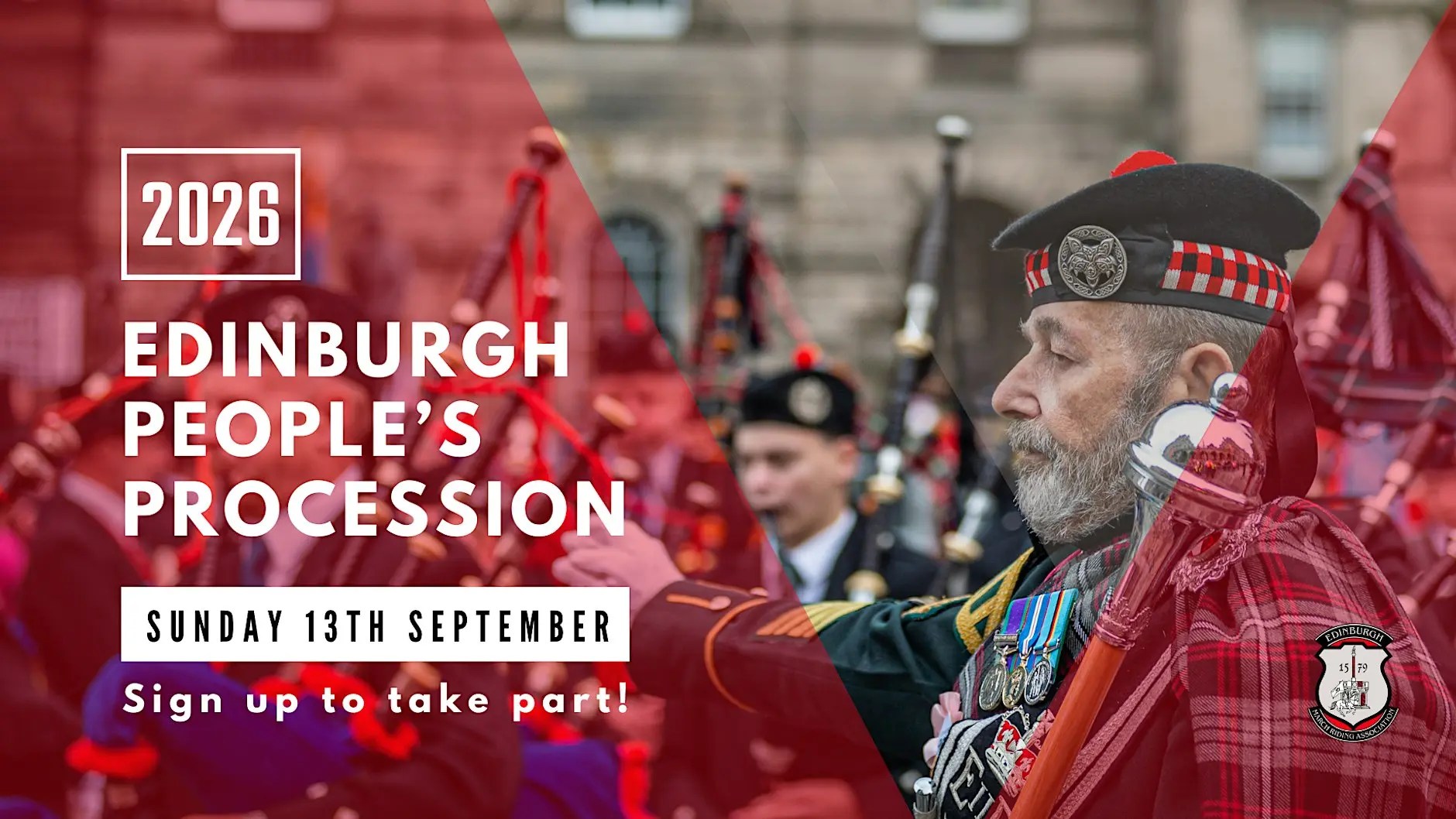
Community groups and organisations from across the city are being invited to register by Saturday 15 August to take part in the 2026 Edinburgh People’s Procession.
The People’s Procession takes place on Sunday 13 September 2026 and forms part of the spectacular Edinburgh Riding of the Marches, an annual event celebrating Edinburgh’s heritage while showcasing the city’s vibrant communities, culture and future. The procession gives local organisations the opportunity to raise awareness of their work and celebrate their contribution to life in the capital.
Organised by Edinburgh March Riding Association, with support from the City of Edinburgh Council, the procession will bring together more than 600 participants representing groups and organisations from across the city.
Participants will travel from Holyrood, near the Scottish Parliament and Palace of Holyroodhouse, along the Royal Mile to St Giles’ Cathedral ahead of the arrival of the Riding of the Marches cavalcade later that afternoon.
The Riding of the Marches will once again be joined by the Lord Provost Rt Hon Cllr Robert Aldridge, alongside the Edinburgh Captain and Lass, who will lead the cavalcade of 280 horses and riders up the Royal Mile watched by an audience of thousands.
City of Edinburgh Lord Provost Robert Aldridge said: “I’m delighted to see the return of the People’s Procession for 2026. The enthusiastic response to last year’s inaugural procession demonstrated the pride, diversity and community spirit that make Edinburgh such a special city.
“The procession is a fantastic opportunity for local groups and organisations to come together to celebrate the invaluable work they do and be part of one of Edinburgh’s most unique and historic events.
“I look forward to seeing even more community groups represented this year as the People’s procession continues to grow and become an established part of Edinburgh’s Riding of the Marches.”
Further information on the event including expected timings and the registration form is available via the events Eventbrite page.
Yesterday, I had the privilege of facilitating the second Introduction to Advocacy, Campaigning and Lobbying training for third-sector professionals in Edinburgh (writes TESFU GESSESSE).
In a time when narratives of division, fear, and “otherness” seem to be growing louder, it is more important than ever that we stand up for inclusion, fairness, and community. Advocacy is not just about influencing policy—it is about amplifying voices that are often unheard, challenging misinformation, and helping to build a society where everyone belongs.
What gives me hope is the passion, commitment, and determination of the people in this photo. Their energy reminded me that many individuals and organisations are still working every day to strengthen community cohesion, promote social justice, and bring people together.
Thank you to everyone who participated, shared their experiences, and contributed to such thoughtful discussions. Change happens when people come together, organise, and speak up.
Together, we are stronger. Together, we can shape a fairer future.
The Timms Review into Personal Independence Payment (PIP) is expanding its engagement to hear from more disabled people, following the closure of the Call for Evidence on 28 May
New resources launched to help organisations run workshops and events with disabled people and those with long term health conditions
The workshops cover three key themes: what PIP is for, what it is like to apply, and how decisions are made.
All materials are available on GOV.UK. and organisations can submit insights from their Workshop in a Box until 17 July.
Launched last autumn, the Timms Review is being co-produced with disabled people and aims to make sure the benefit is fit and fair for the future and better reflects the impact of people’s conditions in the modern world.
New resources are now being made available to support organisations and communities across the country to run workshops, bringing together disabled people to share their experiences and views. These sessions will focus on key aspects of the system, including what PIP is for, people’s experience of applying, and how decisions are made.
Their responses will shape the Review, with its launch following the closure of the Call for Evidence last month which received 38,000 responses.
Minister for Social Security and Disability, Sir Stephen Timms, said: Hearing from disabled people across the UK is vitally important to inform the Review.
£That is why we are co-producing this review with disabled people every step of the way — to make sure that PIP is truly fair and fit for the future.
“I encourage any organisation that is able to host a workshop to do so, because we need to hear the views and lived experience of as many disabled people as possible.”
The resources include downloadable, ready-to-use engagement materials to help organisations across the UK engage with the review, run their own sessions with the people they advocate for, the public, or other stakeholders.
While the workshops are designed primarily for disabled people and those with long-term conditions, organisations are encouraged to adapt the materials for carers, advisors, and others with relevant knowledge and experience of PIP.
Co-chair Sharon Brennan said: “It is vital to the success of the review that we hear from as many people as possible about their thoughts on PIP, especially those whose voices are less heard such as those from marginalised communities or who are do not feel comfortable engaging with government-led consultations.
“We hope this new engagement method allows people to have conversations that matter with the organisations that they most trust so their lived experiences can shape the outcomes of our Review.
It is open to anyone who would like to host a session, including Deaf and Disabled People’s Organisations (DDPOs), disability and health charities, community groups, and elected representatives.
Organisations can sign up for information sessions on how to conduct a workshop in a box taking place on 10 and 16 June and access the materials via the Timms Review webpage on gov.uk. Those taking part will need to submit their insights by 17 July to directly inform the steering group’s recommendations.
The newly released resources which make up the ‘Workshop in a Box’ are one of six evidence and engagement strands within the Review’s programme. The others are analysing existing data and research; carrying out new quantitative survey research; hearing evidence from experts; and running deliberative events.
We have approached a small number of organisations to offer financial support to deliver accessible workshops with local groups and communities in their networks. These organisations have been identified for their ability to reach individuals and groups who are less likely to engage with government research or public consultations, including those from marginalised or underrepresented communities.
An interim report will be published in the coming months, providing a fuller update on the steering group’s work to date.