New GRIDSERVE Electric Super Hub has arrived at Fort Kinnaird
Includes 12 ultra-rapid 400kW-capable EV charging bays
Visitors to Fort Kinnaird can now charge their electric vehicles (EVs) at speed while shopping, thanks to the opening of a new GRIDSERVE Electric Super Hub.
Located next to the A1 in Newcraighall, south-east Edinburgh, Fort Kinnaird is one of the UK’s largest outdoor retail destinations with over 70 shops, restaurants and leisure options, making it a hugely popular destination for the region.
The new Electric Super Hub features 12 ultra-rapid charging bays, located near Caffè Nero, equipped with the latest 400kW-capable chargers and powered by 100% net-zero carbon energy.
Plug in and the latest electric vehicles will be able to add more than 100-miles of range in less than 10 minutes. To make charging even more convenient, all chargers are available 24/7, accept contactless payment and feature an improved user interface with large screen that displays the vehicle’s real-time charging status.
Electric Super Hubs are a vital part of GRIDSERVE’s nationwide EV charging network, the GRIDSERVE Electric Highway, and Fort Kinnaird is one of five retail parks owned by British Land that GRIDSERVE is supporting with the fastest, most reliable and most convenient EV charging provision.
Rebecca Trebble, Chief Customer Officer at GRIDSERVE, said:“It’s fantastic to bring ultra-rapid charging to Fort Kinnaird combining speed with convenience.
“This location underlines GRIDSERVE’s commitment to expanding super-fast, reliable EV charging infrastructure across Scotland and the UK, making it easier than ever for EV drivers to charge confidently as part of their everyday journeys.”
Liam Smith, Centre Director at Fort Kinnaird, added: “Introducing electric vehicle charging at Fort Kinnaird is an important step forward for us.
“More of our shoppers from the local community and beyond are choosing to use EV or hybrid cars, so we need to make it as easy as possible for them to make greener travel choices. It’s about keeping pace with how people want to travel, while doing our bit for the environment.”
Funding will help to build a fairer, cleaner future where every family can benefit from cheaper, greener transport
major boost to charging investment to break down barriers to electric vehicle ownership and boost charging infrastructure across the UK, cutting costs for families, businesses and the public sector
£63 million package to support at-home charging for households without driveways, transition NHS fleets to save millions for the health service in England, create thousands of chargepoints at business depots across the UK
builds on £400 million invested in charging infrastructure and recent Zero Emission Vehicle Mandate updates to kickstart economic growth, create thousands of green jobs, and put more money in people’s pockets as part of the Plan for Change
Drivers across England are set to benefit as the UK government today (13 July 2025) announces a £63 million investment package to supercharge Britain’s electric vehicle infrastructure, driving down charging costs and putting money back in the pockets of working people as part of the Plan for Change.
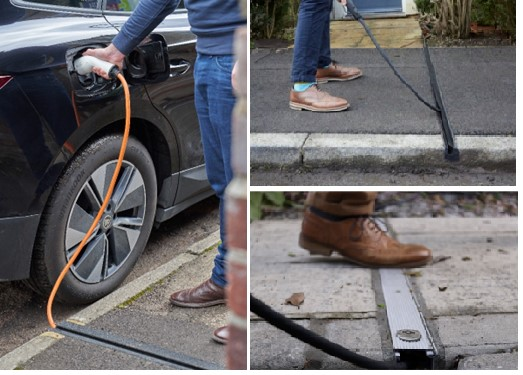
A pioneering £25 million scheme for local authorities will expand access to cheaper at-home charging. This will provide access to cheaper household rates, allowing consumers to save up to £1,500 a year compared to running a petrol or diesel car, transforming how thousands of households without driveways power up their electric cars.
The innovative cross-pavement technology will allow cables to run safely beneath pavements, connecting homes directly to parked vehicles, enabling more families to tap into cheaper domestic electricity rates for as little as 2 pence per mile even if they don’t have a driveway.
The fund is the latest move to bolster the UK’s growing charging network which has reached a record 82,000 public chargepoints, with a further 100,000 expected to be installed as a result of the government’s Local EV Infrastructure Fund and £6 billion of private investment committed to 2030.
To ensure the savings the EV transition can bring are felt in the public sector too, the NHS in England is also receiving a major sustainability upgrade with an £8 million fund to power the electrification of ambulances and medical fleets across over 200 NHS sites, saving millions in costs which can be invested into patient care.
‘Standing firmly on the side of British drivers’, this latest investment is part of the government’s plan to support motorists, including a record £1.6 billion invested to tackle potholes and bring down and frozen fuel duty at 5p until Spring 2026, saving the average motorist £50 to £60 over the year.
This investment underpins the government’s Plan for Change mission to kickstart economic growth and make life easier for working people, ensuring the transition to net zero delivers for working families whilst creating good jobs and driving economic growth across all regions of the UK.
Transport Secretary Heidi Alexander said: “We are making it easier and cheaper to own an electric vehicle. We know access to charging is a barrier for people thinking of making the switch, so we are tackling that head on so that everyone – whether or not they have a driveway – can access the benefits of going electric.
“Our investment is about more than just charging points – it’s about charging up Britain’s economy. I’m proud that through this boost, we are helping deliver cheaper bills for families, massive savings for the NHS to reinvest in patient care, and thousands of new green jobs.
“This is what our Plan for Change mission to kickstart Britain’s economy looks like in practice. We’re not just boosting charging infrastructure, we’re building a fairer, cleaner future where every family can benefit from cheaper, greener transport, whilst creating thousands of good jobs across the country.”
In a pioneering move to help EV drivers plug into the rapidly expanding charging network, the UK government is also modernising EV charging signage on major roads.
EV charging hubs have more than doubled since the beginning of 2023 and immediate changes will allow larger EV charging hubs to be signposted from major A-roads for the first time. Government is committed to boosting charging for long journeys, with £400 million announced in the Spending Review to support charging infrastructure, including on the strategic road network.
Alongside the boosts for electric car drivers, the government is also launching a major new grant scheme to help businesses install charging points at depots nationwide, supporting the nation’s heavy goods vehicles, vans and coach drivers in the transition to zero emissions.
With over 1.2 million people employed in the freight and logistics sector in the UK alone, today’s announcement is the latest move to keep industry at the forefront of international competition in the face of global economic headwinds.
Over 1,200 new charging sockets will deliver a more efficient, modern health system whilst generating millions in cost savings over the next two decades for the taxpayer on maintenance and fuel costs – valuable savings that can be prioritised for patient care and help rebuild the NHS.
Owning and buying an EV is becoming increasingly cheaper, with 2 in 5 of used electric cars sold at under £20,000 and 34 brand new electric cars are available from under £30,000.
The UK was also the largest EV market in Europe in 2024 and the third in the world with over 382,000 EVs sold – up a fifth on the previous year. There are now more than 82,000 public chargepoints in the UK – with one added every 30 minutes – ensuring that motorists are always a short drive from a socket.
Health Minister Karin Smyth said: “This is a win-win: cheaper travel for the NHS and cleaner air for our communities.
“As part of our Plan for Change, we’re investing in green energy to build an NHS fit for the future — cutting pollution and saving millions in fuel costs.”
Edmund King, AA president, said: “There are more public chargers than people realise, but they are often hidden in plain sight. Increasing signs for the public network is vital to help the EV transition as it will create confidence for drivers both now and in the future.
“It is great to see more support for those without off-street parking so that they can also benefit from the EV revolution.”
Delvin Lane, CEO, InstaVolt said: “We are pleased that the government has taken the crucial step of delivering official EV charging signage on the strategic road network – a move we believe will improve consumer confidence and bolster EV adoption. This marks a major milestone for the EV industry and drivers across the UK.
“At InstaVolt, we have been relentless in our campaigning and have built a strong, collaborative relationship with the government to push this initiative forward. Our opinion research suggests that the rollout of clear, official signage will make a significant difference—helping EV drivers easily locate public charging points while on the move, and reassuring those considering making the switch to electric vehicles.
“For years, we have emphasized that the UK’s public EV infrastructure, so critical to mass adoption, is already largely in place, and now this signage will finally showcase it to drivers in a visible, accessible way.
“As the UK’s largest ultra-rapid public charging network with over 2,000 chargers nationwide, InstaVolt is proud to be at the forefront of this transformation and excited to see how these signs will accelerate the adoption of electric vehicles.”
Ian Johnston, CEO, Osprey: “Signage impacts all the UK’s drivers because consumers need to see it to believe it. Osprey have tirelessly highlighted the benefit that clear EV road signage would bring to drivers looking to make the switch and to the charging businesses installing the critical infrastructure underpinning transport decarbonisation.
“This is a welcome first step and we look forward to continuing to work closely with ministers and officials to achieve clear signage for the hundreds of high-quality EV charging hubs being opened across the nation.”
NHS Chief Sustainability Officer Chris Gormley said: “The NHS has already implemented hundreds of projects that reduce emissions and drive significant cost savings, all while improving patient care.
“This new £8 million investment, across 62 NHS Trusts and around 224 sites, supports the renewed commitment in the government’s 10 Year Health Plan to deliver a more sustainable NHS while also helping hospitals to save millions on fuel and maintenance costs and reducing air pollution. These savings can be reinvested directly into frontline care, ensuring the NHS continues to deliver for our patients and communities.”
Vicky Read, CEO of ChargeUK said: “With 82,000 public charge points already installed across the UK, this positive action on strategic road signage will help more drivers see the extensive charging network that’s rapidly being built across the country. This has been a priority for our industry and will boost consumer confidence in making the switch to electric vehicles.
“Our members are investing £6 billion to ensure the deployment of charging infrastructure stays ahead of demand. Today’s announcement shows government recognising the vital role charging plays in the transition, and we look forward to working together to maintain the UK’s position as Europe’s leading EV market.”
The Zero Emission Vehicle Mandate will be changed to make it easier for industry to upgrade to make electric vehicles
2030 phase out date of new petrol and diesel car sales confirmed with hybrids to be sold until 2035 and small manufacturers exempt
firms given greater freedom on how to meet the target – easing pressure on industry
£2.3 billion to boost manufacturing zero emission vehicles and help working people make the switch
Prime Minister says new era means we must go ‘further and faster’ on the Plan for Change to spur growth that puts more money in working people’s pockets
British car brands like Rolls-Royce, Vauxhall and Land Rover are being given certainty, stability and support as the Prime Minister sets out plans to back industry in the face of global economic headwinds today (7 April 2025).
The Prime Minister will say the new era of global insecurity means that the government must go further and faster reshaping our economy through the Plan for Change.
The Zero Emission Vehicle Mandate will be changed to make it easier for industry to upgrade to make electric vehicles while delivering the manifesto commitment to stop sales of new petrol and diesel cars by 2030, which will help even more British consumers access the benefits of cheap to run electric vehicles.
The package will be backed by a modern Industrial Strategy, to be published in full this spring, which will help British businesses realise the potential of industries of the future.
The changes, which reflect extensive consultation, will help the car industry by:
increasing flexibility of the mandate for manufacturers up to 2030, so that more cars can be sold in later years when demand is higher
allowing hybrid cars – like the Toyota Prius and Nissan e-Power – to be sold until 2035 to help ease the transition and give industry more time to prepare
continuing to boost demand for electric vehicles, on top of the £2.3 billion we’re already spending on boosting British manufacturing and improving charging infrastructure – with a new charge-point popping up every half an hour
pressing on with tax breaks worth hundreds of millions of pounds to help people switch to electric vehicles
Support for the car industry will be kept under review as the impact of new tariffs become clear.
This package is the latest in a series of pro-growth measures that the Prime Minister is announcing to counter the impact of new global headwinds and build a strong, resilient economy with more well-paid jobs.
Prime Minister, Keir Starmer, said: “Global trade is being transformed so we must go further and faster in reshaping our economy and our country through our Plan for Change.
“I am determined to back British brilliance. Now more than ever UK businesses and working people need a government that steps up, not stands aside.
“That means action, not words. So today I am announcing bold changes to the way we support our car industry.
“This will help ensure home-grown firms can export British cars built by British workers around the world and the industry can look forward with confidence, as well as back with pride.
“And it will boost growth that puts money in working people’s pockets, the first priority of our Plan for Change.”
Transport Secretary, Heidi Alexander, said: “We will always back British business. In the face of global economic challenges and stifled by a lack of certainty and direction for too long, our automotive industry deserves clarity, ambition and leadership. That is exactly what we are delivering today.
“Our ambitious package of strengthening reforms will protect and create jobs – making the UK a global automotive leader in the switch to EVs – all the while meeting our core manifesto commitment to phase out petrol and diesel vehicles by 2030.
“Once again, the Prime Minister’s decisive and bold actions show how we’re on the side of British business while harnessing the opportunities of the zero emissions transition to create jobs and drive growth, securing Britain’s future, and delivering our Plan for Change.”
In recognition of the changing global trading landscape, the government has worked with the industry to both strengthen its commitment to the phase out and introduce practical reforms to support industry meet this ambition.
Demand for electric vehicles is already rising, with the latest data showing sales in March were up over 40% on last year, which will help with the transition.
There is a huge opportunity to be harnessed here – with the UK being the largest EV market in Europe. Over £6 billion of private funding is lined up to be invested in the UK’s chargepoint roll-out by 2030. Since July, the government has also seen £34.8 billion of private investment announced into UK’s clean energy industries.
The updated ZEV Mandate will ensure flexibilities support UK manufacturers by:
maintaining the existing phase-out dates and headline trajectories for cars and vans
extending the current ability to borrow in 2024-26, to enable repayment through to 2030
extending the current ability to transfer non-ZEVs to ZEVs from 2024-26, out to 2029, giving significant additional flexibility to reward CO2 savings from hybrids – caps will be included to ensure credibility
introducing a new flexibility by allowing for van to car transfer, i.e. 1 car credit will be exchanged for 0.4 van credits, and 1 van credit will be exchanged for 2.0 car credits
The wide-ranging package of measures introduced today will also exempt small and micro-volume manufacturers – supercar brands including McLaren and Aston Martin – from the 2030 phase out, preserving some of the UK car industry’s most iconic jewels for years to come.
Vans with an internal combustion engine (ICE) will also be allowed to be sold until 2035, alongside full hybrids and plug-in hybrid vans.
Employing 152,000 people and adding £19 billion to our economy, the UK’s automotive industry is a huge asset to our nation – and the transition to zero emissions is the biggest opportunity of the 21st century to attract investment, harness British innovation, and deliver growth for generations to come.
Owning and buying an EV is becoming increasingly cheaper, with drivers able to save £1,100 a year compared to petrol if they charge overnight at home. Half of used electric cars are sold at under £20,000 and 29 brand new electric cars are available from under £30,000.
The UK was also the largest EV market in Europe in 2024 and the third in the world with over 382,000 EVs sold – up a fifth on the previous year. There are now more than 75,000 public chargepoints in the UK – with one added every 29 minutes – ensuring that motorists are always a short drive from a socket.
Chancellor of the Exchequer, Rachel Reeves, said: “The world is changing but we are determined to deliver for working people, protect their jobs and put more pounds in their pockets.
“That is why we are backing British business and investing in industries of the future, including our car manufacturers.”
Energy Secretary, Ed Miliband, said: “It is very important that the government has strengthened our commitment to our world leading EV transition plan.
“This plan will benefit UK consumers by expanding the market for cars that are cheaper to run. And it will support our domestic manufacturing so we can seize this global opportunity.”
Business Secretary, Jonathan Reynolds, said: “This pro-business government is taking the bold action needed to give our auto sector the certainty that secures jobs, drives investment and ensures they thrive on the global stage.
“Our Industrial Strategy will back the country’s high growth sectors, including advanced manufacturing, so we can grow the economy and deliver on the promises of our Plan for Change.”
Consultation launched to shape the 2030 petrol and diesel car phase-out.
Industry invited to have their say on the UK’s approach to the zero emission vehicle transition and how consumers can be supported to make the switch.
Comes as figures show more than 72,000 public chargepoints available, helping the UK become a clean energy superpower and delivering on our Plan for Change.
The UK automotive and charging industries have been invited to shape the UK’s transition to zero emission vehicles, as the UK Government works with the sector to harness the huge opportunities for economic growth and improve living standards for working people.
Today [Tuesday 24 December], Transport Secretary Heidi Alexander has launched a consultation to ask views from industry on how to deliver on the manifesto commitment to restore the 2030 phase out date for new purely petrol and diesel cars and make the transition to zero emissions vehicles a success.
The 2030 phase out date was broadly supported by industry before the previous UK Government extended the phase out to 2035. Currently more than two-thirds of car manufacturers in the UK, including Nissan and Stellantis, have already committed to fully transitioning to electric cars by 2030.
Today’s consultation will restore clarity for vehicle manufacturers and the charging industry so that they have the confidence to invest in the UK in the long-term and drive growth in the UK automotive industry.
The consultation proposes updates to the Zero Emission Vehicle (ZEV) Mandate, which is the joint responsibility of the UK Government, the Department for Infrastructure in Northern Ireland, the Scottish Government, and the Welsh Government. The mandate sets out the percentage of new zero emission cars and vans manufacturers will be required to sell each year up to 2030.
To support manufacturers in the transition, the ZEV Mandate already features a range of flexibilities to help industry comply in a way that makes sense for them and the wider market, including selling fewer zero emission vehicles than the headline target if they make up for it in other ways. The consultation explores the design of the flexibilities to ensure they continue to support manufacturers.
This consultation is focused on how, not if, we reach the 2030 target. It will give the sector the opportunity to consider how the current arrangements and flexibilities are working, which hybrid cars can be sold alongside zero emission models between 2030 and 2035, and any further support measures to help make the transition a success for industry and consumers.
The UK automotive industry already employs over 152,000 people, is our most valuable exported good, and adds £19 billion to our economy. EVs are also cheaper to own and drive than ever, and can run from as little as 2p per mile.
Industry research also shows that using an electric vehicle could save people up to £750 a year in running costs if they’re charged at home compared to using petrol and diesel cars. Upfront costs are also coming down, with 1 in 3 used electric cars now costing under £20,000 to buy, according to industry data.
Getting this transition right and supporting the growth of the electric vehicle market in the UK will enable Britain to tap into a multibillion-pound industry, create high paid jobs for decades to come and deliver on our plan for change by putting more money in the pockets of hardworking families.
Transport Secretary Heidi Alexander said:““Employing 152,000 people and adding £19 billion to our economy, the UK’s automotive industry is a huge asset to our nation — and the transition to electric is an unprecedented opportunity to attract investment, harness British innovation, and deliver growth for generations to come.
“Yet over the last few years, our automotive industry has been stifled by a lack of certainty and direction. This Government will change that.
“Drivers are already embracing EVs faster than ever, with one in four new cars sold in November electric. Today’s measures will help us capitalise on the clean energy transition to support thousands of jobs, make the UK a clean energy superpower, and rebuild Britain”.
Business and Trade Secretary Jonathan Reynolds said:““There is no route to net zero without backing British industries and workers. There are huge advantages for British industry and we must make sure decarbonisation creates jobs and opportunities.
“We are steadfast in our mission to help our world-leading automotive industry thrive, and this consultation will look at how we can support manufacturers, investors, and the wider industry to reach their targets.
“This Government is backing the auto sector with £2 billion to support our domestic manufacturers to transition to zero emission vehicles and over £300 million to drive consumer uptake”.
Today’s consultation is part of a wider push to make it easier and cheaper for drivers to charge their electric cars. It follows over £2.3 billion investment from the UK Government to support domestic manufacturers and consumers switch to EVs.
With 56 public chargers added on average to the network every day in 2024, 24/7 helplines, and up-to-date chargepoint locations, it’s never been easier for drivers to charge their EVs. They can now rely on more than 72,000 public chargers across the UK, alongside £6 billion of private investment by 2030 to roll out our chargepoint network at pace.
Charging infrastructure will continue to match the rising sales of EVs, with another 100,000 chargers planned by local authorities all across England under the Government’s Local EV Infrastructure Fund alone.
It comes as data shows that one in four new cars sold this November was an EV, according to the Society of Motor Manufacturers and Traders (SMMT) – a 58% increase on November 2023. EV owners are seeing the benefits too, as 97% of electric car drivers say they do not want to go back to petrol and diesel cars.
Energy Secretary Ed Miliband said: ““Accelerating the transition to electric vehicles will drive forward our clean energy superpower mission and brings huge economic opportunities.
“It will help drivers access cars that are cheaper to run, cut air pollution in our cities and towns, back British manufacturers and provide highly-skilled jobs in emerging industries.”
With more and more drivers switching to electric vehicles, the UK government has also unveiled a series of measures today to continue to improve charging infrastructure and tackle barriers to EV take-up and drive forward this transition.
The new measures include a separate consultation on whether we can reduce barriers to roll out more zero emission vans – crucial to help decarbonise the freight and delivery sectors more quickly.
The UK government will also change planning legislation to provide additional flexibility in England through permitted development rights when installing off-street electric vehicle chargepoints. We will also amend legislation to allow chargepoint installers to use street works permits instead of licences to make it easier and quicker to install chargers, and to apply for these online using the DfT’s Street Manager digital service for planning and managing works.
The results of a review will also be published on how to improve grid connections for chargepoints, increasing cohesion, cooperation and communication across the industry. Local councils will continue to be supported in their charging projects with resource and new guidance.
The transition to electric is an unprecedented opportunity to attract investment, harness British ingenuity, and deliver growth for generations to come. The UK Government wants to work in partnership with industry to make sure that our approach to the transition supports a thriving UK automotive sector now and for years to come.
It is fundamental to our Growth and Clean Energy missions and will help lead Britain and the world into a cleaner, safer, a more prosperous future.
MotorEasy survey finds the cost and practicalities of charging remain a significant challenge for EV owners
New figures reveal that sales of used battery electric cars almost doubled last year, with a record 119,000 of the vehicles changing hands*.
However, despite increasing numbers of motorists making the switch, a new survey of MotorEasy members has revealed that continuing challenges with the cost of charging, access to public charging and the apps used to facilitate charging are damaging the ownership electric vehicle (EV) experience.
Over half of survey respondents expressed frustrations with battery range and one in four said energy costs for recharging are a worry. However, the biggest ownership hurdles for owners are access to public charging (73%) and the practicalities of using these chargers (71%), including the multitude of apps supposedly designed to ease charging (65%). The rapid and much-publicised depreciation of used EVs has also left 65% of owners worried about the loss of value in their EV.
“Although the number of EVs on UK roads is accelerating, our membership survey strongly confirms that the accessibility of EV charging still has a long way to go,” commented Duncan McClure Fisher, CEO of Intelligent Motoring, the parent company of MotorEasy.
“Almost three-quarters of the EV drivers we surveyed have experienced difficulties with accessing and using the infrastructure.
“As a result, EV owners advised those considering the switch to prioritise the installation of a home charger to save both time and money. Experienced owners also suggest new buyers research energy providers and take advantage of nighttime charging tariffs wherever possible, to make powering up even more cost-effective.”
Over 22% also said that service, maintenance and repair costs are putting a strain on finances, with 25% of drivers claiming to have faced challenges finding a qualified garage or technician to conduct service, maintenance or repair work.
Duncan McClure Fisher continued: “With high voltage systems and advanced technology onboard, technicians working on EVs need to have the right training, which can mean EV owners may not be able to use their usual garage.
“However, a little research should identify a qualified EV technician locally or check out the Institute of the Motor Industry’s Professional Register which lists TechSafe-accredited technicians.
“It is vital that owners have the assurance that their vehicle is suitably maintained by a qualified professional and safe to drive.”
EV adopters – two essential points of advice
Choose carefully – do your research on different makes and models, take a test drive, do not be swayed by an enthusiastic salesperson, and prioritise range by opting for the vehicle with the longest range you can afford.
Get a home charger – it’s a more cost and time-efficient way of charging. Consider your expected usage and charging requirements, and don’t leap into having an expensive fast charger installed – you may not need it if you can charge slowly overnight using a three-pin plug and relevant adapter and cable provided with the car.
*Society of Motor Manufacturers and Traders (SMMT)
Ratho Coaches has become the first operator in the central belt of Scotland to put an electric coach into service, after taking delivery of a new Yutong TCe12 from Asset Alliance Group.
The Edinburgh-based firm added the coach as part of its sustainability drive, and to ensure compliance with the existing Low Emission Zone (LEZ) in Glasgow city centre and ahead of the introduction of the LEZ in the Scottish capital on 1 June 2024.
Charles McIntosh, Co-Owner and Director at Ratho Coaches, says: “We are delighted to be leading the way as an environmentally-friendly coach operator. It’s the first time we’ve used Asset Alliance Group and we’re extremely pleased with the exceptional service they have provided.
“The Yutong TCe12 is a fantastic addition to our fleet and a key part of our mission to become a more sustainable business.
“It replaces a diesel coach previously used for city tours to places like Glasgow, Stirling and as far as St Andrews, helping the company to reduce its carbon footprint.”
After being certified as an Ultra Low Emission Bus (ULEB) in August 2020, the Yutong TCe12 is the first fully electric zero-emission coach to be made available in the UK. It means that the 50-seat, fully PSVAR-compliant vehicle is eligible to receive the 30p per kilometre Bus Service Operators Grant (BSOG) Low Emission Vehicle (LEV) incentive payment in Scotland for qualifying work.
Using an identical electric driveline and control system to Yutong’s E10, E12 and airport buses, the vehicle’s 281 kWh battery offers Ratho Coaches a range in excess of 200 miles on a full charge.
“The excellent battery range of the coach, combined with the flexible seating and luxury specifications – including fold down tables and footrests – offers a high level of comfort for passengers joining our city tours,” adds McIntosh.
“We plan to add more electric coaches to our fleet in the coming years to take advantage of ongoing improvements in battery charging infrastructure for EVs, which will allow us to utilise them for UK-wide tours and further enhance our green transport credentials.”
Ratho Coaches currently runs a fleet of 76 vehicles, ranging from people carriers and 16-seat Mercedes-Benz Sprinters to 57-seat Executive coaches and 70-seat capacity coaches.
This year, the coach operator hopes to access the Scottish Government grant system designed to accelerate the bus and coach sector’s transition to net zero. The company has applied to the Scottish Zero Emission Bus Challenge Fund (ScotZEB) to help acquire additional EVs.
£381 million funding scheme to deliver thousands of public charge points across the country opens for applications.
Chancellor opens UK’s largest electric vehicle charging site in Birmingham in major boost to Britain’s electric charging infrastructure.
EV drivers in the West Midlands set to benefit from the 180 charge point hub, becoming the largest electric vehicle charging site in the UK.
A new electric vehicle charging hub – big enough to charge 180 cars simultaneously – has been opened by the Chancellor Jeremy Hunt in Birmingham yesterday (Thursday 7 September). It marks a significant boost for Britain’s electric car charging network, becoming the largest electric vehicle charging site in the UK.
The Gigahub™, located at the city’s NEC Campus, is the largest-ever private investment in a UK electric vehicle project to date. The project has been developed by a three-way collaboration between the NEC, EV Network and bp pulse, and is now operated by bp pulse. It is funded by a record £8 million from its investment partner, Zood Infrastructure Limited. The site will provide 30 super-fast, 300kw DC charging bays and a further 150, 7KW a/c charging bays – one of the largest amounts of super-fast chargers in one location in the UK.
The site is strategically positioned to become a major transport hub for the future – located in the heart of the UK motorway network, including the M42, M46 and A45 and the new HS2 interchange station.
The site supports the Government’s electric vehicle infrastructure strategy and commitment to decarbonising transport, backed with more than £2 billion to support the transition to zero emission vehicles including accelerating the rollout of chargepoint infrastructure.
As part of that, Government and industry have so far supported the installation of over 45,500 publicly available electric vehicle charging devices, including more than 8,600 rapid devices. The public charging network is growing quickly – public charging devices have more than tripled in four years from 10,300 devices in January 2019 to over 45,500 in August 2023.
The number of public chargepoints rose by 38% over the last year, and as a recent report from the National Infrastructure Commission points out, if charge point deployment grows at around 30% per year the 300,000 expectation will be met.
Today the Chancellor has also announced that several local authorities across England can apply for the first round of the Government’s £343 million Local Electric Vehicle Infrastructure (LEVI) Capital Fund, with the West Midlands Combined Authority among the authorities eligible to apply this year.
The LEVI fund will ensure the transition to electric vehicles takes place in every part of the country by supporting tens of thousands of local chargepoints, especially for those without access to off-street parking.
Local authorities will receive LEVI funding in two groups, with the first able to apply for their allocated funding from today, to be distributed this financial year. The second group can apply for their funding next financial year.
The Chancellor of the Exchequer, Jeremy Hunt, said:“This is the biggest private investment in electric charging in the UK and is a huge vote of confidence in Britain’s role as a leader in green industries.
“The ground-breaking site will be a major transport hub for the future and marks a significant step in our rollout of electric vehicle charging infrastructure across the country”.
Decarbonisation Minister Jesse Norman said:“Electric vehicles will play a crucial role in helping the UK to decarbonise transport and reach net zero.
“Today’s measures will deliver tens of thousands of chargepoints across the country, boosting the economy and creating skilled jobs.”
Paul Thandi CBE, DL Chairman of NEC Group, said: “We are proud to contribute to the UK Government’s Electric Vehicle Infrastructure Strategy. Working in collaboration with EVN and bp pulse, the opening of our EV charging hub provides NEC Campus customers, commuters, and those working for local regional or national businesses, a reliable and convenient way to recharge and support a lower carbon travel future.
“This strategic collaboration and initiative strengthen our destination offer, demonstrate our commitment to reducing the impact our business practices and our Masterplan credentials have on the environment, and ultimately supports a reduction in carbon emissions.”
Akira Kirton, vice president of bp pulse UK, said: “The transition to electric vehicles is evolving at pace which is why bp pulse is focussed on accelerating the development of the UK’s EV infrastructure, delivering the right charging speeds, in the right locations and investing up to £1 billion to do so.
“This new, nationally significant bp pulse Gigahub™ at the heart of the UK’s road network, is another great example of our strategy in action.
“We plan to roll out hundreds of hubs this decade in places EV drivers needs them – urban areas, on trunk roads and motorways and at destinations such as restaurants, retail parks and hotels.”
Alexander Walsh, Senior Managing Director at Blackstone, said: “The opening of the UK’s largest EV charging hub at the NEC is a significant step forward as more drivers across the UK move to electric vehicles, with sites like this playing an important role in supporting the UK’s energy transition.
“Blackstone has been invested in the NEC since 2018, and this development demonstrates the positive impact private investment can have in driving innovation and creating green jobs, and we’re proud to be backing the industries of the future in the West Midlands and beyond that are helping build a more sustainable future.”
Reza Shaybani, CEO, and co-founder of the EV Network, said: “The launch of one of Europe’s largest ultra-fast Gigahub™ is a massive game changer for EVN and a huge step forward for UK electric vehicle fast charging.
“The EVN team responding to the public demand for more – charging and we are responding with hundreds of millions of pounds of new investment and the very latest technology.
“EVN has already built dozens of sites across the UK, but the successful completion of this new project launches us onto a much more ambitious growth path, as the leading business in our sector with a range of exciting new partners.
“The NEC was a perfect location that is not only geographically key, but of national significance, to support the EV charging landscape. EVN secured 6.5MVA grid connection, to support the entire infrastructure. The strategic placement and impressive scale of this charging hub within the UK’s transport infrastructure offers reassuring support to drivers journeying between cities.
“Our long-term relationship with both the NEC Group and bp pulse ensures this is not just an investment for the site’s visitors but a transformative step towards bolstering the entire EV charging infrastructure of the UK.
“At EVN we are excited to invest £100M in EV Infrastructure projects this year, and we aim to invest a further £300M equity by 2025.”
Alongside this, UK Research and Innovation has announced that Innovate UK has awarded £5.8m of funding to 12 projects through the Driving the Electric Revolution Challenge Fund. Winning projects include work on best practice in automation and robotics to produce EV chargers, and the scale-up of the assembly manufacturing processes for a rare earth-free permanent magnet generator – allowing us to produce electric machines without using rare earth elements.
Whilst he was in the region, the Chancellor also convened a roundtable with green industries SMEs based in and around the West-Midlands, including leading green electric vehicle, energy and manufacturing companies as part of his ongoing engagement with his five key growth sectors: life sciences, advanced manufacturing, green industries, digital and technology and creative industries.
Only five of the UK’s biggest theme and adventure parks currently offer electric charging facilities but the situation is set to improve in the coming months, according to a new study by the RAC.
Just Thorpe Park in Surrey, Chessington in London, Blackpool Pleasure Beach, Crealy in Devon and M&Ds in Scotland provide EV chargers for visitors, with many other popular and well-loved attractions in other regions currently offering none at all. At the five parks that have some provision, the average number of chargers on offer is four.
The parks that currently don’t offer any charging facilities include such well-known names as Legoland Windsor in Berkshire, Alton Towers in Staffordshire, Gulliver’s sites in Cheshire, Yorkshire and Buckinghamshire and Oakwood in Wales. But the good news is that the first two of these parks have publicly committed to installing chargers before the end of the year.
The RAC study also looked at the nearest ultra-rapid chargers to top theme parks as the next most convenient place to charge on a day out and found they were an average of seven miles away, with each offering an average of only five chargers each. In some parts of the country however, drivers need to travel much further, with the closest ultra-rapid chargers to Pleasurewood Hills in Suffolk and Flamingo Land in North Yorkshire being some 25 miles away.
RAC Charge Watch data shows that drivers currently pay on average 73p per kWh of electricity at an ultra-rapid (100kW+) charger, making an 80% charge of a family-sized EV currently cost £37.39. If public chargers were only subject to 5% VAT like home chargers, that cost would be around £4 cheaper.
Comparisons with major theme parks elsewhere in Europe show just how different the situation can be when it comes to on-site electric vehicle charging. Efteling in the Netherlands has capacity for 174 electric cars to charge at once, while PortAventura in Spain can accommodate 150 cars charging and Europa Park in Germany offers 32 chargers.
It’s far from a perfect picture everywhere however, with Disneyland Paris and Gardaland in Italy having just four chargers each.
RAC spokesman Rod Dennis said: “Even though most people visiting adventure and theme parks in electric cars will be starting out fully charged from home, many will still need to charge on the way back depending on the length of their journey and their vehicle’s range.
“For those travelling considerable distances to reach them it surely makes sense to have some chargers at theme parks as cars will be parked for long periods, making slower chargers ideal.
“It’s a little disappointing therefore to find some big-name attractions aren’t yet providing any charging facilities, but the situation is thankfully changing with several having stated they’re looking into installing chargers in the near future. We look forward to these plans becoming a reality to make drivers’ lives easier.
“As things stand, families with electric cars who need to recharge after enjoying a day out will no doubt be relying on ultra-rapid chargers to get on the move again as quickly as possible.
“Our research shows drivers will have to travel only an average of seven miles from a theme park to reach one of these, although in some parts of the country the distance is considerably further. Fortunately, with every month that passes provision is improving and in fact over the last 12 months the number of ultra-rapid chargers in the UK has nearly doubled to 8,772.
“Some leading theme parks in other parts of Europe are currently putting the UK in the shade when it comes to more extensive electric charging infrastructure. As they’ve decided it’s right to put chargers for their visitors in place, we now need all major theme park operators in the UK to come to the same conclusion.”
Quentin Willson, automotive journalist and founder of theEV campaign FairCharge, added: “Theme parks are an obvious example of how we need to make sure the UK’s future charging infrastructure really is joined up.
“Parks, attractions, museums, holiday centres, hotels and leisure facilities need to have plenty of chargers for visitors in EVs. Drivers will base their leisure choice destinations – as many already do – on if there are reliable charging facilities. This is the future.”
In a bid to stimulate the take-up of electric vehicles and make public charging more cost-effective, the RAC is supporting the FairCharge campaign’s call to get VAT on public electricity reduced from 20% to match the 5% domestic rate.
Tata Group announces new multibillion-pound electric car battery factory to be built in the UK – one of the largest ever investments in the UK automotive sector.
Investment will create up to 4,000 new direct jobs, and thousands more in the wider supply chain – driving forward the Prime Minister’s priority to grow the economy.
New gigafactory set to provide almost half of the battery production needed by 2030 – turbocharging UK’s switch to zero emissions vehicles.
The UK has been chosen as the home of Tata Group’s first ‘gigafactory’ outside India, in a move set to create thousands of jobs and bring a huge boost to the UK’s automotive sector.
Tata Group confirmed the UK had secured one of the largest ever investments in the UK auto industry today (19 July). The gigafactory will secure UK-produced batteries for another Tata Sons investment, Jaguar Land Rover, as well as other manufacturers in the UK and Europe.
The new gigafactory, at 40GWh, will be one of the largest in Europe. It will create up to 4,000 highly skilled jobs, as well as thousands of further jobs in the wider supply chain for battery materials and critical raw minerals, helping grow the economy and take forward the UK’s commitment to net zero.
Prime Minister Rishi Sunak said:“Tata Group’s multi-billion-pound investment in a new battery factory in the UK is testament to the strength of our car manufacturing industry and its skilled workers.
“With the global transition to zero emission vehicles well underway, this will help grow our economy by driving forward our lead in battery technology whilst creating as many as 4,000 jobs, and thousands more in the supply chain.
“We can be incredibly proud that Britain has been chosen as home to Tata Group’s first gigafactory outside India, securing our place as one of the most attractive places to build electric vehicles.”
Mr N Chandrasekaran, Chairman, Tata Sons, said: “The Tata Group is deeply committed to a sustainable future across our business.
“Today, I am delighted to announce the Tata Group will be setting up one of Europe’s largest battery cell manufacturing facilities in the UK. Our multi-billion-pound investment will bring state-of-the-art technology to the country, helping to power the automotive sector’s transition to electric mobility, anchored by our own business, JLR (Jaguar LandRover).
“With this strategic investment, the Tata Group further strengthens its commitment to the UK, alongside our many companies operating here across technology, consumer, hospitality, steel, chemicals, and automotive.
“I also want to thank His Majesty’s Government, which has worked so closely with us to enable this investment.”
The investment of over £4 billion represents a historic moment for the UK’s growing electric vehicles industry.
The new gigafactory will supply JLR’s future battery electric models including the Range Rover, Defender, Discovery and Jaguar brands, with the potential to also supply other car manufacturers. Production at the new gigafactory is due to start in 2026.
This investment will be crucial to boosting the UK’s battery manufacturing capacity needed to support the electric vehicle industry in the long term. With an initial output of 40GWh it will also provide almost half of the battery production that the Faraday Institution estimates the UK will need by 2030.
Business and Trade Secretary Kemi Badenoch said: “Today’s multibillion-pound investment demonstrates that this Government has got the right plan when it comes to the automotive sector.
“We are backing the UK car industry to help grow our economy as we transition to electric vehicles, and this latest investment will secure thousands of highly-skilled jobs across the country.
“Tata’s decision is a major vote of confidence in UK automotive. The Government is committed to making the UK one of the best places in the world for automotive investment, as evidenced by the Automotive Transformation Fund, the British Industry Supercharger, and the strong programme of support for research and development.”
Chancellor of the Exchequer Jeremy Hunt said:“This is a huge vote of confidence in the UK and one that will drive growth in our economy, creating thousands of jobs and powering our transition to electric cars.
“Tata Group’s gigafactory builds on the strength of our manufacturing industry and shows we’re on the right track, backing the sectors that will underpin our future prosperity for decades to come.”
Energy Security Secretary Grant Shapps said: “Today’s announcement from Tata is excellent news. We have been working tirelessly with the company, and across government, to make the case for why the UK is the best place for them to invest.
“This new gigafactory puts us firmly in the fast lane to becoming the capital of Europe’s electric car market, and makes crystal clear how they see the UK as the place to be for their future growth.
“With thousands of jobs on site and in the supply chain, this new factory will be the cornerstone of our automotive industry, backing manufacturers to develop and expand, and customers to make the switch from petrol and diesel.”
Electric rocked down to Waterfront Avenue yesterday/this morning as the Council’s new Electric Refuse Collection Vehicles (eRCVs) were unveiled for the first time.
The introduction of these eRCVs to the fleet is the first major step to decarbonising the Council’s approximately 200 trucks. These are the first fully electric refuse collection vehicles and will drive forward the Council’s vision for services.
Stopping at Station Square in Granton, Transport and Environment Convener Scott Arthur, alongside colleagues from waste and cleansing, got a first-hand look at one of the five new eRCVs that will soon be doing the rounds across the city. They also got the chance to inspect an electric mechanical sweeper and electric pedestrian sweeper.
In total the Council already have more than 150 electric vehicles within the fleet, including a large mechanical sweeper, three welfare buses, and over 140 cars and vans.
Councillor Scott Arthur, Transport and Enviroment Convener said:“I was delighted to be here today to see the new eRCVs, procured with generous funding from Zero Waste Scotland.
“By introducing these vehicles in exchange for traditional diesel refuse trucks we will see a significant fall in carbon dioxide emissions across our waste services alongside reductions in fuel, servicing, and maintenance costs. These will also be quieter as they carry out services. We also have ambitious plans to electrify our entire fleet of over 400 cars and vans before the end of 2024.
“Unveiling these new eRCVs at Station Square, in the heart of our £1.3 billion Granton Waterfront regeneration, is particularly fitting as this will be the blueprint for sustainable urban development and regeneration for Scotland with around 3,500 new net zero carbon homes.
“Changes like these all feed into our wider commitment to becoming a net zero city by 2030, and achieving our other key goals set out in our 2030 Climate Strategy.
“With tomorrow marking Clean Air Day it’s more important than ever that we all play our part in making our city as sustainable as possible and I am proud that as a Council we are taking steps to do so.”
Zero Waste Scotland’s Head of Resource Management, Waste and Recycling, Jane Beasley, said: “I’m pleased to see the City of Edinburgh Council take delivery of these new electric refuse collection vehicles, which will help the council cut carbon while delivering its expanded recycling service.
“The Recycling Improvement Fund exists to help councils improve and invest in their recycling and reuse services, helping citizens up and down the country move towards a circular economy, where materials and products are kept in use as long as possible.
“I’m looking forward to seeing them in action across the city.”