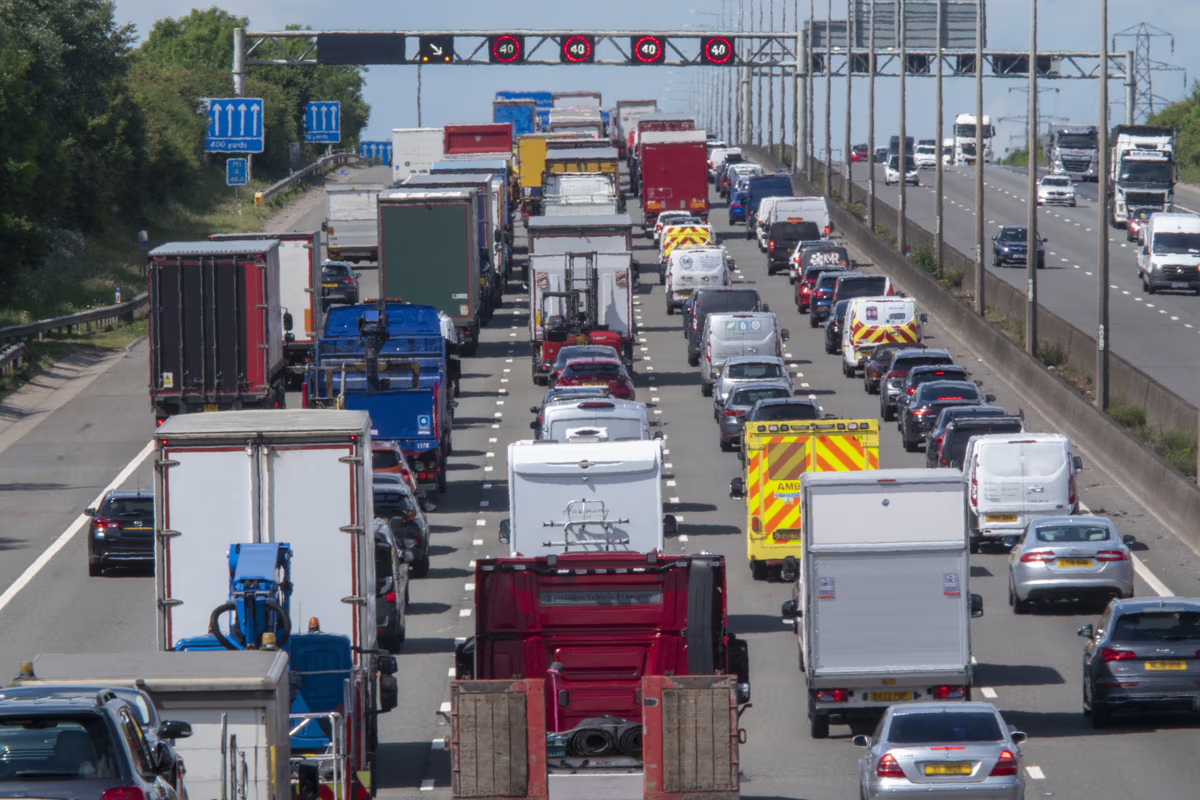
Drivers’ love-hate relationship with sat-navs sees more than three quarters ignore directions to beat the ETA
The majority of drivers use a sat-nav, but just one third (35%) have a high degree of trust in their device and have taken matters into their own hands to reach their destination sooner
Sat-navs … most drivers use them, but the majority don’t fully trust them. So much so that many are constantly disregarding directions and following their gut instinct in a bid to beat the often-exasperating ETA.
And for eight-in-10 drivers (84%), the gamble paid off as they managed to get to their destination quicker than what their sat-nav predicted, according to research from the RAC.
The survey, which polled 1,601 drivers in the UK*, found that 91% use a sat-nav, with 8% steadfastly using one on every journey, 30% on most trips, and 53% using it occasionally.
Popular sat-nav gripes included users complaining that their devices don’t always detect upcoming traffic jams (52%), as well as getting sent down small, narrow roads (44%).
Worryingly, one-in-10 (11%) sat-nav users got sent down a one-way street the wrong way, risking a head-on collision.
And one fifth (19%) almost got stuck after their sat-nav sent them down a dead end that was hard to reverse out of.
Despite the drawbacks, one-in-10 (12%) confessed to following the instructions on their sat-nav without question.
The majority, 89%, preferred to take sat-nav instructions with a pinch of salt, sometimes ignoring them to get to their destination.
Free phone apps, such as Google Maps, Waze or Apple Maps are the most popular form of sat-nav drivers use, with more than half (53%) choosing this form of technology to guide their journeys.
Another 35% use a sat-nav that is built into the car, while 9% use a separate sat-nav unit that they attach to the dashboard or windscreen, a popular choice among drivers aged 65 and over.
RAC Breakdown spokesperson Harriet Hernando said: “Sat-navs are used by the majority of drivers, and can be a useful tool to help us get from A to B. But what this data shows is that people shouldn’t blindly follow the directions but continue to pay close attention to road signage and tap into any local knowledge they have of the area.
“While it’s tempting to just jump in the car and punch in the postcode on your chosen sat-nav and follow along, it’s best to look at the journey more closely on the myRAC app route planner before setting off so you have a good idea of where you’re going and what routes you could take depending on the traffic. You can also use the Fuel Finder tool to refuel at the cheapest price.
“Worryingly, one-in-10 said their sat-navs sent them down a one-way road the wrong way, risking a head-on collision. With several fatalities attributed to sat-navs, it’s important to pay attention to road signage and ensure devices are fully updated with the latest changes to the road network.”
In November 2024 Google and Apple agreed to amend their audio prompts after a double fatal crash appeared to have been caused by incorrect directions from a sat-nav.
The driver drove the wrong way along the A5 near Milton Keynes after following audio directions from her sat-nav resulting in a head-on collision where both drivers tragically died.
RAC head of policy Simon Williams said: “While pump prices have technically risen for a record 43 straight days, the increases have almost ground to a halt.
“The average price of petrol now stands at 158.27p, only having gone up a quarter of a penny since reaching 158.03p on Thursday. Similarly, diesel is now at an average of 191.5p, having first climbed to 191.11p on Thursday too.
“With dated Brent crude under $100 a barrel for the last three trading days, there’s now scope to see prices finally starting to go the other way.
“But, as always, it’s a highly volatile situation with much depending on what happens with the Strait of Hormuz. And, if the oil price was to go back up again this week, any hopes of slight forecourt reductions will inevitably disappear.”
Drivers are being told that harsh acceleration and braking could be contributing to poor fuel efficiency.
Experts at LeaseLoco.com are sharing ways to help cash-strapped Brits minimise fuel waste on the road and save money when travelling this Easter.
As prices continue to fluctuate, adopting more cautious driving habits and reducing unnecessary energy output can lead to significant savings.
Shopping around for the best fuel prices and planning ahead for fuel top ups can make a big difference in cutting costs.
Motorists should plan journeys and try to include well priced petrol stations in their route to prevent unnecessary detours for fuel.
Drivers are also advised to conserve fuel and prevent unnecessary consumption by avoiding excessive engine revs and sudden acceleration.
Other tips like closing windows to reduce drag on a vehicle, and minimising air conditioning use can prevent vehicles from overworking and using fuel unnecessarily.
These tips can also benefit electric vehicles (EVs). EV drivers can extend their driving range and reduce the need for frequent charging by minimising energy consumption, ultimately saving money.
John Wilmot, CEO of LeaseLoco.com said: “Fuel costs are continuously rising but there are a few ways to combat this which can help make a difference to your monthly budget.
“Some common bad habits that cause drivers to waste more fuel than they realise include unnecessary engine revs, harsh acceleration, and idling in traffic with the engine running.
“If you have an older car you’ll want to avoid frequently restarting your engine in brief stops. Those with new models however should definitely consider making the most of their stop-start systems to help reduce fuel consumption.
“By thinking ahead and driving smoothly, you can make significant savings on fuel by reducing your vehicle’s consumption.”
TEN FUEL-SAVING TIPS:
Shop around
Checking out where near you has the cheapest fuel, you can use sources such as PetrolPrices.com to help you work this out.
Accelerate and brake smoothly
Driving smoothly, with gentle acceleration and braking will help to reduce fuel consumption by minimising sudden spikes in fuel usage.
Reduce engine revs
Revving your engine increases fuel consumption. By reducing revs, you can make your fuel usage more efficient.
Use cruise control
Using cruise control or driving at a steady, consistent pace, particularly on motorways, will help reduce fuel consumption.
Remove unnecessary weight
The heavier your car, the more energy it requires to move. Reducing unnecessary weight will decrease fuel consumption and improve efficiency.
Top up tyre pressures
Make sure your tyre pressure is topped up; this will reduce drag and improve fuel efficiency. Under inflated tires create more rolling resistance, which can increase fuel consumption.
Combine trips and plan ahead
Plan your trip in advance to find the quickest routes and avoid traffic, especially on unfamiliar journeys. This can help you save time and reduce fuel consumption. If possible, combine trips and car share if you’re taking the same route.
Cut down on air conditioning
Anything that requires energy from your vehicle, such as air conditioning, will consume fuel to operate. To reduce fuel costs, it’s best to minimise the use of air conditioning when possible.
Close windows
Driving with the windows open can increase drag on your vehicle, requiring more acceleration to reach speed. Particularly on fast roads, keeping the windows closed will help reduce drag and improve fuel efficiency.
Turn engine off
When stopped for a few minutes, turn off your engine. In newer cars, utilise the start/stop function. Reducing idling can help lower fuel consumption and costs.
LeaseLoco is the UK’s biggest car lease comparison website, making it super quick and easy for drivers to filter and compare millions of deals from the UK’s leading car leasing companies to best suit their needs.
New figures show most drivers are sticking to Easter travel plans, despite surging fuel prices
Drivers are committed to making the most of the four-day Easter bank holiday despite sharply rising fuel prices, with nearly 21m leisure journeys planned, according to a new study of drivers’ getaway plans by the RAC and traffic analytics specialists INRIX.*
With over a million more trips planned than last year, this Easter weekend is set to be the busiest on the roads since 2022 – which was the first full getaway after the Covid lockdowns.
RAC data suggests traffic will be at its busiest on Good Friday 3rd April with drivers planning around 3.3m leisure trips. Over 2.3m trips are planned on Thursday 2nd, while drivers are expected to make 3m journeys on Saturday 4th. The number of trips planned drops slightly on Easter Sunday to 2.3m, before increasing again to a further 3m on bank holiday Monday as travellers return home.
A further 6.7m journeys are anticipated at some point over the Easter bank holiday weekend, with drivers undecided on their exact date of travel. But with some early indications that the weather could warm up in time for the weekend, the number of ad hoc journeys could rise.
New separate research by the RAC also shows that while 31% of drivers are increasingly worried about rising fuel costs – driven by the current conflict in the Middle East that has seen pump prices soaring – most aren’t changing their plans. Only 6% expect to drive shorter distances and another 6% say they won’t drive at all, as a direct result of the higher prices.*
This is despite the fact that filling up a typical diesel family car this Easter will cost at least £19 more than it did on Good Friday in 2025, and a tank of petrol nearly £8 more, with further increases likely.
On Thursday 2nd – the day when many schools break up for the Easter holidays – some of the worst delays of more than 40 minutes are expected on the M25 clockwise between J15 and J19 around 2.45pm, and on the M4 westbound across the Prince of Wales Bridge towards Bridgend with delays of an hour and a quarter in the evening, according to data from INRIX. The anticlockwise stretch from J17 to J12 will also see similar delays closer around 4pm, close to the evening rush-hour.
Meanwhile, on Good Friday, many major roads are expected to be busy throughout the day from 10am-7pm. The M5 southbound between J15 at the RAC tower north of Bristol and J23 for Bridgwater – a key holiday route – could see journey times extended by more than 50 minutes at lunchtime, while the M25 anticlockwise between J17 and J12 may see delays of 30 minutes mid-morning, nearly trebling normal journey times.
On Saturday 4th, drivers are advised to avoid 10am to midday when traffic will be at its busiest. The M40 northbound from J12 to the Umberslade interchange with the M42 will see delays of around 48 minutes at 11am, with journey times almost four times longer than usual.
The roads are expected to be busy for most of Easter Monday 6th April as families return from their Easter trips. Delays of over an hour (65 minutes) are expected at midday in the South West on the M5 northbound between J25 for Taunton and J15 at the RAC tower.
Elsewhere, the M25 clockwise between J15 to J19 will be hit with queues at 5.30pm, with journeys taking over 38 minutes longer than usual, double usual travel times.
RAC mobile servicing and repairs team leader Sean Kimberlin said: “The Easter bank holiday getaway is traditionally one of the biggest of the year, and 2026 looks no different.
“In fact, the number of planned leisure journeys by car has risen for the second year running and as a result we expect this to be the busiest Easter on the roads since 2022, when the country opened up after the Covid lockdown.
“Despite fuel prices rising dramatically due to the conflict in the Middle East, our research suggests Easter remains incredibly important to people as it’s often the first chance to get away since Christmas or to meet up with friends and family.
“While a significant number of drivers are concerned about rising fuel prices, a much smaller contingent are actually changing their plans this Easter as a result. This is despite the cost of filling up a family diesel car increasing by around £19 compared to this time last year, and a tank of petrol being £8 more expensive. In the face of rising prices, we urge everyone to use the myRACapp to find the cheapest forecourts near them.
“We expect traffic levels to be consistently high from Thursday when many schools break up. We advise drivers to plan for the best time to travel if they want to avoid significant queues, especially in traffic hotspot areas such as the M5 heading towards Devon and Cornwall and the M25. Congestion is likely to be at its worst from 10am from Thursday to Saturday and on Easter Monday, so leaving early in the morning is the best way to avoid the jams.
“The Easter bank holiday is always a particularly busy period for our patrols, but many breakdowns can be avoided if drivers ensure their vehicles are fully prepared before they travel. It’s still not too late to book an RAC Mobile Mechanic who can service or repair cars at home or at work, removing the need to visit a garage and giving drivers peace of mind their vehicles are fit for a long road trip.”
National Highways’ traffic contraflow system, ‘Operation Brock’, will be in place throughout the Easter weekend from 1st to 7thApril, with lorries travelling to the Port of Dover being directed to a specific lane at Junction 8 of the M20.
Port of Dover chief executive Doug Bannister said: “The port is preparing for a busy Easter getaway period, with an early increase in traffic expected from Friday 27th and Saturday 28th, followed by the predicted getaway volumes through to mid-April.
“Between Thursday 2nd and Sunday 19th April, we will welcome in the region of 37,000 cars through the port. To help ensure a smooth departure, we kindly ask all customers travelling with our ferry partners not to arrive any earlier than two hours before their scheduled sailing, just as you would if departing from a UK airport.
“We appreciate everyone’s patience, should there be any additional waiting time due to the increase in traffic levels.”
For drivers planning a long Easter getaway journey, the RAC advises booking an appointment with one of its Mobile Mechanics. RAC Mobile Mechanics can complete services and repairs on the driveway or at a customer’s place of work, giving drivers peace of mind before they lhit the roads.
Plans to extend 20mph speed limits across more UK roads are facing resistance from drivers, new research reveals.
A recent survey by Quotezone.co.uk found that 66% of respondents said they were not in favour of reducing key 30mph roads to 20mph.
The study of 1,000 British adults, showed over two-thirds (67%) think 20mph roads are simply too slow.
The findings come amid ongoing discussions across parts of the UK about expanding 20mph zones, hoping to improve road safety and reduce accidents in urban areas.
Last month, the government launched a new road safety strategy, which aims to reduce deaths and serious injuries on Britain’s roads by 65% by 2035.
The strategy revealed there will be a new edition of the best practice guidance on setting local speed limits, which suggests there may be significant changes to the 30mph default limit on urban roads.
Wales is leading the way in terms of adopting lower speed limits and has already implemented a default 20mph rule on residential and built-up roads.
Scotland and England are also following suit, with many regions already rolling out a 20mph speed limit in urban areas.
London has seen significant progress, with lower speed limits in place on more than half of urban roads, while the North West is close behind, with over 45% now set at 20mph.
While public opinion may be divided on the approach, in the first year of the new 20mph limit, Wales saw approximately 100 fewer people killed or seriously injured, and research shows that even an average speed reduction of just 1mph can cut crash frequency by 5%.
As more roads move to lower limits, drivers are being encouraged to stay alert to changing signage and adjust their driving accordingly.
Sticking to the indicated limits ensures motorists avoid fines, penalty points and potential increases to their insurance premiums.
Greg Wilson, car insurance expert and CEO at Quotezone.co.uk said: “With changes to speed limits continuing to be discussed across the UK, our research suggests many motorists remain unconvinced about reducing key 30mph roads to 20mph, with concerns likely centred around journey times and practicality.
“That being said, evidence from Wales, for example, demonstrates that lower limits can have a positive impact on road safety, with data from the first year of implementation showing fewer people killed or seriously injured.
“Ultimately, decisions around speed limits sit with local authorities, and they must balance public sentiment with safety outcomes, congestion, and the needs of different road users when assessing what’s appropriate for their communities.
“With lower limits appearing on more roads, it’s important drivers watch for signage and adapt their speed to make sure they stay safe and avoid fines.
“From an insurance perspective, any measure that successfully reduces collisions is positive news for premium prices. Fewer accidents could lead to fewer claims, and over time that has the potential to ease the pressure on car insurance costs.”
As a price comparison site, Quotezone helps drivers compare and find savings on all sorts of motoring products, such as van, fleet and car insurance.
With warnings in place for heavy rain, motorists are being advised on how to navigate flooded roads safely.
Motoring experts at LeaseLoco.com have shared their top tips for drivers who find themselves with no choice but to tackle waterlogged routes.
Flooded roads not only pose a serious risk of vehicle damage but can also lead to lengthy standstills and an increased likelihood of accidents.
So motorists have been advised to drive steadily, remain considerate of other road users, and use consistent engine revs to reduce the risk of water damage.
Using a low gear is particularly important, as it helps prevent costly repairs and avoids unnecessary breakdowns that can cause further disruption.
Drivers are also being urged to stay calm and focus on safety by using headlights and maintaining clear visibility.
Patience is key when navigating flooded roads – motorists should take turns, drive through the highest points of the road, and avoid rushing, as panic can lead to accidents.
John Wilmot, CEO and founder of car leasing deals site LeaseLoco said: “Driving through flooded roads should be avoided whenever possible, both for personal safety and to prevent costly damage to your vehicle.
“However, drivers will inevitably encounter waterlogged roads from time to time, so knowing the safest ways to navigate them is essential.
“Water damage to vehicles can be expensive, but maintaining consistent revs while driving through floodwater can help prevent water from entering the engine.
“It’s also important to stay inside your vehicle in flooded areas, as floodwater often contains contaminants from drainage systems that pose serious health risks.
“In wet conditions, vehicles are at risk of losing traction and control – something known as aquaplaning. If this happens, ease off the accelerator gently, keep the steering wheel straight, and avoid braking harshly, as this can worsen the situation.
“By staying calm, driving slowly, and taking proactive precautions, you can protect yourself, your passengers, and your vehicle.”
LeaseLoco’s tips and advice for driving through flooded roads:
Avoid where possible
Driving in floods should be avoided whenever possible, as water deeper than 4 inches can pose significant risks to both passengers and pedestrians. Floodwater may be deeper and faster moving than it appears, so plan your journey carefully and reroute if needed.
Drive slow
It’s crucial to drive cautiously and at reduced speeds in flooded areas, as driving too fast can force water into your vehicle and cause serious damage. Additionally, splashing pedestrians by driving through puddles at speed is against the law.
Drive through the centre
Roads are engineered to dip at the sides, allowing water to run off into drainage systems, so driving through the centre of a flooded road will ensure you’re not driving through more water than necessary.
Oneat a time
Take time and be patient when roads are flooded. Drive cautiously to allow cars to drive through the middle of the road one at a time. For people with larger, more robust cars, be mindful and cautious of other vehicles that might not be as sturdy.
Low gear
Driving in a lower gear and maintaining steady revs can help prevent water from entering the exhaust. If water does enter the exhaust, it can cause hydrolock, potentially resulting in severe engine damage.
Use headlights
Visibility is important when roads are flooded, especially in the evenings, as other drivers might not notice reduced speeds or delays caused by cautiously navigating through the centre of floodwater.
Air conditioning
Prevent your car from misting in floods so that your vision is clear for any potential hazards. Keep air flowing by turning the air conditioning on.
Remain inside the car
Flood water is usually caused from systems overflowing, so the water could be grossly contaminated. Stay inside your car, even if you’re waiting for help. Water may also appear to be more shallow than it really is, which can increase danger to individuals who aren’t confident in water.
Motorists can sign up for flood warnings on the GOV.uk website.
Drivers are being told what to do if they accidentally collide with animals when driving around the UK this summer.
With 14,649 animals reportedly killed on UK roads each year*, the motoring experts from LeaseLoco.com are offering advice to help keep both drivers and animals safe on the roads.
Those driving in rural areas or late at night should be extra mindful that they might come across wildlife.
Motorists are advised to reduce their speed and remain alert, particularly on country roads with 60mph limits, where animal collisions are more common.**
The experts warn that drivers who do come across animals should slow down and avoid any sudden or loud movements such as swerving, braking suddenly, using the horn or revving the engine.
This can frighten the animal and cause them to panic and act unpredictably, which could put both you and the animal in danger.
Remain calm and wait for the animal to pass and clear the road before gently driving off.
In the event of a collision, the correct course of action depends on the animal involved.
For dogs, cattle, horses, pigs, goats, sheep, donkeys and mules, drivers are legally required to report the incident to the police.
Failure to do so may result in penalty points, fines, or even imprisonment under section 170 of the Road Traffic Act 1988.
Hitting an animal can be distressing, but it’s important to remain calm. Pull over when it is safe to do so, switch on hazard lights, and check that all passengers are unharmed.
If safe to do so, motorists are also advised to take photographs of the scene and the animal to support any necessary reports or insurance claims.
Although it is not a legal requirement to report collisions involving other animals such as cats, foxes, deer or badgers, contacting the RSPCA or a local wildlife rescue centre may help save the animal’s life.
It’s also recommended to report larger animals like deer to the police or local council so that they can be easily removed, as they can obstruct the road and pose a hazard.
If a domestic animal is involved, check for a collar, as this may help identify the owner.
Notifying the owner can provide closure and prevent unnecessary distress from not knowing what happened to their pet.
John Wilmot, CEO of car leasing comparison site LeaseLoco.com said: “Encounters with animals on the road can be stressful but staying calm and knowing what to do is key.
“If you’re travelling in rural areas this summer, be prepared and always look well ahead for animals and slow down when approaching one.
“Swerving to avoid them can lead to more serious accidents, so it’s safer to brake in a controlled way and gently come to a full stop if you need to and wait for the animal to pass.
“Sudden movements and loud noises from the car can frighten and startle animals which can be really dangerous for everyone so avoid revving the engine and beeping the horn at all costs.
“If you spot animals like cattle or deer, wait a few minutes to ensure that the rest of their herd isn’t about to appear behind them and drive cautiously.
“If you have hit an animal, it’s really important that you report the incident to the council, police, or the RSPCA. You could potentially save the animal’s life and help keep other road users safe.”
Drivers are being told they have been using the air conditioning in their car all wrong as the weather heats up across the UK.
The motoring experts at LeaseLoco.com have revealed that air conditioning for short car journeys is actually ineffective and have shared six ways to use the feature efficiently.
Using air conditioning on short journeys can actually increase a car’s fuel consumption by up to 10%.*
This is because air conditioning can take a while to circulate properly as the system needs time to cool down the air that is going to be pushed through the vents.
If your car has been sitting in the sun it can take even longer to cool everything down due to the warmer temperatures.
The experts state that when driving at speeds under 40mph on short journeys, rolling down the window is the best and quickest way to cool down in the car and won’t use up any fuel.
Going faster than 40mph with the windows open can create a lot of drag, causing your car to work harder.
John Wilmot, CEO of LeaseLoco.com said: “When you turn the AC on in your car it can take a while for the system to get going because it needs to make the refrigerant cold. This is the fluid that is used to cool the air.
“Once the fluid is cool, it’s then blown through the vents to cool the car down but replacing all of that warm air can take some time. It can take even longer if your car has been parked in the sun previously.
“This makes your car hotter and means the air conditioning has to work even harder in cooling the car down which is why it’s best to park in the sun or use sunshades.
“If you’re on a short journey and you’re driving under 40mph, you’re actually better off just opening the window to cool down rather than waiting for the aircon to kick in. It’ll be much more efficient and you won’t be using any more fuel.
“If you’re driving in an area that exceeds 40mph then you’ll want to switch to using air conditioning. Driving at higher speeds with your windows open can create a drag which will make your engine work much harder and will ultimately cause your car to use more fuel.”
SIX ways to use your air conditioning efficiently:
Air out the car first
If you have been parked in the sun and your car is particularly warm, consider rolling the windows down for a bit first before putting your air conditioning on. This will cool down the car, which means the aircon will have less work to do and will begin to fill your car with cool air quicker.
Start driving
Aircon works best when your engine is running so start the car up and begin driving for a few minutes before turning it on.
Use the recirculation button
Pressing the recirculation button in your car while the aircon is on will mean that your car will reuse the cool air already inside instead of constantly pulling new, hot air from outside.
Don’t set it to maximum straight away
When you’re hot and bothered, it can be tempting to turn up the aircon on full blast in the hopes of cooling down, but this is actually much less efficient. Instead, start the aircon on medium and gradually increase it.
Keep the windows up
If you’re driving with the aircon on then it’s important to keep your windows closed. Having them open means that all of that cool air is escaping, which makes your aircon less effective and causes your car to use more fuel.
Park in the shade if possible
Where possible, try to park your car out of the sun and in a shady spot instead. This will help keep your car cooler so that when you get into it, the aircon has less work to do. If your driveway naturally gets a lot of sun, consider using a sunshade on your car.
LeaseLoco is the UK’s biggest car lease comparison website, making it super quick and easy for drivers to filter and compare millions of deals from the UK’s leading car leasing companies to best suit their needs.
Volkswagen’s ‘evergreen’ supermini receives major accolade
This year the Polo is celebrating its 50th anniversary
With 20 million sales to date, the Polo has become an international bestseller over the course of six generations
The Volkswagen Polo has started 2025 with a bang, after being named the Best Car of the Half Century as part of the Best Cars of the Year – The New Car World Championships. It means the UK’s number-one motor manufacturer can celebrate back-to-back wins for this prestigious award, after the Golf received the same accolade last year.
The Best Car of the Half Century title plays a significant part in the annual British Motor Show, which this year is due to take place at the Farnborough International Exhibition and Conference Centre from 15 to 17 August. Visitors to the show will be able to see the Polo for themselves and learn why it has been the supermini of choice for millions of people for the past 50 years.
The judging panel responsible for the award comprises a who’s who of international motoring experts, including car designers and engineers, auto industry figureheads, motorsport personalities, journalists, broadcasters, media professionals, vehicle retailers, automotive consultants, motor club chiefs and motoring event organisers.
One of the judges was automotive journalist Mike Rutherford, who founded the awards. He said: “The 20 million motorists who’ve been buying Volkswagen Polos since 1975 can’t be wrong.
“It’s been the most consistently credible supermini of the past 50 years and has repeatedly hit the sweet spot in terms of design, overall dimensions, build quality, competitive retail pricing, efficiency and low standing and running costs.
“It’s a real-world car for budget-conscious real-world motorists who appreciate the affordability and durability of their long-lasting Polos. And it’s fair to say that since the birth of the Mk 1 version in 1975, it has grown in size, stature and market relevance.
“No longer is Polo a basic supermini to be driven on tight, slow streets in busy towns and cities across the world. At more than four metres long in its current Mk 6 guise, it’s more of a small, credible, borderline premium-quality family hatchback.”
Rod McLeod, Director of Volkswagen UK, said: “We are delighted to see the Polo claim this award; it’s a great way to kick off its 50th anniversary celebrations.
“The Polo is not just a pioneer in terms of technical innovations, but also represents affordable mobility for all. These attributes and values are as relevant and important to customers today as they were half a century ago, and we believe that’s why our evergreen supermini has stood the test of time.”
With more than 20 million vehicles sold worldwide since 1975, the Polo has established itself as one of the most successful models in its class. The car has gone from strength to strength over six generations, combining everyday reliability, comfort and affordability with technological breakthroughs and high-performance GTI thrills. In motorsport guise, the Polo R WRC secured four World Rally Championship titles in a row from 2013.
A total of 166,304 new Volkswagen passenger vehicles were registered in the UK in 2024, making Volkswagen the UK’s best-selling new-car brand for the fourth year running. Almost 29,000 of those were Polos, second only to the Golf (32,370) among Volkswagen sales in the UK last year.
Motorists are being warned to keep their cars cool at all times during the hot weather else risk breaking the Highway Code.
Insurance comparison experts at Quotezone.co.uk have named six tips for drivers to keep their vehicles fully ventilated throughout summer.
Under rule 237 in the Highway Code, drivers should keep their vehicles fully ventilated at all times to avoid drowsiness and danger behind the wheel.
If caught and charged with dangerous driving, motorists could face two years in prison, unlimited fines and have their licence revoked.
Anyone getting behind the wheel this summer needs to ensure they have a fully ventilated vehicle for the whole journey but with the ever-increasing cost-of-living crisis, running the AC for the entire journey is not an option for many motorists.
Fuel usage can be increased by 10% by switching on the air con even for short journeys.
Internal temperatures of cars can reach dangerous levels – studies have measured vehicles reaching over 50°C, even on a cooler summer day.
Yet with the rise of petrol prices in the UK, many drivers are reluctant to turn on their air con, opting to save fuel and money.
However, there are several other ways drivers can keep cool this summer without having to switch on the air con.
Greg Wilson, Founder and CEO of Quotezone.co.uk said: “It’s important to make sure the car is fully ventilated throughout hot journeys or risk going against guidance from the Highway Code – putting drivers in danger of drowsiness behind the wheel and risking big penalties.
“For those with cars that do not have air con, or if they want to save fuel by not switching the cold air on, there are several cost-effective ways to ventilate the vehicle and stay cool in the car as temperatures continue to soar.
“Drivers can buy relatively inexpensive solar-powered fans to attach to the inside of vehicles or reflective screens to line the windscreen, keeping the heat out and reducing the temperature in the car before they set off.
“Drivers can also freeze water bottles to use as ice packs and to help them stay hydrated with the ice-cold water when they melt, or hang damp cloths over the vents to cool down the air.
“If motorists are hiring a car or in the process of buying a new one, the colour of the car itself can actually make a difference too, white cars reflect the heat and also tend to cool down quicker than cars of a darker colour, so worth bearing in mind.”
Here are Quotezone.co.uk’s tips on keeping cool and making savings this summer:
Choose your spot wisely
Watching where you park will help to stop the interior of the car getting too hot throughout the day. Leave your car underneath trees and overhanging bushes or find a large van or lorry to park beside.
White is right for keeping cool
If you’re buying a new car or hiring one on holiday, the colour can actually play a part in helping to keep the car cool. White cars reflect the heat and can actually cool down quicker. Lighter coloured seat covers can also help.
Invest in some cooling accessories
Drivers can purchase relatively inexpensive items such as pocket-sized fans to attach to their dashboard to stay cool and help ward off drowsiness. Sunshades can be bought to reflect the sun rays to reduce the vehicles interior temperature. It’ll also reduce the dashboard temperature and steering wheel by blocking out the hot sun – both accessories can normally be found for under £10.
Keep yourself cool and hydrated
Pop a water bottle in the freezer overnight, and in the morning wrap it up in a towel to stop any drips – it will help you keep cool and once melted, drivers will have ice-cold water to drink. Staying hydrated is vital on long hot journeys, dehydration can cause drowsiness – which is dangerous behind the wheel.
Plan ahead and take a break
Plan ahead and avoid the hottest parts of the day if possible, normally between 1-3pm. If the trip can be made early or late in the day it’s best to do so and play it safe. Also don’t drive for more than 2 hours without taking a 15 minute break to recharge, as recommended by rule 91 of the Highway Code.
Utilise what you have
Draping a damp cloth over the vent will make the air blowing through much cooler. Remember to take the rags out of your car afterwards to prevent mildew building up. Leave the windows open if you’ve parked up for a summer picnic or doing some jobs in your front garden where you can keep an eye on your car.