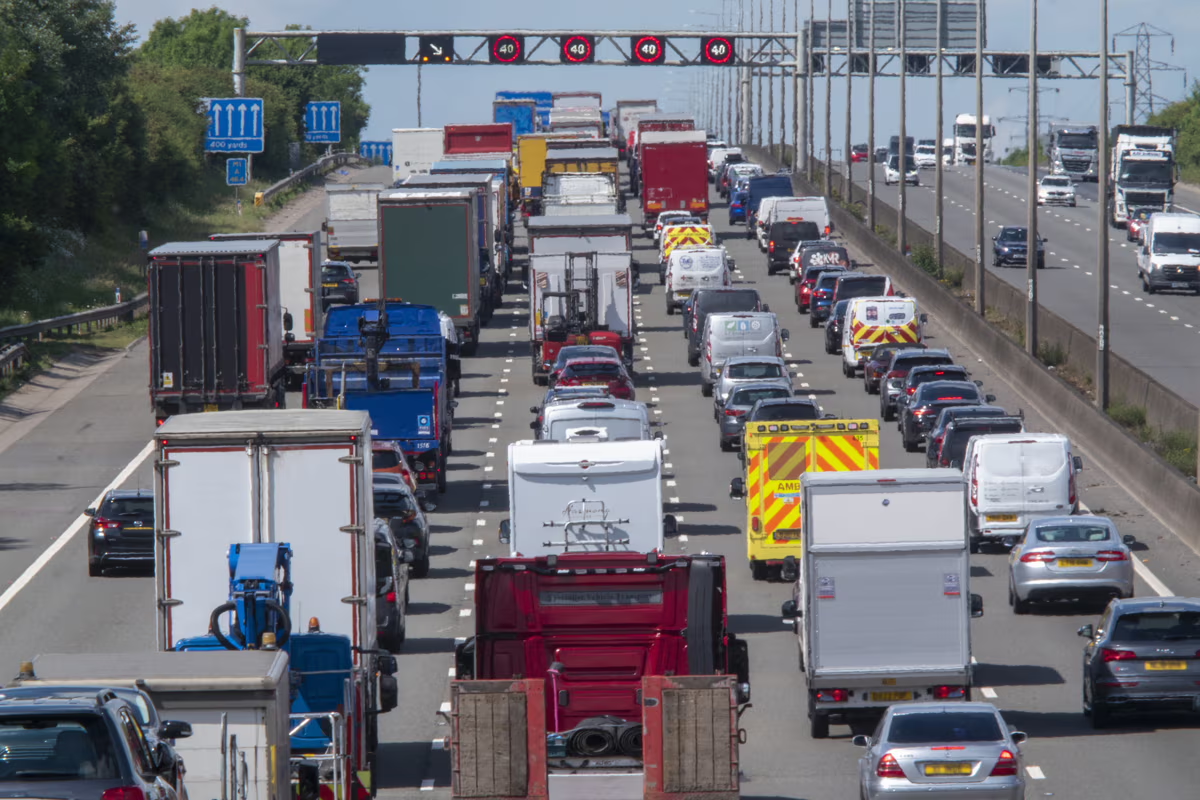
RAC: Fuel Prices latest

RAC head of policy Simon Williams said: “While pump prices have technically risen for a record 43 straight days, the increases have almost ground to a halt.

“The average price of petrol now stands at 158.27p, only having gone up a quarter of a penny since reaching 158.03p on Thursday. Similarly, diesel is now at an average of 191.5p, having first climbed to 191.11p on Thursday too.

“With dated Brent crude under $100 a barrel for the last three trading days, there’s now scope to see prices finally starting to go the other way.

“But, as always, it’s a highly volatile situation with much depending on what happens with the Strait of Hormuz. And, if the oil price was to go back up again this week, any hopes of slight forecourt reductions will inevitably disappear.”

PetrolDiesel Unleaded daily changeUnleaded change – since 28/2Unleaded % change since 28/2Diesel daily change Diesel change – since 28/2Diesel % change since 28/2
28/02/2026132.83142.38+0.200.0%+0.2 00.0%
13/04/2026158.27191.50+0.0+25.419.2%+0.0+49.134.5%

Essential fuel saving tips ahead of Easter road trips

10 fuel saving tips for drivers  

Drivers are being told that harsh acceleration and braking could be contributing to poor fuel efficiency. 

Experts at LeaseLoco.com are sharing ways to help cash-strapped Brits minimise fuel waste on the road and save money when travelling this Easter.  

As prices continue to fluctuate, adopting more cautious driving habits and reducing unnecessary energy output can lead to significant savings.

Shopping around for the best fuel prices and planning ahead for fuel top ups can make a big difference in cutting costs.

Motorists should plan journeys and try to include well priced petrol stations in their route to prevent unnecessary detours for fuel.

Drivers are also advised to conserve fuel and prevent unnecessary consumption by avoiding excessive engine revs and sudden acceleration.

Other tips like closing windows to reduce drag on a vehicle, and minimising air conditioning use can prevent vehicles from overworking and using fuel unnecessarily.

These tips can also benefit electric vehicles (EVs). EV drivers can extend their driving range and reduce the need for frequent charging by minimising energy consumption, ultimately saving money.

John Wilmot, CEO of LeaseLoco.com said: “Fuel costs are continuously rising but there are a few ways to combat this which can help make a difference to your monthly budget.

“Some common bad habits that cause drivers to waste more fuel than they realise include unnecessary engine revs, harsh acceleration, and idling in traffic with the engine running.

“If you have an older car you’ll want to avoid frequently restarting your engine in brief stops. Those with new models however should definitely consider making the most of their stop-start systems to help reduce fuel consumption. 

“By thinking ahead and driving smoothly, you can make significant savings on fuel by reducing your vehicle’s consumption.”

TEN FUEL-SAVING TIPS:

Shop around 

Checking out where near you has the cheapest fuel, you can use sources such as PetrolPrices.com to help you work this out. 

Accelerate and brake smoothly 

Driving smoothly, with gentle acceleration and braking will help to reduce fuel consumption by minimising sudden spikes in fuel usage.

Reduce engine revs

Revving your engine increases fuel consumption. By reducing revs, you can make your fuel usage more efficient.

Use cruise control 

Using cruise control or driving at a steady, consistent pace, particularly on motorways, will help reduce fuel consumption.

Remove unnecessary weight

The heavier your car, the more energy it requires to move. Reducing unnecessary weight will decrease fuel consumption and improve efficiency.

Top up tyre pressures 

Make sure your tyre pressure is topped up; this will reduce drag and improve fuel efficiency. Under inflated tires create more rolling resistance, which can increase fuel consumption.

Combine trips and plan ahead

Plan your trip in advance to find the quickest routes and avoid traffic, especially on unfamiliar journeys. This can help you save time and reduce fuel consumption. If possible, combine trips and car share if you’re taking the same route.

Cut down on air conditioning

Anything that requires energy from your vehicle, such as air conditioning, will consume fuel to operate. To reduce fuel costs, it’s best to minimise the use of air conditioning when possible.

Close windows 

Driving with the windows open can increase drag on your vehicle, requiring more acceleration to reach speed. Particularly on fast roads, keeping the windows closed will help reduce drag and improve fuel efficiency.

Turn engine off

When stopped for a few minutes, turn off your engine. In newer cars, utilise the start/stop function. Reducing idling can help lower fuel consumption and costs.

LeaseLoco is the UK’s biggest car lease comparison website, making it super quick and easy for drivers to filter and compare millions of deals from the UK’s leading car leasing companies to best suit their needs.

Drivers undeterred by fuel price concerns with nearly 21m Easter getaway trips planned

New figures show most drivers are sticking to Easter travel plans, despite surging fuel prices

Drivers are committed to making the most of the four-day Easter bank holiday despite sharply rising fuel prices, with nearly 21m leisure journeys planned, according to a new study of drivers’ getaway plans by the RAC and traffic analytics specialists INRIX.* 

With over a million more trips planned than last year, this Easter weekend is set to be the busiest on the roads since 2022 – which was the first full getaway after the Covid lockdowns.

RAC data suggests traffic will be at its busiest on Good Friday 3rd April with drivers planning around 3.3m leisure trips. Over 2.3m trips are planned on Thursday 2nd, while drivers are expected to make 3m journeys on Saturday 4th. The number of trips planned drops slightly on Easter Sunday to 2.3m, before increasing again to a further 3m on bank holiday Monday as travellers return home.

A further 6.7m journeys are anticipated at some point over the Easter bank holiday weekend, with drivers undecided on their exact date of travel. But with some early indications that the weather could warm up in time for the weekend, the number of ad hoc journeys could rise.

New separate research by the RAC also shows that while 31% of drivers are increasingly worried about rising fuel costs – driven by the current conflict in the Middle East that has seen pump prices soaring – most aren’t changing their plans. Only 6% expect to drive shorter distances and another 6% say they won’t drive at all, as a direct result of the higher prices.*

This is despite the fact that filling up a typical diesel family car this Easter will cost at least £19 more than it did on Good Friday in 2025, and a tank of petrol nearly £8 more, with further increases likely.

On Thursday 2nd – the day when many schools break up for the Easter holidays – some of the worst delays of more than 40 minutes are expected on the M25 clockwise between J15 and J19 around 2.45pm, and on the M4 westbound across the Prince of Wales Bridge towards Bridgend with delays of an hour and a quarter in the evening, according to data from INRIX. The anticlockwise stretch from J17 to J12 will also see similar delays closer around 4pm, close to the evening rush-hour. 

Meanwhile, on Good Friday, many major roads are expected to be busy throughout the day from 10am-7pm. The M5 southbound between J15 at the RAC tower north of Bristol and J23 for Bridgwater – a key holiday route – could see journey times extended by more than 50 minutes at lunchtime, while the M25 anticlockwise between J17 and J12 may see delays of 30 minutes mid-morning, nearly trebling normal journey times.

On Saturday 4th, drivers are advised to avoid 10am to midday when traffic will be at its busiest. The M40 northbound from J12 to the Umberslade interchange with the M42 will see delays of around 48 minutes at 11am, with journey times almost four times longer than usual. 

The roads are expected to be busy for most of Easter Monday 6th April as families return from their Easter trips. Delays of over an hour (65 minutes) are expected at midday in the South West on the M5 northbound between J25 for Taunton and J15 at the RAC tower.

Elsewhere, the M25 clockwise between J15 to J19 will be hit with queues at 5.30pm, with journeys taking over 38 minutes longer than usual, double usual travel times.

RAC mobile servicing and repairs team leader Sean Kimberlin said: “The Easter bank holiday getaway is traditionally one of the biggest of the year, and 2026 looks no different.

“In fact, the number of planned leisure journeys by car has risen for the second year running and as a result we expect this to be the busiest Easter on the roads since 2022, when the country opened up after the Covid lockdown. 

“Despite fuel prices rising dramatically due to the conflict in the Middle East, our research suggests Easter remains incredibly important to people as it’s often the first chance to get away since Christmas or to meet up with friends and family.

“While a significant number of drivers are concerned about rising fuel prices, a much smaller contingent are actually changing their plans this Easter as a result. This is despite the cost of filling up a family diesel car increasing by around £19 compared to this time last year, and a tank of petrol being £8 more expensive. In the face of rising prices, we urge everyone to use the myRACapp to find the cheapest forecourts near them.

“We expect traffic levels to be consistently high from Thursday when many schools break up. We advise drivers to plan for the best time to travel if they want to avoid significant queues, especially in traffic hotspot areas such as the M5 heading towards Devon and Cornwall and the M25. Congestion is likely to be at its worst from 10am from Thursday to Saturday and on Easter Monday, so leaving early in the morning is the best way to avoid the jams.

“The Easter bank holiday is always a particularly busy period for our patrols, but many breakdowns can be avoided if drivers ensure their vehicles are fully prepared before they travel. It’s still not too late to book an RAC Mobile Mechanic who can service or repair cars at home or at work, removing the need to visit a garage and giving drivers peace of mind their vehicles are fit for a long road trip.”

National Highways’ traffic contraflow system, ‘Operation Brock’, will be in place throughout the Easter weekend from 1st to 7thApril, with lorries travelling to the Port of Dover being directed to a specific lane at Junction 8 of the M20. 

Port of Dover chief executive Doug Bannister said: “The port is preparing for a busy Easter getaway period, with an early increase in traffic expected from Friday 27th and Saturday 28th, followed by the predicted getaway volumes through to mid-April.

“Between Thursday 2nd and Sunday 19th April, we will welcome in the region of 37,000 cars through the port. To help ensure a smooth departure, we kindly ask all customers travelling with our ferry partners not to arrive any earlier than two hours before their scheduled sailing, just as you would if departing from a UK airport.

“We appreciate everyone’s patience, should there be any additional waiting time due to the increase in traffic levels.”

For drivers planning a long Easter getaway journey, the RAC advises booking an appointment with one of its Mobile Mechanics. RAC Mobile Mechanics can complete services and repairs on the driveway or at a customer’s place of work, giving drivers peace of mind before they lhit the roads.

Two-thirds of drivers oppose plans to expand 20mph areas

Plans to extend 20mph speed limits across more UK roads are facing resistance from drivers, new research reveals.

A recent survey by Quotezone.co.uk found that 66% of respondents said they were not in favour of reducing key 30mph roads to 20mph.

The study of 1,000 British adults, showed over two-thirds (67%) think 20mph roads are simply too slow.

The findings come amid ongoing discussions across parts of the UK about expanding 20mph zones, hoping to improve road safety and reduce accidents in urban areas.

Last month, the government launched a new road safety strategy, which aims to reduce deaths and serious injuries on Britain’s roads by 65% by 2035.

The strategy revealed there will be a new edition of the best practice guidance on setting local speed limits, which suggests there may be significant changes to the 30mph default limit on urban roads.

Wales is leading the way in terms of adopting lower speed limits and has already implemented a default 20mph rule on residential and built-up roads.

Scotland and England are also following suit, with many regions already rolling out a 20mph speed limit in urban areas.

London has seen significant progress, with lower speed limits in place on more than half of urban roads, while the North West is close behind, with over 45% now set at 20mph.

While public opinion may be divided on the approach, in the first year of the new 20mph limit, Wales saw approximately 100 fewer people killed or seriously injured, and research shows that even an average speed reduction of just 1mph can cut crash frequency by 5%.

As more roads move to lower limits, drivers are being encouraged to stay alert to changing signage and adjust their driving accordingly.

Sticking to the indicated limits ensures motorists avoid fines, penalty points and potential increases to their insurance premiums.

Greg Wilson, car insurance expert and CEO at Quotezone.co.uk said: “With changes to speed limits continuing to be discussed across the UK, our research suggests many motorists remain unconvinced about reducing key 30mph roads to 20mph, with concerns likely centred around journey times and practicality.

“That being said, evidence from Wales, for example, demonstrates that lower limits can have a positive impact on road safety, with data from the first year of implementation showing fewer people killed or seriously injured.

“Ultimately, decisions around speed limits sit with local authorities, and they must balance public sentiment with safety outcomes, congestion, and the needs of different road users when assessing what’s appropriate for their communities.

“With lower limits appearing on more roads, it’s important drivers watch for signage and adapt their speed to make sure they stay safe and avoid fines.

“From an insurance perspective, any measure that successfully reduces collisions is positive news for premium prices. Fewer accidents could lead to fewer claims, and over time that has the potential to ease the pressure on car insurance costs.”

As a price comparison site, Quotezone helps drivers compare and find savings on all sorts of motoring products, such as van, fleet and car insurance.

Motorists could save hundreds of pounds by following these tips

Expert advice from car insurance comparison specialists

UK motorists are being shown how simple adjustments could help them save hundreds on their car insurance in 2026.

Car insurance experts at Quotezone.co.uk are urging drivers to consider what modifications they choose, how they word their job title, and to be realistic about the annual mileage covered each year. 

Although car insurance prices have fallen in 2025, with the current average cost coming in at £591 as of Q3 2025, small changes to how and when people purchase their premiums could create further savings.

Recent data has revealed how slight changes in job title wording could impact insurance pricing, as providers can categorise job roles differently.

Another major consideration for drivers is the modifications they make to their car, with common modifications like window tints, tow bars, and even sunroofs having the potential to not only increase insurance premiums, but invalidate insurance altogether if they are undeclared. 

A Quotezone survey earlier this year showed 65% of drivers didn’t realise adding a sunroof could be seen as a modification, meaning many drivers could be unknowingly risking higher insurance premiums or invalid cover.

Drivers have also been warned about how much their mileage can really affect their insurance premiums, with those clocking up the miles potentially paying hundreds more each year.

The timing of car insurance renewal remains a huge saving, with drivers potentially able to cut costs by up to 45% simply by renewing 15 to 24 days before their policy ends.

The later drivers leave it, the more expensive premiums are likely to be. A recent Quotezone survey showed two-thirds buy at the last minute when costs are potentially at their highest. 

Research also shows that premiums purchased between midnight and 6am are 22% higher on average than those secured during the day.

Quotezone.co.uk CEO and car insurance expert Greg Wilson said: “This year has been really positive for many motorists as car insurance costs continued to decline quite significantly. 

“This time last year we were looking at an average of £770 and now the average cost is coming in at just over £590. A decrease of £180 in the space of 12 months is welcome news for drivers who may be struggling with rising fuel and repair costs.

“But there are further savings to be had and a number of small changes could help put more money back into drivers’ pockets. 

“While each individual’s circumstances are different and car insurance premiums are based on a series of risk factors such as age, location, and the cost of the vehicle – it is always worth ensuring drivers have the best possible price for their situation and reviewing these price sensitive questions and keeping these money saving tips in mind is key. 

“It’s hard to predict what car insurance prices will do in 2026. While recent months have seen some easing in average premiums, there’s no guarantee this will continue, as inflation pressures, rising claims rates and the increasing cost of car repairs may make it challenging to keep prices lower for long. This makes it vital that drivers know how to get the most competitive price possible.”

Quotezone.co.uk’s top five car insurance saving hacks of 2025:

1.Choose your job title carefully

Insurers categorise job roles differently, meaning slight changes in job title wording can also impact insurance pricing. For example, someone describing themselves as a “Healthcare Assistant” might receive a different quote by selecting “Care Assistant” or “Care Worker” instead. As long as the title remains accurate, it could help reduce premiums.

2.Consider the car modifications you make 

Car modifications can cause higher insurance premiums as they often increase the value of the vehicle and insurers may view them as an increased risk of theft. It’s also important to make sure any modifications are declared to the insurer or you run the risk of invalidating your policy.  

3.Review how much annual mileage you’ll really cover

Driving habits and your circumstances can change over time, so it’s important to regularly review your policy and let your insurer know of any changes to ensure you are in the correct mileage band, especially if you’re driving much less miles than you initially covered yourself for. Motorists clocking up fewer than 1,000 miles a year pay an average of £520, while those who exceed 30,000 miles face average costs of £800. 

4.Hit the insurance renewal sweet spot 

Those who are organised and give themselves plenty of time to compare quotes from other insurers will likely get a better deal than those who leave it until the last minute. Quotezone data reveals that 15 to 24 days before the policy is due to start is the sweet spot, with drivers purchasing during this timeframe saving themselves an average of 33-45%.

5. Park somewhere safer

The closer you can park to the house, the safer your car is likely to be, reducing the risk of theft or damage, which could help reduce your insurance premiums. Those who park their car out on the road overnight could see average premiums of £1136, whereas the average for parking on a private driveway is 24% less at £868.

Quotezone helps over 4 million customers every year compare and find savings on all sorts of motoring products such as car, truck and van insurance.

Essential driving tips for safe journeys this festive season

Travelling home for Christmas or out and about visiting family can be a hectic and dangerous time on our roads.

Around Christmas, conditions are normally challenging with cold and wet weather making roads treacherous.

The evenings are also darker, with a larger volume of cars. Traffic experts estimate nearly 30 million journeys take place in the UK over the Christmas holidays, as people hunt for gifts, enjoy festive nights out and celebrate with friends and family.

Experts from Tiger.co.uk have named six important steps for drivers to take when travelling over the festive period, particularly if they have kids in the car.

The calendar is normally packed full of festivities that children often need to be driven to, from visiting Santa, to pantomimes, town Christmas light switch-ons and carol services – often driving long distances or through turbulent winter weather conditions.

It’s crucial for parents or guardians to be aware of potential issues to ensure a safe and responsible driving environment for little ones.

Crucially, parents should use an appropriate car seat or seat belt for their child’s age, height, and weight and make sure it’s installed properly, regularly cleaned and is compatible with the vehicle.

According to the Highway Code, children must use a car seat until they’re 12 years old or 135 cm tall, and toddlers under 15 months must be placed in a rear-facing car seat.

Failing to comply with these rules can result in a fine of up to £500 and penalty points.

The Highway Code Rule 98 also warns drivers to make sure objects are secure when loading a car. Christmas presents, juice bottles and toys need to be stored properly before setting off, to reduce the risk of them hurting people inside the car in the event of an accident.

Busy parents or caregivers are also reminded to avoid multitasking while driving and avoid driving altogether if they are too tired over the festive break.

Ian Wilson, car insurance expert and Managing Director at Tiger.co.uk said: “Driving over the holiday season can bring a whole new set of challenges given the unpredictable weather, busy roads and hectic Christmas calendar.

“It also brings unfamiliar situations as more people do late night runs as designated drivers, usual routes can suffer additional congestion due to festive events and Christmas lights and festive spectacles can make for distractions.

“It’s important for drivers to be aware of these additional hazards and safety tips in the build up to Christmas, leaving time to prepare the car, the passengers and ensure they’re not too tired to drive.

“Careless driving can see motorists handed an unlimited fine with three to nine penalty points so it’s best to be aware of the dangers and plan ahead.”

Tiger’s tips for staying safe on the roads this Christmas: 

1. Avoid distractions and ensure visibility

It’s important that the driver can see out of the vehicle properly at all times, so presents need to be packed and stored safely in the boot – and not on the parcel shelf. If the car is decorated for Christmas, you need to be careful that it’s not a distraction to the driver and they can see clearly out of all of the windows.

2. Check you’re not too tired

The Christmas period can put a lot of stress on drivers. Organising, packing, wrapping and spending time visiting lots of family members can be exhausting but you should never drive when tired. Anyone experiencing festive fatigue should swap drivers, take a rest stop to recharge or consider public transport. 

3. Beware of bulky clothes

Although the winter chill means children are likely wrapped up warm before getting into the car, bulky coats should not be worn in car seats. They leave extra space under the harness, which could lead them to slip through the straps during an accident. To keep kids warm in the car, dress them in thin layers and use a blanket over the harness. 

4. Double-check child lock

When driving with children, child locks should also be in use. Children may open the door accidentally while moving – which is incredibly dangerous and could be seen as careless driving and result in a hefty fine and points on your licence. Without a child lock, children can also try to leave the vehicle in busy areas before the parents are ready to help.  

5. Car seats are a priority 

When driving with young children under 12 years or 135 cm tall, it is crucial to follow guidelines provided by car seat manufacturers and the law, to ensure children are properly restrained. Babies under 15 months must be placed in a rear-facing car seat. Refit and clean the seats regularly to ensure they are secure and free from debris that could hinder the buckles.

6. Be wary of multitasking

Passengers, especially children, can be very excitable when travelling at Christmas time, but it is important for drivers not to get distracted. Whether you are tending to their needs or trying to calm them down in the car, these distractions could lead to accidents. It is important to stay focused on the road in order to remain in control of the vehicle. If children in the car are becoming fussy on long journeys, it is better to pull over and take a break in a safe spot before taking to the road again. 

It’s also sensible to add breakdown cover to car insurance policies this Christmas or purchase a standalone product – drivers should check with their insurer to see if they have it already as standard, to avoid paying extra.

Motorists warned of aquaplaning dangers during heavy rainfall

Motorists are being warned about the dangers of aquaplaning, as experts share tips on how to stay safe on the roads during stormy weather.

Rainfall in the UK is on the rise, with winter 2023-24 the wettest on record,* making it vital that drivers know how to react in these challenging situations.  

Car insurance experts at Quotezone.co.uk urge drivers to check their tyre tread depth and significantly reduce their speed when it’s raining to help keep control during unexpected aquaplaning.

Also known as hydroplaning, aquaplaning happens when a layer of water builds up between a vehicle’s tyres and the road surface, causing the tyres to lose grip.

This can lead to a complete loss of steering and braking control, leaving drivers unable to manoeuvre safely until the tyres regain contact with the road.

Even a small amount of water can cause aquaplaning if tyres are worn or under-inflated. The legal minimum tread depth in the UK is 1.6mm, so it’s important for motorists to regularly check their tyres to ensure they meet or exceed this limit.

Drivers are advised to slow down when conditions are wet, as aquaplaning is far more likely to occur at speeds above 35 mph.**

It’s also important to avoid harsh acceleration, braking or sudden steering movements in rainy weather.

When the car is aquaplaning, drivers might notice the engine suddenly becoming louder, feel as though they’ve dropped the clutch down a gear, causing the revs to increase, experience lighter or unresponsive steering, or feel the back end of the car drifting from side to side, also known as ‘fishtailing’.***

In that situation, it’s crucial not to slam the brakes or turn the wheel sharply. Instead, drivers need to gently ease off the accelerator and keep the steering straight until the tyres regain contact with the road.

Greg Wilson, CEO and car insurance expert at Quotezone.co.uk said: “As the weather across the UK gets wetter and stormier, motorists need to be on alert for dangerous driving conditions.

“Many drivers underestimate how easily aquaplaning can happen. Even a thin layer of water can be enough if tyres are worn or speeds are too high.

“It can be a frightening experience when you suddenly lose control of the car, and can result in serious accidents, so knowing how to prevent and manage aquaplaning is crucial at this time of year.

“Regularly checking tyres, slowing down, keeping an eye out for puddles and avoiding harsh manouvers in wet conditions, can all help improve safety while driving in the rain.

“Being aware of the first signs of aquaplaning is also important so that drivers can react calmly and safely. If the steering suddenly feels light or the car starts to drift, don’t panic.

“Staying composed, easing off the accelerator, keeping the wheel straight and letting the tyres regain their grip naturally is the best that you can do in this situation. Being prepared and aware of what’s happening is half the battle.”

Quotezone.co.uk’s top tips on avoiding aquaplaning:

1. Reduce speed  

Your tyres will have less chance of gripping the road if you’re travelling at a higher speed. There’s no magic “safe speed,” but experts say that cars travelling under 35 mph in an inch or two of water are much more likely to stay in control.

2. Check your tyre tread depth

The legal minimum tread depth is 1.6mm, but don’t wait until you’re right on the limit. More tread means better grip, especially on wet roads. If your tyres are starting to look a little smooth, it’s time to get them checked or replaced,**** driving with unroadworthy tyres can lead to fines, penalty points and could even invalidate your car insurance. 

3. Keep tyres properly inflated

Under-inflated tyres can’t clear water as effectively, increasing the risk of aquaplaning. Check tyre pressures regularly, especially before long journeys. If you’re not sure what your tyre pressure should be, check your car manual or reference sticker on the inside of the doorframe.

4. Keep an eye out for puddles

Those big puddles might look harmless, but hitting one too fast can make your car lose contact with the road in an instant. Try to avoid waterlogged roads or drive around puddles safely – if you have to go through, reduce speed and proceed with caution. Turning your headlights on is recommended on rainy days to increase visibility, so other drivers can see you better and you have a better chance of spotting excess surface water. 

5. Follow the track

If there’s a car ahead, their tyres will already have cleared some of the water from the road, leaving tracks behind. Driving in those tracks, while keeping a safe distance, could help your tyres maintain better grip.

6. Drive smoothly

Gentle steering, braking and accelerating are key when it’s wet. Take extra care on bends and avoid using cruise control, as it can stop you from reacting quickly if you start to aquaplane.

As a leading price comparison site, Quotezone helps millions of drivers every year compare and find savings on all sorts of car insurance, such as young, older and convicted driver insurance.

Expert tips for driving through flooded roads

With warnings in place for heavy rain, motorists are being advised on how to navigate flooded roads safely.

Motoring experts at LeaseLoco.com have shared their top tips for drivers who find themselves with no choice but to tackle waterlogged routes.

Flooded roads not only pose a serious risk of vehicle damage but can also lead to lengthy standstills and an increased likelihood of accidents.

So motorists have been advised to drive steadily, remain considerate of other road users, and use consistent engine revs to reduce the risk of water damage.

Using a low gear is particularly important, as it helps prevent costly repairs and avoids unnecessary breakdowns that can cause further disruption.

Drivers are also being urged to stay calm and focus on safety by using headlights and maintaining clear visibility. 

Patience is key when navigating flooded roads – motorists should take turns, drive through the highest points of the road, and avoid rushing, as panic can lead to accidents.

John Wilmot, CEO and founder of car leasing deals site LeaseLoco said: “Driving through flooded roads should be avoided whenever possible, both for personal safety and to prevent costly damage to your vehicle.

“However, drivers will inevitably encounter waterlogged roads from time to time, so knowing the safest ways to navigate them is essential.

“Water damage to vehicles can be expensive, but maintaining consistent revs while driving through floodwater can help prevent water from entering the engine.

“It’s also important to stay inside your vehicle in flooded areas, as floodwater often contains contaminants from drainage systems that pose serious health risks.

“In wet conditions, vehicles are at risk of losing traction and control – something known as aquaplaning. If this happens, ease off the accelerator gently, keep the steering wheel straight, and avoid braking harshly, as this can worsen the situation.

“By staying calm, driving slowly, and taking proactive precautions, you can protect yourself, your passengers, and your vehicle.”

LeaseLoco’s tips and advice for driving through flooded roads: 

  • Avoid where possible 

Driving in floods should be avoided whenever possible, as water deeper than 4 inches can pose significant risks to both passengers and pedestrians. Floodwater may be deeper and faster moving than it appears, so plan your journey carefully and reroute if needed.

  • Drive slow 

It’s crucial to drive cautiously and at reduced speeds in flooded areas, as driving too fast can force water into your vehicle and cause serious damage. Additionally, splashing pedestrians by driving through puddles at speed is against the law.

  • Drive through the centre 

Roads are engineered to dip at the sides, allowing water to run off into drainage systems, so driving through the centre of a flooded road will ensure you’re not driving through more water than necessary.

  • One at a time 

Take time and be patient when roads are flooded. Drive cautiously to allow cars to drive through the middle of the road one at a time. For people with larger, more robust cars, be mindful and cautious of other vehicles that might not be as sturdy.

  • Low gear 

Driving in a lower gear and maintaining steady revs can help prevent water from entering the exhaust. If water does enter the exhaust, it can cause hydrolock, potentially resulting in severe engine damage.

  • Use headlights 

Visibility is important when roads are flooded, especially in the evenings, as other drivers might not notice reduced speeds or delays caused by cautiously navigating through the centre of floodwater.

  • Air conditioning 

Prevent your car from misting in floods so that your vision is clear for any potential hazards. Keep air flowing by turning the air conditioning on.

  • Remain inside the car 

Flood water is usually caused from systems overflowing, so the water could be grossly contaminated. Stay inside your car, even if you’re waiting for help. Water may also appear to be more shallow than it really is, which can increase danger to individuals who aren’t confident in water.

Motorists can sign up for flood warnings on the GOV.uk website.

UK Drivers Warned Over ‘Crash-for-Cash’ Scams

LEGAL EXPERT REVEALS THE TACTICS

Motorists across the UK are being urged to stay vigilant as “crash-for-cash” scams continue to rise – with fraudsters deliberately causing rear-end collisions to cash in on bogus insurance claims.

According to the Insurance Fraud Bureau (IFB), over 170,000 claims linked to suspected crash-for-cash incidents have been made in recent years – costing the UK industry hundreds of millions and pushing up premiums for honest drivers.

Legal expert Adam Jones from HD Claims warns that these staged accidents are often designed to make innocent drivers look responsible, particularly by slamming on brakes in congested traffic or at roundabouts.

“Many of these scams are carefully choreographed to leave you thinking you were at fault,” says Jones. “You may feel you were too close or distracted, but in reality, the collision was intentional. It’s financial exploitation – and in some cases, extremely dangerous.”

Telltale signs you’re being set up for a rear-end scam:

  • The other car’s brake lights are faulty or deliberately disabled
  • The driver is erratic, braking sharply or hesitating at junctions
  • The car is full of passengers – who all later claim whiplash
  • The other driver tries to talk you out of calling the police
  • They provide pre-written insurance details or urge you to use their “preferred” repair garage.

Other roadside scams to watch out for in 2025:

  • False damage claims: Fraudsters may claim you scraped their car in a car park, showing fake dents or photos from a previous incident.
  • Staged pedestrian accidents: A person may jump in front of your slow-moving car to fake injury.
  • Vehicle obstruction thefts: Drivers are blocked in by a second car while someone tries to steal valuables from the passenger side.
  • Fake breakdown helpers: In remote areas, con artists may offer help then demand cash or card payment on the spot.

What to do if you suspect a scam:

  • Stay calm and don’t admit fault at the scene
  • Photograph everything – car positions, damage, number plates, road signs, passengers
  • Call the police if anything feels suspicious
  • Never accept cash offers or sign anything without checking it first
  • Report it to your insurer and the Insurance Fraud Bureau (IFB) Cheatline

“Crash-for-cash fraud doesn’t just cost drivers money – it can cause injury, anxiety, and serious legal consequences,” Adam Jones adds.

“If something feels off, document everything and get legal advice immediately.”

Discount of up to £3,750 on electric cars set to slash costs

Car manufacturers can apply for the Electric Car Grant from tomorrow

  • new £650 million grant will slash electric car prices, saving UK households up to £3,750 when they upgrade or switch to electric  
  • car manufacturers to apply through the Electric Car Grant – speeding up access and cutting costs for drivers and businesses  
  • comes as more than 380,000 zero emission cars were registered last year, delivering the government’s Plan for Change to kickstart economic growth and put more money in working people’s pockets

Drivers across the UK will soon enjoy discounts on dozens of new electric car models after the Transport Secretary today (15 July 2025) announced a £650 million grant scheme worth up to £3,750 per car, putting more money back in working people’s pockets as part of the Plan for Change and making owning an electric car a reality for thousands.  

Supporting the manifesto commitment to phase out the sale of new petrol and diesel cars by 2030, the £650 million Electric Car Grant (ECG) will back UK and other manufacturers, with eligibility dependent on the highest manufacturing sustainability standards. Discounts up to £3,750 will be available at the point of sale for new eligible electric cars priced at or under £37,000.

Drivers will start to benefit from discounts as soon as manufacturers successfully apply for their zero emission cars to be part of the grant scheme from 16 July 2025, with funding available until the 2028 to 2029 financial year.

With drivers citing upfront costs as a key barrier to adoption, the grant will narrow the upfront cost between petrol and electric vehicles, giving thousands more drivers access to savings of up to £1,500 a year in fuel and running costs compared to a petrol car. The discount means that zero emission cars are now cheaper to buy and run than ever before and comes on top of preferential tax rates, delivering real savings for working families.  

Owning and buying an electric vehicle (EV) is becoming cheaper, with 2 in 5 of used electric cars sold at under £20,000 and 34 brand new electric cars available from under £30,000.

‘Standing firmly on the side of British drivers’, this latest investment is part of the government’s major plan to support motorists, including a record £1.6 billion invested to tackle potholes and freezing the fuel duty at 5 pence until spring 2026, saving the average motorist £50 to £60 over the year.

Transport Secretary, Heidi Alexander, said: “This EV grant will not only allow people to keep more of their hard-earned money – it’ll help our automotive sector seize one of the biggest opportunities of the 21st century.  

“And with over 82,000 public chargepoints now available across the UK, we’ve built the infrastructure families need to make the switch with confidence. 

“This is our Plan for Change in action. We’re backing British drivers, British jobs and British growth.”

This latest scheme builds on the government’s major £63 million package to support at home charging for households without driveways, transition NHS fleets to electric and create thousands of chargepoints at business depots across the country. 

In total, the government is investing £4.5 billion to turbocharge the switch to EVs, securing Britain’s position as a world-leader in electric vehicle adoption while helping put more money in people’s pockets. Today, the UK is already a global leader in the transition to zero emissions driving, with the largest EV market in Europe in 2024 and sales up a fifth on the previous year.

The latest update also comes as the UK hits over 82,000 public chargepoints nationwide – with one added every 30 minutes – giving peace of mind to drivers that they will be able to charge conveniently at home, work or on longer journeys.  

This latest move comes alongside the Zero Emission Vehicle (ZEV) Mandate, which requires manufacturers to sell increasing percentages of zero emission vehicles each year. Recent changes to the mandate give industry the certainty, stability and support they’ve been asking for, alongside crucial trade deals with the US, India and the European Union following the recent global economic headwinds.

Simon Williams, RAC head of policy, said: “Within weeks, discounted cars should start appearing at dealerships across the country. And, as the biggest savings will be given to cars with the strongest ‘green’ manufacturing credentials, drivers will be picking models that are not only better for their wallets, but better for the planet too.

“This is further welcome news following last week’s announcement about more funding for pavement gully charging solutions that will enable those without driveways to charge an EV at home. Together, these initiatives should mean more drivers than ever start benefitting from the lower costs of running an electric car.”

Vicky Read, CEO of ChargeUK, said: “This announcement is brilliant news – for drivers and for the UK’s transition to electric vehicles.

“With a commitment to invest £6 billion through to 2030, the UK’s charging industry has rolled out infrastructure ahead of demand to ensure that when drivers switch, the network is there to make charging as convenient as possible.

“There are now 82,000 public charge points and a new one goes in the ground every 29 minutes on average.

“Hot on the heels of the weekend’s announcement on measures to support charging, including meeting ChargeUK’s calls for improvements to signage on main roads, today’s package is another vital boost to the charging industry, helping it invest with confidence.”

Dan Caesar, CEO, Electric Vehicles UK, said:  “A targeted incentive program is a significant step forward in encouraging consumers to buy battery electric vehicles and to make them more accessible. While battery-only EVs are much cheaper to buy and run than most realise, surveys show that cost misperceptions are the primary reason for hesitance.

“A generous grant of this nature gives a new group of interested buyers, who might have thought that going electric was beyond them, a gentle nudge into what is great tech. More than 9 out of 10 battery EV drivers will never revert, and there’s a reason for that.”

John Lewis, CEO, char.gy, said: “It’s encouraging to see the government stepping up to support consumers in making the switch to electric vehicles. This move brings us closer to a future where driving electric is accessible to everyone – not just the privileged few.

“Combined with the introduction of the price cap and the additional funding for on-street charge points, we can get more affordable cars on the road and more people enjoying the benefits of EVs. The outcome will be cleaner air for all and more cash in the consumer’s wallet as they enjoy the long-term savings of driving electric.”

Mike Hawes, SMMT chief executive, said: “Today’s announcement of the return of government support for the purchase of electric vehicles is a clear signal to consumers that now is the time to switch.

“Rapid deployment and availability of this grant over the next few years will help provide the momentum that is essential to take the EV market from just 1 in 4 today, to 4 in 5 by the end of the decade.

“This announcement is a welcome response to consistent calls from the industry for more support, which will be in addition to the substantive subsidies already provided by manufacturers.

“Taken with recent announcements regarding infrastructure investments and the Industrial Strategy, the UK has the opportunity to maintain its position as a leader in both the manufacture and sale of zero emission vehicles.”