Aldi stores across Edinburgh donated 24,039 meals to charities, foodbanks and community organisations across the UK throughout the recent school summer holidays.
The donations took the number of meals redistributed by Aldi in 2026 from more than 8.8 million before the school holidays to 10.9 million – an increase of 24%.
Aldi has worked with Neighbourly since 2019 to redistribute surplus food from its stores to charities and community organisations across the UK.
Luke Emery, National Sustainability Director at Aldi UK, said:“There’s no reason for good food to go to waste when it can be put to use by organisations supporting their local communities.
“Our stores redistribute surplus food throughout the year, giving local charities a regular source of food they can use to support the people who rely on them.”
Steve Butterworth, CEO of Neighbourly, added:“For many of the organisations we work with, summer doesn’t mean demand eases off. The school holidays can bring an additional pressure, as families face higher food costs and children who usually receive free school meals may not have the same access to support during the holidays.
“Regular surplus food donations give charities something practical they can use straight away, helping them keep shelves stocked and respond to what people in their communities need.”
Shoppers in Edinburgh can also donate food and everyday essentials to local charities, foodbanks and community groups through community donation points in Aldi stores nationwide.
Aldi also works with Company Shop to redistribute surplus food from its Regional Distribution Centres.
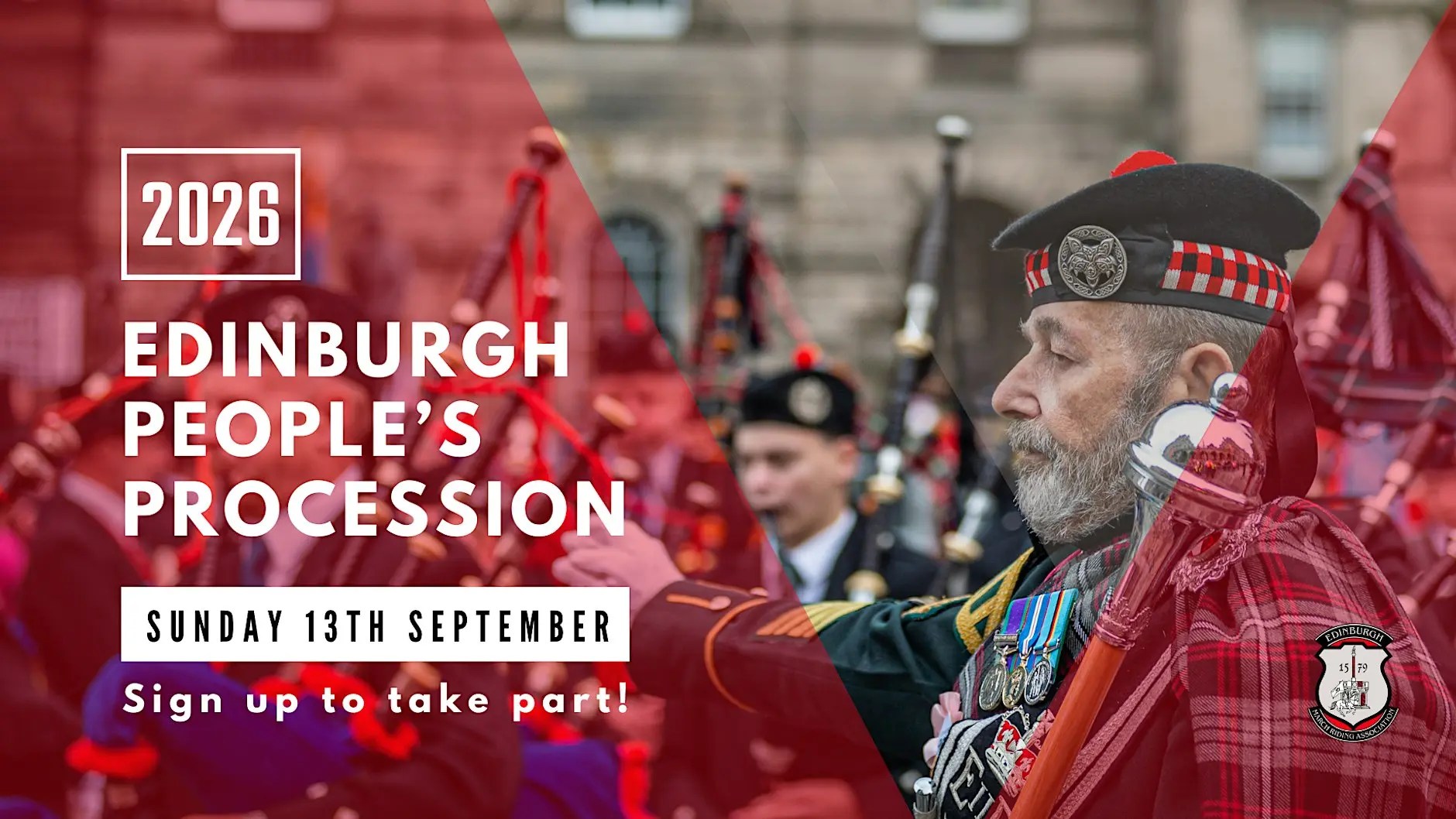
Community groups and organisations from across the city are being invited to register by Saturday 15 August to take part in the 2026 Edinburgh People’s Procession.
The People’s Procession takes place on Sunday 13 September 2026 and forms part of the spectacular Edinburgh Riding of the Marches, an annual event celebrating Edinburgh’s heritage while showcasing the city’s vibrant communities, culture and future. The procession gives local organisations the opportunity to raise awareness of their work and celebrate their contribution to life in the capital.
Organised by Edinburgh March Riding Association, with support from the City of Edinburgh Council, the procession will bring together more than 600 participants representing groups and organisations from across the city.
Participants will travel from Holyrood, near the Scottish Parliament and Palace of Holyroodhouse, along the Royal Mile to St Giles’ Cathedral ahead of the arrival of the Riding of the Marches cavalcade later that afternoon.
The Riding of the Marches will once again be joined by the Lord Provost Rt Hon Cllr Robert Aldridge, alongside the Edinburgh Captain and Lass, who will lead the cavalcade of 280 horses and riders up the Royal Mile watched by an audience of thousands.
City of Edinburgh Lord Provost Robert Aldridge said: “I’m delighted to see the return of the People’s Procession for 2026. The enthusiastic response to last year’s inaugural procession demonstrated the pride, diversity and community spirit that make Edinburgh such a special city.
“The procession is a fantastic opportunity for local groups and organisations to come together to celebrate the invaluable work they do and be part of one of Edinburgh’s most unique and historic events.
“I look forward to seeing even more community groups represented this year as the People’s procession continues to grow and become an established part of Edinburgh’s Riding of the Marches.”
Further information on the event including expected timings and the registration form is available via the events Eventbrite page.
On the Friday of last week, five people were injured in a series of racist and Islamophobic attacks across Edinburgh.
We, at ELREC, value and work toward an equal, inclusive and just community free from prejudice and discrimination and we stand with all of those who were affected by the events of last weekend and who are worried for their safety.
We stand, decidedly and absolutely, against all forms of discrimination, all violence and all attempts to rob Scotland of its diversity and the people of Scotland of their safety.
We are sharing the following statement in response to the reported anti-Muslim attacks in Edinburgh on Friday, 19 June.
**Statement from The Welcoming Association**
The Welcoming Association is deeply concerned by the reported anti-Muslim attacks that took place in Edinburgh on Friday, 19 June.
Our thoughts are with those who were injured, their families, and everyone affected by these distressing incidents. We recognise that events of this nature can have a profound impact not only on those directly involved but also on wider communities who may feel frightened, vulnerable, or targeted.
Leith, Sighthill, Telford Road, and the other affected areas are home to many of our members, volunteers, staff, neighbours, and friends. Edinburgh’s strength lies in its diversity, and everyone should be able to live, work, worship, and move around the city safely and with dignity.
While the circumstances of these incidents remain a matter for the relevant authorities, we are clear that there is no place for racism, anti-Muslim hatred, discrimination, or violence in our communities.
At times of tension and uncertainty, it is important that we reject misinformation, challenge prejudice, and avoid narratives that seek to divide people. Strong communities are built through trust, mutual respect, understanding, and meaningful relationships between people from different backgrounds.
As an organisation that supports refugees, migrants, and other New Scots, we see every day the positive contribution that diversity brings to Edinburgh. We remain committed to promoting inclusion, strengthening community cohesion, and creating spaces where people can come together, learn from one another, and build a shared sense of belonging.
We stand in solidarity with Muslim communities across Edinburgh and Scotland, and with everyone working to promote equality, dignity, and respect for all.
There is no place for hatred or violence in our city.
We encourage our partners, supporters and wider network to stand with Muslim communities, challenge misinformation and help build an Edinburgh where everyone can live safely and with dignity.
Organisations call for reliable, multi-year funding to avoid increased annual pressures
Charities in Scotland are increasingly struggling with funding delays, with organisations facing cash‑flow pressures, postponed or cancelled services, and depleted reserves.
The latest findings from the Scottish third sector tracker reveals a sector that continues to show resilience and adaptability, but one that is increasingly stretched across multiple fronts.
The Scottish Council for Organisations (SCVO) have now said calls for multi-year funding for the sector in line with inflation is absolutely essential.
The research, carried out for SCVO and partners, found over a quarter (28%) of organisations now cite delays or reductions in funding as a top challenge.
As a result, charities say these hold-ups in funding force organisations to draw on reserves as well as creating immediate cash‑flow pressures and forcing services to be postponed or cancelled.
The tracker found 58% of organisations hold less than six months’ reserves – up five per cent from Spring 2025 – and 57% say their current use of reserves is unsustainable, a sharp increase from 40% in Autumn 2024
Delays create immediate cash‑flow pressures (for around 60% to 65% of those organisations), force organisations to draw on reserves (45% to 50%), and lead to postponed or cancelled services (35% to 40%). (1)
Critically, funding delays also have a profound impact on staff morale, wellbeing, and retention.
Uncertainty around contract renewals, the risk of redundancy, and the inability to plan long‑term contribute to anxiety, frustration, and the loss of experienced staff are all exacerbating existing problems.
Overall, the findings show a sector committed to delivering for communities but increasingly constrained by financial instability, workforce shortages, and systemic uncertainty.
Steve Grozier, Research Officer at SCVO, said: “This latest wave of Scottish third sector tracker reveals a sector that continues to show resilience and adaptability, but one that is increasingly stretched across multiple fronts.
“Service delivery remains broadly stable, yet over half of organisations report that limitations in resources, skills, or capacity are hindering their ability to meet demand.
“Financial pressures have intensified. Staff recruitment and retention remain difficult for many organisations. Volunteer recruitment and retention challenges remain acute. Funding delays have now also emerged as a major challenge. The work being done by organisations across the sector in the midst of these issues is commendable.”
Responding to the tracker survey, organisations consistently emphasise that secure, multi‑year, inflation‑linked funding — particularly for core costs and staff salaries — is the single most important factor that would enable them to do more.
Without structural changes to public sector funding models, investment in workforce capacity, and improved partnership working, organisations risk being unable to meet rising demand or sustain essential services.
The calls come ahead of a hustings of candidates for the 2026 Scottish Parliamentary elections at SCVO’s flagship event, The Gathering, on Tuesday, 10 February.
SCVO have published their manifesto, Scotland’s Essential Sector, outlining the need for the next Scottish Government to deliver Fair Funding, with the need to reform the public sector funding landscape for voluntary organisations more pressing than ever.
Anna Fowlie, SCVO Chief Executive, added: “Scotland’s charities, community organisations and social enterprises are a fundamental cornerstone of our society and economy.
“This research shows a growing fragility which is detrimental to us all. It’s time to give these organisations, and the people they serve, the respect and stability that they need.
“The next Scottish Government needs to implement Fair Funding as a matter of urgency.”
Seven organisations have been selected to receive funding for campaigning projects aimed at improving the lives of people in Scotland.
Covering a wide range of issues from access to health checks for disabled people to helping older people connect with their communities, these projects will lay the essential groundwork and build momentum for larger campaigns.
Celia Tennant, Chief Executive of Inspiring Scotland, said: “Achieving long term, systemic change requires sustained effort and commitment. And while there is no shortage of people with the required passion and good ideas, funding for the crucial early stages of social justice campaigns is often limited.
“Our goal was to support those with a clear vision, deep knowledge of the issues, and confidence in building larger campaigns, but requiring resources to explore ideas, gather evidence, and test approaches for maximum impact.”
For this funding call, we partnered with Changing Ideas, an organisation with a strong track record of supporting campaigners to tackle social injustices in the UK and worldwide, and we’re excited to bring their experience and investment to Scotland.
David Graham, founder of Changing Ideas, said: “We are delighted to fund charities and groups working for change across the environment, childcare, women’s and girls’ rights, and more.
“We see this as the first step in building momentum for wider systemic change, and we are excited by what our partners will go on to achieve.”
Although this call focused on supporting a small number of projects, we were overwhelmed by nearly 100 applications, clearly demonstrating the strong appetite for campaigning in Scotland.
We wish all those who weren’t selected best of luck in their efforts.
After careful consideration and interviews with shortlisted applicants, the following seven projects were selected for funding:
Children First: £10,000 to progress their campaign against online harm to children and young people.
Coastal Communities Network: £10,000 to campaign for better access to information on water quality, increased centralised water testing, and improved access to community water testing equipment.
Enable Scotland: £9,928 to support people with learning disabilities in leading local and national campaigns to improve access to regular health checks.
Vintage Vibes: £10,000 to campaign against isolation, declining confidence and stigma surrounding ageing, and help older people feel valued and sure of their place in their community.
YWCA Young Women in Scotland: £9,983 to run a Scotland-specific campaign addressing digital violence against women and girls (VAWG), led by young women themselves.
The Motherhood Plan – Pregnant then Screwed: £10,000 to undertake the groundwork for a large Scotland-wide campaign that secures bold, credible childcare commitments from MSPs and holds the next Scottish Government to account.
Parenting Across Scotland: £8,600 to co-ordinate a campaign group with other children and families organisations to campaign for a Scottish hobby model to address the current inequity in hobby provision in Scotland.
Amy Woodhouse from Parenting Across Scotland explains how the funding is going to help the organisation realise their ambition for all children and young people in Scotland to have access to a hobby of their choice: “Hobbies are brilliant for so many reasons – they help children develop new skills, make friends and boost confidence.
“They can provide solace when times are tough and offer positive spaces for children to grow and develop. They should be a part of every childhood, but sadly they’re not. Cost, accessibility, lack of choice, transport difficulties and long waiting lists all prevent children from taking part.
“The solutions are possible, but we need a co-ordinated national approach to really make progress. Support from the Ideas for Change fund will help us to build momentum behind our hobbies campaign and ensure that all children and young people, regardless of their circumstances, can benefit.
“We are very grateful to Inspiring Scotland and Changing Ideas for this award.”
A spokesperson for Vintage Vibes said: “We are delighted to be selected by Inspiring Scotland as one of seven fantastic organisations to run a campaign to improve the lives of Scottish people in 2026.
“Our campaign will launch later this year, building on our highly acclaimed Ten Years Bold campaign, and will aim to spread empowerment in older people across Scotland, tackling ageism and challenging stigmas. We can’t wait to start!”
Inspiring Scotland are proud to partner with Changing Ideas and the seven funded organisations, and look forward to supporting their efforts and sharing updates as their campaigns progress.
At yesterday’s meeting of the city council’s Finance and Resource Committee (Thursday 15 January) the Scottish Greens presented an amendment which drew attention to a £15m Scottish government budget cut to community organisations and the end of Investment in Communities.
The shock proposed cut by the Scottish government risks a long list of local community groups being left high and dry as core funding for charities continues to be a pressing issue in the city (see list below).
Finance spokesperson Alex Staniforth said, “We’re glad our amendment passed at committee and officers will investigate the impact of these proposed cuts, but every time we think we’ve got a handle on cuts to the third sector some other proposal comes forward to squeeze it still further.
“The Scottish government should reflect on whether this is the best way to save £15 million given the vital work community organisations do in the city.”
List of Edinburgh organisations potentially affected:
About Youth, Calder Youth Action Project (part of Wester Hailes Together), City of Edinburgh, £105,822
Community Renewal Trust, Our Neighbourhood: A new hyperlocal Community Wealth Building partnership, City of Edinburgh, £300,732
Dr. Bell’s Family Centre, Start Well, Live Well: Wellbeing Support for Families in Leith, City of Edinburgh, £348,067
Edinburgh Food Social Cic, Changing Craigmillar Food Culture, City of Edinburgh, £325,847
Fresh Start, Fresh Connections, City of Edinburgh, £280,201
North Edinburgh Arts, North Edinburgh Arts Link Up, City of Edinburgh, £331,400
Space @ The Broomhouse Hub, Together We Can, City of Edinburgh, £350,000
The Venchie Children And Young People’s Project, Family Support Service, City of Edinburgh, £208,732
Transition Edinburgh South (Scotland) Ltd, Investing in Gracemount, City of Edinburgh, £302,196
Whale, The Arts Agency, Creativity, Place and Enterprise in Wester Hailes (part of Wester Hailes Together), City of Edinburgh, £332,494
R2 SUMMER EVENT HELD AT GRANTON CASTLE WALLED GARDEN
R2 held our Summer Garden Party in Granton Castle’s Walled Garden last week.
Garden Parties are becoming something of an annual event for R2 – last year’s gathering at Drylaw Neighbourhood Centre was a great success – and once again the event proved very popular with more than fifty local organisations represented.
Granton Castle’s Walled Garden is very much a hidden jewel, and for many participants it was a first opportunity to enjoy the wonderful green space that is tucked away between Caroline Park House and Social Bite Village.
Following a delicious buffet lunch provided by North Edinburgh’s very own Empty Kitchens Full Hearts, Friends of Granton Castle Walled Garden chairperson Gillean Paterson treated visitors to a tour of the near three-acre site – and there was a delight around every corner.
From flowers beds and vegetable patches to an impressive orchard stocked with a great variety of apple, damson and plum trees, the garden is a natural wonder, teeming with life. The walled garden is ablaze with colour, and this despite the fact that there is no electricity supply and no running water on-site!
Tended by a team of enthusiastic volunteers – I was given my own wee personal tour by one volunteer who has put his handyman and building skills to good use all over the site – the garden really is an amazing local success story.
The Garden Party was an opportunity for R2 member projects to network and share information, and – maybe it was the sunshine! – there seemed to be more positive news to share than has sometimes been the case in the past. We even had music!
Connections have been made with a number of local organisations who now use the garden space regularly, and I have no doubt many more will now be making a beeline down to Granton Castle Walled Garden again following the R2 visit!
For further information about Friends of Granton Castle Walled Garden, visit their website or email grantongarden@gmail.com.
For further information about R2, email Anita at hello@R2.org.uk
Lothians list MSP, Foysol Choudhury, has called for an immediate pause on proposed cuts to vital community mental health services in the city, urging the Edinburgh Integrated Joint Board (EIJB) to undertake a thorough strategic assessment of the city’s mental health provision.
The Labour MSP argues that the current decision-making process lacks the necessary time and consideration to evaluate the long-term impact on those who rely on these essential services.
The call comes in response to proposed cuts, including the potential cancellation of a £188,000 contract with Change Mental Health for the Thriving Spaces and Places initiative leaving 650 people with mental health challenges and mental health illness without support, Foysol Choudhury MSP, emphasised the need for proper planning, engagement with stakeholders, and an evidence-based approach to reforming mental health services in Edinburgh.
Nick Ward, CEO of Change Mental Health, a charity which runs services under the Thriving Spaces and Places initiative, has strongly criticised the approach taken by the EIJB, highlighting the flaws in both the economic and clinical rationale behind the cuts.
He stated: “On economic, clinical, and process grounds, the Edinburgh Integrated Joint Board has approached this all wrong. It’s outrageous and short-sighted that vulnerable people will not be getting the support they need.
“Thrive and the wider Edinburgh third sector recognise the tight budgetary environment and the case for reform. However, this is not about scrapping services entirely. It’s about working together to redesign services that meet the needs of our communities.
“Removing the services will not remove the need and will just shift it to more expensive NHS services. We estimate that the Stafford Centre alone saves the NHS £4 million a year at a cost of only £188,000.
“The decision to remove funding risks undermining the stability and quality of services that so many depend on. It would be devastating to the population of Edinburgh.
“This approach, if carried forward, would leave Edinburgh as an outlier in Western Europe, where other cities continue to support community-based mental health services as an essential part of their healthcare systems.
“We call upon the EIJB and in particular the councillors on it, to reject this self-defeating proposal and instead work collaboratively with the third sector to redesign services to save money and deliver support for our city’s most vulnerable.”
Foysol Choudhury MSP pointed out that the proposal threatens to destabilise key services such as drop-in support, carer services, and veteran support, which have been fundamental in improving the mental health and wellbeing of hundreds of Edinburgh residents.
The lack of consultation and the rushed timeline undermine the collaborative approach that was promised after earlier breakdowns in communication with third-sector partners.
Commenting, Foysol Choudhury MSP said:“This is not just an issue for those directly impacted by these cuts. It is a question of public health, social cohesion, and responsible governance.
“Do Councillors, MSPs, and MPs across Edinburgh fully understand the magnitude of the decisions being made in their names? The risks associated with these cuts are profound, and it is crucial that we pause to reassess the long-term impact on mental health provision and the health system as a whole.”
Foysol Choudhury MSP concluded by calling for urgent engagement with the third sector, health professionals, and local communities to ensure a sustainable and effective redesign of services that meets the needs of the city’s population.
Mr. Choudhury also suggested a full review of the process before any further cuts are made.
Charities due to lose funding from the Edinburgh Integration Joint Board (EIJB) will be able to apply for emergency support from the City of Edinburgh Council.
A one-off Third Sector Resilience Fund will launch tomorrow (Friday 28 March) and will remain open for two weeks. It will only be open to organisations in Edinburgh directly impacted by the closure of the EIJB’s third sector grants programme and applications must be made by 12 noon on Friday 11 April.
This package of support will include a funded programme worth £1m to allow third sector advice providers to continue to offer income maximisation, debt, and welfare advice services previously funded by the EIJB grants programme.
Applications will be reviewed and reported to a special meeting of the Policy and Sustainability Committee on Monday 12 May, with the intention of releasing funds in June.
Further work is progressing to review the relationship between the public sector and third sector in Edinburgh, to improve funding certainty in future years.
Council Leader, Jane Meagher, said: “Many of these local charities are at the forefront of helping those in our city with the greatest need. We’ve urgently been working to provide a lifeline to those affected by the closure of the previous grants programme, and I’m really pleased that we’ve found a way forward.
“This fund should provide enough money to potentially support all 64 affected organisations for up to nine months. It must be said that this is a one-off emergency fund – we need to act quickly, and I urge applications to be made as soon as possible.
“Alongside this we must develop a stronger way of supporting the third sector in our city. We recognise that the EIJB, like the Council, is under significant financial pressure and there needs to be longer-term change.
“Tackling poverty and inequality is one of the biggest challenges we’ve set ourselves as a city and this will be a really important piece of work – for us, for our partners and for the whole third sector.”
Benjamin Napier, CEO of Citizens Advice Edinburgh, is a member of the third sector reference group which the Council has set up as it reviews the funding relationship the city has with charities.
Benjamin said: “We welcome this investment in the third sector and hope it will go some way to providing resilience, while we continue our work with colleagues across the Council to find a longer-term solution.
“We recognise the pressures on public funding and thank the Council for their efforts in securing this funding. The third sector in Edinburgh plays a vital and very cost-effective role in supporting some of the most vulnerable people in our communities.
“We look forward to strengthening the relationship between the Council and the third sector. By working together in this way, we can create real and lasting change for our citizens.”
The City of Edinburgh Council Third Sector Resilience Fund is a short term, one off, draw down resource using reserves agreed for use during 2025/26.
The fund aims to:
Provide financial support in 2025/26 for Edinburgh based third sector organisations significantly impacted by the closure of the EIJB Grants Programme
Ensure that the closure of the EIJB Grants Programme does not affect, disrupt, or delay the delivery of other grant funded or commissioned projects and services in the city during 2025/26.
Towards these aims:
The funding is for the period 1 July 2025 to 31 March 2026, whilst the wider review of the Council’s approach to supporting the third sector in Edinburgh is undertaken during 2025/26
Is intended to ensure the viability and survival of the third sector organisations whilst a new sustainable long-term approach, aligned with the Council’s Business Plan priorities, is developed for implementation from 2026/27 onwards
Not intended to provide costs associated with closure of an organisation because of the loss of EIJB grant funding, and
Not intended to be used for delivery of any specific projects or services that would be the direct function of the EIJB(noting that this fund will provide resilience until such time as the EIJB’s Strategic Plan is published and any future procurement processes are confirmed and made available to the 3rd sector).
A Third Sector Response to the Draft EIJB Strategic Plan for 2025-28
In response to the EIJB consultation inviting people and organisations to have a say on the draft Strategic Plan for 2025 – 28, the Third Sector Reference Group is working on a contribution on behalf of our sector.
This is another in a series of actions in light of the future funding crisis third sector organisations are facing across the city.
Your input to this response is vital and we would ask any and all third sector groups and organisations to share your hopes, fears and priorities, by answering the 9 questions in this short survey.
You are also encouraged to submit a separate response individually, feeding back on the identified priorities, planned actions and measures of success.
You can find out more and submit a response to the consultation here.
Please be aware that the deadline for the consultation submission is extremely tight – Sunday 23rd Feb 2025.
This is strongly influencing the actions we are focusing on to deliver the best outcome for the sector.
The Reference Group has pulled together several resources that you might find useful: