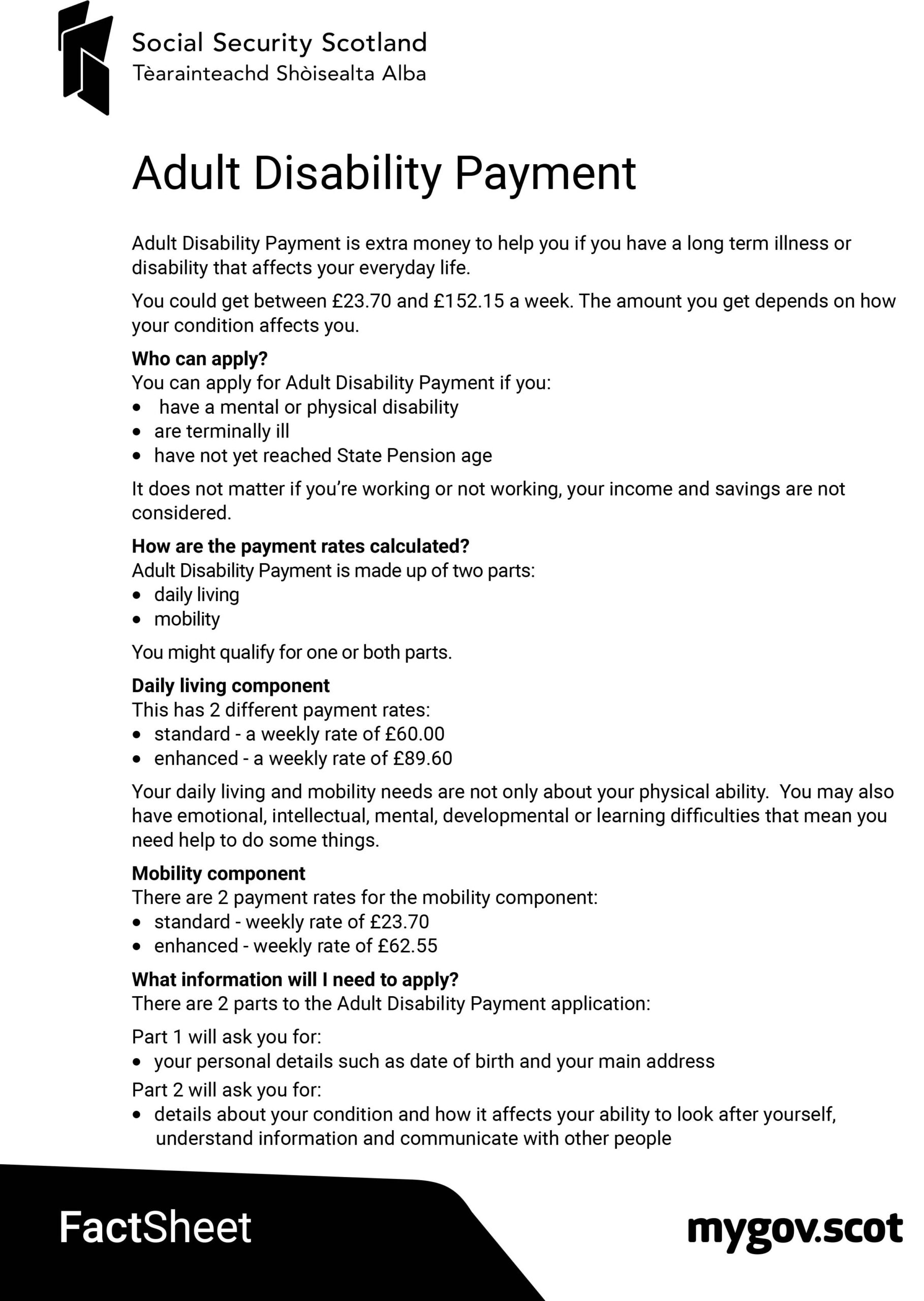
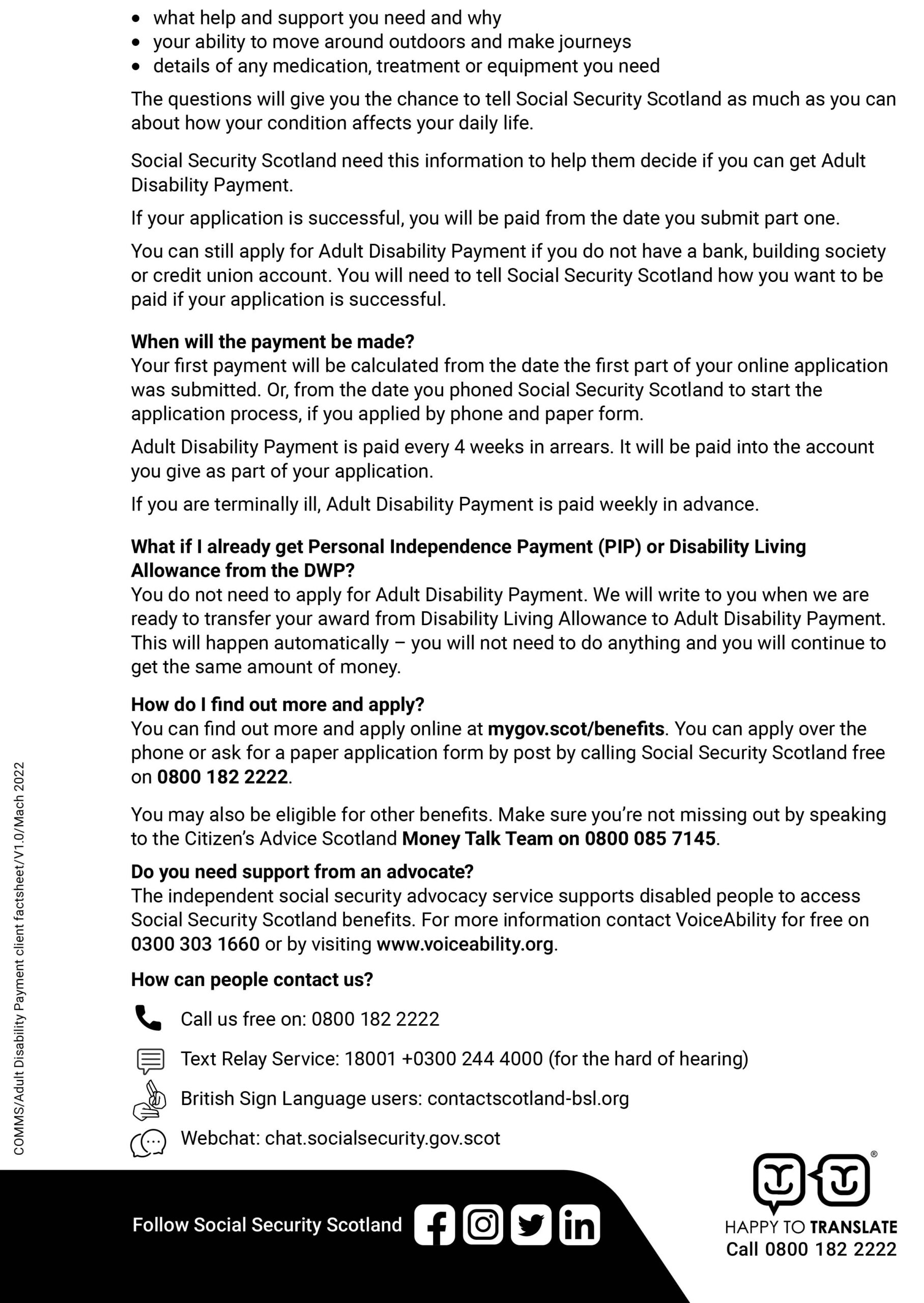
Plans have been announced to automatically pay the Best Start Grant Early Learning and School Age Payments to parents and carers who already receive Scottish Child Payment when their children become eligible.
The change will be introduced later this year when Scottish Child Payment is extended to under-16s and increased to £25 per child, per week.
This builds on extensive work already done to make applying for the Scottish Government’s five family payments as straightforward as possible.
It includes the ability to apply for all children in a household on a single form. The form can be completed online, by phone or on paper. Parents and carers contributed to the design of the form to make sure the language was clear and easy to navigate.
As set out in the recent Tackling Child Poverty Delivery Plan ‘Best Start, Bright Futures’, the introduction of automatic awards will remove the need for eligible families receiving Scottish Child Payment to reapply when their child becomes eligible for the Early Learning and School Age Payments.
This will mean less paperwork for tens of thousands of families and ensure that families automatically receive the support to which they’re entitled.
On a visit to FARE Scotland in Glasgow, Minister for Social Security, Ben Macpherson said: “Tackling child poverty is a key mission for the Scottish Government and automating payments, where we already have all of the information we need to do so, will mean parents and carers automatically getting the financial support they are eligible for paid directly to them.
“Since launching Best Start Grant in December 2018, we’ve made more than 177,000 payments, totalling £55.3 million in support, families who need it most. Automating payments, where we can, will enable us to help even more families.
“We are committed to making sure that receiving our five family payments is as straightforward as possible. Automatic awards, increasing Scottish Child Payment to £20, and again to £25 by the end of the year, and uprating eight Scottish benefits by 6% are some of the ways we are using our limited social security powers and resources to help families in need.”
Jimmy Wilson, Chief Executive of FARE Scotland, said: “There are families who aren’t aware of all the benefits to which they’re entitled so anything that can be done to make the process simpler is to be welcomed.
“It’s more important than ever that people understand the help which is there for them.
“The advantages in having automatic awards could be significant. We hope this move has a positive impact on take up rates which could help to reduce and prevent child poverty and support family wellbeing.”
Best Start Grant Early Learning Payment and Best Start Grant School Age Payment are part of a package of Five Family Payments. This package also includes Best Start Grant Pregnancy and Baby Payment, Best Start Foods and Scottish Child Payment. By the end of 2022, the Scottish Government’s package of Five Family Payments for low-income families will be worth up to a maximum of over £10,000 by the time a family’s first child turns 6, and £9,700 for second and subsequent children
The Early Learning Payment opened for applications on 29 April 2019 and provides £267.65 per child to support child development, for example travel costs, changes of clothes for messy play, trips out and toys for home learning
The long application window, from 2-3½, captures the 2 common ages for starting nursery, depending on whether parents qualify for a free nursery place when the child is 2 or 3. There is no requirement to take up a place at nursery to qualify for a payment
The School Age Payment opened for applications on 3 June 2019 and provides £267.65 per child to help with the costs of preparing for school, for example educational toys or after school activities. Eligibility is based on the child’s age and relates to when a child is first old enough to start school. The application window runs from 1 June in that year until the last day in February the following year. There is no requirement to take up a place at school to qualify for a payment
Between launching on 10 December 2018 and 28 February 2022, more than 177,000 Best Start Grant payments had been authorised. This figure does not include Best Start Foods
In 2022-23 we expect 52,000 households will receive £18 million of support through Best Start Grant (Scottish Fiscal Commission report published 9 December 2021). With projected take up rates of 76% for Pregnancy and Baby first births, 77% for Pregnancy and Baby subsequent births, 82% for Early Learning Payment and 80% for School Age Payment
The Scottish Fiscal Commission (report published 9 December 2021) has forecast that 20,000 people will receive the Early Learning Payment and 22,000 people will receive the School Age Payment during the 2022-23 financial year
Eligible families, and carers can find out more and apply at mygov.scot/beststart or by calling Social Security Scotland free on 0800 182 2222
New report on impact of UK Government policies on families in Scotland
A new report estimates 70,000 people in Scotland, including 30,000 children, would be lifted out of poverty by 2024 if UK Government welfare reforms introduced since 2015 were reversed.
The cost of reversing changes, including the removal of the £20 per week Universal Credit uplift and the two child benefit cap would be around £780 million a year, according to estimates in the Scottish Government’s Welfare Reform – Impact on Families with Children report.
Last month the Scottish Government published its second Tackling Child Poverty Delivery Plan – Best Start, Bright Futures – which sets out immediate and longer term actions to support people out of poverty and to tackle its deep-seated causes.
Social Justice Secretary Shona Robison said: “Tackling child poverty is our national mission and we are helping to lift thousands of children out of poverty in Scotland within our limited powers. This report lays bare the cost of repeated UK Government welfare reforms since 2015 and the challenge we face in lifting children and families out of poverty for good.
“We are determined to tackle the cost of living crisis and we’re already helping to lift thousands of children out of poverty. We invested almost £6 billion from 2018-21 to support low income households, including around £2.18 billion to directly support children. We are also taking steps to mitigate the impact of the UK Government’s bedroom tax and benefit cap as fully as we can within our limited powers.
“We have introduced a package of five family benefits, including the Scottish Child Payment that we will raise to £25 a week by the end of 2022. We are also investing in employment support for parents, through new skills and training opportunities and key worker support to help reduce household costs and drive longer term change.”
104,000 children have payment increased to £20 per week
The flagship family payment – Scottish Child Payment – has now doubled to £20 per week per child. 104,000 children are already benefiting from this increase.
The payment, which is unique to Scotland, was designed to tackle child poverty head on. It is one of five family benefits which provides financial support to low income families with children aged under 6.
The benefit will be extended at the end of the year to all eligible children under the age of 16 – and at that point also increase further from £20 to £25.
Once extended, it is expected over 400,000 children could be eligible. The newly doubled Scottish Child Payment, together with the three Best Start Grant payments and Best Start Foods, will provide families with more than £10,000 by the time their first child turns 6 and £9,700 for subsequent children.
This compares to less than £1,800 for an eligible family’s first child in England and Wales, and less than £1,300 for subsequent children.
Visiting Glasgow based family charity Govan Help, First Minister Nicola Sturgeon said:“We are using our social security powers to take immediate steps to put cash in the pockets of families by doubling the Scottish Child Payment to £20 per week per child – support not replicated anywhere else in the UK.
“This is a key part of our national mission to tackle child poverty. We will further increase this payment to £25 by the end of 2022 – five times the amount campaigners originally asked. This will gives families additional financial support of £1,300 for each eligible child every year. We will back this with investment of around £671 million over the next two years – just part of our package of support for families.
“Our Tackling Child Poverty Delivery Plan will also build on our investment in employment support for parents, through new skills and training opportunities and key worker support to help reduce household costs and drive longer term change.
“We are determined to give children the best start and a bright future by putting more money into the pockets of those who need it most. Increasing the Scottish Child Payment will make a real difference to families and help to build a more equal and fairer Scotland for everyone.”
Viv Sawers, Chief Officer at Govan Help, said: “This is a fantastic measure from Scottish Government in tackling Child Poverty in Scotland. The roll out and the uplift in Scottish Child Payment will have an incredible impact on the families across Scotland who need it most and we are delighted to see money going directly to families who we know are struggling to meet their basic cost of living.
“Govan has higher than average rates of Child Poverty so this will have a hugely positive impact on the quality of life for families in this local community. We see families struggling daily, they have told us what a difference this has made already with the cost of living increases, we look forward to supporting more families to access this as it rolls out to children up to age 16 later this year.
“We know parenting is a really hard job, without financial pressures, this funding will go a long way to removing stresses that can impact on healthy family functioning and wellbeing.”
Scottish Child Payment increased to £20 from Friday 1 April
Parents and carers do not need to reapply and will see their payments increase automatically
Social Security Scotland administers five benefits for families on tax credits and certain benefits. These include Best Start Grant Pregnancy and Baby Payment, Early Learning Payment, School Age Payment, Best Start Foods and Scottish Child Payment. Parents and carers can find out more and apply at mygov.scot or by calling 0800 182 2222
Ahead of extending the Scottish Child Payment to under 16s, the Scottish Government is set to invest £225 million this year (2022-23) in our Scottish Child Payment.
The Scottish Government is also putting around £150 million in the pockets of families through Bridging Payments to families of 145k children in receipt of free school meals across 2021 and 2022
The extension of Scottish Child Payment is subject to data on qualifying benefits being received from the Department of Work and Pensions
The Tackling Child Poverty Delivery Plan 2022-26 – Best Start, Bright Futures outlines actions to be taken to provide immediate support to children and families and to break the cycle of child poverty
Social Security Scotland: Payment rates for benefits increase from April
EIGHT of the benefits delivered by Social Security Scotland will now increase by 6%. The increase in payments for low income households and carers comes as the cost of living continues to rise.
Benefits and assistance including Job Start Payment, Young Carers Grant, Funeral Support Payment and Carer’s Allowance Supplement were due to be increased by 3.1% for 2022/23. Subject to parliamentary approval, the increases will now be almost doubled to a 6% uprate.
In addition, the three Best Start Grant payments, which we had not previously planned to uprate, will also now be uprated by 6%, and Child Winter Heating Assistance, which was previously set to rise by 5%, will now also rise by 6%.
From tomorrow (1st April), there will be a 100% increase in Scottish Child Payment, which will double from £10 per week to £20. Best Start Foods was already increased from £4.25 to £4.50 a week in August (5.88%).
Adult Disability Payment and Child Disability Payment will still increase by 3.1% on April 11 in line with the equivalent benefits (Disability Living Allowance and Personal Independence Payment) which are still administered by the Department for Work and Pensions under agency agreement.
This is to avoid creating a two-tier system where individuals paid by Social Security Scotland are paid more than clients whose cases have not yet transferred to the Scottish system.
Payment rates for 2022-2023 are:
Benefit
Rates 2021-2022
Rates 2022-2023
New rates 2022-2023 (6% uprate)
Best Start Grant
Best Start Grant Pregnancy and Baby Payment (1st Child Payment)
£606.00
£606.00
£642.35
Best Start Grant Pregnancy and Baby Payment (Subsequent Child Payment & Extra Payment for Twins/Triplets)
£303.00
£303.00
£321.20
Best Start Grant Early Learning Payment
£252.50
£252.50
£267.65
Best Start Grant School Age Payment
£252.50
£252.50
£267.65
Child Winter Heating Assistance
Child Winter Heating Assistance (annually)
£202.00
£212.10
£214.10
Funeral Support Payment
standard rate for other expenses element
£1,010.00
£1041.30
£1,070.60
other expenses element where there is a funeral plan
£123.25
£127.05
£130.65
removal of implanted medical devices
£20.55
£21.20
£21.55
Job Start Payment
Job Start Payment (one-off) standard rate
£251.25
£260.35
£267.65
higher rate
£404.00
£416.50
£428.25
Young Carer Grant
Young Carer Grant (annually)
£308.15
£317.70
£326.65
Carer’s Allowance Supplement
£8.90
£9.15
£9.45
Child Disability Payment
Rates 2021-2022
Rates 2022-2023*
Care Component Highest Rate
£89.60
£92.40
Care Component Middle Rate
£60.00
£61.85
Care Component Lowest Rate
£23.70
£24.45
Mobility Component Higher Rate
£62.55
£64.50
Mobility Component Lower Rate
£23.70
£24.45
Adult Disability Payment
Rates 2021-2022
Rates 2022-2023*
Daily Living Component Standard Rate
£60.00
£61.85
Daily Living Component Enhanced Rate
£89.60
£92.40
Mobility Component Standard Rate
£23.70
£24.45
Mobility Component Enhanced Rate
£62.55
£64.50
* 3.1% increase in line with the equivalent benefits (Disability Living Allowance and Personal Independence Payment) which are still administered by DWP under agency agreement.
People who ordinarily live in Ukraine will be able to access NHS services at no charge on the same basis as people living in Scotland.
An amendment to current legislation will ensure that people who have fled Ukraine can access services such as maternity care, mental health services and treatment for specific conditions at no charge while they remain here.
This will also apply to people from Ukraine who were in Scotland on short-term visas when the conflict began and who apply to extend or switch visas because they cannot return home.
Anyone in Scotland, regardless of their nationality, residence status or length of time they will be in the country, is already entitled to receive emergency treatment at an A&E or casualty department, and can register with a GP Practice to receive general medical services, at no charge.
In addition, emergency legislation which came into force on Tuesday 22 March will allow people coming to Scotland from Ukraine to meet residency conditions for Scottish social security benefits.
This means that those fleeing war in Ukraine, and who are eligible, will have immediate access to benefits such as Scottish Child Payment and Child Disability Payment.
Health Secretary Humza Yousaf said: “We are determined to do everything in our power to give displaced people from Ukraine the warmest welcome possible when they arrive and this includes offering healthcare to those who need it.
“We fully recognise that they may have been through very traumatic experiences and could require specialist treatment and care. Removing charges for healthcare and providing access to benefits is a practical step in ensuring those who have been forced to flee their homes and country can live safely and comfortably in Scotland for as long as they need to.”
UP TO £660 PER YEAR COULD BE SLASHED FROM HOUSEHOLD INCOME
In a letter to the chancellor last week, the Bank of England stated that it expected inflation to be “around 8 per cent” this spring. With Universal Credit set to rise by just 3.1 per cent in April, families with children on universal credit now face a real-terms cut of around £660 per year, on average.
This is an increase on Child Poverty Action Group’s original analysis which showed a cut of £570, when inflation was expected to be 7.25 per cent.
The £20 cut to universal credit last October plunged out-of-work benefits to their lowest level in 30 years. Latest analysis shows that the picture for families is going from bad to worse.
Without government action, families will be pulled deeper into poverty. Increasing benefits by anything less than 8 per cent risks pushing those with already stretched budgets past breaking point.
Anti-poverty charities wrote to the Chancellor last weekcalling for a minimum 7% benefits rise:
Prices are rising at the fastest rate in 30 years, and energy bills alone are going to rise by 54% in April. We are all feeling the pinch but the soaring costs of essentials will hurt low-income families, whose budgets are already at breaking point, most.
There has long been a profound mismatch between what those with a low income have, and what they need to get by. Policies such as the benefit cap, the benefit freeze and deductions have left many struggling.
And although benefits will increase by 3.1% in April, inflation is projected to be 7.25% by then. This means a real-terms income cut just six months after the £20 per week cut to universal credit.
Child Poverty Action Group’s analysis shows families’ universal credit will fall in value by £570 per year, on average. The Joseph Rowntree Foundation has calculated that 400,000 people could be pulled into poverty by this real-terms cut to benefits.
The government must respond to the scale of the challenge. Prices are rising across the board. Families with children in poverty will face £35 per month in extra energy costs through spring and summer, even after the government’s council tax rebate scheme is factored in. These families also face £26 per month in additional food costs. The pressure isn’t going to ease: energy costs will rise again in October.
A second cut to benefits in six months is unthinkable. The government should increase benefits by at least 7% in April to match inflation, and ensure support for housing costs increases in line with rents. All those struggling, including families affected by the benefit cap, must feel the impact.
Much more is needed for levels of support to reflect what people need to get by, but we urge the government to use the spring statement on 23 March to stop this large gap widening even further. The people we support and represent are struggling, and budgets can’t stretch anymore.
Alison Garnham, Chief Executive, Child Poverty Action Group
Emma Revie, Chief Executive, The Trussell Trust
Graeme Cooke, Director of Evidence and Policy, Joseph Rowntree Foundation
Morgan Wild, Head of Policy, Citizens Advice
Dan Paskins, Director of UK Impact, Save the Children UK
Imran Hussain, Director of Policy and Campaigns, Action for Children
Thomas Lawson, Chief Executive, Turn2us
Sophie Corlett, Director of External Relations, Mind
Dr Dhananjayan Sriskandarajah, Chief Executive, Oxfam GB
Caroline Abrahams, Charity Director, Age UK
Eve Byrne, Director of Advocacy, Macmillan Cancer Support
Kamran Mallick, CEO, Disability Rights UK
Katherine Hill, Strategic Project Manager, 4in10 London’s Child Poverty Network
Karen Sweeney, Director of the Women’s Support Network, on behalf of the Women’s Regional Consortium, Northern Ireland
Satwat Rehman, CEO, One Parent Families Scotland
Mark Winstanley, Chief Executive, Rethink Mental Illness
James Taylor, Executive Director of Strategy, Impact and Social Change, Scope
Irene Audain MBE, Chief Executive Scottish, Out of School Care Network
Steve Douglas CBE, CEO, St Mungo’s
Richard Lane, Director of External Affairs, StepChange Debt Charity
Robert Palmer, Executive Director, Tax Justice
Claire Burns, Director, The Centre for Excellence for Children’s Care and Protection (CELCIS)
The Disability Benefits Consortium
Dr. Nick Owen MBE, CEO, The Mighty Creatives
Peter Kelly, Director, The Poverty Alliance
Elaine Downie, Co-ordinator, The Poverty Truth Community
Tim Morfin, Founder and Chief Executive, Transforming Lives for Good (TLG)
UCL Institute of Health Equity
Dr Mary-Ann Stephenson, Director, Women’s Budget Group
Natasha Finlayson OBE, Chief Executive, Working Chance
Claire Reindorp, CEO, Young Women’s Trust
Businesses in Scotland are also calling for the Chancellor to announce new measures to help with rising costs ahead of his Spring Statement tomorrow, according to a recent survey from Bank of Scotland.
As inflation hits the highest levels seen since 1992, over half (55%) of Scottish businesses said that direct help with energy bills and rising costs tops their wish list for the Chancellor. This was followed closely by calls for a reduction in VAT, cited by two-fifths (40%), while almost a quarter of firms (23%) want increased funding to help create new jobs and develop skills.
Rising prices remain a key challenge for business. Almost half (46%) of respondents said they are concerned about having to increase the costs of goods and services and over one in ten (14%) stated that inflation is reducing profitability. Almost one in ten (9%) said rising prices had caused them to worry about having to make staff redundant and a further one in ten (9%) were concerned about not being able to pay their bills.
To help specifically with rising prices Scottish businesses are asking the Chancellor for a VAT reduction (46%), while a third (35%) have called for grants to cover rising energy costs. A further quarter (23%) called for grants to support investment in energy saving measures.
The data comes as businesses face continuing supply chain challenges, which are reducing the availability of stock (40%), causing hikes in freight costs (39%) and disruption through Rules of Origin and VAT requirements from EU suppliers (33%).
Fraser Sime, regional director for Scotland at Bank of Scotland Commercial Banking, said:“Rising prices are causing multiple challenges for businesses across Scotland and the pressure from inflation shows no sign of abating in the near-term.
“As we wait for the Chancellor’s Spring Statement, we’ll continue to remain by the side of business in Scotland and support the country’s ongoing economic recovery from the pandemic.”
Responding to the ONS public sector finances statistics for FebruaryChancellor of the Exchequer, Rishi Sunak said:“The ongoing uncertainty caused by global shocks means it’s more important than ever to take a responsible approach to the public finances.
“With inflation and interest rates still on the rise, it’s crucial that we don’t allow debt to spiral and burden future generations with further debt.”
“Look at our record, we have supported people – and our fiscal rules mean we have helped households while also investing in the economy for the longer term.”
All will be revealed when the Chancellor delivers his Spring Statement (Budget) at Westminster tomorrow.