Investment to help children and families access support
Children, young people and their families will benefit from £7.6 million funding to strengthen and expand local neurodevelopmental support.
The Scottish Government funding, which will be distributed to local councils, will mean more flexible support is provided to children, young people and their families to get the help they need, when they need it, informed by local circumstances.
It is part of wider work by the Scottish Government, local authority body COSLA and partners to improve neurodevelopmental support for young people across health, education, local government and the third sector, as set out in the new Programme for Government.
This includes the work of the Children and Young People’s Neurodevelopment Taskforce, alongside other action to improve support and services.
Announcing the funding on a visit to Windygoul Primary School in East Lothian, Minister for Mental Wellbeing Maree Todd said: “Demand for neurodevelopmental support has increased significantly in recent years and I want families to access the help they need, when they need it.
“This £7.6 million investment will help local areas build on existing services and further invest in the support that works for their communities.
“There is no single action that will solve all the challenges people face in getting timely and consistent support. This investment is just one part of the wider work to improve neurodevelopmental support.
“Through our continued partnership with local government, health services and the third sector, we will ensure a more joined-up, sustainable system of support for neurodivergent children, young people and their families.”
COSLA Spokesperson for Children and Young People, Councillor Tony Buchanan said: “Along with our wider partners, Local Government has seen rising demand for support for children and young people’s neurodevelopmental needs both pre, post and regardless of diagnosis.
“We very much recognise the value of early, neuro-affirming support for children, young people and their families in preventing the negative impacts caused where children’s needs are not met and helping them achieve their full potential.
“A whole system response is essential to support children and young people with neurodevelopmental needs and their families . We look forward to continuing to work with our cross sector partners to deliver improved outcomes as this work progresses.”
Neurodevelopmental conditions include autism and ADHD.
Autistic people and their families across Scotland continue to face significant barriers, including long waiting times for diagnosis, a lack of support in schools and low employment rates.
Too often, children are missing out on education or are excluded from the classroom, while many people are left without support until they reach crisis point.
We and others have long campaigned for the Learning Disabilities, Autism and Neurodivergence (LDAN) Bill – a Bill which the SNP committed to as far back as 2021. This would provide an opportunity to address the challenges facing autistic people and deliver real change.
Legally binding national and local strategies would improve support and accountability, while mandatory training across public services such as health, education and criminal justice would ensure autistic people’s needs are recognised and supported earlier.
Years of consultation have shaped these proposals, with many in the autistic community sharing difficult and traumatic experiences in the hope of having their voices heard.
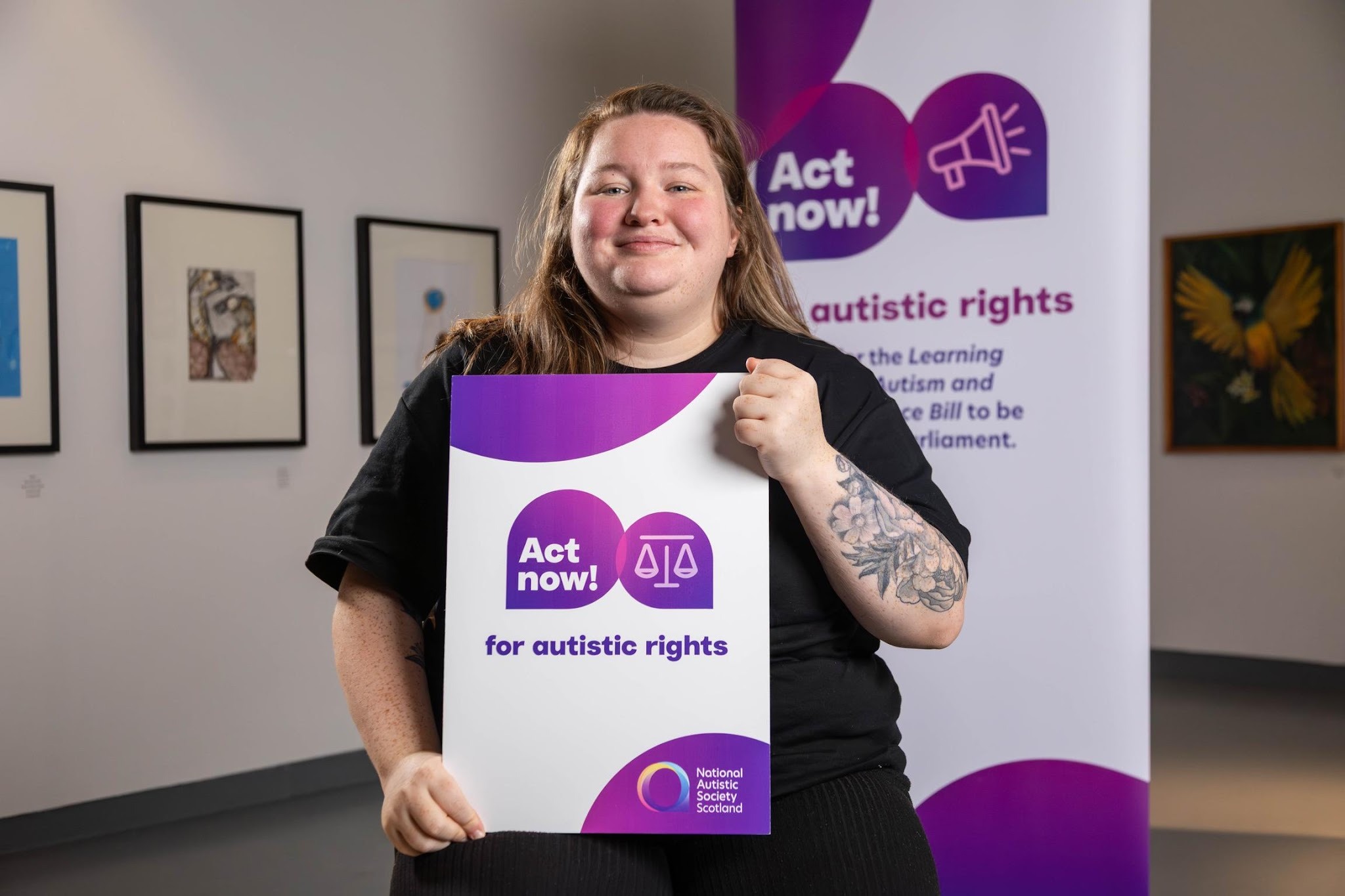
As part of the Act Now for Autistic Rights campaign, our charity has launched a petition urging the First Minister, John Swinney, to include the LDAN Bill in September’s Programme for Government, which will set out the Scottish Government’s key priorities and legislative programme for the coming year.
In the lead up to the recent election in Scotland, more than 5,500 letters were sent by supporters urging party leaders to commit to this legislation. This momentum must now be matched with action. Without a clear commitment from the First Minister, autistic people risk being left behind.
Rob Holland, Director of the National Autistic Society Scotland, said: “Our campaign had a fantastic response during the election period. Thousands of letters were sent urging all parties to commit to the Learning Disabilities, Autism and Neurodivergence (LDAN) Bill, demonstrating a significant level of support for legislation long overdue in helping secure the rights of autistic people and their families.
The importance of the LDAN Bill in tackling the inequalities faced by autistic people and their families cannot be underestimated and this legislation is a vital opportunity to improve outcomes and recognise the rights of some of our most marginalised communities.
“With the election behind us and attention now turning to the first Programme for Government, we need everyone who wants to see urgent change to sign our petition and ensure this vital piece of legislation is introduced as early as possible in the new term.”
Becca, NAS Scotland Campaigner, said: “The LDAN bill is vital for the wellbeing, safety and equality of autistic and neurodivergent people in Scotland.
“Access must be granted, training must be given and voices must be heard to ensure that autistic and neurodivergent people have equal access and opportunity as anybody else.
“The LDAN bill must be included in the Programme for Government to ensure this change happens and lives are improved.
“As an autistic person, it is a struggle to ensure my voice is heard and my opinions are taken into account, so by committing to the inclusion of the LDAN Bill in the Programme for Government, I matter.
“My voice and many others across the country matter.“
You can call on the First Minister to Act Now for Autistic Rights by signing the petition here.
The Health, Social Care and Sport Committee published its report today into Attention Deficit and Hyperactivity Disorder (ADHD) and autism pathways and support.
The Committee calls for urgent action to deliver a national plan that ensures autistic people and people with ADHD can access clear, consistent pathways to support across every health board in Scotland.
The Committee welcomes the Scottish Government’s commitment to accept the recommendations in the National Autism Implementation Team (NAIT) Adult Neurodevelopmental Pathways report.
It also notes the Scottish Government’s intention to review implementation of the National Neurodevelopmental Specification for Children and Young People through its new task force.
The Committee expresses concern that many people wait years for neurodevelopmental assessments and that some health board areas have closed waiting lists. It emphasises that long waits harm individuals and may prevent people from making a full contribution to society.
The unprecedented demand for neurodevelopmental assessment is recognised by the Committee and the need to put certain thresholds in place before a referral is made. But the Committee warns that this approach can be seen as gatekeeping and can cause delays to accessing assessments and support.
The report further highlights evidence that long waiting times can push people into crisis, which can increase complexity of the support needed and put additional pressure on services. It calls on the Scottish Government to work with health boards to deliver a shift towards early, progressive support, in line with the principles of the Population Health Framework.
The Committee also heard evidence that long NHS waiting times can push people towards private diagnosis at significant cost, risking a two-tier system.
The Committee calls for a comprehensive review of assessment processes across all areas, leading to a National Standard that guarantees consistency, responsiveness and support across Scotland.
Given current waiting times, the Committee calls for consistent high-quality communication with people on waiting lists, including accurate, supportive, up-to-date and neuro-affirming information that meets the needs of each individual.
Countering claims that neurodevelopmental conditions are subject to over-diagnosis, the report instead notes evidence that rising demand for assessments reflects historic under-diagnosis and improved understanding of these conditions. The report recognises that diagnosis can validate lived experience and help people access adjustments, support and medication if needed.
While the Committee welcomes the Scottish Government’s commitment that diagnosis should not be a prerequisite for support, it remains concerned that, for many individuals, the lack of a formal diagnosis can create a barrier to accessing support. The Committee calls on the Scottish Government to set out actions to prevent diagnosis status becoming an artificial barrier to receiving support.
To improve fairness and consistency, the Committee calls for a plan to deliver mandatory training for everyone involved in making referrals to neurodevelopmental pathways and all health and social care staff in patient-facing roles.
The Committee supports a whole systems approach across health, social care, education and other sectors to improve awareness, reduce stigma and strengthen support for those with neurodevelopmental conditions.
It calls on the Scottish Government to set out what it is doing to advance whole society action, including workforce planning, funding distribution that supports integration, inclusive education, support for families with multiple neurodivergent members, and stronger collaboration across public services.
On publication of the report, Clare Haughey MSP, Convener of the Health, Social Care and Sport Committee said:“Our inquiry has shone a light on the myriad issues those with neurodevelopmental conditions face in accessing and receiving support from Scotland’s NHS.
“We acknowledge the huge rise in demand for assessment and diagnosis and the huge pressure this places on services. But we are concerned that inconsistent care pathways and a lack of support can leave some feeling isolated and unable to access the support they need.
“We are concerned to have heard evidence of long waits for assessments or closed waiting lists, meaning some individuals are unable to access support due to where they live or because they haven’t been diagnosed with a neurodevelopmental condition. It’s clear things need to improve.
“We’re calling for urgent delivery of a national plan so that autistic people and/or people with ADHD are able to access clear, consistent pathways to support regardless of where they live in Scotland.
“We’re also calling on the Scottish Government and health boards to work together to undertake a comprehensive review of the assessment process in order to introduce a National Standard for assessments that guarantees consistency and quality of access throughout Scotland.
“Our Committee wants to see a whole systems and whole society approach to ensure autistic people and/or people with ADHD can access equitable and timely pathways to assessment, treatment and support across Scotland.
“Thank you to all of the individuals who shared their personal experiences of ADHD and autism with us and helped inform our inquiry.”
Other findings in the report:
The report also stresses the need for consistent national data on referrals and waiting times. The Committee calls for steps to enable routine quarterly reporting of data on referrals and waiting times for autism and ADHD, underpinned by national guidance, and for longer-term work to culminate in a comprehensive dashboard.
The Committee pays tribute to third sector organisations that support people who have not received, or are waiting for, diagnosis. It welcomes ongoing commitments such as the Autistic Adult Support Fund and calls for clearer plans to place third sector funding on a sustainable long-term footing.
Both ADHD and autism are neurodevelopmental conditions.
ADHD is characterised by a group of symptoms that includes difficulty in concentrating, hyperactivity and impulsive behaviour. It affects around 5% of school-aged children, and between 2.5% and 4% of adults.
Autism Spectrum Disorder (ASD) is a lifelong developmental condition that affects the way a person communicates, interacts and processes information.
It is often characterised by social and communication difficulties and by repetitive behaviours. Current estimates indicate about 1 in 34 people are autistic, just under 3% of the population.
Increased funding to support children and families
Children, young people and their families will benefit from £3.4 million of additional investment to improve access to neurodevelopmental support.
This brings investment in neurodevelopmental supports and services this year to more than £5 million, providing earlier help for families and ensuring people can access support that meets their needs.
More than £1 million is intended to directly support families, including providing access to digital support on neurodevelopmental conditions – including autism and ADHD. A successful hub model developed in Edinburgh will also be expanded to Tayside, bringing together health, education and third sector support for families in one place.
The investment will also help improve services, including testing new approaches to neurodevelopmental assessment and ADHD support for young adults.
Minister for Social Care and Mental Wellbeing Tom Arthur said: “I am determined to drive real, meaningful improvements and deliver the best possible outcomes for neurodivergent people. Demand for neurodevelopmental support and diagnosis has increased significantly in recent years, both in Scotland and globally.
“This additional £3.4 million will improve the help available to families – providing better information, practical support and access to services in their communities. This funding will create the groundwork for additional investment in the future – as proposed in our Budget for next year.
“We want to ensure that children, young people and their families can access the support they need, regardless of where they are on their neurodevelopmental journey.
“A diagnosis is just one part of someone’s experience. What matters most is that people get the right support at the right time, and this funding will help make that happen.”
The investment builds on the additional £500,000 funding announced in June 2025, bringing the total additional investment to £3.9 million in 2025-26.
Funding is being made available for a range of projects, including:
supplementing health board assessment capacity, particularly for young people approaching transition to adult services
providing digital support to 1,000 families through the EPIC Think Learn platform
extending the Yard’s Edinburgh Disability and Neurodevelopment Hub model to Tayside, bringing together support from health, education and third sector services
testing holistic approaches to assessment and support with a new neurodevelopmental research clinic with the University of Glasgow
work to develop and test digital support tools for ADHD for young adults
continuing the Fife children and young people’s neurodevelopmental test of change
and work to better understand support needs of children and young people on health board waiting lists and assist connection of families with local support
Neurodevelopmental conditions include autism and ADHD.
Paracetamol should be taken as directed in the patient information leaflet
Following publication of a new systematic review and meta-analysis in The Lancet Obstetrics, Gynaecology, & Women’s Health which found no evidence that paracetamol use during pregnancy increases the risk of autism spectrum disorder, ADHD or intellectual disability among children, the MHRA has reaffirmed that paracetamol continues to be the safest option for managing pain and fever during pregnancy.
Dr Alison Cave, Chief Safety Officer at the MHRA, said: “Paracetamol remains safe to use during pregnancy. This large-scale analysis of the evidence found no link between taking paracetamol during pregnancy and autism, ADHD, or disability in children.
“Paracetamol has been used for many years and is the recommended first choice for treating pain or fever during pregnancy. When taken as directed, it is safe and effective.
“As with all medicines, pregnant women should speak to their doctor, pharmacist or midwife if they have any questions, and follow the guidance provided with the medicine.”
Paracetamol is recommended as the first-choice painkiller for pregnant women, used at the lowest dose and for the shortest duration.
If pain does not resolve, then patients are advised to seek advice from their healthcare professional.
There is no evidence that taking #paracetamol during pregnancy causes autism in children.
Always follow NHS guidance and report any suspected side effects via the Yellow Card scheme https://bit.ly/2A6B165
Dr Alison Cave, Chief Safety Officer at the MHRA, said: “Patient safety is our top priority. There is no evidence that taking paracetamol during pregnancy causes autism in children.
“Paracetamol remains the recommended pain relief option for pregnant women when used as directed. Pregnant women should continue to follow existing NHS guidance and speak to their healthcare professional if they have questions about any medication during pregnancy.
“Untreated pain and fever can pose risks to the unborn baby, so it is important to manage these symptoms with the recommended treatment.
https://twitter.com/i/status/1970506529125064995
“Our advice on medicines in pregnancy is based on rigorous assessment of the best available scientific evidence.
“Any new evidence that could affect our recommendations would be carefully evaluated by our independent scientific experts.
“We continuously monitor the safety of all medicines, including those used during pregnancy, through robust monitoring and surveillance. We encourage anyone to report any suspected side effects to us via the Yellow Card scheme.”
Paracetamol is recommended as the first-choice painkiller for pregnant women, used at the lowest dose and for the shortest duration.
If pain does not resolve, then patients are advised to seek advice from their healthcare professional.
Scottish Autism is aware that pronouncements regarding autism from the US Government will be a source of anxiety and worry for many in our community.
We are clear that public policy should be focused on recognising and accommodating the needs and rights of autistic people rather than stigmatising neurodivergence as something to be ‘treated’ or prevented. Spreading misinformation about the identified reasons why some people are born autistic does nothing to further this aim.
Scottish Autism’s focus is on finding better ways to support autistic people and their families. Our research, campaigning and service provision reflect this priority and always will.
Our Advice Line is open 10am-4pm Monday, Tuesday, Thursday & Friday and our Community Advisors can help you to identify what support may exist in your area.
You can call the Advice Line on 01259 222022, email advice@scottishautism.org or LiveChat with us via our website.
HealthCare in Mind, a new dedicated service offering private autism, ADHD and mental health assessment treatments and therapies, has launched in Edinburgh to improve access to high quality mental health diagnoses and address the growing wait times for critical mental health support.
With average NHS wait times for autism and ADHD assessments reaching one to two years across the country, HealthCare In Mind provides a much-needed alternative for families and individuals seeking answers and support. The service is now live in Edinburgh and will allow patients to access care instantly through both remote and in-person appointments to suit their needs.
HealthCare in Mind offers a range of mental health services, including fully comprehensive diagnostic assessments for both children and adults, and therapy treatments to manage mental health conditions, including depression, anxiety, post-traumatic stress disorder, obsessive compulsive disorder and mood disorders.
HealthCare In Mind is led by Dr Simon Le Clerc MStJ, and Dr Kate Higham, alongside an expert team of psychiatrists, psychologists and therapists to provide instant access to the highest quality care to those in need.
Dr Simon Le Clerc commented: “Cases of adults and children seeking answers about their mental health, and the way they experience the world have risen dramatically in Edinburgh, and NHS waiting lists are struggling to keep up.
“It is not uncommon for wait times of up to a year for a first appointment for ADHD, autism and mental health assessments, and after assessment there are further waiting lists for accessing therapy treatments to help people manage their conditions.
“By offering private, tailored neurodiversity assessments, we can offer an option to families and individuals in need of a quicker solution. Our ambition for the future is to work with the NHS to support with clearing the waiting lists, but our service is also available for those in need today.”
Visual cards break down barriers for inclusive swimming lessons
A PIONEERING visual teaching tool has launched in Edinburgh, making swimming lessons more accessible to everyone.
Supporting Scottish Swimming and Scottish Water’s vision to create ‘Generation Swim’, SwimPix – a collection of waterproof visual instruction cards- is helping to transform how Edinburgh Leisure and George Watsons swimming teachers communicate with their students.
The cards represent the latest learning development in the Learn to Swim National Framework, which currently helps around 81,000 children and adults learn to swim each week across Scotland.
SwimPix features multiple display options, including sequence boards and lesson planners, covering lessons through pictures which children with autism, hearing impairments, or where English isn’t their first language may find benefit – supporting the Framework commitment to creating inclusive, supportive and quality environments in which individuals can learn to swim regardless of their age, ability or skill level.
Alison Bell, Founder of Aswim, said: “SwimPix are a tried and tested teaching and communication tool for swimming teachers that helps create a more inclusive swimming environment.
“It’s great to see teachers using SwimPix and children having fun in the lesson with the cards. It really reduces anxieties and helps children know what the teacher is asking them to do, therefore faster learning.”
Edinburgh Leisure and George Watsons are two of 37 Learn to Swim providers who are introducing the SwimPix cards in their lessons across 165 pools in Scotland.
Euan Lowe, Chief Executive Officer at Scottish Swimming, said: “By making swimming lessons more accessible through tools like SwimPix, we’re taking another significant step toward our mission of creating a generation of confident and safer swimmers.
“These visual teaching resources ensure that swimming really is for everyone – breaking down communication barriers and helping all children feel included and supported in the water.”
Peter Farrer, Chief Operating Officer at Scottish Water said: “Learning to swim and understanding water safety are vital life skills, especially in Scotland where we have so many miles of rivers, reservoirs, lochs and coastline to enjoy.
“Rolling out inclusive teaching tools like SwimPix is such a positive step, helping provide opportunities for every child to learn the vital knowledge and skills to help them feel safe in, on and around water – and help their parents and family network feel confident and comfortable in their swimming abilities.”
The initiative forms part of wider efforts to remove barriers to swimming across Scotland, with visual learning tools becoming increasingly important in inclusive education.
The Learn to Swim National Framework has already seen more than 100,000 children take part in lessons up and down the country and is targeting another 100,000 by 2025.
For more information on the Learn to Swim programme, visit:
As a coalition of organisations that support vulnerable children and young people, we are deeply concerned in relation to proposed budget cuts to City of Edinburgh Council’s inclusion services.
There has been a massive increase in the number of pupils in Scotland’s schools identified with additional support needs (ASN), such as autism, dyslexia and mental health problems. In Edinburgh, this has seen the number of pupils with ASN almost treble in number between 2013 and 2023.
It has been estimated that over 40 per cent of primary school and over half of secondary school pupils in the capital now have an ASN.
Unfortunately, the necessary resourcing required for this group has not increased. For example, the number of ASN teachers in Edinburgh’s schools has declined by four over the period 2013 to 2023, from 170 to 166, despite the massive increase in the number of pupils with ASN.
Any further axing in staff, who are already overstretched and under-resourced, in supporting these pupils will prove absolutely devastating.
This will impact not only them, but also fellow pupils who will face reduced teaching time given the need to support those with ASN, as well as putting even more pressure on teachers and support staff.
We would urge City of Edinburgh Council to reconsider its approach, as this sticking plaster solution of budget cuts will simply lead to reduced life chances for these individuals, with the resultant impact on society and the economy.
17-year-old Nuala has spent much of her life fighting for the support she needs as someone on the autism spectrum. BBC ALBA followed Nuala on her mission to pave the way for change, starting in her hometown in the north-west Highlands of Scotland.
Nuala’s push for change was inspired by a trip to Canada’s first autism friendly town in Channel-Port aux Basques, Newfoundland. The simple changes adopted by the town to make life easier for people with autism inspired Nuala to help her own community in Ullapool, and the surrounding area, become autism friendly.
Produced by MacTV this new 30-minute documentary, Saoghal Nuala / Nuala’s World – #MyAutismFriendlyVillage, explores how autism impacts the way people communicate and process the world around them; and follows Nuala working with schools, businesses and organisations to implement small changes to improve the lives of people with autism.
Nuala said: “Initially, before my diagnosis, I thought that I was odd and stupid and couldn’t understand it… It was a relief to get the diagnosis. It was good to see that I wasn’t just… that I was still sane but just in a different way. This also opened a lot of doors for me.
“Everyone was more willing to help me. The teachers were given extra training. There was extra support there and that was so beneficial for me.”
More than one in 100 people in Scotland have autism – all with skills, talents and ambitions. However, many don’t understand autism which is why Nuala wants to create change so that other youngsters don’t face the same difficulties.
Encouraged by the pioneering work of Joan Chaisson – a retired special education teacher and co-founder of the support group Autism Involves Me (AIM) – with schools, hotels, shops, and the hairdresser in Channel-Port aux Basques’, Nuala’s mum said: “They had drawn attention to how people with autism feel and their daily life.
“It was fascinating … It was clear that the whole town supported her plans. Nuala was so inspired by this. We realised that the same could be done in Ullapool.”
Offering viewers a better understanding of the unique perspectives that she and others on the autistic spectrum experience, and in turn, learning what we can all do as a society to make our communities more inclusive, and accommodating for all, Nuala explains: “I want the local businesses to be better informed about autism and also for the community to be autism friendly.
“People with autism will feel more comfortable here and that includes me… You should be proud of yourself and your capabilities.”
Sharing an insight into her skills, from her photographic memory to her understanding of rhythm which helped her win a bronze medal at the 2022 St Ayles Skiff World Championships, she says: “Lots of people ask me if I would rather not have autism. I tell them that I like having autism because I have these superpowers now and I like that. I’m so proud of myself and of my superpowers.
“I would like people on the spectrum to walk with their head held high. That’s very important. I want to be like that and to create a new stereotype. I look forward to that.”
Saoghal Nuala / Nuala’s World – #MyAutismFriendlyVillage, premiers on BBC iPlayer and BBC ALBA and on Monday 5 August at 9pm (in Gaelic with English subtitles).Watch live or on demand: https://www.bbc.co.uk/programmes/m0021swp