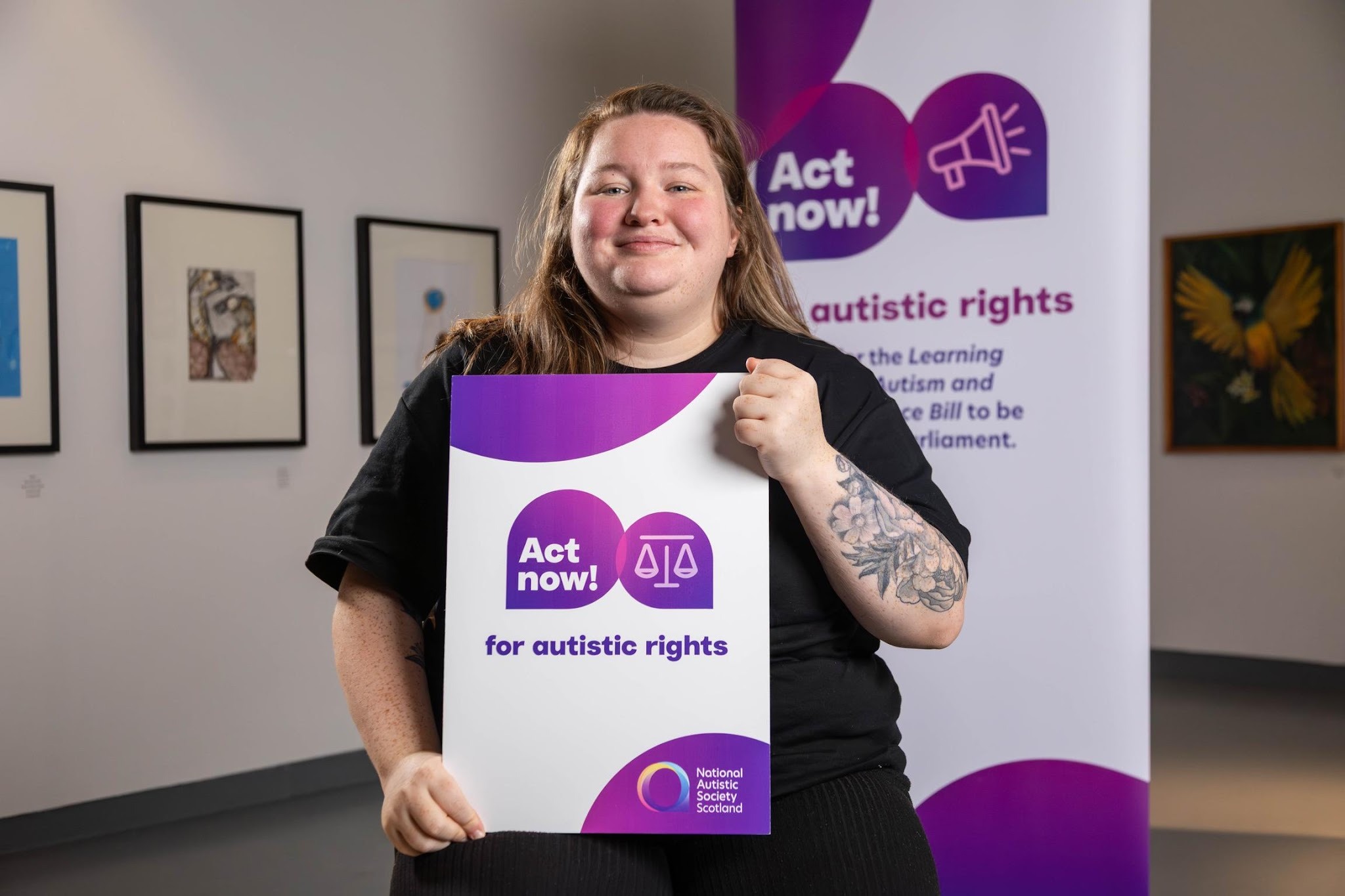
Autistic people risk being left behind without urgent Government action

Autistic people and their families across Scotland continue to face significant barriers, including long waiting times for diagnosis, a lack of support in schools and low employment rates.

Too often, children are missing out on education or are excluded from the classroom, while many people are left without support until they reach crisis point.

We and others have long campaigned for the Learning Disabilities, Autism and Neurodivergence (LDAN) Bill – a Bill which the SNP committed to as far back as 2021. This would provide an opportunity to address the challenges facing autistic people and deliver real change.

Legally binding national and local strategies would improve support and accountability, while mandatory training across public services such as health, education and criminal justice would ensure autistic people’s needs are recognised and supported earlier.

Years of consultation have shaped these proposals, with many in the autistic community sharing difficult and traumatic experiences in the hope of having their voices heard.

As part of the Act Now for Autistic Rights campaign, our charity has launched a petition urging the First Minister, John Swinney, to include the LDAN Bill in September’s Programme for Government, which will set out the Scottish Government’s key priorities and legislative programme for the coming year.

In the lead up to the recent election in Scotland, more than 5,500 letters were sent by supporters urging party leaders to commit to this legislation. This momentum must now be matched with action. Without a clear commitment from the First Minister, autistic people risk being left behind.

You can add your voice and help push for real change by signing the petition today: https://act.autism.org.uk/page/191897/petition/1?mode

Rob Holland, Director of the National Autistic Society Scotland, said: “Our campaign had a fantastic response during the election period. Thousands of letters were sent urging all parties to commit to the Learning Disabilities, Autism and Neurodivergence (LDAN) Bill, demonstrating a significant level of support for legislation long overdue in helping secure the rights of autistic people and their families.

The importance of the LDAN Bill in tackling the inequalities faced by autistic people and their families cannot be underestimated and this legislation is a vital opportunity to improve outcomes and recognise the rights of some of our most marginalised communities.

“With the election behind us and attention now turning to the first Programme for Government, we need everyone who wants to see urgent change to sign our petition and ensure this vital piece of legislation is introduced as early as possible in the new term.”

Becca, NAS Scotland Campaigner, said: “The LDAN bill is vital for the wellbeing, safety and equality of autistic and neurodivergent people in Scotland.

“Access must be granted, training must be given and voices must be heard to ensure that autistic and neurodivergent people have equal access and opportunity as anybody else. 

“The LDAN bill must be included in the Programme for Government to ensure this change happens and lives are improved. 

“As an autistic person, it is a struggle to ensure my voice is heard and my opinions are taken into account, so by committing to the inclusion of the LDAN Bill in the Programme for Government, I matter.

“My voice and many others across the country matter.

You can call on the First Minister to Act Now for Autistic Rights by signing the petition here.

Landmark review calls on employers to boost support for autistic people

A bold new government-backed review has set out a vision for workplace culture changes to support autistic people to start and stay in work

  • Review sets out 19 recommendations to support more autistic people to start, stay and succeed in work.
  • Despite most autistic people wanting to work, just 3 in 10 are currently in employment due to stigma and lack of understanding of their needs.
  • More neuro-inclusivity in the workplace can help fill vacancies and grow the economy by unlocking the potential of thousands more people.

A bold new government-backed review has set out a vision for workplace culture changes to support autistic people to start and stay in work.   

DWP figures show only around 30 percent of working age autistic people are in employment, compared with half of all disabled people and 8 in 10 non-disabled people, despite the majority saying they would like to be employed.   

Commissioned by Secretary of State for Work and Pensions Mel Stride and led by Sir Robert Buckland KC, the Review’s 19 recommendations for businesses and government include:  

  • signing up for the Autistica Neurodiversity Employers Index to access guidance on designing inclusive processes and procedures
  • encouraging career progression by developing packages of training focused on autistic staff
  • improving recruitment by ensuring careers advisers can provide appropriate advice to autistic jobseekers
  • supporting autistic people who are already in the workplace by producing “autism design guides” to create appropriate premises, furnishings and equipment
  • working with software suppliers to develop IT systems that meet autistic people’s needs.

The Buckland Review of Autism Employment was supported by charity Autistica and includes the views of hundreds of employers and autistic people.   

It sets out how businesses and government can work together over the next five years – whether that is showcasing the successes of autism employment, developing pilot programmes in national and multinational companies, or providing tailored support for autistic staff at work.  

Secretary of State for Work and Pensions, Mel Stride MP, said: “I want autistic people to have every opportunity to benefit from work, and recognise that businesses and government must come together if we are to create the cultural change needed to move the dial. 

“Backed by the extra employment support provided through our £2.5 billion Back to Work Plan, this report provides employers with practical and inexpensive steps to open up workplaces to autistic people, boost employment rates and, above all, change autistic people’s lives.”

Sir Robert Buckland KC MP said: “It has been a tremendous privilege to compile this report, and to hear from hundreds of autistic people about their experiences. This is all about them, and we couldn’t have done it without their help.

“The review can make a truly radical difference to the lives of autistic people and their families. I call on employers and government to lead this change and make these recommendations a reality.”

It is all part of the Government’s long-term plan to build a stronger economy – which has seen unemployment compared to 2010 decline, with four million additional people in work. 

The Government has already succeeded in getting one million more disabled people into employment by 2027, five years ahead of schedule, with tailored support helping claimants realise their potential.  

Access to Work grants worth up to £66,000 made working easier for nearly 50,000 people last year. The Government’s flagship Universal Support programme is set to provide up to 25,000 people with highly personalised employment support, working closely with employers to navigate any workplace adjustments required to accommodate individual needs.  

Minister for Disabled People, Health and Work, Mims Davies MP, said: “There are so many benefits and positives autistic people can bring to the workplace, and this is matched by what employment can bring to them. We must make sure they get the work opportunities they want and deserve. 

“This welcome and important review will help ensure autistic people can thrive and progress in the labour market. I am keen employers get behind these recommendations, and partner with us to truly make our workforce more inclusive and welcoming.”

Minister for Social Care, Helen Whately MP, said: “We want autistic people to have equal opportunities to flourish in society and contribute to the economy.

“For too long there have been too many barriers for them in the workplace; this review is a major step to changing that. 

“This builds on our five-year autism strategy and shows our continued commitment to helping autistic people are able to lead happier, healthier and more fulfilling lives.”

The review is the latest milestone in the Government’s mission to make the UK the most accessible place in the world, following the publication of the Disability Action Plan earlier this month, the launch of the Lilac Review, which will investigate the barriers disabled entrepreneurs face, and the longer-term National Disability Strategy, which will transform disabled people’s everyday lives for the better.  

It also builds on the Government’s employment and welfare reforms – including the new £2.5 billion Back to Work Plan which will help thousands more disabled people and people with health conditions to start and thrive in work.