2025 Edinburgh International Festival sees fullest theatres and concert halls in more than a decade

‘SUCCESS REAFFIRMS EDINBURGH’S PLACE AS THE WORLD’S LEADING FESTIVAL CITY’

  • The 2025 Edinburgh International Festival programme was received with record enthusiasm this year, as 88% of all the tickets were sold, filling theatres and concert halls to the highest percentage in over a decade. More than half the performances across the programme sold out and the programme received critical acclaim with 81% 4* and 5* reviews.
  • The most international audience in recent years – from 91 countries – flocked to the International Festival this summer. Drawn by more than 2,000 artists and participants from across 41 countries, audiences experienced the world’s greatest theatre, dance, music and opera, often in unconventional settings.
  • The Festival was more inclusive and affordable than ever, with its sold-out first-ever dementia-friendly concert, the highest number of discount tickets issued to D/deaf, disabled and neurodivergent audience members and record subscriptions to the Festival’s free ‘Access Pass’, and half of all tickets priced at £30 or less.

The 2025 Edinburgh International Festival concluded yesterday after an extraordinary three-week celebration of opera, dance, music and theatre in Scotland’s capital.

The third under the leadership of Festival Director and Scottish violinist Nicola Benedetti, this year’s Festival was distinguished by a bold programme that both challenged and rewarded audiences. Over 2,000 artists from across 41 nations shared a range of perspectives, taking to stages in unconventional formats and settings across the city.  

Over 111,000 audience members attended from 91 countries to enjoy the finest and most exciting performers from across the globe, including 7 world premieres, 8 UK and Scottish premieres, and 2 European premieres.

Kicking off with the world premiere of blockbuster play Make It Happen, which alone was attended by over 22,000 people, other highlights included the eight-hour choral epic The Veil of The Temple; an Australian circus reimagining of opera Orpheus and Eurydice; and Nederlands Dans Theater’s extraordinary Figures in Extinction.

The overall quality of the programme was recognised by audiences and critics alike, with 81% of starred reviews receiving 4 or 5 star ratings from critics and exceptional sales across the programme, with 66 sell out performances, and 88% of the total tickets available were issued.   

Maintaining its industry-leading concessions, the International Festival prioritised affordability, with targeted pricing initiatives for those who need it most. Half of all tickets were priced £30 or under, including over 5,000 £10 tickets which were offered across every performance in the programme. In partnership with Tickets for Good, over 1,000 tickets were also donated to NHS staff, charity workers and low-income benefit recipients. 

Expanding the Festival’s offering to the broadest possible audience, this year saw the first-ever dementia-friendly concert sell out as well as 18 performances and workshops in healthcare and community settings across the city.

Exceeding 2024 totals, 7,271 free and heavily discounted tickets were issued to D/deaf, disabled and neurodivergent people and 763 new audience members signed up for the free Access Pass, bringing total membership to a new high of over 2,000. 

This year the International Festival also championed youth and emerging talent, creating pathways into transformative cultural experiences. A record-breaking 2,695 tickets were issued to young people from across Scotland to attend performances for free through the Young Musician’s Pass, as well as hundreds of Edinburgh’s secondary school pupils who deepened their engagement with the arts through performances and workshops.

24 Rising Star artists collaborated with International Festival mentors and performers on stage this year, contributing to a cohort of 45 early career classical musicians who have been supported with professional development opportunities since 2023.  

In 2025, the Edinburgh Festival Chorus celebrated 60 years as the beating heart of the International Festival. Each year, non-professional singers from across Scotland come together to perform cornerstone works with some of the world’s greatest soloists, conductors and orchestras.

This year, the 160 volunteer chorus members performed for 10,000 attendees in a range of events including the monumental Opening Concert The Veil of the Temple, two performances as part of the London Symphony Orchestra residency, and the Closing Concert, Mendelssohn’s Elijah.

Inspired by their dedication, the 2025 programme offered an open invitation for people from all walks of life to come and sing: The Big Singalong in Princes St Gardens welcomed thousands to join Scottish legend Dougie MacLean in a rousing rendition of Caledonia, and 750 amateur singers enjoyed a full-day workshop taking on highlights from Mendelssohn’s epic Elijah. 

Festival Director, Nicola Benedetti said: This year’s International Festival has been one of extraordinary contrasts, from grandeur and scale to intimacy and informality. Through the theme The Truth We Seek, we were determined to challenge as well as entertain.

“In presenting innovative and risk-taking work we were able to spark debate, dialogue, and a healthy friction that audiences responded to in unprecedented numbers. I’ve seen this year how art can build bridges, change minds and find connection in a world that so desperately needs it.

“This Festival reminded us why we gather, why we create, and why we believe. 

Chief Executive, Francesca Hegyi said: “This year’s International Festival has been a remarkable celebration of ideas, welcoming audiences from across Scotland and 91 other countries.

“Its success reaffirms Edinburgh’s place as the world’s leading Festival City, and the International Festival itself as a global cultural beacon each August.

“Our commitment to accessibility, youth engagement and artistic excellence has never been stronger, from our sell-out first-ever dementia-friendly concert to record-breaking take-up of the Young Musician’s Pass.

“The International Festival is not only a showcase of world-class performance, but also a vital meeting place for cultures, ideas and audiences worldwide. It’s this collection of talent and annual exchange of ideas that sets it apart on the global stage.” 

MSP urges Edinburgh Integration Joint Board to pause £29 million cuts

Foysol Choudhury MSP has called on the Edinburgh Integration Joint Board (EIJB) to pause £29 million of proposed cuts to health and social care, warning that the measures would have devastating consequences for vulnerable people across the city.

The EIJB is set to decide on the cuts today. If approved, they could result in:

  • More than 4,000 people losing community mental health support
  • £2.2 million of Thrive Edinburgh contracts cancelled
  • 82% of Collective Advocacy at CAPS disappearing by November
  • Closure of services such as Pilton Community Health Project and Bipolar Edinburgh

Mr Choudhury said: “I recognise that the Board faces huge financial pressures. These are difficult decisions that no one wishes to make. However, the reality is that the EIJB has been forced into this impossible position because of chronic underfunding from the SNP Government.

“These cuts are not just about numbers on a balance sheet. They represent real people losing vital support, families, communities, and some of Edinburgh’s most vulnerable being left without the services they rely upon.

“I urge the Board to carefully consider the human impact, not just the balance sheet; and to pause these cuts. Edinburgh deserves sustainable funding, not short-term measures that will cause long-term harm. Services must remain available to users while new approaches are explored.”

The full EIJB report can be accessed here:

Integration Joint Board Report – Contracts and SLAs

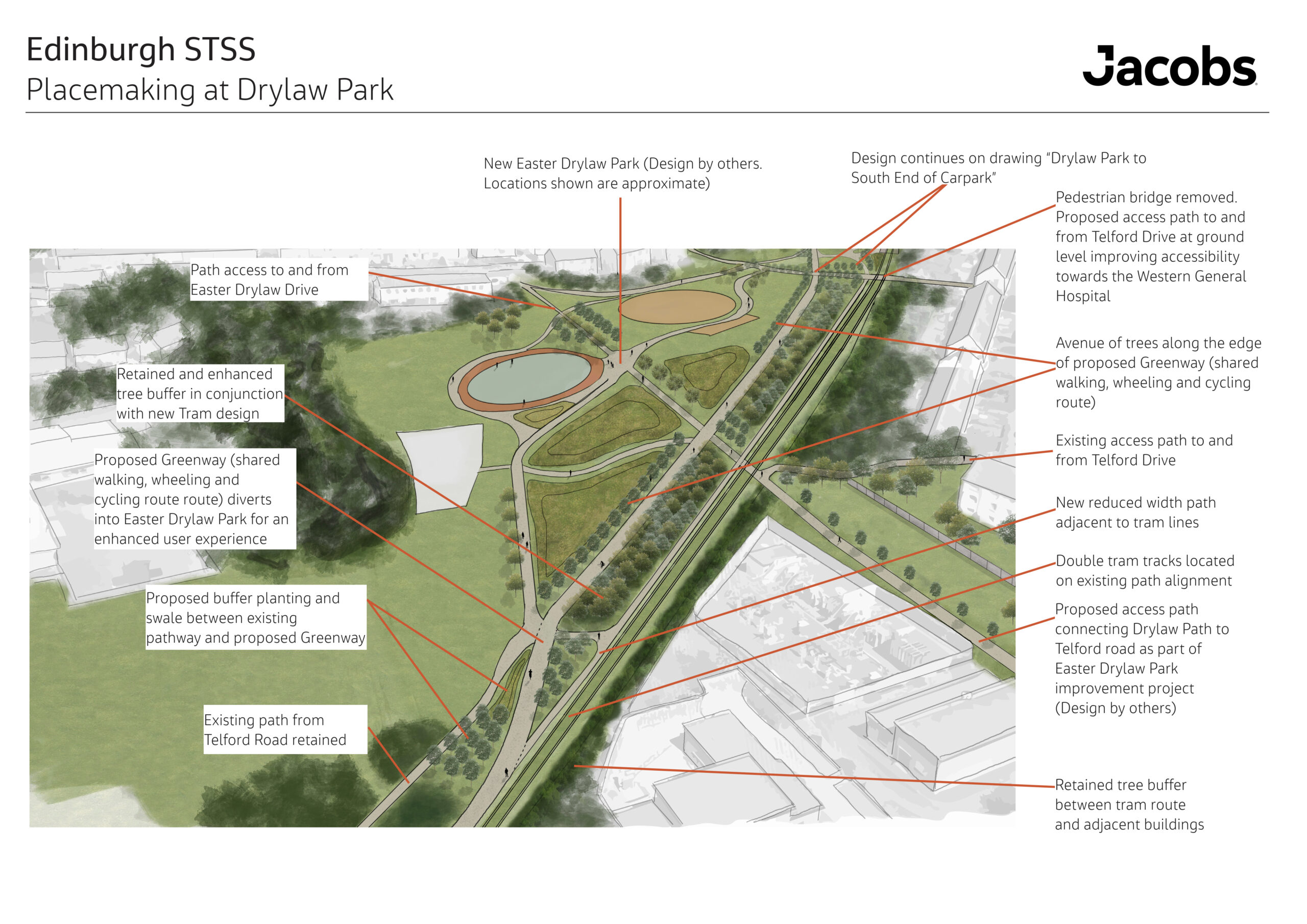
Tram Extension consultation opens

CITY COUNCIL SEEKS VIEWS ON TRAM EXTENSION PLANS

A ‘major public consultation’ on the future development of Edinburgh’s tram network opened yesterday (25 August) and will run for 12 weeks.

The Council are seeking the public’s views on the proposed new tram routes from Granton in the north of the city to the Edinburgh BioQuarter and Royal Infirmary of Edinburgh in the south.

A detailed business case was developed to extend the existing route from Edinburgh Airport to Newhaven, which was successfully completed in 2023 and now carries over a million passengers a month.

This consultation will inform the development of a Strategic Business Case (SBC) for the expansion, which will then be presented to the Transport and Environment Committee in 2026.

The proposed new route can be broken down into three main sections:

GRANTON TO THE CITY CENTRE:

From Granton to Ferry Road / Crewe Toll there is a single route. From Ferry Road / Crewe Toll to the following section, two alternative route options are being considered: the Orchard Brae corridor or the Roseburn Path.

For Orchard Brae, the route would head to the west end of Princes Street along Orchard Brae, Queensferry Road (via the Dean Bridge) and Queensferry Street.  

It is estimated that this option would cost between £650m – £850m and is forecast to carry around 3.75m passengers per annum by 2042.

For Roseburn Path, the route connects to the existing line west of Haymarket via an old railway line which winds from Ferry Road/Crewe Toll before reaching Craigleith and heading towards the west end and city centre.

This option is estimated to cost between £350m-£480m and is forecast to carry around 4.25m passengers per annum by 2042.

In February 2024, the Roseburn Path was initially identified as the preferred route, however Transport and Environment Committee instructed that the consultation should present objectively the pros and cons of both the Roseburn and Orchard Brae routes.

It also examines the potential to install high quality walking, wheeling and cycling alongside the tramline on the Roseburn Path, and look at the potential to protect and enhance the local ecological network.

The entire route is forecast to cost between £2bn-2.9bn, depending on the final options selected, and carry around 38m passengers by 2042.

CITY CENTRE TO BIOQUARTER & ROYAL INFIRMARY

The proposed route would begin at Princes Street on the existing tram infrastructure, allowing bus and rail interchange in the heart of the city centre.

The route would then cross the North Bridge, and run through Nicolson Street, Newington and on to Cameron Toll, then west towards the BioQuarter and Royal Infirmary of Edinburgh.

POTENTIAL EXTENSIONS TO MIDLOTHIAN and EAST LOTHIAN

The city council is working closely with Midlothian and East Lothian Councils and SEStran, the regional transport partnership, regarding potential future mass transit connections beyond the BioQuarter and Royal Infirmary.

This includes exploring a ‘tram-train’ (a light rail vehicle than can operate on tram and rail tracks) concept with Network Rail on the old Edinburgh South Suburban Railway (ESSR).

Other potential options include connections with Musselburgh Railway station and Queen Margaret University (QMU) in East Lothian and to Shawfair with interchange opportunities into Midlothian and the Scottish Borders.

Transport and Environment Convener, Councillor Stephen Jenkinson said:I’m pleased that we’ve reached this key stage for extending our multi award-winning tram service.

“We need to prepare for the future. Edinburgh is the fastest growing city in Scotland, with more than 60,000 new residents expected over the next 20 years. Whilst this shift is a true sign of our success, it brings real pressure on our communities, and crucially on the city’s transport infrastructure on which we all rely.

“Managing this growth also means tackling the climate, nature and housing emergencies. To meet these significant challenges, we need to look for bold and ambitious solutions and the tram extension is central to this.

“Edinburgh Trams already offers a reliable and fast service, allowing residents and visitors to move around sustainably and efficiently, and with some of the cheapest fares in the country. The broader benefits of cleaner air and emphasis on active travel surrounding the network are equally as important.

“Our overarching vision is to truly link our city for the benefit of all. From our flagship £1.3bn development at Granton Waterfront through to the city centre, our world-famous universities, cultural hubs, brilliant local businesses, new housing developments, hospitals and beyond; our transport network must move with the times.

“The new developments we will see along the tram route will be key to Edinburgh’s prosperity for generations to come.

“I’d encourage everyone to engage with this consultation and help to shape the next chapter in the history of Edinburgh’s transport.”

The full details of all the sections mentioned above can be found in the consultation papers.

Residents can give their views until 17 November online on the Consultation Hub or at in person drop-in sessions. Details of these sessions are also on our Consultation Hub.

The next step, should members agree on the SBC, would be to move to the next stage of development, as set out by Transport Scotland, which is the OBC.  

DROP-IN SESSIONS

No drop-in currently planned for Drylaw? – Ed.

Printmaking Festival goes down a storm in Stirling

Visitor numbers increase at Printmakers event

The second annual Printmakers of Scotland (PoS) Festival, held recently at Stirling University, proved to be a great success with over 1400 visitors attending the two day event.

The festival, organised by the PoS artists’ collective, resulted in the sale of about £50,000 worth of prints and saw 28 prizes and certificates being awarded to many of the 45 participating printmakers.

The event also featured ten different demonstrations of printmaking that offered festival visitors the chance to participate.

Organiser Deb Wing commented: “Our second festival has gone very well with an increase in visitors on last year and outstanding feedback from both visitors and all of the 45 artists who were on show.

“Positive comments from visitors included ‘The range of printmaking styles and techniques is amazing,’ to ‘A beautiful selection of different print styles. It was lovely to meet the artists.’

“Some members of the public benefitted for our Quiet Hour first thing in the morning when there was restricted access for us to welcome visitors who face particular challenges in a crowded event. This reflects Printmakers of Scotland’s ongoing commitment to inclusion in our events.

“We will soon begin the process of planning our third festival in 2026 and can only see the event going from strength to strength.”

For more details visit www.printmakersofscotland.com.

Edinburgh International Film Festival 2025 draws to a close and continues to scale up, building creative in-roads with filmmakers and industry

  • With 194 screenings, 34 Industry and panel events, the Festival welcomed over 300 filmmakers, producers and distributors to present their films
  • A total in person attendance over 16500

Edinburgh International Film Festival (EIFF) 2025 draws to a close following a seven-day programme of sold-out premieres, illuminating talks, retrospectives and well-received industry events which continues to build on last year’s successful Festival reboot.

The Festival ran from 14 – 20 August with 43 new feature films, 18 of which were World Premieres including 10 World Premieres competing for The Sean Connery Prize for Feature Filmmaking Excellence, this year won by Abdolreza Kahani’s Mortican, and 6 short film programmes including The Thelma Schoonmaker Prize for Short Filmmaking Excellence competition, this year won by Joanna Vymeris’s Mother Goose. 

The Festival presented special retrospectives including Sacred Bonds, the 6 original James Bond films starring Sean Connery, introduced by members of the Connery family and special guests, and Budd Boetticher’s The Ranown Cycle presented in partnership with Edinburgh Film Guild, alongside 6 special retrospective screenings with introductions from special guests including Andrea Arnold, Kevin Macdonald, Nia DaCosta and David Hayman. 

In Conversation events with major film talent took place, with legendary film editor Thelma Schoonmaker discussing Michael Powell, Ken Loach, Paul Laverty and Rebecca O’Brien, Jeremy Thomas and Mark Cousins, Eva Victor and Adele Romanski, Nia DaCosta, Ben Wheatley and Andy Starke, Andrea Arnold, and Kevin Macdonald and Andrew Macdonald, in partnership with BAFTA Scotland. Hosts included Director of BFI Filmmaking Fund Mia Bays, Variety Film Critic Guy Lodge, Director of Edinburgh TV Festival Rowan Woods, Edinburgh Comedy Award Winning Comedian, Actor & Writer Rose Matafeo, 90 Minutes or Less Podcaster Sam Clements and We Are Parable Co-Founder and Creative Director Anthony Andrews.

The Festival kicked off on 14 August with the UK Premiere of Eva Victor’s acclaimed breakout hit Sorry, Baby and presented a selection of compelling new and established voices in cinema including 39 World Premieres and 48 UK Premieres across features and shorts.

The Festival platformed new talent in Scotland with World Premieres of new shortform work from the inaugural NFTS Sean Connery Talent Lab and new Bridging the Gap documentary shorts in partnership with the Scottish Documentary Institute.

Closing the Festival was the World Premiere of Paul Sng’s brilliantly inventive Irvine Welsh documentary Reality Is Not Enough, rounding off a programme with a strong presence for Scotland-based filmmakers and Scottish talent.

The Festival programme showcased new work from filmmakers from 36 countries including Scotland, UK, US, Ireland, Canada, Spain, Greece, Denmark, Croatia, France, Turkey, Australia, Brazil, Japan, Iran, Argentina, South Africa and beyond.

EIFF also continued to thrill audiences with its Midnight Madness strand beginning with the World Premiere of Ben Wheatley’s visionary Bulk and ending with Macon Blair’s new take on The Toxic Avenger.

The Festival worked with venue partners including the newly reopened Filmhouse alongside Cameo Cinema, Vue Omni, Monkey Barrel Comedy and a new pop-up cinema at the National Galleries of Scotland’s Hawthornden Theatre in partnership with Assembly Festival, once again placing EIFF at the heart of the Fringe and August’s unparalleled Festival landscape.

Tollcross Central Hall served as the Festival Hub, open throughout the Festival to industry and press delegates for industry panels and networking events, alongside informal meeting and working spaces.

With 194 screenings and 34 Industry and panel events, the Festival saw a total in person admissions at public events of over 16,500. All of which added up to the seven-day celebration of world-class new cinema championing a new generation of UK and international talent and seeing audiences, press and industry engage with the best of Edinburgh’s other arts and cultural Festivals.

The Industry Programme ran across the whole of the Festival and was very well received by attending guests with praise for EIFF championing both the spirit of independent cinema globally and locally and cross-arts conversations. Press and industry delegates experienced a wealth of programming including talks and panels discussing disability inclusion and access within film projects with CODE, OSKA Bright and BFI; a case study on Development to Distribution of The Outrun with BBC Film, StudioCanal, Brock Media,Protagonist and Edinburgh International Book Festival; Crafting Fear Through Games and Film with Screen Burn Interactive and Nia DaCosta; an overview of the animation sector in Scotland with Animation Scotland and Animated Women UK; a Screenwriting in Scotland discussion event in association with Writers Guild of Great Britain with Andrea Gibb, Paul Laverty, Paul Sng and Kelly Macdonald; a panel on How Female Creators Are Using TikTok to Break Into the Exclusive World of Film.

A Scottish/Irish Co-Production Opportunities event was hosted with Enterprise Ireland, Filming in Limerick and Screen Scotland, and Screen Scotland delivered an informative session on the new Talent Builder development project.

Other Networking Brunches and Networking Drinks were delivered in partnership with WFTV, Production Guild of Great Britain, Screen Fringe, BBC Film, Screen Academy Scotland, Animation Scotland, Animated Women UK and Writers Guild of Great Britain.

As part of a new partnership with production company Unified led by BAFTA winning producer Amy Jackson (The Nest, Aftersun) and BAFTA winning producer Lauren Dark (The Father, Enys Men), the Festival hosted industry talks from Interim Head of Creative at Film4 Farhana Bhula; Oscar-nominated producer David Hinojosa (Past Lives, The Brutalist, EIFF 2025 title After This Death); Oscar-winning producer Adele Romanski (Moonlight, Aftersun); Director of BBC Film Eva Yates; A24’s Rose Garnett, former Director of BBC Film and Film4; Oscar-nominated producer Finola Dwyer (An Education, Brooklyn), BFI Director of Video Games and Certification Anna Mansi and Executive Director of Screen Scotland Isabel Davis.

Every screening and event at the Festival was introduced by a member of the EIFF team, and BSL interpretation was offered at 33 screenings that were presented with HOH Descriptive Subtitles. Audio Description was provided where possible and live captioning was provided at In Conversation events and panels.

The Festival welcomed over 300 filmmakers, producers and distributors to present their films, over 250 industry delegates including buyers, sales agents, commissioners and festival programmers including Eugene Hernandez, Head of Sundance Film Festival & Public Programming, and Jacqueline Lyanga, Co-Director of Film Programming at Berlinale, and over 170 press delegates.

Filmmakers and actors attending the Festival included Thelma Schoonmaker, Ken Loach, Renée Zellweger, Andrea Arnold, Jeremy Thomas, Kevin Macdonald, Andrew Macdonald, Nia DaCosta, David Hayman, Kate Dickie, Paul Laverty, Rebecca O’Brien, Kelly Macdonald, Eva Victor, Ben Wheatley, Eddie Marsan, Burn Gorman, Rose Matafeo, Jane Horrocks, Golda Roshuevel, Paul Andrew Williams, Brenda Blethyn, John McPhail, Andrew Kötting, Simon Rumley, Stacy Martin, Sam Riley, Alexandra Maria Lara, Noah Taylor, Gerard Johnson, Polly Maberly, Julie Pacino, Nadia Fall, Reed Birney, Constantine Costi, Barry Ward, Lorne MacFadyen, Steve Oram, Steven Saltzman, Douglas Mackinnon, Abdolreza Kahani, Gola and many more.

EIFF Director, Paul Ridd has said: “We are extremely proud of all the exceptional films we launched, as well as all the filmmakers, cinematic legends and audiences we welcomed to Edinburgh this past week.

“Our competitions continue to thrive, with buzzy titles provoking, entertaining and moving audiences, and our wider programme of features, shorts, events and talks signal our place in a global film culture that is alive and exciting.

“Putting it all together has been the collaborative work of many organisations, teams and individuals, and we owe them all an immense debt of gratitude. We cannot wait for EIFF 2026.”

Isabel Davis, Executive Director, Screen Scotland has said: “Filmmakers, audiences, and industry have been brought together thanks to a very strong proposition from Paul and the team at EIFF: the world premiere feature and short competitions, extraordinary insight from some of the most exciting filmmakers working today, and opportunities to network across the festival including with the Fringe being some of the highlights.

“With Cameo, the newly re-opened Filmhouse, Vue and the National Gallery all screening films and with Tollcross Central Hall now the recognized industry place to be and events venue, the festival has taken another confident step forward.”

EIFF 2025 is supported by Screen Scotland and the BFI Audience Projects Fund, awarding National Lottery funding, EventScotland part of VisitScotland’s Events Directorate, and the industry programme is backed by EXPO funding from the Scottish Government through Creative Scotland.

Edinburgh International Film Festival ran from Thursday 14 to Wednesday 20 August 2025.   

Helmed by Festival Director Paul Ridd and Festival Producer Emma Boa, the EIFF team aims to create a world-class showcase for independent film and filmmaking talent.

Former Acquisitions Executive Ridd is supported by EIFF Board, including Chair Andrew Macdonald of DNA Films, producer of the iconic Edinburgh-based film Trainspotting; Peter Rice, former Chairman of General Entertainment at Disney and President of 21st Century Fox; and Vice Chair Amy Jackson, producer of award-winning indie, Aftersun; Teresa Moneo, Former Director of UK Film, Netflix; Isla Macgillivray, Partner at Saffrey; and Romana Ramzan, Producer at Screen Burn Interactive. 

Research reveals the average age children in Scotland are granted independence

According to new data, 12 is the age when children in Scotland are given independence, with most parents granting new freedoms, including being responsible for a pet, going to the local shop alone, and having a mobile phone, at this age.

The research, which was conducted amongst UK parents by name label manufacturer My Nametags, found that children in Scotland are granted some freedoms earlier than the rest of the nation.

At 11, children in the country are allowed to walk to school alone but children in the rest of the UK must wait until age 12.

Similarly, children in Scotland are trusted to stay home alone, use the internet without supervision, and have their own bank card by age 12, a year earlier than the national average.

The data also shows differences between families living in a city compared with those in the countryside. Across the UK, children living in the countryside experience freedom a year earlier than those in urban areas, on average. For instance, children in rural areas can play outside alone by age 11, whilst those in cities must wait until age 12.

The research also investigated the impact of mobile phones on modern children’s independence. Whilst 51% of parents in the UK feel more comfortable allowing their children independence outside of the home because they carry a phone, the vast majority of parents are afraid of the risks posed by unsupervised mobile use. In fact, online bullying (80%) and online predators (83%) are now the top risks feared by parents.

Online habits are also the most likely to lead to regret, with personal mobiles and social media access the top freedoms parents wish they had waited longer to allow. This is often due to pressure from other families, with one in six feeling pushed into granting independence earlier than they feel comfortable by other parents.

Yet, despite concerns about the risks involved, 75% of parents aim to give their children independence at the same age or younger than they did when they were a child.

Lars B. Andersen, Managing Director at My Nametags, commented: “We support parents as they prepare their children for new milestones, from starting nursery as toddlers, to heading off to secondary school. So, we were interested to find out more about attitudes towards independence amongst UK families.

“The data shows that many parents opt to grant their children more freedom around the time they start secondary school. But, it’s clear this isn’t an easy decision, with families weighing up the risks and benefits, whilst also grappling with external pressures.

“And it’s no surprise, granting a child independence is one of the most challenging aspects of parenthood. But it’s also one of the most rewarding. We hope this research makes parents feel less alone as they embark on this journey, and offers some useful insight to help them make the right decision for their family.”

The official age of independence in Scotland:

  • Attend a sleepover – 11 years
  • Walk to school alone – 11 years
  • Have a mobile phone – 12 years
  • Go to the local shop alone – 12 years
  • Use the internet without supervision – 12 years
  • Have a bank account/card – 12 years
  • Stay home alone – 12 years
  • Be responsible for a pet – 12 years
  • Look after a sibling – 13 years
  • Have a social media account – 13 years
  • Use public transport alone – 13 years
  • Wear makeup – 13 years
  • Go into town with friends – 13 years
  • Try alcohol for the first time – 15 years
  • Go on holiday with friends – 16 years

Discover advice for navigating the journey to granting independence.

New Sudden and Traumatic Bereavement Service launches across Scotland

CRUSE SCOTLAND AND GRIEVING FAMILY COLLABORATE TO OFFER FREE SUPPORT

Cruse Scotland, the Nation’s leading bereavement support experts, have joined forces with a family-run charity, Lewis Leap, to launch a new support service for children, young people and adults bereaved by a sudden and traumatic death.

Lewis Leap was founded following the tragic death of 13-year-old Lewis Johnson on a family holiday in 2019. The family from Edinburgh wanted to honour the life and spirit of Lewis and help others who unfortunately find themselves facing such a devastating loss under challenging circumstances.

The Lewis Leap Sudden and Traumatic Bereavement Support Service has been shaped by those with lived experience, including some of Lewis’ family members.

This new service was launched at the charity’s annual fundraising event in the Cammo Estate yesterday (Sunday 24 August 2025), surrounded by Lewis’ family, friends and community as well as members of the Cruse Scotland staff and volunteer team.   

Lewis’ mum, Elizabeth Johnson, said, “The impact of Lewis’ death on our family and friends was overwhelming, and we struggled to process what had happened and why it had happened to us.

“The support we so desperately wanted didn’t seem to be available. We committed to work with Cruse Scotland to shape a specialist support service for others to access in the early stages of grief who had experienced a sudden and traumatic death.”

“I’m so proud that the service is named after Lewis, as he was always so kind and generous to friends and strangers alike. Through this service, his selfless spirit lives on.”

Specialist support can be accessed via any of the existing Cruse Scotland routes:

Fiona Arnott-Barron, Cruse Scotland Chief Executive, said, “We are delighted to launch this vital service after three years of hard work and collaboration with Lewis Leap.

“Having members of the Johnson family and many other bereaved people help us shape this support service, which has been extremely valuable in ensuring it will provide the most appropriate support at the right time.

“Although Cruse Scotland had already taken some steps to address the gap in support for people struggling in the early days and weeks following a death, we knew there were still significant gaps for those who had been catapulted into a new and unwelcomed reality following an unexpected and traumatic death.

“For those requiring support with their grief after such a sudden loss, Cruse Scotland is here, and I would like to thank the Johnson family sincerely for their support in making it possible.”

If you need support with your grief, no matter how recent or long ago the death occurred, or your relationship to them, you can find the support that’s right for you at www.crusescotland.org.uk

Haste Ye Back! theSpaceUK rounds off a vibrant 2025 Festival Fringe

With 469 shows, 3,357 artists, and 188,000 tickets, theSpaceUK has helped new artists and audiences experience the Fringe

theSpaceUK is one of the largest venues at the Edinburgh Festival Fringe with 19 theatres across 6 venues. Every genre in the Fringe programme is represented, with a strong focus on new-writing and new companies, alongside a wide range of support provided for artists bringing work to the Fringe for the first time.

187,913 tickets were issued for shows at theSpaceUK this year, demonstrating both the resilience of the Edinburgh Festival Fringe and the strong platform of shows at theSpaceUK.

This year saw 469 shows featuring 3357 artists at theSpaceUK, representing over 13 different countries. Each day of the 2025 Fringe saw an average of over 8162 audience members watching shows at theSpaceUK with an average of 54% of seats filled per show. 

Two artists at theSpaceUK garnered critical acclaim and were awarded the prestigious Broadway Baby Bobby Award; Sam Sherman’s Kaddish (How to be a Sanctuary), a reflection on Jewish-American life, and Baffin Productions’ In the Black, which subtly navigated systemic and institutional conflicts. 

The latter was also shortlisted for the BBC’s Popcorn Award for outstanding new writing and won the Binge Fringe’s Black Performers’ Award.

Our Asian Arts season was also celebrated for its diverse range of exciting work, with Cathy Lamb’s Dots and Ah-Ma being nominated for the Holden Street Theatres Award and the Brighton Fringe Award, respectively. Sole to Soul from the We ART together Foundation and The Boy From Bantay from Bantay Productions were also awarded Asian Arts Awards.

Artists at theSpaceUK were recognised for their work with Cornermen winning the coveted Theatre Scotland Bright Spark Award. Ghosted! A New Musical and I was a Teenage She-Devil, were the winners and runners up of Best Musical for this year’s Spookies, from The Edinburgh Horror Festival. Roadkill Bambi by Mal MacKenzie picked up the Queer Writing Award at Binge Fringe’s Queer Performers’ Awards, or ‘Queeries‘, which celebrate excellence in shows that champion LGBTQIA+ perspectives.

Finally, Here Comes Gudong by Roarrr Theatre is a sensory-rich puppetry adventure and won Theatre Weekly’s Best Family Show, whilst Entertainment Now WoW Award for Best Theatre has been awarded to When We Were Young by Geezabreak Productions. This production was acclaimed for it’s powerful and hilarious story about the realities of gang culture in Glasgow during the 90s. 

Charles Pamment, Artistic Director of theSpaceUK said: “In contrast to much of the concerns pre this year’s festival theSpaceUK has again enjoyed a fabulous month. Presenting a record number of shows, entertaining near on 200,000 audience members and boasting an array of major festival awards. 

“Our unrivalled locations, focus on programming work from across all genres, sensible and affordable ticket prices, all driven by the ethos of this festival as a platform for all, will continue to give those visiting this fabulous event the experiences they will want to repeat year on year.

“Thank you to all who participated in and watched shows at our venues. We look forward to hosting you all again in 2026 and beyond!”

Deaf children still falling through cracks in Scotland two years on from damning report

Deaf children across Scotland are still falling through the cracks and missing out on vital support despite two years passing since a damning report laid bare the inadequacies of NHS Scotland’s audiology services, the National Deaf Children’s Society is warning.

Today marks two years to the day that the Independent Review of Audiology Services in Scotland (IRASS), identified “multiple systemic problems” in NHS Scotland’s hearing services for both children and adults.

The most urgent recommendations were around the quality of auditory brainstem response (ABR) testing, carried out to identify deafness in very young children. Issues were identified in the quality of ABR testing at every single health board across Scotland. This is particularly concerning for young children, where delays or inaccuracies in testing can have lifelong impacts.

Other issues flagged by IRASS were audiology services facing barriers with recruiting new staff and addressing long waiting times.

Information obtained by the National Deaf Children’s Society reveals waiting times to be referred to audiology services in Scotland are unacceptably long. In some cases, children who should be seen within 42 days were waiting up to 600 days, posing a serious risk to early identification and intervention. 

One mother shared with the National Deaf Children’s Society the “heartbreaking” impact that her son’s unidentified deafness, coupled with a lack of support and intervention, has had on their family.  

Melanie Wright suspected her son Dawson was deaf when he was six, despite him having recently had a hearing test, which revealed no deafness. Dawson, from Dunbar, East Lothian, then had to wait three years before his deafness was finally identified, aged nine, despite Melanie’s repeated calls for a follow-up hearing test. 

Dawson’s family were told he required grommets surgery but there would be a two-year wait unless they paid to go privately, which was not an option.

Melanie recalled how exhausting it was for Dawson to keep up with conversations at home and his frustration when he couldn’t join in. 

At school, Dawson missed key parts of lessons because he could not hear what was said, which made learning harder and knocked his confidence. 

Melanie said: “It’s heartbreaking watching your child work twice as hard just to keep up, knowing it didn’t have to be this way.” 

Dawson’s deafness also impacted on friendships, and he often felt excluded.

When the Scottish Government committed to accept all the IRASS recommendations in December 2023, it was hoped there would be a root and branch reform of Scotland’s struggling audiology services.  

But progress has been painfully slow, and despite the Scottish Government previously pledging to ensure that the voices of those with lived experience are “front and centre” these individuals have since been sidelined, as have deaf charities, despite their direct experience on the frontline.

Melanie continued: “This isn’t about special treatment, it’s about making sure children get the care and support they were promised, when they need it.

“This delay is costing children their education, their confidence, and their future — and no one is taking responsibility. 

“I’m exhausted and totally broken by the experience.”

A coalition of charities, spearheaded by the National Deaf Children’s Society, has written an open letter to Scotland’s Minister for Public Health and Women’s Health Jenni Minto MSP, expressing concern at the lack of progress made by the Scottish Government since the publication of IRASS. 

The charities warn the Minister that delayed hearing tests and inadequate care means that countless other babies and young children, like Dawson, will have unidentified deafness and lack support during this crucial period of their life. This can “severely impact a child’s ability to acquire language – whether spoken, signed or a combination of both”, the letter reads. 

IRASS also found an absence of national leadership, strategic planning and workforce planning at audiology departments across Scotland and that there has been no quality assurance of services in recent years. 

In their letter to the Minister the charities express their disappointment that action taken by the Scottish Government since the publication of IRASS is “yet to deliver the transformative change so urgently needed” while other recommendations “remain partially or completely incomplete”.

The charities urge the Minister to “equip audiology services with the resources, workforce, and leadership necessary to deliver the best possible outcomes for deaf children and adults”.

The Minister is warned by the charities that without “more ambitious and decisive action…we fear the current system will continue to fall short”.

The charities urge action in three key areas:

  1. Evidence of independent safety checks. 
  2. Clear accountability for workforce planning. 
  3. Transparent reporting on waiting times.

When every moment counts, it is time for action – not words” the letter to the Minster concludes.

IRASS was commissioned after significant failures were uncovered at NHS Lothian involving more than 150 children over nine years. Some children suffered life-changing consequences, including developmental delays in their communication, learning and social skills.

This was because their deafness was identified too late for them to receive cochlear implant surgery, or the communications support they needed. 

The open letter to Scotland’s Minister for Public Health and Women’s Health Jenni Minto MSP  is signed by: The National Deaf Children’s Society, the Royal National Institute for Deaf People (RNID), the Health and Social Care Alliance Scotland (the ALLIANCE) and the  British Acadamy of Audiology (BAA).