Strictly Legends Pasha Kovalev and Kristina Rihanoff added a touch of sparkle to the Strictly for Hope Gala Ball at Prestonfield House, to raise vital funds for the House of Hope, Scotland’s first bespoke wellbeing centre for people impacted by breast cancer and their families.
The glittering Strictly themed gala ball was The House of Hope’s biggest fundraising event of the year, to raise money to ensure those impacted by breast cancer can continue accessing fully funded support services, holistic treatments, exercise classes and wellbeing sessions.
Bringing together House of Hope supporters and the business community for an evening of entertainment and empowerment, the event was supported by headline sponsor RevitaLash Cosmetics, silver sponsor PW & Partners and bronze sponsor Hunter Garden Services.
Hazel McLinden, House of Hope Centre Manager said: “The money we have raised will go directly towards enhancing and maintaining the wellbeing services we offer.
“The Gala Ball wouldn’t have been possible without the ongoing support and commitment from our sponsors, plus our team of generous fundraisers and volunteers, who are all instrumental in the success of the House of Hope and we are incredibly grateful to them all.”
Recently celebrating its first anniversary, the Edinburgh-based charity has gone from strength-to-strength.
Lori Jacobus, President and Global CMO of RevitaLash Cosmetics said: “We are thrilled to support the House of Hope as headline sponsor, as it’s a charity that aligns closely with our ethos and values.
“Our story began twenty years ago with one product: the original lash conditioner, created by our Founder, Michael Brinkenhoff, M.D., to help his beloved wife feel beautiful during her brave battle with metastatic breast cancer. Today our physician-led line of cosmetics enhances the health and natural beauty of lashes, brows, and hair while giving back to the cause that started it all – every day of the year.
“Partnering with The House of Hope holds special significance for us as they’re our very first pink-partner to come on board since moving our UK operations in-house earlier this year. It’s an exciting time, and we’re looking forward to working with The House of Hope to create a long and impactful partnership in the Scottish market.”
Compered by broadcast stars Grant Stott and Laura Boyd, with Alan Wake star of Manogram – a man with breast cancer, delivering the keynote speech, the evening included showcase dance performances from Strictly stars Pasha Kovalev and Kristina Rihanoff, along with dazzling routines from amateur dancers – Andy, Emma, Denis and Mary – some of whom had never danced before, to raise money for the House of Hope.
The evening was topped off with a fantastic live music set from popular Scottish duo BLEEKER, who regularly perform for charitable causes.
The Strictly for Hope Gala Ball celebrated the efforts and achievements of the charity to date and paves the way for future fundraising events.
For further information about the wellbeing services and supporting The House of Hope visit houseofhope.org.uk.
Businesses and entrepreneurs are being invited to develop technology solutions to some of Scotland’s most pressing public service challenges.
Scotland’s world-leading public sector innovation programme, CivTech, launches its 12th round today with six new challenges, supported by £5.7 million investment.
Improving patient transport for those receiving vital NHS treatment, strengthening child protection through better information sharing, and preventing fuel poverty are among the issues being tackled in the latest round of the programme.
As well as driving public service reform, CivTech helps innovative Scottish companies develop new products, secure commercial opportunities and create high-value jobs. To date, CivTech has driven the delivery of more than 100 highly innovative products and services to benefit the people of Scotland, including the ePass licensing system, the Forestry and Land Scotland Tape4Trees system and Scotland’s digital mailbox.
Minister for Public Services Reform Ivan McKee said: “CivTech has an international reputation for demonstrating how public sector reform and economic growth can go hand in hand. Through the programme, we are harnessing innovation to help our public services become more efficient and responsive to people’s needs.
“The six challenges address issues that matter deeply to communities, from tackling substance use or improving patient transport to preventing fuel poverty and strengthening child protection.
“The programme continues to deliver impressive results, with more than 80% of CivTech Accelerator companies securing follow-on contracts.
“Private sector investment into CivTech alumni has also grown substantially, rising from approximately £4 million in March 2020 to more than £140 million today.
“CivTech is a strong example of how we are delivering reform while supporting Scotland’s economy and public services to thrive.”
Companies can find out more information about how to apply on the CivTech website. Applications are open until 12:00 noon Tuesday 20th October 2026.
The six Challenges in Round 12 are:
Challenge 12.1: Supporting people affected by substance use to connect with trusted help and support when services are unavailable.
Challenge 12.2: Developing scalable service management solutions for fast-growing digital public services.
Challenge 12.3: Demonstrating the commercial value of circular economy business practices through technology.
Challenge 12.4: Improving efficiency and patient experience in NHS transport services, initially focused on renal care.
Challenge 12.5: Supporting multi-agency processes for the protection of children in Scotland through improved information sharing and decision-making.
Challenge 12.6: Helping social housing providers proactively prevent the impacts of fuel poverty on residents.
The Round 12 Challenge Sponsors are:
Challenge 12.1: Digital Health & Care Innovation Centre, Simon Community Scotland and WithYou.
Challenge 12.2: Scottish Government Directorate for Digital.
Challenge 12.3: Zero Waste Scotland.
Challenge 12.4: Scottish Government Directorate for Health and Social Care Finance, Scottish Ambulance Service and NHS Greater Glasgow & Clyde.
Challenge 12.5: Scottish Government Child Protection Unit, Police Scotland and National Social Work Agency .
***Credit should read Sandy Young/scottishphotographer.com***
Watsonian Football Club has announced the introduction of Hastings 13 Lager into the Myreside pavilion in partnership with longstanding sponsor and Scottish brewery Harviestoun Brewery in honour of the life and legacy of club icon Scott Hastings.
The partnership embeds Harviestoun into the fabric of matchday culture at Myreside while paying homage to Scott, a monumental figure in Scottish rugby who passed away earlier this year having served Watsonians, Scotland and the British & Irish Lions with distinction.
Harviestoun introduced Hastings 13 lager at the recent celebration of Scott’s life, in collaboration with pavilion operator Heart of Midlothian, and now the brewery and club have introduced the lager at Myreside as part of a sponsorship deal to support Watsonian FC’s growth.
The official launch took place at Myreside before the opening home fixtures of the season, on Saturday September 5, when both the men’s and women’s 1st XVs were in action.
John McLellan, President of Watsonian Football Club, said, “Scott Hastings represented the very best of what it means to be a Watsonian and as a hugely influential character who was the life and soul of any party I’m sure he would have loved the idea of raising a glass of his own beer to the club’s future.
“Harviestoun is one of our longest-serving and most important sponsors, and the club is privileged to work with them to embed the brewery into Myreside history. Having the Hastings 13 tap permanently on the bar gives our members, players, and supporters a meaningful way to celebrate Scott’s memory and spirit every single matchday.”
Scott’s brother, former Watsonians, Scotland and Lions captain Gavin Hastings said, “Our family’s connection to Myreside runs incredibly deep and as a tireless champion of the club both on and off the field, I’m sure he would be very proud that our name will continue to be associated with celebration at Myreside, but also the future welfare of the club.
“When Harviestoun stepped up to work with Heart of Midlothian and created the Hastings 13 lager for Scott’s celebration of life, it meant a great deal to our family. Bringing this tribute permanently into the clubhouse alongside Harviestoun’s wider support is a wonderful way to connect our family, the club, and Scott’s legacy.”
Andrew McKnight of Harviestoun Brewery, commented, “It’s a real privilege to continue partnering with Watsonian FC and work alongside the Hastings family. Crafting the Hastings 13 beer to commemorate Scott was a deeply meaningful project for our team.
“We are proud to recognise the club’s past, whilst supporting the club’s future across both the men’s and women’s games, while honouring one of Scottish rugby’s true greats.”
PICTURED (top):Corey Hastings, Gavin Hastings, and Kerry-Anne Hastings
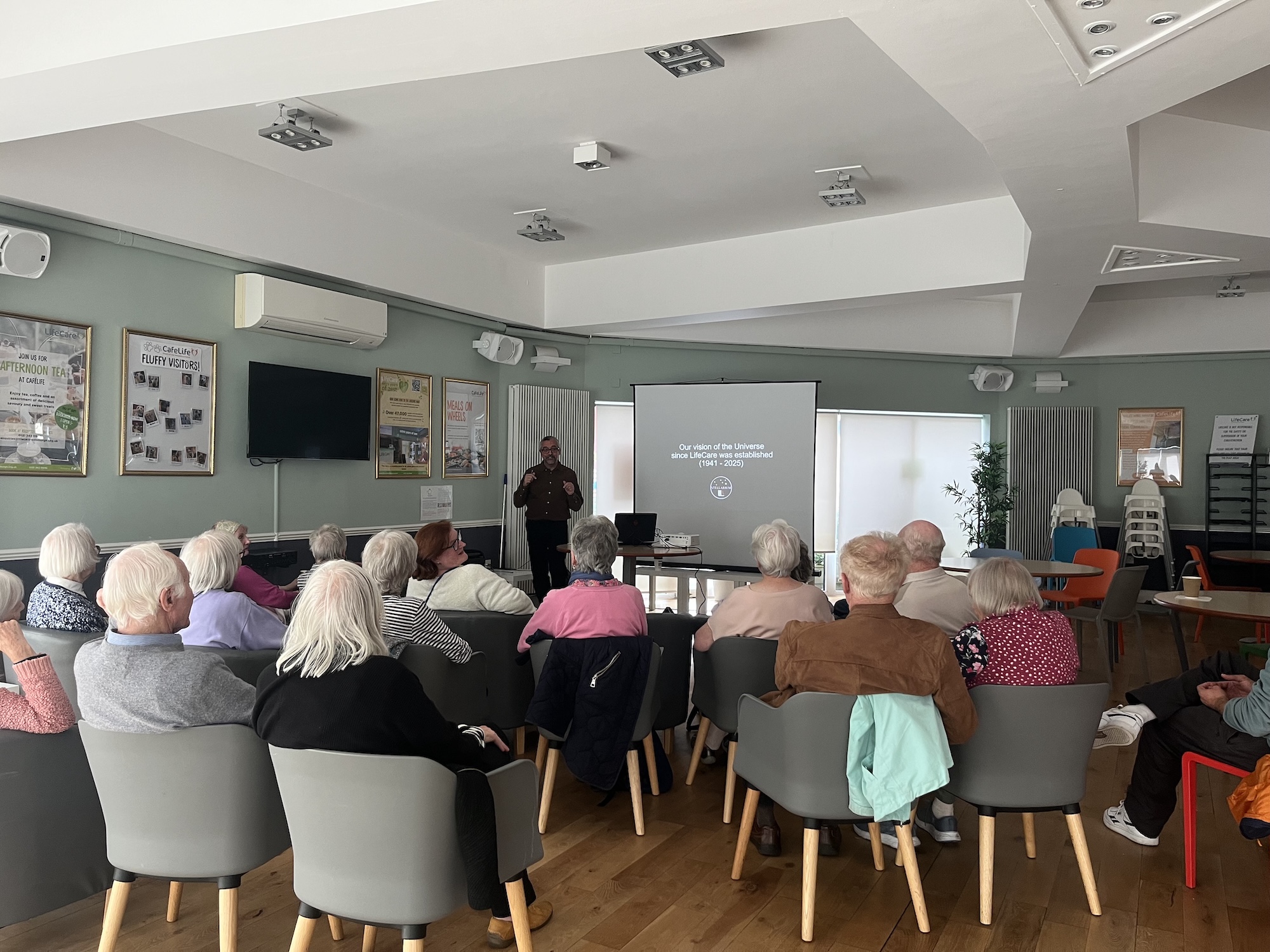
Local charity LifeCare is inviting parents, grandparents and carers to join a free, practical paediatric first aid session at its Stockbridge hub this Friday (11th September).
The session will cover basic first aid for infants, including how to deliver CPR and what to do in the event of choking. It is designed to give people who care for young children the confidence and practical knowledge to respond calmly in an emergency.
Taking place from 3pm to 5pm at CafeLife, LifeCare, 2 Cheyne Street, Stockbridge, EH4 1JB, the informal session is open to anyone who looks after children and would like to learn some essential first aid skills.
There is no need to book, and the session is completely free to attend. Tea and coffee will also be available, with donations welcome to support LifeCare’s work.
Set up in September 1941, the charity is celebrating its 85th anniversary of delivering transformative support within our local communities this month.
Sarah Duckmanton, Activities Coordinator at LifeCare said: “We want to make it as easy as possible for families and carers to access useful, practical information in a friendly and welcoming setting. Knowing what to do in an emergency can make a real difference, and this session is sure to be a great opportunity to learn some important skills.
“This event forms part of our free Talks at LifeCare programme, where we have covered everything from Edinburgh Street Style to the Water of Leith. Everyone is welcome. Thanks to everyone at the National Lottery Community Fund Scotland for helping make these free talks possible!”
CafeLife is fully accessible with lots of space for buggies, prams and wheelchairs. If you’re interested in getting involved or would like to learn more, please get in touch sarahduckmanton@lifecare-edinburgh.org.uk.
Event details
What: Paediatric First Aid – including choking and CPR When: Friday 11 September, 3pm–5pm Where: CafeLife, The LifeCare Hub, 2 Cheyne Street, Stockbridge, EH4 1JB Free but donations are always welcome
Charles Jeffrey reveals full programme for Westfield Days: The Sound of Style atWestfield St James Quarter
11-20 September 2026 | Westfield St James Quarter
To celebrate the launch of Westfield St James Quarter, officially renamed on 10 September 2026, acclaimed Scottish designer Charles Jeffrey returns home for an immersive ten-day takeover as part of Westfield Days: The Sound of Style.
Presented in partnership with the British Fashion Council, the programme forms part of Fashion Britain, a nationwide initiative celebrating the designers, communities and cultural influences shaping British fashion today.
Born in Scotland, Charles Jeffrey is internationally recognised for blending design, performance, music and culture into a distinctive creative vision.
Returning home for the takeover, he brings that world to Westfield St James Quarter across three experiences: an exclusive Listening Room built from his own archives and soundscapes; the PUNK FLEA MARKET, a limited-time shop of archival pieces, accessories and exclusive products; and a full programme of talks, workshops and live performances spanning fashion, music and culture. The entire programme is curated by Jeffrey himself and features some of the most exciting, emerging names.
A particular highlight will see Jeffrey in conversation with Kirsty Hassard, Senior Curator at V&A Dundee, in a talk introduced by the British Fashion Council’s Laura Weir. The conversation will explore the role research plays in shaping Jeffrey’s collections, Scotland’s rich fashion history and its influence on contemporary design, and the importance of recognising the creative talent to have come out of Scotland.
The talk will connect directly to V&A Dundee’s current Catwalk exhibition, which traces the stories, designers and cultural influences that have shaped Scottish fashion’s place on the global stage.
Guests can also expect a vibrant mix of experiences throughout the programme, including intimate one-to-one tarot card readings with the incredibly gifted Jade Mordente, an inspiring dance workshop with acclaimed choreographer Ivan Blackstock – known for his work on Beyoncé’s Brown Skin Girl music video – and a specially curated pop-up Vinyl Lounge from local tastemakers, Umbrella Vinyl.
Charles Jeffrey said:“I’m looking forward to celebrating the people, places and cultural influences that continue to inspire my work on home turf here in Scotland and am delighted to have the opportunity to create something that feels immersive, playful and open to everyone.
“This programme is about showing how I work – the music, the references, the people I collaborate with – and putting it all in one place for ten days.
“There’s something for everyone, whether that’s catching a gig, digging through the PUNK FLEA MARKET or just spending an hour in the Listening Room.”
Anne Ledgerwood, Estate Director at Westfield St James Quartersaid: “Charles Jeffrey is one of Scotland’s most exciting and dynamic creative voices, and there’s no better way to mark this new chapter for Westfield St James Quarter than with a programme built around his work.
“Ten days of music, fashion and ideas, right in the heart of Edinburgh- we want people to come and experience it for themselves.”
What’s On: The Full Schedule
Highlights across the ten-day takeover include:
Friday 11 September
10:00am – Charles Jeffrey’s Listening Room – step inside Jeffrey’s personal archive of music and memory, through curated soundscapes and exclusive content.
11:00am – Vinyl Lounge with Umbrella Vinyl – independent record store Umbrella Vinyl will be selling curated vinyl featuring a selection of the music that inspires Charles Jeffrey
3:30pm – Bikini Body: Live at The Sound of Style – electrifying five-piece Bikini Body bring their irresistible collision of post-punk, dance music and percussion to Westfield St James Quarter
5:30pm – Charles Jeffrey LOVERBOY x V&A Dundee: Scottish Fashion in Conversation – Jeffrey joins V&A Dundee curator Kirsty Hassard, introduced by the British Fashion Council’s Laura Weir, to discuss research, Scottish fashion history and V&A Dundee’s Catwalk exhibition.
Saturday 12 September
10:00am – Self-guided LOVERBOY Exhibition – explore Jeffrey’s LOVERBOY archive at your own pace.
12:00pm – Live Music from Her Picture – an intimate live performance from one of Scotland’s most exciting emerging artists, Her Picture is the public confessional of singer Anny Tahaney, whose honest and thought-provoking songwriting is bewitching listeners in Scotland and beyond.
2:30pm – Fashion, Movement & Theatre with Ivan Blackstock – a workshop exploring the crossover between fashion, dance and performance.
Sunday 13 September
10:00am – Fashion Photography Workshop: Creating the Narrative with Claudius Ricketts – a hands-on workshop on building narrative through fashion photography.
12:00pm – Love Your Body Dance Workshop with Ivan Blackstock – a dance workshop celebrating body confidence and movement.
2:00pm – Charles Jeffrey LOVERBOY: Life Drawing Workshop – life drawing inspired by Jeffrey’s own creative process.
4:00pm – Charles Jeffrey’s Listening Room
Monday 14 September
10:00am – Self-guided LOVERBOY Exhibition
12:00pm & 3:00pm – Charles Jeffrey’s Listening Room
Tuesday 15 September
10:00am – Self-guided LOVERBOY Exhibition
12:00pm – Charles Jeffrey’s Listening Room
1:15pm – MAC Cosmetics Make-up Workshop – a make-up masterclass from the MAC Cosmetics team in Boots.
3:00pm – Lucia & The Best Boys x Neptune Studios: Petals and Frequencies – an autumn equinox bouquet making workshop while listening to Lucia & The Best Boy’s new album, Picking Petals.
Wednesday 16 September
2:00pm – Talk: Tarot, Fashion & Identity with Jade Mordente – a panel discussion on tarot’s connection to fashion and identity.
2:45pm – Tarot – Find Your Archetype with Jade Mordente – a workshop on finding your tarot archetype.
10:00am – Argonaut Books x Charles Jeffrey Bookshop Pop-Up – independent bookstore, Argonaut Books, will be selling a curated selection of books including some of Charles Jeffrey’s favourites and with an LGBTQ+ focus.
10:00am – Charles Jeffrey’s Listening Room
3:00pm – DJ Miss Mixtape: LGBTQ+ Sounds – DJ Miss Mixtape spins an LGBTQ+ focused selection of records.
Friday 18 September
10:00am & 1:00pm – Charles Jeffrey’s Listening Room
5:00pm – Ray Laurél – performance from Ray Laurél, where the listener finds solace and security in tales centring an identity in flux, tales of unbridled desire & a yearning for the Divine.
Saturday 19 September
10:00am – Charles Jeffrey’s Listening Room
1:30pm – DJ Set: DJ Lu – An energetic set to soundtrack your shopping experience at Westfield St James Quarter.
3.00pm – Cocktail Making Masterclass by The Alchemist – shake, stir and sample during an interactive mixology workshop
Sunday 20 September
2:00pm – Pippa Blundell: Live at The Sound of Style – Experience Pippa Blundell’s captivating blend of folk storytelling, ambient sound and classically influenced vocals.
3.30pm – Natural Lacquer Workshop with Moleskine – Discover the beauty of East Asian lacquer art through a contemporary marbling experience
Proceeds from any ticketed workshops or masterclasses across the takeover will be donated to the Equality Network, which works for lesbian, gay, bisexual, transgender and intersex (LGBTI) equality and human rights in Scotland and has been home to the Scottish Trans Network since 2007.
For the full programme and to book onto ticketed workshops, visit Eventbrite.
WESTFIELD St James Quarter? Maybe showing my age here, but to me it’ll always be St James Centre! – ED.
Tracy Gilbert MP has written to councillors ahead of the City of Edinburgh Council Transport and Environment Committee considering the city’s future tram network, warning Councillors that any moves to scrap tram proposals to Granton would entrench inequality and poverty in North Edinburgh.
Tomorrow (Thursday 10 September), Councillors on the Transport and Environment Committee will consider the Strategic Business Case for the Trams to Granton, the BioQuarter and beyond. The officer recommendations are to prioritise the southern section of the proposed tram extension.
Tracy Gilbert is concerned that communities in North Edinburgh, including some of the poorest areas of the city, could once again be left waiting for investment in public transport.
In her letter to councillors on the Transport and Environment Committee, she sets out the case for North Edinburgh to remain firmly within the city’s transport priorities and that a failure to progress trams to Granton could entrench inequality and poverty.
Tracy Gilbert MP said: “In part of my constituency the economic and social benefits of the trams are realised every day. That lived experience and the Strategic Business Case being considered by the Council’s Transport and Environment Committee this week makes the strong case for investment in both the South and North to spread these benefits further.
“Trams to Granton would directly serve three of the 5% most deprived communities in Scotland and six of the 10% most deprived. We are talking about communities that already face significant inequalities, where access to reliable, affordable public transport can open opportunities for training education and employment.
“That is why I have written to councillors ahead of this week’s committee meeting. I am very clear that a failure to realise the ambition of the trams that has been shared by a number of political parties over the last three decades will entrench inequality and poverty in Granton, Pilton and Muirhouse.
“I hope that Councillors will make the ambitious decision this week. Either way I will continue making the case for the strategic investment needed in Granton, Muirhouse and Pilton because our communities deserve better.”
Ms Gilbert’s letter reads:
Since July 2024, I have had the privilege of representing Edinburgh North and Leith. In one part of the constituency the benefits of the trams to local people and businesses are being realised every day, in another part of the constituency the potential benefits of the tram are well known but need political support to become a reality.
Success of Trams to Newhaven
In and around Leith, Leith Walk and Newhaven local people and businesses have enjoyed the benefits of the tram since the extension to Newhaven was opened in June 2023. The recent closure of the line between the City Centre and Newhaven has perversely demonstrated the importance of the trams for connectivity and trade.
Over the tram closure I received a number of e-mails from residents on the increased difficulty they had in travelling to work and into the city centre generally. Most residents experienced severe delays on buses running through Newhaven, Ferry Road, the Shore, Easter Road and Leith Walk. In addition to delays, many buses were full before going up to the City Centre or leaving the City Centre before going along Leith Walk.
Similarly, although the deployment of an additional 200 Voi Bikes was welcome in the wake of the fire there was a tram to bike shift from constituents travelling to and from work which meant many Voi Bike stops were empty across Leith during the day.
In terms of the economic impact there was a visible decrease in the number of people visiting cafes, pubs and restaurants around the Shore and Leith Walk. I am aware that at least one pub and one restaurant have decided to close following the impact of poor summer sales for a second year in a row following Leith Connections project delays and now the impact of the trams.
Argonaut Books have shared data on their Instagram page which shows that in every August since 2022 their sales from July to August have increased. In August 2025, they had a 30% increase in sales compared to July 2025. However, the impact of the tram closure meant in August 2026 they saw a 5% decrease in sales compared to July 2026.
Over the last two months I have repeatedly heard from businesses and residents on the positive impact the trams have had on them. Many of those businesses and residents were sceptical in the past. This lived experience of the trams over the last few years for communities in Leith, Leith Walk, Newhaven and the Shore demonstrate the opportunity of following through on the vision that was developed through the early 2000s for trams in Edinburgh for the other side of my constituency in Edinburgh North and Leith
The Case for Trams to Granton
The Strategic Business Case for consideration by the Transport and Environment Committee makes the case for progressing the whole of the route. Due to my constituency interest, I will focus on the route to Granton.
The proposed routes through Roseburn and Orchard Brae meet the Transport Planning Objectives (TPOs) set in accordance with Strategic Transport Appraisal Guidance (STAG).
TPO1 – To support inclusive and sustainable economic growth
The route between the City Centre and Granton would increase connectivity of major centres of employment such as Craigleith Retail Park, Leonardos and the Western General to the City Centre and beyond. In reverse the increased connectivity would open up employment opportunities for residents in Granton, Muirhouse and Pilton.
A number of major employers in Edinburgh have informed me of the difficulty they have in recruiting people in this area due to the lack of direct public transport connections especially to accommodate shift work.
TPO2 – To respond to climate change, delivering net zero
The route between the City Centre and Granton would increase public transport connectivity between Granton, Muirhouse and Pilton and the West of the city. At present only one bus route serves these communities and the West to the Airport.
The tram extension would help provide the option for residents to use public transport rather than private cars for intra-city and airport journeys. The option would be extended to new residents in the community through the Granton Waterfront Development.
TPO3 – To promote equality and inclusion and help tackle the city’s housing emergency The route between the City Centre and Granton would drastically increase connectivity between the rest of the city and Edinburgh College (Granton Campus). The Campus delivers over 70 qualifications in hospitality, construction, travel operations and the arts with many of the qualifications essential for key growth areas for the city and not delivered at alternative campuses.
The route to Granton would directly service three communities in the 5% most deprived areas of Scotland according to the Scottish Index of Multiple Deprivation (SIMD) (Muirhouse – SO1008929 and SO1008930 and Granton South and Wardieburn – SO1008919) and directly service 6 communities in the 10% most deprived areas (adding Muirhouse SO1008933, Granton and Royston Mains – SO1008921 and Granton South and Wardieburn – SO1008918).
Furthermore, the route would directly serve 12 communities which are in the 20% most deprived communities in Scotland.
TPO4 – To improve health, wellbeing and safety and TPO5 – To protect and enhance our environment The route between the City Centre and Granton would improve connectivity for the whole city to the Western General which provides a range of medical specialisms including geriatric, infectious diseases, diabetes, stroke medicine and breast surgery for the whole of Edinburgh and is the regional cancer centre for the whole of the South East of Scotland.
The route could also see a major upgrade to the Roseburn Path which at present is poorly lit and unsafe during the dark.
In addition, there is considerable development planned across the area. The Granton Waterfront Development which will deliver 3,500 new homes and the Art Works which will help open up Scotland’s National Collection. Ensuring that the trams are extended to Granton will help the public transport network to cope with the increase in demand from these developments alone. A number of these public and private investments have been made on the understanding over the last two decades that the tram network would extend to Granton in one form or another.
Current Position
Despite widespread political support for the trams at various points over the last three decades, it is clear that political will for the route to Granton is falling. I also suspect that there will be calls at the Transport and Environment Committee to only proceed with the South route for trams to the Bioquarter.
Taking such a decision would entrench the inequality and poverty experienced by too many in Granton, Muirhouse and Pilton. Such a decision would be based on political will, not the facts. The Strategic Business Case sets out the performance of both the North route to Granton and the South route to the Bioquarter against the TPOs and the STAG criteria. The appraisals were favourable for both routes and is demonstrated by the analysis below.
Table 1: Analysis of Multi-Criteria Assessment Framework Scoring Framework for each route (Section 4.5.6 of Strategic Business Case)
Benefit/ Impact
Roseburn
Orchard Brae
South East Corridor
Major Benefit (+++)
2
0
2
Moderate Benefit (++)
9
6
10
Minor Benefit (+)
2
4
2
No benefit or impact (0)
1
6
1
Minor cost or negative impact (-)
1
2
3
Moderate cost or negative impact (–)
3
0
0
Major cost or negative impact (—)
0
0
0
Table 2: Analysis performance against STAG Criteria (Section 4.5.7 of Strategic Business Case)
Benefit/ Impact
Roseburn
Orchard Brae
South East Corridor
Major Benefit (+++)
3
2
3
Moderate Benefit (++)
8
7
7
Minor Benefit (+)
4
4
5
No benefit or impact (0)
5
3
3
Minor cost or negative impact (-)
1
6
5
Moderate cost or negative impact (–)
2
1
0
Major cost or negative impact (—)
0
0
0
Next Steps
At the Transport and Environment Committee on Thursday 10th September, I encourage Elected Members to proceed with the officer recommendations on Agenda Item 6.
For the past three decades there has been wide spread support for the vision and ambition for trams to run between the City Centre and Granton in one form or another. Councillors of many groups have championed the route over the past three decades because of the transformative benefits it can have for Granton, Pilton and Muirhouse. The legacy of those Councillors is a legacy of ambition, proceeding
with the officer recommendations allows that ambition to take a further step in being realised. Tearing up that ambition would entrench inequality and poverty, particularly in Granton, Muirhouse and Pilton and would be a dereliction of responsibility by Councillors.
I hope you will take the ambitious decision for Granton, Pilton and Muirhouse and the whole of Edinburgh on Thursday.
Yours sincerely,
Tracy Gilbert MP
Member of Parliament for Edinburgh North and Leith
SARCS is a dedicated NHS Scotland service which offers healthcare and support in the days after an assault, if you are not ready to tell the police or are unsure.
POLICE have released images of a man they believe can assist with their investigation into an incident that took place around 7.30pm on Saturday, 8 March 2025 at Murrayfield Stadium.
The man is described as around 6ft, of slim build, with grey hair.
At the time, he was wearing black glasses, tartan peaked cap and a long dark grey/black jacket.
Constable Ewan Mitchell said: “I would urge the man pictured, or anyone who has information relating to him, to contact police.
“Anyone with information is asked to call Police Scotland on 101, quoting incident number 1254 of 10 March 2025.”