New research warns UK facing shortfall of ONE MILLION unpaid carers by 2050

New research conducted by Carers Trust and policy and research consultancy Public First predicts a shortfall of up to ONE MILLION unpaid carers within a generation.

The expected shortfall is calculated from new projections that draw on current trends and future forecasts. It highlights how intense demand for care from an ageing society is set to outstrip the supply of care available unpaid, from family members and friends at an ever-increasing rate over the next two decades.

The shortfall is the difference between the projected ‘demand’ for carers based on the rising number of people with care needs (7.8 million carers needed by 2050) and the ‘supply’ of carers based on the profile of people who care today (6.7 million carers available by 2050).

Under this projection, the number of people able to provide unpaid care will fail to keep pace with ever-greater need, while paid social care – including care homes and home care – will not expand in line with need. this leads to a shortfall of 600,000 unpaid carers by 2035, and an even more alarming one of one million by 2050.

Such a shortfall would have a crippling impact on the provision of care across the UK: a greater number of people would be left with unmet care needs; overall capacity to provide care would be further stretched; and more families and friends would need to step in to fill gaps – from providing sporadic hours of care to caring for multiple people at once.

These changes would have a potentially devastating knock-on effect on unpaid carers’ wellbeing, employment, and the economy.

With care pressures expected to increase across the board in coming years, the research also found that:

  • 10.3m people will need care by 2050, up from 8.4m in 2025
  • 1.2m unpaid carers already provide care hours that equate to a full-time job
  • 1.6m unpaid carers will be in poverty by 2035, rising to over 2m by 2050

The research predicts that the number of people in need of care will have soared by almost two million between 2025 and 2050. Over the same period, without action, the supply of both paid and unpaid care will grow at a much slower rate, thereby failing to keep pace.

These changes are already taking place in society. Over the last 10 years the supply of carers has not increased with rising need, and the average burden on each carer has increased. In the absence of action, the rate at which the gap opening up between supply and demand for care will only quicken over time.

The research comes at a time when Baroness Casey is running her ‘Big Conversation’ amongst the public into the future of social care and follows the announcement by the Prime Minister that he will use what ‘political capital he has’ to reform the system. 

Louise Casey has already identified that the work of unpaid carers is one of the main reasons the system continues to function.  This research shows that, if nothing changes, this will cease to be the case, with knock on effects on the NHS,  public services and the economy.

Carers Trust, as the largest UK charity supporting unpaid carers through its network of 130 local services, is also highlighting the impact on unpaid carers of the current levels of care they are undertaking:

  • Fewer than three in ten unpaid carers providing care for more than 35 hours a week are in paid work.
  • Mental and physical health outcomes are consistently worse for unpaid carers than for non-carers.
  • Unpaid carers are more likely to live in poverty than the broader population, with living conditions worst for those with the most intense caring roles.

Around three in five people in the UK will become carers at some point in their lives. This can happen overnight, often through circumstances that are impossible to predict or plan, such as a family member being diagnosed with a long-term illness or the birth of a child with a disability.

Kirsty McHugh, Chief Executive of Carers Trust, said: “Almost all of us will either care for a loved one or be cared for in turn at some point in our lives.  However, as a society, we’re simply not facing up to that fact.

“The gap between soaring demand and shrinking supply of care is opening up like a crocodile’s jaws and, unless we act now, it’s unpaid carers, those they care for, and the system itself that will be swallowed whole.

“This grim future is on the horizon, but there is still time to avoid it if we are willing to do the political hard yards now. The Prime Minister’s commitment to fixing our broken social care system is encouraging, but reform needs to focus on more than care home beds, budgets, and the paid workforce. It has to reckon frankly and fairly with the millions of unpaid carers that are holding the system together – at huge personal cost.

“It could be you, your mother, brother, or child who needs care in the future, or who becomes a carer in turn. We cannot go on asking unpaid carers to absorb yet more pressure, and we cannot let the worst-case scenario set out in this research become our reality.

“We need well-funded local support that reaches carers before they hit crisis point, real, comprehensive financial and wellbeing support, and a system that recognises carers as essential and equal, not invisible and expendable.”

Andrew Harrop, Director at Public First, said: “Today family carers provide the lion’s share of support for people with care needs. But Public First’s projections show that the future supply of carers may not keep up with the demand. In 10 years’ time the UK may need 600,000 more people to care than are in a position to do so.

“The number of people with care needs is rising quickly, because more people are reaching late old age. Meanwhile the number in the generation below who typically provide care is barely increasing.

“The shortfall in carers will mean that more people’s needs go unmet and more intensive pressures on those who are able to care.”

QMU’s Gaelic football success helps build a thriving student community

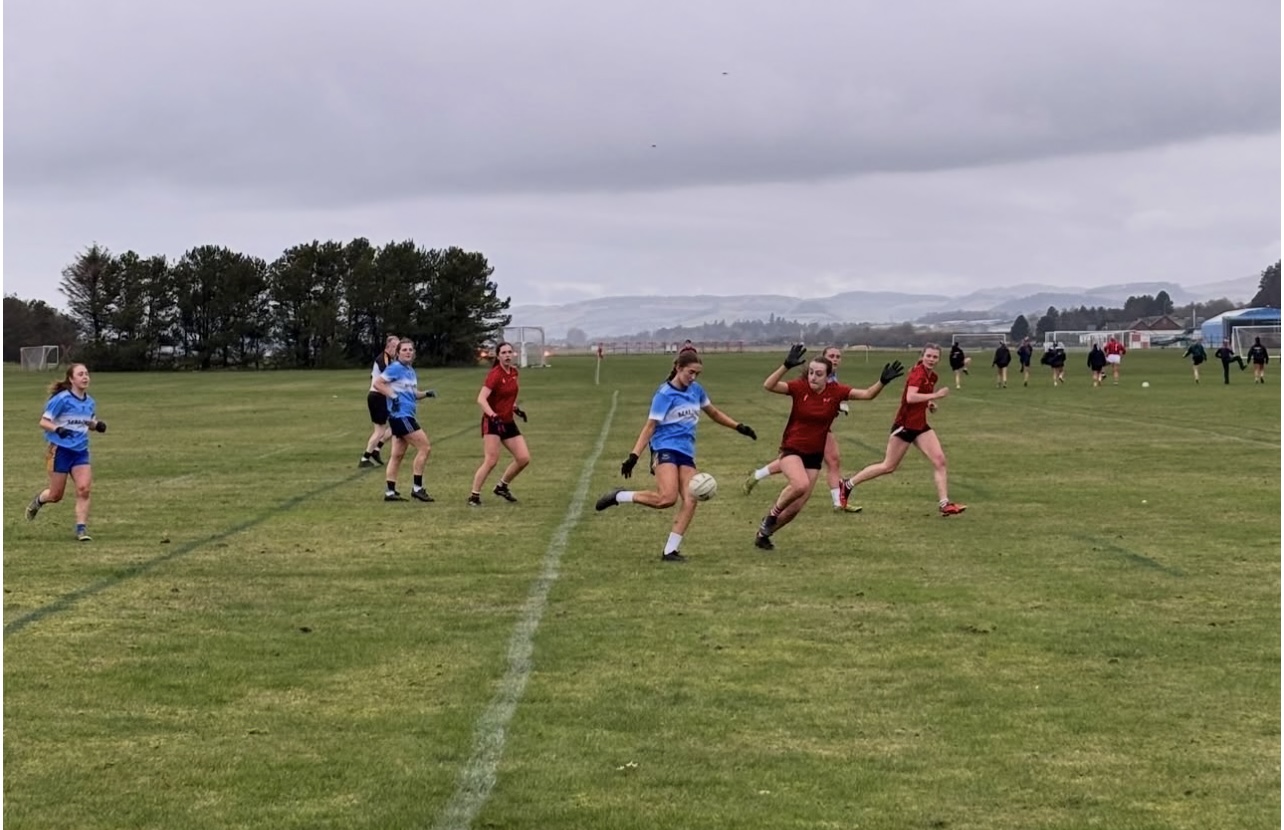
Queen Margaret University’s growing reputation for Gaelic football is helping create a strong sense of community for students from across the UK and Ireland, with the University’s successful teams offering a welcoming home away from home alongside opportunities to compete at a high level. 

The 2025/26 academic year has been another successful season for QMU Ladies Football Club, with the club growing to more than 70 members and securing its fifth consecutive Scottish Championship League title.

The team also celebrated winning the British Championship Shield in Birmingham in 2025, competing against university teams from across the UK. 

The men’s Gaelic football team has also enjoyed significant success in recent years, winning the Scottish University Championship in both 2023/24 and 2024/25 and finishing both seasons as unbeaten champions.

Following some time away from competition, the team’s re-establishment has been supported by the large Irish community studying at QMU, while also providing an opportunity for students from Scotland and elsewhere to get involved in the sport and Irish culture. 

The success of QMU’s Gaelic football clubs is also helping attract prospective students, particularly those from Ireland who are looking to continue playing the sport while studying in Scotland. 

For some students, the opportunity to join a successful Gaelic football club is an important factor when choosing where to study. 

Nicki Carr, an MSc Speech and Language Therapy student from Dublin, said: “The QMU Gaelic Football team has been a big part of my first year at QMU and has really helped me settle into university life.

“Moving to a new country and starting a busy postgraduate course was a big change, so being part of the club gave me a great way to meet people, make friends and feel more settled. 

“I really enjoyed being able to continue playing a sport I love without there being too much pressure around performance. The team was a good balance of football and socialising, and I got to meet people from different courses and years that I probably wouldn’t have met otherwise.

“Having a thriving Ladies Gaelic Football Club team was actually one of the things that attracted me to QMU when I was applying, as I knew it would be a good way to meet people and get involved in university life. Looking back, joining the team has been one of the best parts of my first year and has given me so many good memories and friendships that I’m really grateful for.” 

Although Gaelic games are deeply rooted in Irish culture, QMU’s clubs welcome students from all backgrounds and experience levels. Whether students have played Gaelic football or camogie (an Irish stick-and-ball team sport played by women) for years, are new to the sport, or simply want to try something different, everyone is encouraged to get involved. 

The men’s team has seen first-hand how quickly new players can take to Gaelic football, with students with little or no previous experience able to develop their skills alongside more experienced players. For the 2025/26 squad, creating a “home away from home” has been an important part of the club alongside building on its recent success on the pitch. 

Ciara Brady, Social Secretary for QMU Ladies Gaelic Football Club, said: “The inclusive culture created within the clubs means that members quickly become part of a close-knit community, with friendships formed through training sessions, matches, travel and social events throughout the year. 

“The success on the pitch reflects the commitment and dedication of players, coaches and committee members, but the clubs’ impact extends far beyond trophies. They provide opportunities for students to grow in confidence, meet new people and create memories that last well beyond graduation.” 

The club’s achievements have also been recognised through the QMU Students’ Union Excellence in Sport Award, with the Ladies Gaelic Football Club receiving the award for two consecutive years. 

Joe Agnew, QMU’s Student Union President of Activities, said: “Sport plays an important role in the student experience at Queen Margaret University, and our Gaelic football clubs are a fantastic example of how extracurricular activities can help students build connections. 

“The achievements of our women’s team, alongside the continued success and growth of our men’s team, demonstrate the strength and enthusiasm for Gaelic games at QMU. The clubs give students the chance to compete at a high level while developing skills and connections that can last throughout their time at university and beyond.” 

With both clubs continuing to grow, QMU’s Gaelic football teams are combining sporting success with opportunities for students to try something new, develop their skills and become part of university life. 

Joseph Rowntree Foundation: Poverty in Scotland 2026 report published

CHALLENGE POVERTY WEEK 2026

We are publishing this report at a critical crossroads in Scotland’s journey to a possible future, one free from poverty.

In this year’s election campaign and programme for government, we have consistently heard the First Minister describe eradicating poverty as his defining mission (Scottish Government, 2026a). This commitment is welcome, but there is an increasing disconnect between the Scottish Government’s rhetoric and the reality of life for families in poverty across Scotland.

New data for 2022–25 shows that:

  • 17% of people in Scotland were in poverty, 11% in deep poverty and 7% in very deep poverty. Around 2 in 5 people in poverty in Scotland are in very deep poverty
  • relative child poverty sits at 21%
  • over 9 in 10 children in poverty are in one or more of the Scottish Government’s priority families.

Despite some progress, the legal target to reduce relative child poverty to 10% by 2030/31 is set to be missed by a wide margin. Interim targets have been missed, and the Scottish Government’s current plans will not deliver the scale of change needed to shift the dial.

We want a better start for all children in Scotland, and there is clear evidence of overwhelming public support for more, and more effective, action on child poverty.

The Scottish Government’s plan to review Scotland’s landmark statutory child poverty targets risks delaying action and lowering ambitions. New targets need to be genuinely stretching, grounded in income as a central measure of poverty, and have teeth to hold the Scottish Government and the Scottish Parliament to account for meeting them.

In parallel, the Scottish Government needs a new, much bolder and properly funded plan to reduce poverty in Scotland. Only 1 in 4 people (26%) somewhat or strongly agreed that the Scottish Government is doing enough to tackle child poverty in Scotland (Birt, 2026a).

This year, as well as assessing the national picture, we have focused on the vital role of local government in reducing poverty, backed by new public attitudes data and engagement with people with lived experience.

In findings that must shape live discussions about the future of local governance and public service reform in Scotland, we have heard that:

  • people think councils are too underfunded to provide the services needed in their area
  • there is significant public disaffection with councils, regardless of people’s backgrounds and across Scotland’s different communities
  • councils are not doing enough to tackle poverty, with people on low incomes and living in more deprived areas reporting worse experiences of services and higher levels of disaffection.

To fix this, the Scottish Government and local government will need to work more effectively – in their own right and in collaboration.

Every council needs to ask itself, just as the Scottish Government should do, whether they have genuinely prioritised child poverty reduction and if their services are best where they are needed the most.

Fundamentally, these should be the core questions of public service reform; otherwise it simply becomes a numbers game of reductions in the number of councils and/or budgets. It is also clear that public service reform needs to go hand in hand with a fundamental rethink of local government funding to rewire our services and tax system to radically reduce poverty.

It is also vital that national and local government’s bandwidth across this parliament is not consumed by bureaucratic strife; families in poverty need to see rapid progress in the immediate term.

We want the Scottish Government, as part of its renewed drive to reform local government in Scotland, to:

  • provide local government with a more stable platform for anti-poverty work — avoiding single-year funding settlements and allowing councils greater freedom to adapt to their communities’ needs
  • take steps to fundamentally reform local government finance in Scotland
  • ground public service reform in 2 key questions: would the changes reduce child poverty and will they make services best where they are needed the most?

We want all councils to:

  • prioritise preventing poverty in their communities, and make full use of their levers including economic development, childcare, employability, transport, housing and schools
  • provide better-quality and more joined-up local services to support families in or at risk of poverty, with genuine partnership with the third sector, co-location of services, a ‘no wrong door’ approach and better use of data
  • significantly improve day-to-day communication with the public, underpinned by deeper and more meaningful work to involve people with lived experience of poverty in local decision-making.

Joseph Rowntree Foundation: Poverty in Scotland 2026 report

Executive Summary

COSLA Resources Spokesperson Cllr Kelly Parry has responded to ‘Poverty in Scotland 2026′ by @jrf_uk : “This report is a stark reminder that far too many children and families in Scotland are still being denied the security and opportunities they deserve.”

Cosy Reading Hour at Granton Library

#WeeRead26

Will you join us for a wee read on the 7th October?

#WeeRead26 is a national campaign to celebrate the joy of reading and to encourage people to set aside time to read. Any genre counts!

Join thousands of people across Scotland and pledge to read 6 minutes on the 7th October: https://www.weeread.scot/#pledge

We will be hosting a Cosy Reading Hour at Granton Library to celebrate the Wee Read and complete the challenge together!

Bring your own book or find your new favourite read on our shelves.

Take a blanket and a cushion with you for extra cosiness!

Children are welcome but must be accompanied by an adult.

Frozen Festive Fun returns to Edinburgh!

Edinburgh’s Christmas Polar Ice Bar on sale now, with new Viking theme from Hamilton Ice Sculptors

The Polar Ice Bar with Icelandair – a bar where everything from the tables and chairs are sculpted from ice by experts Hamilton Ice Sculptors – returns with a brand-new theme for 2026, with spellbinding hand-carved Viking themed ice sculptures in the magical Edinburgh’s Christmas attraction on George Street.

The hugely successful Family Ice Experience with Icelandair is back by popular demand, with more family-friendly sessions in the Polar Ice Bar this year than ever before. This year’s ice bar, which sits at a cool minus 8 degrees, will be Viking themed, featuring dazzling hand carved sculptures and fire and ice elements.

The Polar Ice Bar welcomes guests with jackets and gloves on arrival and complimentary mocktails or cocktails served in a glass made of ice.

Visitors can enjoy 30 minute slots for frozen festive fun at the coolest bar in town and then warm up at The Coorie Inn just next door – inspired by luxury Highland lodges, the free-to-enter Coorie Inn will serve up piping hot drinks, festive warmers and host a programme of live music, quizzes and craft workshops.

Polar Ice Bar and Family Ice Experience tickets are available from edwinterfest.com.

A jewel in Edinburgh’s skyline: Palm Houses captured from above

TO mark the reopening weekend of its newly renovated Palm Houses, Royal Botanic Garden Edinburgh lit up the capital’s skyline with its spectacular Cathedral of glass shining like a precious jewel.

Drone content captured from the air shows the Georgian and Victorian structures aglow with warm light, spotlighting the luscious greenery within.

This weekend the Royal Botanic Garden Edinburgh’s iconic Palm Houses reopened to the public, welcoming visitors from around the world to view its rare collection of plants. Following years of painstaking restoration, the glasshouses are open once again to offer a beacon of botanical wonder in the heart of the city.

Royal Botanic Garden Edinburgh (RBGE)

Founded in 1670 as a physic garden, the Royal Botanic Garden Edinburgh has grown into a world leading scientific botanic institution with over 120 scientists working on research related to its National Botanic Collection comprising of a living collection of 13,500 plant species, a herbarium of 3 million specimens, and a library and archive of rare books, paintings, photography and art related to Botany.

Its mission to explore, conserve, and explain the world of plants is at the heart of national and international efforts to address the impact of the biodiversity crisis and climate emergency and save and conserve as many plant species from extinction as possible, in collaboration with partners from across the globe.

Across our four Botanic Gardens in Scotland – at Benmore, in Argyll, at Logan, in Dumfries & Galloway, at Dawyck, in the Scottish Borders, and at Edinburgh – the Royal Botanic Garden Edinburgh is home to our National Botanic Living Collection of more than 13,500 species of plants.

Together our four botanic gardens welcome around a million visitors every year.

Challenge Poverty Week 2026: Social Security Scotland online events

Challenge Poverty Week 2026


Challenge Poverty Week 2026 runs from Monday 5 October to Sunday 11 October 2026, and is coordinated by The Poverty Alliance in Scotland. We will be running a number of online events for stakeholders during that week to help ensure you have information you need about the benefits we deliver.

Our session on Monday 5 October will provide a general overview of who we are and the how to apply for the range of benefits we deliver. Places are nearly all gone at this but you can reserve a ticket here.

Later in the week we will also be delivering an event focused on our Five Family Payments, which includes Scottish Child Payment and our Best Start Grants.

You can register for that event here.

We will have more events throughout the month, including more on our Five Family Payments, as well as a focus on Funeral Support Payment. You can find links to all our events below.

You can also keep an eye on our social media pages throughout the week where we will be sharing relevant content across the daily themes.

Benefit Overview

Monday 5 October 10am – 11:30am

Funeral Support Payment 

Monday 12 October 2pm – 2:30pm

Wednesday 14 October 10am – 10:30am