St George’s School, Edinburgh has appointed Niamh Green, who currently leads the prestigious girls’ school Roedean in the south of England, as its next Head.Niamh Green takes up the role at the leading independent school for girls in Edinburgh next year and brings more than 20 years’ experience in girls’ day and boarding education.
Green will succeed Carol Chandler-Thompson, who has led St George’s since August 2022 and leaves next year to take up a Director of Education role with a global schools group. Chandler-Thompson will remain connected to the school as a Member of Council.
Tracey Ashworth-Davies, Chair of Council at St George’s, said: “On behalf of the Council, I am delighted to confirm the appointment of Niamh Green as St George’s next Head, following a rigorous search with the support of Saxton Bampfylde.
Niamh’s breadth of experience, across teaching, boarding, pastoral leadership and headship, combined with her strong commitment and expertise in the education of girls, made her the outstanding choice to lead St George’s forward. I could not be more confident in her ability to build on the legacy and historical foundations of the school.”
Ms Green joined Roedean as Head in 2023 and this year the school achieved its best A-level and GSCE results in the last ten years.
Previously, she was Acting Head at Mayfield School, Deputy Head (Pastoral) at Godolphin School and a Housemistress at Sherborne Girls. Prior to that, she was Head of Upper School at Woldingham School and a teacher at the International School Luxembourg. She is a serving Independent Schools Inspectorate (ISI) inspector, sits on committees at both the Heads’ Conference (HMC) and the Girls’ Schools Association (GSA), and is a Governor at Marymount School in London.
She holds an MBA in Educational Leadership from UCL, a Postgraduate Certificate in Education from the University of Cambridge, a Certificate in Boarding Education from the University of Roehampton, and an MA in International Relations.
Niamh Green said: “Stepping into the role of Head at St George’s is a real honour. From my first visit, I was impressed by the whole community – exceptional pupils, staff dedicated to the girls, and governors of real calibre.
“The girls I met were articulate, energetic, and compassionate young women, with clear ambition and pride in their school. I am very much looking forward to championing this remarkable school and breadth of opportunities it offers all pupils from age two to 18.”
Ms Chandler-Thompson’s tenure saw the completion of the ‘One School’ project, bringing pupils and facilities together on the Ravelston campus and setting the direction for the school’s estate and development plans.
She reinvigorated the school’s Signature Curriculum, which is explicitly designed for girls, and boasts high achievement in traditionally male-dominated STEM subjects while bucking the trend in girls’ sports with 100% participation levels throughout the school.
Academic results in 2026 were the school’s strongest since the pandemic, with first-choice university outcomes holding above 95% throughout her tenure and 100% A grades in Higher and Advanced Higher music and languages. She also grew the school’s partnerships programme and widened community access to its facilities.
Tracey Ashworth-Davies said: “I want to thank Carol Chandler-Thompson, whose leadership has been exceptional. Throughout her tenure, Carol has amplified how relevant the School’s founding principles and values remain today, as we prepare young women to keep pace in a fast-changing world.
“She leaves St George’s in excellent health, and we wish her all the best in her new role.
“We are delighted she will continue to support the school as a Member of Council.”
LifeCare are proactively recruiting 4 new trustees, as members of our existing board reach the end of their term. This year more than ever is an exciting time to join our board as we celebrate our 85th year.
“After a long career in the NHS, becoming a LifeCare Trustee felt like a natural way to continue supporting peoples’ health, wellbeing and independence.
I feel I bring experience in strategy and governance, whilst helping to support LifeCare to turn good ideas into practical action for older people, their families and carers” – Lorna Jackson-Hall, current Chair
The Communist Party of Britain is calling on voters in the upcoming City of Edinburgh Council by-elections to reject “political tinkering” and “vote for principles” to fix the city’s deepest problems.
The local by-elections take place on Thursday, September 3, 2026. The Communist Party is standing two candidates: Peter Olech in Portobello/Craigmillar and Richard Shillcock in Southside/Newington.
The candidates argue that while other parties try to manage a failing system, only the Communist Party offers a real alternative to more budget cuts and privatisation.
They believe the only way to truly fix these issues is through permanent public ownership in three key areas:
Fixing the Housing and Homelessness Crisis: Other parties suggest market options like “affordable” rents or small planning changes. The Communists say private developers need a shortage of homes to keep their profits and share prices high. They argue the housing crisis will never be solved by the private market, calling instead for large-scale, permanent council housing built and run entirely by the local council.
Ending Council Cuts and Outsourcing: To handle tight budgets, other parties propose changing funding formulas or adding new local taxes on working people. The Communists argue that the wealthiest should pay, and public money must stay under public control. They want to end cuts and outsourcing, demanding that all public services be delivered directly by council workers with strong unions and good apprenticeship programmes.
Bringing Back Real Local Democracy: Other parties avoid the big issues or suggest moving paperwork between different levels of government. The Communists say shifting decisions around does not change who holds the real economic power. They argue that only public ownership gives communities true control over housing, energy, jobs, land, and food distribution.
“The other parties agree on the problems we face, but their policies only tinker at the edges,” said candidate Richard Shillcock.
“We are asking voters to reject political games and on Thursday 3 September to vote for the socialist principles needed to transform local government.”
The Communist Party of Britain campaigns for a socialist society that puts working-class interests, public ownership, and democratic control of local services first.
The local by-elections were triggered following the resignation of two local SNP councillors who were recently elected as MSPs to Holyrood.
The Communist Party urges voters across Southside/Newington and Portobello/Craigmillar to use their first vote and their numbered preference votes to opt for the policies they believe in—ones that will defend and extend the rights and the quality of life of working people.
Swinney: Nobody will take better decisions about Scotland’s future than the people who live here
The draft Referendum Bill has been published asking ‘Should Scotland be an independent country? Yes or No.‘
The Bill, which will be introduced into Parliament once the necessary powers are secured, was a commitment in the Scottish Government’s 100 days programme.
It sets out the question, defines the franchise for the vote, and will include a date upon introduction.
First Minister John Swinney said: “The world has changed fundamentally since 2014. So has the UK, and so has Scotland.
“While people living in the UK endure flatlining living standards and the economic damage caused by Brexit, countries all around us are enjoying a higher quality of life and have more wealth to invest in their public services – often without a fraction of the abundant resources and economic strengths that Scotland enjoys.
“In May, the largest number of pro-independence MSPs in history voted to support the call for powers to hold a referendum on Scottish independence to be devolved to the Scottish Parliament.
“This draft Bill is simple, straightforward and direct. It proposes a clear, unambiguous question, sets out who can vote in the referendum and, once agreed, will include the date. It provides people with certainty. What is now needed is the UK Government to respect the voice of the Scottish people and Parliament and transfer the necessary powers.
“Scotland is ready. The Scottish people are ready. It is time the UK Government delivered.
“I will have more to say about Scotland’s constitutional future in the coming weeks. Fundamentally, nobody will take better decisions about Scotland’s future than the people who live here. That future belongs to the people of Scotland – and no one else.”
From stunt shows and pedal-powered activities to interactive sessions and STEM science, there’s something to set everyone’s head spinning. See amazing 360° stunts and bike parkour from cycling experts, The Extreme Mountain Bike Show, get involved with hands-on activities in the aircraft hangars and have a go at some cycling fun.
National Museum of Scotland Chambers Street, Edinburgh, EH1 1JF Open 10:00–17:00 daily
LAST CHANCE TO SEE Giants
Exhibition Gallery 1, Level 3 Until 14 Sep Tickets from £13
Giants showcases the colossal prehistoric creatures that lived after the extinction of the dinosaurs, 66 million years ago. Discover life-sized 3D sculptures, skeletons, and fossils in this immersive, family-friendly exhibition. The Giants exhibition is designed and produced by the Royal Belgian Institute of Natural Sciences.
Exhibition Gallery 2, Level 3 Until 16 May 2027 Entrance into the museum and exhibition is free
Explore archaeological evidence for the origins of organised conflict, from the Neolithic (late Stone Age) to the Romans, through over 250 objects. Scotland’s First Warriors explores how and why people fought, the impact of war, and the legacy of prehistoric conflict. Internationally significant discoveries from Scotland will be on display for the first time, including the Carnoustie Hoard.
Sep 7, 14, 21 10:30 – 11:15 or 11:45 – 12:30 Tickets from £4 per session
Our Magic Carpet sessions introduce you and your little one to some of the fascinating objects and themes in the museum in a fun and interactive way.
Each month we will explore a different theme using song, rhyme, movement, play and handling objects. This will help you and your little one discover more about our topic.
12 Sep 12:30–16:30 Tickets from £30, Members and concessions available
In this workshop, led by geologist and illustrator Vojta Hybl, you will explore the rock cycle – the process by which rocks change from one type to another. 2026 marks 300 years since James Hutton’s birth. Often credited as the father of modern geology, Hutton’s ideas about deep time changed how understood the age of the Earth. Vojta will combine scientific knowledge of geology with a range of creative approaches to demonstrate just how dynamic rocks can be. You will visit some of our collections inspired by James Hutton, to encourage your drawing as a new way into understanding geology.
The Sunday Sketch 20 Sep & 25 Oct 14:00 – 16:00 Tickets from £13
Join artist Sheena Russell to take a new look at our collections and be guided through a range of drawing activities within the museum’s galleries. All abilities are welcome at this relaxed and informal session. Each month we will explore a different theme, and all materials are supplied.
26 Sep 10:30-12:30 Tickets from £50, Members and concessions available
Join Nic DeRushie, researcher and living educator, for this inspirational and practical workshop around traditional spinning techniques. There will be the opportunity to make spindles and learn the basics of spinning using Scottish heritage breed fleeces. Learn about yarn plying and explore projects that can be done using a small amount of hand-spun yarn.
In Conversation: Understanding Prehistoric Lives Beyond Conflict
26 Sep 14:30-16:00 Tickets from £10
The exhibition curator of ‘Scotland’s First Warriors’, Dr Matthew Knight, is joined by Tristan Hughes, television presenter, author and history podcast host, and Nicole DeRushie, historian and author of ‘Bog Fashion’, to discuss the archaeological evidence that tells us about life beyond conflict in prehistoric Scotland.
27 Oct – 2 Mar 2027 11:30 – 12:15 and 13:30 – 14:15 Free, drop-in
In collaboration with Live Music Now Scotland, we are bringing live music into the heart of the museum on Tuesdays. With experienced performers and rising stars of live music, each week features a different soloist, duo or ensemble.
4 Sep – 26 Feb 2027, Friday afternoon during term time 13:30 – 16:00 Free, drop-in
Explore a different theme each week on Friday afternoons with our Learning team. Find out fascinating facts and hear surprising stories about our collections and get hands on with some of our favourite objects.
Learning Centre Seminar Room, Level 4 Third Friday of the month 10:30–12:00 Free, booking required
Museum Socials events are designed for people living with dementia, their relatives, friends, carers, and supporters. Relaxed and informal, each session explores a different museum theme through various interactive activities, including curator talks, object handling, and creative crafts. Tea, cake and a warm welcome are always provided.
15 & 22 September, 10:30 – 12:00 or 13:00 – 14:30 Tickets from £10, advance booking required
Discover the secrets of how we store and research our collections. Find out how our collections are used in international research and see objects rarely on public display.
Philipshill Road, East Kilbride, G76 9HR Open 10:00–17:00 daily
Working Animal Day
12 Sep 10:30-16:00 Free with museum admission
Join us for a fun-filled celebration of working animals at the National Museum of Rural Life.
See amazing outdoor displays from sheepdog training experts Glen and Jan Welsh, and specialist dog stunt team Les Amis d’Onno. Then head inside the museum for themed crafts and family storytelling.
18 & 21 Sep, 2 and 5 Oct Learning Centre £25 per child for block of 3, £20 per Member child for block of 3
Running in blocks of three sessions, Tractor Tots offers a fun, focused experience for younger visitors, introducing them to rural life through interactive creative play. Each session will feature handling objects from learning boxes, singing, storytelling, rhymes, actions, and sensory play to learn all about life in the countryside
Last Tuesday of every month 14:30-17:00 Free with museum admission and Annual Pass
Relaxed Afternoon is for anyone who would appreciate a calmer visit to the museum. This session is primarily for, but not limited to, families with neurodivergent children; neurodivergent young people and adults; adults living with dementia; adults and children with mental health problems; and any other visitors with sensory needs or who may prefer a more relaxed experience, plus their families, friends and carers.
Tue 13 – Fri 16 Oct 10:30 – 15:30 Free with museum admission and Annual Pass
Our Autumn Explorers family activities are back, and this time we’re going back to our roots, digging into the traditions of the Scottish potato harvest.
Ever wondered why there’s a school holiday in October? Come along and discover how this tradition began when children would swap the classroom for the fields to help with the tattie howking. Find out how this crop has fed families for generations and get hands-on with sustainable activities, some surprising science and spud-tacular storytelling.
Tickets from £65, Members and concessions available
Join Glasgow-based natural dyer and botanical printer Elisabeth Viguie-Culshaw for an introduction to sustainable monoprinting using only locally foraged botanicals. You will learn how to select and prepare plant-based elements to create your own set of monoprints on paper.
This workshop is for anyone curious about sustainable processes and creativity with nature. Elisabeth will also share some of her work along with her new book ‘Botanical Printing on Paper’.
East Fortune Airfield, East Lothian, EH39 5LF Open Weekends only, 10:00–16:00
360 Fest
29 Aug 10:00-17:00 Tickets from £17
From stunt shows and pedal-powered activities to interactive sessions and STEM science, there’s something to set everyone’s head spinning. See amazing 360° stunts and bike parkour from cycling experts, The Extreme Mountain Bike Show, get involved with hands-on activities in the aircraft hangars and have a go at some cycling fun.
Every second Sunday of the month, 10:00-12:00 Free with museum admission
Relaxed Morning at the National Museum of Flight is for anyone who would appreciate a calmer visit to the museum. Friendly staff will be there to give you a warm welcome and support your visit, as you explore the museum without noisy interactives and videos to create a more relaxed environment.
Concorde Theatre 11 Sep & 16 Oct 11:00-11:20 Free with museum admission
From April to October, learn more about the collections and history of East Fortune Airfield with a series of free expert talks at the museum. There will be an opportunity to ask questions at the end of each talk. In August, Eilidh MacKenzie will discuss ‘The Work of Poppy Scotland’ and in September, Elaine Edwards will discuss ‘The Work of the Commonwealth War Graves Commission.’
Visit the museum for free over Doors Open Days East Lothian weekend and learn about the history of aviation from the First World War to the present day. Immerse yourself in interactive galleries, supersonic experiences and our historic hangars and airfield.
Mon 12 – Fri 16 Oct 10:30 – 15:30 Free with admission
The National Museum of Flight is full of things that fly of all shapes and sizes. This October Break you can discover how they fly with a range of fun family activities.
Build a glider with wings shaped like a real aeroplane. Try some popular flying toys from our toy trolley. Watch our 10 minute How things fly show.
Edinburgh Fringe performer Kate Danley gave Blackhall Library regulars a taste of the history and mystery of her native Seattle on Wednesday 26th August, when she brought her storytelling show to the newly re-opened facility in Davidsons Mains.
Kate’s show Madam(e) Lou tells the remarkable true story of Lou Graham, a pioneering Seattle entrepreneur and bordello owner whose role in the city’s history has largely been erased. Kate who is visiting and performing in Edinburgh for the first time admits she had some reservations about bringing a history show to a city with such a formidable relationship with its own past.
And while Edinburgh and Seattle may appear to have little in common, Kate has found some unexpectedly dark connections. ‘Both cities have fascinating, murky histories, including stories of body snatching and darker chapters beneath their celebrated pasts.’
Based on more than a decade of research, Madam(e) Lou explores the life of a woman who amassed a fortune during Seattle’s rapid expansion in the 1880s and went on to become a major power player in the evolution of the city.
Kate has been inspired by Edinburgh audiences’ interest in her hometown and her storytelling show has proved a hit with reviewers.
Kate described it as an ‘absolute pleasure’ to bring the show to Blackhall Library and was delighted to connect with an enthusiastic local audience including a couple who knew her from a book tour in the US.
Blackhall Library reopened in the grounds of Davidson’s Mains Primary School in June 2026 after the building on Queensferry Road was condemned. The staff, who were dispersed around the city following the closure of the original building, are working hard to rebuild the library for the local community.
The performance was the biggest event to date and Kate – who as an author is a big supporter of libraries -was thrilled to make the journey out of town for an appreciative crowd.
Anyone who has missed Madam (e) Lou at the Fringe, need not worry, as it has been optioned for a television adaptation and should be coming to a small screen near you soon.
JOSHUA KHOURY WINS SO YOU THINK YOU’RE FUNNY? 2026
Karen & Katy Koren and the Gilded Balloon are delighted to announce Joshua Khoury as winner of the 39th edition of So You Think You’re Funny? – the UK’s most prestigious comedy newcomer competition.
Bobby Jethro came in second place, with Lucas Jones Ho and Sarah Lewis taking joint third, out of around 500 applicants. They entertained a sold-out crowd at this year’s final in the Debating Hall at the iconic Gilded Balloon Teviot, hosted by multi-award-winning comedian, writer and actor Laura Lexx.
Following hilarious heats across the UK, comic Joshua Khoury claimed the crown for this year’s competition after a judging panel including special guest judge Nina Conti (award-winning comedian and ventriloquist, and star of Live at the Apollo and The Stand Up Show), as well as judges Susan Provan (former Festival Director & CEO of Melbourne International Comedy Festival), Bruce Dessau (Evening Standard comedy critic), Angela Squire (Artistic Director of The Kilkenny Cat Laughs Comedy Festival), Julia Chamberlain (So You Think You’re Funny? Producer), and Karen and Katy Koren (Artistic Directors of Gilded Balloon), watched 7-minute sets from all finalists, before convening to choose the winner.
In 2026, Joshua Khoury won the RAW Comedy national final at the Melbourne Comedy Festival, and earned selection in the Sydney Comedy Festival’s 2026 New Talent Showcase. “An excellent writer of quirky jokes, serving up one hilarious gag after another” (Chortle).
Since it began in 1988, previous winners and finalists of SYTYF? have included Aisling Bea, Tommy Tiernan, Maisie Adam, Peter Kay, Lee Mack, Fern Brady, Rob Beckett, Romesh Ranganathan, Sara Pascoe, Daniel Sloss and many more, with the competition renowned for kickstarting the careers of dozens of the UK’s top comics and providing essential support to comedy newcomers.
Karen & Katy Koren and the So You Think You’re Funny? team would like to offer huge congratulations to 2026’s finalists:
Winner – Joshua Khoury
First runner-up – Bobby Jethro
Joint second runners-up – Lucas Jones Ho & Sarah Lewis
Finalists (in alphabetical order):
Chris Byfield
Matilda Humphreys
Naph
Omar Bouzad
Sarah Dungworth
Victoria Blunt
Katy and Karen Koren, Artistic Directors of Gilded Balloon and So You Think You’re Funny? said:“Huge congratulations to Joshua Khoury – 2026’s fantastic winner of So You Think You’re Funny?
“As ever, this year’s competition was very competitive with around 500 applications, so it’s an amazing achievement for these 10 finalists from across the UK to have made it to the final round, and perform in front of our sold-out crowd tonight.
“We also love seeing our So You Think You’re Funny? alumni return to the Fringe each year to make their debut or take part in mixed bill runs.
“2025’s winner Madeleine Brettingham has had a fantastic debut at Gilded Balloon this year, seeing her being shortlisted for Comedians’ Choice Awards 2026: Best Newcomer, nominated for NextUp’s Biggest Award in Comedy, and longlisted for The List Festival Awards: Best Comedy Show and ISH Edinburgh Comedy Awards: Best Newcomer.
“We also had three of our fabulous finalists from last year, Reb Day, Joel Walker and Rachel Porter, perform throughout the festival in Best Of So You Think You’re Funny?.
“We want to say a huge thank you to every comic who entered the competition this year, and all our esteemed judges who joined us at heats across the UK to ensure we could provide a platform to some of the very best new up-and-coming comedians in the country.
“The talent showcased tonight was truly incredible, and we can’t wait to see what they all do next!”
Celebrity guest judge Nina Conti said: “I was amazed by how fantastic all of the finalists were tonight. It was a joy to watch them, and it made our job very difficult!”
Judges who chose this year’s finalists included: Susan Provan, Bruce Dessau, Angela Squire, Julia Chamberlain, plus Katy and Karen Koren and more.
Since it began in 1988, So You Think You’re Funny? has kick-started the careers of dozens of the country’s top comics including Aisling Bea, Tommy Tiernan, Maisie Adam, Peter Kay, Lee Mack, Fern Brady, Rob Beckett, Romesh Ranganathan, Sara Pascoe, Daniel Sloss and many more.
It is the longest-running and most established comedy competition of its kind, funded solely by Gilded Balloon with no external sponsors.
This year’s winner will receive…
A cash prize.
A fully paid-for solo show (or mixed bill) run as part of the Gilded Balloon’s Fringe programme.
A paid performance slot in the Comedy Arena and weekend pass at Latitude Festival in the year following the competition thanks to Festival Republic.
Opportunity to perform at Cat Laughs comedy festival in Kilkenny, Ireland
Opportunity to perform at Glasgow International Comedy Festival
Opportunity to take part in Soho Theatre’s Soho Labs programme in the year following the final.
Other paid performance slots at the UK’s best comedy clubs including the Glee Club, the Boat Show and more.
Complimentary headshot photoshoot by professional photographer to the stars, Steve Ullathorne.
Complimentary filmed copy and professional photographs of their spot from the Final to use in their show-reel.
Mentorship and support from Karen and Katy Koren, Artistic Directors at Gilded Balloon and Julia Chamberlain, the So You Think You’re Funny? producer for over 20 years.
There are also prizes for the runners-up, including;
A cash prize for the first and second runner-up.
An invite to take part in a fully paid-for mixed bill show as part of Gilded Balloon’s Fringe programme.
Mentorship and support from Karen and Katy Koren and Julia Chamberlain, the So You Think You’re Funny? producer.
For more information on So You Think You’re Funny? visit:
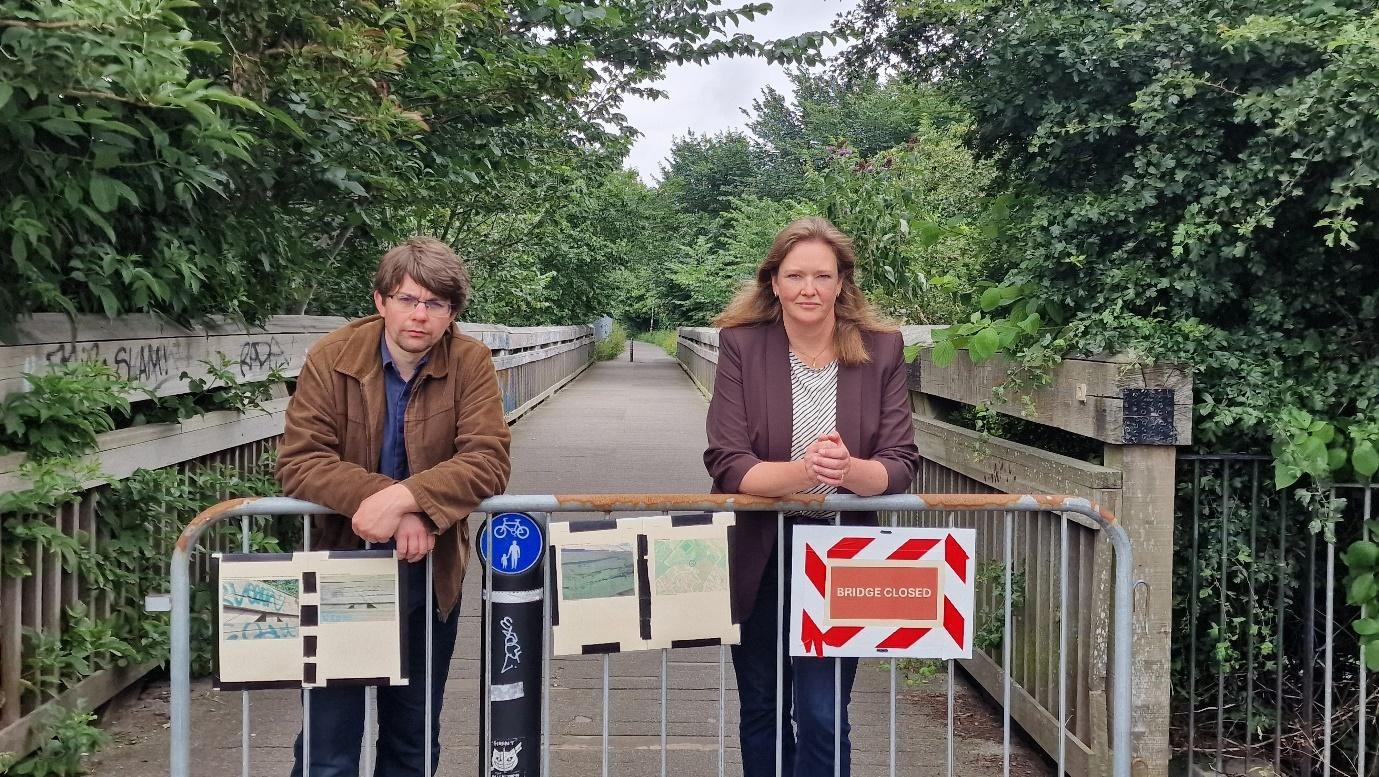
Edinburgh’s Liberal Democrats are calling for the Council to prioritise re-opening the closed bridge at St Mark’s Park, which is a vital and very popular route for pedestrians and cyclists everyday.
The bridge, which links St Mark’s Park to Broughton Road, was suddenly closed by the Council at the end of June when an inspection report indicated that it wasn’t safe to remain open. However, many residents and businesses have made clear the negative effect that the ongoing closure is having on them.
Yesterday (Thursday, 27th August), Edinburgh’s Liberal Democrat Councillors tabled a call for an urgent re-opening and lodged several questions to the Council Administration on how it’s being handled.
Local MSP for Edinburgh Northern, Sanne Dijkstra-Downie said “A huge number of residents from either side of the bridge have raised this matter with me. Many have commented on how far and accessible the closest diversion is while it remains closed.
“While the inspection lays bare why the Council have closed the bridge, we now need to look at solutions to get access back to the route.”
Speaking on the Motion tabled before Councillors, Leith Walk ward councillor Jack Caldwell said “This bridge is vital for residents, local businesses, Broughton Primary School, commuters, and visitors alike.
“For many residents in the Broughton area, an area with very limited private garden access, residents have effectively been cut off from their local park. Access to nature is one of the things that Edinburgh prides itself on, and that should also be true for residents who live near the city centre.
“The fantastic police box coffee shop by the entrance has also seen footfall significantly down, for reasons completely outwith their control.”
Inverleith ward councillor and city transport committee member Hal Osler commented: “A sudden closure like this wouldn’t have been possible on many bridges across the city.
“This bridge is a vital link for the many people who walked, wheeled and cycled across it daily. If we as a Council are serious about our commitment to sustainable forms of transport, then this is our opportunity to show it.
“It won’t be good enough if we shrug our shoulders. Hopefully we can get cross-party support to prioritise this important project.”
PICTURED: Cllr Jack Caldwell and Sanne Dijkstra-Downie MSP
Further information including statements and the inspection report from the local authority available upon request.
Speeches from the meeting will be available at Home – City of Edinburgh Council Webcasts at agenda item 8.9, including an amendment from the Green Group by Councillor Booth.
Families are being encouraged to enjoy days out for less over this bank holiday weekend as the government’s Great British Summer Savings scheme is set to end on 1 September.
Millions of pounds have been saved by families so far via a VAT cut from 20% to 5% on kids’ meals in restaurants and tickets to attractions like theatres and soft play, alongside free bus fares in England for children aged five to fifteen.
The UK’s leading holiday park operator, Haven, returned £4 million to holidaymakers after it joined the government’s scheme.
A VAT cut from 20% to 5% on kids’ meals in restaurants and tickets to attractions like theatres and soft play has been in place since 25 June, allowing families to enjoy their summer holiday activities for less, giving people breathing space during the cost-of-living squeeze.
The scheme ends at midnight on Tuesday (September 1) and the Chancellor has urged people to make use of the savings over this bank holiday weekend.
Yesterday the Chancellor visited Haven’s Kiln Park holiday park in Pembrokeshire, as the company announced that as a direct result of Great British Summer Savings families holidaying on its parks have got back more than £4 million.
Around 251,000 families have benefited from the savings across Haven sites UK wide, and 39,000 families across Wales.
Over 2,100 eateries and attractions across the UK are now listed on the government’s deal finder website – one of the fastest digital tools ever launched in partnership between business and government – where families can search for discounts close to them.
Businesses from across the UK have been passing on the savings, including Barleylands Farm Park in Essex, Playdale Farm Park in Scarborough and Alexandra Palace which has offered savings on activities including boating lake pedalos and family dining. Adventure Attractions, the operator of Bournemouth Pier, has gone further by removing the historic Pier Toll and offering families discounts on attractions.
Chancellor of the Exchequer, John Healey MP, said: “I want every family to get out and enjoy the bank holiday weekend by taking advantage of the final days of Great British Summer Savings.
“This government is determined to give people a bit of breathing space. So families can afford the days out that make the summer holidays special. Whilst giving our world-class attractions and businesses a welcome boost in trade.”
Simon Palethorpe, CEO of Haven, said: “Great British Summer Savings has helped us put more smiles on more faces this summer – with over half a million youngsters receiving Haven activity vouchers. That’s half a million more reasons for families to make memories together at the seaside.
“Great British Summer Savings is a good example of Government and businesses, like Haven, working together to keep costs down for families who choose a British break – supporting jobs and boosting the coastal economies where we operate.”
ODEON, which joined the scheme at its launch in June, has said that more than 1.2 million guests have benefited from discounted cinema trips through Great British Summer Savings.
Greene King, another participating business, has said that they have sold more than 1.1 million children’s meals and recorded more than 80,000 entries to its Wacky Warehouse soft play venues, resulting in cumulative savings for customers of more than £740,000.
Merlin, operator of iconic destinations including Alton Towers, LEGOLAND Windsor and the London Eye, welcomed almost 5 million guests to its UK attractions between 25th June and now, helping families enjoy even better value days out.
Support will continue for households with measures announced over the last month like the £2 cap on bus fares in 2027 and removing VAT from electricity bills will continue to give families breathing space in the months ahead.
Action to slash business rates by 20% for pubs, social clubs and live music venues will also boost Britain’s hospitality sector which has been supported by the increased footfall attracted by the discounts created by Great British Summer Savings.
Fiona Eastwood, CEO of Merlin Entertainments, said: “The Great British Summer Savings scheme has helped more families enjoy memorable days out together this summer, while providing a welcome boost for destinations across the country.
“We were pleased to pass these savings on to our guests at Merlin’s UK attractions, making visits more accessible and helping even more families create lasting memories during the school holidays.”
Suzie Welch, Managing Director UKI, Odeon Cinemas Group said: “ODEON is delighted to be part of the Great British Summer Savings scheme, helping to offer even greater value to our guests.
“It was fantastic to launch the scheme at ODEON Milton Keynes on 25 June, alongside Sir Keir Starmer and children from local schools.
“Since introducing the reduced rates across 100 ODEON cinemas, more than 1.2 million guests have benefited from the offer and enjoyed a trip to the cinema.
“Alongside a fantastic summer film slate – including Toy Story 5, Minions & Monsters, Moana and many more – the scheme has helped make the big-screen experience even more accessible for families across the UK.”
Lucy Fenner, Commercial Director at Alexandra Park and Palace Charitable Trust said:“It’s been fantastic to see so many families making the most of the Great British Summer Savings scheme at Ally Pally.
“Government initiatives that can support charities and businesses like ours to help families and communities enjoy more affordable days out, get active, and make the most of green parks and places on their doorstep, can make a real difference, especially in the school holidays.”
National Lottery Open Fund Awards celebrate Scotland’s heritage, creativity and communities
Stories of Scotland’s past, present and future- from Gaelic song to inclusive storytelling, animation and contemporary theatre- are among the projects receiving the latest National Lottery Open Funding through Creative Scotland.
A total of 59 projects are receiving £1,455,888 in funding via the latest round of Open Fund recipients, supporting artists and organisations to create new work, reach audiences and develop opportunities across Scotland and beyond.
From stories rooted in family and place to new work created for children and young people, the projects reflect the power of culture to connect people with their communities, heritage and each other.
Running from 21 August to 24 October 2026, the exhibition brings together large-scale inflatable sculptures, film, sketchbooks and digital work, drawing on Jason’s experiences of disability, childhood memories and his father’s life as a coal miner.
At its heart is Wish You Were Here, a three-metre-tall tapestry created with Flanders Tapestries in Belgium, inspired by Jason’s memories of his parents and childhood holidays, and his family’s connection to the mining industry.
Dr Ray Lafferty, Curator at National Mining Museum Scotlandsaid: “Creative Scotland’s Open Fund has allowed us to be much more ambitious in presenting Jason Wilsher-Mills’ work in Scotland.
“Without that support, we would have had the tapestry and film, but we simply could not have shown the range of work that visitors will now see. The inflatables completely transform the exhibition.
“They are funny, colourful, strange, and enormously engaging, but, as Jason says, they are also a form of ‘Trojan Horse art’: their humour and colour draw you in before you realise that they are addressing much more serious subjects.”
My Kind of Book is creating Stories that Stretch and Bounce, a collection of sensory stories for children on the autism spectrum with severe or profound learning disabilities.
Using narrative alongside tactile and sensory props – from stretchy socks and boxes within boxes to objects to squish and bounce – the project aims to make storytelling joyful, engaging and accessible.
The stories will be developed with teachers and families, piloted in ASN schools and shared more widely, with some scripts made available as free downloads for use at home and in classrooms.
Ailie Finlay, Director of My Kind of Book said: “It’s fantastic to get this funding. These stories are so badly needed – we have been wanting to work on this for a long time now.
“It will take time, thought and experimentation to create the right kind of sensory stories- it would be impossible to do this without this funding from Creative Scotland.”
Acclaimed Gaelic singer and songwriterGillebrìde MacMillan will record a new album of original Gaelic songs and tour the work at venues across Scotland.
Gillebrìde has played a leading role in the resurgence of Gaelic song composition, with two critically acclaimed albums and the ÒranÙrproject, which has showcased new Gaelic songwriting through concerts, workshops and podcasts. He will work with a stellar band of musicians and producer Pablo Lafuente on the new recording.
Gillebrìde, who is also known internationally for his work as Gwyllyn the Bard on Outlander, said: “I am honoured and delighted to get this support from Creative Scotland for something that I am so passionate about.
“It is vitally important that Gaelic song composition is encouraged and developed. Original song recordings, and the performance of those songs, shows the vibrancy of the language and the community and ensures that the Gaelic song tradition is constantly renewing and developing.”
Aberdeen Animateswill build on its successful inaugural event to create a more ambitious annual programme for emerging and early-career animation creatives in the North East.
The 2027 programme will feature screenings, industry talks, awards and networking at The Lemon Tree in Aberdeen on 27 March 2027, alongside year-round links with schools, colleges, universities and creative networks.
The programme aims to build confidence, industry knowledge and connections, while strengthening Aberdeen’s animation and digital creative community.
Aberdeen Animates’ project team said: “Creative Scotland’s support has allowed us to take something that started as a small local event and give it the space and resources to grow into something much more ambitious.
“For our audience, particularly emerging animators and early-career creatives, that means more opportunities to see their work celebrated, meet people working in the industry, build connections and feel part of a creative community.”
Leith-based Jaggy Edina Productions will bring The Rhinestone Cowboy to audiences in Scotland and Iceland.
Created by mother and son duo Heidi and Harry Docherty, the multimedia theatre production tells the true story of a young man’s journey from Scotland to Iceland, exploring identity, belonging, migration and mental health through theatre, original music, sound and projected visuals.
With Open Fund support, the production will grow from an intimate work into a more ambitious presentation, with performances at Tjarnarbíó in Reykjavik on 29 September and 1 October 2026, followed by Summerhall Arts in Edinburgh on 23 and 24 October.
Heidi and Harry Docherty said: “We are delighted to say that the Open Fund will enable us to evolve the play from its earlier, more intimate format into a more fully realised and ambitious presentation suitable for larger audiences and international contexts, reflecting the narrative journey at the centre of the production while supporting cultural exchange and international engagement with contemporary Scottish theatre.”
Paul Burns, Director of Arts at Creative Scotlandsaid: “These awards showcase the extraordinary range of stories being created and shared across Scotland, and the many ways in which artists and organisations are connecting people with culture.
“From emerging talent to the continuing evolution of Gaelic song, to inclusive storytelling and contemporary theatre connecting Scotland with the rest of the world, these projects celebrate where we have come from whilst looking towards the future.”
“Thanks to National Lottery funding, the Open Fund is helping artists and organisations create work that can be enjoyed, experienced and shared by people of all ages and backgrounds, strengthening connections between people, communities and the places they call home.”
The full list of awardees in this round of Open Funding can be found on Creative Scotland’s website.