Football fans in Edinburgh need little encouragement to cheer on whoever are playing England. And one business owner on Easter Road has an extra incentive to roar on our Auld Enemy’s opponents at the World Cup this summer.
Ernestina Doku hails from Ghana, who face England on June 23 in Boston. Ernestina runs Dazzelustrous, an independent shop selling handmade jewellery, clothing and accessories from Ghana.
The mother-of-three moved to England from Accra as a child and spent many years down south before crossing the border. But despite the time spent there, she is in no doubt about who she will be supporting at the World Cup.
“It’s Ghana all the way for me,” she said. “We are a small nation but very proud and we have some excellent players.”
Ernestina, 46, started the business in 2015 and works closely with her sister in Ghana to select the items for sale.
“I previously worked for a well-known accessories company so that experience was a big help for me in my new venture,” she added. “I contacted my sister about my idea and together we decided to create hand-crafted jewellery and accessories which were taking Africa by storm.
“My sister started taking regular craftsmanship classes and the rest is history.
“All our products are crafted in Ghana with a selection of our jewellery created by me here in Scotland.”
Ernestina has been delighted with the support received from the Edinburgh public for her business – and she is sure this will extend to her country’s football team.
“I wasn’t aware how strong the rivalry was between England and Scotland before I got here,” she said. “But knowing what I do now I am sure that the whole city will be supporting Ghana on June 23!”
Housebuilder staff brave mud and obstacles to support young people into education and employment
Eleven members of staff from Barratt and David Wilson Homes East Scotland have raised £8,000 for Scran Academy, an Edinburgh catering social enterprise that supports school-aged young people facing poverty and trauma to engage in education and employment.
The funds were raised through the team’s completion of the Tough Mudder obstacle course challenge, with parent company Barratt Redrow match funding the £4,000 raised on the day.
The Tough Mudder team, drawn from Barratt and David Wilson Homes East Scotland and Oregon Timber Frame, a Selkirk-based timber manufacturer acquired by Barratt Redrow in 2022, took on the course, battling mud pits, physical obstacles and teamwork challenges across the course’s demanding terrain.
Scran Academy is a youth-led catering social enterprise on a mission to help every young person, regardless of background or barrier, realise their full potential in learning, work and life. The organisation was selected as Barratt and David Wilson Homes East Scotland’s charity partner of the year for 2026/27.
Yvonne Barrie, Regional Finance Managerfor Barratt and David Wilson Homes East Scotland said: “Taking on the Tough Mudder is never easy, but having colleagues alongside you makes all the difference.
“The team gave everything on the day and the spirit throughout was brilliant. Raising £8,000 for Scran Academy makes it all worthwhile.
“The work they do to support young people through food education is genuinely important, and we’re proud that our fundraising can play a part in that.”
Through the match funding programme by the Barratt Redrow Foundation, every pound raised by the team on the day has been doubled, meaning Scran Academy will receive £8,000 to support its work helping young people across Edinburgh into education and employment.
For further information about Barratt and David Wilson Homes visit:
First Minister John Swinney has confirmed a package of up to £1 million will be provided to Clackmannanshire Council to support residents affected by ground movement in the Coalsnaughton area.
The money will ensure the local authority can cover expenses it has incurred as a result of its emergency response, including temporary housing, welfare and staffing costs.
First Minister John Swinney said: “I was grateful to hear from the residents of Coalsnaughton last week about the situation they have been placed in and understand the considerable stress this is causing.
“As residents will be out of their homes for at least eight weeks while the Mining Remediation Authority (MRA) carries out its investigations, this £1 million package will allow Clackmannanshire Council to provide support for them during this time.
“Ministers will continue to ensure the UK Government is pressing the MRA to expedite its investigations as quickly as possible to prevent further disruption to people’s lives.
“The Scottish Government is working closely with Clackmannanshire Council to support residents.”
Hundreds of Scots have already provided nearly 900,000 meals for kids in crisis-hit Haiti with Scottish charity Mary’s Meals
Former Scotland star Stephen O’Donnell has backed a Scottish charity appeal to feed hungry children in Haiti ahead of the nations’ World Cup clash.
Scotland will play their first World Cup match in 28 years when they take on Haiti in Boston this Sunday. Haiti have qualified for only their second World Cup and first since 1974, but their participation is even more remarkable given they were unable to host any qualification matches on home soil.
The situation in Haiti is dire. Armed conflict has intensified and gangs now control an estimated 90% of the capital city, while dominating areas previously deemed safe. Widespread violence is devastating the economy, agriculture, and supply chains, leaving the country to face the worst hunger crisis in its history, with more than half of the population currently experiencing acute food insecurity.
Hardest hit are Haiti’s children. Hungry and surrounded by violence, many are being recruited into armed gangs – lured by the promise of food.
Mary’s Meals, the school feeding charity founded in a shed in the Scottish Highlands, has been providing school meals in Haiti since 2006. Under normal circumstances, Mary’s Meals reaches more than 196,000 children every school day, providing them with food, energy to learn and the hope of a brighter future.
In response to the escalating chaos, Mary’s Meals recently launched a crisis appeal. Thanks to the generosity of hundreds of Scots, donations have already raised enough to provide nearly 900,000 meals for hungry Haitian children.
In the build-up to the World Cup opener, former Scotland international and current Motherwell footballer Stephen O’Donnell – a long-time supporter of Mary’s Meals – is backing the appeal.
Stephen says: “While all eyes will be on the pitch on Sunday, the match is also shining a spotlight on Haiti’s challenges off the pitch.
“The game holds so much excitement for me, my former teammates, the Tartan Army, and all of Scotland, but it gives everyone a chance to reflect on what’s happening in Haiti as well.
“As a father, I can only imagine how it feels to be struggling to feed your children, amid violence and the threat of your loved ones being recruited into gangs. I’m thankful there’s a charity in Scotland helping those in need, and I know the incredible work Mary’s Meals does in turning just one 10 pence coin into a nutritious meal for a child.”
Scottish donations are helping children in Haiti like Billy, who has overcome the loss of his father and his own difficult health issues to thrive in school and become top of his class. He says: “Receiving Mary’s Meals keeps me from being hungry. And it is much easier to follow the teacher and be active in class.”
Calling on people in Edinburgh to consider contributing to Mary’s Meals, Stephen adds: “It’s incredible – but not unexpected – that so many Scots have already responded to Mary’s Meals’ rallying call to reach families suffering in Haiti, and I’d urge anyone who has a spare 10p to follow in their footsteps.
“Although we’ll all be hoping for a Scotland victory this weekend, we can also support Haiti by donating to the appeal and providing a brighter future for Haiti’s next generation. Hopefully we’ll see some of the children fed by Mary’s Meals at a future World Cup too.”
Mary’s Meals UK Media Manager and Scotland fan Gary Armstrong says: “For the past 20 years, Scottish donations to Mary’s Meals have been helping feed children in Haiti. Today, our school feeding programme is more necessary than ever given the brutal violence and daily challenges families and their children are facing.
“We’d like to thank Stephen for his support, and the hundreds of people across the country who have responded to our appeal so far. Scots are known the world over for their friendliness and generosity, which I’m sure we’ll see in the US in the coming weeks. By helping friends in Haiti we haven’t yet met, this kindness has already been shown before a ball has been kicked.”
It costs Mary’s Meals just 10p to provide a child with a nutritious meal in school, or only £19.15 to feed a child for a whole school year. If you can, please donate today: www.marysmeals.org.uk
HMRC doubles funding for customers who need extra support
More than £11 million in funding available for organisations to help customers with their tax affairs.
Voluntary and Community sector organisations invited to bid for funding from today.
Successful organisations will receive three-year funding grants from April 2027.
HM Revenue and Customs (HMRC) has pledged more than £11 million to support customers who need extra help, as it launches the latest round of its Voluntary and Community Sector Grant Funding Scheme.
Bids can be submitted from today for the funding, which is available for voluntary and community sector organisations to provide specialist advice and support to HMRC customers who may need extra help with their tax affairs, interacting with its digital services, which continue to expand, or claiming entitlements.
HMRC has more than doubled the three-year grant funding allocation to £11.18 million starting April 2027. Applications can be submitted on GOV.UK until 3 July.
Organisations applying for the funding must show they can provide independent tailored support to customers who may experience barriers including those who:
may face difficulties in understanding their tax obligations
may have complex needs
are digitally excluded from accessing HMRC services
Dan Tomlinson, Exchequer Secretary to the Treasury said: “I’m delighted to build on our commitment to customers who need the most support and make this latest round of funding available for our partners in the voluntary sector who provide invaluable assistance to them.
“This funding means customers, who may be struggling with their tax affairs, are able to get the help they need to make a real difference to their situation.”
Successful organisations will work alongside HMRC’s Extra Support Team to ensure customers get straightforward advice and support in dealing with their tax affairs and ensuring they get the benefits they are entitled to receive.
Between April 2025 and April 2026, more than 43,000 customers, helped by grant-funded organisations working closely with HMRC’s Extra Support Team, were able to engage with HMRC in a way that works for them and access the information they need.
Myrtle Lloyd, HMRC’s Chief Customer Officer said: “We are all about making it easier for people to get their tax right and by working closely with our Voluntary and Community sector partners we can ensure our customers who need extra support have access to help when they need it most.”
The grants, worth £3.73 million a year, will be awarded quarterly over the 3 years between April 2027 and April 2030. Successful organisations will be announced later this year.
For more information on the Voluntary and Community Sector Grant Funding Scheme, eligibility and to apply, go to GOV.UK.
CASE STUDY
Elena*, who is from the South East of England, works as a self-employed hairdresser, partly at home and partly in a salon where she rents a chair.
When she contacted a Voluntary and Community Sector grant-funded organisation in September 2024, she was struggling with depression following the loss of a family member and divorce. In her mid-forties, she had no sustainable income, was receiving Universal Credit, and struggling just to afford the basics.
She was behind with her rent and Council Tax as well as a tax debt of £1,093, including Late Filing Penalties and interest.
Elena got in touch about her tax debt and three years of outstanding tax returns. As someone who had always struggled with maths, she found it difficult to manage her tax.
One of the volunteer advisers worked with Elena to help her complete her outstanding tax returns which resulted in an increase in her tax liability to £1,824.34.
After the grant-funded organisation contacted HMRC, they waived the Late Filing Penalties and associated interest leaving only the tax balancing payments and a small amount of interest, totalling £503 to pay.
Elena emailed the volunteer who had supported her to express the real difference our support had made to her future.
Two joiners from Harbour Multi-Trades went above and beyond to help create a safer outdoor environment at a local nursery after stepping in to collect fencing materials themselves when the supplier vehicle broke down.
Harbour Multi-Trades worked together with Little Larch Nursery in Craigentinny to secure the boundary next to a neighbouring bowling green, with the nursery supplying the materials. Aaron Fletcher and Bradley Anderson installed a new fence free of charge at the Little Larch Nursery’s premises on Loaning Crescent, making it easier for staff to supervise children safely while they play and learn outdoors.
Formerly Leith St Andrew’s Playgroup, Little Larch is a long-standing charitable outdoor nursery that has supported local children and families for around 50 years. After relocating from Leith St Andrew’s Parish Church on Easter Road to a new site on Loaning Crescent last year, the nursery has continued to develop the premises to make the outdoor space fully usable and secure.
The new fence was installed after the nursery identified a need for additional security along the site boundary. When the supplier vehicle carrying the fencing materials broke down, Aaron and Bradley stepped in to collect the materials themselves to ensure the work could go ahead without delay.
Their efforts have helped create a safer and more secure environment for children to play, learn and explore outdoors with confidence.
Louise Kelly, Nursery Manager at Little Larch Nursery, said:“On behalf of everyone at Little Larch Nursery, I would like to sincerely thank you for the fantastic work you carried out in building our new fence.
“Your generosity, craftsmanship and support have made a huge difference to our outdoor charity nursery. The new fencing has created a safer and more secure environment for the children to play, learn and explore outdoors with confidence.
“We truly appreciate the time, effort and care your team put into the project. It is wonderful to see local businesses supporting community spaces that benefit children and families.
“Thank you once again for your kindness and professionalism. Your contribution will have a lasting positive impact on our nursery and the children who attend it.”
Chris Thomson, Managing Director of Harbour Multi-Trades, said:“I’m incredibly proud of Aaron and Bradley for the way they stepped up to help Little Larch Nursery. Their willingness to go the extra mile and make sure the job was completed shows the community spirit that runs right through Harbour Multi-Trades.
“We are committed to making a positive difference in the communities we serve. Supporting local organisations like Little Larch Nursery is an important part of that, especially when it helps create safer spaces for children and families.
“This work will have a lasting benefit for the nursery and the wider community.”
SASS4US (Support And Survival Skills for Unleashing self love) is a trauma support group facilitated through LIFT, bringing together women aged 20 to 50 from the Muirhouse and West Pilton communities.
The group provides a safe and supportive space where women can talk openly about life experiences, mental health, personal challenges, and goals for the future. Around eighteen women attend every week.
Through mutual support, encouragement, and understanding, members work together to build confidence, develop resilience, embrace positive change, and support one another in their personal journeys.
Recently, many group members shared their concerns about the negative atmosphere they feel has developed within the local community. Some residents have expressed feeling anxious or even afraid to visit local shops, and there is a growing sense that negative stories are overshadowing the many positive aspects of the area.
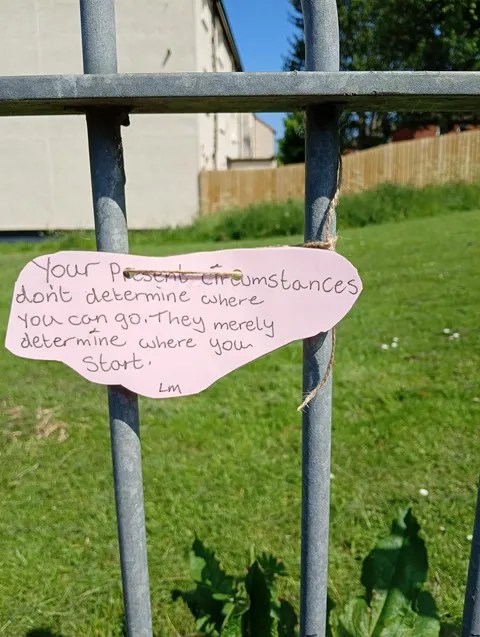
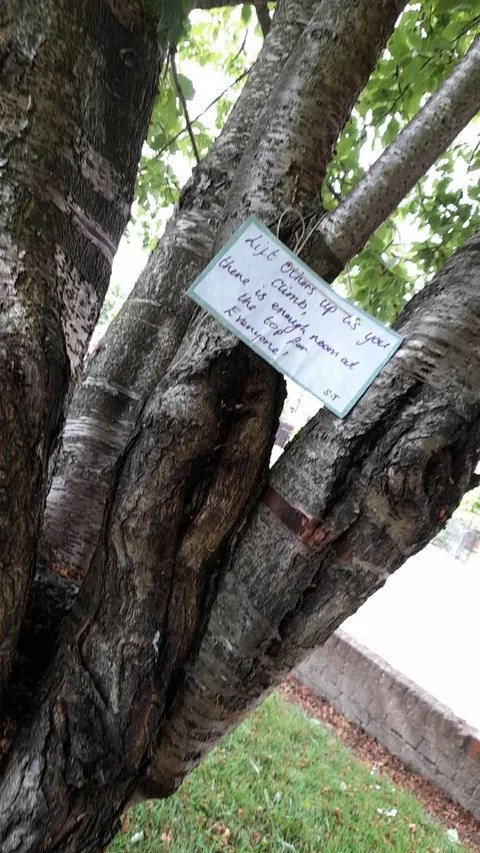
Wanting to make a difference, the women of SASS4US decided to take positive action. They created inspirational stones and uplifting quotations, which have been placed throughout the Muirhouse and West Pilton communities.
Their writings aim is to spread kindness, hope, and encouragement, while reminding people that even small acts of positivity can have a meaningful impact.
This project reflects the group’s commitment not only to supporting each other’s wellbeing but also to helping create a stronger, more connected, and more hopeful community for everyone.
The girls would like to be anonymous as they want to start making these each month and placing them around the community continuously.
£4 million funding boost over three years for business debt advice services support an additional 16,000 small businesses and sole traders
Strengthened debt advice services to provide expert advice to small businesses struggling with finances
Funding builds on the success of the Business Debtline delivered by Money Advice Trust
Additional £2 million funding this year to help modernise debt advice
Small businesses and the self-employed struggling with their finances to receive a helping hand through new £4 million funding boost to business debt advice services through the Money and Pensions Service.
The funding will go towards expanding access to expert support to help them get back on track, giving a leg up to an additional 16,000 businesses over the next three years to total 75,000 businesses.
Economic Secretary to the Treasury Rachel Blake said:“From the plumber fixing your radiator to your local café, small businesses are the backbone of our economy, and we know they sometimes need a helping hand when times get tough.
“We’re building on the success of our expert debt services to help tens of thousands more get back on their feet.”
Money and Pensions Service CEO Oliver Morley said:“When financial pressures mount, knowing where to turn can make all the difference.
“This vital funding will help more small business owners and sole traders get trusted advice when they need it, so they can regain control of their finances and plan for the future.”
Money Advice Trust CEO Steve Vaid said:“The Financial Inclusion Strategy has highlighted the need, and our long-term ambition, to deliver more debt advice for small business owners.
“This enhanced funding further strengthens the partnership between the Money and Pensions Service and Money Advice Trust and will help Business Debtline offer additional support to over 16,000 small business owners, sole traders and the self-employed – a group that often struggles to find tailored help.”
This builds on the £3 million a year put forward by the Money and Pensions Service from 2024 for the Business Debtline service designed to provide support at the point where personal and business finances often cross over.
Business Debtline has since been able to support around 50,000 people with more than 90% of clients seeing their debts reduce or stabilise, and demand has continued to grow for its services. Today’s funding will go towards meeting that growing demand.
The new funding will support the government’s Plan for Small Business – the most comprehensive package of support for SMEs in a generation – that helps small businesses access the tools and support they need to unleash their full potential with boosted access to finance measures and the most significant reforms to late payments in 25 years.
Alongside support for small businesses, a further £2 million of funding will go towards modernising debt advice on top of the £4.8 million already invested as part of the government’s Financial Inclusion Strategy. Launched last November, the Strategy looks to remove barriers to financial participation and to build household financial resilience.
Debt advisers play an invaluable role in supporting people to get their finances back on track. This modernisation fund will allow them to spend more time helping their clients, particularly complex cases who may need additional support.
Previous recipients of the funding have delivered a diverse range of projects, from AI pilots and digital referral pathways to upgraded infrastructure and more inclusive service design.
For example, Money Advice Plus, a community-based debt advice charity, invested £49,000 in technology, including AI-supported transcription and upgraded equipment. This has significantly increased their capacity, nearly halved the time to first appointments, and enabled advisers to spend more time supporting people in financial difficulty.
As cost-of-living crisis worsens, Islamic Relief UK deliver food packs across the country to struggling families as part of Qurbani
Islamic Relief UK will be working with over 40 local partners, from this week as part of the religious festival of Qurbani to deliver food packs to vulnerable families and individuals affected by the country’s worsening cost-of-living crisis.
More people throughout the country are struggling with the cost-of-living, and pressure is starting to build up against local charities and foodbanks as demand rises. According to Islamic Relief UK’s recent survey, over a quarter (28%) of their local partners have had to turn people away as they cannot keep up with the intensifying demand. Now with the added impact of the Middle East crisis, the economic situation will only further push more families into poverty.
Qurbani is one of the most important months of the Islamic calendar, as Muslims across the UK donate what they can to those struggling to afford food for their families.
This year, Islamic Relief is working partners throughout the UK, in cities such as London, Birmingham, Liverpool, Leeds, Leicester, Burnley, Cambridge, Glasgow, Exeter and more, and will be working with local charities, food banks, mosques and football clubs to deliver for those who need it most.
Nadeem Baqir, UK programme manager for Islamic Relief UK said: “This Qurbani should be a time for us all to reflect on the most vulnerable. Far too many families across the country are struggling with the cost of food, and too often we hear reports from our local partners about parents who must go without to make sure their children can eat.
“But at the same time, we can see communities pulling together and looking after each other, just like our wonderful partners, who provide food to those who cannot afford it, even as they themselves are put under increasing pressure as the number of people in need rises.
“As more families struggle to make ends meet, there is a clear need for government action to ensure the support families receive is sufficient to help them afford their essential needs and prevent more households from falling into poverty.”
Charitable organisations across the country are already benefiting from a share of Barratt and David Wilson Homes Scotland’s £63,000 Community Fund for 2026, with two groups in Edinburgh being awarded funding in the first four months of the year.
Part of the UK’s leading housebuilder Barratt Redrow, Barratt and David Wilson Homes Scotland’s Community Fund supports charities and community organisations delivering positive impact in the areas in which it builds.
Since the start of the year, two organisations in Edinburgh have shared a total of £3,000 in funding to support their work. The funded projects span a diverse range of community initiatives, reflecting the breadth of support being delivered through the fund.
Edinburgh-based catering social enterprise Scran Academy was awarded £1,500 to support its work providing opportunities for young people to gain meaningful work experience and skills by helping them to transition beyond the classroom to take control of their development.
The programmes engage them in a bespoke and informal skills training journey, accessing qualifications and accreditation that support them to achieve their next training or employment steps.
Simba Honouring Baby Loss, a charity also based in Edinburgh, was awarded £1,500 to support its services for affected families by helping them create special moments to honour the memory of their baby.
Andrew Morrison, Managing Director at Barratt and David Wilson Homes East Scotland, said:“It’s fantastic to see the positive impact the Barratt and David Wilson Homes Scotland 2026 Community Fund is already having on communities across the East of the country.
“The organisations we’ve supported so far are doing vital work, whether that’s providing health and wellbeing services or bringing people together through inclusive community initiatives to make a real difference.
“We’re committed to creating thriving, sustainable communities and we’re proud to play a part in helping these groups continue and expand their work, and we look forward to supporting many more organisations throughout the year.”
The launch of the 2026 Community Fund builds on Barratt and David Wilson Homes Scotland’s long-standing commitment to social responsibility and community engagement. The housebuilders are currently creating a range of new communities in Edinburgh, including Barratt Homes @ West Craigs and David Wilson Homes’ West Craigs Quarter.
The Barratt and David Wilson Homes Scotland Community Fund is funded by the Barratt Redrow Foundation, the charitable arm of Barratt Redrow, which aims to help communities across the UK to thrive. Grants will be available exclusively to registered charities operating in the areas in which Barratt and David Wilson Homes build, including the East of Scotland.
Applications for 2026 funding will close on 30 October 2026 with successful applicants continuing to be selected throughout the year*.
For more information about the Barratt and David Wilson Homes Scotland 2026 Community Fund including eligibility and how to apply, visit: