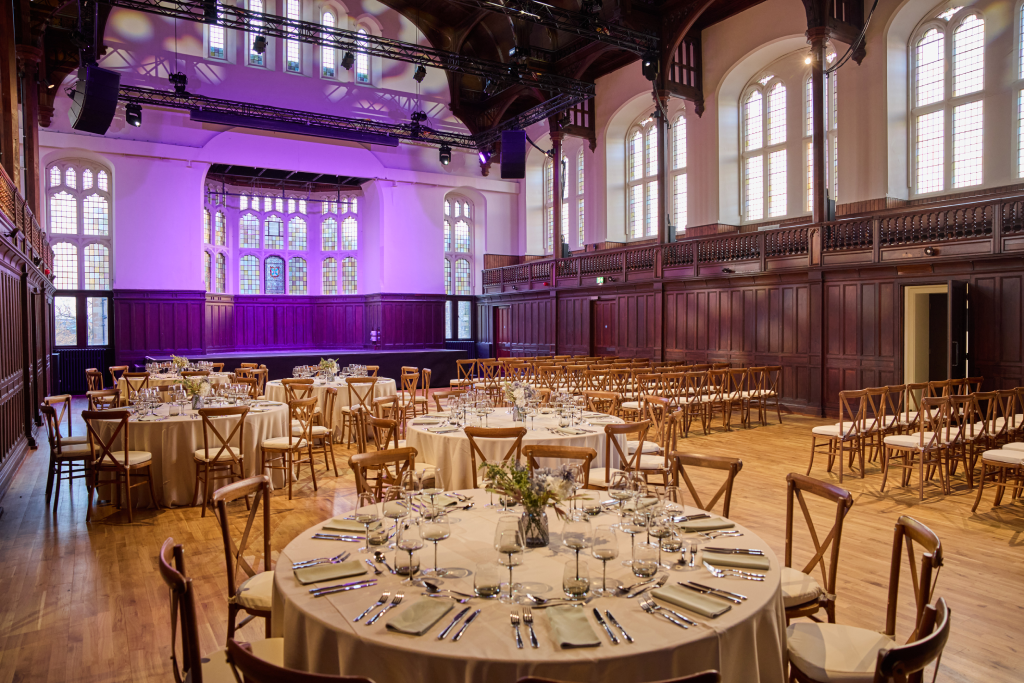
One of Edinburgh’s best-known historic venues is preparing to host Christmas celebrations for the first time since reopening following a major refurbishment.
Teviot reopened its doors in March after a two-and-a-half year refurbishment, marking a new chapter for the 137-year-old building in the heart of Edinburgh.
First opened in 1889 and known as the world’s oldest purpose-built students’ union, Teviot has been part of Edinburgh life for generations – from student events and celebrations to performances and the Edinburgh Festival Fringe.
Its refurbishment has introduced improved accessibility, facilities and energy efficiency while retaining much of the character of spaces including the Debating Hall and Library Bar.
This December marks another milestone for the venue as Teviot hosts its first Christmas season since reopening.
Edinburgh University Students’ Association is opening the venue to businesses, organisations, university departments, societies and groups from across the city, with Christmas events available from 1–20 December 2026.
While Teviot may be best known as a home for generations of Edinburgh students, its event spaces are open to everyone and are managed by an experienced events team, who are available to look after food, drinks, décor and entertainment.
Some of the building’s most recognisable rooms, including the West Reading Room for groups of 40–80 and the Debating Hall for larger celebrations up to 140 guests, are available for Christmas celebrations.
The return of Christmas events follows a busy year for Teviot, which has welcomed people back into the building since its reopening and returned as a major Edinburgh Festival Fringe venue over the summer.
Vice President Activities & Services 2026/27, Vasil T, said: “Teviot means a lot to generations of people in Edinburgh, so it feels really special to be welcoming Christmas parties back into the building this year.
“A lot of people will remember Teviot from their own student days, while others may never have had a reason to step inside before.
“We want people to know that you don’t have to be a student or connected to the University to celebrate here – our venues are open to everyone.”
Every booking helps support the charitable work of Edinburgh University Students’ Association. Income generated through Teviot supports our work to enhance student experience and services at the University of Edinburgh.
With Teviot now entering its first full festive season since reopening, the team hopes Christmas will give businesses and groups from across Edinburgh another reason to rediscover one of the city’s most distinctive buildings.
Christmas Returns to Scotland’s UNESCO World Heritage Site
Families looking for a magical Christmas day out can once again celebrate the festive season at New Lanark as the UNESCO World Heritage Site launches its Christmas Experience for 2026.
Running on selected dates from 28 November to 24 December, the event transforms the historic village into a festive destination where families can enjoy a visit with Santa, The Wiz That Woz pantomime, the Spirit of Christmas Ride and indoor soft play, all included in a single ticket.
Set within the historic mill village on the banks of the River Clyde, the experience offers families the opportunity to celebrate Christmas within one of Scotland’s six UNESCO World Heritage Sites, a festive setting unlike any other festive attraction in the country.
Designed for families with children aged one to eight, the Christmas Experience offers festive entertainment throughout the day, with activities running between 10am and 5pm.
Every child visiting the Christmas Experience will enjoy a personal visit with Santa Claus in his festive grotto and receive a special soft toy gift to take home. Families can then enjoy this year’s pantomime, The Wiz That Woz, a lively Scottish twist on a much-loved classic packed with laughter, colourful characters and audience participation.
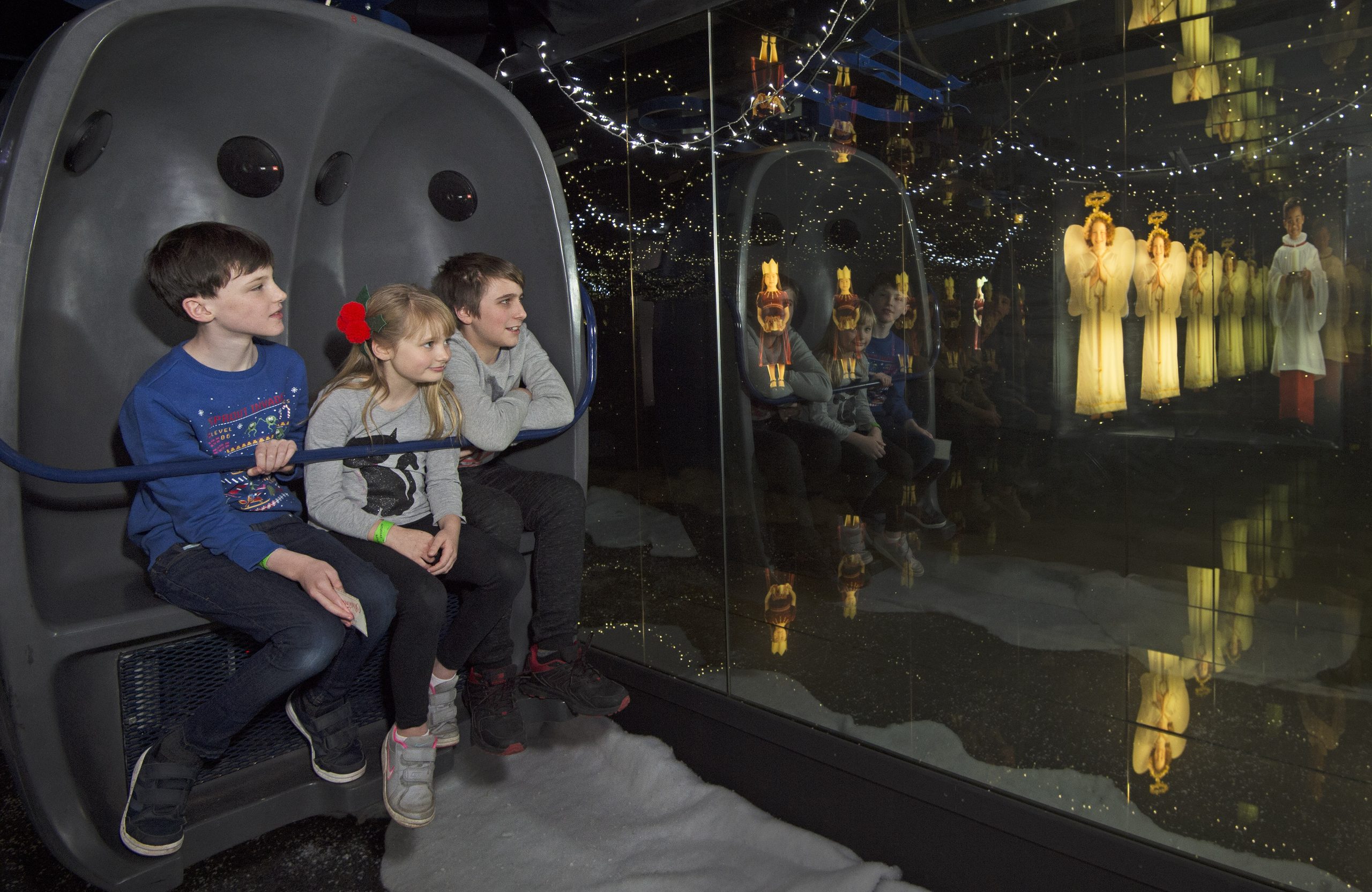
Visitors can also climb aboard the much-loved Spirit of Christmas Ride, where Holly and her friends take families on a magical festive journey, before little ones enjoy even more fun in the indoor soft play area.
New Lanark’s dedicated Quiet Session will return on 28 November, offering a calmer and more relaxed experience for children and families who may benefit from a lower-sensory environment.
For many families across Scotland, a visit to New Lanark has become a treasured festive tradition, combining seasonal entertainment, family activities and a unique historic setting.
“There is something truly special about Christmas at New Lanark,” said a spokesperson for New Lanark.
“Families tell us year after year that visiting New Lanark has become part of their Christmas celebrations. What makes the experience special is being able to spend quality time together, whether that’s meeting Santa, enjoying the pantomime or exploring the village in its festive setting. We are delighted to welcome visitors back for Christmas 2026.”
Alongside the festive attractions, families can enjoy seasonal treats, warming drinks and family meals across New Lanark’s café and restaurant, making it easy to enjoy a complete festive day out.
With many dates proving popular each year, families are encouraged to book early, particularly for weekends closer to Christmas.
Tickets for Christmas at New Lanark 2026 are on sale now, with full details and booking information available on the New Lanark website.
New figures reveal the UK wastes a staggering 10.2 million tonnes of food every year, with an extra three million tonnes wasted over the festive period.
With kitchens overflowing and fridges crammed full, festive excess means food waste spikes, particularly when it comes to the nation’s favourite side dish: roast potatoes.
Waste removal experts at Rainbow Rubbish Removals estimate that more than 40 million roast potatoes could be wasted on Christmas Day alone, as households over-cater, misjudge portions and throw away perfectly edible leftovers.
Britain throws away enough food at Christmas to fill millions of plates, and your roast potatoes are top of the list.
According to the latest data by Numan, potatoes are the most wasted food in the UK, with an average 1,300 tonnes thrown away every single day. That’s the equivalent of more than 21 million roast potatoes. enough to cover Christmas dinner tables across the country many times over.
A record high of £460 per average household was also spent on Christmas groceries last year, yet painfully, 200,000 tonnes of that food was wasted – equivalent to 6.6 million bins full.
With this in mind, Rainbow Rubbish Removals are urging households in the UK to think greener this Christmas, revealing the true scale of festive food waste and sharing practical tips for celebrating more sustainably this year.
Councils call for more responsible waste disposal, following hazards
Last Christmas, the sheer volume of waste forced Carmarthenshire Council to inform residents it was “unable to complete collections due to the quantity of waste presented”[9], highlighting how seasonal excess can disrupt essential services.
Brighton and Hove’s Councillor Tim Rowkins, Deputy Leader and Cabinet Member for Net Zero and Environmental Services, previously warned that improper festive disposal has knock-on effects across entire communities:“We have seen a lot of waste left on roadsides, alongside communal bins, or in parks and open spaces. If we have to divert staff to clear waste on an ad hoc basis, then those staff can’t do their usual work to keep the city clean and in many cases the waste is no longer recyclable.”
Similarly, Brent Council’s Cabinet Member for Environment, Cllr Krupa Sheth, urged residents to think more carefully about what they throw away during Christmas: “Protecting the environment is one of our Council’s top priorities.
“Food and garden waste thrown away unnecessarily adds to the challenges already faced. Please use the disposal and recycling options available to help keep our borough cleaner and greener.”
With potatoes now confirmed as the most wasted food in the UK, councils say Christmas dinners significantly contribute to the problem, as uneaten roast potatoes, vegetables and trimmings are thrown away in vast quantities.
EXPERTS REVEAL SIX WAYSS TO CUT CHRISTMAS FOOD WASTE
Miroslav Radov, waste collection expert at Rainbow Rubbish Removals, says Christmas food waste is one of the most avoidable environmental problems of the year:
“Christmas has become a season of extreme excess, and much of the waste generated is entirely avoidable. From mountains of uneaten food to over-purchased groceries, councils are overwhelmed every festive period. Potatoes, vegetables and cooked food that could be frozen or reused too often end up in the bin.”
1. Buy only what you’ll actually cook
With food spending peaking at Christmas, over-buying is common. Planning portions carefully, such as weighing potatoes per person, can dramatically reduce waste.
2. Cook smaller batches and top up if needed
Instead of roasting everything at once, cook in stages. This prevents trays of roast potatoes being left untouched and thrown away.
3. Freeze leftovers immediately
Roast potatoes, mash and parboiled spuds freeze well if cooled and stored properly. Freezing leftovers on Christmas Day prevents them being forgotten and binned days later.
4. Get creative with next-day meals
Leftover potatoes can be turned into bubble and squeak, hash, soups or potato cakes. Recipe generator apps can help households use what they already have.
5. Reduce packaging waste when shopping
Buying loose produce or bulk potatoes cuts down on unnecessary packaging and helps households buy only what they need.
Miroslav adds:
“To avoid unnecessary packaging, bring reusable produce bags and buy loose vegetables. You’ll reduce waste and avoid buying more than you need.”
6. Compost unavoidable food waste
If food waste can’t be avoided, composting potato peelings and scraps keeps them out of landfill and reduces emissions.
Around 10,000 offshore workers are spending today and the rest of the Christmas and New Year holiday far out on the dark seas around Britain’s coasts, providing the energy to heat homes, cook turkeys, and power fairy lights.
As most people are eating, drinking and open presenting with family and friends, this vast army of men and women will be making sure the heat and power is there to make it all happen, working on gas and oil installations that can be more than 200 miles from the UK mainland.
This workforce helps to supply the daily average of 265 million cubic metres of gas we need on Christmas Day and each of the following days of the Christmas break to cook our food, heat our homes and run the 35 gas-fired power stations that remain the backbone of the UK’s electricity generating system.
Among the hundreds of teams involved is 51-year-old Andy Pulford, managing a Christmas workforce of 90 and a complex of 23 gas wells around Spirit Energy’s massive Morecambe Bay central processing complex.
This installation produces enough gas to meet the annual needs of 700,000 homes extracting gas from more than half a mile below the seabed.
Two days before Christmas Andy said goodbye to his primary schoolteacher wife Hannah, 43, and sons George, 11, and William, eight, and embarked on the six-hour drive from his home outside Norwich to a helicopter platform in Blackpool, Lancs, from where he routinely flies to his offshore office.
“Everyone has a personal story about how they feel being away but what we’re doing is an important job. Work goes on as usual all over Christmas,” he says.
Despite the growth of wind-generated electricity, more than a quarter of the electricity we use nationwide is still generated by gas, and this can go up to 55% on days when there is no wind.
There are still more than 21 million homes in this country that rely on gas for their central heating, and 11 million kitchens that have gas ovens.
Although a vast expanse of waves separates offshore workers from home and loved ones, Christmas on the rigs nowadays is far from a miserable affair.
“When I first started working offshore 18 years ago there was no wifi – just three phone boxes and big queues to use them,” says Andy
“Now there’s internet and video calling, but people can still feel isolated having Christmas offshore. We don’t want that to happen and we try to keep the crew together as much as we can.
“I always get everyone together on Christmas morning for a chat and run through what’s going to happen. We have snooker, pool and table tennis tournaments, music and quizzes, a raffle with high value fantastic prizes, plus the most fantastic food which I go down into the galley and help serve.”
Food is as much a part of Christmas everywhere offshore as it is at home. Carl Wilson, 40, from Darlington is a former hotel head chef who has spent the past few months carefully planning the menus to be prepared and served by his team of six for a crew of 51 on the energy industry supply ship Erda which recently took part in a successful operation to pump captured carbon for permanent storage in a disused seabed oil well
This Christmas the ship is engaged in decommissioning a disused oil platform in the North Sea off Rotterdam.
Like Andy, Carl had an early Christmas with his wife Lindsey, 43 and their three children Brooke, 15, Ollie,14, and Sienna, 12. He won’t be back until mid-January.
The long Christmas day feast starts before 5am with breakfast for the early shift, then a special brunch for everyone at 11am followed by two sittings for the main multi-choice Christmas dinner in the late afternoon.
“Food is a huge part of general welfare for everybody and at Christmas it’s just enhanced to another level,” Carl says. “It ties us all back into that home life, brings everyone together and gives us a chance to show our flair as chefs.
“It’s actually the best time of year for us to really shine. Someone eating your food, praising you and saying nice things about it, is a big part of why we do this job. It’s about pride and passion for food.
“Being away from home at Christmas isn’t easy for anyone, but we know it’s what we all signed up for.”
David Whitehouse, chief executive of Offshore Energies UK. which represents almost 500 member organisations involved in producing energy in UK waters, agrees: “On Christmas Day many of us will be with family and friends in warm homes.
“It is easy to forget that while we are sitting down to lunch there are thousands of offshore workers in UK waters – on rigs, vessels, windfarms and other energy projects -who will be working through the holiday to keep the country powered. We should never take them for granted.”
This Christmas, look out for the symptoms of dementia, such as irritability, forgetfulness, struggling to follow a conversation, or being confused about time and place.
If you spot any of these symptoms in a loved one, encourage them to visit their GP for an assessment. http://nhs.uk/conditions/dementia/
Brits spend more on gifts for pampered pooches than their best buds – whilst dogs will sign 46.9 MILLION Christmas cards
As the nation gears up for the festive break, new research reveals what dog owners have long known – our dogs aren’t just pets; they’re family.
From joining in on Christmas morning gift exchanges to featuring in family photos, festive walks, and even ‘signing’ Christmas cards, the UK’s four-legged friends are being treated like lifelong best friends – cherished companions who make every home a happier place.
The festive period gives us a chance to fully appreciate this – we spend less time rushing around, consumed in work or life tasks, and we have more time to dedicate to the things, people and animals we love so dearly.
Brits consider their dogs to be part of the family. They’re valued members of our households – 40% think of their dog as their child, and another 49% refer to them as their best friend, according to a new survey commissioned by Dogs Trust as part of their Happy Place Index, which spoke to 5,002 UK dog owners.
It is a scientific fact that dogs have the power to make us happier people. When you look at your dog, your brain produces more oxytocin. It works both ways, and recent studies have shown that just looking at each other causes your dog’s oxytocin levels to go up, too.
This is reinforced by the 87% who agreed their dog’s happiness level impacts their own – 60% have spent more time in nature since becoming dog owners, 28% have met and socialised with more people, and 35% feel less lonely.
Intent on returning the favour this festive season, dog owners across the UK will spend more on presents for their dog than they will for their closest friend this Christmas.
On average, owners will buy their dog five presents at £25 each (£125) whilst giving their closest friend three presents at £35 each (£105 in total). That’s £20 more spent on lucky pups across the country.
Over two thirds (65%) – approximately 6.7 million households – will sign their dog’s name in family Christmas cards this year, rising to 71% of Gen Zs and 70% of Millennials. Dogs will sign an average of 7 cards, meaning there could be up to 46,900,000 paw-printed cards in circulation this month.
Actress and Dogs Trust supporter Suranne Jones, who recently visited the Dogs Trust rehoming centre in Glasgow, said: “Christmas in our house definitely revolves around our dachshunds Mickey and Chase – they’re brothers, they’re inseparable, and they’re absolutely part of the family.
“They get their own pile of presents, they’re always involved in the festive routines, and yes, their names definitely end up on the Christmas cards.
“They bring so much joy and comfort, especially at Christmas, and I honestly can’t imagine life without them”.
Our love of dogs knows no bounds, and the social time we spend with our treasured pets is clearly important to us. Over half (59%) of owners have cancelled plans simply because their dog couldn’t join them.
18% say they have done this many times, rising to 26% of Gen Zs and 24% of Birmingham residents, and those living in homes without gardens are especially likely to cancel – 28% have done so repeatedly, a sign that companionship often outweighs socialising outside the home.
Dr Rob Christley, PhD, Honorary Professor of Epidemiology & One Health at the University of Liverpool and Head of Research at Dogs Trust comments: “The company of our dogs is becoming increasingly valued, as many opt for those cosy nights in and are likely to keep this up as we near the frosty festive season.
“We have it on good pawthority that 67% of Brits have cancelled their plans because they preferred to stay home with their dog; this is especially the case amongst Gen Zs, Millennials, and busy Londoners.
“It’s brilliant to see that our dogs are not only being cared for, but they’re being chosen, again and again, as company over convenience”.
Dogs Trust wants every dog to have a Happy Place. In 2025 alone, the charity rehomed 9,519 lucky pups (up to 9th December), who are now getting ready to enjoy their first presents and see their name in their first family Christmas cards in their new loving furever homes.
Dr Christley adds: “For dogs, a Happy Place can be somewhere physical, like cuddling up next to their owner on the sofa, dozing by the fire, or rolling around in a muddy puddle… But it can also be a feeling, like the excitement of a new toy, the comfort of being with their favourite humans, or the relief of just being somewhere safe”.
However, there are still thousands of dogs who will spend the festive season in rescue centres, cared for by dedicated teams of staff and volunteers. You can help these pups feel as warm and fuzzy as yours by supporting your local Dogs Trust centre with gifts this Christmas.
Essentials that we might overlook like treats, enrichment puzzles, and food bowls are paramount to the foundations of a dog’s Happy Place, and they’re all available here:
Last December, NSPCC’s Helpline service received almost 5,400 contacts from an adult with concerns for a child. Of these, three quarters were about abuse.
The charity is reminding adults and young people that their Helpline and Childline services are here for them right through the festive period.
The Childline Christmas campaign continues to highlight how the next few weeks can be the most dangerous time of year for some children.
The NSPCC will be responding to thousands of child protection concerns during the Christmas countdown and right through the festive period.
Last December the charity’s Helpline received 5,384 contacts from an adult with concerns about a child, with three quarters of these being about emotional, physical and sexual abuse (including online) and neglect.
Around a third of these contacts came from parents or carers and a fifth from neighbours and members of the community.
The Helpline was just as busy across the 12 Days of Christmas – December 24 to January 4 – dealing with almost 2,000 child welfare contacts sent via email and shared over the phone.
One in six (17%) of contacts over the 12 Days of Christmas were deemed so serious that NSPCC practitioners made referrals to the local authorities or emergency services for further attention and action.
A carer told the NSPCC Helpline: “I’m calling about the family next door. It’s just the parents and their child who’s around 3 or 4. I can hear them shouting and screaming such awful things at the child, and at each other, pretty much every day.
“It seems like it’s been getting worse over Christmas. This is no place to raise a child. Is there anything you can do to help?”
The NSPCC Helpline is a dedicated service which helps adults with concerns about children. These can be related to a child’s safety and wellbeing or for adults seeking guidance and support on issues that affect young people.
Child protection specialists are on hand to advise and can, if necessary, refer the concern to a different organisation. The Helpline will be open to provide help and support across the festive period.
Children are also directly contacting the charity through Childline about a range of issues, with the NSPCC-service delivering over 2,700 counselling sessions related to abuse across the winter period.
A child, aged 13 told Childline: “I’m scared of visiting my mum on Christmas. She and her sisters call me names and yell at me.
“They told me I won’t get any presents because of how I behaved this year, but all my siblings will. It’s so unfair!”
In response the NSPCC is running a hard-hitting campaign shining a light on how, for some children, Christmas is the most dangerous time of year. The campaign advert, now showing on TV and running across radio, is inspired by the true story of a woman who was abused by her father.
Lived Experience Advocate, Sarah,who inspired the Christmas advert, said: “Christmas Day used to be so special to me, I used to love dressing up in nice dresses and jewellery, then one day I never wanted to dress up again as my father assaulted me while wearing a new skirt.
“He would use the festive period as another way to exert power over me and manipulate me. He would make me ‘earn’ my presents each year, which he often ended up selling when he ran out of money.
“I was nine when I first called Childline to disclose my abuse and ended up speaking to a wonderful counsellor who made me feel listened to and safe These conversations encouraged me to seek further support and, eventually, my father was convicted of his crimes against me.
“This Christmas, I would urge every child to speak out if something doesn’t feel right. Childline is here for every child who has a concern and they don’t know where to turn to.”
Adeniyi Alade, Service Head for NSPCC headlines in Scotland, said: “Christmas should be a time of joy, but for too many children in Scotland it can be a difficult time.
“Behind the statistics are young people who feel frightened, neglected or unheard — and that’s why Childline is here every day, including throughout the festive period. Whether it’s worries about abuse, bullying or simply feeling alone, our counsellors are ready to listen and support children whenever they need us.
“We know that the pressures families face at this time of year — from financial strain to heightened tensions at home — can make life even harder for children living in unsafe or unhappy situations. By speaking out, children can take the first step towards safety and support, and Childline will always be here to make sure their voices are heard.
“Our Helpline is a place for adults who have concerns over the welfare of a child, but don’t know where to turn to. We have trained experts who know how to handle concerns and when and where to make referrals, giving a child the best chance of being safe and well looked after this Christmas period.”
Kam Thandi, Helpline Director, said:“Our Helpline figures reveal how thousands of adults are reaching out to us with concerns about children’s safety as we move through December and into the festive period.
“We know that Christmas can place extra pressures on people – financial strain, increased alcohol consumption, families spending more time together in close quarters – can all contribute to situations where children are at risk.
“Behind every one of the contacts we receive throughout December is an adult who cared enough to speak up, and in many cases, that call has led to vital interventions to protect a child.
“While the NSPCC Helpline is there for adults, our Childline service is also available to all children to talk about their concerns. Trained counsellors are here 24/7, including throughout the festive period, to listen to young people’s concerns and provide advice.”
This Christmas, Childline is reminding young people that it is there for them 24/7 via the phone on 0800 1111 and online through the 121 chat on theChildline website.
Any adults concerned about a child’s safety or wellbeing can contact the NSPCC Helpline at help@nspcc.org.uk or by calling 0808 800 5000.
Despite being called the “most wonderful time of the year”, for so many of us, the festive season doesn’t always bring joy.
In our latest blog, Aaron explores his own difficulties with Christmas as well as the challenges many of us face during the festive season and the steps we can take to help protect our mental health during this time.