Arthritis and other musculoskeletal (MSK) conditions affect 1.7 million people in Scotland – around one in three of us.
Yet despite the enormous impact these conditions have on people’s health, independence and ability to work, Scotland has no dedicated national strategy for MSK health. That needs to change.
Arthritis UK is calling on First Minister John Swinney to deliver Scotland’s first-ever MSK Action Plan, providing the national leadership needed to improve diagnosis, treatment, rehabilitation and support.
Behind the statistics are people living every day with pain, fatigue and disability – some waiting years for a diagnosis or treatment that could transform their lives.
Our “Don’t Turn Your Back on Arthritis” campaign gives those people, their families, and supporters the opportunity to make their voices heard.
We are urging people across Scotland to send a simple message to the First Minister: arthritis affects too many people to remain an afterthought.
It is time to face arthritis head-on and give MSK health the priority it deserves.
Local charity LifeCare is inviting parents, grandparents and carers to join a free, practical paediatric first aid session at its Stockbridge hub this Friday (11th September).
The session will cover basic first aid for infants, including how to deliver CPR and what to do in the event of choking. It is designed to give people who care for young children the confidence and practical knowledge to respond calmly in an emergency.
Taking place from 3pm to 5pm at CafeLife, LifeCare, 2 Cheyne Street, Stockbridge, EH4 1JB, the informal session is open to anyone who looks after children and would like to learn some essential first aid skills.
There is no need to book, and the session is completely free to attend. Tea and coffee will also be available, with donations welcome to support LifeCare’s work.
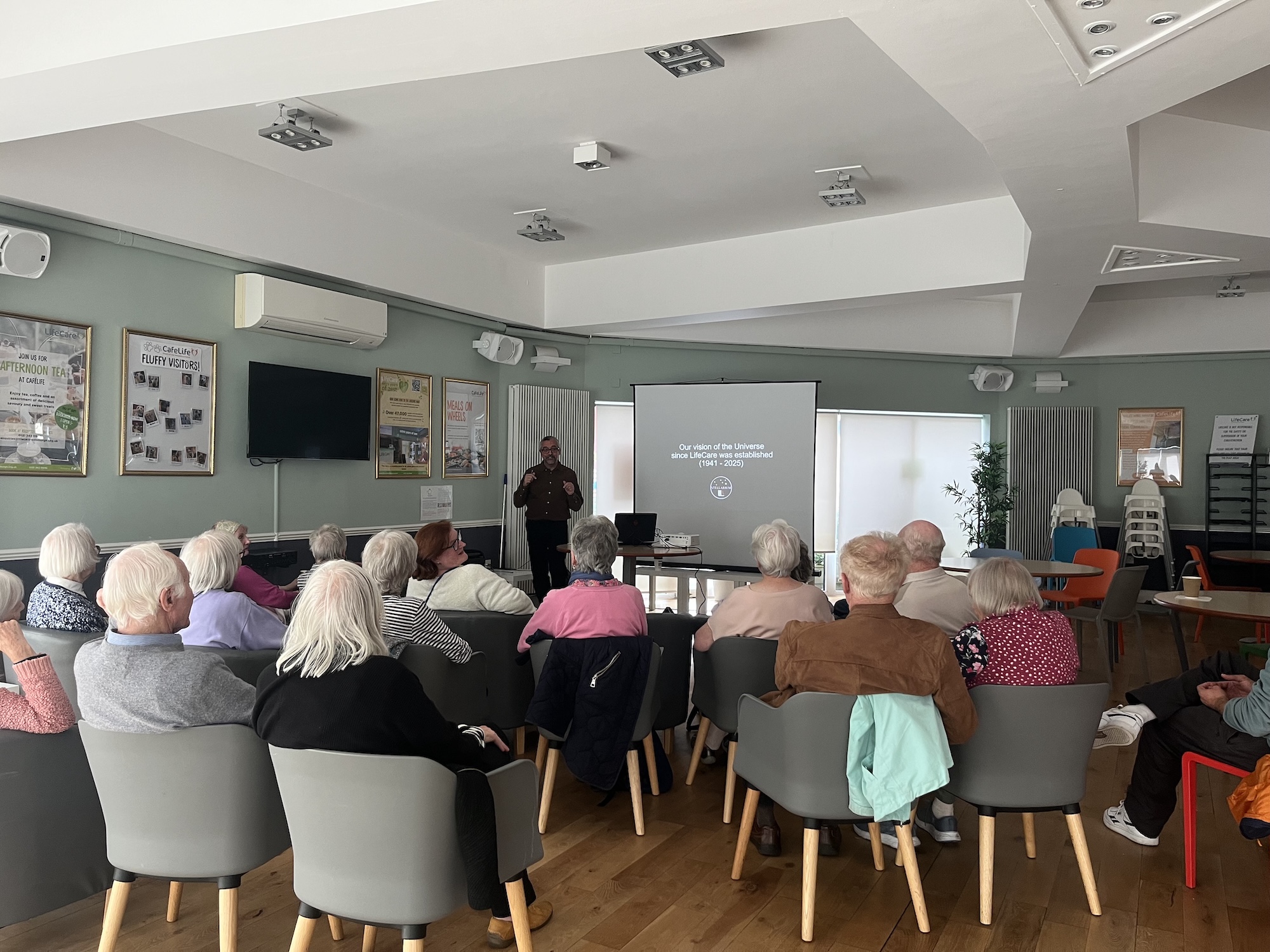
Set up in September 1941, the charity is celebrating its 85th anniversary of delivering transformative support within our local communities this month.
Sarah Duckmanton, Activities Coordinator at LifeCare said: “We want to make it as easy as possible for families and carers to access useful, practical information in a friendly and welcoming setting. Knowing what to do in an emergency can make a real difference, and this session is sure to be a great opportunity to learn some important skills.
“This event forms part of our free Talks at LifeCare programme, where we have covered everything from Edinburgh Street Style to the Water of Leith. Everyone is welcome. Thanks to everyone at the National Lottery Community Fund Scotland for helping make these free talks possible!”
CafeLife is fully accessible with lots of space for buggies, prams and wheelchairs. If you’re interested in getting involved or would like to learn more, please get in touch sarahduckmanton@lifecare-edinburgh.org.uk.
Event details
What: Paediatric First Aid – including choking and CPR When: Friday 11 September, 3pm–5pm Where: CafeLife, The LifeCare Hub, 2 Cheyne Street, Stockbridge, EH4 1JB Free but donations are always welcome
The Association of Scotland’s Self-Caterers (ASSC) has launched Behind Every Business is a Person, a month-long campaign putting the mental health and wellbeing of the people behind Scotland’s self-catering businesses firmly in the spotlight.
Self-catering businesses do more than provide a place to stay. Behind the warm welcomes, memorable stays and contribution these businesses make to Scotland’s visitor economy and communities are people managing the everyday realities of running a small business – often alongside significant and sustained external pressures.
The latest ASSC Barometer survey provides a clear reason for starting this conversation: more than two-thirds of operators said running their business had negatively affected their mental health or wellbeing, against a backdrop of rising costs, cumulative regulation, concerns about profitability and continued uncertainty.
Running throughout September, the campaign brings together ASSC evidence and member experiences with practical advice and support from specialist groups Hospitality Health and the Scottish Association for Mental Health (SAMH).
Hospitality Health has contributed guidance specifically relevant to self-catering operators – from setting a communications cut-off and switching off business notifications, to scheduling proper time away and talking to someone when pressure begins to build. The campaign will also signpost members and the wider sector to trusted mental health and wellbeing resources available through SAMH.
At the heart of the campaign are ASSC members themselves. Over the coming weeks, the Association will share some of the faces and voices behind Scotland’s self-catering businesses, alongside practical wellbeing advice, information about where to find support, and simple ways operators can look out for themselves and one another.
The campaign has two aims. First, the ASSC wants members and the wider self-catering community to know they are not simply statistics – that their wellbeing matters. The Association will continue to listen, build connections across its community, and work with trusted specialist organisations to help members access appropriate support.
Second, the campaign will support the ASSC’s ongoing advocacy by ensuring the human impact of the pressures facing the sector is recognised, with the Association continuing to gather evidence and use members’ experiences in its conversations with government and policymakers.
Fiona Campbell MBE, Chief Executive of the Association of Scotland’s Self-Caterers, said: “Our members are at the heart of everything we do, and our evidence is telling us very clearly that the cumulative pressures facing the self-catering sector are having an impact on the people behind these businesses.
“Behind every licence, booking, regulation and statistic is a person – someone running a business, supporting their family, welcoming visitors and contributing to their local community.
“We have a responsibility both to support those people and to make sure their experiences are heard. This campaign is about saying to our members: we see you, we are listening and we have your back.
“This is not something we intend to talk about for four weeks and then move on from. We want this campaign to be the beginning of a longer-term commitment to wellbeing within our sector.”
Gordon McIntyre MBE, Founder and Chairman of Hospitality Health, said: “Running a hospitality business can be incredibly rewarding, but it can also be demanding. For self-catering operators in particular, the boundaries between work and home can easily disappear, making it difficult to properly switch off.
“As another busy summer season draws to a close, this is an important opportunity to remind people that looking after their own wellbeing matters too.
“Small changes, honest conversations and knowing where to turn for support can all make a difference.
“Hospitality Health is delighted to work alongside ASSC on Behind Every Business is a Person, helping to bring practical wellbeing advice and support to the people who work so hard to look after Scotland’s visitors.”
Millions wrongly believe they have ‘nothing worth leaving’
A solid majority of adults in Edinburgh risk leaving loved ones without clear instructions about their final wishes, new research has revealed.
A new poll commissioned by charity Will-writing campaign Will Aid has found 63% of adults in Edinburgh either do not have a Will or admit the one they have is out of date.
The research, released to mark the opening of appointments for the Will Aid 2026 campaign, found 57% of people in the city have never made a Will, while a further 6% admit their existing Will no longer reflects their current circumstances or wishes.
Nationally, the picture is similarly concerning, with 67% of UK adults either without a Will or with one that is out of date – 57% have never made one and 10% admit theirs is no longer up to date.
And despite the potential consequences for the people they leave behind, 44% of UK adults say they are unlikely to write a Will within the next year.
Will Aid is warning that misconceptions about who needs a Will could be leaving millions of families unnecessarily exposed.
Peter de Vena Franks, Campaign Director at Will Aid, said: “The fact that 63% of people in Edinburgh either don’t have a Will or have one which is no longer up to date should concern all of us.
“A Will is about far more than the value of the money or property you leave behind. It is about making your wishes clear, protecting the people you care about and making incredibly difficult decisions easier for those you love at what will already be a distressing time.
“You may have children whose future you want to protect, possessions with enormous sentimental value, pets you want cared for or very clear wishes about who should – and should not – benefit from your estate.
“Without a valid Will, you lose the opportunity to make many of those decisions yourself.”
The national research revealed that one of the biggest barriers to making a Will is the belief that people simply do not have enough to leave behind.
Of the 1,151 UK respondents surveyed who had not made a Will, the most common reason – cited by 29% – was the belief that they did not have anything worth leaving.
Cost and simply not finding the time were each cited by 19%, while 18% said they felt uncomfortable thinking about death and 14% were put off by the perceived complexity of the process.
Peter added: “Perhaps one of the most striking findings from our national research is that almost three in ten people without a Will believe they simply don’t have anything worth leaving.
“But Wills are not just for people with substantial wealth or property. They are about giving you a say in what happens after you die and making your wishes clear for the people you leave behind.
“We want people to recognise that making a Will is relevant to them, whatever their circumstances.”
The national research also revealed some of the life events that finally prompt people to act.
Among 857 respondents who had made a Will, 23% said they wanted the reassurance of knowing their children would be looked after if they died, while the same proportion said having children had prompted them to make one.
More than one in five (22%) said hearing stories about people who had died without a Will encouraged them to act, while 18% made theirs after buying a house.
Will Aid is also urging people in Edinburgh who already have a Will not to assume the job is finished.
With 6% of local respondents admitting their Will is out of date, the campaign is reminding people that a document written years ago may no longer reflect their family, relationships, assets or wishes, particularly following significant life changes.
Peter said: “Making a Will is not something you should do once and then forget about for the rest of your life.
“Families change. Relationships change. People marry, separate and divorce. Children and grandchildren are born. People buy homes, build businesses and acquire assets. Sadly, people we intended to include in our Wills can also die before us.
“If you know your Will no longer reflects what you want to happen, it is important not to keep putting off reviewing it.
“There may never feel like a perfect time to think about death, but making or updating a Will is ultimately about looking after the people you leave behind.”
The findings have been released as Will Aid 2026 opens for appointments, giving people in Edinburgh and across the UK the opportunity to have a basic Will professionally prepared by a participating solicitor while supporting good causes.
Every November, participating solicitors volunteer their time and waive their usual fee for writing a basic Will. Instead, clients are invited to make a voluntary donation to Will Aid, with the money raised supporting the campaign’s charity partners.
Since it was founded, the campaign has brought together the legal profession and some of the UK’s best-known charities, helping people put their affairs in order while raising millions of pounds for vital charitable work.
Donna Imrie, Partner at Rollos Law, said: “One of the biggest misconceptions we hear is that Wills are only for people who are wealthy or own significant assets.
“That simply isn’t the case. A professionally drafted Will gives you control over what happens after your death and allows you to make your wishes clear rather than leaving important decisions to chance.
“It is particularly important for parents and for people whose family circumstances may not be straightforward.
“We would also encourage anyone in Edinburgh who already has a Will to think about when they last looked at it. If your life has changed significantly since it was written, your Will may need to change too.
“Will Aid is an opportunity to sit down with a professional solicitor, talk through your circumstances and make sure your wishes are properly recorded – while at the same time helping charities carrying out extraordinary work in the UK and around the world.”
Appointments for Will Aid 2026 are now open and can be made with a participating firm either in person, where available, or remotely.
To find a participating Will Aid solicitor and book an appointment, or for more information about Will Aid, visit willaid.org.uk
Edinburgh Leisure has released it’s latest Impact Report.
Edinburgh Leisure Chief Executive Jen Holland said: “I am delighted to share Edinburgh Leisure’s Impact Report for 2025–26, a story of progress, resilience and people working together to help Edinburgh be active and well.
“This year’s report marks an important turning point, with stronger financial foundations, growing participation and continued investment in places and programmes that help more people feel active, included and connected.
“From expanding health and wellbeing programmes such as Balanced Life, to widening access through community facilities, subsidised provision and inclusive opportunities for people facing barriers, our work continues to support a healthier, happier and more active Edinburgh for everyone.
“One of this year’s Victorian Pool Crawl participants, Eileen Ingram, summed up that purpose when she told us: “I think it’s important for everyone, regardless of wealth, health or age, to be able to have access to facilities to enable them to live an active life. Regular exercise is really important for improving all aspects of our life.”
“Thank you for your ongoing support and partnership.
“I hope you enjoy reading the report and celebrating what we continue to achieve together for Edinburgh and its people.”
Around three in four UK Emergency Department staff have told the Royal College of Emergency Medicine that they experience or witness violence and aggression in their department on a daily or weekly basis.
That’s according to new survey data, revealed today (7 September) as part of the launch of RCEM’s Safe to Care campaign.
‘Safe to Care‘ aims to highlight the appalling levels of violence and aggression that doctors, nurses and other healthcare staff in Emergency Medicine continue to face while at work.
In the coming weeks and months, RCEM will be sharing testimonies of those who have experienced violence or aggression at work and will be calling on the four UK governments to take immediate action to ensure Emergency Department (ED) staff feel safe, and are safe, to provide care.
Levels of violence towards NHS staff has become intolerable: RCEM surveyed over 2,000 ED staff, with 96% of respondents saying they experienced violence or aggression in their ED from patients or members of the public.
More than three quarters (73%) said it was a weekly, or even daily, occurrence and around two thirds said the incidents they experienced were of a discriminatory nature.
One anonymous resident doctor told the survey: “Working in the ED, you brace yourself for a lot, but nothing truly prepares you for direct, hateful verbal abuse, especially when it’s racially charged.”
Meanwhile, an ED consultant told the survey that they had been kicked in the face by an aggressive patient lying on a trolley.
Just four per cent told RCEM that they always felt safe working in ED, and barely more than half (57%) felt safe most of the time.
If left to continue, the impact this will have on the workforce could be devastating for Emergency Medicine, with 75% of staff reporting short-term stress and anxiety, 40% experiencing burnout, 14% taking time off work – and 28% experiencing long-term stress or anxiety.
Meanwhile, many staff said they had little confidence that reporting incidents will lead to action, with fewer than half (41%) of staff who made a report saying their trust took ‘meaningful action’.
Dr Ian Higginson, President of the Royal College of Emergency Medicine, said: “No one should go to work fearing or, worse, expecting, to be attacked, intimidated or abused. Nor should they lack confidence that their employers have their backs, or that the judicial system will kick in.
“Yet, that’s the reality faced by the majority of my colleagues in EDs across the country. They often do not feel safe to care for patients. It is an appalling state of affairs which is contributing towards many people seriously considering whether Emergency Medicine – or even healthcare in general – is for them.
“Tackling violence and aggression is crucial for the wellbeing of staff, whose dedication to the NHS is all too frequently being repaid in kicks, punches and abhorrent verbal abuse.
“We know that long waits and crowding are key drivers of this, but that is not the fault of staff – that’s on our governments. Every hour of every day, our Emergency Medicine teams are there for patients. It’s time staff received the respect and safety they deserve.
“This should not be a novel concept to anybody. Much has been said by us and other organisations over the years about violence and aggression towards healthcare staff. But the problem seems to be getting worse, not better.
“It’s time for action, time for governments, employers and organisations stand up for NHS staff, and time to ensure that those who intimidate, abuse or assault those who are trying to care for them face meaningful consequences for their actions.”
Violence and aggression is not always an isolated problem. Many survey respondents pointed out that long waiting times (90%), overcrowding (85%), staff shortages and corridor care (both 65%) was making the problem worse.
Tackling these issues will undoubtedly create a calmer environment in A&E, which provokes fewer incidents.
In a new briefing, RCEM is calling on government in the four nations, and NHS leaders, to make Emergency Departments safe to care by:
Preventing violence and abuse before it occurs – starting with the eradication of long waits to be seen, crowding and corridor care, whilst strengthening security standards
Supporting staff through better training, reporting, follow-up, and links with the police
Improving accountability of organisations to protect and support NHS staff, with better working across systems to ensure perpetrators face justice
Dr Catherine Hayhurst, co-chair of the RCEM Quality in Emergency Care Committee, said: “Safe to Care has a very clear goal: make EDs a place in which you can work without fear of intimidation or attack.
“Some of the stories that our members have told the campaign so far have been heartbreaking – but not surprising.
“Whilst most patients and relatives continue to be a pleasure to treat, it is true that we are seeing increasing levels of unacceptable behaviour from a significant minority.
“Anyone who works in ED knows that violence and aggression towards healthcare staff has become normalised. That must end and we call on policymakers and NHS leaders to help us make EDs a safer place for staff.”
September is Blood Cancer Awareness Month, and as part of our Let’s talk lymphoma campaign, Lymphoma Action is inviting people affected by lymphoma to write to their MP, MSP or MS and ask them to raise important issues about lymphoma treatment and care in Parliament.
The campaign aims to make it easier for decision-makers to understand the realities faced by people affected by lymphoma, and to encourage practical action to improve diagnosis, treatment and care.
Lymphoma is officially categorised as a rare or less common cancer. The recent National Cancer Plan recognised that people affected by rare and less common cancers often face major challenges with diagnosis and care. Lymphoma is the most common type of blood cancer, but too many people still experience delays in diagnosis, limited access to treatment and unequal care.
For the first time, the National Cancer Plan gives rare and less common cancers dedicated focus and commits to improvements in treatment and care. It recognises that people with these cancers must receive the same priority as those with more common cancers. But making promises is only the first step – they need to become reality.
This September, we want to hold the government to account and make sure the plan is put into action, leading to meaningful change for people affected by lymphoma and other cancers. If you are affected by lymphoma, you can write to your representative this September and ask them to raise lymphoma in Parliament.
Together, we can push for the improvements people affected by lymphoma deserve and help make sure the National Cancer Plan delivers real change.
An Edinburgh writer and filmmaker living with multiple sclerosis (MS) is encouraging other people affected by the condition to come together at MS Walk Glasgow this month, saying that community can be a powerful antidote to the isolation that many people experience after diagnosis.
Roby Walsh, 38, who is based in Leith, will join family and friends from across Scotland at Glasgow Green on Saturday 19 September for the MS Society’s annual MS Walk Glasgow.
Roby, who was diagnosed with relapsing-remitting MS in 2017, will take on the 5K route. In 2022, she underwent haematopoietic stem cell transplantation (HSCT) in Florence after previous MS treatments had not worked for her.
She says the experience was one of the most difficult periods of her MS journey, making her participation in MS Walk Glasgow particularly meaningful.
She says the event is about much more than crossing the finish line: “For me, it’s become almost like a tradition. I used to take part in similar walks when I was living in Australia.
“It’s important to support and bring awareness, and of course to support funding and research. But it’s also a good way to bring people together and talk about MS.”
MS is a condition that affects the brain and spinal cord. Symptoms are different for everybody and often invisible – they can be mild or severe, and include fatigue, pain and mobility issues.
Roby lives with a range of symptoms that aren’t always visible to other people. Speaking about her experience of MS, she says: “My MS is really invisible. If you see me, you would never say I have a disability, because I think I’m good at putting on a façade. But something that doesn’t go away is the pain. I’m always in pain. From when I wake up until I go to bed early, around 9pm, I’m always in pain.
“Sometimes that affects me psychologically and drains me. You have to be kind to yourself.”
Fatigue can also affect Roby’s social life: “You want to go out with your friends and have a nice night, but by 9pm I’m like, ‘Guys, I’m going home,’” she said. “You have to adapt. That’s the word: adapt.”
For Roby, one of the most important messages she wants to share with other people living with MS is not to isolate themselves. She said: “Sometimes when we get diagnosed with something like this, we tend to isolate. I feel that isolation is a big part of people’s experience with MS.
“Maybe we need to find the courage sometimes to come out and find your people, or just ask to have a chat with someone else. You will find there are so many other people like us, and it’s okay.
“I’ve done it. I pushed a lot of people away. But I’ve learned from that mistake, and that’s the advice I would give: don’t isolate yourself.”
Since moving to Edinburgh in 2019, Roby has thrown herself back into the creative world. She is now a writer and director, has published a children’s book and made her first short film, Glitch, which is currently being shown at film festivals.
She has also found a new sense of purpose in using her experiences to raise awareness and champion greater representation of disabled people in creative industries: “I’ve connected with so many other women with different kinds of disabilities, including invisible disabilities like mine.
“I find this fire in me, thinking we need so much more empowerment around us. There can be so much more representation in industries like modelling, acting and film.
“I want people to see that there is so much more to a person, and this doesn’t define you.”
Roby hopes that message will encourage others to join her at MS Walk Glasgow, whatever distance they choose.
Participants can walk, roll or stroll routes ranging from 1K to 20K, making the event accessible to people of all ages and abilities.
“You don’t have to go for a run. You don’t have to do 20K,” Roby said. “You can just start with something like 5K.
“Even if you want to do it alone, you’re not going to be alone, because you’re going to meet so many people there. You make friends.
“I would say, do it. It’s a really amazing experience.
“In the end, you’re like, ‘Yes, I’ve done it.’ It’s a challenge with yourself as well. If I go back to some of the most difficult points in my MS journey, I could never have imagined doing these walks.
“Now, looking back, I’m really proud. I’m so proud of everything. I’m proud to be able to do the walk 100% and continue that tradition.”
Jo Anderson, Director for Scotland at the MS Society, said:“More than 17,000 people in Scotland live with MS. Roby’s story is a powerful reminder that MS is different for everybody, and that many of the symptoms people experience are invisible to those around them.
“We’re incredibly grateful to Roby for sharing her story and for fundraising for the MS Society through MS Walk Glasgow. I’m really looking forward to meeting her and cheering her on at Glasgow Green on the day.
“MS Walk Glasgow is a chance to come together, celebrate the strength of the MS community and raise vital funds to support everyone affected by MS. Every person who walks, rolls or strolls will be helping us continue our work supporting people with MS and funding pioneering research.”
MS Walk Glasgow takes place at Glasgow Green on Saturday 19 September. With 1K, 5K, 10K and 20K routes available, there’s a distance for everyone to walk, roll or stroll.
Sign up today and help raise vital funds to support people affected by MS and fund pioneering research.
Find out more and register on the MS Society website:
Tracy Gilbert, Member of Parliament for Edinburgh North and Leith, has today (Friday 4 September 2026) raised concerns over a lack of consistent guidance for midwives across Scotland caring for surrogate mothers and babies.
Through Freedom of Information requests the Edinburgh North and Leith MP has uncovered serious gaps in vital guidance for midwives and wider clinical teams when supporting births where a surrogacy arrangement is in place.
Tracy Gilbert’s FOI requests to all of Scotland’s NHS Boards found that only NHS Ayrshire & Arran and NHS Fife have active guidance in place for midwives and clinical teams on the care and treatment of surrogate mothers and babies.
Of the remaining NHS Boards:
Five have no policy at all
Four have a policy where the review is overdue
One has a policy currently in draft form
One referred to Department of Health and Social Care guidance
The Edinburgh North and Leith MP raised the issue during a debate on the Infants, Parents and Carers Bill in the House of Commons, warning that midwives and maternity teams should not be left to navigate these legal, clinical and safeguarding issues without clear and up-to-date guidance.
Tracy warned that the lack of consistent guidance could leave maternity staff without the information they need to ensure surrogate mothers and babies receive the best possible care.
Speaking after raising the issue in Parliament, Tracy Gilbert MP said:“Every mother and baby deserves the very best care with their needs put first in all decisions. However, I have exposed worrying gaps in the guidance available in some areas of the country for staff caring for families involved in surrogacy.
In many cases midwives will come across no or very few surrogacy cases in their careers; up-to-date guidance is therefore even more essential so that those midwives have access to the support and signposting that they need.
“The Scottish Government should now make sure that health boards across Scotland have this important guidance in place.”
An overview of the findings of the FOIs across health boards is as follows:
NHS Ayrshire and Arran
Policy in place Dec 2025, due for review in Dec 2028
NHS Borders
Policy in place March 2022, Review overdue (March 2025)
NHS Dumfries and Galloway
Refer to Department for Health and Social Care guidance
NHS Fife
First policy effective from May 2026, to be reviewed May 2029
NHs Forth Valley – First guidance
April 2015, reviewed October 2021, review overdue (October 2024)
NHS Grampian
No guidance
NHS Greater Glasgow and Clyde
No guidance
NHS Highlands
Guidance in draft
NHS Lothian
Guidance in place Feb 2022, review overdue (Jan 2023)
NHS Orkney
No guidance
NHS Shetland
No policy
NHS Tayside
Policy put in place Jan 2019, review overdue (Aug 2025)