The 111 service is expected to be VERY busy which may mean a prolonged wait for calls to be answered. Boxing Day is one of the busiest day of the year for our services. Here’s what you can do to help yourself, save time and help us care for those in the most need first.
NHS inform has a range of symptom checkers for common illnesses and conditions you can use to help you decide what to do next: https://nhs24.info/symptom-checkers
Check out the winter illness hub on NHS inform if you need help with colds, flu, coughs, sickness bugs, etc: https://nhs24.info/winter-illness
If you are using a mobile phone to call please switch to WiFi calling and ensure your device is charged. This will help to prevent your call being disconnected. Some mobile providers disconnect calls due to network capacity demand. NHS 24 does not cut calls.
NHS 24’s staff are working exceptionally hard to answer as many calls as we can, quickly and safely. Please be patient and we will answer.
If you can try the above options first, it could save you time. We want to help you get the right care, in the right place.
This Christmas, look out for the symptoms of dementia, such as irritability, forgetfulness, struggling to follow a conversation, or being confused about time and place.
If you spot any of these symptoms in a loved one, encourage them to visit their GP for an assessment. http://nhs.uk/conditions/dementia/
David Watkins (76), a retired college lecturer from Edinburgh, is looking forward to celebrating Christmas with his family after being given the gift of sight after decades of vision loss and having to stay in the dark.
Following the ‘miraculous difference’ made by a corneal transplant at the Princess Alexandra Eye Pavilion, David is set to enjoy being able to see his Christmas celebrations properly for the first time in years.
David suffers from a degenerative condition called Fuchs Dystrophy. He said “I visited the optician around 20 years ago and they saw what looked like birthmarks all over my eyes. I was sent to a specialist and diagnosed with Fuchs Dystrophy.
“It was slow progressing but three or four years later, I got to the stage where I had to sit in the dark and wear sunglasses all the time because my eyes were so sensitive to light. When I got up in the morning, it looked like I was looking through a steamed-up bathroom window. I found lights blinding and felt like I spent half my life in the dark.”
In August this year, David underwent a corneal transplant under local anaesthetic and, several weeks later, his eyesight is so vastly improved he no longer needs to wear dark glasses constantly.
He said: “It took six or eight weeks but one day I woke up and could see again – the difference was miraculous. I can now appreciate being able to see colours again and even dust floating in the air.
“My wife loves Red Kites and I couldn’t see them with her but now I get out walking every day and can enjoy seeing the birds.
“The impact on my life is incalculable, made possible by the generosity of an organ donor and I am and will remain eternally grateful.”
David is now on the list for a second corneal transplant for his other eye.
Dr Naing Latt Tint, Consultant Ophthalmic Surgeon at NHS Lothian said: “It’s fantastic to see how the corneal transplant has dramatically improved David’s quality of life. His journey is testament to the transformative impact that organ and tissue donation can have.
“It takes a dedicated team working together to make each transplant operation happen but, above all, it’s the selflessness of donors and their families that makes it all possible. Donating a cornea is a truly life-changing gift and can help those affected by failing eyesight continue to live independent and fulfilling lives.”
Earlier in December, the Scottish Government announced annual funding for extra specialist staff to support eyesight-saving cornea transplants and help to increase donation rates.
The cornea, the clear outer layer at the front of the eye, can be retrieved within 24 hours of death in hospital or hospice and preserved ahead of transplant but, unlike other tissue transplants, does not need to be a ‘match’ and can come from a donor of any age.
PUBLIC Health Scotland has released a new CancerWaiting Times report.
These latest figures show that, during the last quarter for which results are available, from July-September 2025, around 1,400 (29.3 per cent) patients waited longer than 62 days to start treatment following an urgent suspected cancer referral.
The report shows that only 70.7 per cent of patients on an urgent referral for a suspicion of cancer started treatment within 62 days during this quarter.
This is well below the 95 per cent target and is the fifth worst performance on record (since 2012).
Dr Sorcha Hume, Cancer Research UK’s public affairs manager in Scotland, said:“Waiting to find out if you have cancer is a hugely distressing time for people.
“NHS staff are also stretched to the limit and, without action, delays will persist.
“As we approach the new year, the Scottish Government must make a firm resolution to invest in the NHS workforce and equipment, as well as innovative ways of working.
“There’s no time to lose. The cancer crisis is urgent. Without immediate action, countless lives will be lost.”
People should follow NHS inform guidance before calling 111 or 999
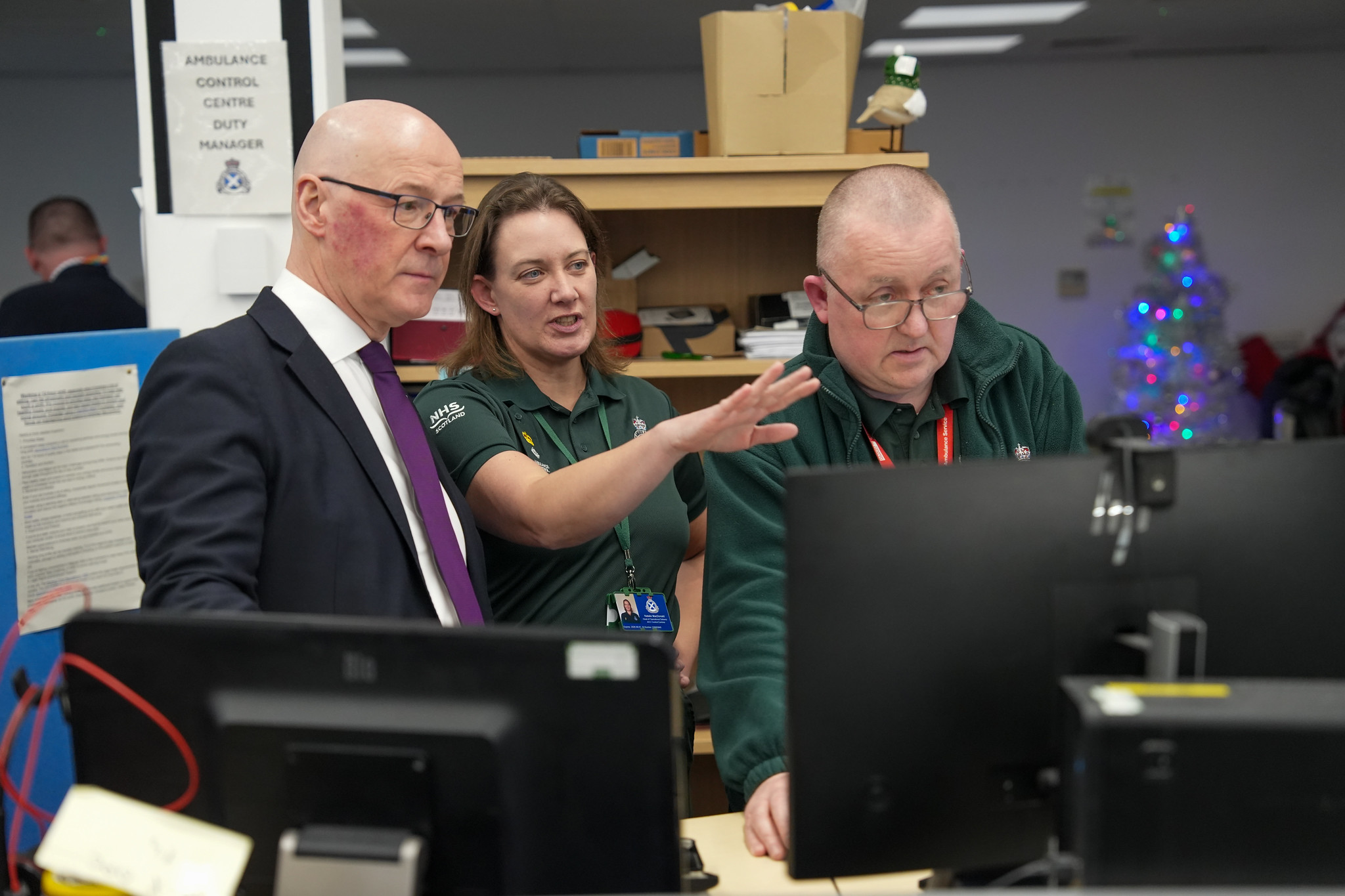
First Minister John Swinney has urged people to ensure they get the Right Care at the Right Place by checking the NHS inform website in the first instance if they become unwell.
During a visit to NHS 24 and the Scottish Ambulance Service (SAS), the First Minister thanked staff for their commitment to keeping the public as safe and informed as possible ahead of the busy festive period.
The guidance in the NHS Winter Preparedness plan sets out that anyone feeling unwell should:
check the NHS inform website for guidance and advice on symptoms. Around a quarter of 111 calls result in self-care advice, checking the website instead of calling ensures people can safely treat their symptoms without calling for help
call 111 if anyone thinks they need A&E but it is not a life-threatening emergency, support for mental health distress, or advice when the GP, pharmacy, or dental practice is closed
only attend A&E for genuine emergencies that cannot wait
call 999 immediately for life-threatening emergencies
Get the right care at the right place.
First Minister @JohnSwinney has urged people to check the NHS inform website in the first instance if they become unwell.
Follow NHS inform guidance before calling 111 or 999.
First Minister John Swinney said: “We know that demand for the NHS increases quite substantially over the festive period and there are a number of steps you can take to help yourself if you become unwell.
“In the first instance, check the symptom checkers on the NHS inform website – it can help you decide what to do next. If you still require medical help, NHS 24’s 111 service is there for you and dedicated professionals can provide advice.
“A&E is expected to be exceptionally busy in the coming weeks so only attend if you have a genuine emergency that requires urgent medical treatment.
“Our dedicated NHS staff will continue working throughout the festive period to provide support and care for the people of Scotland. I’m extremely grateful for their hard work and my thanks go out to all of you.”
Scottish Ambulance Service Chief Executive Michael Dickson OBE said: “Winter is always an exceptionally busy period and as demand on our service increases, we’re asking the public to use our service responsibly by only phoning 999 in a life-threatening emergency.
“Currently over 50% of our calls are managed without having to take patients to A&E. However, for those who do need hospital treatment, system-wide pressures, including lengthy handover times in key areas, are having a direct impact on our ability to get crews back on the road to reach other patients.
“Our fantastic staff are working extremely hard and we continue to prioritise those patients who are most critically ill. For those patients who are not critically ill, they may have to wait longer for an ambulance than usual and we thank the public for their patience; we will try to get to them as quickly as we can.”
NHS 24 Executive Medical Director Dr Ron Cook said: “With public holidays limiting access to GP and pharmacy services for four consecutive days across both festive weekends, NHS 24 is forecasting a significant rise in demand for our services as other primary care services take a well‑earned break.
“We plan carefully to ensure we have the right staff in place so people can access the right care in the right place. Our teams bring a wide range of skills, and every practitioner and clinician will play a vital role in supporting patients and each other to stay well during this busy period.
“We realise it’s not possible to cover every health eventuality, but we encourage everyone to plan ahead if possible. Make sure you have your prescription medicines, have over‑the‑counter remedies available at home, and check in on vulnerable friends or family. By preparing now, you can protect your festive time and avoid unnecessary interruptions.”
First Minister John Swinney visited the Royal Hospital for Children (RHC) in Glasgow yesterday to meet families who have benefitted from NHS Greater Glasgow and Clyde’s expanding Hospital at Home and virtual hospital services.
Mr Swinney was welcomed by NHSGGC Chair Dr Lesley Thomson KC and Chief Executive Professor Jann Gardner and spoke to staff leading new services designed to deliver hospital-level care for children in the comfort of their own homes.
He was also given a tour of key areas of the hospital including the Teddy Hospital and the Sensory Room, which support children and families during their visits to the RHC.
The First Minister had the opportunity to hear from parents whose children have received care through Hospital at Home, as well as those who have received intravenous antibiotic treatments on an outpatient basis.
NHSGGC recently launched two new services within its wider virtual hospital. Paediatric Hospital at Home offers care and monitoring for children with a wide range of conditions that do not require admission to a physical hospital, while Neonatal Hospital at Home enables babies with neonatal jaundice to receive treatment at home rather than remaining in hospital for several days.
These services, alongside the existing Paediatric Outpatient Parenteral Antimicrobial Therapy (OPAT) service for children with complex infections, significantly expand the opportunities for young patients to be safely treated at home rather than in hospital wards.
First Minister John Swinney said: “We are taking bold action to reduce pressure on our NHS, increase capacity and shift the balance of care into communities.
“Through our £220 million Operational Improvement Plan, we’re investing to reduce waiting times, improving hospital flow, and provide care for patients in the comfort and safety of their own homes.
“It’s clear to see the impact of NHS Greater Glasgow and Clyde’s new Paediatric and Neonatal services, helping children to stay at home while receiving hospital level care.
“Thanks to these innovative services, this festive season they can be treated in familiar surroundings rather than be separated from family, friends and pets and not have to travel to a hospital where it isn’t required.”
Paediatric Hospital at Home is tailored to each child and can include a combination of nurse home visits, wearable technology such as oxygen and heart‑rate monitors, virtual consultations, phone check‑ins, and early supported discharge.
This approach allows children to remain with their families in a familiar environment while still receiving high-quality clinical care, often reducing the length of time they spend in hospital.
The new Neonatal Hospital at Home service is already improving experiences for families.
Neonatal jaundice affects around six in ten newborns and typically requires several days of phototherapy treatment in hospital.
Through the new service, babies can now receive phototherapy at home, with neonatal nurses visiting daily to check bilirubin levels, assess progress, and determine whether treatment should continue – all while keeping families together.
These services form a key part of NHSGGC’s Transforming Together programme, which aims to provide more care closer to home and reduce unnecessary time spent in hospital.
The virtual hospital model brings advanced monitoring, treatment, and multidisciplinary support directly to families, helping ensure care is flexible, responsive, and centred around the needs of the patient.
One of the patients Mr Swinney met was 15-week-old Albie Thorburn, who was cared for through the Paediatric Hospital at Home service after having issues with feeding and weight gain.
Albie’s mum Kirsty, 32, explained that her son was initially admitted to the RHC for tests to rule out anything underlying.
She and husband Alan, 38, were then shown how to feed Albie using a nasal gastric tube which was inserted during his hospital stay, and they were able to take him home sooner.
Kirsty, from the east end of Glasgow, said the family had daily check-ins with Albie’s clinicians via phone, and two attendances in person for Albie to be weighed. These phone calls allowed his parents to ask for further advice, and they were given a dedicated out of hours number for any concerns.
She said: “It was great to be under the Hospital at Home as we were getting daily input from the clinicians without Albie having to be in a physical hospital.
“Albie wasn’t unwell, so there was no need for him to be kept in hospital other than having his condition monitored.
“Having him at home meant I was more relaxed and was able to feed him and produce milk better.
“It meant my partner could be there overnight too and assist with the night feeds.
“It just helped us be together at home with all of our comforts. He has been thriving since he got home.”
The First Minister also met three-week-old baby Krish Butti who had jaundice when he was born but was able to go home to have phototherapy treatment.
Krish’s mum, Bijini Balan, who is 35 and lives close to Glasgow city centre, said: “We were much more comfortable at home, and it meant we were more settled.
It was very beneficial not to have to spend days or weeks in hospital because he could have his treatment at home and the jaundice has completely disappeared now.”
Meanwhile, Mr Swinney had the opportunity to meet families of young patients who received intravenous antibiotic treatment on an outpatient basis, also known as OPAT, rather than having to stay overnight in hospital.
Caleb McLellan, 7, was treated using OPAT for a heart infection called endocarditis.
His mum, Joanne Campbell, from Stepps, said: “Having the OPAT treatment had a significant impact on Caleb and really helped him cope with the situation.
“He was able to go to school for a couple of hours in the afternoon each day which meant he was able to see his friends and regain a sense of normality instead of being isolated and confined to hospital.
“Being at home also allowed him to spend time with his little sister, which was hugely important for both of them.”
Dr Neil Patel, Clinical Innovation Director and Consultant Neonatologist at the Royal Hospital for Children, said: “Our Hospital at Home programme is giving babies and children the opportunity to receive the same high‑quality care they’d receive in hospital, but in the place that’s most natural and comfortable for them – their own home.
“We’re seeing the benefits every day, from reduced hospital stays to better experiences for families at what can be a very stressful time.
“These services are a core part of NHSGGC’s virtual hospital and our wider Transforming Together agenda.
“By using technology, specialist nursing support, and innovative care pathways, we are safely shifting more hospital‑level care to the home environment, improving outcomes while helping families stay together.”
New process will cut waiting times and support earlier skin cancer diagnosis
Patients at all GP practices in Scotland are benefiting from a digital dermatology service designed to reduce waiting times and improve outcomes.
Since the national rollout in September, GPs have referred more than 12,000 patients. It is estimated that up to 130,000 dermatology referrals a year could be made this way, reducing demand on dermatology waiting lists by up to 50%.
The national rollout has been funded by £1.8 million from the Scottish Government through the Accelerated National Innovation Adoption (ANIA) initiative.
GPs can now securely send images of a patient’s skin condition to dermatology specialists for analysis using a mobile device. An initial assessment of the condition is done digitally, and patients are then offered a face-to-face appointment, directed to a more suitable service, or given advice on managing their condition.
Around half of annual dermatology referrals are for suspected skin cancer, and the new service means that cancer can be ruled in or out more quickly – providing either earlier relief or diagnosis for patients.
Early melanoma diagnosis is vital for patient outcomes. At stage one, almost all patients live five years or more, compared to only 50% at stage four.
Health Secretary Neil Gray said: “Digital dermatology is a fantastic example of how innovation is improving access to healthcare and delivering our Programme for Government commitments.
“It provides faster reassurance for patients who do not have cancer and earlier diagnosis for those who do, potentially leading to better treatment options and outcomes.
“I want to thank everyone who has worked hard to deliver this successful national rollout as we continue to harness technology to reform our NHS for the future.”
Dr Fiona Macdonald, Consultant Dermatologist and Clinical Lead for Dermatology at the Centre for Sustainable Delivery said: “Digital dermatology helps dermatologists carry out robust referral triage without the patient being present, enabling them to prioritise the most urgent referrals.
“Referrals with images also allow the option to offer advice and/or a diagnosis to colleagues in primary care at the point of referral rather than patients having to wait for an appointment.
“The new system will help support the referral process where appropriate, and patients will still have the choice of whether to include an image. If they choose not to then the referral will be processed efficiently in the usual way.”
Giving children with cancer the chance to bring their imaginary friend to life
Cancer Support UK has launched the 2026 Create Your Dream Bestie competition, inviting children receiving treatment for cancer to design their very own imaginary best friend – with the winning creation being brought to life as a real cuddly toy by Warmies® – famed for their cuddly toys and wellness products, which can be microwaved for warmth and comfort.
Now in its second year, the national competition encourages children in hospital to dream big, be creative, and let their imaginations soar, despite going through the toughest of times. The initiative follows the success of 11-year-old Spencer Codling (pictured above), winner of the 2025 competition and designer of the hugely popular Bat Cat toy, produced and sold by Warmies in support of Cancer Support UK.
Giving children moments of joy, hope and distraction
For many children undergoing cancer treatment, art and storytelling offer precious moments of escape. Spencer’s mum, Karen Codling, said the competition was “a lifeline of joy” during her son’s treatment.
“Taking part in the competition gave Spencer something positive to focus on during each stage of his treatment,” Karen said. “It distracted him from the difficult days, gave him hope, and gave us something to look forward to together. Seeing Bat Cat come to life was absolutely magical.”
Following the success of Bat Cat, which has sparked messages of support nationwide – Spencer himself shared a message for other children considering entering this year’s competition:
“I just want to say a huge thank you to everyone who bought a Bat Cat teddy in support of me and Cancer Support UK,” said Spencer, who wanted to create a superhero teddy, which children could cuddle when having treatment to make them feel better.
“Your kindness and generosity made our hearts smile! Every purchase puts a HUGE smile on my face and helped Cancer Support UK do their amazing work.
Encouraging creativity during treatment
The 2026 competition invites children undergoing cancer treatment in hospitals across the UK to create and submit drawings of their “Dream Bestie” – a companion who makes them feel brave, happy, safe or magical.
Mark Guymer, CEO of Cancer Support UK, said: “Every day, we meet children who show extraordinary bravery while facing cancer. The Create Your Dream Bestie competition gives them a chance to escape into creativity, to imagine someone who brings comfort and to see that imagination celebrated.
“This competition is about joy, hope and believing that dreams can come true, even in the hardest times. Last year Spencer inspired us all with Bat Cat, plus we received some amazing designs from children across the UK. Now we can’t wait to see what children create for the 2026 competition.
“Entry forms are available to download from the Cancer Support UK website. In addition, forms will be available from all major cancer treatment centres in the UK.
“We really hope people will be inspired to buy one of the remaining limited edition Bat Cats – it’s a lovely comforting toy that anyone can appreciate.”
Warmies® bring the magic to life
Warmies®, known for their heatable soft toys designed to provide comfort and calm, will once again manufacture the winning design as a limited-edition cuddly toy – to be sold in support of Cancer Support UK’s work with people of all ages who are affected by cancer.
David Tweedale, CEO at Warmies®, said: “Partnering with Cancer Support UK on this competition is one of the highlights of our year. Seeing the joy on Spencer’s face when Bat Cat was created was unforgettable and we’re honoured to bring another child’s Dream Bestie to life in 2026.
“Warmies toys are all about warmth, comfort and soothing moments, and this competition brings those values to children who truly deserve them.”
The winning Dream Bestie will be professionally designed, manufactured and released by Warmies in 2026, with proceeds supporting Cancer Support UK’s services people living with and beyond cancer.
Primary cancer treatment centres in the UK
Entry forms for the competition will be available at these hospitals (as well as online)
Addenbrookes
Alder Hey
Birmingham Children’s Hospital
Cardiff and Vale UHB -Noah’s Ark Children’s Hospital
Edingburgh
John Radcliffe Hospital Oxford
Leeds – Leeds General Infirmary
London – The Royal Marsden Hospital
Manchester – Royal Manchester Children’s Hospital
Newcastle – Great Northern Children’s Hospital
NOTTINGHAM Childrens Hospital
Queen Elizabeth the Queen Mother Hospital
Royal Belfast Hospital for Sick Children
Royal Hospital for Children Glasgow
Sheffield – Sheffield Children’s Hospital
Southampton – Southampton Children’s Hospital
University College London Hospital
University Hospitals Plymouth
Bristol Royal Hospital for Children- Ocean Unit and wards
Following a detailed review by the Joint Committee on Vaccination and Immunisation (JCVI), the UK’s independent expert group on vaccines, Public Health Scotland (PHS) has been working with the Scottish Government and colleagues across NHS Boards to make some changes to Scotland’s childhood vaccination programme.
The changes, which began in July 2025, are based on the latest scientific evidence and are designed to ensure that children continue to have the best possible protection from vaccine-preventable diseases.
From January 2026, children will be offered a varicella (chickenpox) vaccine as part of the routine childhood schedule for the first time in Scotland.
JCVI’s recommendation is to offer a two-dose programme offering vaccination at 12 and 18 months of age, using the combined MMRV (measles, mumps, rubella and varicella) vaccine.
Varicella vaccines have been seen to dramatically decrease the number of cases of chickenpox seen in childhood when used in other countries.
Dr Daniel Chandler, Consultant in Public Health Medicine at PHS said: “Chickenpox is a highly contagious infectious disease. While most cases of chickenpox in children are relatively mild, many children are unwell for several days and have to miss school or nursery as a result. In some cases, chickenpox can be more severe and can lead to hospitalisations from serious secondary infections or other complications.
“The offer of the varicella vaccine is a welcome new addition to the routine childhood schedule and, as well as reducing the number of cases, will prevent more severe cases of chickenpox.”
Vaccination programmes are regularly reviewed to make sure that all children are offered the best protection against preventable diseases. As new vaccines become available, or research shows that giving existing vaccines at different times improves protection, the programme will be changed.
Parents and carers will receive appointment invitations from local NHS immunisation teams and are encouraged to look out for them and bring their children for vaccination as scheduled.
Where to find more information:
Parents and carers who want to know more about the vaccinations offered to their children should visit nhsinform.scot/vaccinesforchildren


 NHS inform has a range of symptom checkers for common illnesses and conditions you can use to help you decide what to do next: https://nhs24.info/symptom-checkers
 Check out the winter illness hub on NHS inform if you need help with colds, flu, coughs, sickness bugs, etc: https://nhs24.info/winter-illness
 If your call is related to medicines please visit https://nhs24.info/accessing-medicines
 By using NHS resources wisely, we can keep well and get the care we need quickly, safely and as close to home as possible.




 Breakfast, showers, games & four Christmas dinner servings!


