A huge majority of people surveyed in Scotland support proposals to make shops keep all vaping products and nicotine pouches out of sight, according to an opinion poll commissioned by ASH Scotland gathering views about the UK Government’s current consultation aimed at reducing children’s visibility of nicotine products.
86% of 1,061 survey respondents favour measures preventing all vaping products and other nicotine products like heated tobacco and nicotine pouches from being seen in shops, in the same way that cigarettes are already hidden, a finding welcomed by ASH Scotland and the Society of Chief Officers of Trading Standards in Scotland (SCOTSS).
Retail displays of brightly coloured and branded packaging are enticing young people to use addictive, health-harming recreational nicotine products, including vapes.
The display ban for tobacco proved highly effective in reducing youth exposure to cigarettes and sets an exemplar for removing vapes and nicotine pouches from window displays and point-of-sale promotions, where they are often displayed alongside confectionery.
The Scottish Government committed to progressing proposals for a Vape Display Ban in its recently announced Programme for Government.
ASH Scotland and the SCOTSS are urging government to move quickly to implement display bans for nicotine and vaping products in Scotland that align with the current approach for cigarettes.
Both organisations contend that the same rules for retailers across all tobacco and related products would assist trading standards teams in enforcing regulations consistently and reduce gaps that could be exploited by the tobacco and nicotine industry.
Sheila Duffy, Chief Executive of ASH Scotland, said: “With 86% of adults polled in Scotland supporting measures to keep addictive health harming vapes and nicotine pouches hidden like tobacco in shops, we want the government to make rapid progress in implementing this proposal, which is both effective and vital, to prevent the tobacco and nicotine industry from continuing to generate massive profits at a cost to the health of young people now and future generations.”
Chris Bell, SCOTSS Chair, said “Vaping displays can be colourful, visually prominent and eye-catching, increasing the visibility and appeal of nicotine products to children, young people and non-smokers.
“SCOTSS considers restricting the prominent retail display of vapes to be an important starting point to reduce visibility and limit opportunities for these products to be promoted.”
ASH Scotland encourages the public to read the charity’s views on the proposed measures in the UK Government’s ‘Tobacco and vapes: packaging, appearance and display’ survey and respond to the consultation before the 23:59 on 2 October 2026 deadline by visiting our webpage here.
Young people reveal how adult criminals exploit children to commit crime in Scotland
A new Scotland-wide campaign was launched yesterday warning that adult criminals are grooming and exploiting children to commit crime, enabling them to profit while leaving children to face the risks and consequences.
The campaign, created by Fearless – the youth service of the independent charity Crimestoppers – is shaped by young people with lived experience of crime, exploitation and the justice system. It challenges adults across Scotland to look beyond behaviour and recognise the criminal exploitation of children for what it is: child abuse.
Launching at the Grosvenor Picture Theatre in Glasgow, the campaign includes new films and social media content for young people, parents, carers and professionals, and has been developed with support from Scottish Government, Police Scotland’s Retail Crime Taskforce and the Scottish Violence Reduction Unit.
Young people told Fearless that exploitation does not always feel like exploitation from the inside. Adults can use trust, friendship, money, status and protection to draw children into criminal activity, particularly when the child feels other options are limited.
But one young person reflected:“You’re not getting paid to carry or sell the drugs. You’re getting paid to take the risk.”
That insight sits at the heart of the new campaign.
The campaign asks children to look more closely at what is really being offered to them. Criminal exploitation often sees adults profiting, while transferring the greatest risks onto children. The arrest, the violence, the debt, the injury, the criminal record and the consequences are carried by the child, while those directing the activity remain further removed from harm.
Over several months, Fearless listened to young people speak openly about criminal exploitation and the realities they see around them. They talked about violence, arrest, drugs, debt, weapons and being deprived of their liberty. They also spoke about what criminal exploitation appeared to offer and why it could feel difficult to walk away from.
The conversations revealed something many adults struggle to understand. Many young people already know the terrible risks they face. What they challenged Fearless to understand is that awareness of risk is not always enough to help them when the alternative feels like being left with nothing.
The campaign also challenges adults to hold two truths at once.
Some children who are victims of criminal exploitation cause harm – sometimes serious harm. But children can cause harm while also being harmed themselves. It’s not about excusing behaviour – it’s about understanding that there can be a wide range of reasons for offending behaviour, including exploitation.
Fearless is urging adults not to stop at what they can see:
To stay curious
To consider who is actually benefiting
And to ask what might be happening behind the behaviour
The campaign also explores why children do not always feel able to leave these situations.
While fear, threats and violence can be part of criminal exploitation, young people told Fearless that leaving is often about more than what they are escaping. Sometimes it is about what they fear being left without.
As one young person explained:“People don’t leave because there’s nothing there for them. What would they be left with?”
If criminal exploitation appears to offer opportunity, belonging, protection or hope, then safer alternatives must feel real enough to compete.
The campaign argues that it is not enough to tell children what to walk away from – communities, services and trusted adults must also give them something worth walking towards.
Children need more than a route away from harm. They need genuine opportunities, meaningful connections, hope for the future and a sense that they matter.
Lyndsay McDade, Fearless Scotland Manager, said:“I am so grateful to the young people who helped develop this campaign. I asked them to be honest with me, and they were. Never have I been more struck by the level of hopelessness some young people are living with, and yet by their determination to help us understand their reality and get this campaign right.
“Young people, children the same age as my own, shared stories that no child should have to live through. What struck me most was the compassion they showed when talking about other children who were being exploited. They could see the circumstances, pressures and lack of choices facing others, yet they rarely afforded themselves the same understanding.
“Many do not recognise that they are being exploited because what they are experiencing feels normal to them. They often see it as simply the choices they have to make to get by. But those choices are frequently being made in a landscape of limited and harmful alternatives, where what feels like survival comes at a terrible cost and where an adult is manipulating a child’s circumstances for their own gain.
“The people exploiting children should never be offering them what can feel like the strongest sense of opportunity, belonging or hope in their lives. Yet for some children, I fear that is the reality.
“Every child deserves a future bigger than the one their exploiters have planned for them. No child should be written off as too difficult, too risky or too far gone.
“If you know who is exploiting young people, you can speak up 100% anonymously to our charity. At fearless.org, we cannot track your IP address or any contact details that could identify you.”
Children and Young People Minister Siobhian Brown said:“The criminal exploitation of children and young people is an abhorrent crime. Those who are exploited must be recognised as victims of child abuse and given the protection and support they need.
“I am pleased that the Scottish Government, Police Scotland and Fearless are jointly funding this important campaign, whose powerful messages have been shaped by the voices and experiences of young people themselves.
“The Scottish Government is working to protect children and young people from this type of harm. Our Trafficking and Exploitation Strategy Delivery Plan includes action to reduce the criminalisation of exploited children and implement new child criminal exploitation and cuckooing offences in the Crime and Policing Act 2026.
“We’re also developing Scotland’s approach to contextual safeguarding to protect children and young people from harms posed to them from outside their homes.”
Assistant Chief Constable Catriona Paton said:“Every child deserves to be safe from harm and exploitation. This campaign is seeking to protect children from manipulation and exploitation by criminals involved in drug dealing, shoplifting and other crime, often leaving them to face the risks and consequences alone.
“Listening to the experiences of young people is vital if we are to understand the pressures and vulnerabilities that can place them at risk. I thank Fearless for amplifying those voices and providing a safe space for children to connect and communicate.
“Police Scotland is committed to working with partners to safeguard children, support those affected by exploitation, and ensure those responsible are identified and held accountable.”
To help parents, carers and professionals access further information and support:
New changes introduced to the sale and placement of foods high in fat, sugar and salt in shops come into effect
Following the passing of regulations by Parliament last year, new restrictions will be introduced from 1 October 2026 in Scotland to support people to make healthier food choices.
Businesses with more than 50 employees will no longer be allowed to display prepackaged junk food such as sugary soft drinks, confectionary, biscuits and breakfast cereals in prominent locations, such as entrances, checkouts and at aisle ends.
Certain price promotions including free refills of sugary soft drinks will also be restricted.
The regulations, which will apply both in-store and online, are intended to create a healthier balance of products on offer, support healthier eating habits and help lower levels of obesity.
Similar restrictions are already in place across England and Wales.
Public Health Minister Maree Todd said: “We want to make it easier for people to live healthier lives. “In Scotland, two out of three adults are overweight or obese, with those living in our poorest areas more likely to be overweight and experience the most harm as a result.
“We know that promotions and the prominent product placement can encourage over-consumption and impulse buying of foods with high levels of calories, fat, sugar and salt.
“By restricting the promotion of less healthy food and drink we can make it easier for people to make healthier choices, improving health and wellbeing and create a Scotland where everyone eats well and has a healthy weight.
”We have engaged extensively with business and industry extensively in developing this approach.
“These restrictions strike a balance between improving the health of people in Scotland whilst reducing any potential effects on smaller businesses and shops.”
Ewan MacDonald-Russell, Deputy Head of the Scottish Retail Consortium, said: “Scotland’s retailers are committed to helping consumers make healthier choices. For example, fresh fruit and veg are heavily price promoted and grocers have led the way on reformulating products to reduce salt, sugar, and fat. We’ve pioneered traffic light labelling and signage to help consumers make informed choices.
“We believe these new regulations are proportionate and will enhance the positive work being done by retailers in supporting consumers to make healthier food and drink choices. The choice to implement a consistent model with other UK nations should simplify and reduce the cost of implementation: albeit retailers will still invest around £20 million to deliver the policy.
“We hope this approach, where industry is meaningfully consulted and government acts in a constructive manner, can serve as a model going forward as we work in partnership to make Scotland a healthier and wealthier nation.”
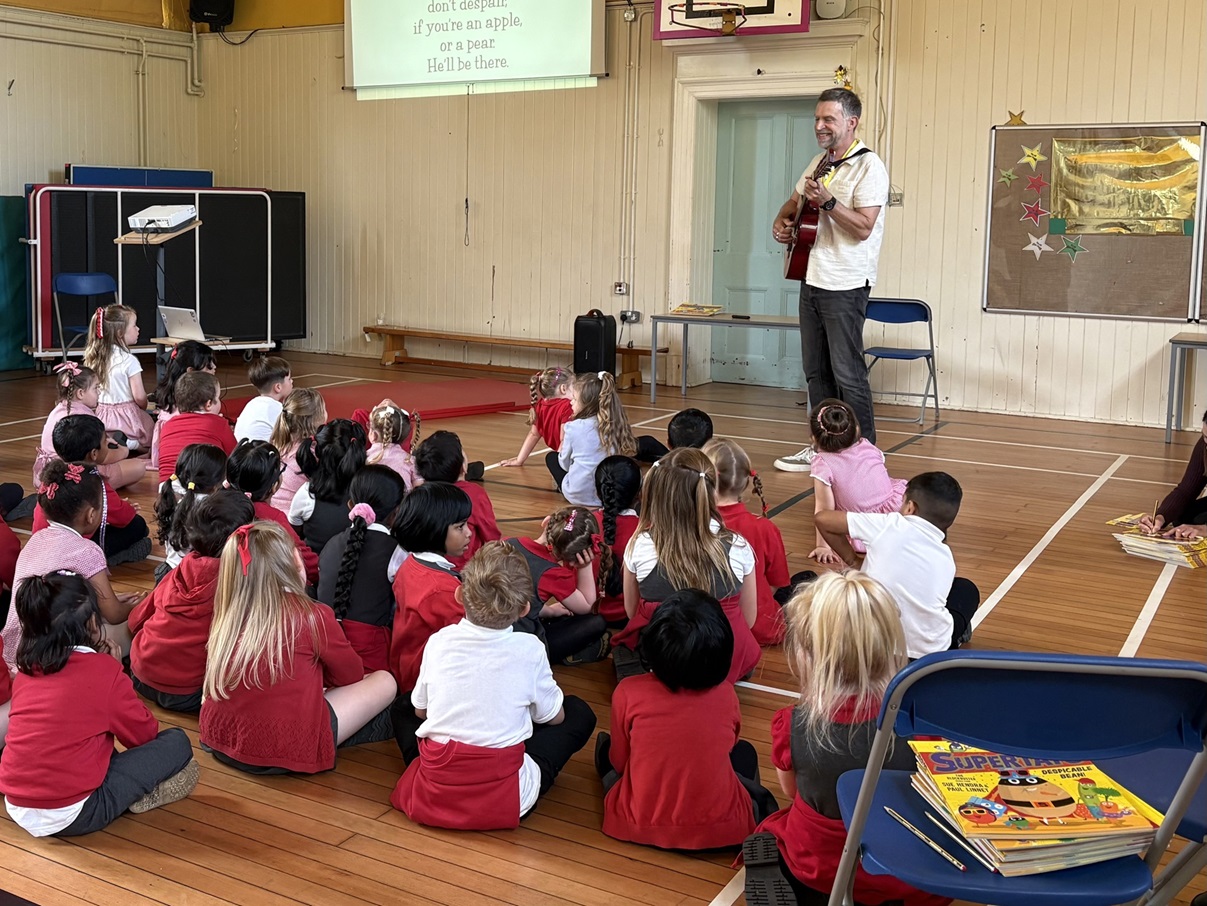
Paul Linnet, co-creator of the popular Supertato series of children’s books, visited pupils at Stenhouse Primary School to read to pupils.
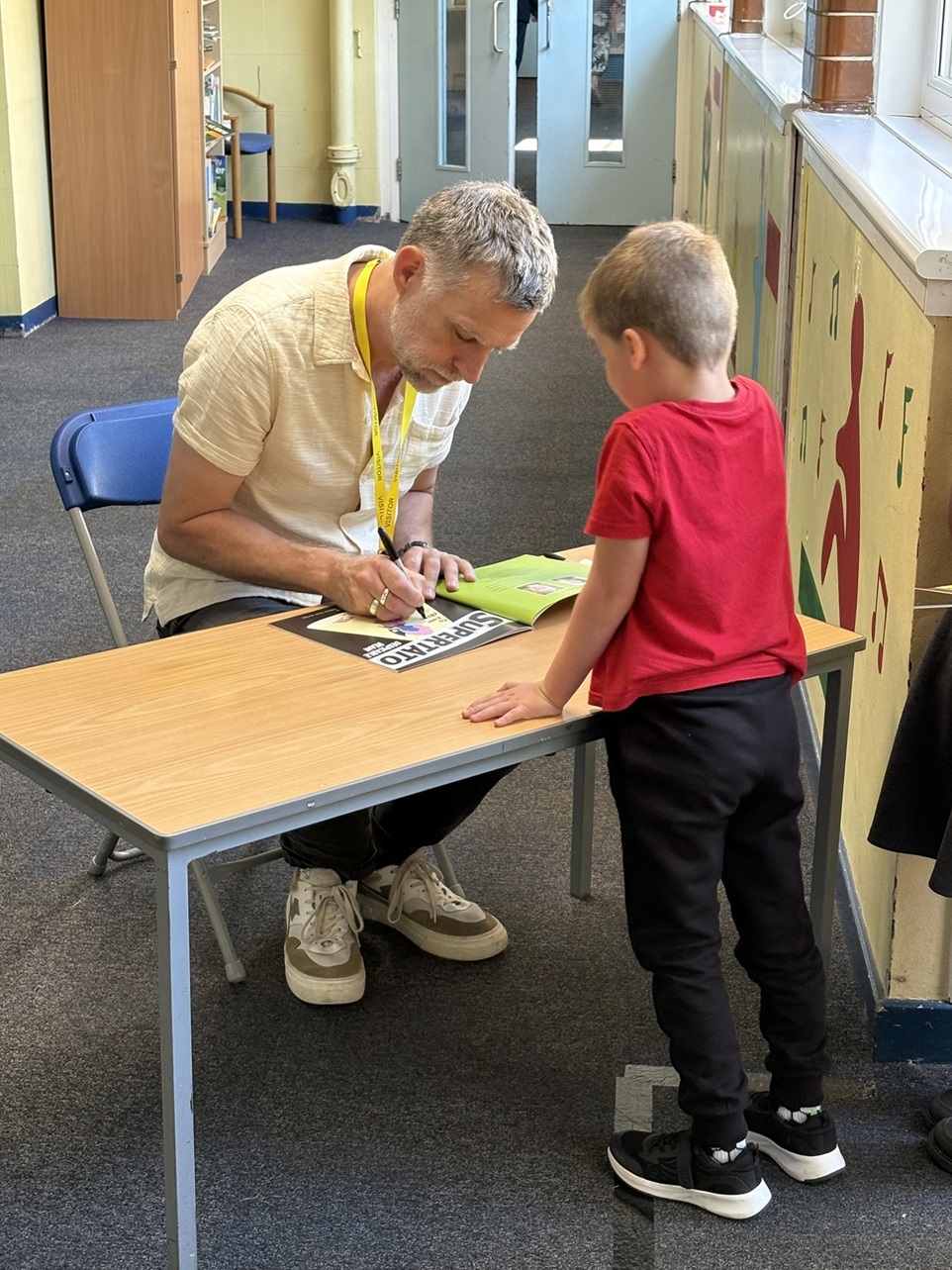
Each child received a signed book to take home, while the school’s library received 96 books donated by Paul and his publisher, Simon & Schuster Children’s Books.
The visit was arranged by Tesco as part of its National Year of Reading and Fruit & Veg campaigns.
Paul Linnet, the co-creator of the popular children’s book series Supertato, delighted pupils at Stenhouse Primary School in Edinburgh with a special storytelling session, encouraging their love of stories and reading.
The author recently visited P1 and P2 pupils at the school to read his latest book, Supertato: Despicable Bean, and share his love of stories with the young audience.
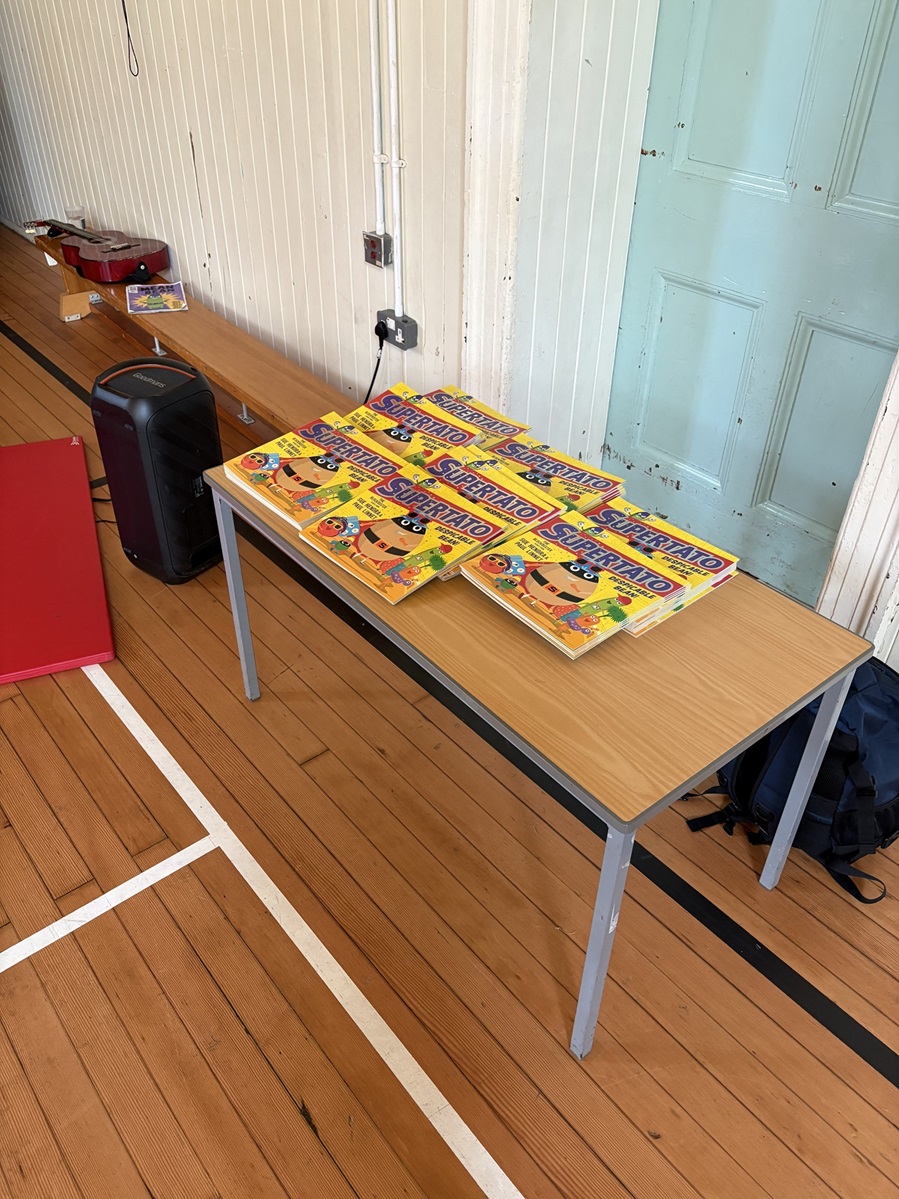
Thanks to Paul and his publisher, Simon & Schuster Children’s Books, each child also received a signed copy of the book to take home, with an additional 96 assorted Supertato books donated to the school’s library.
The visit was arranged by Tesco as part of its National Year of Reading campaign, which aims to encourage children to discover a love of reading.
The Supertato series follows the adventures of a superhero potato who uses his ‘potato powers’ to save his fellow vegetables. The series has sold over 1.8 million copies in the UK and is now a CBBC series.
Emily Sinclair, Headteacher at Stenhouse Primary School said:“As a school we were delighted to be selected, through Tesco’s Fruit for Schools initiative, to welcome Paul Linnet in to share his love of stories and vegetables with our children.
“This has been a wonderful experience for our children which has created a real enthusiasm for reading in the classroom. The children have loved reading and learning through Paul’s stories and engaging characters and they have been inspired to write their own stories based on Supertato.
“They have also become very enthusiastic about vegetables and the fun that can be had turning them into various characters.”
Timothy Hammertson, Lead Buying Manager on Books at Tesco said:“We’re delighted to have helped bring Paul Linnet and his Supertato stories to Stenhouse Primary School to inspire children to discover the joys of books, stories and reading.
“It was fantastic to hear that pupils loved the visit and were hugely excited to receive their very own signed copy to keep
“Reading is a brilliant way to spark children’s imaginations, and initiatives like this help bring books to life while encouraging a love of reading from an early age.”
Stenhouse Primary School is also actively involved in Tesco’s Fruit & Veg for Schools campaign, which provides fruit and vegetables to pupils to help them discover healthy eating habits.
The latest book, Supertato: Despicable Bean, is currently featured in Tesco’s Kids Summer Reading Stack, which is available in 400 stores across the UK until 16 September. This initiative is part of the chain’s Go All In campaign, which aims to help get younger children into reading as part of the National Year of Reading.
Kids Operating Room reaches major global surgery milestone and sets ambitious 2035 goal
A SCOTTISH charity has hit a major milestone, helping create capacity for one million life-changing operations around the world.
Kids Operating Room, founded by Garreth and Nicola Wood MBE, has created over 135 dedicated children’s operating rooms in 39 countries, from Ukraine and Bangladesh to Peru and the West Bank and supported the training of more than 70 surgeons.
The couple marked the achievement at Murrayfield Stadium, returning to an early ambition to one day help enough children to fill its 67,000 seats.
Garreth Wood MBE, co-founder, said: “Standing here today is quite surreal. In the early days, Nicola and I talked about whether we could ever help enough children to fill Murrayfield. Looking around at 67,000 seats, even that felt like an enormous ambition.
“Today, 728 operations take place every day in operating rooms created by Kids Operating Room. That’s enough to fill Murrayfield again every three months.
“It’s incredible to think about, but every one of those operations is about much more than a number. It’s a child getting the surgery they need and the chance to get back to being a child. That’s what this milestone means to us.”
The landmark achievement, and ambitious new goal, follows a review of the charity’s strategy and a new brand built around the idea “Make anything possible”, reflecting what safe surgery means for children: the chance to grow up and live their life to the full.
Nicola Wood MBE, co-founder, said: “We started with one surgeon, one operating room and one country. To now be talking about a million operations is something we could never have imagined.
“The real heroes of this story are the surgical teams we support, working in some of the toughest conditions on earth and doing incredible things every single day. This milestone is theirs as much as ours.”
David Cunningham, Chief Executive of Kids Operating Room, said: “Reaching one million children proves the model works. But there are still millions more waiting for surgery that could change their lives.
“That’s why we’ve sharpened our focus, backing local surgical teams, investing in innovation like solar-powered operating rooms and making children’s surgery a core part of every country’s health system.
“One million operations a year by 2035 is a big ambition, but that’s what it takes and we can only get there with governments, funders and partners behind us.”
The charity’s story began in 2015, when the Woods learned about Dr John Sekabira, Uganda’s only paediatric surgeon, working in Kampala to care for a population of 20 million children without a dedicated children’s operating room. After that first room opened, requests for more poured in, and the couple formally launched Kids Operating Room in 2018.
By 2021, the charity had created 50 operating rooms. Today, it has 136.
The charity transforms unused or derelict spaces, usually in public hospitals, and fits each room with 3,300 pieces of specialist equipment, shipped from its global operations centre in Dundee. Solar technology keeps the lights on during power cuts and bright, colourful artwork helps children feel safe before surgery.
Unlike “fly-in” medical missions, Kids Operating Room never sends in medical professionals from richer countries. Instead, it backs local surgical teams, funds specialist training in partnership with ministries of health, and works with local engineers to keep every room running, with the aim of handing each one over to the local health system as soon as possible.
The charity’s own data, drawn from their paediatric surgical database, shows the difference a dedicated operating room makes.
At one partner hospital in Nigeria, the rate of sepsis after surgery fell from 19.1% to 3.8%, and children’s average hospital stay dropped from 12 days to three. Surveys of school-age patients found that more than half of those missing school were doing so because of their surgical condition.
The charity estimates the operations made possible by its rooms will generate more than £23billion in economic benefit, as children who might otherwise have died or lived with lifelong disability grow up to work, earn and contribute to their communities.
Garreth Wood MBE, said: “Every one of those million is a child who can now run, play, go to school and grow up. Behind every number is a family who didn’t know if their child would make it, and a childhood that hasn’t been stolen by a treatable condition.”
An estimated 1.75 billion children still live in areas without reliable access to safe surgery . You can learn more about Kids Operating Room and help them reach these children here.
Garreth and Nicola Wood were both awarded MBEs in 2025 for services to international health and children’s surgery.
Do you want to win a fun day out in Edinburgh with your family?
If so, please pick up a map made by students from @impactarts Cashback to the Future programme (more details below), which shows off some of our fantastic Doors Open Days venues.
Next, grab a packet of our Cockburn coloured pencils and have your child colour in the map, decorating it with lots of bright colours, showing off their enthusiasm for the beautiful buildings of Edinburgh!
All our family-friendly venues that will hand out maps and pencils are on the Doors Open Days website, indicated by a balloon symbol.
When done, submit your child’s colourful creation using the QR code on the back of the map, and we will choose three winners, whose maps we feel really represent Edinburgh, to win the following prizes:
Prize 1: Tickets to @cameraobscuraedinburgh for the whole family
Prize 2: Gift card to @filmhouse_edinburgh, where you and your family can attend a Wee Filmhouse screening on Sundays
Prize 3: Gift card to the Scottish Cafe and Restaurant at @nationalgalleriesscot – National for afternoon tea
Additionally, all winners are invited to visit the National Galleries of Scotland’s Granton Art Centre with family or friends!
Note about the Impact Arts Cashback to the Future Programme:
Students between the ages of 14-19 visited eight Doors Open Days Venues over five weeks, and as a result, created a selection of artworks that will be exhibited at St Michael’s Parish Church, as well as a booklet to accompany this exhibition.
These talented students also created our Doors Open Days maps, which feature illustrations of several Doors Open Days venues across the city.
Aldi stores across Edinburgh donated 24,039 meals to charities, foodbanks and community organisations across the UK throughout the recent school summer holidays.
The donations took the number of meals redistributed by Aldi in 2026 from more than 8.8 million before the school holidays to 10.9 million – an increase of 24%.
Aldi has worked with Neighbourly since 2019 to redistribute surplus food from its stores to charities and community organisations across the UK.
Luke Emery, National Sustainability Director at Aldi UK, said:“There’s no reason for good food to go to waste when it can be put to use by organisations supporting their local communities.
“Our stores redistribute surplus food throughout the year, giving local charities a regular source of food they can use to support the people who rely on them.”
Steve Butterworth, CEO of Neighbourly, added:“For many of the organisations we work with, summer doesn’t mean demand eases off. The school holidays can bring an additional pressure, as families face higher food costs and children who usually receive free school meals may not have the same access to support during the holidays.
“Regular surplus food donations give charities something practical they can use straight away, helping them keep shelves stocked and respond to what people in their communities need.”
Shoppers in Edinburgh can also donate food and everyday essentials to local charities, foodbanks and community groups through community donation points in Aldi stores nationwide.
Aldi also works with Company Shop to redistribute surplus food from its Regional Distribution Centres.
“Pupils voluntarily handed weapons in” – Council funds performances for local high schools
Leith-based charity Strange Town is taking its powerful knife-crime play BALISONG back into Edinburgh schools this autumn, as part of the Knife Angel project, with performances planned for pupils across 13 high schools.
The production, written by award-winning Scottish playwright Jennifer Adam and directed by Strange Town Artistic Director Steve Small, explores the consequences of carrying a knife through the story of a 15-year-old boy who brings a butterfly knife home after a school trip.
The tour comes at a time of growing concern about knife crime and youth violence in Edinburgh. Police Scotland figures show that crimes committed in a public place involving a knife rose by 29% between 2022/23 and 2024/25, from 178 offences to 250.
Strange Town has seen first-hand the impact theatre can have in opening up difficult conversations with young people. When BALISONG previously toured schools, pupils voluntarily handed in weapons after seeing the production.
The play was originally commissioned by No Knives Better Lives and, between 2017 and 2019, toured schools in every local authority in Scotland. It has since been brought back to Edinburgh as part of Strange Town’s wider programme of high-quality theatre for young audiences.
The charity’s Touring Company has now delivered 62 free performances to more than 7,000 pupils across 25 Edinburgh schools, tackling issues including knife crime, consent, online bullying and climate anxiety.
Each performance is followed by teacher-led discussion, giving pupils the opportunity to reflect and talk openly about the issues raised.
Steve Small, Artistic Director and Joint Executive Director of Strange Town, said:“We know BALISONG works because we have seen what happens when young people encounter it. On our previous tour, pupils voluntarily handed in weapons. Teachers told us that the play opened up conversations they simply could not have started in the same way themselves.
“That is why we are so pleased to be taking BALISONG back into Edinburgh schools as part of the Knife Angel project. Theatre doesn’t lecture young people or tell them what to think. It allows them to see themselves, their friends and the consequences of choices in a different way, and then gives them the space to talk.
“We will be working with 13 high schools during this tour. At a time when concerns about knife crime and youth violence are so high, it is vital that we give young people opportunities to have these conversations before a crisis happens.
“We are incredibly grateful to the City of Edinburgh Council for supporting this project and helping us bring this work to young people. We also want people to understand that organisations like Strange Town cannot deliver this work without ongoing support.
“If you believe young people deserve access to ambitious, high-quality theatre that can genuinely make a difference, please come and see BALISONG at the Traverse and consider supporting the future of Strange Town.”
That impact has also been recognised by teachers working directly with pupils. Head of Drama at Drummond Community High School said: “As a drama teacher, I see firsthand the transformative power of live professional theatre in shaping young minds.
“It allows for meaningful discussion and reflection on themes that are current to the society they live in.”
Martin Hutchison – The City of Edinburgh Council said:“Tackling knife crime and youth violence requires a partnership approach, with prevention and early intervention at its heart. We are pleased to support the return of BALISONG to Edinburgh schools as part of the wider Knife Angel project.
“Creative approaches can provide young people with a safe and engaging way to explore difficult issues, challenge perceptions and have conversations that might otherwise be difficult to start.
“Reaching pupils across 13 high schools gives this project an important opportunity to engage young people directly and encourage positive choices.
“We are grateful to Strange Town for the important work they continue to do with young people across Edinburgh and look forward to seeing the impact of this project.”
The Edinburgh tour forms part of the wider Knife Angel project, which aims to bring communities together to raise awareness of the devastating impact of knife crime and encourage prevention and positive action.
Strange Town believes that high-quality theatre has a unique role to play in this work. By putting young people at the centre of a compelling story, BALISONG creates space for empathy, debate and reflection rather than simply presenting statistics or warnings.
The charity is also inviting members of the public to support the project by attending a special performance of BALISONG at the Traverse Theatre at 7pm on Friday 25th and Saturday 26th September.
The public can also help Strange Town continue its work with young people by making a donation to support future productions, school tours and accessible creative opportunities.
Strange Town is a Leith-based charity that has spent more than 18 years creating accessible, high-quality theatre and creative opportunities for young people.
Its Touring Company works with professional emerging artists to create original productions specifically for young audiences, bringing theatre directly into schools and creating opportunities for pupils to engage with challenging issues in a safe and accessible environment.
The Balisong Theatre production is funded by the City of Edinburgh Council and Forth Ports, and is part of a wider programme of events whilst the Knife Angel Sculpture is in Edinburgh – supported by Places for People Scotland and Police Scotland.
A new drive is being launched to help schools achieve better results for their pupils through traditional music.
The Scottish Schools Pipes and Drums Trust already teach over 2000 youngsters each week in school programmes across Scotland.
The new drive is to target musical help for youngsters at schools facing some of the toughest economic challenges in the country.
Charity Chief Executive Lindsay Mackenzie said their work so far shows how school pipe bands help players do better in the classroom and head on to positive destinations after school: She said: “Over the past ten years we have seen great evidence of how pipe bands in schools really make a difference.
“Being part of a band teaches young people so much in terms of commitment, discipline, teamwork and there is the cultural side of it too.”
The SSPDT is now targeting schools facing challenges of remoteness or deprivation to help give pupils a boost.
The charity has over 500 sets of pipes out on free loan as well, realising that many of the pupils they are trying to help would struggle to afford instruments costing up to £900.
Lindsay Mackenzie said they are open to approaches from schools or parent groups wanting to start a band and are able to offer funding and more importantly expertise to get the project up and running effectively.
Screenshot
“We have had some great successes working with school groups the length of Scotland and many have gone on to form competiting school bands with more on the same pathway coming along behind.
“Our flagship project at Preston Lodge High School in East Lothian held on to their title as the best state school pipe band in the world at the World Championships in Glasgow last month.
“Entries will be opening soon for the competition we run, the Scottish Schools Pipe Band Championships, and many of the over 100 bands performing there come from projects started working with the SSPDT.”






 Do you want to win a fun day out in Edinburgh with your family?
 All our family-friendly venues that will hand out maps and pencils are on the Doors Open Days website, indicated by a balloon symbol.
 Prize 1: Tickets to @cameraobscuraedinburgh for the whole family


 Looking for the ultimate birthday party venue?
 Bouncy castle with slide
 The Greenhouse, West Pilton Brae
 info@pycp.co.uk
 Book your child’s next birthday party with us!

