Improving care for women and babies across Scotland
A nationwide review of Scotland’s maternity services begins today, examining how care can be improved for women, babies and families.
Chaired by maternal and child health expert Professor Christine McCourt, the independent review will take a whole-system approach, drawing on data, evidence and the direct experiences of women, families and staff at every level of care.
The review will pay particular attention to how care is provided in rural and island communities, with specific focus on services in Caithness, Elgin and Wigtownshire. It will also examine disparities in maternal outcomes, including higher rates of maternal mortality by Black and Asian women.
The review will run for nine months and will also take account of the unannounced inspections of all 18 of Scotland’s acute maternity units currently being carried out by Healthcare Improvement Scotland.
Prof McCourt is due to submit her findings and recommendations in July 2027.
Health Secretary Angela Constance said: “I want every woman and baby to receive the high-quality care they deserve.
“That is why I announced this independent review, which will sit alongside the inspections already underway of every acute maternity unit in Scotland, to identify the systemic changes needed to strengthen services and improve outcomes.
“While the vast majority of mothers receive good care, I have heard from families who were let down, and from those who have bravely shared their experiences of loss – these are powerful stories. Their experiences must shape improvement.
“While the vital work of the review is underway, we will continue to take action to improve services, through implementation of the Miscarriage Framework and HIS Maternity Standards, the Scottish Patient Safety Perinatal Programme, improved bereavement care through the National Bereavement Care Pathway, and new work to improve triage services.
“HIS will also continue its programme of maternity inspections, driving improvement locally in every acute maternity unit in Scotland, and informing the review.”
Professor Christine McCourt said: “The review team is committed to engaging with women, families, healthcare staff and organisations across Scotland to understand both the challenges facing maternity services and the examples of excellent care that can inform future improvements.
“We want to hear from people with a wide range of experiences and perspectives. We encourage anyone with relevant insights to visit the website, learn more about the review and engage with the process as our work progresses.”
We are publishing this report at a critical crossroads in Scotland’s journey to a possible future, one free from poverty.
In this year’s election campaign and programme for government, we have consistently heard the First Minister describe eradicating poverty as his defining mission (Scottish Government, 2026a). This commitment is welcome, but there is an increasing disconnect between the Scottish Government’s rhetoric and the reality of life for families in poverty across Scotland.
New data for 2022–25 shows that:
17% of people in Scotland were in poverty, 11% in deep poverty and 7% in very deep poverty. Around 2 in 5 people in poverty in Scotland are in very deep poverty
relative child poverty sits at 21%
over 9 in 10 children in poverty are in one or more of the Scottish Government’s priority families.
Despite some progress, the legal target to reduce relative child poverty to 10% by 2030/31 is set to be missed by a wide margin. Interim targets have been missed, and the Scottish Government’s current plans will not deliver the scale of change needed to shift the dial.
We want a better start for all children in Scotland, and there is clear evidence of overwhelming public support for more, and more effective, action on child poverty.
The Scottish Government’s plan to review Scotland’s landmark statutory child poverty targets risks delaying action and lowering ambitions. New targets need to be genuinely stretching, grounded in income as a central measure of poverty, and have teeth to hold the Scottish Government and the Scottish Parliament to account for meeting them.
In parallel, the Scottish Government needs a new, much bolder and properly funded plan to reduce poverty in Scotland. Only 1 in 4 people (26%) somewhat or strongly agreed that the Scottish Government is doing enough to tackle child poverty in Scotland (Birt, 2026a).
This year, as well as assessing the national picture, we have focused on the vital role of local government in reducing poverty, backed by new public attitudes data and engagement with people with lived experience.
In findings that must shape live discussions about the future of local governance and public service reform in Scotland, we have heard that:
people think councils are too underfunded to provide the services needed in their area
there is significant public disaffection with councils, regardless of people’s backgrounds and across Scotland’s different communities
councils are not doing enough to tackle poverty, with people on low incomes and living in more deprived areas reporting worse experiences of services and higher levels of disaffection.
To fix this, the Scottish Government and local government will need to work more effectively – in their own right and in collaboration.
Every council needs to ask itself, just as the Scottish Government should do, whether they have genuinely prioritised child poverty reduction and if their services are best where they are needed the most.
Fundamentally, these should be the core questions of public service reform; otherwise it simply becomes a numbers game of reductions in the number of councils and/or budgets. It is also clear that public service reform needs to go hand in hand with a fundamental rethink of local government funding to rewire our services and tax system to radically reduce poverty.
It is also vital that national and local government’s bandwidth across this parliament is not consumed by bureaucratic strife; families in poverty need to see rapid progress in the immediate term.
We want the Scottish Government, as part of its renewed drive to reform local government in Scotland, to:
provide local government with a more stable platform for anti-poverty work — avoiding single-year funding settlements and allowing councils greater freedom to adapt to their communities’ needs
take steps to fundamentally reform local government finance in Scotland
ground public service reform in 2 key questions: would the changes reduce child poverty and will they make services best where they are needed the most?
We want all councils to:
prioritise preventing poverty in their communities, and make full use of their levers including economic development, childcare, employability, transport, housing and schools
provide better-quality and more joined-up local services to support families in or at risk of poverty, with genuine partnership with the third sector, co-location of services, a ‘no wrong door’ approach and better use of data
significantly improve day-to-day communication with the public, underpinned by deeper and more meaningful work to involve people with lived experience of poverty in local decision-making.
Joseph Rowntree Foundation: Poverty in Scotland 2026 report
Executive Summary
COSLA Resources Spokesperson Cllr Kelly Parry has responded to ‘Poverty in Scotland 2026′ by @jrf_uk :“This report is a stark reminder that far too many children and families in Scotland are still being denied the security and opportunities they deserve.”
Christmas Returns to Scotland’s UNESCO World Heritage Site
Families looking for a magical Christmas day out can once again celebrate the festive season at New Lanark as the UNESCO World Heritage Site launches its Christmas Experience for 2026.
Running on selected dates from 28 November to 24 December, the event transforms the historic village into a festive destination where families can enjoy a visit with Santa, The Wiz That Woz pantomime, the Spirit of Christmas Ride and indoor soft play, all included in a single ticket.
Set within the historic mill village on the banks of the River Clyde, the experience offers families the opportunity to celebrate Christmas within one of Scotland’s six UNESCO World Heritage Sites, a festive setting unlike any other festive attraction in the country.
Designed for families with children aged one to eight, the Christmas Experience offers festive entertainment throughout the day, with activities running between 10am and 5pm.
Every child visiting the Christmas Experience will enjoy a personal visit with Santa Claus in his festive grotto and receive a special soft toy gift to take home. Families can then enjoy this year’s pantomime, The Wiz That Woz, a lively Scottish twist on a much-loved classic packed with laughter, colourful characters and audience participation.
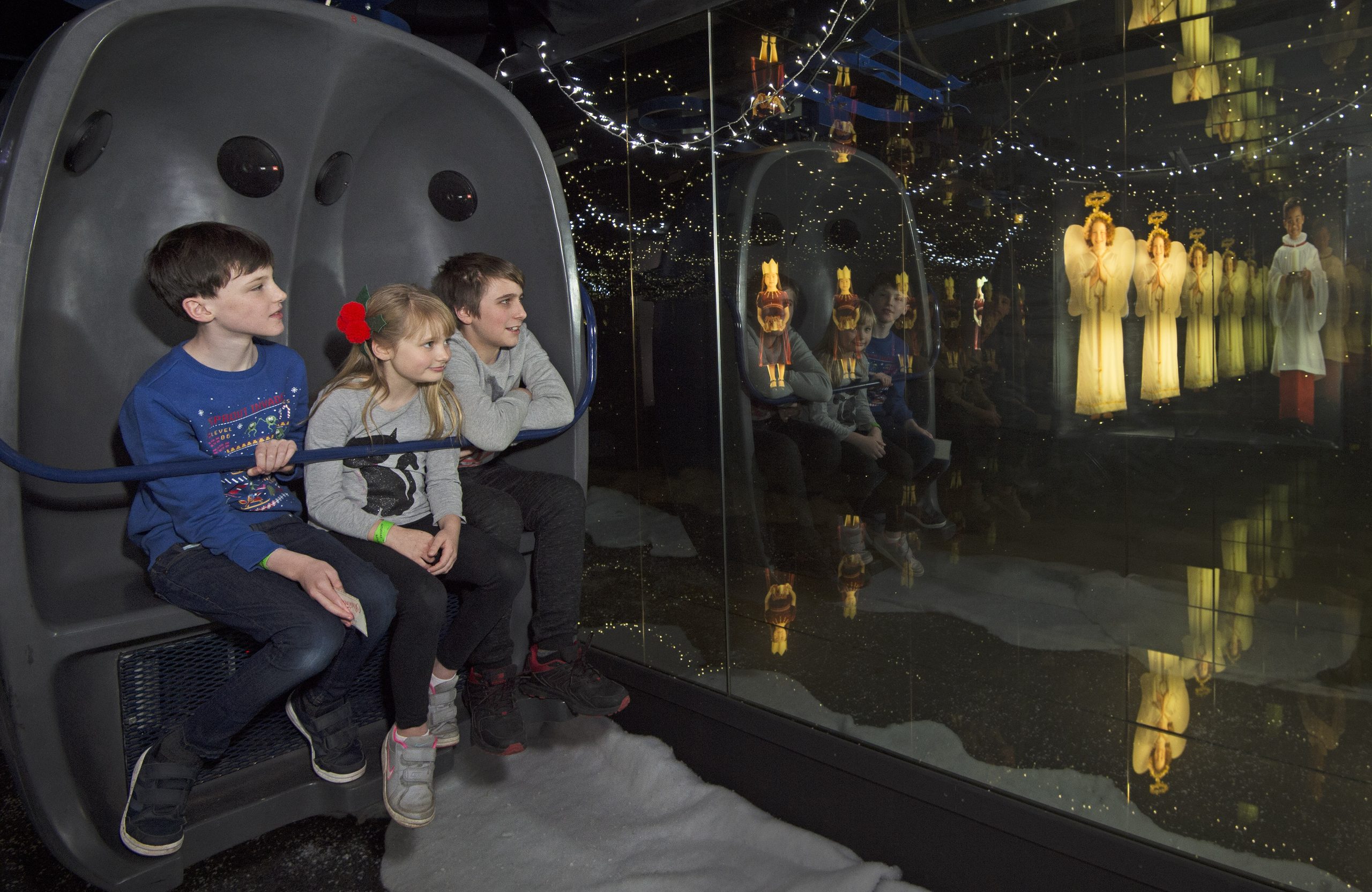
Visitors can also climb aboard the much-loved Spirit of Christmas Ride, where Holly and her friends take families on a magical festive journey, before little ones enjoy even more fun in the indoor soft play area.
New Lanark’s dedicated Quiet Session will return on 28 November, offering a calmer and more relaxed experience for children and families who may benefit from a lower-sensory environment.
For many families across Scotland, a visit to New Lanark has become a treasured festive tradition, combining seasonal entertainment, family activities and a unique historic setting.
“There is something truly special about Christmas at New Lanark,” said a spokesperson for New Lanark.
“Families tell us year after year that visiting New Lanark has become part of their Christmas celebrations. What makes the experience special is being able to spend quality time together, whether that’s meeting Santa, enjoying the pantomime or exploring the village in its festive setting. We are delighted to welcome visitors back for Christmas 2026.”
Alongside the festive attractions, families can enjoy seasonal treats, warming drinks and family meals across New Lanark’s café and restaurant, making it easy to enjoy a complete festive day out.
With many dates proving popular each year, families are encouraged to book early, particularly for weekends closer to Christmas.
Tickets for Christmas at New Lanark 2026 are on sale now, with full details and booking information available on the New Lanark website.
Edinburgh College’s Waterfront Nursery has become the first non-local authority early years setting in Scotland to secure a national certification for serving fresh, local and sustainable food.
The nursery, which is operated by the College, gained the Food for Life Served Here (FFLSH) Bronze certification, for serving food that’s good for health, the environment and the local economy. The nursery serves 34,000 meals each year.
Nursery Manager Catherine Buchanan and Chef Lukasz Szyszka received the FFLSH Bronze certificate from Food for Life Scotland’s Business Development Manager – Scotland Sue McVey during a celebration event at the nursery.
The Food for Life Scotland (FFLS) programme, led by Soil Association Scotland and funded by Scottish Government since 2009, provides a framework through which local authorities and public sector sites can ensure they are serving good food.
This is done by meeting a set of standards to achieve the FFLSH certification at Bronze, Silver or Gold level.
Since 2024, Food for Life Scotland’s remit has expanded to support caterers to achieve the certification in the wider public sector. Waterfront Nursery has become the 26th Scottish public sector site to do so. Through the process of gaining the certification, Waterfront Nursery has increased the amount of scratch cooked food on the menu.
As part of the Food for Life Served Here Bronze certification, Waterfront Nursery also ensures that a minimum of 75 percent of dishes are cooked from scratch using unprocessed ingredients. Meals are also free from undesirable trans fats, sweeteners and additives, and use free range eggs, higher welfare meat and ingredients from sustainable and ethical sources.
Waterfront uses produce from a wide range of sustainable providers, including the likes of Bonaly Farms for milk, Blacketyside Fruits for strawberries, and East Lothian Produce for cabbage, potatoes and parsnips.
Catherine Buchanan, the Manager of Waterfront Nursery, said: “We are absolutely thrilled to have received this recognition from Food for Life Scotland, which highlights our dedication to providing our early learners with the absolute best quality of food possible.
“Ensuring our children are well-fed with fresh, local and sustainable food is just part of our approach, which always has our learners at its very heart. This award is the culmination of months of hard work from so many people at Waterfront, and we’d like to thank every single person involved in getting us to this stage.”
Sarah Gowanlock, Programme Manager, Food for Life Scotland, said: “We’re thrilled to welcome Waterfront Nursery to the Food for Life Scotland programme and congratulate them on being the first non-local authority early years setting to achieve the Food for Life Served Here Bronze certification for their meals service.
“The early years are a crucial period for developing healthy diets. We’re delighted that children at the nursery will be eating more scratch cooked and sustainable food every day.
“The Food for Life Scotland team can offer support to public sector caterers across Scotland, to follow in the footsteps of Waterfront Nursery and our other public sector certification holders in Scotland.”
THURSDAY 22 OCTOBER 5.45pm from DRYLAW NEIGHBOURHOOD CENTRE
Join a women-led night ride through North Edinburgh starting at Drylaw Neighbourhood Centre and exploring local highlights before finishing with a hot drink at West Pilton Park.
Edinburgh Leisure has reopened the refurbished leisure facilities at Wester Hailes High School today, Thursday 1 October, giving people in the surrounding area increased local access to sport, leisure and wellbeing.
Delivered by the City of Edinburgh Council as part of its wider investment in the community campus, the refurbishment has improved a valued local facility and expanded access through a seven-day programme of gym, swimming and fitness activities.
The needs of local residents have been at the heart of the redevelopment, with improvements focused on activity spaces, inclusivity and the overall customer experience.
The swimming pool offers lane swimming, diving and family sessions, with daytime access now also available to the fitness suite and new general-purpose studio.
The fitness suite includes 30 cardio and resistance workout stations in a bright, open environment, while the studio hosts an expanded programme of classes, including Kettlecise, Pilates and Edinburgh Leisure’s Active Communities activities, and is also available for group hire.
The venue is also more accessible and inclusive, with improvements including modern changing accommodation, step-free access throughout, a Changing Places facility and a state-of-the-art pool pod to support easier entry to the water.
The refurbishment forms part of the wider City of Edinburgh Council project to deliver a new Passivhaus-standard secondary school adjacent to the existing site, which is due to open later this year.
David McGlade, Head of Operations (Schools) at Edinburgh Leisure, said:“We’re delighted to welcome the community to a modern, accessible leisure facility in the heart of Wester Hailes. The investment has created brighter activity spaces, upgraded changing accommodation and a wider range of opportunities for people to be active close to home.
“Alongside our gym, swimming and fitness offer, we’re particularly excited to expand our Active Communities programme, helping people of all ages overcome barriers to being active and supporting healthier, more active lives.
“We hope these improvements will help even more local people enjoy being active and build on the facilitiy’s place at the heart of the community.”
Cllr James Dalgleish, Education, Children and Families Convener, said:“It is fantastic to see the opening of this new facility that will provide more opportunities for the local community to be active and try new sports.
“This state-of-the-art leisure centre is not just for the school, but for the whole community to use and enjoy. It is open seven days a week, with a modern gym, swimming pool and range of sport classes, Wester Hailes High School will make keeping active and developing new skills easier than ever.”
Get ready for half term with hands on activities and workshops at the National Museum of Scotland in Edinburgh, the National Museum of Flight in East Lothian and the National Museum of Rural Life in East Kilbride.
Looking further ahead, the major new exhibition Roman Scotland: Life on the Edge of Empire opens in November with a legion of special events including the return of Museum Lates and a weekend of ancient craft demonstrations.
EXHIBITIONS & DISPLAYS
National Museum of Scotland Chambers Street, Edinburgh, EH1 1JF Open 10:00–17:00 daily
OPENING SOON Roman Scotland: Life on the Edge of Empire Exhibition Gallery 1, Level 3 Saturday 14 November 2026 – Sunday 18 April 2027
Tickets from £13.50, concessions available.
Roman Scotland: Life on the Edge of Empire will reshape our understanding of Scotland’s relationship with the Roman world. This exhibition will bring the military communities of Rome’s most northern frontier to life through new research, significant loans from across Europe, and previously unseen archaeological discoveries.
Visitors will encounter objects and stories that bring a vibrant and diverse frontier community to life. This will include finds from a 2nd century AD Roman fort at Inveresk, East Lothian. Central to the exhibition will be two spectacular altars from the fort’s Mithraeum (a temple to the god Mithras).
Scotland’s First Warriors Exhibition Gallery 2, Level 3
Until 16 May 2027
Entrance into the museum and exhibition is free
Explore archaeological evidence for the origins of organised conflict, from the Neolithic (late Stone Age) to the Romans, through over 250 objects. Scotland’s First Warriors explores how and why people fought, the impact of war, and the legacy of prehistoric conflict. Internationally significant discoveries from Scotland will be on display for the first time, including the Carnoustie Hoard.
Scotland’s First Warriors is supported by Postcode Lottery players
Short Courses with the University of Edinburgh 1 Oct 2026 – 28 May 2027 Various prices, book via Centre for Open Learning website
Explore our collections with expert tutors on a University of Edinburgh Short Course hosted at the National Museum of Scotland. Courses include Victorian Edinburgh, Georgian Scotland and Colour in Science and Nature.
Find out Fridays Until 26 Feb 2027, Friday afternoon during term time 13:30 – 16:00 Free, drop-in All ages
Explore a different theme each week on Friday afternoons with our Learning team. Find out fascinating facts and hear surprising stories about our collections and get hands on with some of our favourite objects.
Relaxed Morning: National Museum of Scotland 4 Oct – 6 Dec 2026 10:00 – 12:00 (Quiet space open until 12:30) Free admission, drop-in All ages
A monthly Relaxed Morning for anyone who would appreciate a calmer visit to the museum.
This session is primarily for, but not limited to families with neurodiverse children, neurodiverse young people and adults, adults living with dementia, adults and children with mental health problems and any other visitors with sensory needs or who may prefer a more relaxed experience, plus their families, friends and carers.
Mon 12 – Fri 16 Oct 10:00 – 16:00 Free, drop-in All ages
This October Half Term explore a world of stories with free family activities.
From historical happenings and fantastical myths to local gossip and traditional folktales, explore the different ways people of the past and present have kept a record of the world around them. Journey through the many forms that stories can take, from oral storytelling and written tales to stories told through dance, song and objects. Discover the stories that shaped Scotland and those that have reached us from distant shores.
Creative Workshops for Kids: Imagine That! Wed 14 Oct 9:30 – 12:30, 13:30 – 16:30 Tickets £20, Members and concessions available Ages 7 -11
Artist and writer Hannah Kelly leads a workshop all about stories. Children will explore the museum through playful prompts and let their imaginations transform objects into story ingredients. Back at the studio they will create their own terrific tales.
Shadows on the Wall: Storytelling through Shadow Puppetry Wed 14 Oct 9:30 – 12:30, 13:30 – 16:30 Tickets £15, Members and concessions available Ages 7-11
A creative workshop exploring storytelling, Scotland, and shadow puppetry. Taking inspiration from Scotland’s landscape and folktales, children will learn more about the museum’s collection. Then they will craft a story of their own, told through the art of shadow puppetry.
Museum Socials Fri 17 Jul – Fri 19 Mar 2027 10:30 – 12:00 National Museum of Scotland Free, booking required
Museum Socials are designed for people living with dementia, their relatives, friends, carers, and supporters. Relaxed and informal, each session explores a different museum theme through various interactive activities, including curator talks, object handling and creative crafts. And tea, cake and a warm welcome are always provided.
Book now nms.ac.uk/events/museum-socials
Perspectives: Black History Month Tour Fri 16 Oct 16:00 – 17:00 and 17:30 – 18:30 Free, booking required Ages 16+
Join Lisa Williams for an after-hours tour of the National Museum of Scotland to celebrate Black History Month. Lisa will explore the stories behind iconic objects and give fresh insights on the links between Scotland and Africa and the Caribbean. From the Darien Chest to Althea McNish fabrics, you’ll uncover groundbreaking design and new perspectives.
We Were Here: Film screening and in conversation Fri 16 Oct 19:00 – 21:00 Free, booking required Ages 12+
We Were Here interweaves art history with social narratives, offering a fresh lens on European Renaissance and the complex tapestry of Black presence often overlooked in conventional historical accounts. After the screening, there will be a discussion and Q&A with Director Fred Kudjo Kuwornu and historian, writer and presenter, Dr Onyeka Nubia. The event will be chaired by Dr Anna Groundwater, Principal Curator of Renaissance and Early Modern History.
Family Storytelling Day Sat 24 Oct 10:30 – 16:30 Free, drop-in All ages
Join us for a day of free fun for families, including storytelling, crafts and object encounters. Get to know birds, beasts and beasties of all kinds at the National Museum of Scotland this October half term.Settle in for a story with our friends from the Scottish International Storytelling Festival, get creative at our craft tables, or get up close to some of the incredible animals in our collections.
In partnership with the Scottish Storytelling Centre.
Words of the Wild: Changing Seasons Sat 24 Oct 15:00 – 16:00 Free, booking required Ages 6+
Join the Scottish Wildlife Trust and storyteller David Hughes to take a turn of the “Celtic Wheel of the Year”. David will explore what can be learnt about our changing seasons when Scottish myths, legends and folk tales are looked at through an ecological lens.
This event is part of Family Storytelling Day and is held in partnership with the Scottish Wildlife Trust and the Scottish International Storytelling Festival.
The Sunday Sketch 25 Oct 14:00 – 16:00 Tickets from £13 Ages 16+
Join artist Sheena Russell to take a new look at our collections and be guided through a range of drawing activities within the museum’s galleries. All abilities are welcome at this relaxed and informal session. Each month we will explore a different theme, and all materials are supplied.
Music at the Museum 27 Oct – 2 Mar 2027 11:30 – 12:15 and 13:30 – 14:15 Free, drop-in All ages
In collaboration with Live Music Now Scotland, we are bringing live music into the heart of the museum on Tuesdays. With experienced performers and rising stars of live music, each week features a different soloist, duo or ensemble.
Museum Socials Learning Centre Seminar Room, Level 4 Third Friday of the month 10:30–12:00 Free, booking required
Museum Socials events are designed for people living with dementia, their relatives, friends, carers, and supporters. Relaxed and informal, each session explores a different museum theme through various interactive activities, including curator talks, object handling, and creative crafts. Tea, cake and a warm welcome are always provided.
Book now nms.ac.uk/events/museum-socials
Curiosity Club Sat 31 Oct 2026 – Sat 27 Mar 2027 10:30 – 12:00 £10 (Members and Concessions £9) Ages 7-11
Inspired by some of the museum’s most exciting collections, Curiosity Clubs are a chance for kids to explore the museum without their adult helpers through games, activities and gallery visits.
Book now nms.ac.uk/events/curiosity-club
Relaxed Curiosity Club Sat 31 Oct 2026 – Sat 27 Mar 2027 14:30 – 15:30 £10 (Members and concessions £9) Ages 7-11
These relaxed sessions are designed for children with additional support needs and their families.
Get inspired through games, activities and an optional gallery visit. Explore some of the fascinating facts and stories behind our collection. We aim to create a fun, friendly, and relaxed environment for ASN children to explore our Curiosity Club activities with the reassurance of their parents/carers being with them or nearby.
Book now nms.ac.uk/events/relaxed-curiosity-club
Magic Carpet Nov 9, 16, 23 10:30 – 11:15 or 11:45 – 12:30 Tickets from £4 per session Ages 0-4
Our Magic Carpet sessions introduce you and your little one to some of the fascinating objects and themes in the museum in a fun and interactive way.
Each month we will explore a different theme using song, rhyme, movement, play and handling objects. This will help you and your little one discover more about our topic.
Book now, nms.ac.uk/events/magic-carpet
Perspectives: A guided LGBTQ+ tour of the National Museum of Scotland Fri 13 Nov 2026 and Sun 21 Feb 2027 14:00 – 15:30 Free, ticketed Ages 16+
Researcher Joe Setch presents a free guided tour that highlights some of the LGBTQ+ histories in the National Collection. Explore the museum’s collections from a queer perspective. Discover stories of creativity, innovation and love, alongside often hidden truths about harm and exclusion.
Book now nms.ac.uk/events/perspectives-lgbtq-tour
Museum Late: When in Rome Fri 20 Nov 19:30 – 22:30 Tickets £26, Members and concessions available Ages 18+
A night of Roman-inspired revelry in the spectacular setting of the National Museum of Scotland after hours, inspired by the major new exhibition Roman Scotland: Life on the Edge of Empire.
When in Rome, do as the ancient Romans do! Get ready for a night like no other with music, bars and Roman-themed performances and activities throughout our galleries.
Meet the Makers: Prehistoric and Roman Scotland Sat 21 and Sun 22 Nov 10:00 – 16:00 Free, drop in All ages
Free, drop-in demonstrations and displays showcasing craftsmanship of the past.
Contemporary makers will represent craft skills from Bronze Age Scotland to the Roman military occupation. Discover how pottery, jewellery, textiles, leather, tools, and wooden objects were made in the past. Inspired by our major new exhibition Roman Scotland: Life on the Edge of Empire.
Find our more nms.ac.uk/events/meet-the-makers-prehistoric-and-roman-scotland
Creative Workshop: Roman Pottery Sat 21 and Sun 22 Nov 10:30 – 13:00 and 14:00 – 16:30 Tickets £50, Members and concessions available Ages 16+
Master potter and ancient pottery specialist Graham Taylor leads a workshop on the skills and techniques of ancient Roman Pottery making and decorating, inspired by objects on display in the major new exhibition Roman Scotland: Life on the Edge of Empire. Working with a pot fresh from Graham’s wheel, participants will create their own replica pot that will be taken back to the Potted History workshop, fired, and returned to them.
Book now nms.ac.uk/events/creative-workshop-roman-pottery
National Museum of Rural Life Philipshill Road, East Kilbride, G76 9HR Open 10:00–17:00 daily
Relaxed Afternoon: National Museum of Rural Life Last Tuesday of every month 14:30-17:00 Free with museum admission and Annual Pass
Relaxed Afternoon is for anyone who would appreciate a calmer visit to the museum. This session is primarily for, but not limited to, families with neurodivergent children; neurodivergent young people and adults; adults living with dementia; adults and children with mental health problems; and any other visitors with sensory needs or who may prefer a more relaxed experience, plus their families, friends and carers.
Book your visit nms.ac.uk/events/relaxed-afternoon-national-museum-of-rural-life
Autumn Explorers Tue 13 – Fri 16 Oct 10:30 – 15:30 Free with museum admission and Annual Pass All ages
Autumn Explorers family activities are back, and this time we’re going back to our roots, digging into the traditions of the Scottish potato harvest.
Ever wondered why there’s a school holiday in October? Come along and discover how this tradition began when children would swap the classroom for the fields to help with the tattie howking. Find out how this crop has fed families for generations and get hands-on with sustainable activities, some surprising science and spud-tacular storytelling.
Autumn Explorers is supported by Postcode Lottery players
Find out more nms.ac.uk/events/autumn-explorers
National Museum of Flight
East Fortune Airfield, East Lothian, EH39 5LF Open Weekends only, 10:00–16:00
Relaxed Morning: National Museum of Flight Every second Sunday of the month 10:00-12:00 Free with museum admission
Relaxed Morning at the National Museum of Flight is for anyone who would appreciate a calmer visit to the museum. Friendly staff will be there to give you a warm welcome and support your visit, as you explore the museum without noisy interactives and videos to create a more relaxed environment.
Book your visit nms.ac.uk/events/relaxed-morning-national-museum-of-flight
Half Term: How Things Fly Mon 12 – Fri 16 Oct 10:30 – 15:30 Free with admission Ages 3+
The National Museum of Flight is full of things that fly of all shapes and sizes. This October half term, families can discover how they fly with a range of fun activities. Build a glider with wings shaped like a real aeroplane, try some popular flying toys from and watch the How things fly show.
Find out more nms.ac.uk/events/half-term-how-things-fly
Expert Talks Concorde Theatre 16 Oct 11:00-11:20 Free with museum admission Ages 7+
Learn more about the collections and history of East Fortune Airfield with a series of free expert talks at the museum. In October, Curator Ian Brown will discuss ‘Mythbusting the Raid on the Forth, 16 October 1939’. There will be an opportunity to ask questions at the end of each talk.