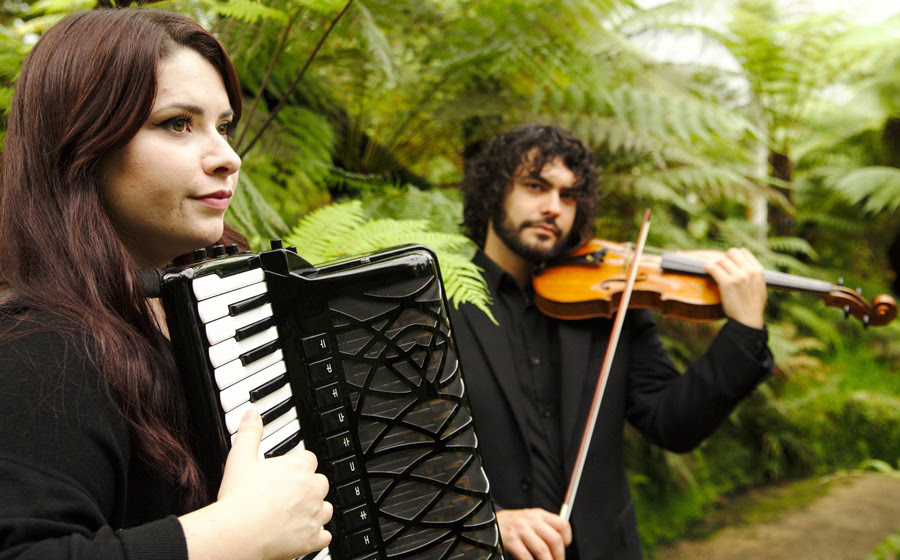
LMNS continues to collaborate with the Scottish Arts Club with Virtual Fridays on the Fringe
Teaming up with Capital Theatres, LMNS provides dementia friendly tea-party
National Galleries of Scotland and LMNS continue to work in partnership on lockdown concert series
As we adjust to the new normal, Live Music Now Scotland (LMNS) is embracing the change this festival season with a programme of inclusive, online and in person events that extends into September.
From tea parties catering for those with dementia, to a continued collaboration as part of Edinburgh Festival Fringe, LMNS is excited to shake off the difficulties of the past year by bringing even more live music, to even more people.
Collaborating once again this summer, Live Music Now Scotland and the Scottish Arts Club are joining forces for Virtual Fridays on the Fringe, an online concert bringing audiences from all over Edinburgh, the UK and even the world, the sound of Scotland this summer.
Taking place this Friday (13 August), fiddler Euan McLaughlin and guitarist Nicky Kirk will be taking to the digital stage with a selection of folk and traditional tunes from 6.30pm.
Part of the Edinburgh Fringe Festival, Virtual Fridays on the Fringe is produced by Fika Productions for the Scottish Arts Club.
Throughout the pandemic the LMNS team has been working hard to keep live music in the lives of those who would otherwise not, even at the best of times, get the chance to enjoy it. Achieved by embracing the power of Zoom and, as restriction lifted, even occasionally the power of the outdoor gazebo, LMNS continues to find new ways to herald in the return to live.
This summer two significant projects, one supported by The Armed Forces Covenant Fund Trust and the other by Morton Charitable Trust, continue to bring live music (and in-the-flesh LMNS musicians!) to residential homes in Edinburgh and four Erskine homes for veterans.
Fiddler Jamie MacDonald and guitarist Nicky Kirk entertained residents at Murrayfield House Care Home to hugely positive feedback from all involved.
One Murrayfield House Care Home staff member said: “Jamie and Nicky were fantastic. They gave a flawless performance. They interacted with the residents who enjoyed the outdoor performance. Staff were happy to see residents in the garden and see how happy they were.”
On Monday 23 August LMNS is delighted to be joining Capital Theatres for a dementia friendly Tea Party. Taking place online audiences are encouraged grab a cuppa, and favourite sarnie or a scone, and join in on YouTube for a sing-a-long and some dancing.
And, once again teaming up with the National Galleries of Scotland for its lockdown concert series, LMNS continues to support those living with dementia across Scotland, with an online and dementia friendly session. With both musicians and audiences joining in from the comfort of their own homes, these soothing sets are suitable for everyone of any age and are entirely free.
It is not only the ears of the older generation being treated to LMNS live music this summer.
YouthLink Summer of Play by YouthLink Scotland (the national agency for youth work) in Kirkcaldy saw young people with additional support needs enjoy live, in person performances by a range of LMNS musicians including Kaitlin Ross, Sally Simpson, Valerie Barr, Aidan Moodie and Robbie Greig.
Later in the year, from Monday 27 September – Friday 1 October, working with Aberdeenshire Council Youth Music Initiative (YMI), LMNS musicians will take to the road in Aberdeenshire, bringing music to ten schools across the region.
Harpist Lucie Hendry and fiddler Sally Simpson are the latest LMNS musicians to take part in the initiative which aims to create access to high quality music making opportunities for young people.
Created by the Scottish Government and administered by Creative Scotland, YMI offers young people the chance to achieve their potential in or through music making, while supporting the development of the youth music sector.
Carol Main MBE, Director at Live Music Now Scotland, said: “We are delighted that live music is coming back across the country post pandemic.
“There is a fantastic range of events and opportunities for our musicians to take part in this summer, and it is testament to the hard work of venues – be they concert halls or care homes – that these are starting to take place in person, as well as online.
“We continue to work with some exceptional establishments who provide support for those with additional support needs of all ages, and it is heart-warming to hear how much music has been missed and how impactful its return has been for so many.”
As Scottish football supporters return to stadiums across the country, Police Scotland has renewed its commitment to building relationships with football fans following the publication of its first supporters’ engagement survey.
Supporters were asked for their views on how officers engaged with them, the communities affected by football and the wider public about football policing – following a key recommendation made in the Independent Review of Football Policing in Scotland.
Almost 7,000 took part in the survey and the results have now been published.
Assistant Chief Constable Mark Williams said: “We recognised that engagement and communication with football supporters is key and I am pleased so many people with an interest in football took part in the survey.
“Football plays an important role in Scottish life, for communities and individuals and can make a positive impact.
“We commissioned the survey as a way of getting views directly from supporters and local communities, as much to allow them to fully understand the role of officers at matches as gaining an understanding of what they expect from us.
“As a result, we have completely transformed the way we communicate with supporters and going forward will continue to involve them and our communities in shaping the way we police football matches.”
Supporters groups are now an integral part of Police Scotland’s planning of football matches – the Scottish Disabled Supporters Association, the Scottish Football Supporters Association and Supporters Direct Scotland now attend the Football and Events Working Group.
This forum meets regularly to discuss issues relating to policing of football and other events and includes representatives of British Transport Police, the SFA, the SPFL, Crown Office and Procurator Fiscal Service, the Scottish Government and the Football Safety Officers’ Association Scotland.
A large majority of those who responded felt that football had a positive impact on their community. While the results of the survey show that football supporters do not always feel the need to engage with Police Scotland officers at matches, the enhanced engagement has been welcomed by Scottish football supporters groups.
Alan Russell of Supporters Direct said: “Police Scotland is a key partner to Scottish football in ensuring that the match day experience is safe and enjoyable for all supporters.
“It is vitally important that communications between everyone involved on are clear and constructive, and we welcome the publications of its Football Engagement Strategy.
“The Independent Review of Football Policing identified potential improvements in how Police Scotland interact with supporters, and we are pleased to have seen the early implementation of many of these recommendations.
“The survey results are revealing, and identify a number of issues that matter to supporters. Communication is the key to any good relationship, and we will listen to each other and work together to ensure that improvements continue to be made.”
Simon Barrow, co-founder and vice-chair of the Scottish Football Supporters Association, said: “This survey, and the process of which it is part, represents a significant step forward in communicating better with the whole football community over policing and security issues.
“We will study the results with interest, and look forward to further engagement, discussion and consultation in the coming months.”
Assistant Chief Constable Williams added: “It is extremely important that we continue to work with the clubs and match organisers to ensure everyone who goes to a football match anywhere in Scotland can enjoy it in a safe and secure environment.
“We will build on the work already undertaken and continue to develop effective working relationships with football supporters and our communities.”
Thieves operate all year round. That’s why this summer Crimestoppers are launching a new seasonal acquisitive crime campaign, ‘Safer Communities’:
We’ll be raising awareness of our anonymous service and sharing prevention advice from our partners Mitie and Neighbourhood Watch to help protect you, your home and car from opportunistic thieves.
As lockdown eases and we leave our homes this summer, we need to protect ourselves and possessions from crime. The pandemic has brought neighbours together, and we don’t want that to stop – you can still be neighbourly by looking out for each other’s homes when you go on holiday.
With your help we’ve helped reunite people with stolen goods, made communities safer and brought people to justice.
THEFT
Lockdown easing is likely to result in a rise in interpersonal crimes like snatch-theft and assault, as people go out more in the evening and have a few drinks with friends.
When we’ve all been used to not going out as much as usual, it’s easy to forget to keep an eye on your handbag, wallet, mobile phone or purse – and thieves are always on the lookout for new opportunities.
Domestic burglary may be perceived as a victimless crime; however, 84% of victims feel emotionally affected after a burglary, with 35% feeling vulnerable, resulting in a lack of confidence.
Burglars keep an eye out for empty and unprotected properties and, now that we’re starting to go out more, they are likely to step up their surveillance – but, by speaking up, together we can all help to combat this.
John Hayward-Cripps, CEO of Neighbourhood Watch, said: “Now that we’re all starting to ease out of Covid-19 restrictions, we need to make sure that as well as keeping ourselves safe, we’re keeping our homes and neighbourhoods safe.
“More people out and about means homes will be left unattended, and burglary may rise, which is why we’re supporting Crimestoppers’ Safer Communities campaign.”
Did you know? In the UK, a car is stolen on average every ten minutes, and catalytic converter theft is on the rise.
Catalytic converter theft doesn’t just happen outside residential properties, it can happen in car parks too. Earlier this year OPAL, a national intelligence unit focused on serious organised acquisitive crime, reported a national increase in these types of offences across both locations.
Barrie Millett, Mitie Director of Assurance, Security and Business Services, said: “Our business crime unit at Mitie is tackling catalytic converter theft for our clients. Last year they saw an increase in this activity between July and October, when lockdown restrictions eased, in line with national trends.
“As Covid restrictions get lifted once more, we urge our customers, clients and staff to stay vigilant, follow prevention advice, and tell Crimestoppers what you know if you have information about the criminals carrying out these crimes.”
Whilst you’re out and about this summer, stay alert and follow Neighbourhood Watch’s simple protection advice – to keep your car locked, lit and empty.
Heart of Midlothian and Hibernian football clubs have been granted dispensation by the Council to welcome back full capacity crowds at their upcoming home matches in the next few weeks.
The move follows the easing of Scottish Government Covid19 public health guidance.
Council Leader Adam McVey said: “We’ve been working very closely and productively with both clubs on over the last few weeks and months to help ensure fans can safely attend home games within the parameters of the public safety guidance.
“It’s great that we’re now in a position to have both stadiums back at full capacity as Covid restrictions ease. I’m sure fans of both teams will be hugely looking forward to hearing the roar of their home crowds after such a long time and it’s bound to give a real boost to the players themselves too.
Depute Council Leader Cammy Day said: “This is great news for Hearts and Hibs fans who can get back to enjoying the football they love.
“Fans’ safety remains our number one priority and we’re delighted that with the easing of restrictions it’s now possible to welcome back the crowds at Easter Road and Tynecastle once again. We’ll keep things under review, as you’d expect, given the unpredictable nature of this pandemic, but for now we wish both clubs all the best with their return to capacity attendance.
Ben Kensell, Hibernian Football Club Chief Executive, said: “We are all really delighted to be able to welcome back our supporters. It is what everyone has been waiting for.
“While those fans who have attended our recent games have created a terrific atmosphere to spur the team on, we are looking forward to hearing what a full stadium can do. We would like to thank City of Edinburgh Council for their support throughout these challenging times.
Andrew McKinlay, Heart of Midlothian Football Club Chief Executive, said:We are thrilled that full capacity has been restored and would like to thank the City of Edinburgh Council for their support.
“We really can’t wait to welcome our fantastic supporters back in numbers for the visit of Aberdeen on August 21st and look forward to hearing Tynecastle Park at full voice for the first time in 17 months.”
Record number of Higher and Advanced Higher passes
Scottish school pupils will receive their official grades today. There were more than 200,000 entries for Higher and Advanced Higher courses this year – and this year’s students have achieved new records.
The number of Higher passes is at a record level since the advent of Devolution, and the number of Advanced Higher passes is the highest since their introduction in 2001.
Almost 137,000 learners are receiving Scottish Qualifications Authority (SQA) results today – the most since 2017.
Pass rates overall remain high, despite the exceptional challenges caused by the COVID-19 crisis, and are significantly higher than the historic picture – up 12.6 percentage points for Highers compared with 2019, but down slightly on last year.
With an exam diet not possible because of the pandemic, this year’s grades for National 5s, Highers and Advanced Highers were based on teachers’ judgement of evidence of attainment.
The results show:
the highest number of Higher passes since at least 1999
the highest number of Advanced Higher passes since the qualifications were introduced in 2001
an increase in the number of entries for National Qualifications compared with 2020
the percentage of grade As awarded at National 5, Higher and Advanced Higher level is at a record high
pass rates at National 5, Higher and Advanced Higher are higher than in 2019, although slightly down on 2020
the poverty-related attainment gap is narrower than in 2019, although slightly wider than in 2020
Education Secretary Shirley-Anne Somerville said: “This is a strong set of results, achieved under extraordinary circumstances.
“It’s been one of the toughest academic years we’ve ever known, with the pandemic throwing significant challenges at our young people. So to have this many learners receiving certificates and for the number of passes at Higher and Advanced Higher to be so high is incredible.
“These results are testament to the hard work, resilience and determination of learners – and to the dedication of their endlessly supportive teachers and lecturers, who have been with them every step of the way, going above and beyond to make sure pupils got the grades they deserve.
“Learners can be confident that their awards are fair, consistent and credible. Indeed, industry representatives have made it clear how much they value this year’s qualifications.
“As in any year, the results highlight some areas for us to focus attention on. Closing the poverty-related attainment gap and ensuring every young person has the chance to fulfil their potential remains central to our work. We know that the challenges presented by the pandemic mean our efforts to deliver equity in education are more vital than ever, so we are investing a further £1 billion over the course of this Parliament to help close the gap.
“While congratulating those receiving SQA results today, we should also recognise, and celebrate in equal measure, the successes of young people whose achievements are not measured in national qualifications but in other ways. They should be proud of their hard work and resilience during such a difficult year.
“For some young people, today’s results may not be what they would have liked. There is always a next step – and there is a range of support and practical advice available for learners, and their parents and carers, to help in that onward journey, whether it’s staying in education, training, or moving into the workplace.”
Fiona Robertson, SQA Chief Executive and Scotland’s Chief Examining Officer, said yesterday: “Results Day, when learners receive their certificates and find out their grades, is always a significant and important annual date in the calendar.
“This year is very different for lots of reasons, not least because teacher judgement has replaced exams and because learners already know their grades after receiving provisional results before the end of term.
“The 2021 approach to assessment – the alternative certification model (ACM) as it is formally known – has not been without its critics.
“Perhaps that was inevitable given the need to agree and build a new model at pace, but it was the best possible solution in the exceptional circumstances we faced and I have yet to hear a credible alternative put forward.
“As we approach Results Day 2021 tomorrow, it is time to put those criticisms aside and to focus on paying tribute to the tremendous efforts made by Scotland’s young people in what has been a very difficult and challenging time for many.
“It’s also important to recognise the tireless professionalism and commitment of Scotland’s teachers, lecturers and support staff who have gone the extra mile to do their utmost for their learners, whom they know best.
“Following the cancellation of exams by the Deputy First Minister, the education sector came together last autumn to form the National Qualifications 2021 Group, which was tasked with developing and implementing an alternative.
“There was no ‘off the shelf’ solution but we quickly agreed that the ACM had to have evidence of learners’ learning and skills at its heart.
“And so provisional results, decided by teachers and lecturers using assessments completed by learners that followed the national standard set by SQA, were used to award this year’s National 5, Higher, and Advanced Higher courses. Those provisional results are the same as the final results learners will receive tomorrow unless the SQA, in very exceptional circumstances, discovered an administrative error.
“As we all know, through this year there have been further restrictions and lockdowns and together with teachers, lecturers, learners, parents and carers, the ACM had to quickly adapt.
“Ways in which the model adapted include the in-built flexibility around when and how schools and colleges assessed learners so that they had the best chance to demonstrate their knowledge and skills.
“A big congratulations to each and every learner getting their certificate. You have achieved so much.”
Open Letter to Young People
Introduction from Sandy Begbie, CEO Scottish Financial Enterprise, Chair of Young Person’s Guarantee Implementation Group, Chair of DYW:
We all know that this year has been a year like no other and understand that the impact on young people has been significant.
Research undertaken with young people by Young Scot reveals anxiety that this year’s qualifications and achievements will not be valued as highly by employers in comparison to previous years.
My many discussions with industry and employers resoundingly confirms the opposite. Instead my experience is widespread employer admiration for the fortitude and resilience young people have shown throughout all the challenges faced in the past year, and a solid commitment to create opportunities to help shape futures.
Official SQA results are due to be issued on 10 August. This is an opportune moment to communicate through an ‘open letter to young people’ that Scotland’s industry and employers stand in support of them, recognise their qualifications, and congratulate them on their achievements. The content of the open letter is attached and includes a number of signatories who represent a broad range of Scotland’s employers. We couldn’t include everyone, however I know there will be many more who stand ready to endorse it.
I therefore kindly ask for your support now, to get behind our campaign and help re-build youth confidence at this critical time.
An open letter to Scotland’s Young People
While you enjoy the summer and a well-deserved break from your studies we wanted to write to you in our role as Scotland’s business leaders and on behalf of our networks of thousands of Scottish employers.
As you receive your official SQA results, we want to reassure you that we recognise and value your qualifications as much as any other year. We congratulate you on everything you’ve overcome and achieved this year, and you have our support, whatever your needs and wherever your ambitions lie.
Over the past 18 months you’ve had to deal with a situation like no other and the flexibility, ingenuity and resilience you’ve shown gives us confidence in you as future employees.
We are committed to helping to create job opportunities for you so that you can have a positive future. We are also committed to ensuring that there are opportunities available for every young person and that you have help and support to develop further.
Many people in interesting job roles across Scotland may not have taken an obvious or traditional path. Look out for #NoWrongPath which will show you that, whatever your results, there are different routes into jobs.
There are lots of industries continuing to grow and new ones emerging which offer exciting opportunities. Employers need young people with fresh ideas and experience to get involved and work together with us to tackle big challenges, such as climate change. We will do all that we can to help you find ways to use your skills and talents in the workplace.
We all support the ambition of the Young Person’s Guarantee and its commitment that within two years, every young person aged between 16 and 24, will have the opportunity of a job, apprenticeship, further or higher education, training programme or volunteering. And we’ll keep speaking to young people across Scotland to understand how we can keep delivering on our commitment to you.
Wishing you the very best of luck with your next steps. Scotland’s employers stand ready to support you. This is our #CommitmentToYOUth.
Signed:
Sandy Begbie, CEO, Scottish Financial Enterprise Marc Crothall, CEO, Scottish Tourism Alliance Louise Macdonald, National Director Scotland, Institute of Directors Damien Yeates, CEO, Skills Development Scotland James Withers, CEO, Scotland Food and Drink Dr Liz Barron-Majerik, Director, LANTRA Lee Ann Panglea, Head of CIPD Scotland and Northern Ireland, CIPD Tracy Black, Director Scotland, CBI Anna Fowlie, CEO, SCVO Fiona Hodgson, CEO, SNIPEF Training Services David Lonsdale, Director, Scottish Retail Consortium Karen Betts, CEO, Scotch Whisky Association Martin Crewe, Director, Barnardo’s Susan Love, Head of External Affairs, The Federation of Small Businesses Liz Cameron, CEO, Scottish Chambers of Commerce Sara Thiam, CEO, Scottish Council for Development and Industry Paul Carberry, Director for Scotland, Action for Children Iain MacRitchie, Founder and Chair, MCR Pathways Anne Wexelstein, Director for Scotland, Career Ready Kate Still, Director Scotland, The Prince’s Trust Kirsten Urquhart, CEO, Young Scot Linda Hanna, Interim CEO, Scottish Enterprise Carroll Buxton, Interim CEO, Highlands and Islands Enterprise Jane Morrison-Ross, CEO, South of Scotland Enterprise
Wendy Robinson, Service Head of Childline, said: “At Childline we know that results day and the period running up to it can be a really challenging time.
“The impact of the pandemic has made this even more difficult – and young people have told our Childline counsellors they are understandably feeling anxious and stressed.
“The last year has been incredibly tough for young people with school closures, exam cancellations and changes to the assessment process – so it is vital that they are supported and listened to.
“Young people have told us they’re concerned that they may get lower grades than if they’d been able to sit their exams, or that their results are out of their control – whereas others are concerned that they won’t get the results they need for their future.
“Some also said they struggled to prepare and do the work they were being graded on due to having so much time out of school because of restrictions.
“If any young person is feeling apprehensive and worried about their results, I’d urge them to talk to someone about it.
“And if they don’t get the results they need, there are options they can take and there are trusted adults that they can turn to for help and support. This could be a teacher, careers advisor, parent, carer or Childline.
“Our counsellors are always here to talk to young people whether that be on the phone or online.
“The conversation will be completely confidential and no worry is ever too small. If it matters to a young person, it’s important to Childline.”
One 16 year old girl said: “It is exam season and I am missing three very important papers because I have COVID. I feel so trapped and alone in my room. I’m expected to study for exams as if the pandemic hasn’t happened.
“The exam board said they’d cancel exams yet they proceed to give the papers to schools to give to us to sit which I find so unfair. I have missed months of school, had to learn online, and now I have COVID right before exams. None of this is my fault and I don’t understand why my grades should suffer for something that is out of my control. (Girl, 16, Scotland)
Advice
For young peoplewho may not achieved the results they wanted:
Ask a teacher, careers advisor or any adult you trust what they think and discuss your options and how you are feeling.
Remind yourself of what you did well in whether that be specific pieces of coursework, or other parts of your life.
Don’t compare yourself to your friends.
If you do not feel your grade reflects your ability speak to your school about making an appeal. This doesn’t always mean you’ll get a better grade but it can help if you think things would have been different had you sat the exam.
Look at other courses or training programmes and apprenticeships that you can do.
If you haven’t got a place at your chosen university, try not to worry as there is a chance you could get a place at another university through the clearing process.
Take a gap year and do something different like volunteering.
Look at different courses that you can do with the grades you have achieved.
For parents and carers:
Your child may find it hard to talk to you about their results so be patient and supportive until they feel ready to talk about how they feel.
Encourage your child to take their time to think about what they want to do next. There’s no need to rush into a decision straightaway.
Help them think about their choices by writing down a list of pros and cons for each of their options
If they are finding it hard to talk to you, let them know they can contact Childline for free, confidential support and advice on 0800 1111 or www.childline.org.uk
Childline data for the UK
Between April and June this year Childline has delivered 1812 counselling sessions to young people who spoke about concerns relating to exams and exams being cancelled.
This has more than doubled when compared to the same period last year where 861 counselling sessions were delivered.
In 43% of these counselling sessions, a young person also spoke about their mental and emotional health.
985 sessions were delivered to girls (54%), 220 were delivered to boys and 607 of the sessions the gender of the child was either other or unknown (34%).
The EIS has congratulated Scotland’s senior students after a strong set of qualifications results were confirmed.
Commenting, EIS General Secretary Larry Flanagan said, “Scotland’s young people have endured a particularly difficult period over the past year, with the ongoing Coronavirus pandemic creating many challenges in all aspects of their lives including their education.
“The late decision to cancel the exam diet and to move to the Alternative Certification Model (ACM) inevitably created additional pressures on students, but it is clear that Scotland’s young people have performed exceptionally well in the most trying of circumstances and they can be extremely proud of all that they have achieved.”
Mr Flanagan continued, “The additional pressure and workload created by the late move to adopt the ACM, compounded by a three-month lock-down, placed a particularly heavy burden on teachers and lecturers, and they deserve sincere thanks for their absolute commitment to ensuring that young people could receive the grades that they deserved.”
Mr Flanagan added, “As we look ahead to the welcome replacement of the Scottish Qualifications Authority and a refresh of a qualifications system that still places too much emphasis on high-stakes end of year exams, there will be lessons to learn from this year’s experience.
“Today, however, is about recognising and celebrating the successes of Scotland’s young people.”
A National Care Service for Scotland – but COSLA condemns proposals
A consultation has been launched to seek the public’s views ahead of the creation of a National Care Service, which will ensure everyone who needs it can expect the same standards of care, wherever they live in Scotland.
Local government umbrella organisation Cosla has criticised the government’s plan as another move to undermine local democracy.
The National Care Service will deliver person-centred care that supports people in a way that suits their needs, providing real benefits for those who are being cared for and the people who care for them. It will introduce ethical commissioning, based on fair work principles, for the benefit of everyone involved.
The consultation sets out some of the options for delivering social care in a way which changes the system from one that supports people to survive to one that empowers them to thrive. It recognises that this will involve significant cultural and system change that will need to be supported by new laws, and new ways of working.
In order to deliver these recommendations there will continue to be strong local accountability. The consultation proposes Community Health and Social Care Boards to strengthen the voice of the local population, with people with lived experience and local elected members sitting alongside professionals.
Consulting on the proposals was one of the commitments for the first 100 days of this government. Implementation of the recommendations of the Independent Review of Adult Social Care, and the establishment of a National Care Service, will be one of the most significant tasks of the current parliament.
At a minimum the new National Care Service will cover adult social care services. However, the consultation document also recognises that if we want to build a comprehensive community health and social care system, we should consider extending its scope to other groups such as children and young people, community justice, alcohol and drug services, and social work.
Minister for Social Care Kevin Stewart said: “The importance of our social care services has never been clearer. We owe an enormous debt of gratitude to our nation’s carers, paid and unpaid, for the commitment and compassion we have seen throughout the pandemic.
“The Scottish Government commissioned the Independent Review of Adult Social Care during the pandemic, because it was clear we needed to do things better in future.
“We have already made significant improvements, with reforms such as the integration of health and social care, and implementation of the Real Living Wage Policy for Adult Social Care workers and this year the Scottish Government pledged £64.5m to fully fund the pay increase. But we can go further. What we are now proposing is the biggest public sector reform for decades, since the creation of the National Health Service.
“I am committed to implementing the recommendations of the Independent Review and staying true to the spirit of that report by building a system with human rights at the heart of it.
“The Review recommended the creation of a National Care Service, with Scottish Ministers being accountable for adult social care support. I believe however that it is right for this consultation to look beyond simply the creation of a national service for adult social care. The ambition of this government is to go much further, and to create a comprehensive community health and social care service that supports people of all ages. We are also committed to a ensuring there is strong local accountability in the system.
“Absolutely vital to this is ensuring that our invaluable social care workforce feel happy, respected and fulfilled in their role.
“We are at the beginning of a journey to improve social care in Scotland. We will only get this right with your support. I want to hear from as many people and organisations as possible over the next couple of months, so we can build a better system together.”
In a statement, the Social Covenant Steering Group which will advise on the creation of a National Care Service, said: “Most of us have waited many years to see plans for major improvements in the way social care support is delivered and we welcome the publication of this consultation.
“Many people may feel they have been consulted before and are keen to see some action. But this time it is an important legal step in in order that a bill can be put to Parliament.
“So, it is important that as many people as possible including; current users of social care support, unpaid carers, the workforce and everyone else who cares about this vital support will take this opportunity to express their views on the kind of system we need to enable everyone to reach their potential.”
The Consultation on the National Care Service which was launched today cuts straight through the heart of the way Scotland is governed, says COSLA President Councillor Alison Evison:
“The Consultation launched today cuts through the heart of governance in Scotland – not only does it have serious implications for Local Government – it is an attack on localism and on the rights of local people to make decisions democratically for their Place. It once again brings a centralising approach to how decisions which should be taken locally are made.
“We welcomed large parts of the Independent Review of Adult Social Care and have been keen to get on and deliver, however the vision this consultation sets out goes beyond the Feeley Report. It isn’t evidence based and will take years to deliver – years when we should be making improvements which will benefit all users of social care services.
“Councils know their communities and all the evidence suggests that local democratic decision making works. Councils have shown time and time again during the last 18 months of the pandemic that we can deliver for the communities we serve when we are trusted and resourced to do so.
“It is deeply concerning that the consultation is also a considerable departure from the recommendations of the independent review set up to look at Adult Social Care.
“The lack of prior engagement with Local Government is not new – the partnership between the Scottish Government and Local Government which we have been seeking to build, continues to elude us in practice and it is the communities we serve who are losing out.
“Let’s be clear – this is not a “thinly veiled” attack on Local Government – there is no subtlety to it and, sadly for local communities, the ‘onion peel’ of Local Government services by this Government shows no sign of letting up.
“On behalf of the communities we serve, COSLA and Local Government will engage constructively with the Consultation process. People may be surprised by the extent of services covered by this Consultation and I would urge as many as possible to respond to it, as this could really be the end for anything other than central control in Scotland.
“We all want better services for our communities, nobody more so than Local Government and that is what Local and National Government should be working on collectively for our communities.”
A West Dunbartonshire nurse, who found herself in the limelight when she vaccinated the First Minister, has been reflecting on her pandemic experience.
The day job normally for Elaine Anderson (51) is vaccinating school pupils against diseases such as tetanus, diphtheria and polio, but since January she’s been at the forefront of the Covid vaccination programme.
Elaine, from Clydebank, said: “Early on it was recognised that the School Immunisation teams had a great deal of experience in this area and as the schools were closed, we were brought into the Covid vaccination programme.
“It’s been an absolute honour, really quite overwhelming actually. In the beginning, people were coming in, often it was the first time they had been out of the house in months. Some were in tears, there was such relief.
“There’s been a real sense of solidarity – we are in this Covid war together and we will beat it.
“I have met so any great people from so many walks of life. Everyone has a story. So many interesting people I would never normally meet. Now we are vaccinating the young people which is fabulous. Many just say please get it into me – they just want go get back to normality.”
In April, Elaine found herself in front of the cameras when she gave the First Minister her first vaccination – the day Nicola Sturgeon referred to vaccinators as “heroes”.
Elaine said: “It was another honour. She was lovely and quite emotional. My son was very impressed and was telling all his friends his mum is famous as she vaccinated Nicola! Nicola, not even the First Minister!
“Nothing makes me happier than looking out the window and seeing people in their droves, lining up to get their vaccination. There’s such excitement; I get a real buzz. My parting line to them is please don’t have a vaccination party!”