Providers of apprenticeship places will see their funding rise 10% in 2027-28, giving greater stability to those that offer training.
Modern Apprenticeship contribution rates support the training and assessment of the next generation of skilled workers, applying to new apprentice starts and apprentices in training from 2027/28.
The £8.8 million uplift applies to all types of apprenticeship frameworks, following phase one of the Scottish Government’s contribution rates review.
Minister for Innovation, Technology and Tertiary Education, Alyn Smith, said: “Apprenticeship training providers play a profoundly important role in equipping people with the skills they need to have successful careers. In doing so they make a significant contribution to a healthy economy.
“This funding increase demonstrates our commitment to Scotland’s apprenticeship system and to developing our future workforce. It will also provide greater stability for training providers within the context of a challenging financial environment.
“We want to see more high-quality apprenticeships to meet our skills needs and to support our vital public services. We look forward to expanding our modern and graduate apprenticeship offer in the future.”
Thirty-six people have been arrested, and 14 cannabis cultivations have been discovered following the biggest and most coordinated human trafficking operation that Police Scotland has ever carried out.
The nationally coordinated operation, which took place on Wednesday, 23 September, was targeting a Vietnamese crime group suspected of human trafficking and exploitation and organised immigration crime.
Around 300 officers were engaged in the enforcement action with simultaneous deployments across Scotland, targeting 47 addresses in Aberdeen, Dundee, Falkirk, Edinburgh, Glasgow, Ayrshire, Lanarkshire, Midlothian and the Scottish Borders. Arrests were also made in Birmingham.
There were 35 warrants served and a number of potential trafficking victims were also recovered from several of the addresses.
Officers from across Police Scotland, led by the National Human Trafficking Unit, worked alongside Home Office Immigration Enforcement and HMRC. Enforcement action took place in Northern Ireland earlier this week.
Detective Superintendent Stevie Bertram, Head of Police Scotland’s National Human Trafficking Unit said: “This enforcement action is the biggest and most coordinated human trafficking operation that we have ever carried out, and was the result of a lengthy investigation, working closely with our partners. We took a coordinated approach and the arrests and seizures are the result of this work.
“Human Trafficking is the illegal trade in human beings for the purpose of commercial exploitation, and it has no place in Scotland. It exists in many of our communities and can involve people who are resident legally in the country. The industry of trafficking people has become so sophisticated that it often goes unnoticed.
“We will target criminals who abuse, control and exploit people, working with partners nationally and internationally to bring offenders to justice, and to raise public awareness to help identify victims and ensure they get the support they need.
“I want to thank all of the officers involved who have worked tirelessly to get to where we are today.
“We will continue to use focused days of action to disrupt and identify those who control, abuse and exploit others to bring them to justice.”
Justice & Care deployed two Victim Navigators, based in Scotland, to assist in Operation Kendrew. The Victim Navigator programme provides independent, specialist support. As a result of their training and professional expertise, the Navigators provide trauma informed support at the point of rescue and beyond, recognising that every victim has lived through a different experience.
Debi Lloyd, Head of Counter-Trafficking at Justice & Care, adds ”Trauma-informed support is ultimately about recognising the person before the process.
“When somebody begins to trust again, to make their own choices and believe that people will do what they say they will do, that can be incredibly powerful.”
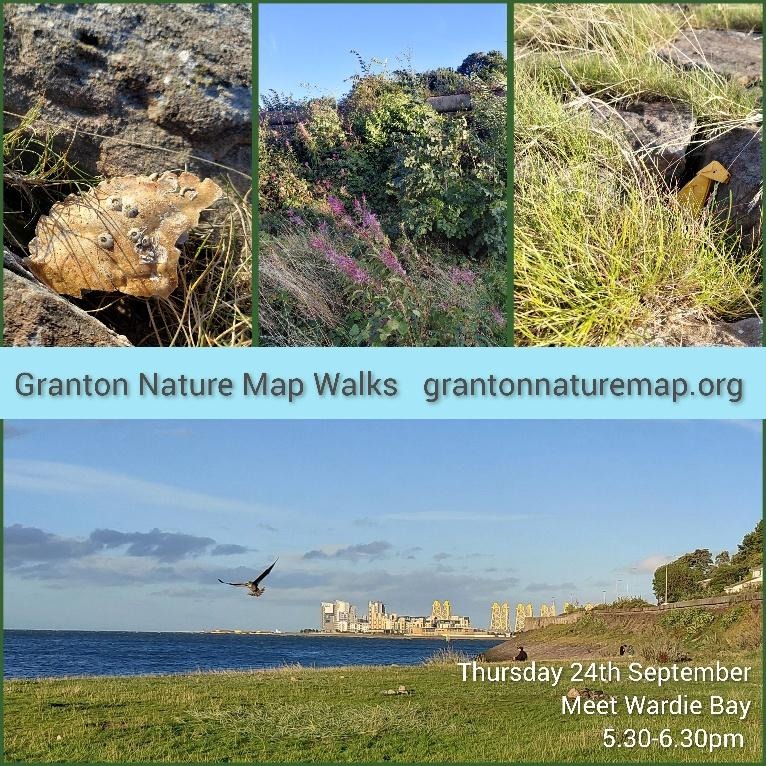
Walking along the beach; noticing what grows, flies and crawls, and the opportunity to sketch a design for your stitched contribution to the Granton Nature Map.
With Katie Smith from the Granton Community Gardeners and Tamsin Grainger, Community Artist
Alcohol and Drugs Minister Maree Todd has raised concerns about an ‘increasingly toxic and unpredictable drugs supply’ in Scotland and has said the government will continue to prioritise a public health response to drug deaths.
It comes as new figures from National Records of Scotland show there were 1,133 drug use deaths in 2025, an increase of 11% compared with the previous year.
Cocaine was implicated in over half of all drug use deaths in 2025 (52%, or 589 deaths), an increase of 23% compared with 2024. Nitazenes, a group of highly potent synthetic opioids , were implicated in more than one in five drug use deaths (22%, 247 deaths).
Speaking during a visit to In Cahootz, an initiative in Glasgow which supports people affected by substance use through creative activities and building community connections, Ms Todd said: “My heartfelt condolences go out to everyone who has lost a loved one to drug use. Each and every death is a tragedy, and even more so because every life lost to drug harms is preventable.
“Against an increasingly toxic and unpredictable drugs supply, this rise is deeply concerning and unacceptable. The increase in deaths involving cocaine, and the continued threat from dangerous synthetic opioids like nitazenes, must drive more coordinated action across the country.
“We have taken important steps forward, including funding more than 1,100 residential rehabilitation placements last year and widening access to treatment and life-saving naloxone. However, despite these policy interventions, and the actions of our valued frontline workers, it is clear we need to do much more to reduce this tragic loss of life.
“Our new Alcohol and Drugs Strategic Plan will strengthen surveillance, deepen links between treatment, housing and other services, and target support at the communities most at risk. I have also announced today that Scotland’s first local drug-checking service will open in Glasgow this October – building on the UK’s first safer drug consumption facility.
“Whilst we are using every lever available through our devolved powers, it is clearly now vital that the UK Government work with us to transfer the greater powers over drugs policy that we require to treat drug harms fully as a public health issue.”
In Cahootz Creative Director Kate Black said: “The National Mission funding has allowed us to expand the range of activities available through our Creative Citizens Project.
“Taking part in creative activities can increase confidence and give people a sense of purpose and belonging. Building connections and becoming an active part of a community can play an important role in recovery.
“Our project helps people develop those connections and supports them to build a better quality of life.”
THE POVERTY ALLIANCE commented: “In a just Scotland, no-one would lose their life to drug addiction and everyone would have quick and efficient access to addiction treatment that works for them.
‘People living in the most deprived communities in Scotland are around 15 times more likely to experience problem drug use, compared to people in the least deprived communities. Reducing drug deaths means reducing poverty.
‘That means redesigning our economy so that people are able to access decent work, and investing in our social security system and public services, so that people have the income they need to live in dignity and security.
‘Above all, we need to treat people with the dignity, respect, and compassion they deserve.’
As part of recovery month, COSLA’s Spokesperson for Health and Social Care, Cllr Paul Kelly, reflects on the key role local authorities play in preventing harms from drugs and alcohol and supporting people to recover:
Across Scotland, unacceptably high levels of drug and alcohol related harms continue to have profound impacts on our communities. Behind each life lost is a person, their family, friends and colleagues. As a small but diverse country, many of us will know personally how the effects of drug use pervade our lives and affect whole communities.
Earlier this year, COSLA Leaders agreed the new Strategic Plan for alcohol and drugs, Preventing Harm, Promoting Recovery – the first time Local and Scottish Government have agreed shared ownership over this critical challenge we face as a nation. The Strategic Plan builds on progress made during the National Mission but recognises that we need sustained leadership to tackle ongoing and emerging harms from alcohol and drugs.
While a shared policy direction at a national level is important, ultimately it is the local delivery of support that will make a difference to people’s lives. These solutions will lie in our communities, shaped by people, and delivered through trusted local services.
At the launch of the strategy at a rehabilitation facility in Inverclyde, I met with people in recovery and who told me how important it is to have pathways of care that bridge different services, bringing together specialist care with appropriate housing and ongoing wellbeing support.
Councils are well placed provide wrap-around support for people affected by drugs and alcohol and their families which fosters sustained recovery. Housing, social work and social care and community justice support some of the most vulnerable in our communities. This holistic support, meeting the needs of the whole person, act as the foundations for more specialist care. Meanwhile, our partnership working third sector organisations enable greater reach into communities, including outreach with people who face additional barriers to accessing services.
If we are serious about reducing harm from alcohol and drugs, we need strong local knowledge to understand why communities in Scotland continue to be deeply affected by drugs and alcohol. The stark reality is that the harms are not evenly distributed; rather, they are closely aligned to the prevalence of deprivation. Experiences of poverty and trauma can act as an underlying driver of harms, while drug and alcohol issues can perpetuate deprivation.
COSLA has long championed this preventative approach which tackles these root causes because our councillors witness firsthand how interconnected these inequalities are with wider outcomes. As much as 80% of what determines our mental and physical health comes from outside of health and care services. Our health and wellbeing starts long before a person speaks to their GP. It starts with a warm, safe home, with whole-family support in the critical early years and access to opportunities through high-quality education and secure local jobs.
As set out in the Population Health Framework, these are the wider determinants of health, the underlying social, economic and environmental factors that have a greater impact on our health outcomes that access to health and social care services. The preventative and universal services that councils deliver every day are the embodiment of these determinants: our schools, transport networks, leisure and culture facilities.
Indeed, no other part of the public sector has such depth or breadth in people’s daily lives. Our joint approach to reducing harms from alcohol and drugs rightly places prevention at its heart, maximising these local opportunities to shape healthy, resilient communities.
As the form of government which is closest to people, councils have the local knowledge to understand where services are working well, where gaps exist and how to make the best use of a community’s strengths. Differing demography and geography mean that our communities can vary. Post-industrial communities in the central belt have different challenges and opportunities to remote, rural and island communities. Flexibility in the delivery of services is vital to meet the needs in a range of local contexts.
Key to developing place-based solutions are the insights from people with lived and living experience of drug and alcohol issues, so services are developed with people, not for them. Last year, COSLA Leaders endorsed the Charter of Rights for People Affected by Substance Use which empowers people to know the human rights that belong to them.
Since publication, a range of emerging local practice has focused on meaningful engagement and participation, promoting more inclusive and accessible services, and enabling people to shape services through what matters most to them.
As we move forwards with this preventative, rights-based approach, I recognise the significant pressures that the system is under. Alcohol and Drug Partnerships, which coordinate a range of services to meet local need are often led by very small teams of committed individuals working to tight budgets. The wider workforce is delivering preventative, wrap-around and specialist support in challenging circumstances due to high and complex levels of need in communities.
Many of us continue to feel the effects of drugs and alcohol issues in our communities – in the unacceptably high numbers of lives lost and the families affected, and through the wider impacts of organised crime, including trafficking. New substances, increased toxicity and changing patterns of drug use add further challenges which require expertise and bespoke solutions.
Strong leadership in all parts of the system is essential to recognise the role that we all have to play to promote good health wellbeing and reduce harms. This will involve culture change, tackling stigma and promoting human rights in everything we do. We have already clarified the governance arrangement for Alcohol and Drug Partnerships through the Partnership Delivery Framework. This affirms the importance of a range of statutory services, not just local authorities, but also health boards, police and the prison service. Further work is required to ensure all partners understand their roles and responsibilities.
At a national level, our joint approach with Scottish Government will enable local and national leaders to work together to prioritise action that will make the greatest impact and hold each other to account.
Working with the Minister for Public Health, Mental Wellbeing, Sport, Alcohol and Drugs, I look forward to inviting a diverse range of individuals and organisations, including third sector colleagues, clinicians and people with lived and living experience, to provide advice, insight and challenge to support the delivery of the Strategic Plan.
By combining a shared national ambition with strong local leadership, we can consider drugs and alcohol not in a siloed fashion but across the broad range of services that councils and their partners provide.
We can deepen partnership working, build a culture of learning, listening to those most affected. Through a collective commitment to prevention and wrap-around support, to reducing inequalities and to improving outcomes, we can create resilient communities and support people to live longer, healthier and more fulfilling lives.
National roll-out of Nurse Sexual Offence Examiners
Specialist nurses trained to examine survivors of sexual assault will be available across Scotland as part of a national roll-out.
Nurse Sexual Offence Examiners (NSOEs) support and examine survivors of sexual violence, providing trauma-informed care and gathering forensic evidence.
Following a test of change backed by over £700,000 of Scottish Government funding, the Lord Advocate approved the national roll-out of the role in March 2026
The change means specialist nurses will now be able to undertake forensic medical examinations and give opinion evidence in court, subject to continuing review of progress.
The expansion will particularly benefit islands and rural areas, which have previously relied on private forensic doctor services to deliver this care.
Public Health Minister Maree Todd said: “It is crucial for any survivor of rape or another sexual offence to be able to access the support they need, in the way they need it.
“The hours after a sexual assault are some of the most difficult a survivor will face. Expanding this specialist nursing role means more survivors will be cared for by compassionate, highly trained professionals. It also means these specialist nurses will be able to give opinion evidence in court.
“This is a significant milestone for Sexual Assault Response Coordination Services throughout Scotland, and I want to thank everyone involved for their dedication and work to make this possible.”
Sexual Assault Response Coordination Service (SARCS) Network Patient Advocate Kirsty Arnaud said: “Disclosing sexual assault is one of the hardest things a person can do. It takes a considerable amount of courage and strength to attend a SARCS.
“Every survivor who has taken that step deserves timely, compassionate and trauma-informed care. This includes being able to exercise their right to request the preferred sex of the examiner.
“The quality of care a survivor receives post-assault can determine their future mental and physical wellbeing. More survivors should have access to the passionate and dedicated nurses I have been so fortunate to have met during my time as the lived-experience representative for the SARCS Network.
“The role of Nurse SOEs will further enhance this access across SARCS in Scotland. This development reflects the ways the SARCS Network is strengthening its commitment to delivering high-quality support to survivors across Scotland.”
This change will also mean people will be able to exercise their right to be examined by someone of their chosen sex.
Like most of us, I don’t think twice before hopping on a bus or train to go to work, meet friends or do a spot of shopping.
However, for millions of people across the country who are deaf or have hearing loss, barriers on public transport can make even every day journeys feel impossible.
Challenges like inaccessible live travel information and a lack of deaf awareness from transport staff can cause huge amounts of stress and anxiety and even force people with hearing loss to stop using public transport altogether.
These are the shocking findings in Clear Signals, a major new report from RNID which found widespread accessibility barriers on public transport in the UK, including buses, trains, trams, underground services and ferries.
It’s unacceptable that in 2026, people with hearing loss are facing these barriers, simply because they want to get from A to B.
As our report makes clear – solutions do exist but it needs a coordinated response. We’re calling on the Government and transport sector to take action, so everyone has access to the safe and independent travel they deserve.
Queens Manor care home in Barnton have invited members of the local community to join them for lunch and a lovely day of friendship.
Murrayfield Club members came over and joined us for lunch followed by games, lots of laughter and plenty of friendly conversation. During the visit, our guests also had a wander around the home’s beautiful gardens, meeting the residents and the fantastic team at the home.
General Manager Margaret said: “We really enjoyed Murrayfield Club members visit and we are looking forward to making more friends in our local community. The more support we can provide to each other, the better.
“Our team here at Queens Manor care home are always here for a chat. If anyone would like to pop in for a tour and a cup of tea, our doors are always open.”
Queens Manor care home is run by Barchester Healthcare, one of the UK’s largest care providers, which is committed to delivering high-quality care across its care homes and hospitals. Queens Manor Care Home provides residential care and dementia care for 60 residents from respite care to long term stays.
Almost 3 million matured Child Trust Fund accounts have been claimed or transferred into an Individual Savings Account since September 2020.
Around 827,000 matured Child Trust Funds yet to be claimed, worth on average £2,310.
Young people can find their Child Trust Fund quickly and for free using the GOV.UK locator tool.
Almost 3 million accounts held by 18 to 24 year-olds have either been claimed or transferred into an Individual Savings Account, HM Revenue and Customs (HMRC) reveals as it encourages the thousands who don’t know where their savings are to find them today.
Latest figures show around 827,000 young adults have a matured Child Trust Fund account waiting to be claimed, which could be worth on average £2,310.
Child Trust Funds are long term, tax-free savings accounts set up for children born between 1 September 2002 and 2 January 2011 with an initial government deposit of at least £250.
Young people can take control of their account at 16 and when the account matures at 18, can decide what they want to do with it – withdraw it to spend, leave it where it is or re-invest it.
Anna, 18 from London, has already claimed her Child Trust Fund:“It was really straightforward. Nationwide kept me updated the whole way through and explained how to access the money. I’m heading off to university soon, and I honestly had no idea how expensive things like saucepans, plates and all the other essentials would be, so this support has been really helpful.”
Matteo, 18 from London, has decided to leave his savings in the account:“I’ve just turned 18 and I’m looking at all my options before deciding what to do with my Child Trust Fund.
£My parents have topped it up over the years, so it’s grown into a really useful amount of money. I don’t want to rush into anything or waste it, so I’m taking the time to work out what’s best for me.”
If young people, or their parents or guardians, know who their Child Trust Fund provider is, they can contact them directly.
If not, they can locate it via the online Child Trust Fund locator tool. Almost 500,000 young people used the GOV.UK locator tool to find their Child Trust Fund in the nine months to August this year.
A Child Trust Fund Taskforce has been established to bring together Government and industry to help more young people access the savings that belong to them and to reduce the number of unclaimed accounts.
Economic Secretary to the Treasury, Lucy Rigby, who leads the Taskforce, said: “The oldest matured accounts are now more than six years old and some young people may not know they have savings waiting for them.
“The Taskforce has been set up to help those young people who don’t know about their savings. If you’re unsure where your account is, you can find, quickly, easily and for free using the GOV.UK locator tool.”
It takes about 5 minutes to submit a request to find a Child Trust Fund through the online tool using the young person’s National Insurance number and date of birth and, for most, less than 3 weeks to hear back.
For those who don’t have their National Insurance number to hand, they can quickly and easily download it from the HMRC app and keep it in their digital wallet for whenever it’s needed.
The savings accounts are not held by government but are held in banks, building societies or other saving providers. Find out more about Child Trust Funds at GOV.UK.