The former Stockbridge favourite Ping On returned to its original home for one night only on Sunday 4th October, as Sotto celebrated its second birthday by recreating the much-loved Cantonese restaurant for an evening in aid of Dementia UK.
Ping On was a Stockbridge institution for 56 years, having first opened in the area in 1968 under the ownership of Kenny Mak. It went on to become a firm favourite with generations of Edinburgh locals before Sotto opened in its former premises in 2024, transforming the space into an Italian trattoria and enoteca.
To mark Sotto’s second birthday, owner James Clark brought Ping On back to the restaurant for one night, with the Sotto team temporarily swapping Italian cooking for some of the dishes that had made the restaurant a Stockbridge staple.
The menu featured Kenny’s family recipes, including sizzling ribs, spring rolls, lemon chicken, beef in black bean sauce, egg fried rice and banana fritters.
The evening brought together former Ping On customers returning to the restaurant, alongside Sotto regulars, with more than £4,000 raised for Dementia UK.
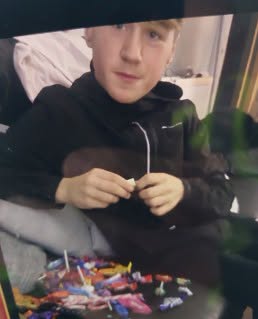
Police are concerned for the welfare of missing person 13 year old Thomas Hutton. He was last seen at 8.30pm on Monday 12th October in the Drylaw area.
He is known to frequent Ocean Terminal. He is described as white, 5ft4, slim with blonde hair, missing a front tooth and believed to be wearing a light grey Berghaus jacket, grey joggers, black and white On Cloud trainers and a dark blue Montrex hat.
If you have seen Thomas or know of his whereabouts, please contact Police Scotland on 101 and quote Incident 3329 of 14th October.
A drop-in day of hands-on fun activities at the Wee Museum of Memory will gather Leith’s stories, priorities and big ideas for the town’s UK Town of Culture bid
Leith residents are being invited to help shape the town’s bid to be UK Town of Culture 2028 at The Leith Imaginarium, a (free) drop-in public event at the Wee Museum of Memory, Ocean Terminal, on Sunday 25 October from 12 – 4pm.
Leith is one of 15 places shortlisted from nearly 400 applications for the new national competition, run by the Department for Culture, Media and Sport, which will name the UK’s first Town of Culture. In 2028 Leith also marks 900 years since its first written record.
Leith’s waterfront and working docks. In 2028, Leith will mark 900 years since its first written record as the community bids to become the UK’s first Town of Culture.
The bid team is developing its plans now, and the Leith Imaginarium is a chance for the people who know Leith best to help decide what goes into them.
Visitors of any age – from 3months to 103 – can bring their stories, their priorities and their big ideas for Leith in 2028 and what comes next, through hands-on activities including a chance to be Mayor of Leith for a moment, sofa conversations about Leith’s past and future, and a giant illustrated interactive map of Leith to mark places that need a bit of care as well as hidden gems and favourite spots.
The ideas gathered will help inform the final bid, which is being built from the ground up by Leith residents in the newly formed Leith Culture Partnership, with the backing of more than 80 local and national organisations and public figures.
Leith Theatre hosts an Edinburgh International Festival performance. Cultural venues, artists and community organisations from across Leith are helping shape the town’s bid to become the UK’s first Town of Culture in 2028.
Susie Gray and Jenny Mungall,co-ordinators of Leith’s bid for UK Town of Culturesaid:“This isn’t about bringing ‘culture’ to Leith. It’s about celebrating what’s already here, backing the creativity and communities that make this place special, and giving Leithers a real say in what comes next.
“Whatever the result, 2028 will be a special year as Leith celebrates 900 years and looks forward to the future.
“The ideas and relationships coming out of the process of this competition belong to this place, and we want to keep building on them to preserve what makes Leith so distinctive and celebrate living in such a brilliant place.”
For anyone who can’t make it there are other ways in which to find out more and have a say in Leith’s plans for 2028.
The team are hosting drop-in sessions at Printworks Cafe on Constitution Street on Friday 16 October from 9 to 11am; Leith Library on Monday 19 October 6.30pm to 8pm and other locations to be announced.
Follow @Leith2028 on Instagram for the latest news.
Posters and postcards have also appeared across Leith inviting people to have their say and linking to a survey which can be found here.
The team of Leith residents behind the bid has formalised as Leith Culture Partnership, chaired by born and bred Leither, and Executive Director and Co-Chief Executive of National Theatre of Scotland Liam Sinclair.
On 21 October, we’ll be opening a call for cultural and creative organisations based in Scotland to submit Expressions of Interest in Multi-Year Funding, with a deadline of 18 November
This call for Expressions of Interest is an information gathering exercise, to provide us with insight on the likely demand for future Multi-Year Funding –
PLEASE NOTE: Submitting an Expression of Interest will not have any bearing on an organisation’s eligibility to apply for Multi-Year Funding when the formal application process opens.
DETAILS
We would like to provide advance notice to cultural and creative organisations based in Scotland, of our intention to seek Expressions of Interest for Multi-Year Funding from April 2028.
Timeline
The call for Expressions of Interest will open at 11am on Wednesday 21 October 2026, and close at 5pm on Wednesday 18 November 2026, and will be accessible through the Creative Scotland website.
The full application process for new applicants will open in early 2027, with the next cohort of Multi-Year Funded Organisations in place from April 2028.
Purpose
This call for Expressions of Interest is an information gathering exercise, to provide us with insight on the likely demand for future Multi-Year Funding, in terms of both the number of organisations seeking this type of funding support, and the likely financial ask.
While providing invaluable information on the future potential for the Multi-Year Funding Programme to support culture and creativity in Scotland, this will also help us shape the detail of the formal application process.
Expressions of Interest will not be assessed, and no decisions will be made regarding individual organisations at this stage. Submitting an Expression of Interest will not have any bearing on an organisation’s eligibility to apply for Multi-Year Funding when the formal application process opens.
Information required
Expressions of Interest will be invited from organisations currently in receipt of Multi-Year Funding along with those interested in joining the programme from 2028.
A short form will be available via our website where organisations will be asked to provide summary information on their area of practice and an indication of the level of annual funding they anticipate requiring, on an annual basis, from April 2028.
Find out more
Any questions on the Expression of Interest, the Multi-Year Funding Programme, or any other aspect of Creative Scotland’s funding, should be directed to our Enquiries Service.
Background
Information and guidance on the Expression of Interest in Multi-Year Funding from April 2028 will be made available on our website from 11am on 21 October.
Feedback gathered during the original development of Multi-Year Funding (MYF) called for a move away from a single, large-scale application round towards a rolling, continuous programme that reduces the administrative burden on applicants and the wider sector.
This would include the potential for organisations already in receipt of MYF, subject to review, to be offered continued funding through this programme beyond the original three-year agreement.
Alongside this, organisations not currently in receipt of MYF would have the opportunity to join the programme.
Creative Scotland is currently developing the details of this next stage of the programme, and the Expression of Interest response will help with that development.
Ian Murray and Daniel Johnson call for more power and funding
Ian Murray and Daniel Johnson, the MP for Edinburgh South and MSP for Edinburgh Southern, have called for increased power and funding for Edinburgh, as new analysis shows the city has been short-changed by £147 million since 2014.
New analysis from the House of Commons Library found that if local government funding in Scotland had kept pace with the Scottish block grant, Scottish Councils would be £2bn better off.
Scottish Labour is arguing for more power and funding to be pushed out of Holyrood and into local communities.
Commenting, Ian Murray said:“Edinburgh is Scotland’s worst-funded local authority, receiving less funding per resident than every other council in the country. Everyone knows a road with a pothole that needs fixed, a school that needs more support for children with additional support needs, or a high street that needs local investment.
“Instead of empowering local communities and opening up politics and decision making to communities here, the SNP has chosen to hoard power and money in Holyrood and deprive areas of funding which would have made a real difference to the lives of local people.”
Daniel Johnson MSP said:“Too much money and control is centralised in Scotland, we need to reverse that and push funding and powers out of Holyrood and into local communities.”
Union Theatre presents Pride and Prejudice by Kate Hamilladapted from the novel by Jane Austen
Tue 17 – Sat 28 November 2026Norton Park, Edinburgh
Union Theatre Company concludes its inaugural season with Pride and Prejudice by Kate Hamill, adapted from the novel by Jane Austen. The joyful, big-hearted adaptation will enjoy a two week run at Norton Park, selected dates Tuesday 17 – Saturday 28 November 2026.
Early 19th century. Regency England. The Bennet family live on Longbourn estate in Hertfordshire. The estate must pass to a male heir, of which the Bennets have none. In order to save the family from destitution upon the death of Mr Bennet, at least one daughter must make an advantageous match.
Despite this grim outlook, the clever and outspoken second daughter, Lizzy, is determined to never marry. But her plans for independent spinsterhood are put to the test when the wealthy, mildly handsome, vaguely amusing and entirely irritating Mr. Darcy arrives in Hertfordshire with his best friend, Mr. Bingley.
Bold, surprising and boisterous, Kate Hamill’s Pride and Prejudice brings the satire and playfulness of Austen’s novel to the fore, creating a timely new take on a classic love story. Originally premiered at the Primary Stages and Hudson Valley Shakespeare Festival in New York in summer 2017, the play went on to critical acclaim and was selected by the Wall Street Journal and Huffington Post as one of the best theatre pieces of the year.
Kate Hamill is an actor/playwright, and one of the most produced playwrights in America for the last nine years (2017 – 2026). Hamill has adapted a number of Austen’s and other classic works, including Sense and Sensibility (2014), Little Women (2018), Dracula (a feminist revenge fantasy) (2020), and The Scarlet Letter (2024).
Her work has been produced in all 50 US states and internationally, including Australia, Canada, Indonesia, Ireland, Japan, Kenya, Norway and the UK.
Union Theatre’s production of Pride and Prejudice will be directed by Hannah Fitzpatrick, and performed for selected dates Tuesday 17 – Saturday 28 November at Norton Park in Edinburgh’s Leith neighbourhood.
For further information about Union Theatre Company, its production of Pride and Prejudice and to book tickets visit www.uniontheatre.co.uk.
Pride and Prejudice by Kate Hamill Adapted from the novel by Jane Austin
Children as young as three are learning Mandarin and Spanish through outdoor play at an Edinburgh nursery and junior school which is challenging the idea that learning has to happen sitting behind a desk.
At The Forest at Merchiston, Mandarin lessons can involve games of hide-and-seek, with children learning to count and call out in the language as they play outdoors.
The co-educational nursery and junior school, which opened at Merchiston Castle School in 2024 for children aged three to 10, has introduced weekly Mandarin and Spanish lessons for every child from nursery upwards.
Mandarin, which has more native speakers than any other language in the world, and Spanish were chosen for their global reach, introducing children to languages from an early age and preparing them for an increasingly international world.
Families will have the chance to experience the approach for themselves at The Forest’s Open Morning on Saturday 31 October, when children will be able to try Mandarin through play alongside exploring the school and its outdoor learning environment.
The language programme forms part of a wider approach at The Forest, which combines a strong academic curriculum with extensive outdoor learning. Mud play, hikes, building, growing and exploring the natural world all become opportunities to learn, with the school’s extensive grounds used as an extension of the classroom.
Davina Bowers, Head of The Forest, said:“Children at this age are like sponges. It is the best time to start a new language because they absorb it naturally and don’t yet have that sense of something sounding different or unfamiliar.
“Mandarin and Spanish are two of the most widely spoken languages in the world, and introducing them from nursery is about preparing children for an increasingly international future.
“Everything we do is through play, movement and experience, so during Mandarin that can mean learning numbers and words while playing hide-and-seek outside.
“We are still absolutely a school and have high academic expectations for every child. What is different is how we deliver that education. Children learn incredibly well when they are active, engaged and interested in what they’re doing.”
The Forest is also planning immersive language and culture days across its junior school, using activities including mock restaurants, food and national dress to bring languages to life.
Ms Bowers added: “There is huge demand from parents for outdoor nursery provision, but too often that approach stops when a child starts school. We couldn’t see why something that works so well for young children should suddenly disappear.
“Our children still learn the curriculum, but the outdoors becomes another classroom. The aim is that they develop academically while also building confidence, independence and the ability to solve problems for themselves.”
Families can meet the team, explore The Forest and take part in Mandarin and outdoor activities at the Open Morning on Saturday 31 October.
The Institute for Health Equity’s new report A Fairer, Healthier Scotland: The Collaboration for Health Equity reinforces that health inequalities are largely driven by the conditions of daily life that shape health, including income, housing, work and education, rather than access to health services alone.
The Collaboration for Health Equity in Scotland (CHES) is a partnership between Public Health Scotland, University College London’s Institute of Health Equity (directed by Professor Sir Michael Marmot) and three collaborating areas: Aberdeen City, North Ayrshire and South Lanarkshire.
Each area utilised local evidence to develop their own priorities to reduce inequalities, with a shared emphasis on prevention and working in partnership.
COSLA’s Spokesperson for Health and Social Care Cllr Paul Kelly commented: “Through our unique position close to communities, Local Government already has a strong understanding of the wider social, economic and environment determinants which act as the building blocks of health.
“This report reaffirms that empowering local authorities to develop place-based solutions makes a positive difference to people, families and communities, preventing issues before they arise and reducing inequalities in outcomes.
“As a joint sponsor of Public Health Scotland, COSLA will explore how we can build on this successful approach, creating the conditions for more people to live longer, healthier and fulfilling lives.”
A Fairer, Healthier Scotland: The Collaboration for Health Equity is an independent assessment authored by University College London’s Institute of Health Equity outlining progress and opportunities arising from the Collaboration for Health Equity in Scotland.
The first phase of the programme ran from 2024 to 2026 and aimed to better understand barriers to reducing health inequalities and to test practical approaches for improving health equity.
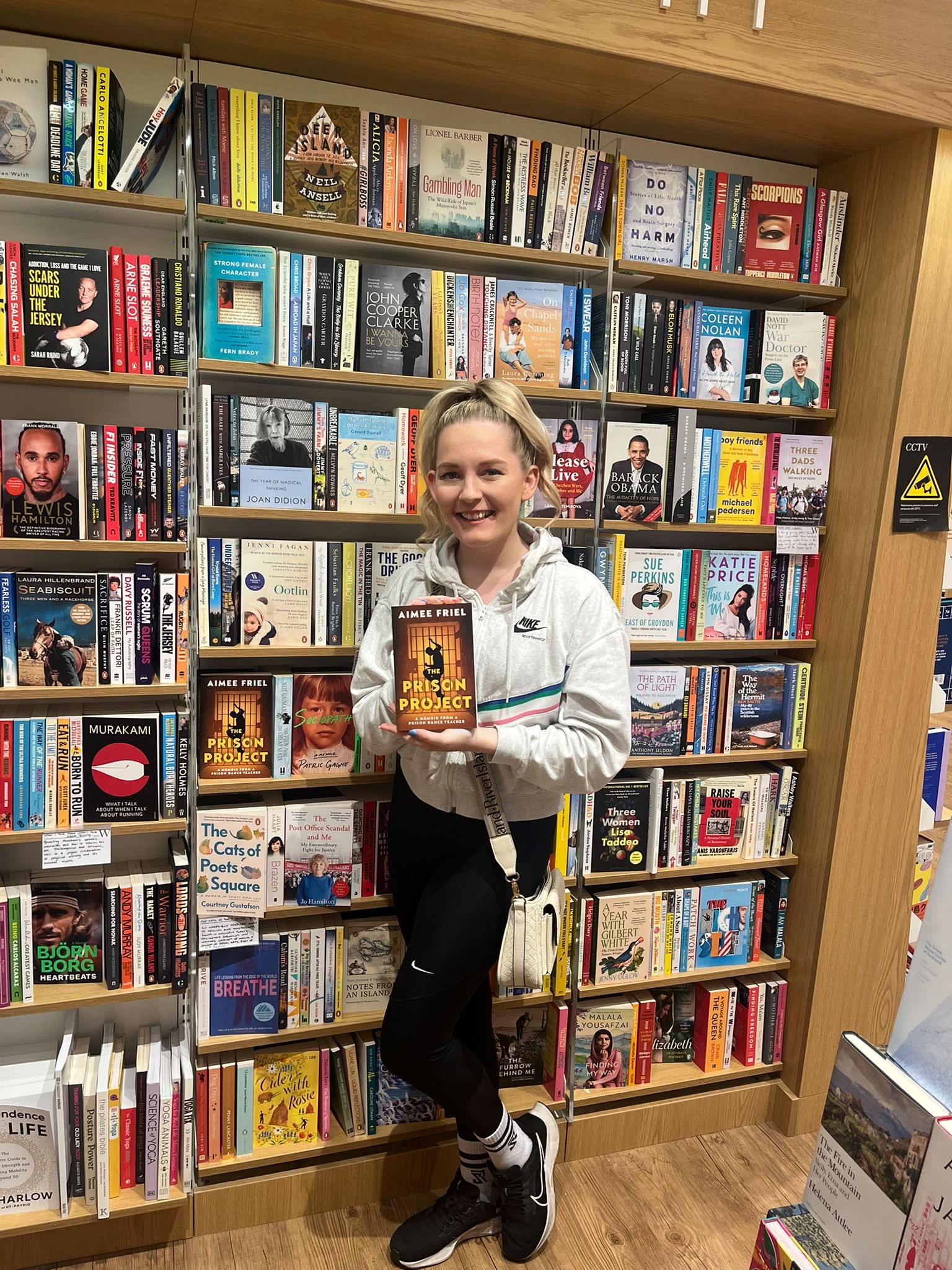
Of the many thousands of people that have walked through the doors of Edinburgh College, few can claim to have a more interesting story than that of Aimee Friel.
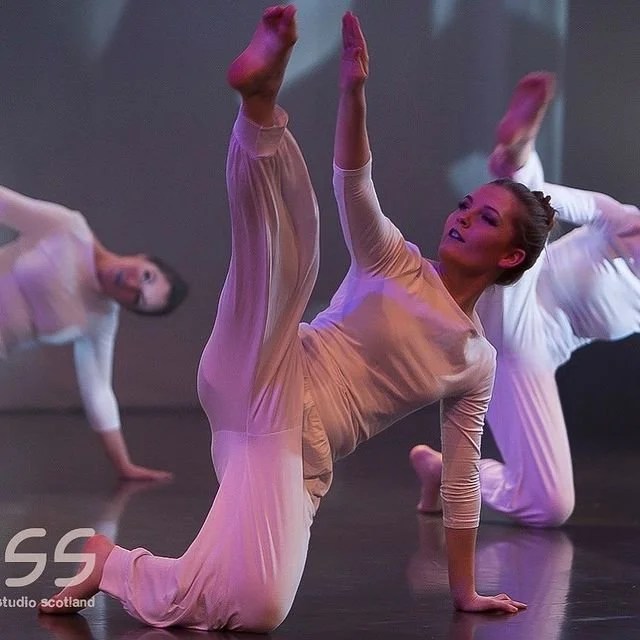
Now a published author and primary school teacher, the 30-year-old Kirkintilloch native, who studied Dance & Drama BA Hons (Dance), has enjoyed a unique journey since her graduation, including a period teaching dance classes to male prisoners, helping to break down misconceptions about the artform, and giving them a platform to express themselves.
To find out a bit more about how Aimee’s time at the College influenced her, and how she still reflects on some of the lessons she learned there today, she sat down for a chat:
Hi Aimee, thanks very much for joining us. To start off, could you give me a bit of an overview of what you’ve been up to since you graduated from the College?
“After I completed the BA Dance course, I managed to find work with several different dance companies. Teaching dance in community settings, in schools, in schools for children and adults with additional support needs, and in prison. I did that for around 6 years, before going back to do a post-grad in primary teaching. And in the middle of all that, that was when I got my book published about my experiences teaching in prison!”
It’s obviously an interesting hook, and something people probably don’t expect, teaching men dance in prison. What was the reality of it like?
“It’s maybe not somewhere you’d expect to wind up if you’re on a dance course, but for me I’ve always been really passionate about using the arts to help people. Dance can improve social skills, mental health, physical health, so I wanted to use that to help those that needed it most, people that had experienced trauma, or adverse childhood upbringings, or mental health issues.
“It just so happened that the dance company I was working for at the time was putting on classes in the prison, so to start with I went along and shadowed, watched the other teachers doing their thing, but nothing really prepares you until you go in and do it yourself.
“I did a teaching skills unit at Edinburgh College which was really helpful and impactful, and that alongside my previous experience meant I was in a good place to go in and give it a shot.”
What sort of impact did the classes have on the prisoners you worked with, and what was it like for you as the teacher in that environment?
“I really loved it. I can’t speak for everyone, but I think some people that have experienced trauma, or had a difficult time growing up, come from a tough background, can struggle to be present in the moment, and dance really encourages that. They were focusing on their breath, certain movements, muscle groups.
There’s also the social side of it, they worked on lots of transferrable communicative skills, it might be that they’re doing a lift, or a counter-balance, and that requires you to really be communicating properly with whoever you’re dancing with.
“It was really about getting to know them as people, seeing them every week, it wasn’t just about the dance. It was letting them know it was a safe space, that we saw them as individuals, that they had talent.
There were the usual biases that we had to break down, men thinking dance is effeminate etc, but then they get involved and see how much strength and coordination it requires, and how athletic it is. It also releases all sorts of helpful endorphins, but I could talk about that for ages!”
And when did you decide it was time to write down your experiences?
“It was during Covid, I’d been doing it for a few years at that point, and I was no longer an apprentice so I was sort of taking more ownership of the class. I was teaching it as usual and I just realised there were so many big personalities, so much humour, so much laughter, as well as the more heartfelt moments where someone would open up about a difficult experience, and I knew I didn’t want to forget any of it, so I started writing it down. It started as a journal purely for myself, a bit of a hobby, then I thought I had some good material there.
“I let my wee granny read it, and she’s a really harsh critic so she would have told me if it was rotten, but she thought it was really strong, and she encouraged me to try and get it published and gave me a lot of confidence. So, I sent it out to lots of publishers and agents, and it took a little while, but eventually it got picked up! Now you can find The Prison Project in places like Waterstones and Amazon, so it’s been pretty amazing.”
Do you still find yourself reflecting on your time at College even now?
“It’s quite funny actually, I remember when I was doing my dissertation, you could choose between a written piece, or choreography, and I chose the written piece (because I love writing!). My lecturer, Jo, she was supporting us at the time, and she really encouraged me to look into writing about the use of dance as a tool in primary schools.
“After I graduated, I wound up working with a dance company that was involved in a project which saw us collaborating with teachers to use dance to help teach kids the curriculum. We taught loads of things, maths, speech, technology, all through practical dance lessons, and I would always draw on the things Jo helped me with, and now working as a primary school teacher it all feels very full circle.”
What would you say to someone who’s considering coming to Edinburgh College to study dance?
“I’d absolutely recommend it. Having that degree opens so many doors, and will allow you to do so many things. You might want to go on and do another course, which is what I ultimately did, but having been to Edinburgh College meant I only had to do a one-year post-grad, rather than a full four-year degree.
“If you fancy a career change, it gives you so many options.”