The ‘Bendy Tree’ in Newcastle, Northern Ireland, has won UK Tree of the Year 2026.
This “astonishing and bizarre” wych elm in County Down has been crowned winner of the popular, annual competition run by the Woodland Trust to find the nation’s favourite tree.
With more than 30% of public votes, the Bendy Tree has become the first ever tree from Northern Ireland to win UK Tree of the Year.
Since voting opened in July, tens of thousands of people picked their favourites from a shortlist of 10 tenacious trees, chosen for being impressive, beautiful and sometimes baffling examples of how nature can survive adversity, as part of this year’s theme: ‘Against the odds.’
The extreme seaside gusts that the Bendy Tree has survived are glaringly apparent from its near-horizontal trunk. Its unexpected rainbow shape casts welcome shade for locals resting on the town centre bench located beneath its leafy branches.
Strong coastal winds over many decades have forced the Bendy Tree into its unusual shape.
A much-loved feature of Newcastle’s promenade, the Bendy Tree has also resisted Dutch elm disease (Ophiostoma novo-ulmi), a fungus which, during its second UK outbreak, destroyed most of the UK’s 30 million elms, after it was accidentally imported from North America in the 1960s.
Now over 150 years old, the Bendy Tree was planted as part of a row of wych elms along the town’s original promenade around the mid-19th century to shelter the main street from sea winds. Many of those trees were felled during redevelopments in the 1980s, and the Bendy Tree is now the last one standing.
May Chemais, Ancient Tree Inventory lead for the Woodland Trust, said: “When you look at this astonishing and bizarre tree, there’s no doubt about what it has endured.
“The Bendy Tree has been blasted by extreme winds over and over again, for well over a century. But it has continued to exist and remain rooted, adapting to its surroundings and flourishing into this unusual shape that is providing shade and joy to its community.
“We’ve all been through changes and hardships that have shaped who we are: I think that’s why the Bendy Tree has struck a chord with people.
“Older trees like this one are providing our communities with so much – from shade, wellbeing and health benefits, to stories, culture and pride of place.
From football pitches to future forests: 13 projects backed by Urban Forestry Challenge Fund
In just two years, the Urban Forestry Challenge Fund has awarded £1,360,000 across 25 projects, bringing the benefits of trees to communities from Aberdeen to Dumfries
The latest round of funding will see £740,000 invested in 13 projects through the Urban Forestry Programme’s Challenge Fund. The programme is a partnership initiative between Future Woodlands Scotland and JERA Nex bp.
Recipients include Edinburgh and Lothians Greenspace Trust (ELGT), for their Urban Street Trees Canopy Custodians proramme, and Edible Estates, for their South West Edinburgh Urban Woodlands project.
The fund supports projects that create, enhance and expand urban woodlands, helping to make Scotland’s towns and cities greener, healthier and more resilient places to live. The 2026 awards span communities across the country, backing initiatives that aim to improve biodiversity, strengthen climate change resilience and bring more people into contact with nature in the places they live, work and play.
Since the first projects were funded in 2025, £1,360,000 has been invested, over 6,500 trees have been planted, engaging more than 320 volunteers, and four new urban forestry jobs have been created.
Among the projects awarded funding this year is FEL Scotland’s ‘Trees for Goals’, which will receive £94,500 to support community sports clubs to plant and care for trees in and around their grounds.
The simple but powerful scheme began as a pilot with grassroots football team Alloa Saints where a tree was planted for every goal scored throughout the season. Enough goals were scored to plant around 2,000 trees, helping connect sport with practical environmental action. The programme has grown to include 16 clubs across Clackmannanshire, Falkirk and Stirling.
Clara Walker, Executive Director at FEL Scotland, said: “This funding enables us to plant trees where they’ll make the biggest difference, strengthening communities, improving local environments and inspiring climate action through the power of sport. By working with a range of local partners, we can grow greener neighbourhoods and ensure the impact makes a difference now and lasts well into the future.”
Trees for Goals focuses on communities with low tree cover and poor tree equity, helping to bring the benefits of urban woodland to areas where it is needed most. As well as increasing tree cover, the project is designed to leave a legacy by embedding tree care into regular club activity, ensuring that young people and volunteers continue to nurture the spaces they have helped create.
Trees for Goals is one of a wide range of projects supported through the 2026 Urban Forestry Fund, reflecting the diversity of community-led urban greening taking place across Scotland.
Other successful projects in this year’s funding round include Dumfries LIFT’s NANA’s Garden, which was awarded £18,000 to plant native and fruit trees in Lochside while helping local children and families learn more about biodiversity and climate change resilience.
In Dundee, Maxwell Community Centre and Garden’s Dundee Food Forests: The Big Grow is to receive £67,600 to work with community groups and schools to create 25 biodiverse food forests in areas with the greatest tree inequity.
Meanwhile in Aberdeen, Social Juice CIC’s Silver City Trees will receive £20,000 to plant 200 fruit and native trees in priority neighbourhoods, combining greener spaces with practical community skills development.
Des Hackett, Urban Forestry Programme Manager at Future Woodlands Scotland said: “The second year of projects to receive Urban Forestry Challenge Funding demonstrates the growing ambition and creativity of organisations across Scotland to make our urban areas greener and healthier.
“From community sports grounds to neighbourhood woodlands, the 13 projects show how local action can deliver long-term benefits for climate resilience, biodiversity and wellbeing.”
A total of 29 applications were submitted this year, across two competitive grant categories: projects ranging from £2,000 to £20,000, and those ranging from £20,000 to £100,000.
Projects were chosen based on the contribution they could make to the Urban Forestry goal of helping towns and cities across Scotland achieve the 3:30:300 rule: everyone should see three trees from their home; every neighbourhood should have 30% tree canopy and quality green space within 300 metres.
JERA Nex bp’s Thomas Hudson, Morven Project Director, added: “These projects demonstrate the power of community-led action to create lasting environmental change.
“Through the Urban Forestry Challenge Fund, we are supporting initiatives that not only increase tree cover, but also bring people together, build skills and create greener, more resilient neighbourhoods across Scotland.”
Applications for both categories of Urban Forestry Challenge Fund grants will reopen in Autumn. More information on the Urban Forestry programme is available at www.futurewoodlands.org.uk
2026 Urban Forestry Challenge Fund awards
SMALL GRANTS – up to £20,000
LIFT Dumfries NANA’s Garden: Growing Trees, Skills and Community in Lochside A community-led greening project in Lochside that will plant native and fruit trees while engaging local children and families in biodiversity, climate resilience and long-term tree care.
CLEAR, Buckhaven and Methil, Fife
Trees, Bees and Fruit This project will plant fruit trees in gardens, create community orchards and establish new native woodland, alongside resident-led learning in pruning, grafting and tree care.
Kirkton Community Centre, Dundee
Keswick Terrace Greenspace Development New trees and shrubs will transform local greenspace into a more welcoming, wildlife-friendly area while helping absorb rainfall and reduce local flood risk.
Social Juice CIC, Aberdeen Silver City Trees Working in priority neighbourhoods, this project will plant 200 fruit and native trees while helping communities build skills and greener local spaces.
LARGE GRANTS – £20,000-£100,000
Edinburgh and Lothians Greenspace Trust, Edinburgh Urban Street Trees Canopy Custodians A community-led street tree programme that will replace trees in vacant pits and grass verges in low tree equity areas, creating a model that can be replicated city-wide.
West Lothian Council, West Lothian Trees and Woodlands in the West Focused on former mining communities, this project will identify new planting opportunities and work with residents and schools to increase canopy cover in tree-depleted neighbourhoods.
FEL Scotland, Forth Climate Forest Area Trees for Goals A practical project supporting community sports clubs to plant and care for trees around their grounds, using football as an accessible route into climate action and biodiversity.
Natural Connections, Tranent, East Lothian Tranent Tree Town A three-year community planting project that will help local people grow, plant and care for trees in one of East Lothian’s lowest tree equity areas.
Maxwell Community Centre and Garden, Dundee Dundee Food Forests: The Big Grow! Working with community groups, schools and gardens, this project will create 25 biodiverse food forests across Dundee in areas of greatest tree inequity.
The Orchard Project – Glasgow and Inverclyde Orchard Commons: Planting and Stewardship for Resilient Edible Treescapes A community-led orchard planting programme that will increase canopy cover in low-canopy neighbourhoods while building long-term local stewardship and skills.
South Lanarkshire Council – South Lanarkshire Improving Tree Equity in South Lanarkshire’s Lowest-Scoring Urban Areas Using Community Payback teams, the council will plant 450 standard trees in low-scoring urban areas to deliver lasting environmental and social benefits.
Edible Estates, South West Edinburgh South West Edinburgh Urban Woodlands A community-led woodland project across four council estates that combines tree planting, training and local partnerships to create healthier, climate-resilient neighbourhoods.
Details of one further project will be confirmed once contractual arrangements are complete.
If you’re curious to learn more about Lauriston Agroecology Farm – and especially about why we planted so many trees – come along to our farm tour on Sunday 1st February.
Farming with trees (‘agroforestry’) was once commonplace, and nearly got swept away by large scale industrial agriculture and monocrop growing. We will share how we are reviving it here at Lauriston Farm, with all the hope and excitement this brings.
You’ll hear from the folk who look after the trees on the farm – sharing what we’ve done, why we’ve done it, and what we’ve learned so far + then all return to the Community Kitchen for soup, bread and chat from 1pm-2pm.
(If you want to make a day of it, please stay on for the Orchard Wassailing in the afternoon)
Who is This For?
We welcome all curious visitors, including total newcomers with no previous knowledge about farming or trees, as well as farmers and growers and anyone interested in a career or volunteering in this type of work. The tour is aimed at adults or interested young people (the free event in the afternoon is more suited to children).
Accessibility Notes
This is a walking tour across the farm, lasting around 1.5hrs, potentially also suitable for all terrain/off road wheelchairs or mobility scooters, but probably not standard wheelchairs. The ground is rough, and will be wet and muddy in parts. We will be in groups of 15-20 people.
Please contact us if you have any accessibility questions or requests
COMING UP – It’s the fiftieth anniversary of National Tree Week – the UK’s biggest celebration of trees!
National Tree Week (NTW), from November 22 – 30, marks the start of the winter tree planting season. The Tree Council and partners want people all across the country to plant, connect with, celebrate and learn more about our trees and all that they deliver for people, wildlife and our planet.
They brighten our streets, parks and gardens – and are a vital element of our nation’s network of hedgerows.
In a year where emotions around trees ran high following the alarming damage, for example, to the ancient Enfield oak, and where convictions were handed down for the destruction of the Sycamore Gap Tree in a ‘seemingly mindless act of vandalism’ – NTW brings urgent focus, not just to the need to establish more trees, but also to ensure those we already enjoy are sufficiently protected.
With this in mind, the theme for NTW 2025 is ‘A Future Filled with Trees’.
The Tree Council CEO, Sara Lom, said: “We’re delighted to celebrate our 50th National Tree Week, which provides a fantastic opportunity for all of us to come together for the love of trees.
“Trees have faced so many challenges over the past 50 years, from Dutch elto ash dieback, from development pressures to water shortage, but we’ve never needed trees more.
“They provide homes for wildlife, help us cope with our warming climate and make our busy city lives more joyful every day, with their beauty, colour and form.
“They help us – and now we need to help them back – and by getting involved this planting season, you’ll be part of growing a greener, tree-filled future for everyone.”
The Tree Council’s official NTW webpage – www.nationaltreeweek.org.uk – has details of planting opportunities, events, talks, tours and more, taking place throughout the UK during NTW. We’ve developed an easy-to-use interactive map to help people search their local area. Simply visit the page and search the map!
For those unable to join in tree planting, download the pack of Tree Party materials to help celebrate the trees in your life.
The Tree Council is also sharing printed materials with more than 300 libraries across England, Scotland and Wales, to create colourful and informative tree-themed displays in these important and well-visited community hubs.
The packs contain activity booklets, posters, tree-themed reading lists, and even special NTW bookmarks!
On Wednesday November 26, Jon Stokes, The Tree Council’s Director of Trees, Science & Research, and the man behind WILD Guides’ 2025 publication, Trees of Britain and Ireland, will be joined by Paul Wood, the author of Tree Hunting; and Harriet Rix, the author of The Genius of Trees, for a conversation about Trees in Unexpected Places, hosted by Tree Council CEO, Sara Lom.
The final event of the week, on Thursday November 27, will see Riverford founder, Guy Singh-Watson and Soil Association Chief Executive, Helen Browning OBE share their experience of developing Trees on Farms with chair, Jon Stokes, and Ben Norwood, who was co-lead on the Trees on Farms research pilot – part of The Tree Council’s Trees Outside Woodland project.
National Tree Week 2025 runs from November 22 – 30. To find out more about how to get involved, find your nearest NTW themed library or access resources, or to book events, please visit www.nationaltreeweek.org.uk
Barratt Developments East Scotland has partnered with Edinburgh Zoo to recycle and donate felled trees from its upcoming Livingston development.
Barratt Developments East Scotland – which includes Barratt Homes and David Wilson Homes – has donated 21 felled trees from its recently acquired Houston Road site, Woodland Gait, which will launch later this year.
The trees were removed due to them being in a poor condition, creating public safety concerns, or because they were low quality with low biodiversity benefits.
Following the tree removals, Barratt Developments will plant approximately 152 new trees across the site to support local wildlife.
In line with its approved landscape strategy, the new tree species include Rowan and Hazel, as well as other native species.
A robust landscape strategy has been approved for the Houston Road development, including native planting and various biodiverse elements such as the installation of hedgehog highways, along with bird and bat boxes.
Following the donation, Edinburgh Zoo, which is operated by the Royal Zoological Society of Scotland (RZSS), will repurpose the trees, with a significant portion being distributed to the Zoo’s resident giraffes, which consume an average of 75kg of plant matter every day.
Larger branches and trunks will also be used as climbing structures and apparatus within the ape and giant panda enclosures, enriching the animals’ habitat experiences. Meanwhile, designated portions of the trees, such as trunk bases and off-cuts, will undergo natural decomposition processes, attracting insects which are ideal for the dietary needs of Giant Anteaters.
The distribution of the repurposed trees across the diverse animal habitats within the zoo will help to ensure that there will be minimal waste, building on both Barratt Developments’ and Edinburgh Zoo’s shared commitment to sustainable practices and lowering carbon footprints.
Jason Watt, Technical Director at Barratt Developments East Scotland, said: “We’re proud to be supporting Edinburgh Zoo with the donation of trees from our new Livingston development on Houston Road.
“Not only does this partnership support our sustainability commitments, it will also be beneficial to the animals and their enclosures.
“Looking forward, we hope to continue to support Edinburgh Zoo’s mission of fostering an appreciation for wildlife and habitat conservation.”
Robert Harden, Head Gardener at Edinburgh Zoo, said: “We were delighted to accept the offer of trees and branches from Barratt’s new site in Livingston.
“We have since used the material as a source of food, branching and perching for the animals, and what was left after chipping has been used as a mulch for feeding the willows and growing on site for the giraffes.
“We pride ourselves with not only trying to educate and preserve endangered species of animals but also to try and work in tandem with the landscape environment itself. That’s why every bit of material that we received from Barratt has and will be used to benefit the animals and the growing environment.”
Garden Centre to host themed children’s workshop in May
Dobbies, the UK’s leading garden centre, is inviting children aged four to 10 to a free workshop in its Edinburgh store in May to learn more about trees and how to protect them.
‘Love Your Trees’ is the theme of next month’s Little Seedlings Club, taking place on Sunday 5 May, ahead of Love Your Tree Day on 16 May.
Dobbies’ Little Seedlings Club provides interactive learning activities that allow children in Edinburgh to understand, explore, and connect with plants, wildlife and the environment around them.
During May’s workshop, children will learn about the most common trees in the UK, including the Alder, Beech and English Oak, and discover the value of trees and learn how to nurture and protect them.
They will delve into the anatomy of trees, exploring their different parts and understanding their fascinating lifecycle, from seedling to plant, as well as the difference between deciduous and evergreen varieties and how they change through the seasons. To add to the fun, there will be a special tree-themed 3D craft activity.
Dobbies’ colleague Liz Clare-Savage, who is involved in the delivery of the Little Seedlings Club, is looking forward to welcoming children along to May’s workshop. She said: “Our Little Seedlings Club is very popular with kids in Edinburgh, and we’re thrilled to introduce them to the wonders of trees.
“Learning about and encouraging the planting of new trees is a fantastic way to give back to nature and support our wildlife. Little Seedlings Club is not just about learning, it’s about fostering a lifelong connection with nature and having a great time.”
For more information about Dobbies’ Little Seedlings Club May session or to make a booking, visit dobbies.com/events.
A final operational plan for Edinburgh’s George Street and First New Town (GNT) project was approved yesterday (Thursday, 15 June), along with updates to the proposed design.
A key change is the introduction of trees on George Street, which has been agreed following discussions with Edinburgh World Heritage, Historic Environment Scotland and the Cockburn Association and other stakeholders.
This recognises trees’ contribution to the city’s Net Zero 2030 goals as well as their capacity to enhance the street’s biodiversity value, helping to combat urban heat island effects and supporting our One Million Tree City pledge. Following the approval of proposals, the Council will continue to work closely with partners to determine the appropriate position, number and type of trees to be added.
Transport and Environment Committee members approved updates to the principles of the proposed GNT Operational Plan which include plans for the creation of a pedestrian and cycling zone where loading, servicing and licensed taxi access on George Street will only be permitted during evening and morning hours.
At this stage, automated bollards will provide additional public safety measures and enforce the pedestrian cycling zone restrictions. Blue badge holders will still be able to park in disabled bays on George Street and the surrounding streets.
The George Street and First New Town project is being supported by funding from the Scottish Government through Sustrans Scotland’s Places for Everyone programme and delivered by City of Edinburgh Council.
Councillor Scott Arthur, Transport and Environment Convener, said:“In updating designs and operational plans for the GNT project, the project team has worked closely with the community, key stakeholders and elected members to develop proposals which will both enhance the space for all those travelling through and spending time in the area but also retain the First New Town’s unique historic value.
“I know the potential inclusion of trees on George Street will be welcomed by many, now their inclusion has been approved more work will be done to ensure the position and type of trees is sympathetic to the street’s iconic character.
“We have also listened carefully to the Edinburgh Access Panel and have agreed blue badge holders should have full access to up to 27 blue badge spaces in the George Street and First New Town area.
“This latest update marks an exciting milestone in the GNT project and it will allow us to move forward with the final stages of development before construction begins.”
Minister for Active Travel, Patrick Harvie, said:“I welcome the latest approved designs for the George Street and First New Town project. With over £13 million being invested by the Scottish Government, the introduction of more trees alongside improved walking, wheeling and cycling infrastructure will create a more pleasant environment for people to enjoy.
“This work, supported by Sustrans Scotland, is part of our record funding for active travel in 2023/24 and we remain committed to investing at least £320 million or 10% of the transport budget for active travel by 2024/25.”
Royal Institute of British Architects (RIBA) Stage 3 developed design principles were approved in November 2022, though these were conditional upon further discussions around factors such as the potential inclusion of trees and taxi access.
Amongst the ‘core elements’ of the design are significantly widened pavements, the creation of a European style cycling street and the removal of parking bays (while retaining blue badge parking). The First New Town operation plan will support the area’s transformation and, in addition to setting out taxi access and enforcement, the plan maintains bus services in the wider First New Town (Hanover, Frederick and North/South St David Street) and criteria for exempt vehicles.
The next stage for the project will be to progress the promotion of all the necessary statutory processes for George Street, which provide the powers to enable the construction of the project, scheduled for 2025. Further engagement and analysis will be carried out on planned layouts for Hanover, Frederick and Castle Street during the next design stage in the process, RIBA Stage 4.
The report was approved with a series of addendums and amendments from groups. These include agreements to consider of the project’s impact on the wider Active Travel Investment Programme, to continue dialogue on licensed taxi access for people with disabilities and to explore how the plan can deliver priority for pedestrians, wheelers and cyclists while also ensuring accessibility for disabled people.
Simon Strain, Head of Places for Everyone Programme at Sustrans, said: “We are pleased to see the final operational plan for George Street and First New Town approved by members of the Transport and Environment Committee, along with updates to the proposed design.
“The funding awarded for this project will help make everyday walking, wheeling, and cycling journeys a reality, as well as improving biodiversity and creating a new space for people to spend time and relax in Edinburgh city centre.”
Stuart Hay, Director, Living Streets Scotland said:“Edinburgh is currently one of the least pedestrianised historic cities in Northern Europe, so we are delighted to see progress in the plans for a place that prioritises people, not cars. George Street has the potential to become the heart of the city, creating a much-needed public space of high quality.
Over 50 trees have been planted in Princes Street Gardens following donations from FLY Festival and the Edinburgh Million Tree City Project.
Organisers of FLY Open Air – which was last held in West Princes Street Gardens in 2021 – donated £5,000 towards trees for the community and this has been match-funded by the Million Tree City Project.
In 2021, Edinburgh officially launched its ambitious target to become a Million Tree City by 2030 as part of its commitment to be net zero by the end of the decade.
The Edinburgh Million Tree Forum is made up of representatives from relevant Council services, the Edinburgh and Lothians Greenspace Trust, the Woodland Trust and partners who are all working together on an updated vision for trees in Edinburgh and to find ways of planting more trees, more quickly.
City of Edinburgh Council Culture and Communities Convener Cllr Val Walker, joined Sam Joss, FLY Festival Director, to plant the final of 51 trees donated to the Gardens.
Culture and Communities Convener, Cllr Val Walker, said: “We’re very proud that Edinburgh is already one of the UK’s greenest cities, with more trees than people and more green space and green flag parks than any other place in Scotland for people to enjoy. But we want to do even better, especially as we strive towards our hugely ambitious target of making the city net zero by 2030.
“I’m delighted to join Sam to plant the last of these donated trees. After years of successful events in our gardens it’s a fantastic way for the festival to give back to the community. These trees will be enjoyed for generations to come. It’s impossible to overstate the benefits trees bring to the urban landscape. They help clean our air, reduce the risk of flooding, keep us cool in the summer and warmer in winter while giving the wildlife in our city a home.
“We became the first local authority to sign the tree charter and in doing so we pledged to keep nurturing, planting, celebrating, cherishing and increasing Edinburgh’s trees and through our Million Tree City initiative. It is really important that we look after Edinburgh’s wonderful tree legacy for future generations.”
Sam Joss, Fly Festival Director, said: “We are very proud to call Princes Street Gardens our home so I am thrilled to be able to make this donation with funds raised through our music festival; FLY Open Air.
“We have a fantastic relationship with the council and hope to continue to work in partnership to bring improvements to green spaces in the city and show what a positive impact events can have.”
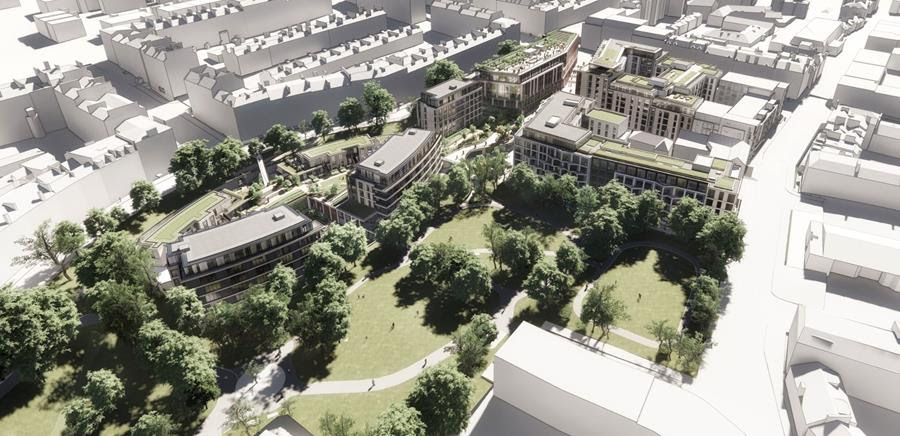
Ediston and Orion Capital Managers are working together to deliver one of the most complex city-centre developments in the UK. New Town Quarter is a £250 million development that has involved extensive local community consultation during the last 18-months.
Planning proposals have involved complex negotiations over major infrastructure matters as well as providing sensitive consideration to environmental concerns given the proximity of the much-loved King George V Park.
Plans include creating 350 new homes as well as office accommodation that will support 700 jobs and add £35 million per annum to the city’s GDP. The construction work alone will generate nearly £27 million of economic development value and support 600 jobs.
The final proposals are expected to go before the City of Edinburgh Council Planning Committee in the near future.
Ross McNulty, Development Director of Ediston, said: “We’ve gone the extra mile to take the local community with us. We’re determined that this major development becomes a positive driver of significant economic activity for Edinburgh city centre.”
Clarification on Trees and Building Heights
We are aware that some of the information currently presented on a Fettes Row and Royal Crescent Association backed-website is inaccurate and we welcome this opportunity to provide clarification.
It is not correct to state that our three planning applications are a threat to many trees being removed, as part of the development. The largest single number of trees being removed is in Eyre Place which is covered by a previous Planning Consent already agreed by the Council.
Some other trees are being removed due to the development, but the information on the website is inaccurate. In Dundas Street, trees are being removed for two important reasons. Firstly, they will not survive the demolition of the existing buildings, and secondly to restore Dundas Street’s original building line.
In King George V Park there will be a small number of trees removed to create a new entrance to link the new route from Dundas Street to the park. The Council has confirmed these trees have a limited lifespan and would need to be removed in due course but we are also providing replacements for these trees within the same area of the park.
Our team has also sought to protect the trees at Fettes Row and Royal Crescent as much as possible to protect the outlook in this location, and the continuous screen of tree cover will be retained.
We have also made a commitment to a 25-year Tree Management Plan throughout our site, as well as helping the Council deliver improved tree management within King George V Park. The number of trees to be removed in the park is entirely a Council matter.
However, along with other investment in the park, we hope to carry out works that will improve both tree cover and the park itself. It should be noted that any additional tree planting and park improvements are not being done to facilitate our development.
In total, 68 new trees are being planted – plus however many are needed for King George V Park. We have stated before that a number of the trees need to be removed on health and safety grounds, and some are internal within the site and have no impact on the local community. We expect the development to either have a neutral impact on tree removal – or potentially a positive one.
The other matter we would like to address is that great efforts have been made to minimise the impact of the development for residents in Fettes Row and Royal Crescent. This includes keeping the buildings at the same height or lower than the adjacent buildings.
With regards to the impact on the park, we have conducted detailed and independent overshadowing studies that show the buildings closest to the park are not only fully compliant with Council guidelines but actually improve some aspects of existing overshadowing.
We appreciate that with any development there is change and we are acutely aware of the difficulties encountered with previous proposals and we respect residents’ right to comment on the proposals. All we are seeking is a fair hearing and a decision taken on the basis of Council and Scottish Government planning policies.
We have extensively consulted with the local community and interest groups and we would like all residents to consider the facts regarding the proposals and view them in the context of the Council and Scottish Government planning policies. The information set out in the Fettes Row and Royal Crescent Association-backed website does not accurately reflect our proposals.
Tree Cover on Fettes Row and Royal Crescent
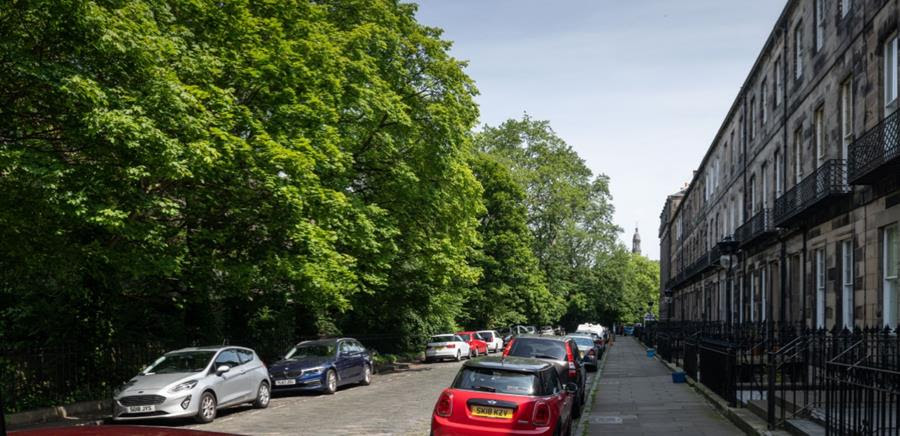
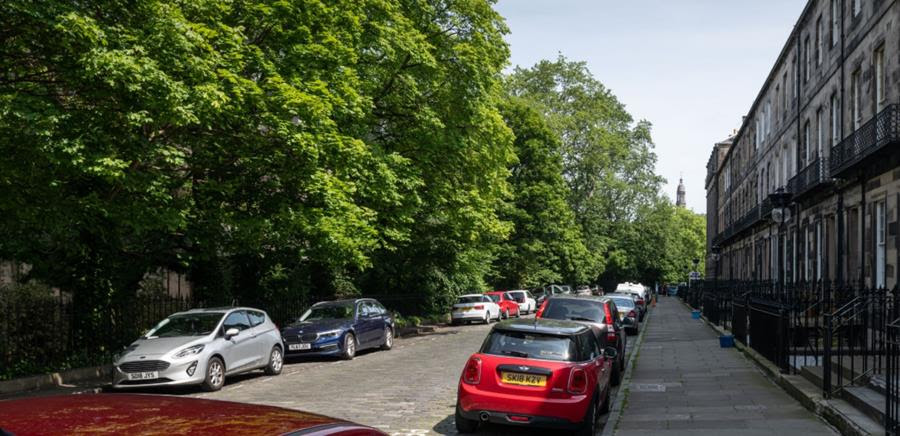
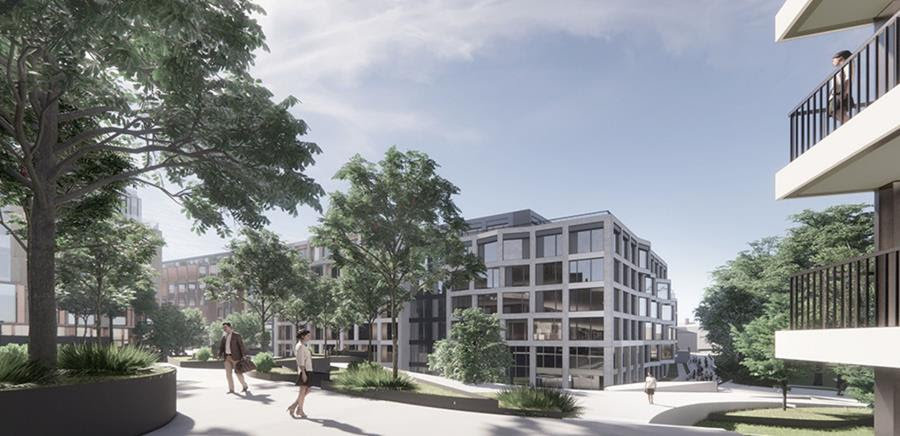
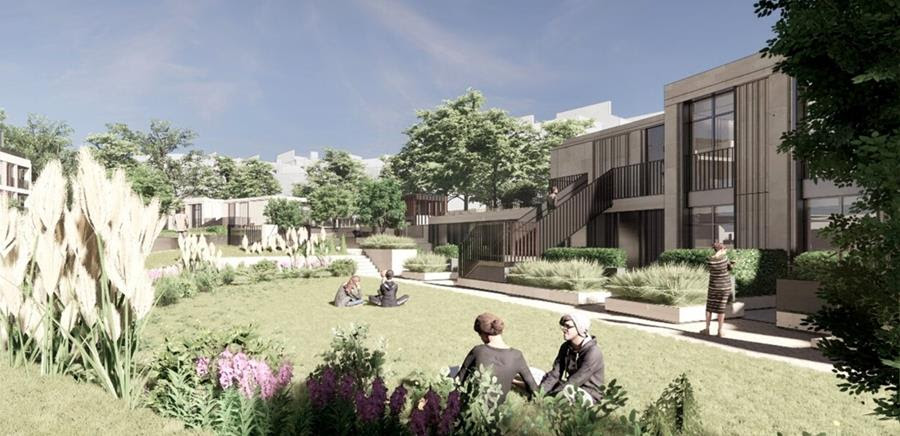
One of the main priorities for the development team was protecting the tree cover in Fettes Row and Royal Crescent. New Town Quarter is well screened by trees to the south of the development and these are much appreciated by residents. The development team has worked hard to ensure that the tree screen is protected and maintained. Existing trees are largely being retained to ensure that views enjoyed by local residents can be enjoyed for a long time to come.
New and replacement trees are being provided on the street and in King George V Park. Wherever possible the development team has sought to ensure that existing trees are protected. Ross McNulty said: “Preserving the character of Fettes Row and Royal Crescent has always been one of the key objectives for the development team and we’re confident that will be achieved with our proposals.”
Current View
Proposed View
King George V Park
King George V Park is a much-loved local park. Since the early stages of the public consultation, elements of the proposals for pathways and cycling have been scaled back following feedback. We have also had further consultation with the Council to highlight the need to manage pedestrians and cyclists at the interface with the park.
The development team is also working closely with the Council to finalise additional investment in the park to help take account of the new development, as well as helping safeguard its future quality and longevity. The proposals for park investment will be finalised through a Section 75 agreement, which is currently being negotiated with the Council. Once signed, this will be a legally binding agreement.
Ross McNulty added: “We would like to thank the Friends of the Park group for engaging with us throughout the consultation process. The discussions have been thorough and complicated at times but hopefully, everyone will see the results – including replacement trees, improved pathways and investment in the park for the long-term benefit of the local community.”
Eyre Place Update
There is a separate planning application to change the site area initially proposed as a hotel to housing. The timing of this application will run behind the main application. Being aware that Eyre Place residents had concerns about overlooking from the proposed new homes, the development team has been looking at ways to address the concerns, and we believe a solution has been agreed.
Even though the current proposals would have been entirely within planning guidelines, the proposed solution has been shared with interested residents.
Ross McNulty said: “We were left in no doubt how concerned residents were regarding this aspect of the proposals and we wanted to help if we could. The housing proposals, as with the hotel, will result in improved daylighting for Eyre Place, which should also help reassure residents that we are sensitive to their interests.”
Business Benefits For the City Centre
If the New Town Quarter development progresses, it will be the first major project in Edinburgh to move forward since the start of the pandemic. As such, it has a critical role to play in boosting the regeneration of the city centre as it recovers from the crippling effects of economic lockdown.
The local area around Dundas Street brings together an interesting mix of mainly independent traders – including cafes, restaurants, bars, hairdressers and guest houses – and a recent survey of 32 local businesses which surround the New Town Quarter area showed overwhelming support for the development plans.
Many of them were hit hard when RBS vacated their premises in 2017 and are now suffering further following the ongoing trading restrictions imposed by the pandemic. The New Town Quarter will bring much-needed investment to the city centre – and most importantly, bring people back to the local area to create a vibrant and exciting new destination.
Here are some of the comments posted by local businesses who support our planning application:
“The RBS site was always a highly visible focal point for visitors and activity and all the businesses in this area benefited from it. Now, more than ever, as we recover from lockdown, we all need the site to once again be an attractive destination for both living and visiting, to both help recovery in the immediate future and over the longer-term.” – Guest House, Eyre Place
“I have gradually built up my business following the RBS relocation, but have also now been hit hard by the coronavirus lockdown. We are all desperate to stay trading in the area but need a commitment that something significant is going to be happening to transform an ugly empty building and gap site right opposite us into a thriving and busy neighbourhood that will bring people back to the area.” – Barber, Dundas Street
Feedback & Contact
For more information on New Town Quarter, contact: Ross McNulty, Development Director, Ediston.