Challenge Poverty Week: Children First encourages Edinburgh families to call them for help

Scotland’s national children’s charity, Children First, has revealed new figures showing that financial difficulties remain the top reason for families to call its support line, as it urged families who are struggling to get in touch for support. 

Over half of Edinburgh families (56%) who got in touch with the charity’s support line between July and September were experiencing money worries, with callers seeking help and advice when rising costs, household bills and unexpected expenses become difficult to manage. 

Children First’s support line provides practical, emotional and financial support, including debt support, to parents and carers 365 days a year.  

Last year, the charity worked with nearly 1,500 families to provide financial wellbeing support and advice that helped put £1.8 million in financial gains back in their pockets and manage over £1 million in debts. 

Kerry* recently contacted Children First as she was experiencing high levels of stress, anxiety and a difficult financial situation that was affecting her whole family.  

Describing the immediate impact of speaking to Children First, she said she felt: 

“Overwhelmed in a good way as I have been listened to and told that food can be on the table tonight. 

“Children First’s support line saved me – held me and gave me hope for the first time that there was light at the end of the tunnel.” 

Children First was able to provide immediate hardship funding so the family could buy groceries. The family was also referred for ongoing support with energy debt and income maximisation, helping them develop a plan for their financial situation and allowing Kerry to focus on parenting and meeting her children’s needs.  

Simon McGowan, Assistant Director at Children First, said: “When a parent or carer is worrying about whether there will be food on the table, it can be incredibly difficult to focus on anything else. It’s so important that families can access support before financial pressures become a crisis. 

“Our support line provides a place for families to talk, be listened to and access practical, emotional and financial help without judgement. 

“This Challenge Poverty Week and beyond, we’re urging families in Edinburgh not to struggle alone. If money worries or other pressures are making family life difficult, please reach out to Children First. We’re here for you.” 

With around 210,000 children in Scotland living in poverty, the gap between current child poverty levels and the targets for 2030/31 is significant. As part of efforts to address this challenge, Children First has received a £2 million investment from the Scottish Government to expand its support line and help even more families. 

Any family worried about their financial situation can call the Children First support line on 08000 28 22 33. 

Independent review of maternity services begins

Improving care for women and babies across Scotland

A nationwide review of Scotland’s maternity services begins today, examining how care can be improved for women, babies and families.

Chaired by maternal and child health expert Professor Christine McCourt, the independent review will take a whole-system approach, drawing on data, evidence and the direct experiences of women, families and staff at every level of care.

The review will pay particular attention to how care is provided in rural and island communities, with specific focus on services in Caithness, Elgin and Wigtownshire. It will also examine disparities in maternal outcomes, including higher rates of maternal mortality by Black and Asian women.

The review will run for nine months and will also take account of the unannounced inspections of all 18 of Scotland’s acute maternity units currently being carried out by Healthcare Improvement Scotland.

Prof McCourt is due to submit her findings and recommendations in July 2027.

Health Secretary Angela Constance said: “I want every woman and baby to receive the high-quality care they deserve.

“That is why I announced this independent review, which will sit alongside the inspections already underway of every acute maternity unit in Scotland, to identify the systemic changes needed to strengthen services and improve outcomes.

“While the vast majority of mothers receive good care, I have heard from families who were let down, and from those who have bravely shared their experiences of loss – these are powerful stories. Their experiences must shape improvement.

“While the vital work of the review is underway, we will continue to take action to improve services, through implementation of the Miscarriage Framework and HIS Maternity Standards, the Scottish Patient Safety Perinatal Programme, improved bereavement care through the National Bereavement Care Pathway, and new work to improve triage services.

“HIS will also continue its programme of maternity inspections, driving improvement locally in every acute maternity unit in Scotland, and informing the review.”

Professor Christine McCourt said: “The review team is committed to engaging with women, families, healthcare staff and organisations across Scotland to understand both the challenges facing maternity services and the examples of excellent care that can inform future improvements.

“We want to hear from people with a wide range of experiences and perspectives. We encourage anyone with relevant insights to visit the website, learn more about the review and engage with the process as our work progresses.”

www.citystgeorges.ac.uk/scotland-maternity-review

House of Hope working with Scottish Rugby for Breast Cancer Awareness Month

Having opened its doors in 2025 as Scotland’s first permanent, community-based support and wellbeing centre for those impacted by breast cancer, The House of Hope recently welcomed a number of Scotland Women players to learn about the nuances of what they do.

As well as delivering a breast cancer awareness clinic to the squad at Oriam, the charity played host to players Chloe Rollie, Evie Wills, Elliann Clarke and Alex Stewart to offer a peek behind the scenes at their Edinburgh headquarters.

As we enter Breast Cancer Awareness Month, House of Hope want to make it clear to women of all ages that checking your breasts for anything unusual is to be championed, in order that issues can be addressed at the earliest opportunity.

Breast cancer will affect 1 in 7 women in Scotland in their lifetime and by supporting the clinical work that exists, through emotional, practical and social support, House of Hope’s mission is to ensure that care is offered to anyone who might need it as they navigate their way through a breast cancer diagnosis.

Rosie Small, Breast Cancer Nurse Specialist at The House of Hope said: “It was a fantastic opportunity to run a breast health awareness session with Scottish Rugby, as part of our Hope in Your Hands campaign to mark Breast Cancer Awareness Month and encourage people to ‘check your breasts’.

“Many young women lack confidence, or actually avoid examining their breasts, due to fear of what they might find, so it was good to chat with the team and talk about benign breast conditions as well as breast cancer and answer their questions around breast health.

“I hope it has given them the confidence to regularly examine themselves and empower them to seek medical advice if they notice any changes in their breasts.”

The House of Hope provides wellbeing classes, workshops, support groups, drop-in sessions and holistic therapies such as oncology massage and aromatherapy. It offers a safe haven for those impacted by a breast cancer diagnosis with a relaxing living room,  bustling kitchen, bespoke yoga and pilates studio, hair and wig salon, counselling room, kids zone and bra fitting/styling lounge.

Scotland Women centre Evie Wills said: “It is just astounding. When we got a tour, there were rooms upon rooms and they’ve just thought of everything; you can really see why so many people come here.

“As athletes, we think we know our bodies well, but with these workshops we are checking things we’ve probably never checked before. We know what a tweaked hamstring looks like but we don’t necessarily know what a mass looks like in our breast, or any changes in our breasts.

“I just think everyone should support everyone, no matter what they’re going through.”

Scotland full-back Chloe Rollie added: “Being aware of the House of Hope charity is really important. It gives us a chance to use it if we ever have to, or if we know someone who is going through a life-changing experience like this, that we can point them in the right direction to find the support they need.”

Breast Cancer Awareness Month runs throughout October and if you would like to hear more about the work that House of Hope does, or wish to speak to them at any point, you can do so here.

Public consultation opens on plans to secure future of Summerhall

PUBLIC DROP-IN TOMORROW 3pm to 7.30pm

A public consultation is now underway on proposals to secure the future of Summerhall, Edinburgh’s landmark arts venue, as developer AMA sets out an emerging vision to secure the site’s future.

Residents, businesses, artists and community groups can review the proposals and provide feedback on plans for Summerhall from Tuesday 29 September until Friday 23 October.

sculpture at Summerhall

A public drop-in event will be held at Summerhall tomorrow – Wednesday 7th October, from 3pm to 7.30pm, where visitors can view the plans, meet the project team and ask questions.

Since the Royal Dick Veterinary College left in 2011, Summerhall has become a home for artists, performers, creative organisations and small businesses. The site now faces significant financial and physical challenges, and needs substantial investment to secure its long-term future.

Having entered into a contract to acquire Summerhall from Oesselmann Estate Limited in April 2025, Edinburgh-based AMA is developing a vision together with Kettle Collective architects for an Arts Quarter at Summerhall. The plans seek to retain the site’s cultural role while bringing new activity and investment to the wider complex.

The emerging proposals include retaining and sensitively adapting key heritage buildings, improving pedestrian access through the site and enhancing its public spaces. A wider mix of uses is also being explored to help support Summerhall’s long-term sustainability.

The proposals have been informed by pre-application discussions with the City of Edinburgh Council. Its advice recognises the potential for a mixed-use development that retains arts and community uses, and welcomes the proposed retention and use of the majority of the site’s listed buildings.

It also identifies improved accessibility and energy efficiency as potential benefits, while stressing the need for sensitive design within Summerhall’s heritage and conservation setting.

A January 2026 review by the Edinburgh Urban Design Panel also recognised the site’s complex history. Once home to a brewery and two churches, Summerhall became the Royal Dick Veterinary College in the early 20th century.

Later additions include modernist buildings constructed between 1967 and 1971, among them its distinctive tower. The site sits within the South Side Conservation Area, close to The Meadows.

Dr Ali Afshar, co-founder and managing director of AMA, said: “Summerhall is an important part of Edinburgh’s cultural life. We know how much it means to the people who work here, visit and live nearby. We also know that significant investment is needed to address the challenges facing its buildings and secure its future.

“Our vision for an Arts Quarter builds on what makes Summerhall special. Art and culture will remain at its heart, alongside sensitive work to its heritage buildings, better access through the site and a mix of uses that can support it for the long term.

“Summerhall’s character comes from the many different chapters of its history. We want to respect that history while making the site more welcoming and accessible. This consultation is a chance for people to tell us what matters to them, and their feedback will help inform the proposals before we submit a planning application at the start of 2027.

“We hope the existing management team will continue its stewardship and day-to-day running of the Arts Quarter and associated commercial spaces following redevelopment, within modernised buildings offering greater flexibility.”

The consultation is open until Friday 23 October. Plans can be viewed and feedback submitted at www.summerhallconsultation.co.uk.

A further public engagement event will be held in due course, with details announced ahead of time.

Everyone deserves a happy Christmas, you can help make it happen

A call to action from Fresh Start

Fresh Start, an Edinburgh-based charity dedicated to supporting individuals and families who are moving on from, or at risk of homelessness, are calling on the community to support those in need this Christmas, with several ways to get involved.

With 9,600+ households experiencing homelessness in Edinburgh this year, the power and generosity of community is more impactful than ever before.

This festive season, the best way to support Fresh Start’s services is to donate to its annual Cookers for Christmas Appeal, which raises funds for their White Goods service, providing essential appliances like cookers, washing machines and fridge/freezers for those in need.

Hoping to beat last year’s £31,000 total, Fresh Start asks individuals, businesses, and organisations across Edinburgh and beyond to support the Appeal and ensure everyone has a Happy Christmas this year. 

Alongside their White Goods service, Fresh Start provides other essential services, including Starter Packs with household items, local food support through their Community Pantry, and cooking classes to promote healthy living on a budget. They help people rebuild their lives with dignity and a sense of community, offering practical assistance, support, and pathways to long-term stability.

Every donation, big or small, makes a huge difference for people like Sarah*, who was able to “start living like a real human being again” after receiving a cooker for her flat.

For families like the Hashimi’s*, receiving White Goods allowed them to “store and cook healthy homemade meals for our family again. It really has been such a big relief, helping us move on from the last few years, which have been a nightmare.”

Donations can be made via Fresh Start’s JustGiving page, or by cash, cheque or bank transfer, and will ensure families can cook hot meals over Christmas and throughout 2027. Get in touch with Fresh Start at admin@freshstartweb.org.uk or on 0131 476 7741 for more information on how to donate to the appeal.

If you’d like to support Fresh Start’s services more broadly this Christmas, you can also: 

  • Take part in their #GatherForGood campaign by turning your office Christmas Party, ‘Friendmas’, Christmas Carols service, movie night or festive celebrations into a fundraiser for Fresh Start. 
  • Donate to their festive food collection, helping to support hundreds of families and individuals with festive food hampers this Christmas. Donations close on Friday, 4th December, with Fresh Start accepting non-perishable seasonal items – see a full list and more details about how to donate on their website. 
  • Spread the word! Help raise awareness with others in your community by following Fresh Start on Facebook, LinkedIn and Instagram, and sharing their posts with your followers!

Everyone deserves a happy Christmas, and you can help make it happen, in a way that works for you – support Fresh Start this festive season and help those moving on from homelessness in Edinburgh to make a home for themselves. 

Cookers For Christmas 2026 – JustGiving Page:

https://www.justgiving.com/campaign/cookers-for-christmas-2026
https://www.freshstartweb.org.uk/ • Facebook • LinkedIn • Instagram

Circus in the Garden!

Saturday 10th October, 12-2pm

Free family circus skills session! with Think Circus

“🎪 Cirque Du Cycle is bringing circus to your community this October 🚲✨

We bring circus skills and creative play to parks and community spaces around Edinburgh using our custom built e-Cargo bike.

Our experienced team of tutors and volunteers make circus skills accessible to people of all ages through skill sharing, play and a little bit of circus magic. 🤹‍♀️

So come along and throw, catch, twist, twirl and have fun with us! 🎪💫

Everyone is welcome, no experience needed, just come ready to play.”

Celebrating Leith’s Football Rebooted Day

Leith’s Utilita Hub welcomed local families, football fans and community partners for a successful National Football Rebooted Day 2026 event, helping to promote access to grassroots football through the donation and redistribution of pre-loved boots.

Hosted by Hub Supervisor Natasha Baillie and Energy Expert Finn Salisbury, the event attracted strong community interest, with 12 additional visitors attending specifically for Football Rebooted Day and total Hub footfall reaching almost 70 people throughout the day.

The event saw eight pairs of football boots donated, adding to the growing number of boots already collected through the Hub. In addition, representatives from the Hibernian Community Foundation collected a bag of previously donated boots, ensuring they can be redistributed to those who need them most across the local community.

Visitors were also delighted to meet Sunshine, Hibernian FC’s much-loved mascot, who proved a huge hit with children and adults alike. Families took the opportunity to pose for photographs, creating memorable moments throughout the day.

Further excitement came later in the event when Hibernian FC Women players Tiree Burchill and Scarlett Herron visited the Hub, meeting supporters and local residents. The players were warmly welcomed by fans, including season ticket holders John Paul and Amanda (pictured above), who were thrilled to meet some of their footballing heroes.

With a Football Rebooted gazebo positioned outside the Hub, the team was able to engage passers-by and answer questions about the initiative, raising awareness of how donated boots can help remove financial barriers to participation in sport.

Natasha Baillie, Supervisor at Leith Utilita Hub, said: “We had a fantastic day celebrating the National Football Rebooted Day in Leith. There was a real buzz throughout the event, with families stopping by to meet Sunshine, donate boots and learn more about how Football Rebooted supports people in our community.

“It was wonderful to see the smiles the mascot brought to visitors of all ages, and we were especially pleased to welcome Tiree and Scarlett from Hibernian FC Women. Events like this help spread awareness of the importance of making football accessible to everyone, while ensuring unused boots find a new home with someone who can benefit from them.”

Football Rebooted is a nationwide campaign that encourages families to donate unwanted football boots so they can be cleaned, redistributed and reused by players who may otherwise struggle to afford the equipment needed to play.

Through partnerships with clubs, community organisations and Utilita Energy Hubs, the initiative aims to make football more accessible while reducing waste and supporting sustainability.

National Football Rebooted Day took place at Utilita Energy Hubs across the UK, bringing communities together to celebrate the positive impact that sport can have on people’s lives while helping thousands of football boots continue their journey on pitches across the country. 

If people couldn’t make it to Saturday’s event, they can still donate football boots throughout the year; many local schools, colleges and sports clubs also have collection boxes.

A full map of collection points can be found on the Football Rebooted website: www.footballrebooted.co.uk

Young mussels struggle as conditions change in Firth of Forth

Falling salt levels in seawater could be contributing to driving blue mussels from parts of the Firth of Forth, researchers say.

Scientists at Heriot-Watt University found that baby mussels are especially sensitive to fresher water, with their growth and development badly affected when the seawater becomes diluted.

The lab-based study was sparked by the sharp drop in mussel beds that were once common around Musselburgh and Cramond.

The team says their findings, published in the academic journal Frontiers in Ocean Sustainability, could also help explain falling blue mussel numbers across northern Europe. 

“Now there’s nothing there” 

Dr Mark Hartl, from Heriot-Watt’s School of Energy, Geoscience, Infrastructure and Society, said the university’s marine science researchers had worked with mussels from the Firth of Forth for over 20 years and had observed the disappearance of the local populations. 

Dr Hartl said: “We noticed them disappearing from Cramond at first, where we used to be able to easily find and collect mussels.

“At Musselburgh, you could walk for a mile out at low tide and it would be full of mussels, even as recently as 2018. 

“It used to take me just a few minutes to find the mussels I needed. Now there’s nothing there.”

The researchers stressed that the experiments were carried out under controlled conditions in a laboratory and that long-term field work is required to conclusively show that changing local salinity has been a significant driver of the loss of mussels in the Firth of Forth.

However, they said the findings could help explain the absence of younger mussels that would normally replace older and larger adults. 

Dr Hartl said: “We had noticed in Musselburgh that the mussels were big, and old. There weren’t any smaller ones. 

“They were reproducing and producing larvae, but the larvae didn’t seem to be developing properly.”

Wetter winters mean less salty estuaries 

Isabella Jackson is undertaking the research as part of her PhD at Heriot-Watt University. 

Working with Dr Mark Hartl, Isabella looked at how pollution, temperature and salinity interacted during the first stages of mussel development.

Mussel embryos and larvae were exposed to different conditions in the laboratory over 48 hours. 

Lower salinity had one of the clearest detrimental effects on the mussels: reducing salinity from optimal conditions cut normal larval development by almost 29%. 

Isabella said: “Mussels in the Firth of Forth experience multiple stressors: pollution, temperature change and changes in salinity among them.

“We found that they are highly susceptible to changes in salinity, but pollution compounds the problem and amplifies the effects we saw under lower-salinity conditions.” 

“Reduced salinity is likely to happen as wetter winters bring more freshwater into estuaries, and it is not something that can easily be fixed. 

“But if we tackle some of the other problems, such as pollution, we may be able to alleviate the pressure on mussels.

“We may not be able to address every stressor at once, but reducing one of them could still make a difference.”

Isabella said the research also highlighted the importance of studying the early life stages of marine organisms.

“The early life stages are often the most sensitive to environmental stressors, but they are also easily overlooked, particularly in studies looking at multiple stressors,” she said.

“If larvae are not developing properly, this can create a bottleneck where a population is unable to sustain itself. 

“Understanding what happens at this critical stage is an important piece of the puzzle when investigating why blue mussel beds are declining.”

Impact on biodiversity 

Blue mussels, Mytilus edulis, were once widespread in estuaries around northern Europe.

Declines have been observed elsewhere in Scotland but some areas, like Orkney, still have healthy populations containing mussels of different ages. 

Dr Hartl said: “A decline in mussel beds could have several potential impacts. It could reduce biodiversity, as mussel beds act as habitat for lots of other species. And, as mussels clean the water by ingesting contaminants, it could have an impact on water quality. 

“Ideally we would set up field experiments to replicate what we did in the lab, and definitely determine that salinity levels are behind their decline.

“The Firth of Forth’s health has improved dramatically over the past few years, we’re seeing large mammals like humpback whales return now. But there are locations  where a decline in biodiversity is happening, as witnessed by the disappearance of mussels, and we should monitor and try to resolve this.” 

This research was funded by NERC Scottish Universities Partnership for Environmental Research (SUPER) Doctoral Training Partnership (DTP)

(Grant reference number NE/S007342/1 and website https://superdtp.standrews.ac.uk).

Teviot prepares to celebrate first Christmas since reopening 

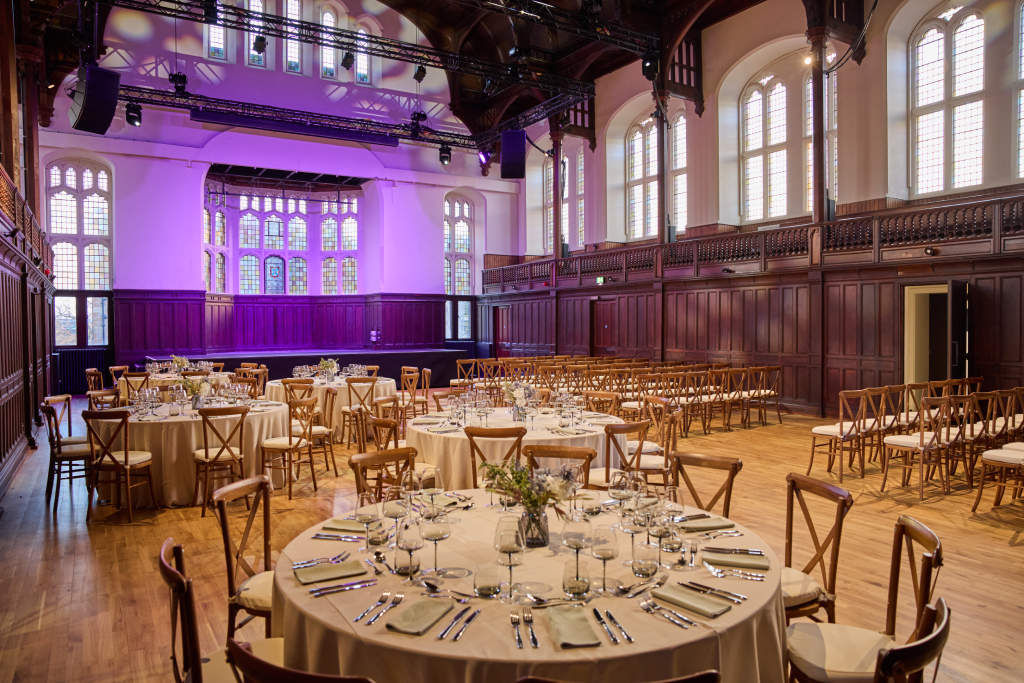
One of Edinburgh’s best-known historic venues is preparing to host Christmas  celebrations for the first time since reopening following a major refurbishment. 

Teviot reopened its doors in March after a two-and-a-half year refurbishment, marking a  new chapter for the 137-year-old building in the heart of Edinburgh. 

First opened in 1889 and known as the world’s oldest purpose-built students’ union,  Teviot has been part of Edinburgh life for generations – from student events and  celebrations to performances and the Edinburgh Festival Fringe.

Its refurbishment has  introduced improved accessibility, facilities and energy efficiency while retaining much  of the character of spaces including the Debating Hall and Library Bar. 

This December marks another milestone for the venue as Teviot hosts its first Christmas  season since reopening. 

Edinburgh University Students’ Association is opening the venue to businesses,  organisations, university departments, societies and groups from across the city, with  Christmas events available from 1–20 December 2026. 

While Teviot may be best known as a home for generations of Edinburgh students, its  event spaces are open to everyone and are managed by an experienced events team,  who are available to look after food, drinks, décor and entertainment. 

Some of the building’s most recognisable rooms, including the West Reading Room for  groups of 40–80 and the Debating Hall for larger celebrations up to 140 guests, are  available for Christmas celebrations. 

The return of Christmas events follows a busy year for Teviot, which has welcomed  people back into the building since its reopening and returned as a major Edinburgh  Festival Fringe venue over the summer. 

Vice President Activities & Services 2026/27, Vasil T, said: “Teviot means a lot to generations of people in Edinburgh, so it feels really special to be  welcoming Christmas parties back into the building this year.

“A lot of people will  remember Teviot from their own student days, while others may never have had a  reason to step inside before.

“We want people to know that you don’t have to be a  student or connected to the University to celebrate here – our venues are open to  everyone.” 

Every booking helps support the charitable work of Edinburgh University Students’  Association. Income generated through Teviot supports our work to enhance student  experience and services at the University of Edinburgh.

With Teviot now entering its first  full festive season since reopening, the team hopes Christmas will give businesses and groups from across Edinburgh another reason to rediscover one of the city’s most  distinctive buildings.