Following a series of incidents across Edinburgh on 19 June, the Capital’s Lord Provost has called for the city to unite against hatred:
Speaking at a meeting of Full Council on Thursday, 25 June, Lord Provost Robert Aldridge said:“We recently saw a horrific attack on five of our fellow Edinburgh citizens. We were all shocked and stunned that such an attack should happen in this safe, welcoming and inclusive city.
“Edinburgh is very proud to be home to many faiths which we respect. Our rich diversity is what makes the city so special and our hearts, prayers and thoughts are with the victims and their loved ones.
“There is no place in our city for islamophobia, nor will we tolerate any other form of discrimination, and I know that all my colleagues across the Council chamber believe that.
“An attack on any one of us is an attack on us all, so let us unite against those who seek to create division and hatred and show that as a city we stand together with all of our communities.”
More than a dozen events being held across Scotland to mark Armed Forces Day
Edinburgh, Aberdeen, Dumfries, Glasgow, and Thurso among those leading Scotland’s celebrations
Around 200 events are planned across the United Kingdom as nation gathers to thank Armed Forces community
Communities across Scotland are today (Saturday 27 June) celebrating Armed Forces Day, joining around 200 events planned across the United Kingdom.
Armed Forces Day is an annual opportunity to thank the entire Armed Forces community – service personnel, reservists, veterans, cadets and military families – for all they do to keep us safe.
Earlier this year the Ministry of Defence announced it would provide up to £500,000 of funding for Armed Forces Day celebrations across the country.
The events – a map of which can be found here – help deliver on the Strategic Defence Review’s call for a whole-of-society approach to defence, strengthening the bonds between society and our Armed Forces.
Almost 10,000 Armed Forces members live and work in Scotland, and the defence sector directly supports nearly 12,000 jobs in the country. Approximately 176,000 veterans live in Scotland.
Scottish Secretary Douglas Alexander said:“I welcome the whole country uniting for Armed Forces Day to show our support for currently serving troops, service families, veterans and cadets.
“Scotland plays such a vital role in the UK’s defence and I am appreciative, and deeply proud of, our service personnel. Their professionalism and bravery to keep us and our allies safe are rightly respected worldwide.
“The UK Government is renewing the country’s contract with our military personnel through initiatives such as a new housing strategy which will make homes fit for heroes, delivering the biggest pay rise for personnel in 20 years and putting the Armed Forces Covenant into law. National security is a top priority for the UK Government and we will always stand up for our Armed Forces.”
Armed Forces Day events are hosted every year by local authorities, veterans’ organisations, schools, places of worship, charities and community groups.
The UK Government is determined to ensure British people can take pride in their communities and enjoy safe and vibrant high streets, with community events like Armed Forces Day an important part of British life.
The Government has also increased defence spending to both support local jobs and keep families safe in an uncertain world.
Scotland is home to the UK’s military shipbuilding industry in Rosyth and the continuous at-sea nuclear deterrent, which is based at HM Naval Base Clyde.
RAF Lossiemouth operates the UK’s Quick Reaction Alert, which scrambles Typhoon fast jets to monitor suspicious aircraft in the skies above the UK.
EDINBURGH’S CITY CENTRE PARADE CELEBRATES ARMED FORCES DAY
Serving personnel, veterans and their supporters will parade through St Andrew Square in Edinburgh this weekend at a special event being held to celebrate Armed Forces Day.
The celebrations will start from 10.30am on Saturday, June 27, as the annual procession of around 400 members of the Armed Forces community will assemble in Charlotte Square, led by 12 vintage vehicles from the Scottish Military Vehicle Group.
From there they will follow the route along George Street, reassembling in St Andrew Square where they will be welcomed by Edinburgh’s Depute Lord Provost, Lezley Marion Cameron, followed by a day of fun and entertainment until 3pm.
The public will also enjoy tunes from the Lowland and Highland Bands of the Royal Regiment of Scotland and Royal Air Force Central Scotland Pipes and Drums.
There will also be static displays of vintage military vehicles throughout the day, and members of the public will be able to see some of the kit and equipment used by our Armed Forces over the years.
Dr. Claire Armstrong, OBE, Chief Executive of Royal British Legion Scotland, emphasised the significance of the occasion, stating that it is a time for unity and appreciation for all those who have served, both past and present, and their families. It serves as a reminder of the sacrifices made by the Armed Forces every day, highlighting their dedication and commitment.
Dr. Armstrong said: “We hope this event will be a good opportunity for veterans and serving personnel to reunite acquaintances and comradeship and will also be a fitting tribute to everyone who serves in our Armed Forces and will also recognise the continued sacrifices that our servicemen and women make today.”
She encouraged residents of Edinburgh and beyond to attend the event, show their support, and enjoy a memorable day out.
Dr Armstrong added: “We hope you can come along and help us celebrate the Armed Forces community in our capital city in style, whilst also learning about the valuable work of charities Royal British Legion Scotland, Poppyscotland and many more.”
The number of students learning an instrument has increased by almost 30,000 since the abolition of fees for music lessons in schools.
A new report shows that annual investment of up to £12 million from the Scottish Government to fund free instrumental music tuition has seen participants increase to more than 70,000 since 2021.
Those involved in Scotland’s Instrumental Music Service believed playing a musical instrument supported better attendance, attainment and behaviour in schools.
The We Make Music Now research findings highlights:
an increase in instrumental music learners from 41,594 in 2020-21 to 70,075 in 2024-25 – around 10.1% of the eligible school roll
highest participation between Primary 5 and S1 pupils in many areas, often attributed to large-scale music-making projects
playing an instrument helped young people with social anxiety and other mental health challenges
music departments are viewed as a “safe space” by learners, where they feel supported within school
The Scottish Government funds Grant Aided Schools and all 32 local authorities to support free instrument tuition. The report identified some challenges, including waiting lists in certain local authority areas, lower representation from more deprived areas and fewer performance opportunities for young musicians in rural areas.
Education and Culture Secretary Màiri McAllan said: “The Scottish Government has transformed instrumental music tuition in Scotland’s schools by funding councils to eradicate unfair charges.
“All children should have the opportunity to take part in instrumental music as a core element of education, without being limited by a family’s ability to pay.
“This report reveals the wide-ranging benefits of providing opportunities to all – not only in developing new skills but in growing confidence, supporting mental health and creating a sense of belonging.
“We will continue to work with COSLA and the music education sector to ensure an inclusive approach to music tuition that addresses potential barriers to participation.”
Chair of the Music Education Partnership Group (MEPG) Board Ian Mills said: “The We Make Music Now research demonstrates the initial successes of the commitment made to ensure the provision of free instrumental music instruction in schools.
“As well as the successes, there are undoubted challenges and areas for growth raised in the work.
“MEPG looks forward to supporting local authority music services and the Scottish Government in considering the recommendations made in the report to ensure that pupils are gaining maximum benefit from the government’s investment in music.”
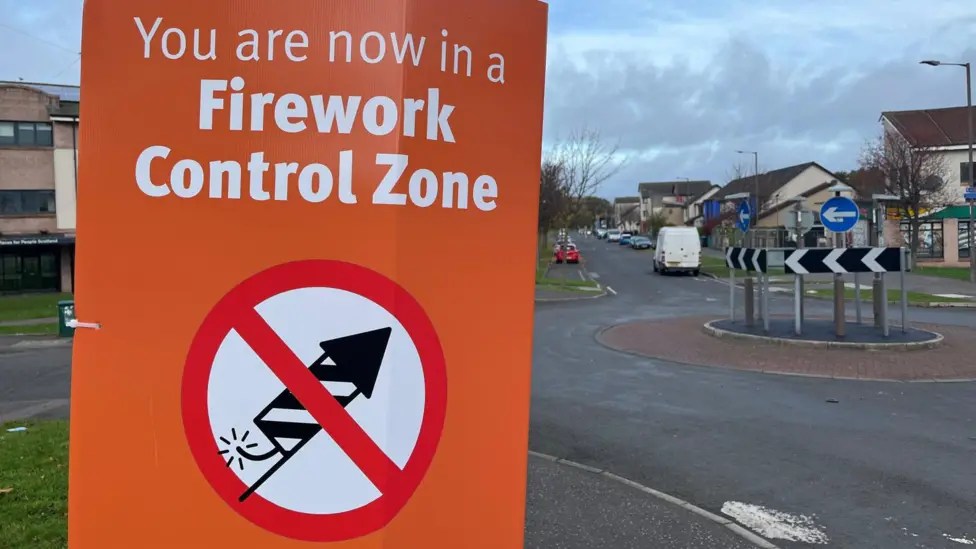
Residents are being encouraged to have their say on proposed Firework Control Zones (FCZs) for autumn 2026 as a public consultation gets underway across Edinburgh.
The consultation is seeking views on continuing Firework Control Zones in Corstorphine, Longstone, Sighthill/Broomhouse, Mordeun and The Murrays, as well as introducing new zones in Liberton Grange, Lochend, Stenhouse/Gaskell Street, West Pilton and Wester Hailes.
Firework Control Zones prohibit the use of fireworks within designated areas for a limited period and form part of a wider package of measures designed to improve public safety, reduce anti-social behaviour and support local communities during the fireworks season.
Earlier this year, community groups were invited to apply for Firework Control Zone status in their neighbourhoods. Applications highlighted concerns about the misuse of fireworks, anti-social behaviour, and the impact on animals, older people and other vulnerable residents.
The proposals build on the positive results seen in recent years, with Edinburgh experiencing significantly lower levels of firework-related anti-social behaviour compared with previous years.
Councillor Margaret Graham, Convener of Culture and Communities, said: “We want to hear directly from residents and communities about the areas being considered for Firework Control Zones again this year.
“They are just one of the measures we’re using to improve safety and reduce firework-related anti-social behaviours to make sure our communities can enjoy Bonfire Night in a safe and responsible way.
“I’d encourage everyone to take part in the consultation and help shape our approach for the 2026 fireworks season.”
The consultation will run from Wednesday 24 June until Wednesday 5 August on the Council website.
Biggest update to curriculum in over a decade under way
The most significant reform of Scotland’s curriculum in more than ten years is underway, as the first early samples of new curriculum materials have been shared with councils across the country.
Planned updates to the curriculum, prepared by Education Scotland and co-designed with input from over 1,500 teachers, nursery practitioners, and partners through the Curriculum Improvement Cycle (CIC), will clarify knowledge and progression, making it clearer what children should know, understand and be able to do at every stage of school.
Discussions are taking place with the Scottish Negotiating Committee for Teachers (SNCT) for two additional in-service days to be offered during the 2026-27 academic year, to help schools prepare for change.
Education Secretary Màiri McAllan said: “The Curriculum Improvement Cycle is driving the single largest update to the curriculum in over a decade.
“The new curriculum will make the place of knowledge and skills clearer. It will drive excellence. It will be taught in schools from August 2028 and it will be benchmarked against international standards.
“The materials shared by Education Scotland this week are a preview ahead of the full draft curriculum framework later this year, as we work with the profession on implementation from August 2028.
“We are proposing additional in-service days to provide teachers the time and support needed to prepare for these changes which will support Scotland’s young people to reach their full potential in our education system.
“These will form part of wider support up to 2028 to ensure teachers can fully engage with the updates and how they can use them in the classroom.”
This Small Charity Week, an Edinburgh chaity has been announced as a finalist for a prestigious national award, recognised as the ‘Oscars’ of the small charity world.
Grassmarket Community Project, which supports those furthest from employment, has been nominated for a Centre for Social Justice (CSJ) Award.
The CSJ Awards seek out the top charities nationwide, highlighting those that excel in innovation and effectiveness in the fight against poverty. The diverse panel of judges includes David Gandy, BAFTA-Winning Actor Toby Jones, and past CSJ Award winners along with cross-sector experts that come together to select the winners.
The Awards celebrate the best of the small charity sector who are providing innovative policy solutions to address the root causes of poverty across the UK.
Grassmarket Community Project exists to support people facing multiple causes of poverty in Edinburgh. The charity offers a long-term, strengths-based community for approximately 450 people each year offering mainstream support to build relationships, develop skills, and create pathways to long-term change.
Helene van der Ploeg, CEO of Grassmarket Community Project, said: “We are delighted to be recognised as a finalist in the 2026 CSJ Awards. At Grassmarket Community Project, we are an open door to anyone experiencing social isolation and poverty in Edinburgh and beyond.
“We see every day the extraordinary potential that exists when our members are given the opportunity and support to thrive through our huge programme of activities and social enterprises. To be recognised by the Centre for Social Justice is a tribute to them, staff, our volunteers and supporters across Edinburgh.”
Chris Murray MP for Edinburgh East and Musselburgh, said: “‘It is fantastic to see the Grassmarket Community Project named as a finalist for the 2026 CSJ Awards.The Project is a true cornerstone of our community, providing vital space and services that support so many people.
“It stands as a powerful example of what can be achieved when people come together with a shared purpose to make a positive difference.”
Andy Cook, CEO of the Centre for Social Justice, said: “While political uncertainty continues at home and global challenges mount, there’s an army of small charities in some of our most deprived communities across the UK quietly rolling up their sleeves and changing lives.
“The CSJ Awards are the Oscars of the small charity sector where we celebrate the very best of those unsung heroes who rarely get the recognition they deserve.
“Today we are proud to announce our twelve 2026 finalists. We will be revealing the winners at our CSJ Awards ceremony in the heart of Westminster this November.”
As a record-breaking heatwave hits parts of the UK this week, the Chair of Westminster’s Environmental Audit Committee has pushed the government on what it is doing to tackle the “silent killer” of extreme heat.
In a letter published today, the Chair asks the government how it plans to tackle overheating in hospitals, care homes, schools and prisons, as well as its views on measures such as establishing maximum workplace temperatures, prescribing active cooling such as air conditioning, and changing school timetables.
The Chair also asks the government about standards to ensure new housing is resilient to future heat, and the work taking place on the imminent Fourth National Adaptation Programme (NAP4). The Climate Change Committee has been highly critical of the Plan’s predecessor (NAP3), saying it falls “far short of what is needed”.
During a recent evidence session, witnesses told the Committee that current rates of global warming are unprecedented and that heat extremes are often outpacing scientific predictions, leaving the UK likely to face longer and more intense heatwaves.
One witness told MPs that the UK was “built for a climate that no longer exists”.
Chair of the Environmental Audit Committee, Toby Perkins MP, said: “This week parts of the UK are facing temperatures approaching 40 degrees, a level of extreme heat that was once unthinkable yet now is becoming increasingly likely.
“The effects of such extreme heat can be disruptive and devastating. Without action, we will see economic productivity take a hit; more people needing attention in hospital and suffering with poor mental health; more hospitals, care homes and schools overheating and more of our critical transport, water, food and IT systems failing.
qEconomic productivity will be hit, but more importantly we will likely see a significant number of deaths as a direct result of the current heatwave.
“The evidence could not be clearer that extreme heat is an urgent threat to the UK. Yet the government is currently falling “far short of what is needed”, according to its independent climate advisors.
“Taking action carries a significant cost. But the cost of doing nothing is far, far greater.
“I want to know what action the government is taking to tackle extreme overheating, a problem that will only grow worse without intervention, as well as its views on important measures to adapt to what seems to be our new normal.”
Up to 40,000 disabled people and people with health conditions will benefit from expanded access to personalised support, as the government rolls out Support Conversations across a further 27 Jobcentres taking the total number of sites to 33
Support Conversations expanding to a further 27 Jobcentres across Great Britain, bringing the total to 33 sites.
Disabled people and those with health conditions on out of work benefits are being offered a one-to-one, voluntary, hour-long conversation to discuss their support needs and identify extra help. This support is personalised and could link people to help with their health, debt, skills, employment and housing.
Part of the government’s wider £3.5 billion investment to help disabled people and those with health conditions into work over the Parliament.
Support Conversations are voluntary, hour-long sessions designed to help people identify and overcome the barriers stopping them from moving into work or into meaningful activity (such as volunteering) and is part of the commitment the Government made in last year’s Pathways to Work Green Paper
Unlike standard Jobcentre appointments, Support Conversations take a holistic approach, covering not just employment, but housing, debt, skills, and drug and alcohol rehabilitation services. Support Conversations are delivered by Healthcare Professionals, Pathways to Work Advisers, and Disability Employment Advisers, and are available face to face, by video, or by telephone.
They are open to those who are awaiting a Work Capability Assessment and people furthest away from the labour market – assessed as having Limited Capability for Work and Work-Related Activity (LCWRA).
These are people who for too long were written off and denied support. But the government’s expansion of Support Conversations is giving people they help they need and builds on the landmark deployment of 1,000 Pathways to Work Advisers, who have already helped more than 65,000 sick and disabled people get one step closer to work.
Minister for Employment Dame Diana Johnson said: “Too many disabled people and people with health conditions face barriers that stop them from accessing the support and opportunities they deserve.
“That is why we are expanding the number of sites delivering Support Conversations from 6 to 33 Jobcentres across Great Britain, giving up to 40,000 people personalised help tailored to their circumstances.
“Getting more people into good work is central to our Plan for Change and Support Conversations will help us do exactly this.”
This expansion builds on testing already live in six sites where support conversations are being delivered by healthcare professionals and disability employment advisers. Early testing indicates customers feeling “listened to” and “supported.”
Neil, a Disability Employment Adviser in Bournemouth said: “Support Conversations are a great opportunity to spend an hour focused on the claimant and their needs.
“We all know that many people face a whole range of challenges which need to be overcome as part of their individual journey back to work and talking through those challenges with a DEA is an important first step.
“Support Conversations confirm that the most valuable resource we have is the time that we spend with our claimants.”
Saimha, a Healthcare Professional in Preston said: “Support Conversation is about providing compassionate, informed, holistic, person-centred support to disabled people and those with health conditions. Every interaction is an opportunity to make someone feel heard, safe, and supported.
“Every person’s health journey is unique and support conversation is an opportunity to identify the range of barriers people are facing in their day to day life and signposting them to the relevant services that can help, encouraging people to take positive steps towards improving their lives.”
This expansion forms part of the UK government’s Pathways to Work offer and its broader £3.5 billion employment support package, which includes:
Connect to Work, which delivers tailored, personalised, local support that will help 300,000 people into work by the end of this parliament.
The national expansion of WorkWell, backed by £259mn, helping up to 250,000 people with health conditions to stay in or return to work.
Allowing sick or disabled people to try work without the immediate fear of reassessment through the Right to Try.
The deployment of 1,000 Pathways to Work advisers who’ve already helped tens of thousands of people the previous Government wrote off.
The government will continue to test the success of Support Conversations through healthcare professionals and disability employment advisors as part of this expansion, with Pathways to Work Advisers also carrying out these Support Conversations for the first time. 27 sites have been confirmed so far, with a further six sites to be confirmed shortly.
The expansion directly supports the government’s Plan for Change and its mission to raise living standards across the UK by helping more people into work and ensuring everyone has the opportunity to thrive.
Additional Information:
Support Conversations are currently offered to people awaiting a Work Capability Assessment (WCA) who have registered a health condition or disability that impacts their ability to work and those assessed as having Limited Capability for Work and Work-Related Activity (LCWRA).
The conversations are entirely voluntary.
List of confirmed sites (note 6 further sites to be confirmed shortly):