There’s just one week to go before the world’s largest celebration of storytelling begins…
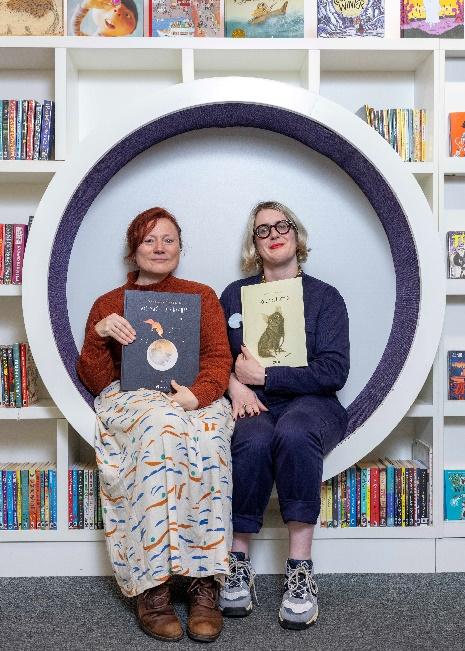
Pic Neil Hanna
The 37th Scottish International Storytelling Festival’s packed programme of over 200 events, taking place in Edinburgh and all across Scotland, kicks off next Wednesday 21 October, thanks to support from the Scottish Government’s Expanded Festivals Fund, Creative Scotland Multi-Year Funding and the City of Edinburgh Council.
The Scottish International Storytelling Festival (21 October to 31 October 2026) organised by TRACS (Traditional Arts and Culture Scotland), is the world’s largest annual celebration of storytelling.
Over the 11 days of the festival, in true cèilidh tradition, some of Scotland’s finest storytellers will share the stage with guest storytellers and musicians to explore stories about the natural world through this year’s theme Bird and Beast.
One of the main highlights, kicking off the festival, will be the arrival of this year’s guest storytellers from Canada, England, Ireland,Türkiye, and Italy.
Over 20 storytellers and musicians will arrive from other nations, including Dawne McFarlane previous Artistic Director of the Toronto Storytelling Festival from 2019-2021; Drut’syla traditional storyteller Shonaleigh; festival favourite Peter Chand with more hilarious tales from the Indian subcontinent and beyond; Muslim storyteller Jumana Moon; Irish storytellersGráinne Holland andSinéad O’Brien who will be part of an epic retelling of the Ossian cycle;Turkish storytellers Roza Erdem and Nazlı Çevik Azazi from the SEIBA International Storytelling Centre in Istanbul and leading expert on Intangible Cultural Heritage ICH (Living Heritage) Prof Dr Evrim Ölçer Özünel.
With support from the Italian Cultural Institute in Edinburgh the festival also welcomes members of two storytelling companies: Paola Balbi and Davide Bardi from Raccontamiunastoria Storytelling Company based in Rome, who will present a poetic and musical tale about the early years of Leonardo Da Vinciwith Italian singer-songwriter, producer and priest Mario Costanzi; and Bologna’s Fraternal Compagnia APS who specialise in Commedia dell’Arte and mask making.
They will present Dario Fo and Franca Rame’s reinterpretation of the myth of Dedalus and Icarus in recognition of the centenary of Nobel Prize winner Dario Fo, promoted by the Fondazione Fo Rame.
This year also sees 15 new pieces of work presented across the programme including Riikka Palonen sharing tales from the cow sheds of Finland with cow call ‘kulning’ teacher and musician Satu Lankinen; Lithuanian storyteller Daiva Ivanauskaitė-Brown blending folklore, family legacy, and history in Bird of Truth, accompanied by Edinburgh’s Sutartinės Lithuanian folk singers; and Ailsa Dixon sharing fascinating historical tales of feral, seaweed eating sheep on the Isle of North Ronaldsay who live within a 13 km area hemmed in by a dry stane dyke.
Adding to the festival’s cèilidh style approach to hosting events, including its popular Open Hearth and year-round Guid Crack sessions; will be this year’s new series of ‘Circles’. These include Morning Circle events where audiences will have the opportunity to kick start their festival day with a relaxed story sharing and networking led by some of the festival’s finest storytellers including Dawne McFarlane, Donald Smith, Beth Cross,Orcadian Tom Muir, Fergus McNicol, and Dr Robert Fell from Art27 Scotland; a Song Circle led by the North Atlantic Song Convention (NASC) at Waverley Bar in Edinburgh; an informal Story Circle where storytellers can bring along a story to share; and the festival’s Closing Circle where ideas for the future and a reflexion on the festival can be shared.
Daniel Abercrombie, Scottish International Storytelling Festival Director, said: “Wi’ one week to go until the full festival kicks aff, we cannae wait to welcome audiences, storytellers and visiting guests to join in wi’ the story cèilidh.
“There are already family events beginning to happen and story sessions around the country in our Go Local programme, so now’s the perfect time to delve intae this wonderful programme and ink some plans intae the diary, as we celebrate and explore our Bird and Beast theme. ‘Mon in!”
Culture Cabinet Secretary Màiri McAllansaid: “Over nearly four decades, the Scottish International Storytelling Festival has celebrated our nation’s rich storytelling traditions, bringing together voices from across Scotland and around the world.
“Backed by multi-year funding from Creative Scotland and the Expanded Festivals Fund, the Scottish Government is proud to support this outstanding, globally significant cultural event.
“As we mark 20 years of the Scottish Storytelling Centre, this year’s programme theme, Bird and Beast, captures the deep connection between our stories and the natural world we share.
“The largest ever Go Local programme underlines the importance the festival places on community, and bringing people together, through events in towns and villages across Scotland.
“I’d encourage everyone to explore this year’s programme and discover storytelling’s power to connect us with each other and the world around us.”
For details of the full programme, visit sisf.org.uk
● Five bursaries, to the value of £1,500 each will be awarded
● Applications close on Friday 26 June
● Scottish International Storytelling Festival (21 to 31 Oct 2026), confirms programme launch date as Tuesday, 15 September.
To mark World Environment Day (Friday 5 June), the next round of storytelling bursaries, set up to commemorate the life and work of storyteller Andy Hunter, who was a true advocate for our natural environment, is now open.
Andy Hunter, who died in 2015, was passionate about the Earth, its people and live oral storytelling. He was an avid cyclist and through his project Storybikes, he combined storytelling, sustainable travel and deep attention to place, encouraging people to slow down, listen, and connect more meaningfully with landscapes, communities and one another.
His Bursary fund, set up by his wife Anne in 2018, is administered by TRACS (Traditional Arts and Crafts Scotland) and five awards of £1,500 each will be made this year.
The fund aims to nurture the work of storytellers whose practice is rooted in place, sustainability, community, and the living tradition of oral storytelling.
Since its inception, it has supported many storytellers and new projects across Scotland including, storytelling walks for New Scots in Holyrood Park, projects working with disabled people, intergenerational cèilidhs in libraries and schools, foraging and rope-making workshops, nature-connected papercraft and storytelling installations, and sustainable storytelling journeys such as Ian Stephen’s sailing trip from Lewis to Iceland and the Faroes, which was shared with audiences during the 2025 Scottish International Storytelling Festival.
Speaking about her late husband, fellow storyteller Anne Hunter who has generously provided funding for the bursaries since 2018 said: ‘Andy believed in the power of storytelling to facilitate contemplation, attention and deep connections between people, place and the natural world.
“For me and Jacinta (Andy’s daughter) the bursary engenders a dynamic conversation with Andy’s core principles, facilitating projects and ideas that are always developing and often going beyond anything we, or he, might have imagined.
“I hope storytellers are encouraged to be audacious in their research and explorations, to share generously and continue to find meaningful ways to bring people together through story and our precious, fragile earth.’
This year’s Scottish International Storytelling Festival, which returns from Wednesday 21 to Saturday 31 October, will also explore the rich relationships between storytelling and the natural environment under the theme ‘Bird and Beast’.
Led by the Festival’s new Director Daniel Abercrombie, the festival programme will look at the traditional and contemporary ties between humans, birds and the animal world and will include ten pieces of new work supported by the festival’s open call; guest storytellers from Turkey, Italy, Ireland and North America amongst others; Scotland-wide storytelling events, talks, workshops, and exhibitions for children and adults; and the return of the Scottish Wildlife Trust’s Words of the Wild nature writing competition.
The Scottish International Storytelling Festival is made possible thanks to continued support from Creative Scotland’s Multi-Year Funding and the Scottish Government Expanded Festivals Fund.
Full details of the Scottish International Storytelling Festival programme will be announced on Tuesday, 15 September.
On World Storytelling Day (Friday 20 March), TRACS (Traditional Arts and Culture Scotland) is delighted to announce the appointment of Daniel Abercrombie as the new Director of the Scottish International Storytelling Festival. An experienced creative arts producer deeply embedded within the storytelling community in Scotland, Daniel will take up his appointment from April 2026.
Daniel has been Associate Director of the Scottish International Storytelling Festival (SISF) for the past five years, and at the forefront of the much-loved Scottish Storytelling Centre since 2010.
He has been a key figure in driving and shaping the current resurgence of interest in traditional and contemporary storytelling, and his work, just like a traditional ceilidh is rooted in shared creativity, partnerships and collaboration.
Under Daniel’s guidance, the Scottish Storytelling Centre’s Edinburgh Festival Fringe programme has developed into a thriving platform for storytellers and trad-artists, becoming a must-see programme of first-class creativity each August.
In 2013 Daniel was also part of the team that led the creation of Edinburgh Tradfest.
Raised in Edinburgh, Daniel has a deep understanding of the city’s festivals, but also how the SISF reaches across Scotland and absorbs international friendships. As part of his appointment he will join the Directors of Festivals Edinburgh bringing with him a wealth of experience in working with a wide range of artists and cultural organisations and an educational background in cultural and literary tourism.
SISF was founded in 1989 by former director Donald Smith to promote storytelling, nurture new talent and celebrate community. Today, the festival welcomes audiences in excess of 40,000 participants and connects with new and well-known storytellers from all across Scotland and in other parts of the world.
SISF is the world’s largest annual celebration of storytelling and is organised by TRACS (Traditional Arts and Culture Scotland), the national network for traditional arts in Scotland. In 2026 the festival will run from 21 to 31 October.
Daniel Abercrombie, new Director of the Scottish International Storytelling Festival said: “It’s a great joy to be tasked with continuing the great work of the Scottish International Storytelling Festival.
“I have seen first hand the natural evolution of the festival into the thriving cultural community force it is now and I look forward to being a steward, celebrant and advocate for the great stories, storytellers and traditional artists that make our festival a light in a world in need of stories.”
Beverley Bryant, Chair of the Scottish Storytelling Forum said: “Daniel absolutely understands the importance of storytelling; both the tradition and culture we are preserving and the need for storytelling in contemporary settings.
“He is a passionate advocate of the art form and of the Scottish arts scene more broadly. It will be exciting to see the SISF develop in new ways under his direction.”
Steve Byrne, CEO of TRACS,who led the recruitment process, commented: “I am delighted to welcome Daniel to the TRACS team after many years of working alongside him in partnership, having long admired his innovative programming work at the Scottish Storytelling Centre.
“His track record speaks for itself – he is an outstanding candidate whose commitment to traditional arts is first rate. I look forward to seeing SISF flourish under his leadership.”
● International Guest Storytellers from Norway, Finland, Sweden, Iceland and Germany
● Tales by Scotland’s Travelling Community
● Over 60 Go Local Events
● Dark Tales for Halloween and the Brothers Grimm
TODAY (Wed 10 Sep) with support from the Scottish Government’s Festivals EXPO Fund and Creative Scotland Multi-Year Funding, the Scottish International Storytelling Festival launched its 36th festival programme.
The Scottish International Storytelling Festival (22 October to 1 November 2025) organised by TRACS (Traditional Arts and Culture Scotland), is the world’s largest annual celebration of storytelling.
This year’s theme ‘Lights of the North’ explores Scotland’s northern identity through sharing tales from the world’s northern arc, which bridges Finland to Iceland and connects Germany to Norway, with Scotland in between.
Over the 11 days of the festival, some of the North’s most celebrated storytellers will join leading voices from Scotland to bring a feast of traditional storytelling to Edinburgh and to venues across Scotland.
International guest storytellers including Anna-Maria Toivonen from Finland; Georgiana Keable Jerstad and Mimesis Heidi Dahlsveen from Norway; Hjörleifur Stefánsson from Iceland; Jerker Fahlström from Sweden; and Suse Weisse from Germany; will share tales of Vikings, Huldufólk (or the hidden people from Iceland), trolls, the dark northern winters and some of their favourite traditional folktales.
Joining them, will be some of Scotland’s most celebrated storytellers, who will present new work themed on the ‘Lights of the North’, and their own twist on some classic tales including:
● Of Stars, Bears and the Beginning of Time (Wed 22 Oct) presented by storyteller Riikka Palonenand accompanied by folk musician Richard Clarke. Riikka will take audiences on a mythical journey through the celestial origin stories of the Fenno-Baltic tradition.
● The People of the Sea (Thu 23 Oct) inspired by David Thomson’s remarkable work about selkie myths and coastal voices told by Ruth Kirkpatrick and Colin Urwin.
● Selkie: Past, Present, Future (Fri 24 Oct) with Niall Moorjani and Ailsa Dixon who explore what it is to be human through three queered and reimagined selkies set in the past, present and future.
● Land of Many Waters (Sat 25 Oct) with Eileen Budd, David McAlmont and Debbie Armour whopresent stories inspired by Scottish rivers and waters, the stories they carry and their fragile eco-system.
● He Sits on the Rock of Joy (Sun 26 Oct) with storyteller Linda Perttula and singer-songwriter Aino Elina who combine their own teenage memories, with ancient poetry and ethereal vocals in the search for a connection to this Finnish epic.
● Da Winters O Shetland (Sun 26 Oct) with storyteller and comedian Marjolein Robertson, who takes us on a story arc across the dark night of a Shetland winter.
● Gullrun’s Saga: A Viking Story (Thu 30 Oct) with storyteller Svend-Erik Engh and Scottish musician Neil Sutcliffe who present an original story inspired by the Icelandic sagas.
Classic tales with a twist include:
● Claire Hewitt presenting the magical tale of The Swan Woman with Anna-Maria Toivonen.
● Mark Borthwick retelling the tale of The War of the Birds.
● Sarah Wedderburn-Ogilvy, Isobel O’Donovan, Daiva Ivanauskaitė-Brown and Trinidad Cabezón Droguett reimagining the forgotten tale of St Enoch through the journey of four women making their lives in Glasgow.
● Monica Madas and Erin Farley using puppetry and song to tell the epic tale of Triduana and her journey to take Saint Andrew’s bones to Scotland.
● Tania Allan and Craig McCulloch’s take on traditional Selkie myths and the parallels between the silence and captivity found in deafness.
The festival is also packed with rich tales and songs from Scotland’s Travelling Community that have been passed down through generations. With Jess Smith and Jimmy Williamson sharing well known tales, and Marion Kenny paying homage to Duncan Williamson with a retelling of The King and The Lamp. This year’s Alan Bruford lecture will also discuss ‘Nackens’ (Scottish Gypsy Travellers) and how their folklore gives us unique insights into Scotland’s history and placenames. This will be led by author Dr Robert Fell who will be joined by Shamus McPhee to recount a tale about Balquhidder and how it got its name. Plus, piper Gary West, author of the Martyn Bennett biography Brave New Music, hosts a live event celebrating the Traveller ballads and stories which influenced the late musician’s work.
As we edge closer to Halloween,and the Samhuinn Fire Festival in Holyrood Park, the festival embraces the dark side of storytelling with Daniel Serridge and Heather Cartwright sharing stories and songs about the unnerving and haunted corpse roads in Cumbria, where the dead passed through on the way to their graves; Anna Lehr presents Dazwischen – a tale about death, birth and what lies between; Chair of the Scottish Storytelling Forum, and celebrant, Beverley Bryant leads a workshop on Mortality and Making and how we craft conversations about death whilst participants weave willow and make decorations for coffins; and Suse Weisse in association with Goethe-Institut, shares some of the Brother Grimm’s fairy tales and tales fit for The Bewitching Season on Hallow’s Eve.
For younger audiences and families there’s a packed programme of events over the October school holidays kicking off on Saturday 11 October, ahead of the festival’s main programme (22 Oct to 1 Nov). Family highlights include sensory storytelling fun with Fibi Cowley in A Dispute with a Butterfly told through puppetry; and sensory stories with Ailie Finlay in Tales of Cold Forests and Cosy Bears.There’s also percussive dancing from Tokyo-born stepdancer Kae Sakurai in BLOOM; a family ceilidh with the Minnow Ceilidh Band; songs and stories about dragons with Daiva Ivanauskaitė-Brown and Gaynor Barradell; and plenty of events outdoors including the return of the Botanics Storytelling Day and Macastory’s School for Skalds.
Plus, Allison Galbraith delights audiences with folk tales about our Scottish waters and will announce the winners of this year’s Words of the Wild nature writing competition run in partnership with the Scottish Wildlife Trust. Also, new for 2025, three emerging storytellers present their own work themed around shame, consent and survival, in association with FEST (Federation of European Storytelling).
This year’s workshop programmeis packed with tips on telling stories including a look at using BSL in storytelling and how facial expression and movement can help bring a story to life; tech and storytelling with the Scottish Storytelling Centre’s very own inhouse expert Roddy Simpson discussing how best to present storytellers on the stage; what music can add to stories; and the ethical considerations behind using recordings and archive material. Plus, Boglárka Klitsie-Szabad of the Hungarian Heritage House explores the rich repertoire of one of Hungary’s last traditional Roma storytellers Vilmos Csipkés; and Anna Lehr discusses classic fairy tales particularly those of the Brothers Grimm.
Throughout the festival, audiences can also enjoy relaxed Open Hearth gatherings of storytellers and musicians across four evenings in the Storytelling Centre’s Netherbow Theatre.
Go Local returns this year, with new voices from East Lothian and Shetland joining storytellers from all over Scotland throughout October and November to celebrate Scottish storytelling. From the Western Isles, to Dumfries and Galloway there will be over 60 Go Local events in this year’s programme, plus the international storytellers invited to participate in this year’s festival, will also perform in Glasgow, Kenmore, Aberfeldy and Dundee; and as guests at storytelling festivals in Orkney, Aberdeen and Dumfries and Galloway.
Finally, this year’s festival exhibition Stories Drawn from the Land, hosted at the Scottish Storytelling Centre will feature ink illustrations and ceramics by Hester Aspland, whose work is rooted in the realms of folklore, wild places, landscape and history. Hester is also the illustrator of this year’s festival programme.
Culture Secretary Angus Robertson said:
“The fantastic programme for this year’s Scottish International Storytelling Festival features something for everyone and brings together stars of Scotland’s storytelling scene with our north Atlantic neighbours to give light to dark winter nights through mystical stories and songs.
“The festival received £200,000 this year from our EXPO fund as part of a record increase in culture funding from the Scottish Government. We are proud to support this celebration of Scotland’s storytelling heritage and its important place on the world stage.”
Donald Smith, Scottish International Storytelling Festival Director said: “I’m very inspired by the chemistry of this year’s programme. Northern stories come from the forests, mountains and oceans, while drawing on an eerie imagination, surreal humour and hidden connections between human and natural spirits. Inner and outer journeys collide with unexpected magic. And Scotland is a hub and a crucible of this unique northern brew!”
Performing at today’s launch, with musician Richard Clarke, storyteller Riikka Palonen said: “This festival is a very special and exciting time for me – as a relatively recent arrival on these shores, I feel honoured to be able to present the stories from my home land, here in the land of my new home.
The stories I will be telling are rooted in the celestial origins of our northern mythology – tales born of the stars – and just as the starlight brings its glow to the darkening nights, I hope my tales can also cast a little light and wonder, if even for a short while.”
The Scottish International Storytelling Festival takes place from Wednesday 22 October to Saturday 1 November. For those planning on attending multiple events, the Festival Supporter Pass (£24) offers discounted tickets to many festival events, at the Scottish Storytelling Centre, as well as a discount at the Scottish Storytelling Centre’s bookshop, Haggis Box Café and an invitation to the Festival launch event.
There will also be BSL interpretation available for D/deaf audiences at selected events.
To purchase tickets and browse the full programme, visitsisf.org.uk
To celebrate the life and learnings of revolutionary 19th and 20th century Scottish social thinker Patrick Geddes, the Scottish International Storytelling Festival in partnership with the Sir Patrick Geddes Trust is holding a day of workshops, screenings, talks and discussions as part of Edinburgh’s 900 programme on Saturday, 22 February.
Patrick Geddes by Kenny Hunter on display at the Scottish Storytelling Centre
The day looks to the future, structured around Geddes’ key sayings including ‘By Creating We Think’ and combining ideas with practical initiatives that can open pathways into ecology, culture and creativity to create a city rich in local, national and international identities.
Speakers include environmental artists Kenny Munro and Claudia Zeiske; Murdo MacDonald who is a leading writer and original interpreter of Patrick Geddes; environmentalist and nature writer Mandy Haggith; Bengali storyteller Neel Debdutt Paul; Samuel Gallacher who is Director of Sottish Historic Buildings Trust and has had close involvement with the ideas and legacy of Geddes; and many other writers, activists and thinkers.
Patrick Geddes was an ecologist and town planner who believed that our future lies in the merging of the natural world with human culture. He also championed the need for science and society to work together, citizen action, creative learning, and the need for green space.
Donald Smith, Director of the Scottish Storytelling Festival and Programmer of ‘By Creating We Think’ said: “Geddes would have loved to be at this event.
“His method was to bring people together and let the ideas and passions flow. Of course in a sense he will be there, and I can’t think of anyone more important to have at Edinburgh’s 900th celebrations.”
Samuel Gallacher, Director of Scottish Historic Buildings Trust said: “Geddes’ revolutionary thinking has influenced more than a century of practice, and yet still, his ideas and methods have still so much to offer to society today as we reflect, as Geddes did in his own time, on our rapidly changing world.”
‘By Creating We Think’ is supported by the City of Edinburgh Council as part of Edinburgh’s 900th year celebrations and The Sir Patrick Geddes Memorial Trust. It will be the final event in the Scottish International Storytelling Festival’s programme of over 40 community events across the city that have been attended by more than 1600 people.
By Creating We Think Saturday 22 February from 10.30am to 5pm Scottish Storytelling Centre, 43-45 High Street, Edinburgh EH1 1SR.
A day of talks, workshops, screenings and lively discussion to celebrate the life and learnings of revolutionary 19thcentury Scottish social thinker Patrick Geddes,
The event is ticketed on a ‘pay as you can’ basis.
Introduction and hosting by Andrew Bachell, environmentalist and Chair, Traditional Arts and Culture Scotland.
Re-Naturing a Nation:Mandy Haggith, poet, novelist and nature writer. Greening the City: Bridgend Farmhouse with John Knox and Will Golding.
Think Global, Act Local
Cultures in Conversation: environmental artist Kenny Munro and storyteller/writer Neel Debdutt Paul explore a web of connections between Patrick Geddes and India.
Cultures in Conversation: Tom Hubbard writer and researcher; Claudia Zeiske, environmental artist, producer and community curator; and Iliyana Nedkova Curator of the Traditional Dance Forum of Scotland, explore a web of connections between Geddes, France and Europe.
Place, Work, Folk
Remaking and restoring – a participative session led by Claudia Zeiske, environmental artist, producer and community curator.
By Living We Learn
Geddes, Tagore and Education – the work of Stewart A Robertson and Bashabi Fraser introduced by Donald Smith
The Making of Books: By Publishing We Think – Murdo MacDonald, Art Historian and Essayist.
A Geddes Future in Edinburgh’s Old TownSam Gallacher, Scottish Historic Buildings Trust
In October 2004, Edinburgh was designated the world’s first UNESCO City of Literature, a permanent title celebrating Edinburgh’s status as a literary capital and pioneer in the UNESCO Creative Cities network.
The concept of a City of Literature was devised in Edinburgh by the Trust’s founding members Jenny Brown OBE, Catherine Lockerbie, James Boyle and Lorraine Fannin, trailblazing the way – there are now 53 UNESCO Cities of Literature across the world.
To mark the occasion, 60 representatives from Cities of Literature destinations across the global network came to Edinburgh for a four day conference as part of The Scottish International Storytelling Festival last week (21-25 Oct 2024).
The conference helped mark the achievements of the past two decades and to make plans for the future – ensuring that Edinburgh continues to stay firmly on the literary map.
As part of this conference the Cities of Literature attending from all over the globe carried on the annual tradition of donating a selection of books to the hosting city. This year’s donations sees a range of diverse and beautifully illustrated children’s books in the original language of each of these UNESCO Cities gifted to the Central Lending Library in Edinburgh.
Keira Brown, Communications and Community Manager for Edinburgh City of Literature Trust, said:‘It’s a wonderful initiative that the Cities of Literature decide to donate picture books from their city, showcasing the range of talent from this global network, giving back to Edinburgh for welcoming these delegates to the city for the week, such a beautiful idea reflecting the international connection that is so beneficial for the sector here in Edinburgh.’
Keira Brown from Edinburgh UNESCO City of Literature Trust and UNESCO Cities of Literature Coordinator, Hannah Trevarthen, with a selection of the donated books.
Nottingham’s City of Literature Director and UNESCO Cities of Literature Chair, Hannah Trevarthen, said: “It’s a fantastic tradition, donating children’s books to the city hosting the meeting every year, and one we hope will long continue.
“It’s our thank-you to the city for all of the hard work that goes into hosting the Cities of Literature delegates.’We hope that the children of Edinburgh will be inspired by the books from other Cities of Literature from around the world.’’
Within Edinburgh City of Literature Trust’s twenty year span, they have helped grow a global network of international literary cities, for the benefit of writers and literature professionals, bringing opportunities for paid commissions, supporting creative practice and broadening literary networks internationally.
At a more local level in Scotland, the Trust’s work has ranged from high profile campaigns to community-based Edinburgh projects, with bold, innovative work bringing communities together – connecting readers and writers as well as literary organisations in the Scottish literature scene.
The Trust has also long partnered with Edinburgh Library service, working to advocate the importance of librarians and libraries across the city.
Culture and Communities Convener Val Walker, said: ““Donating children’s books is a wonderful tradition within the UNESCO Cities of Literature Network. Through our ongoing partnership we are thrilled to see this meaningful gesture from such a diverse network of cities.
“As the founding city of this international cohort of UNESCO Cities of Literature, we take immense pride in celebrating our 20th anniversary, and I truly hope this wonderful tradition continues for many years to come.”
Edinburgh City of Literature Trust birthday also contributes to the on-going Edinburgh 900 celebrations; marking the 900 year anniversary of Edinburgh – a city-wide celebration of Edinburgh’s history, culture and future.
The Scottish International Storytelling Festival continues until 31 October
Next week, guest storytellers from Berlin arrive in Edinburgh to share stories and films from their divided and reunified city to mark 35 years since the fall of the Berlin Wall.
This milestone coincides with the founding year of the Scottish International Storytelling Festival, which runs until 31 October and takes place at the Storytelling Centre, and various venues in Edinburgh and across Scotland, thanks to support from Creative Scotland and the Scottish Government’s Festivals EXPO Fund.
The Festival’s German strand kicks off with West-East-West – stories from a still divided Germany on Tuesday, 29 Oct, 8pm.
Supported by the Goethe-Institut, guest storytellersCarsta Zimmermann, Kristin Wardetzky, and Peter Hofmann will be sharing stories of their experiences in, and since, the early 1990s in Berlin.
Curated by Rachel Clarke who currently lives in Berlin and works in theatre, these guest storytellers include actress Carsta Zimmermann who moved to a squatted house in the newly reunified East Berlin in the 1990s where she and her brother, director Jan Zimmermann, built a theatre and performed Shakespeare in the summer and Grimm’s fairy tales by the fireside in winter; Kristin Wardetzky, a storyteller and professor of theatre in education, who moved from East to West Berlin and introduced a storytelling course to the University of the Arts; and Peter Hofmann, who went from being at home in the cosy independent music scene of 1980s West Berlin, to playing his part in the emerging club scene in the East of the city.
This event will be complemented by a screening of a documentary film by Horst Edler on Wednesday, 30 October, 5.30pm, illustrating the peaceful revolt that was witnessed during the fall of the Berlin Wall when people brought down the power of the Stasi using music, caricatures and satirical slogans.
The footage includes unknown stories told by eyewitnesses at the original locations, pictures of current actions, events, and posters to commemorate the Peaceful Revolution. Some of footage shown will also be from scenes at the Zion church or Zionskirche 35 years ago.
This patriotic landmark stands at the highest point in Berlin and was a meeting place for opposition groups in the mid-1980s, it was also where vigils were held for members arrested by the Stasi, and as a result, became the home of the civic movement that campaigned for the end of the GDR.
Daniel Abercrombie, Associate Director, Scottish International Storytelling Festivalsaid: ““We are delighted to welcome our international guests from Berlin and the Storytelling Arena to take part in this year’s festival.
“Our theme this year is ‘Bridges Between’ and it feels even more fitting than ever that at a time where literal, figurative and societal walls continue to be constructed everywhere we try to look beyond these boundaries and continue to build bridges between us using the universal power of storytelling.”
Hanna Dede, Director of Goethe-Institut Glasgow said:“Storytelling is the ideal medium for exploring complex narratives from various perspectives.
“When we learned the Scottish International Storytelling Festival shares its founding year with the fall of the Berlin Wall 35 years ago, we felt it was the perfect opportunity for the Storytelling Festival and Goethe-Institut to team up in commemorating this event.
“We are excited to cooperate with our partners in bringing storytellers from Germany to Scotland to share their stories about this pivotal point in German history, which set off the process of unification – still ongoing and shaping the public debate to this day.
“Horst Edler and Storytelling Arena delve into the topic by including perspectives from East and West Germany, thus creating an atmosphere to listen and learn from each other – a prerequisite for anyone truly committed to building bridges.
“We hope the Storytelling Festival will continue with this remarkable work for many more years.”
Kate Deans, International Officer, Creative Scotland said: “As the Scottish International Storytelling Festival celebrates its 35th anniversary, it continues to connect local and global stories.
“Creative Scotland welcomes the Scottish Government’s Festivals Expo Fund, supporting new commissions and uniting storytellers and musicians from Scotland and abroad, covering regions as diverse as Andalucia, Siberia, the Celtic Isles, and India.
“This year marks an exciting moment as the festival hosts UNESCO City of Literature delegates from around the world. As Edinburgh celebrates 20 years of its UNESCO designation, these delegates will also be able to explore the festival’s rich programme of events during their time here.”
Other international guests performing this year include Jeeva Raghunath who will be sharing stories from the folk lands of India, and Irish guest storyteller and broadcaster Nuala Hayes who founded the Dublin Storytelling Festival who will be joined by Irish musician Aoife Granville for two events celebrating the life of storyteller, seanchaì and author Peig Sayers thanks to support from Culture Ireland.
There’s just one week to go before the world’s largest celebration of storytelling begins.
The 35th Scottish International Storytelling Festival’s packed programme of over 130 events, taking place in Edinburgh and across Scotland, kicks off next Friday 18 October thanks to support from Creative Scotland and the Scottish Government’s Festivals EXPO Fund.
Since it began in 1989, the festival has been building bridges between cultures, artists and audiences through the power of storytelling. This year, to mark its 35th year, which coincides with 35 years since the fall of the Berlin Wall, the festival has invited international storytellers from the Storytelling Arena in Berlin to join them, and share stories and films from their divided and reunified city.
Other international guests also invited to perform this year include Jeeva Raghunath who will be sharing stories from the folk lands of India, and Irish guest storyteller and broadcaster Nuala Hayes who founded the Dublin Storytelling Festival.
Nuala will be joined by Irish musician Aoife Granville for two events celebrating the life of storyteller, seanchaì and author Peig Sayers who lived most of her life on The Great Blasket Island off the coast of south-west Kerry.
They will also be entertaining audiences with Stories and Songs from Ireland at the Aberdeen & Beyond Storytelling Festival (22 Oct); in Edinburgh as part of the main programme (23 Oct); and as guests at the Wild Goose Festival in Dumfries (18-25 Oct); thanks to support from Culture Ireland.
Storyteller James MacDonald Reid who performs Cath Gailbheach nan Eòin The Desperate Battle of the Birds with electric cellist Ryan Williams in Edinburgh (22 Oct) and Tobermory (25 Oct) this festival. Photo credit Neil Hanna.
Unmissable Gaelic highlights this festival include, the premiere of Cath Gailbheach nan Eòin The Desperate Battle of the Birds told by Scottish storyteller James MacDonald Reid in English and Gaelic throughout.
This classic Gaelic folk tale will be shared in the traditional manner by James but with a contemporary twist, as it will be intertwined with live electric cello music by Scottish-Korean musician Ryan Williams.
Plus, experimental folk duo Burd Ellen will premiere their new multi-media performance Òran Mhòirwhich explores the Gaelic lore of the intertidal zone and mixes costume, film, folk song, electronic sounds and field recordings, with stories told by Eileen Budd from Angus.
Eileen will also be in Angus as part of the festival’s Go Local programme in November, for a weekend of crafts from the glens, Halloween history and folklore, and fireside ghost tales at Balintore Castle.
Performers from The Dream of Al-Andalus with L/R Omar Afif, Inés Álvarez Villa, Danielo Olivera, Director Jelena Bašić and Sef Townsend – premieres Sat 19 Oct at 8pm
Other events not to miss include The Dream of Al-Andalus, told by Sef Townsend and Inés Álvarez Villaand accompanied by flamenco guitarist Danielo Olivera and Moroccan musician Omar Afif. Al-Andalus was a vibrant era of cultural diversity in mediaeval Spain, where the interplay of Muslim, Christian and Jewish cultures sparked an artistic and intellectual renaissance. These cultures are fully represented by this group of artists who aim to evoke Al-Andalus, not as a relic of the past, but as an inspiration for a more tolerant future.
The Festival’s opening weekend also coincides with the October school holidays and there are plenty of family friendly events for children this year including; face painting, crafts, storytelling and songs presented by the Beltane Fire Society for Samhuinn; the premiere of a new sensory version of the traditional tale The Bouncy Billy Goats Gruff, suited to children with additional needs, their families and friends with storyteller Ailie Finlay and artist Kate Leiper;A Jaunt Round Auld Reekie with the Ceilidh Crew n’ Co performed with stories, music, comedy and puppetry; and a retelling of an ancient border ballad in Into the Woods: In the Footsteps of Thomas the Rhymer narrated by celebrated actor Julia Munrow and with music composed by multi-instrumentalist John Sampson and played by Pete Baynes.
Actor Julia Munrow narrates a new take on the ancient Border ballad of Thomas the Rhymer, with Pete Baynes and John Sampson
This year there is also a great selection of Edinburgh 900 events to look forward to, including a visit to St Catherine’s ‘Oily Well’ in Gracemount, known for its healing properties with storyteller Jane Mather, and an opportunity to join storytellers Jan Bee Brown and Beverley Casebow at the National Library’s exhibition exhibition Renaissance: Scotland and Europe, 1460-1630to hear true and traditional tales ofStars, Secrets and Sea Monsters.
In addition, Edinburgh will celebrate 20 years since its designation as the world’s first UNESCO City of Literature, with a conference from 22-25 October, which aims to bring together all the subsequent cities of literature in the network, and connect them to writers and literary organisations in the city.
Global Lab returns with four online workshops exploring intangible cultural heritage; present day Gaza through the voices of children and young people; stories from India; and Scotland as a slaver nation.
In addition, the festival’s in person workshop programme kicks off in week one with Emotional Literacy with Storytelling with Peter Chand, adult ADHD through the lens of folktales with Jacqueline Harris in Slowing Down to the Speed of Light which is also part of the Festival’s latest podcast series Another Story; and how stories can break down inhibitions, build cooperation and celebrate difference in Telling Across the Divide with storyteller Sef Townsend.
The Scottish International Storytelling Festival runs from Friday, 18 October to Thursday 31 October. Tickets to family events cost just £5 per ticket.
For those planning on attending multiple events, the Festival Supporter Pass offers discounted tickets to many live festival events, online and at the Scottish Storytelling Centre, as well as a discount at the Scottish Storytelling Centre’s bookshop, Haggis Box Café and an invitation to the Festival launch event.
To purchase tickets and browse the full programme, visit sisf.org.uk