Rising attainment among school leavers

Positive destinations second highest on record

The proportion of young people leaving school with five or more passes at National Courses and Highers, as well as their equivalent vocational and technical qualifications, has increased over the past year.

A record high of 68.6% of young people left school with five or more qualifications at SCQF Level  5 (National 5 equivalent), according to the School Leaver Attainment and Initial Destination statistics 2024-25 published today. Those leaving with five or more passes at SCQF level 6 (Higher equivalent) rose to 40.8%. The gap between those from the most and least deprived areas leaving with five or more qualifications narrowed at Level 5.

Nine out of ten young people (95.7%) were in positive destinations – such as work, training, college or university – three months after leaving school. This is the same level as 2023-24 and the second highest on record.

There has also been a fall in the number of young people leaving school at S4, down by 544 pupils to 7,540, and in S5 (down 370), with more pupils (732) staying on until S6. This starts to reverse the trend seen in the immediate post-COVID period.

Education Secretary Jenny Gilruth said: “An increasing number of young people are leaving school with five qualifications or more at SCQF Level 5 or better, including National 5s and Highers.

“This underlines the strong recovery we are seeing in education, following the pandemic and the importance of the breadth of choice schools offer to young people in the senior phase.

“It shows the hard work of learners, teachers and parents and carers and comes after we saw record levels of literacy and numeracy in Scotland’s schools in the recent ACEL statistics  

“The Scottish Government has invested £1.75 billion in the Scottish Attainment Challenge over the past decade helping improve outcomes for children and young people impacted by poverty – and, while this latest data shows there is more to do, we remain determined to address this.

“The proportion of Scotland’s young people in positive destinations remains at a near record high. The welcome increase among those going on to Higher  Education underlines the importance of our commitment to free tuition, ensuring in Scotland education is based on the ability to learn, not pay.

“The recently passed Tertiary Education and Training Bill will also put apprenticeships on a statutory footing for the first time, creating parity with other post-school routes to provide more choices for young people.” 

destinations and attainment of 2024-25 leavers

Literacy and numeracy standards reach record high – gov.scot

Health Literacy Month: It’s Okay to Ask

NHSGGC offers advice on getting the best out of healthcare

NHS Greater Glasgow and Clyde (NHSGGC) has listed its top tips to help patients get the most out of their healthcare this Health Literacy Month.

This October, NHSGGC is supporting Health Literacy Month by sharing practical tips from NHS Inform’s It’s Okay to Ask campaign.

Health Literacy is about making sure people can access, understand and follow health advice – and feel confident enough to ask questions when they don’t.

More than one in four adults in Scotland experience daily challenges due to their lack of literacy skills, which can impact their ability to access and receive healthcare information and support. Others are unsure of where to look, are digitally excluded, or simply lack confidence in discussing their healthcare.

It’s Okay to Ask encourages patients to ask:

What are the Benefits of my treatment?
What are the Risks of my treatment?
Any Alternative treatments I can try?
What if I do Nothing?

Using the BRAN structure can help patients become more involved and able to make better decisions about their own care and treatment.

Patients are also able to access Health and Wellbeing Hubs in their local library, where trained library staff can help patients find reliable and trusted health information and guidance, including support from third sector organisations.

Dr Emilia Crighton, Director of Public Health at NHSGGC, said: “Empowering patients to be more in charge of their care and more involved in the decisions about their support and treatment is one of the Board’s priorities.

“Our staff are trained in ways to support patient understanding but we also want patients to be part of the conversation, and knowing the right questions to ask is a large part of that.

“Using the BRAN questions can help, while our website, NHS Inform, and your local Council library can also guide you to finding the right information in the right way for you.”

Patients across Greater Glasgow and Clyde can access:

  • www.nhsggc.scot for information on local health services
  • Council-run libraries in their community for help finding trusted health care information and advice
  • The Near Me video consulting service, supporting attendance at appointments digitally via local libraries
  • The Realistic Medicine app which can support patients in making decisions about their healthcare.

Dr Malcolm Watson, Consultant Anaesthetist and Clinical Lead for Realistic Medicine at NHS Greater Glasgow and Clyde in secondary care, said: “Health literacy is part of the work to move patients from being a passive recipient of care to being active participants in their care.

“We don’t want people to just sit there and think ‘Doctor knows best,’ we want them to ask questions and be engaged.

“We encourage patients to ask the BRAN questions, and we want healthcare advocates to encourage patients to ask these questions. Once you know the BRAN about any health and care intervention, you really know all you need to know.”

For more information, visit: https://www.nhsinform.scot/campaigns/its-ok-to-ask/

Scottish Book Trust celebrates 10 years of Read Write Count

Scottish Book Trust celebrates 10 years of Read Write Count book gifting with Edinburgh International Book Festival

National charity Scottish Book Trust has partnered with the Edinburgh International Book Festival (EIBF) to host a special free event for 300 school children to celebrate 10 years of Read Write Count, on Wednesday 20 August.

Read Write Count with the First Minister is a universal national book gifting programme for pupils in Primary 2 and 3 all over Scotland. Since 2015 over 2.5 million books have been gifted to children.

The book Shifty McGifty and Slippery Sam by Tracey Corderoy and Steven Lenton was in the very first Read Write Count bag in 2015. The writer and illustrator duo will now host a special event at EIBF tomorrow at 11am. 300 school children will attend the free event with hundreds more watching on live stream across Scotland.

Research by Scottish Book Trust revealed that 85% of parents said that Read Write Count bags helped them to engage better with their children’s learning, while 90% of schools felt that gifting the bags had made a positive impact to their relationship with families.

One parent of brother Ollie, who received the first Read Write Count bag in 2015, and younger sister Elia, who will receive her own bag this year in Primary 2, commented: “We have always loved getting our Bookbug bags so when Ollie got his drawstring Read Write Count bag we were chuffed to have new books and games to use as a family!

“Now Elia will get her own P2 bag this year – we can’t wait!”

First Minister John Swinney said: “Books have the power to open our imagination to new worlds, which makes introducing reading from a young age so vitally important. We also know that nurturing positive relationships with reading supports improved wellbeing and attainment for children.

“Over the past ten years, the Read Write Count programme has played a vital role in supporting more children to access and take joy in reading, and it is more important than ever to recognise and celebrate this incredible milestone.”

Marc Lambert, CEO of Scottish Book Trust, said: “It is wonderful to mark the milestone and legacy of ten years of Read Write Count.

“Gifting books to children to enjoy with their families and carers is vital, helping to give them not only the best start in life but the lasting benefits that comes with having books at home.”

The event will also launch the books and contents of the 2025 Read Write Count bag, which will be distributed through schools during Book Week Scotland in November. Read Write Count with the First Minister is funded by Scottish Government.

Scottish pupils show rising reading comprehension, new data reveals

  • The 2025 What Kids Are Reading report includes insights from over 40,000 pupils in Scotland, and reveals children using structured reading programmes read 20.7 books a year, compared to just three books for UK adults
  • Children’s favourite books are harder—and they’re reading them better
  • From Wimpy Kid to Rashford: the books and authors inspiring a new generation of readers

The 2025 What Kids Are Reading report, published today by leading edtech provider Renaissance, includes data from over 40,000 pupils in Scotland and reveals how children’s reading habits are evolving across the UK and Ireland.

Drawing on data from over 1.2 million pupils, the report shows that five years on from the disruption of lockdown, young readers are engaging with more challenging books—and understanding them better.

Although the number of books read has declined slightly year-on-year, pupils still read on average 20.7 books a year—far more than the median UK adult, who reads just three.

In schools using Accelerated Reader, a structured programme that supports reading practice and comprehension, quiz scores have improved since last year. Primary pupils are now achieving 80% accuracy on reading quizzes (up from 77% last year), while secondary pupils have reached 72% (up from 69%).

Pupils are also scoring highest on their favourite books, many of which are more challenging than their most-read titles. In Year 5, for example, favourite books had a reading level nearly two years above the average for that age group, with quiz accuracy reaching 94%.

These patterns suggest that when pupils are given the freedom to choose books they love, they rise to the challenge—and understand them deeply.

Additional insights from the National Literacy Trust’s Annual Literacy Survey, included in the report, show that while overall reading enjoyment has declined to 35%, its lowest level since 2005, Accelerated Reader users buck the trend.

Among pupils eligible for Free School Meals (FSM), 37% of those using Accelerated Reader say they enjoy reading, compared to 32% of their peers.

A similar pattern appears among boys, with 31% of Accelerated Reader participants reporting enjoyment, versus 27% of non-participants—suggesting structured support may be helping to close the enjoyment gap.

This What Kids Are Reading report also shows how children’s reading habits are changing. Jeff Kinney remains the most-read author across UK schools, with Diary of a Wimpy Kid still topping the charts.

But newer voices are gaining ground. Titles by Marcus Rashford, Maria Isabel Sánchez Vegara and Matt Oldfieldare now among the most-read books in schools.

Books such as The Breakfast Club AdventuresLittle People, BIG DREAMS, and Black Men in Science mean more pupils are seeing their experiences reflected in the stories they read—supporting not only literacy development but also helping pupils see themselves in the stories they read—fostering confidence, connection, and a lifelong love of reading.

Crispin Chatterton, Director of Education at Renaissance, said: “This year’s What Kids Are Reading report highlights the real progress schools are making in helping children read with greater understanding.

“It’s especially encouraging to see disadvantaged pupils reporting higher enjoyment of reading in school—showing how targeted support can help more children build confidence and enjoyment in reading.

“At Renaissance, we’re proud to work alongside schools to create inclusive, engaging reading experiences that help all pupils succeed.”

Professor Keith Topping, author of the report, commented: “This year’s findings are encouraging. The narrowing of the enjoyment gap, particularly among disadvantaged pupils, suggests that structured reading time and access to tools like Accelerated Reader are making a real difference.

“When pupils enjoy reading, they read more — and when they read more, they achieve more.”

Access the What Kids Are Reading 2025 report here: www.whatkidsarereading.co.uk

Table 44: Favourite Books within Primary Schools

RankBook(Position last year in brackets if in list)AuthorNumber of Times Voted For
1The Extremely Embarrassing Life of Lottie Brooks (4)Katie Kirby7271
2Harry Potter and the Philosopher’s Stone (7)J.K. Rowling5965
3Harry Potter and the Prisoner of Azkaban (1)J.K. Rowling4247
4The Catastrophic Friendship Fails of Lottie Brooks (6)Katie Kirby4075
5The Completely Chaotic Christmas of Lottie BrooksKatie Kirby3840
6Harry Potter and the Goblet of FireJ.K. Rowling3289
7Harry Potter and the Order of the PhoenixJ.K. Rowling2361
8Catching FireSuzanne Collins2061
9Skandar and the Phantom RiderA.F. Steadman1823
10Harry Potter and the Deathly Hallows (2)J.K. Rowling1494

Table 45: Favourite Books within Secondary Schools

RankBook(Position last year in brackets if in list)AuthorNumber ofTimes Voted For
1A Good Girl’s Guide to Murder (2)Holly Jackson7718
2Good Girl, Bad Blood (4)Holly Jackson4676
3As Good as Dead (8)Holly Jackson3451
4=Five SurviveHolly Jackson2002
4=Unravel MeTahereh Mafi1346
6Skandar and the Phantom RiderA.F. Steadman922
7

Edinburgh Libraries receive donations of children’s books from 36 visiting UNESCO Cities of Literature

In October 2004, Edinburgh was designated the world’s first UNESCO City of Literature, a permanent title celebrating Edinburgh’s status as a literary capital and pioneer in the UNESCO Creative Cities network.

The concept of a City of Literature was devised in Edinburgh by the Trust’s founding members Jenny Brown OBE, Catherine Lockerbie, James Boyle and Lorraine Fannin, trailblazing the way – there are now 53 UNESCO Cities of Literature across the world. 

To mark the occasion, 60 representatives from Cities of Literature destinations across the global network came to Edinburgh for a four day conference as part of The Scottish International Storytelling Festival last week (21-25 Oct 2024).

The conference helped mark the achievements of the past two decades and to make plans for the future – ensuring that Edinburgh continues to stay firmly on the literary map.

As part of this conference the Cities of Literature attending from all over the globe carried on the annual tradition of donating a selection of books to the hosting city.  This year’s donations sees a range of diverse and beautifully illustrated children’s books in the original language of each of these UNESCO Cities gifted to the Central Lending Library in Edinburgh.  

Keira Brown, Communications and Community Manager for Edinburgh City of Literature Trust, said: ‘It’s a wonderful initiative that the Cities of Literature decide to donate picture books from their city, showcasing the range of talent from this global network, giving back to Edinburgh for welcoming these delegates to the city for the week, such a beautiful idea reflecting the international connection that is so beneficial for the sector here in Edinburgh.’

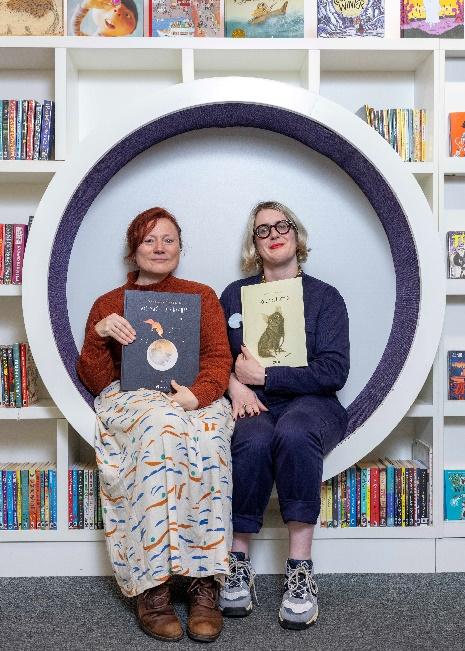
Two women sitting in a round chair

Description automatically generated

Keira Brown from Edinburgh UNESCO City of Literature Trust and UNESCO Cities of Literature Coordinator, Hannah Trevarthen, with a selection of the donated books.

Nottingham’s City of Literature Director and UNESCO Cities of Literature Chair, Hannah Trevarthen, said: “It’s a fantastic tradition, donating children’s books to the city hosting the meeting every year, and one we hope will long continue.

“It’s our thank-you to the city for all of the hard work that goes into hosting the Cities of Literature delegates.’We hope that the children of Edinburgh will be inspired by the books from other Cities of Literature from around the world.’’

Within Edinburgh City of Literature Trust’s twenty year span, they have helped grow a global network of international literary cities, for the benefit of writers and literature professionals, bringing opportunities for paid commissions, supporting creative practice and broadening literary networks internationally.

At a more local level in Scotland, the Trust’s work has ranged from high profile campaigns to community-based Edinburgh projects, with bold, innovative work bringing communities together – connecting readers and writers as well as literary organisations in the Scottish literature scene.

The Trust has also long partnered with Edinburgh Library service, working to advocate the importance of librarians and libraries across the city.

Culture and Communities Convener Val Walker, said:“Donating children’s books is a wonderful tradition within the UNESCO Cities of Literature Network. Through our ongoing partnership we are thrilled to see this meaningful gesture from such a diverse network of cities. 

“As the founding city of this international cohort of UNESCO Cities of Literature, we take immense pride in celebrating our 20th anniversary, and I truly hope this wonderful tradition continues for many years to come.”

Edinburgh City of Literature Trust birthday also contributes to the on-going Edinburgh 900 celebrations; marking the 900 year anniversary of Edinburgh – a city-wide celebration of Edinburgh’s history, culture and future.

PICS: Neil Hanna

Books for Broughton

BROUGHTON High School library is looking to expand the selection of stock and we are looking for donations of good quality books; non-fiction texts for age 10+; David Walliams books, Diary of a Wimpy Kid, Dork Diaries, Roald Dahl, Dog Man, Captain Underpants, Tom Gates books, football books, books about dance, Horrible Histories/Maths/Science, etc and books suitable for dyslexic learners of all abilities.

If you can help.with these, or any other suitable books for high school ages you might have and be able to pass our way, please contact our librarian, Robbie.loosemore@broughton.edin.sch.uk

Queen Margaret University launches free disability resources for schools

 QUEEN Margaret University (QMU), Edinburgh, has developed a series of resources for use in educational settings to help enhance disability literacy.

The University will launch its new Toy Box Diversity Lab website of resources on 9th May 2024, which will help guide discussions between educators and their primary school learners about disability equality and representation in the school curriculum, as well as encouraging them to think about accessibility in their own environments.  

Funded by the QMU Innovation Fellowship, the educational assets include an activities pack, instructional videos and a directory of other resources to encourage positive discussions in schools. 

The University will also be launching an online short course on Disability Confidence for Educational Practitioners, running from September 2024. 

Dr Clare Uytman and Dr Siân Jones, senior lecturers in the Division of Psychology, Sociology and Education at QMU, have led the three-year long project, establishing their own research group to do so. 

The lecturers have tested their resources with almost 550 children in England and Scotland, as well as running focus groups to create the final products in collaboration with teachers, disabled adults and parents of disabled children.   

Dr. Uytman, said: “Positive understanding, representation and discussion around disability is so important for achieving a more inclusive learning environment through imagination and play, which will help children understand the importance of these topics from an early age. 

“It is so rewarding to see three years of hard work and thorough research come together with the creation of these highly beneficial resources which we hope will be of real value to the teaching profession and enhance disability literacy.” 

As well as the website, the QMU lecturers have also been working in collaboration with activist not-for-profit organisation, ToyLikeMe, to ensure better representation of disabilities in children’s media, including toys, books and television programmes. 

Dr. Jones, said: “There is growing evidence that toys representing disability give non-disabled children windows into the worlds of disabled children.  

“We are building on this evidence base, using images of adapted toy prototypes, such as Barbie with a missing limb, or Olaf the snowman from Disney’s Frozen with a cochlear implant, and showcasing these to children through pop-up exhibitions and activities we have been trialing at schools to help them think and speak positively about disability.” 

Scottish primary school teacher, Mhairi Ritchie, welcomed one of these pop-up exhibitions so that she, and her pupils, could sample the resources. She said: “Involvement in the project was a fantastic way to explore disability. The children learned new vocabulary and developed a new perspective around what it means to be disabled.  

“The accompanying resources were highly engaging and thoughtfully designed, enabling an interdisciplinary approach to the learning. The great thing is that we can use the resources again in the future and we look forward to doing so!” 

An event will be taking place both online and in the Halle Lecture Theatre on campus at QMU to coincide with the official launch of the website on 9th May. 

The launch event will take place between 4pm and 5.30pm at which attendees can learn more about the evidence-based research that has been conducted for this project, as well as more details on the resources on offer.

Register for your place on or before 7th May – https://www.tickettailor.com/events/queenmargaretuniversity1/1207938 

Find out more about QMU’s online short course on Disability Confidence for Educational Practitioners here

https://www.qmu.ac.uk/study-here/short-courses/short-courses/disability-confidence-for-educational-practitioners/ 

Celebrating Read Write Count

Supporting child literacy and numeracy

Children across Scotland will be gifted a quarter of a million books and counting activities as part of the Read Write Count with the First Minister programme.

Around 248,000 books will be given to pupils in primary two and three this year as part of a programme underlining the First Minster’s personal commitment to supporting child literacy and numeracy learning across the country.

Pupils in Gaelic Medium Education receive bags with copies of the books in Gaelic and English accounting for 8,000 books in 2,000 bilingual bags.

Read Write Count with the First Minister aims to build parents’ confidence, and encourage families to include easy and fun reading, writing and counting activities in their everyday lives.

The programme received Scottish Government funding of £932,132 for 2023-24.

First Minister Humza Yousaf visited Craigentinny Primary School in Edinburgh to gift pupils with bags to mark Book Week Scotland.

The First Minister said: “I want to encourage all children to enjoy reading, writing, and counting. Reading for pleasure is crucial in developing children’s literacy skills, and our funded national programmes such as Read Write Count with the First Minister are about supporting and enhancing a love of reading from an early age.

“When I was young my favourite books were the ones that were fun and that taught me something new. A good story, or a good book, can open new worlds to us. Reading can even help us if we feel sad, or if we’re unsure about something, and want to learn more about it.

“The Read Write Count with the First Minister programme is a key part of the Scottish Government’s commitment to raising attainment by building parents’ confidence and encouraging families to include fun reading, writing and counting activities in their everyday lives.”

Chief Executive Officer of Scottish Book Trust Marc Lambert said: “Gifting books to children through the Bookbug and Read Write Count with First Minister programmes is one of the highlights of Book Week Scotland each year. For many children in Scotland, the only books they have at home are the ones they are given by Scottish Book Trust.

“Our Bookbug and Read Write Count bags reach children from birth up to Primary 3, and we know they can make a big impact to children’s lives. We’re grateful to the First Minister for joining us at Craigentinny Primary School as the pupils and their families were gifted the bags.”

Local community groups invited to host an author event

Book Week Scotland has opened applications for Pitch It!, which lets community groups, organisations or individuals pitch to host an event with a brilliant writer. We’ll provide up to £500 to help with event costs for the successful pitches, as well as tailored support to help make your event the best it can be.

This year’s Pitch It! line-up comprises:

·       Kiran Millwood Hargrave, for an event on Friday 17 November

Kiran Millwood Hargrave is an award-winning poet, playwright, and bestselling novelist writing for both children and adults. Her books include The Girl of Ink and Stars, Julia and the Shark and The Mercies. Kiran is particularly interested in events relating to the environment, conservation and nature.

·       Nooruddean Choudry, for an event on Saturday 18 November

Nooruddean Choudry, also known as @BeardedGenius, is best known for his football writing. His new book Inshallah United is a humorous look at faith, football and growing up in a working-class immigrant family.

Book Week Scotland (13–19 November 2023) is a week-long celebration of books and reading, with hundreds of events taking place online and in communities all over Scotland. This year’s theme is ‘adventure’.

The deadline to pitch your event by is Monday 25 September at midday, and further info and the application form can be found at bookweekscotland.com.

Next chapter for Reading Schools

More pupils to benefit from ‘transformative’ programme

The First Minister has encouraged every school in Scotland to join Reading Schools, a Scottish Government-funded programme that supports attainment and benefits pupils’ health and wellbeing.

So far, 371 schools have been awarded Reading Schools accreditation and 511 more have joined the programme – which independent evaluation has shown leads to more pupils reading for pleasure and can help to reduce the poverty-related attainment gap.

It is hoped that every school in Scotland will be a Reading School within three to five years.

In addition to Reading Schools, the First Minister will underline his personal commitment to promoting both literacy and numeracy by supporting the ‘Read Write Count with the First Minister’ programme, which will provide books and literacy materials to children when it opens in the autumn.

The First Minister and the Education Secretary heard about the benefits of Reading Schools during a visit to Claypotts Castle Primary School in Dundee.

First Minister Humza Yousaf said: “I am pleased that the hugely successful First Minister’s Reading Challenge has now evolved into a reading support programme that will benefit even more pupils, and involves the whole school community.

“We know that reading can support improved attainment across the curriculum and that embedding a reading culture in schools can open the door to a lifelong love of books.

“I look forward to working with the Scottish Book Trust and schools across the country on both Reading Schools and the refreshed Read Write Count with the First Minister set to launch in the autumn. These fantastic programmes will support children in improving both literacy and numeracy across Scotland.”

Education Secretary Jenny Gilruth said: “Evaluation has shown the clear benefits of Reading Schools to pupils and school staff and I look forward to seeing the impact of this next phase in our work with the Scottish Book Trust.

“I would encourage every school in Scotland to join the programme so that pupils can enjoy all of the positive impacts that reading brings.”

Claypotts Castle Primary School head teacher Nicky Murray said: “The Reading Schools award has allowed us to focus our effort, energy and enthusiasm and protect time within our school improvement agenda to drive forward a culture of reading in our school.  

“We have already awarded over 250 certificates to children this year to celebrate their reading achievements and the feedback from families has been overwhelmingly positive.

“The Reading Schools award has given us the opportunity to align our vision of a community and school improvement focus to extend the life and ethos of the school into every home in our local community.”

Marc Lambert , CEO of the Scottish Book Trust, which delivers the Reading Schools programme, said: “We look forward to supporting even more schools on their Reading Schools journey in the years ahead. 

“Reading Schools is already having a transformative effect in schools, both on young people and learning professionals, as well as the wider school community.

“We are delighted that the First Minister and Scottish Government continue to show their commitment to literacy and numeracy, benefitting pupils across all ages and stages of their education.”

Reading Schools

Participating schools