The Space Between Us is an exhibition of poems and images by sisters Rachel Barr and Bridget Grant.
Together, they explore the impact of a glioblastoma brain tumour diagnosis.
It is a tender, honest and deeply moving body of work, and North Edinburgh Arts is proud to support it.
The exhibition offers visitors the opportunity to spend time with the sisters’ work and gain a personal perspective on the experience of a glioblastoma diagnosis.
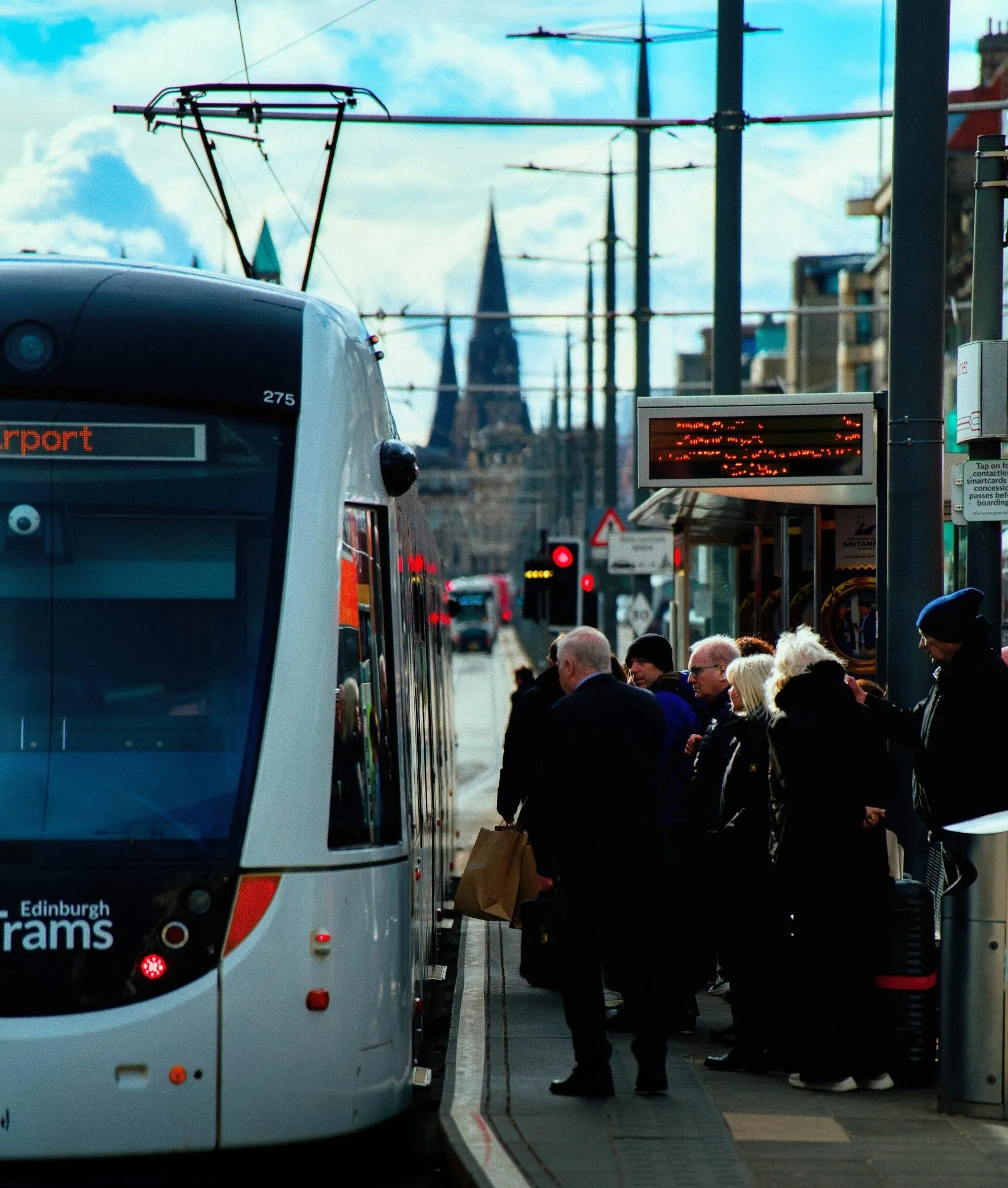
Edinburgh City of Literature is inviting local emerging poets to submit work for an exciting new poetry competition, and the winning poem is set to be installed on a moving Edinburgh tram.
The winning poet will also receive a £100 honorarium and developmental support from Edinburgh City of Literature, offering guidance and encouragement.
The competition celebrates poetry written for public spaces and everyday readers. The prize-winning poem will be read by thousands of passengers as they move through Edinburgh.
Alongside the tram installation, the winning poem will be:
Printed on a specially illustrated postcard, illustration by Liz Windisch
Shared on Edinburgh City of Literature’s website and social media channels
Nearly 600 writers from 41 countries gather in Edinburgh from 15–30 August for the 2026 Edinburgh International Book Festival
Over 600 events span fiction, politics, science, history, music, and live performance in a 16-day curated programme
At a time of intense polarisation and entrenched positions, our 2026 theme Changing Your Mind invites audiences to stay open and curious, championing deep listening and celebrating our capacity to evolve our thinking, informed by a range of reliable experts and diverse perspectives
The Festival brings together a carefully curated programme of voices, experts, and ideas, to create space for informed, nuanced public conversation, and encourage new and alternative thinking – a much-needed alternative to debate driven by reaction and polarisation
Major public figures include former Finnish Prime Minister Sanna Marin, former UK Prime Minister Gordon Brown, Wikipedia founder Jimmy Wales, technology writer Cory Doctorow, best-selling author Michael Pollan, and award-winning poet Claudia Rankine, alongside leading writers from across the world
A landmark rare event brings one of the bestselling writers of all time, John Grisham, and iconic Scottish crime writer Ian Rankin together on stage, crowning The Front List line up at the McEwan Hall. The roster also includes Tom Holland, David Olusoga, Diana Gabaldon, Kiran Desai and Kae Tempest.
Other renowned fiction writers appearing include Maggie O’Farrell, Ann Patchett, Ali Smith, Jenni Fagan, Colm Toíbín, Matt Haig, Louise Welsh, Nao-Cola Yamazaki, Candice McCarty-Williams, Ben Lerner, and 2026 International Booker Prize winner Yáng Shuāng-zi
Greyfriars Kirk becomes a Book Festival venue for the first time, hosting Scotland to the World – a new series connecting leading Scottish writers Ali Smith, Len Pennie, Kathleen Jamie, and William Dalrymple with international musicians, artists and performers.
A strong focus on trust and information runs across the programme, with journalists, analysts and researchers examining misinformation, data, and global narratives, including The New Yorker’s Fergus McIntosh, The News Agents podcast co-host Lewis Goodall, and journalist Yi Ling Liu
The Festival explores the AI revolution and its regulation, with pioneers in the development of AI tools and their application – including Steve Crossan, part of the original DeepMind team; Sarah Wynn-Williams, former Director of Public Policy at Facebook; and Tim Wu, inventor of the term ‘net neutrality’ – weighing its impact and risks
Global Ink convenes 20 cultural leaders from five continents, reinforcing the Festival’s role as an international meeting point for ideas
BBC collaboration transforms the Spiegeltent into a daytime broadcast hub (17–21 August), with live and recorded programming on BBC iPlayer and BBC Sounds
The Festival’s Young Adults programme returns for its second year, bringing together leading YA authors such as Juno Dawson, Samantha Shannon, and Holly Bourne with performance, spoken word and interactive events tailored for audiences under 30 More than 150 events for children and families, with a Schools programme supporting around 5,000 pupils through free tickets for those in need, transport and books
New partnership with LNER delivers a reimagined Kids Zone with free activities every day of the Festival
Livestreamed and Pay What You Can events, alongside library streaming, extend access across Scotland and beyond
The Edinburgh International Book Festival returns to Edinburgh Futures Institute from 15–30 August with one of its most relevant and international programmes to date.
In a moment of increasing global polarisation, the 2026 Festival – with a hero theme of Changing Your Mind – brings together almost 600 writers from 41 countries for 16 days of ideas, literature, conversation, and performance.
The Festival is where books and words spark new thinking, forge connections across borders, and generate conversations that matter.
The 2026 programme spans the full breadth of contemporary writing – world-class fiction and nonfiction, a rich programme for children and young people, food, poetry, and live performance – with a special focus on how we engage with the world’s biggest questions: from geopolitics and the flow of global power, to the nature of consciousness, the reliability of information, and how we live well together.
The theme, Changing Your Mind, runs through the programme as an invitation to listen, reconsider, and discover something new, unfolding across strands exploring public debate, new thinking in science and consciousness, and the role of stories and art in reshaping how we understand one another.
Jenny Niven, Director of Edinburgh International Book Festival, pictured outside the Book Festival’s home at Edinburgh Futures Institute. Photo credit Aly Wight.
Jenny Niven, Director of Edinburgh international Book Festival, said: “Our theme ‘Changing Your Mind’ speaks to the moment we’re in.
“At a time when opinions seem increasingly polarised and online debate is so divisive, we’re creating space for thoughtful, nuanced conversations – exploring the reasons for our increasing social and political divides, and how we might change each others’ minds, or at least agree to disagree, more agreeably.
“We’re also looking at the potential of the human brain to adapt and relearn, and at the unparalleled power of stories to change our thinking.
Changing your mind is a lifelong process of staying open to new ideas. By bringing amazing speakers and curious audiences together, around knowledge and perspectives that help us challenge our assumptions and see the world differently, we hope the Festival programme this year will help us gain a deeper understanding of both ourselves and each other.”
ARE YOU OPEN TO CHANGING YOUR MIND?
As the world becomes ever more polarised, and opinions increasingly entrenched, we’ve reached a moment where to change your mind is seen as a sign of weakness, or even disloyalty – this year’s key theme seeks to reframe that. A wide range of experts, across three thematic strands, share reliable information and nuanced perspectives, encouraging audiences to think both critically, and flexibly, on a number of prescient topics – and maybe even change their minds about their current stances as they learn more, and expand their understanding.
Can You Change Your Mind? explores how we form and revise our views – featuring internet pioneers Sarah Wynn-Williams, Jimmy Wales and Cory Doctorow on the development of the web, and leading political voices including Gordon Brown, Jeremy Hunt and former Finnish Prime Minister Sanna Marin on the forces shaping our world today. Practical workshops offer tools for more open and productive dialogue.
Consciousness Now looks at how our understanding of the mind is being transformed – with Michael Pollan and Anil Seth in conversation about what remains distinctively human in a machine-led world, and Gwen Adshead and Orlando Swayne on the brain’s remarkable capacity for adaptation and recovery.
Stories That Change Us celebrates reading as a route to new perspectives, with Daisy Fancourt and choreographer Wayne McGregor examining how the arts support wellbeing and cognition, and Claudia Rankine and Kiran Desai sharing the books that have shaped their lives and work.
INFORMATION WE CAN TRUST
The Festival has a long-standing commitment to trusted, verifiable sources and data – and this year’s Good Information strand brings together journalists, analysts and researchers to examine how we know what we know. Sir John Curtice examines what data tells us about Britain’s electorate today; Fergus McIntosh, who runs The New Yorker’s fact-checking department, discusses rigour in modern journalismwith The News Agents podcast host Lewis Goodall; while journalist Yi Ling Liu takes audiences behind the Great Firewall for a fascinating account of China’s internet.
The New World Orders strand brings together leading voices in economics, law and politics – including former US State Department official Edward Fishman and Oxford economist Carl Benedikt Frey on the shifting flow of global money and power, and Rana Dasgupta and Ece Temelkuran on borders and displacement.
More widely, nonfiction programming this year includes discussions on topics as wide-ranging as the World Cup (Simon Kuper, who has attended every one since 1990), designing cities for the future (Gabriella Bennett), bringing data to life with design (Mona Chalabi), and using the law as a framework to navigate and protect our rights, with Baroness Brenda Hale.
GLOBAL CONVERSATIONS
At the Festival, a book is just the beginning, and a starting point for conversations that reach far beyond the page – and that spirit is at the heart of this year’s programme.
Scotland to the World is a special series at Greyfriars Kirk – the first time the venue has been part of the Book Festival – bringing together Scottish writers including Ali Smith, William Dalrymple, Kathleen Jamie, and Len Pennie with artists and performers from Japan, India, the Netherlands and the United States. Supported by the new Expanded Festivals Fund, the series reflects Edinburgh’s status as a global meeting point for culture, and Scottish writers as our ambassadors.
Highlights include a highly experimental production created by pairing Kathleen Jamie’s writing with performance from Japan’s Noh Reimagined theatre company, alongside leading musicians Aidan O’Rourke and Brìghde Chaimbeul; and Dutch contemporary classical collective New European Ensemble presenting four new pieces inspired by Ali Smith’s Seasonal Quartet, with the author reading alongside.
The Front List, presented in partnership with Underbelly at McEwan Hall, forms one of the programme’s flagship strands: a curated series of large-scale events bringing leading writers, journalists, historiansand performers into in-depth conversation on some of the most pressing questions of our time.
Highlights include Diana Gabaldon marking 35 years of Outlander, Pulitzer and Booker Prize winners including Colson Whitehead, Douglas Stuart (hot on the heels of his Oprah appearance), and Kiran Desai, as well as conversations with voices such as Wikipedia founder Jimmy Wales, Cory Doctorow and the BBC’s Lyse Doucet.
Fiction this year ranges from Colm Tóibín and Maggie O’Farrell to recent International Booker Prize winners Yáng Shuāng-zǐ and Lin King, and international stars Daniyal Mueenuddin and Japanese literary sensation Mieko Kawakami, with Scottish voices including Fern Brady, Jenni Fagan and Graeme Armstrong.
This August also sees a landmark pairing: John Grisham – whose books have sold over 500 million copies worldwide, with more than 50 consecutive number-one bestsellers and translations into almost 50languages – joins Ian Rankin for an event marking Grisham’s first visit to the Festival.
It is a rare chance to see the godfather of the legal thriller genre with one of the biggest names in contemporary crime writing together on stage, celebrating the accessibility of books and highlighting this year’s status as a National Year of Reading.
A limited number of VIP tickets will offer audiences the chance to enjoy a pre-event drinks reception with Ian Rankin, with proceeds supporting the Festival’s charitable aims, including its communities and Schools programmes.
BUILDING INTERNATIONAL RELATIONSHIPS
The Festival’s international reach extends well beyond its programme. Global Ink, the Festival’s industry forum, reaches a new milestone in 2026 – spanning five continents for the first time, bringing senior figures from 20 of the world’s leading festivals and cultural organisations together for three days of exchange and collaboration with the support of Scottish Government EXPO funding. Now in its third year, Global Ink reflects the Festival’s role as a global meeting point for ideas and the people who champion them.
A multi-year creative partnership with Celtic Connections continues, with The Golden Road – inspired by William Dalrymple’s award-winning book – which premiered at Celtic Connections in January 2026developing into an expanded Festival performance in August.
This year, the BBC will use the Spiegeltent as a base for wider Festival coverage, curating its own selection of content and voices for broadcast on BBC iPlayer and BBC Sounds, bringing the atmosphere of theFestival to national and international audiences.
COMMUNITIES, YOUNG PEOPLE, AND ACCESSIBILITY
In the National Year of Reading, the Festival maintains its commitment to bringing the benefits of reading to all. New research shows fewer than 1 in 5 children currently read daily; 1 in 4 children do not reach the expected reading level by age 11. Both within the National Year of Reading, and as a long-term commitment, the Festival creates environments where reading is fun, sociable and imaginative, rather than solely educational.
Twenty percent of this year’s programme is for children and young people, with more than 150 events for families alongside a Schools programme supporting around 5,000 pupils each year through free ticketsfor pupils in need, transport support, and a free book for every participant, supported by Claire and Mark Urquhart. Authors appearing include Cressida Cowell, Julia Donaldson, Neill Cameron, and Jodie Ounsley of Gladiators fame, while the LNER Kids Zone and Families Hangout offer creative activities and relaxed reading spaces designed for all ages, with free events daily.
A dedicated Young Adults programme for readers aged 30 and under includes BookTok sensation Jack Edwards bringing his Inklings Book Club to life as a live podcast, alongside YA authors Juno Dawson, Samantha Shannon, Faridah Àbíké-Íyímídé and Holly Bourne, and a range of special pop-up events let audiences connect with one another and make new friendships.
The Festival’s year-round Communities Programme works to address literacy inequality and social isolation. Paper Trails, the flagship five-year library initiative launched by HM Queen Camilla in 2025 and developed with City of Edinburgh Council, works with five Edinburgh libraries through co-created creative programming.
This August, events will be livestreamed free to libraries across 20+ Scottish local authorities (up from 13 LA’s in 2025), including as far afield as Shetland. Community work will also be visible throughout the Festival in the Communities Cabaret, the Where We Are exhibition featuring work by Edinburgh College of Art students, and writing from young people at Spartan Foundation’s Alternative School, as well as in visits to hospitals and prisons by a range of authors.
Events will continue to be livestreamed globally with a Pay What You Can model helping to widen access, alongside live and AI captioning, British Sign Language provision and events designed for audiences with learning disabilities.
Lyse Ducet, Chief International Correspondent and senior BBC presenter
FURTHER PROGRAMME HIGHLIGHTS
How to Live a Meaningful Life offers warmth and perspective: Waterstones Children’s Laureate and the first ever Children’ Booker Prize judge Frank Cottrell-Boyce discusses protecting childhood, Prue Leithreflects on the pleasures of ageing, and philosopher Julian Baggini celebrates the meaning of coffee – with a tasting from Santu Coffee.
Table Talks returns with the chance to share a meal with writers including Ella Risbridger, Yasmin Khan, Jess Elliott Dennison, Meera Sodha, Michelin-starred chef Santiago Lastra and former Ottolenghi pastry chef Helen Goh.
Poetry ranges from Loud Poets’ Grand Slam Final and Push the Boat Out’s Open Mic Night to Simon Armitage, Hanan Issa and Peter MacKay – the UK and Welsh Poet Laureates and Scottish Makar – on the idea of national poetic identity.
The Festival’s Spiegeltent programme includes a new edition of Buffy’s Book Club, a celebration of 50 years of Scottish punk with Caledonia Screaming, and Hamish Hawk performing the Festival-commissioned Life in a Scotch Sitting Room, Vol. 0, following a UK tour and sold-out Glasgow show.
Workshops cover war reporting with Sally Hayden, translation with Polly Barton, Tarot as a writing tool with Jill Dawson, and – building on the Festival theme – open conversations with Sarah Stein Lubranoand deep listening with Emily Kasriel.
Curated and directed by Cora Bissett and Hannah Lavery
With visuals by Lucas Chi-Peng Kao
A one-night-only response to the times we are living through, presented by a host of leading Scottish artistic talent from the fields of theatre, music, poetry, comedy and dance.
On 1 May at Edinburgh Central Hall at 7pm.
Featuring Comedy:Sanjeev Kohli (Still Game) / Tia Rey; Music: Dala by Heir of the Cursed performed by Djana Gabrielle / Cora Bissett, Kathryn Joseph and Joan Clevillé & Kassichana Okene-Jameson of Scottish Dance Theatre/ Kitti / Loud and Proud Choir / Soapbox / Declan Welsh; Poetry: Shasta Hanif Ali / William Letford / Michael Mullen; Theatre & Dance; An artistic response to Talat Yaqoob’s International Women’s Day Speech (2026) – led by Janice Parker / Apphia Campbell / Reuben Joseph / Hannah Lavery / Uma Nada-Rajah / Sara Shaarawi / Dawn Sievewright performing It’s No a Weans Choice
Live band: Isaac Savage (keyboards/vocals) / Adam Scott (bass) / Djana Gabrielle (guitar/vocals) / Signy Jacobsdottir (drums and percussion) / MJ McCarthy (musical direction)
Two of Scotland’s leading artists and theatre-makers, Hannah Lavery and Cora Bissett, join forces to create an urgent multi‐form evening of theatre, music, poetry, comedy, film, dance and collaborative performance at Central Hall, Edinburgh, on 1 May.
Created as a rapid-response theatre project, in direct response to the turbulent social and political climate, they have curated and gathered together a constellation of Scottish artists for a one-night-only flare of short, urgent performances and interventions.
Through new work, unique collaborations and community voices, Mayday meets the “dark times” we are living through with wit, defiance, tenderness and imagination. This collective response honours the theatrical space as a place where audiences can think together, dream together and begin to imagine the futures we are still reaching for.
Co-curators/co-directors Hannah Lavery and Cora Bissett said: “Given the times we are living in—where division is being fuelled by dangerous and deliberately misinformed rhetoric— we feel deeply and personally connected to this Rapid Response Project.
“We are living through an age of fear: extreme racism and anti-migrant sentiment are being normalised, human rights attacked at every level, climate injustice accelerating, and ordinary people struggling to meet even basic needs.
“We’re thrilled to curate an event that will bring together bold, fierce, insightful and creatively galvanising voices from across Scotland – an urgent celebration of our shared humanity that challenges the rising tide of hate, calls upon solidarity, inspires change and imagines a more compassionate future.”
Highlights include:
Original short sharp plays from playwrights Apphia Campbell(The Official Version), Hannah Lavery (Patriotic Renewal), Uma Nada-Rajah (The Proposal) and Sara Shaarawi (Pandora’s Box)
Sanjeev Kohli delivers a short sketch on the cultural impact of his character Navid from Still Game
Live music from Declan Welsh, Soapbox and Djana Gabrielle, who honours Beldina Odenyo’s (Heir of the Cursed) Dala with a powerful, intimate performance that moves between vulnerability and defiance.
Cross-artform collaborations including Scottish Album of the Year (SAY) Award winner Kathryn Joseph’s powerful new collaboration with dancer Kassichana Okene-Jameson, visuals by Lucas Chi-Peng Kao, choreography by Joan Clevillé, and direction by Cora Bissett. Joseph’s haunting, fragile songs intertwine with movement in a visceral fusion of music and dance. Created in collaboration with Scottish Dance Theatre.
Collaborations between professional artists and community groups:
An Artistic Response to Talat Yaqoob’s International Women’s Day Speech, Edinburgh, March 2026 led by award-winning choreographer and dance maker Janice Parker.
Loud and Proud Choir
Dawn Sievewright (Wild Rose) performs No a Weans Choice, the defiant rallying cry from the Glasgow Girls stage show, composed by Cora Bissett
Reuben Joseph (Orphans – NTS, Hamilton the Musical) performs a new version of Robert Burns’ A Man’s a Man.
Listings information
Friday 1 May 2026, Central Halls, Edinburgh, 7pm (doors from 6.30pm)
There is still time to enter this year’s Green Pencil Award.
The theme is Scotland’s weather! Whether it’s a story about a magical mist rolling through the Highlands, a poem capturing the drama of a stormy seaside, or a sunny adventure (rare as that may be!), we want to hear how Scotland’s ever-changing skies inspire you.
Come along and browse Drumbrae Library’s display for inspiration!
Open to Primary 4 to S3 students
Entries can be poetry, prose or story, all we ask is that the writing is the author’s own work and is no longer than one side of A4 paper.
The competition started on 1 October and the closing date is 28 November 2025.
Ask for an entry form at the library desk or follow the link below:
Discover the power of poetry as a tool for remembrance, on Tuesday 11th November from 6.30pm-7.30pm.
This guided session offers a gentle and welcoming space to reflect on loved ones through poems about memory, love, and loss. You are invited to join us in writing, sharing your own poems, or simply listening to others.
No poetry experience is needed; all are welcome to participate in this shared experience.
Light refreshments will be provided.
This session will be facilitated by our dramatherapist, Sally McRae.


 North Edinburgh Arts
 Exhibition Opening Dates: 16th to 29th October
 Free entry