If you take regular medication, now’s a good time to check how much you have left.
GP practices and pharmacies may have changed opening hours over the Easter weekend, so ordering what you need in plenty of time can help avoid a last‑minute rush.
Now, new research from Hillarys reveals Britain is spending an estimated £48 billion a year just to function while tired, as millions of workers pay daily to push through poor sleep. With 64% spending money each week to cope, and the average employee shelling out £6.23 a day (£2,274 a year), experts warn the nation’s chronic “sleep deficit” is now hitting wallets as hard as wellbeing.
As Sleep Awareness Month takes place in March, the survey highlights a growing reliance on caffeine, convenience food and other quick fixes – masking fatigue rather than fixing it, and with the clocks about to go forward one hour on March 29th, many could struggle with lack of sleep.
Key findings
64% of UK workers spend money weekly to manage tiredness caused by poor sleep
Annual spend on coping with fatigue (£2,274) can account for up to 43% of a renter’s disposable income, showing the real financial impact of Britain’s sleep deficit
The average worker spends £6.23 per day, equivalent to £2,274 per year
Coffee and energy drinks are the most common coping methods, used by 32% of workers
Workers aged 35-44 spend the most, averaging £7.13 per day to stay alert
New research from Hillarys shows that Britain’s chronic sleep deficit is creating a major consumer burden, with the workforce spending an estimated £48 billion a year just to cope with tiredness. The survey of 2,001 UK employees found that nearly two-thirds of workers spend money each week on coffee, snacks, alcohol, supplements, or convenience food to function after insufficient sleep.
The average daily spend of £6.23 translates into £2,274 per worker annually. When compared with typical disposable income, the impact is striking: research from YBS* shows UK renters have just £440 per month left after bills and essentials, while homeowners have £872 per month.
Put another way, the typical worker’s annual spend on coping with tiredness represents around 43% of a renter’s disposable income and 22% of a homeowner’s, highlighting how chronic fatigue is hitting wallets as hard as wellbeing.
Who is paying the most? Midlife adults aged 35-44 bear the highest cost of poor sleep, averaging £7.13 per day (~£2,603 per year) on coping mechanisms such as caffeine, snacks and convenience food. Younger workers aged 18-24 spend £6.35 per day (~£2,317 per year), while those aged 25-34 average £6.23 per day (~£2,274 per year). Workers aged 55 and over spend the least at £4.47 per day (~£1,631 per year).
High-pressure sectors such as finance and IT report even greater expenditure, with some workers spending up to £3,100 per year just to stay alert during the working day.
Britain’s top coping behaviours
Coffee and energy drinks – 32%
Sugary snacks – 18%
Takeaway or convenience food – 17%
Alcohol – 16%
Supplements or sleep aids – 14%
Sleep deprivation is no longer just a health issue – it has become a consumer economy. Workers routinely spend money on short-term stimulants rather than addressing the root cause, creating a cycle of fatigue and expenditure that compounds across generations and sectors. Younger workers rely heavily on caffeine to get through the day, while older workers invest more in supplements or aids.
Tom Coleman, sleep expert at Hillarys, comments:“Paying to stay awake is only masking a much bigger problem.
“Chronic sleep deficit changes how our bodies regulate energy, stress and focus, and over time it can make fatigue feel normal – which is why midlife workers are spending thousands just to keep going.
“Fatigue also impairs decision-making, so people are more likely to reach for quick fixes like coffee, snacks, energy drinks or takeaways, even when they’re costly or not the healthiest choice.
“The solution isn’t more stimulants – it’s reshaping daily habits to reduce sleep debt: scheduling regular bedtimes, building natural tiredness through daytime activity, and managing stress early in the day rather than in the evening.
“Organisations can help by recognising the hidden costs of fatigue and supporting healthier work-life patterns. Addressing sleep now is an investment that pays back in alertness, better decisions, and real money saved on coping mechanisms.”
Wondering when to call 111? Here’s what you need to know:
For minor illnesses like colds or sore throats, your local pharmacy is the best place for advice and treatment. Call 111 when you need urgent health advice but it’s not an emergency.
Know your options and get the right care, at the right time.
The 111 service is expected to be VERY busy which may mean a prolonged wait for calls to be answered. Boxing Day is one of the busiest day of the year for our services. Here’s what you can do to help yourself, save time and help us care for those in the most need first.
NHS inform has a range of symptom checkers for common illnesses and conditions you can use to help you decide what to do next: https://nhs24.info/symptom-checkers
Check out the winter illness hub on NHS inform if you need help with colds, flu, coughs, sickness bugs, etc: https://nhs24.info/winter-illness
If you are using a mobile phone to call please switch to WiFi calling and ensure your device is charged. This will help to prevent your call being disconnected. Some mobile providers disconnect calls due to network capacity demand. NHS 24 does not cut calls.
NHS 24’s staff are working exceptionally hard to answer as many calls as we can, quickly and safely. Please be patient and we will answer.
If you can try the above options first, it could save you time. We want to help you get the right care, in the right place.
People should follow NHS inform guidance before calling 111 or 999
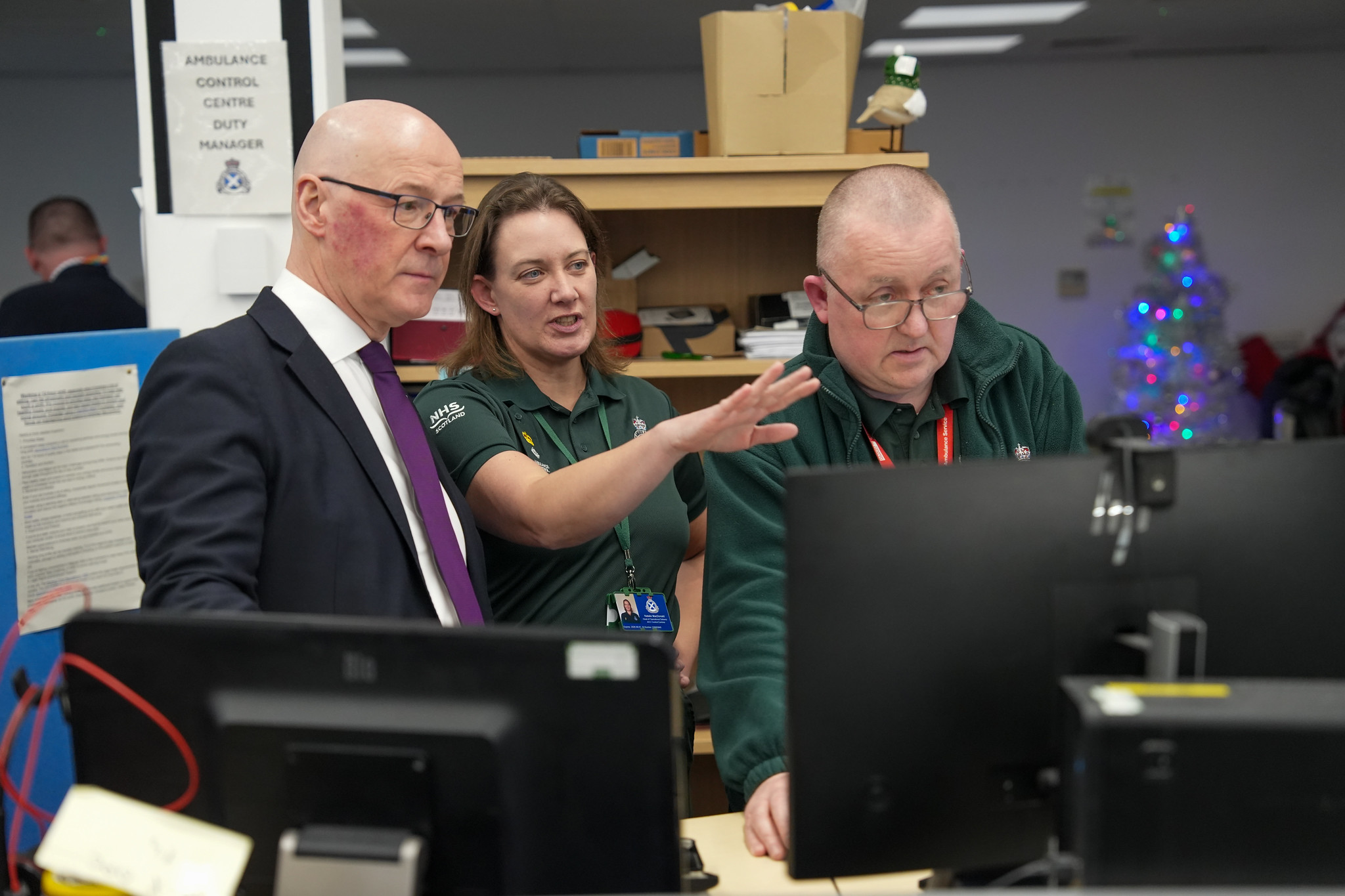
First Minister John Swinney has urged people to ensure they get the Right Care at the Right Place by checking the NHS inform website in the first instance if they become unwell.
During a visit to NHS 24 and the Scottish Ambulance Service (SAS), the First Minister thanked staff for their commitment to keeping the public as safe and informed as possible ahead of the busy festive period.
The guidance in the NHS Winter Preparedness plan sets out that anyone feeling unwell should:
check the NHS inform website for guidance and advice on symptoms. Around a quarter of 111 calls result in self-care advice, checking the website instead of calling ensures people can safely treat their symptoms without calling for help
call 111 if anyone thinks they need A&E but it is not a life-threatening emergency, support for mental health distress, or advice when the GP, pharmacy, or dental practice is closed
only attend A&E for genuine emergencies that cannot wait
call 999 immediately for life-threatening emergencies
Get the right care at the right place.
First Minister @JohnSwinney has urged people to check the NHS inform website in the first instance if they become unwell.
Follow NHS inform guidance before calling 111 or 999.
First Minister John Swinney said: “We know that demand for the NHS increases quite substantially over the festive period and there are a number of steps you can take to help yourself if you become unwell.
“In the first instance, check the symptom checkers on the NHS inform website – it can help you decide what to do next. If you still require medical help, NHS 24’s 111 service is there for you and dedicated professionals can provide advice.
“A&E is expected to be exceptionally busy in the coming weeks so only attend if you have a genuine emergency that requires urgent medical treatment.
“Our dedicated NHS staff will continue working throughout the festive period to provide support and care for the people of Scotland. I’m extremely grateful for their hard work and my thanks go out to all of you.”
Scottish Ambulance Service Chief Executive Michael Dickson OBE said: “Winter is always an exceptionally busy period and as demand on our service increases, we’re asking the public to use our service responsibly by only phoning 999 in a life-threatening emergency.
“Currently over 50% of our calls are managed without having to take patients to A&E. However, for those who do need hospital treatment, system-wide pressures, including lengthy handover times in key areas, are having a direct impact on our ability to get crews back on the road to reach other patients.
“Our fantastic staff are working extremely hard and we continue to prioritise those patients who are most critically ill. For those patients who are not critically ill, they may have to wait longer for an ambulance than usual and we thank the public for their patience; we will try to get to them as quickly as we can.”
NHS 24 Executive Medical Director Dr Ron Cook said: “With public holidays limiting access to GP and pharmacy services for four consecutive days across both festive weekends, NHS 24 is forecasting a significant rise in demand for our services as other primary care services take a well‑earned break.
“We plan carefully to ensure we have the right staff in place so people can access the right care in the right place. Our teams bring a wide range of skills, and every practitioner and clinician will play a vital role in supporting patients and each other to stay well during this busy period.
“We realise it’s not possible to cover every health eventuality, but we encourage everyone to plan ahead if possible. Make sure you have your prescription medicines, have over‑the‑counter remedies available at home, and check in on vulnerable friends or family. By preparing now, you can protect your festive time and avoid unnecessary interruptions.”


 symptom checkers: https://nhs24.info/symptom-checkers
 accessing medicines: https://nhs24.info/accessing-medicines
 Scotland’s Service Directory: https://nhs24.info/servicedirectory
 urgent mental health help: https://nhs24.info/urgent-mental-health


 One small thing to do before Easter


 Wondering when to call 111? Here’s what you need to know:


 NHS inform has a range of symptom checkers for common illnesses and conditions you can use to help you decide what to do next:
  Check out the winter illness hub on NHS inform if you need help with colds, flu, coughs, sickness bugs, etc:
 By using NHS resources wisely, we can keep well and get the care we need quickly, safely and as close to home as possible.


 SilverCloud – a website with courses that help you learn new ways to deal with the challenges you’re facing.
 Daylight – a digital programme to improve anxiety based on Cognitive Behavioural Therapy (CBT).
 Sleepio – a digital sleep improvement programme based on Cognitive Behavioural Therapy (CBT).

 Caught norovirus? – here’s our quick guide on what to do to help you feel better and prevent it from spreading to others:
 take paracetamol for any fever or aches and pains