Teams across NHS Lothian are preparing for the annual influx of visitors during Edinburgh’s world-famous Festivals.
The city’s population doubles to around a million throughout August as people from across the world enjoy the Edinburgh Festival Fringe, the Edinburgh International Festival, the Edinburgh Military Tattoo, and more.
NHS Lothian has a number of arrangements in place to make sure visitors can access healthcare if they need it, while continuing to provide routine and planned care for local residents.
Visitors are being urged to take the same route as locals and call 111 if they have an urgent injury or illness.
Experienced NHS 24 advisors will direct them to the most appropriate service to make sure they get the right care in the right place. NHS 24 also has an interpretation service for those whose first language is not English.
Depending on a patient’s circumstances, they may be given an appointment for a Minor Injuries Unit (MIU), be asked to attend a local pharmacy, or be given an appointment at a GP Practice which provides care and treatment for visitors who are not registered with a GP in the city.
Michelle Carr, Chief Officer of Acute Services, NHS Lothian, said: “We want everyone visiting Edinburgh during the Festivals to enjoy their time here, but if they become unwell or suffer an urgent injury, the best thing to do is call NHS 24 on 111. They should not turn up at a hospital.
“It’s important to stress that there is no walk-in service for visitors, but by calling 111 they will be able to access necessary healthcare 24/7.
“They will also be seen sooner than walking into a busy hospital A&E department that will prioritise patients and work in order of clinical urgency.
“The message is the same for visitors and local residents alike. If you need urgent healthcare, call 111. In a life-threatening emergency, always call 999.”
The 111 service is expected to be VERY busy which may mean a prolonged wait for calls to be answered. Boxing Day is one of the busiest day of the year for our services. Here’s what you can do to help yourself, save time and help us care for those in the most need first.
NHS inform has a range of symptom checkers for common illnesses and conditions you can use to help you decide what to do next: https://nhs24.info/symptom-checkers
Check out the winter illness hub on NHS inform if you need help with colds, flu, coughs, sickness bugs, etc: https://nhs24.info/winter-illness
If you are using a mobile phone to call please switch to WiFi calling and ensure your device is charged. This will help to prevent your call being disconnected. Some mobile providers disconnect calls due to network capacity demand. NHS 24 does not cut calls.
NHS 24’s staff are working exceptionally hard to answer as many calls as we can, quickly and safely. Please be patient and we will answer.
If you can try the above options first, it could save you time. We want to help you get the right care, in the right place.
People should follow NHS inform guidance before calling 111 or 999
First Minister John Swinney has urged people to ensure they get the Right Care at the Right Place by checking the NHS inform website in the first instance if they become unwell.
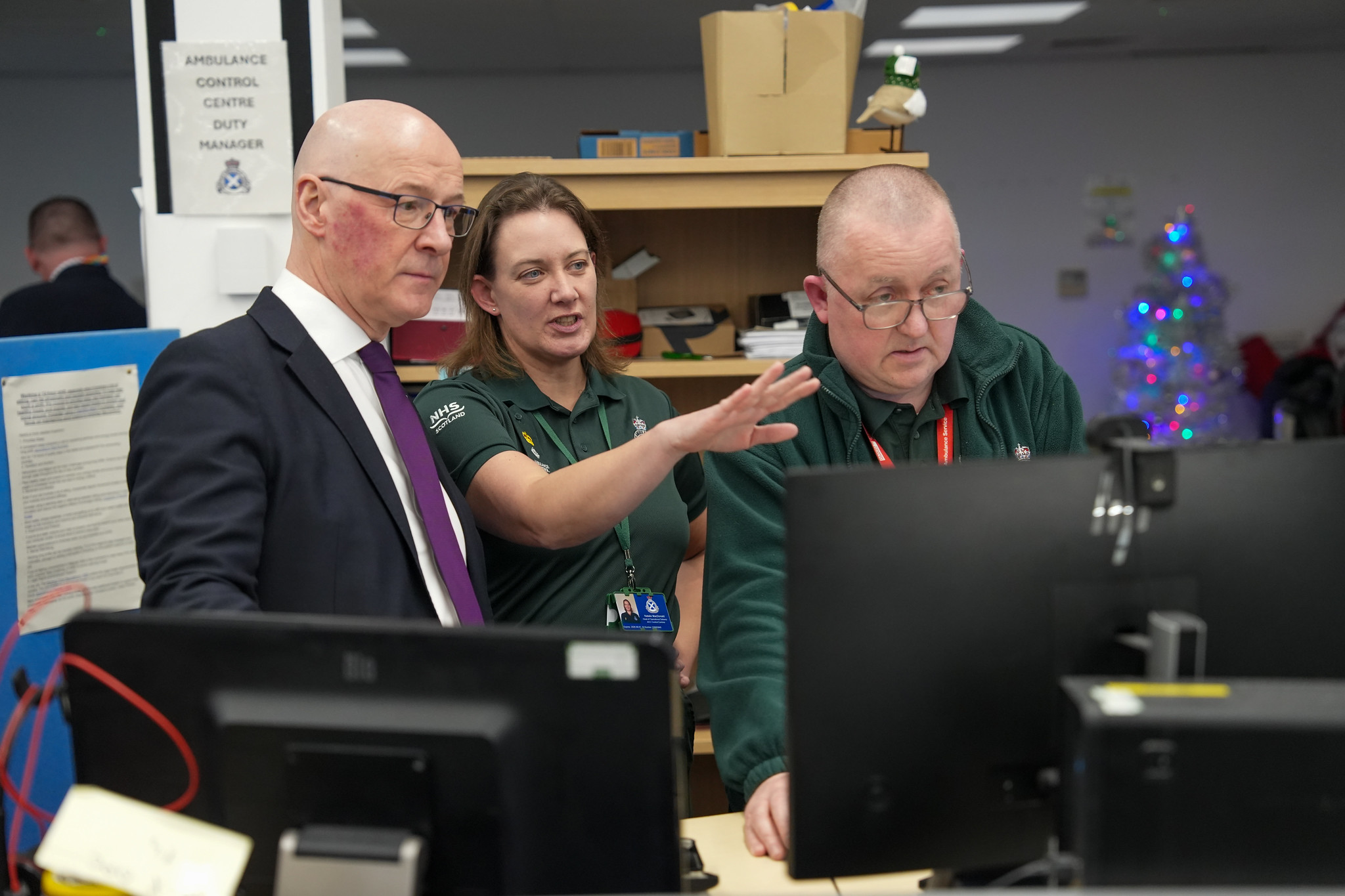
During a visit to NHS 24 and the Scottish Ambulance Service (SAS), the First Minister thanked staff for their commitment to keeping the public as safe and informed as possible ahead of the busy festive period.
The guidance in the NHS Winter Preparedness plan sets out that anyone feeling unwell should:
check the NHS inform website for guidance and advice on symptoms. Around a quarter of 111 calls result in self-care advice, checking the website instead of calling ensures people can safely treat their symptoms without calling for help
call 111 if anyone thinks they need A&E but it is not a life-threatening emergency, support for mental health distress, or advice when the GP, pharmacy, or dental practice is closed
only attend A&E for genuine emergencies that cannot wait
call 999 immediately for life-threatening emergencies
Get the right care at the right place.
First Minister @JohnSwinney has urged people to check the NHS inform website in the first instance if they become unwell.
Follow NHS inform guidance before calling 111 or 999.
First Minister John Swinney said: “We know that demand for the NHS increases quite substantially over the festive period and there are a number of steps you can take to help yourself if you become unwell.
“In the first instance, check the symptom checkers on the NHS inform website – it can help you decide what to do next. If you still require medical help, NHS 24’s 111 service is there for you and dedicated professionals can provide advice.
“A&E is expected to be exceptionally busy in the coming weeks so only attend if you have a genuine emergency that requires urgent medical treatment.
“Our dedicated NHS staff will continue working throughout the festive period to provide support and care for the people of Scotland. I’m extremely grateful for their hard work and my thanks go out to all of you.”
Scottish Ambulance Service Chief Executive Michael Dickson OBE said: “Winter is always an exceptionally busy period and as demand on our service increases, we’re asking the public to use our service responsibly by only phoning 999 in a life-threatening emergency.
“Currently over 50% of our calls are managed without having to take patients to A&E. However, for those who do need hospital treatment, system-wide pressures, including lengthy handover times in key areas, are having a direct impact on our ability to get crews back on the road to reach other patients.
“Our fantastic staff are working extremely hard and we continue to prioritise those patients who are most critically ill. For those patients who are not critically ill, they may have to wait longer for an ambulance than usual and we thank the public for their patience; we will try to get to them as quickly as we can.”
NHS 24 Executive Medical Director Dr Ron Cook said: “With public holidays limiting access to GP and pharmacy services for four consecutive days across both festive weekends, NHS 24 is forecasting a significant rise in demand for our services as other primary care services take a well‑earned break.
“We plan carefully to ensure we have the right staff in place so people can access the right care in the right place. Our teams bring a wide range of skills, and every practitioner and clinician will play a vital role in supporting patients and each other to stay well during this busy period.
“We realise it’s not possible to cover every health eventuality, but we encourage everyone to plan ahead if possible. Make sure you have your prescription medicines, have over‑the‑counter remedies available at home, and check in on vulnerable friends or family. By preparing now, you can protect your festive time and avoid unnecessary interruptions.”
Advice on how to get the right healthcare in the right setting this winter is the focus of an annual campaign launching today (Monday).
This year’s Right Care Right Place Campaign will run across TV, radio, press and digital platforms. It aims to ensure people can get the right care, while also reducing pressures on frontline health services.
As the weather turns colder, Scotland’s NHS and social care services get busier and the awareness campaign helps the public decide whether they should contact their GP or pharmacy, call NHS 24 on 111 or use self-help guides on the NHS Inform website. It reminds everyone that hospital emergency departments should only be visited for critical emergencies.
Health Secretary Neil Gray said: “Pressure on the healthcare system increases in winter months, and the Right Care Right Place campaign helps everyone know where they can go for advice or care for any health concerns during this busy period.
“Of course, people can also help by making sure they receive their Respiratory Syncytial Virus (RSV), Covid-19 and flu vaccinations if they’re eligible. This is even more important this year, as early evidence suggests it could be a particularly challenging flu season.
“We are taking a range of measures to ensure our health service is as resilient as possible over the next few months and that our committed health and social care staff are supported.
“We know that staff members work tirelessly to provide excellent care to all those who need it and as always, I’d like to thank them for their continued dedication.”
Confused about where to go when you or a loved one needs medical help?
It can be tricky to know where to get advice when you are ill or in pain, and choosing the wrong service can mean longer waits, more stress, and extra pressure on OUR NHS.
Our #RightCareRightPlace guide can help you make the right choice, quickly, safely and as close to home as possible.
Confused about where to go when you or a loved one needs medical help?
It can be tricky to know where to get advice when you are ill or in pain, and choosing the wrong service can mean longer waits, more stress, and extra pressure on our NHS.
Our #RightCareRightPlace guide can help you make the right choice, quickly, safely and as close to home as possible.


 NHS inform has a range of symptom checkers for common illnesses and conditions you can use to help you decide what to do next:
  Check out the winter illness hub on NHS inform if you need help with colds, flu, coughs, sickness bugs, etc:
  If your call is related to medicines please visit
 By using NHS resources wisely, we can keep well and get the care we need quickly, safely and as close to home as possible.




 Confused about where to go when you or a loved one needs medical help?
 Our
Our  Share our
