Scotland set for phone-free schools

Protecting children and young people

School learning environments across Scotland will become phone free under measures announced by Education Secretary Màiri McAllan yesterday.

Highlighting the damage phones can cause to pupils’ wellbeing and education, Ms McAllan confirmed forthcoming legislation to restrict their use in all of Scotland’s schools. A consultation will be launched within the new government’s first 100 days, with refreshed guidance published this summer to further encourage schools to bring in their own restrictions in advance of the law change.

A public health campaign will also be developed for young people and their parents, raising awareness of online harms while providing advice on how to stay safe on the internet.

The Scottish Government aims to build on strong foundations, delivering a phased and evidence-based public health approach to tackling online harms, informed by children and young people.

The Education Secretary said: “We will shortly publish a consultation on laws to make our learning environments phone free, meeting our commitment to do so in the first 100 days of this government.  

“Legislation is the way for us to mandate phone-free learning, but if head teachers want to take action themselves they do not have to wait, and nor should they.

“While we prepare legislation, we are working with education authorities to refresh the current guidance by the end of June, to support schools to consider their approach from the next term.

“Our schools and learning environments should be safe and nurturing environments for our children and young people, where they can learn free from the distractions of mobile phones.” 

In response to the Ministerial Statement on phone-free classrooms made yesterday, Mary Glasgow, Chief Executive of Children First said: “The strong commitment from the Scottish Government to set clear, consistent limits on mobile phone use in schools as part of a wider public health response to protect children from online harm is a crucial step in tackling the national childhood emergency of our time.

“The proposed guidance for schools must include firm boundaries for working with technology providers, so children’s data is protected and they are never exposed to advertising, addictive design or harmful content.

“Children are experiencing online harm on an unprecedented scale which must be matched by an unprecedented level of leadership and commitment. That’s why we’re calling on the Government to establish an independent online harm reduction unit within the first 100 days of the new Parliament.

“The unit would bring together expertise from across sectors to better understand risk, support parents, carers and professionals and challenge harmful and exploitative practices by tech companies.”

Any parent or carer worried about their child can contact Children First’s support line on 08000 28 22 33 or visit www.childrenfirst.org.uk/supportline for expert practical and emotional support.

You can listen to the Ministerial Statement in full here: Meeting of the Parliament | Scottish Parliament TV

Autistic people risk being left behind without urgent Government action

Autistic people and their families across Scotland continue to face significant barriers, including long waiting times for diagnosis, a lack of support in schools and low employment rates.

Too often, children are missing out on education or are excluded from the classroom, while many people are left without support until they reach crisis point.

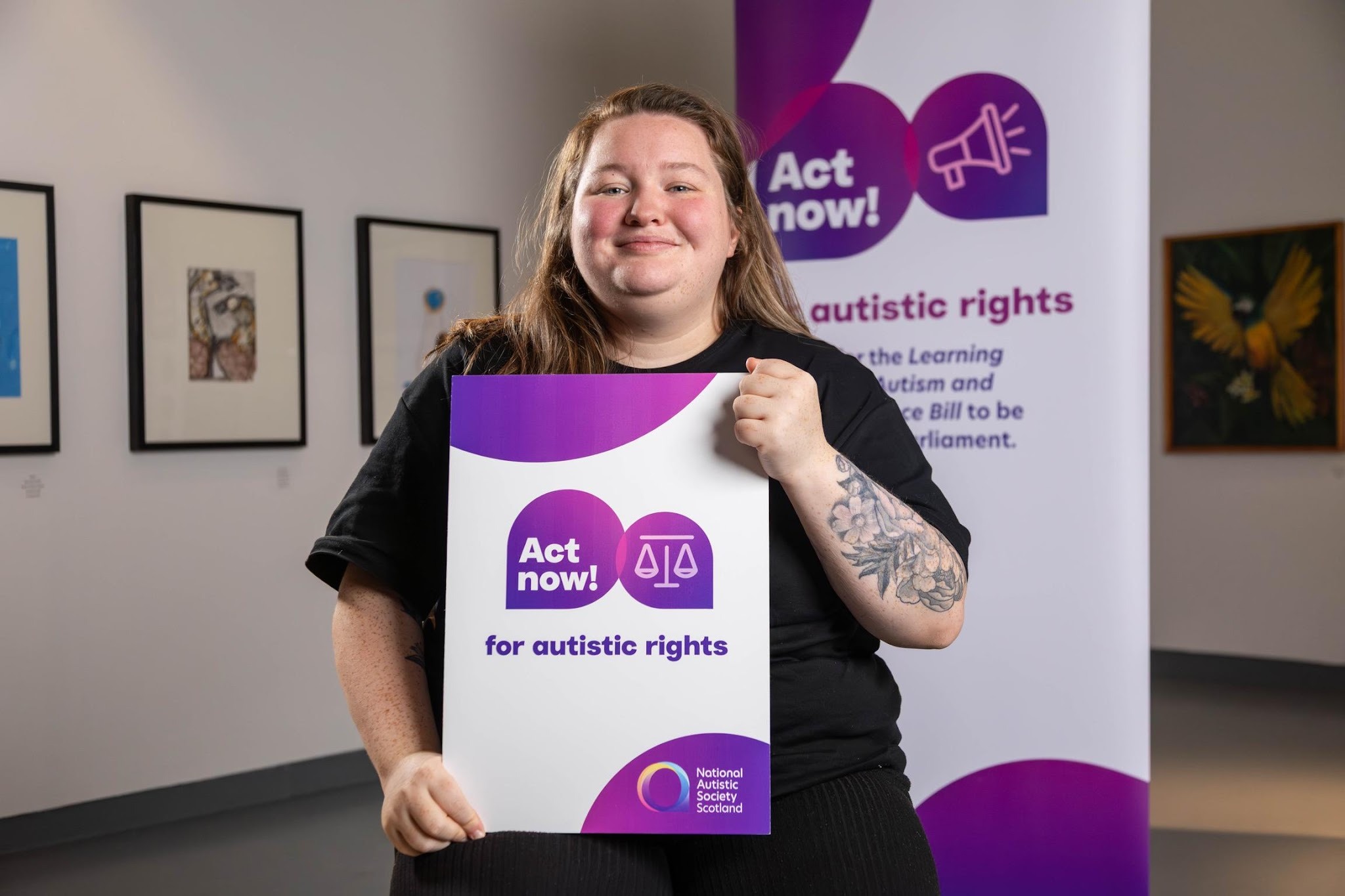
We and others have long campaigned for the Learning Disabilities, Autism and Neurodivergence (LDAN) Bill – a Bill which the SNP committed to as far back as 2021. This would provide an opportunity to address the challenges facing autistic people and deliver real change.

Legally binding national and local strategies would improve support and accountability, while mandatory training across public services such as health, education and criminal justice would ensure autistic people’s needs are recognised and supported earlier.

Years of consultation have shaped these proposals, with many in the autistic community sharing difficult and traumatic experiences in the hope of having their voices heard.

As part of the Act Now for Autistic Rights campaign, our charity has launched a petition urging the First Minister, John Swinney, to include the LDAN Bill in September’s Programme for Government, which will set out the Scottish Government’s key priorities and legislative programme for the coming year.

In the lead up to the recent election in Scotland, more than 5,500 letters were sent by supporters urging party leaders to commit to this legislation. This momentum must now be matched with action. Without a clear commitment from the First Minister, autistic people risk being left behind.

You can add your voice and help push for real change by signing the petition today: https://act.autism.org.uk/page/191897/petition/1?mode

Rob Holland, Director of the National Autistic Society Scotland, said: “Our campaign had a fantastic response during the election period. Thousands of letters were sent urging all parties to commit to the Learning Disabilities, Autism and Neurodivergence (LDAN) Bill, demonstrating a significant level of support for legislation long overdue in helping secure the rights of autistic people and their families.

The importance of the LDAN Bill in tackling the inequalities faced by autistic people and their families cannot be underestimated and this legislation is a vital opportunity to improve outcomes and recognise the rights of some of our most marginalised communities.

“With the election behind us and attention now turning to the first Programme for Government, we need everyone who wants to see urgent change to sign our petition and ensure this vital piece of legislation is introduced as early as possible in the new term.”

Becca, NAS Scotland Campaigner, said: “The LDAN bill is vital for the wellbeing, safety and equality of autistic and neurodivergent people in Scotland.

“Access must be granted, training must be given and voices must be heard to ensure that autistic and neurodivergent people have equal access and opportunity as anybody else. 

“The LDAN bill must be included in the Programme for Government to ensure this change happens and lives are improved. 

“As an autistic person, it is a struggle to ensure my voice is heard and my opinions are taken into account, so by committing to the inclusion of the LDAN Bill in the Programme for Government, I matter.

“My voice and many others across the country matter.“

You can call on the First Minister to Act Now for Autistic Rights by signing the petition here.

Young people get hands-on heritage experience at Edinburgh Castle

Schools Construction Skills Taster Event at Edinburgh Castle.

School pupils from across Edinburgh swapped their classroom for the Castle this week to try their hand at construction and traditional skills through a Build Your Future event.

Historic Environment Scotland (HES), in partnership with Scottish Traditional Building Forum and The City of Edinburgh Council, held the event for nearly 100 pupils on Wednesday 27 and Thursday 28 May.

The two-day skills taster event is designed to inspire the next generation of craftspeople, construction professionals, and heritage specialists by giving young people the chance to try a range of practical skills.

Across the two days, pupils rotated through five interactive skills stations with demonstrations and mini masterclasses delivered by industry specialists.

Activities include roof slating, stonemasonry, painting and graining, timber joinery, and technology in construction such as thermal insulation – showcasing both traditional craft skills and modern construction techniques, and demonstrating how they work together to maintain, repair and future-proof Scotland’s historic buildings.

The National Federation of Roofing Contractors (NFRC), who first supported the inaugural Build Your Future skills demonstration at Edinburgh Castle in 2012, returned this year to lead the roof‑slating activities and share their expertise with pupils. There was also insight from industry body Women in Property who were able to share experience and advice with pupils.

HES craftspeople led behind‑the‑scenes tours of Edinburgh Castle, giving pupils rare and unique insight into the conservation and construction work required to care for a world‑famous heritage site.

Schools Construction Skills Taster Event at Edinburgh Castle.

Colin Tennant, Interim Director of Cultural Assets at HES, said: “Seeing young people get hands‑on with these skills is a fantastic reminder of why this work matters. Scotland’s historic environment depends on a strong pipeline of traditional and emerging skills, and inspiring young people to see the opportunities available to them in the sector is essential.

“At HES, we’re committed to playing a leading role in tackling the skills gap – investing in training, supporting innovative programmes like Build Your Future, and working closely with partners across education, industry and local authorities. But we cannot do this alone. Transforming Scotland’s skills landscape needs sustained support and collective effort. With continued engagement across the sector and beyond, we can build the skilled workforce Scotland needs now and for the future.”

Construction apprenticeships currently see a significant drop‑out rate, with just over half of apprentices completing their training each year. Partners believe this is often due to young people entering apprenticeships without a clear understanding of the wide range of roles available.

Build Your Future aims to change this by giving pupils early, practical experience and helping them choose the right pathway from the outset.

Schools Construction Skills Taster Event at Edinburgh Castle.

Joann Russell, Chair, Scottish Traditional Building Forum, said: “We are delighted to return to Edinburgh Castle to deliver a Build Your Future event. This model of school engagement started at Edinburgh Castle in 2012 and has evolved significantly with the feedback from education and industry.

“It is a young person focussed approach to promote the many and varied careers in construction to provide young people with insights to help them in their career choices. This has been done with numerous stakeholders across construction and we look forward to continuing to work with them for the mutual long-term aims of addressing the skills gap in construction.”

This week’s event at Edinburgh Castle, delivered in partnership between Scottish Traditional Building Forum, The City of Edinburgh Council and HES, builds on the success of a wider National 5 pilot programme.

The pilot programme embeds teaching of construction and traditional skills directly into the school timetable to create a clear pathway towards a National 5 qualification and beyond. The pilot, running across several schools in the city, has supported young people to gain early experience in heritage and construction careers, with several pupils progressing into apprenticeships.

Schools Construction Skills Taster Event at Edinburgh Castle.

Councillor James Dalgleish, Education, Children and Families Convenor, City of Edinburgh Council, said: “This event has been a great opportunity for young people to explore and try out a range of specialist and practical skills, all under the supervision of industry experts. Against the backdrop of Edinburgh Castle, school pupils were given a glimpse into the craftsmanship involved in conserving such a historic landmark too.

“In Edinburgh, we’re focused on improving outcomes for all learners and our innovative pathways work offers tailored routes for all young people – whether further education, an apprenticeship or the world of work.

By partnering with organisations like Historic Environment Scotland and Scottish Traditional Building Forum we want to inspire young people interested in a career in construction or conservation by showing them all that’s on offer.”

More information on traditional skills and training can be found on the HES website. Employers and schools interested in opportunities to participate can contact the team at skills@hes.scot

East Lothian pupils get hands-on insight into construction career

Cruden tackles construction skills gap with hands-on schools programme

Leading 5-star housebuilder, Cruden has developed a new schools initiative in East Lothian, aimed at tackling the construction skills shortage, with pupils at Knox Academy taking part in hands-on sessions designed to bring careers in the industry to life.

Delivered as part of a community benefit activity linked to Cruden’s Herdmanflat development in Haddington for East Lothian Council and Hub South East, the Employability Strengthening Programme (ESP) focuses on building practical skills, boosting confidence and highlighting clear routes into employment.

with pupils at Knox Academy taking part in hands-on sessions designed to bring careers in the industry to life.

Delivered as part of a community benefit activity linked to Cruden’s Herdmanflat development in Haddington for East Lothian Council and Hub South East, the Employability Strengthening Programme (ESP) focuses on building practical skills, boosting confidence and highlighting clear routes into employment.

In Scotland, around a quarter of the construction workforce is aged 50 or over, highlighting a growing succession challenge. Across the UK, more than 225,000 additional workers will be needed by the middle of the decade, with employers continuing to report skills shortages. Initiatives such as ESP aim to engage young people and help build a more sustainable pipeline of talent.

The first session, held in February, introduced pupils to careers in construction, alongside practical employability advice and guidance. Developing the Young Workforce (DYW) and East Lothian Works also attended, providing insight into further training opportunities and  Construction Level 4 and 5 courses.

A second session in March took a more practical approach, with pupils completing a STEM-based measurement activity, replicating a real-world quantity surveying task, giving them insight into the skills used on live construction projects.

Additional sessions included CV and interview advice, as well as a ‘meet the experts’ event, allowing pupils to engage directly with industry professionals. 

Elaine Gorman, DYW School Coordinator at Knox Academy, said the sessions generated strong engagement from pupils and helped raise aspirations around careers in construction. She said: “The pupils responded enthusiastically and engaged well with all sessions, particularly the quantity surveying tasks.

“It gave them a real sense of achievement while bringing construction careers to life in a very practical way.”

Michael Palethorpe, Community Benefit Manager at Cruden, says: “There is a real need to inspire the next generation into construction and that starts in the classroom. 

“Through our Employability Strengthening Programme, we’re giving young people practical, real-world insight into the industry, showing them the opportunities available and building their confidence to take that next step.”

The programme forms part of a wider series of four sessions, designed to support pupils in understanding career options, developing employability skills and connecting with further education opportunities.

Cruden continues to roll out the programme across its developments, in partnership with schools, local authorities and employability organisations to support young people into long-term careers in construction.

Nature walks spark big conversations at Cramond nursery

Children at Bright Horizons Cramond Early Learning and Childcare are enjoying weekly visits to the nearby beach and woodland areas, supporting learning through exploration, conversation and shared experiences outdoors.

The visits give children time to explore their surroundings at their own gentle pace, encouraging curiosity and helping them build confidence beyond the nursery environment. Experiences from their adventures are then revisited back at nursery through discussion, further exploration and play.

The approach comes amid growing national discussion about screen use in the early years. Recent UK research reported by Nursery World has highlighted the increasing role screens play in very young children’s daily routines, prompting renewed focus across the sector on real-world, hands-on experiences.

Yvonne, Nursery Manager at Bright Horizons Cramond, said: “Exploring the local area together supports children’s sense of belonging and helps them make sense of the world around them.

“When they return from visits to the beach and forest, they collect natural materials such as shells, leaves and pinecones, alongside ideas and questions to talk through back at nursery.

“This reflects our Nurture Approach, where emotional wellbeing, strong relationships and shared reflection are at the heart of how children learn.”

Practitioners use children’s observations and conversations from these outings to shape learning back at nursery, supporting communication skills, emotional wellbeing and meaningful connections with the world around them.

By prioritising outdoor exploration, time for talk and shared reflection, the nursery aims to offer young children rich learning experiences rooted in relationships and real environments, rather than digital distractions.

Bright Horizons Cramond Early Learning and Childcare is holding an Open Day on 13 June, giving families the opportunity to visit the setting, meet the team and find out more about early education and childcare.

Registrations are now being taken for 2027. Further details are available via the Bright Horizons website.

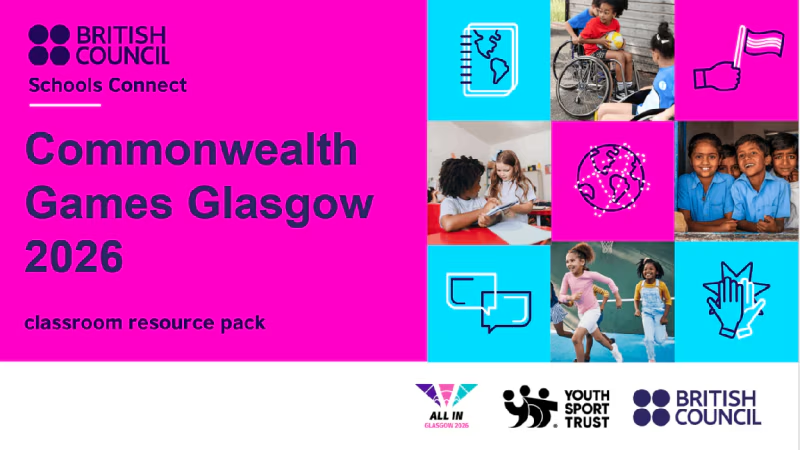
British Council goes All In to support Commonwealth Games 2026 with new classroom resources for schools

Ahead of this summer’s Commonwealth Games in Glasgow, the British Council has joined forces with children’s charity Youth Sport Trust to produce a new classroom resource pack for schools.

Designed to support learning and activities for young people, the pack celebrates the return of the Commonwealth Games to Glasgow this summer from 23 July – 2 August and the work of the Commonwealth to improve the lives of its citizens. 

The resource forms part of the Glasgow 2026 Schools Programme and is inspired by All In – the nationwide call to action for this year’s Games, inviting communities to celebrate the Games in their own ‘altogether brilliant’ way.

The pack was launched yesterday at St John Paul II School in Castlemilk, Glasgow, where teacher and former Glasgow 2014 ceremony cast member, Jacqueline Hart and her pupils were visited by gymnast Cameron Lynn who, following his appearance at Birmingham 2022, is aiming to represent his country again at Glasgow 2026; and Glasgow 2026’s official mascot Finnie, the sport-loving unicorn.

Featuring a series of interactive learning activities and materials, teachers can use the resource pack to raise awareness of the Commonwealth and its values and help young people feel connected to the Games, their local community, country and the wider Commonwealth.

Schools can find out more and download the pack here.

Pupils will be introduced to the Games’ values of Humanity, Destiny and Equality through sessions exploring connection, fairness and inclusion. This echoes the British Council’s work building connections, understanding and trust between people in the UK and other countries through arts and culture, education and English language.

Designed for pupils aged between 7 and 11, the activities in the pack are flexible and adaptable. Teachers can use them as starting points for individual lessons or to form part of a larger cross-curricular project with a partner school overseas.

The British Council is also inviting any schools wishing to participate with an overseas partner to use their PartnerFinder database free of charge, to search for like-minded schools around the world.

The classroom resource builds on the British Council’s Schools Connect programme, which supports young people in the UK and around the world to build the skills, knowledge and attitudes they need to respond to global challenges and develop international understanding.

Glasgow 2026 is set to be ‘the most inclusive, community-driven and connected Commonwealth Games yet’, with 3,000 athletes from 74 nations and territories set to compete in an 11-day programme of 10 sports and six Para sports across four iconic venues.

Beyond its credentials as a major historical sporting event, The Commonwealth Games is also a chance for people from around the world to come together, celebrate their cultures and learn from each other.

Claire de Braekeleer, Director, British Council Scotland, said: ‘The Commonwealth Games 2026 is not just a sporting event, it is a chance for people from around the world to come together, celebrate their cultures and learn from each other.

“This classroom resource pack will enable children and young people to connect internationally on critical themes, such as equality and fairness, and celebrate the Game’s focus on inclusion and sustainability.

“While we proudly shine a light on Glasgow and Scotland as this year’s hosts, the pack is available for all and we hope that teachers and pupils across the whole of the UK will benefit from the resources available.’  

Emily Reynolds, Director, Youth Sport Trust, added: ‘The Youth Sport Trust are delighted to be working in partnership with the British Council and Glasgow 2026 to bring this engaging resource to schools and teachers.

“The Commonwealth Games offer a powerful opportunity to connect young people to Glasgow, the values that unite the Commonwealth, and the wide range of sports that make the Games so special.

“Multi-sport events like the Commonwealth Games can inspire children and young people of all backgrounds, helping them to discover new sports, develop curiosity, and build a lifelong relationship with physical activity.

“This resource is designed to support teachers to bring that inspiration into the classroom and empower young people to learn through sport.’

Phil Batty OBE, Chief Executive, Glasgow 2026, said: “‘The Glasgow 2026 Schools Programme is helping to bring the Games to life in classrooms across Glasgow and Scotland, ensuring that young people feel genuinely connected to what these Games represent. It’s vital that young people across the country see themselves reflected in Glasgow 2026, and this programme plays a key role in making that happen.

“Developed with the support of partners including the British Council and the Youth Sport Trust, the programme gives pupils the opportunity to explore the cultures that make up the Commonwealth, increase participation in sport and develop positive, healthy habits that can last a lifetime.

“The resources have been carefully designed to be inclusive and adaptable for all learners and educational settings, while reflecting the vision and values at the heart of these Games.

“With Glasgow 2026 set to deliver the largest-ever Para sport medal programme in Commonwealth Games history, it’s especially powerful to see that same ambition and commitment to inclusion championed through the Schools Programme.’

PICTURES: Craig Watson

Easter study support 

Free webinars for senior-phase school pupils

Young people across Scotland studying for Senior Phase qualifications will have access to free online Easter Study Support.

The webinars provided by e-Sgoil are delivered by secondary teachers covering multiple subjects over National 4, National 5, Higher and Advanced Higher levels.

Registration for the extensive programme of webinars is now open, with sessions scheduled to run throughout the week beginning 6 April. 

The Easter programme, now in its fifth year, has been developed as part of the Scottish Government-funded National e-Learning offer and continues to grow in both reach and impact.

Cabinet Secretary for Education and Skills, Jenny Gilruth, said: “I welcome the continued success of e‑Sgoil’s Easter Study Support programme, and I’m pleased the Scottish Government has been able to continue to support the provision of high‑quality revision opportunities for senior phase pupils at a crucial point in the school year.

“Last year’s participation and overwhelmingly positive feedback show the real value of this national offer in building confidence and reducing anxiety ahead of exams. The programme reaches young people in every local authority and strengthens the wider support available in Scotland’s schools.”

Last year 4,287 registered for a total of 18,100 webinar places, representing an increase of 689 learners on the previous year.

Commenting, e-Sgoil Study Support Programme lead Rhona Johnstone added: “We are delighted to offer the Easter Study Support programme to Senior Phase learners across Scotland yet again this session and pleased to see the programme reaching more learners year on year. 

“The evidence of the impact that both the Easter and Evening Study Support programmes has on the learners ahead of assessments and exams can be seen in the feedback received from those who have participated in previous years.” 

Improving behaviour in schools

Ensuring safe environments for pupils and staff

Clear progress is being made across all 20 actions set out in out in a national plan aimed at improving relationships and behaviour in schools, according to a newly-published report.

The second annual progress report on the joint action plan details the work undertaken in the last 12 months to address areas including guidance on consequences and on risk assessments for schools.

Updated Scottish Government guidance has also been published on attendance, along with new guidance on substance use, now covering vapes, and on a whole school approach to tackling racism. These were among the recommendations of the 2024-27 blueprint to improve relationships and behaviour in schools.

Work is also ongoing on to provide future guidance in other areas, including the recording and monitoring of violent incidents.

Education Secretary Jenny Gilruth said: “Scotland’s schools should be safe and consistent learning environments for everyone and clearly the vast majority of children and young people behave well.

“However, we know there has been an impact on behaviour as a result of issues including the COVID-19 pandemic and the cost of living crisis. So I am heartened to see the clear progress being made to implement the measures set out in the action plan to address this.

“The challenges of the post-COVID-19 generation of young people is reflected in the updated guidance on attendance to deal with the use of part-time timetables, long-term, persistent absence, as well as young people who are in school but absent from classes.  

“Vaping has also been identified as an emerging trend among some young people at school, so the new guidance on substance use will allow local authorities and Head Teachers to develop or update local policies to deal with this. Taken together this newly-published package of guidance addresses all the all emerging patterns of behaviour identified in our Behaviour in Scottish Schools Research.

“The action we are taking will help ensure that teachers and schools can deal with issues in ways that are appropriate and also respond to the needs of each individual child.”

Second annual progress report on the Relationships and Behaviour in Schools Action Plan 2024-27.

Strengthening additional support for learning

Delivering better experiences for learners, teachers and practitioners to thrive

A rapid review of Additional Support for Learning (ASL) has set out recommendations to ensure young people’s evolving needs continue to be met across Scotland.

Professional Education Advisor Janie McManus’ expert review of ASL said that clearer expectations, stronger pathways to support across education, health and social care, and early interventions should underpin the next steps in delivering Additional Support Needs (ASN) provision in schools.

Education Secretary Jenny Gilruth welcomed publication of the review outcomes and accepted the recommendations in a speech to practitioners – the first in a series of national events on ASL convened by the Scottish Government.

In her address, Ms Gilruth also confirmed that an app to streamline administrative tasks and free up teachers’ time to focus on pupil needs would be rolled out more widely later this year, backed by £700,000 government funding, subject to the success of ongoing pilots in six council areas.

Ms Gilruth said: “I am grateful to MSPs from across Parliament for their constructive engagement on the additional support needs review. I am also thankful to Janie McManus for leading this short, sharp review into ASN, with clear recommendations for the next Scottish Government to address.

“The pandemic was an undoubtedly challenging time for schools, but none more so than for our additional support needs pupils. It is with the needs of those young people in mind, that we have come together to work collegiately to drive the improvement we all want to see in Scotland’s inclusive schools.

“Across the country our teachers and school staff display extraordinary commitment working with pupils with ASN to provide a nurturing, supportive environment. Through our investment in the CivTech programme, we are seeing how technology can be harnessed to cut the time spent on paperwork and free up valuable time for teaching and learning, helping ensure teachers and school staff have the time to focus on what matters most – their pupils.”

COSLA Children and Young People Spokesperson Cllr Tony Buchanan said: “We welcome the final progress report on the Additional Support for Learning Action Plan.

“Six years after Angela Morgan’s review, progress has been made, though more remains to do. We now better understand the needs of children and young people, supported by new tools and stronger partnerships.

“Local and Scottish Government must continue working together with a shared vision that enables local and individualised approaches. We note Janie McManus’s report and will consider it jointly with Scottish Government.”

A spokesperson for the Scottish Children’s Services Coalition commented: “While we welcome the outcomes of the expert review on additional support for learning (ASL), including the call for timely access to specialist services across education, health and social care, and early intervention, there needs to be adequate resourcing in place to turn this vision into a reality.

“Across the last decade, spending per pupil on ASL has declined by almost a third, and there have been cuts in the like of specialist ASN teacher numbers, which have been slashed by 240 over the same time period. We are facing a lost generation of vulnerable children and young people who are not getting the care and support they so vitally need.

“We would urge the Scottish Government to prioritise the windfall that will come from proposed increased spending on those with special educational needs and disabilities (SEND) in English schools, on those Scottish pupils with ASN.

“With more than two out of five pupils identified with additional support needs, and the Scottish Parliamentary elections forthcoming, we would additionally urge the political parties to concentrate on this issue as they draft their manifestoes and for the public to focus on what these parties intend to do if voted into office.”