Junior doctors across Scotland have been offered a 14.5% pay uplift over the two year period 2022-24, following negotiations with BMA Scotland.
This represents a £61.3 million investment in junior doctor pay – the largest in the last 20 years and the best offer in the UK.
If accepted, the new and final offer will be a pay raise of 6.5% in 2023/24, as well as an additional 3% towards an already agreed 4.5% uplift in 2022/23. This amounts to a cumulative increase of 14.5% over two years and matches the recent pay award accepted by nurses and other NHS workers in 2023.
This offer means a doctor at the beginning of their career would receive a total salary increase of £3,834 over two years. For those at the end of their training the rise would be £7,951 over the same period.
Health Secretary Michael Matheson said: “After weeks of intense negotiations I’m delighted our government and BMA Scotland have come to an agreement on pay which they will now put to their members.
“Recognising the incredible work that junior doctors do, we have offered a fair and progressive rise which will mean a pay increase of 14.5% over two years – the best offer on the table in the UK.
“We have taken their concerns regarding pay, and the need to modernise pay bargaining more broadly, extremely seriously. It’s now up to junior doctors to reflect on this final offer, and I hope they will accept.”
Meditation comes with a huge number of benefits, so it’s no wonder it’s becoming more and more popular for people to meditate each day.
Incorporating meditation into your daily routine can help to boost your mood, drive creativity, improve your relationships, improve memory, and bring a lot more love, joy, and gratitude into your life.
Meditation is also great for lowering stress, which is extremely beneficial for both your physical and mental health.
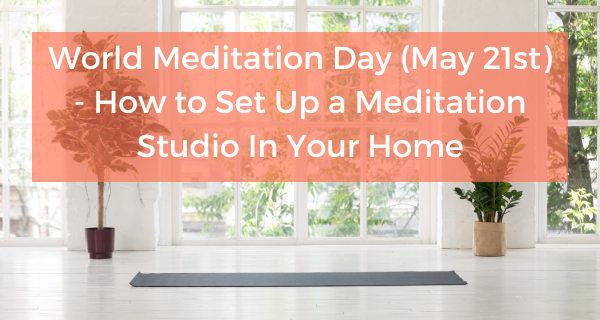
To celebrate World Meditation Day on May 21st, interior design expert Ryan McDonough at MyJobQuote.co.uk has created a guide on how to set up a successful meditation studio in your home.
By creating a space dedicated to meditation in your home, you’ll find it much easier to incorporate meditation into your daily lifestyle.
Take a look at the guide below to find out more about how you can set up a meditation studio in your own home:.
Choose The Right Space
When looking for the right space in your home for a meditation studio, you want to choose somewhere that is quiet, comfortable, and free from distractions. Choose a space in your home that can be dedicated solely to meditation. A spare room would be the perfect choice. If you don’t have enough space in your home, consider converting a corner of a room into a meditation space.
When you find the right spot for your meditation space, remove any clutter and distractions that may exist in your chosen area. Create a clean and organised space that promotes a sense of calmness and tranquillity.
Think About The Ambience
When designing your meditation space, it’s important to consider the ambience of the space. Think about colours and lighting when designing the space. Earthy tones and pastel shades work best in meditation settings, as these colours are calm and help you feel connected to nature. When it comes to the lighting in the space, choose soft, warm lighting. Dimmed lighting is great for creating a soothing atmosphere.
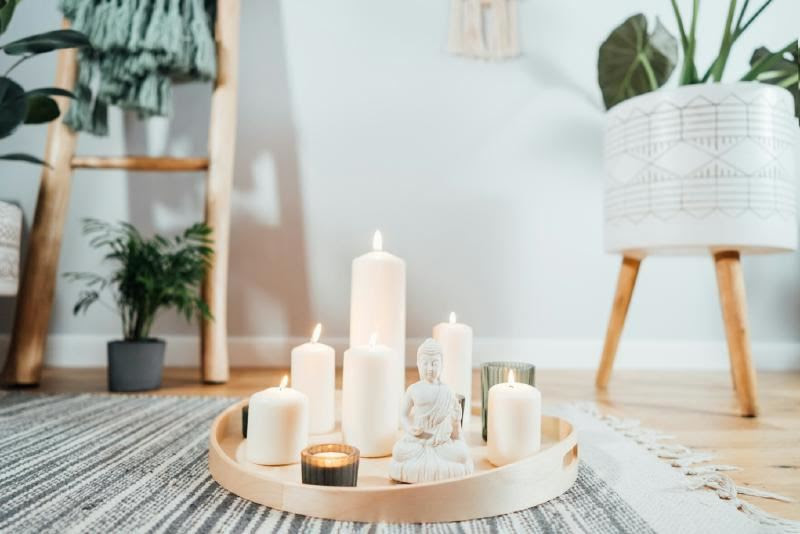
You can add a few elements to the space to improve the overall ambience. Things like plants, candles, and natural materials in accents can help to enhance the peaceful vibe.
Have Comfort In Mind
It’s essential that you choose a comfortable chair or cushion for your meditation practice. A meditation cushion or a yoga mat can help to provide adequate support when you’re completing seated meditation sessions.
You also want to ensure that your seating arrangement promotes good posture. You must be able to sit comfortably in the space for extended periods of time.
Create a Focal Point
It’s a good idea to create a focal point in your mediation space that you can direct your attention to during your sessions. This may be something like a statue, an altar, a piece of artwork, some crystals, or an arrangement of natural objects that hold some personal significance to you.
The object or objects for your focal point should be placed in a position where you can easily see them while meditating. It must be captivating without being distracting.
Think About External Noise
Meditation requires peace and quiet, so it’s important to think about ways in which you can minimise external noises and distractions.
If needed, it may be relevant to install some soundproofing materials in the space to eliminate external noises. Alternatively, consider investing in a white noise machine or a speaker from which you can play some soothing meditation music to overpower external noises. Meditation apps are also great for finding sounds to accompany your meditation sessions.
Accessorise Mindfully
To keep your meditation space from being boring, you can add a few accessories. Select things that can enhance your meditation sessions. Some examples include things like blankets, meditation cushions, essential oils, and soft, natural decorations. Keep your personal preferences in mind. You want to space to feel calming and personal.
It’s also a good idea to bring some natural elements into the space. Natural materials and indoor plants are great options. If possible, it’s also beneficial to place your meditation space close to a window with a view of nature or natural light.
Keep The Space Clean and Organised
It’s important to keep on top of keeping your meditation space clean and organised. Regular cleaning and decluttering are essential in maintaining a calm atmosphere. Keep all of your meditation items neatly organised and easily accessible to create an inviting and harmonious space.
Always remember that the most important part of meditation practice is your presence and intention. Whether you have a dedicated meditation studio or a small meditation corner in your home, mindfulness and consistency are the key factors in creating a meaningful and effective meditation practice.
MyJobQuote is one of the UK’s top trades matching sites that helps individuals find a reputable tradesperson in their local area.
23 sport sites in Scotland to benefit from £2m UK Government funding
UK Government reaffirms commitment to improving access to high quality facilities and increasing participation in grassroots sports in Scotland
Ongoing UK-wide £300 million capital investment continues to build capacity in underserved areas and provide for underrepresented groups
Grassroots sports facilities in Scotland will directly benefit from the latest £2 million investment in high quality multi-sport facilities from the UK Government, in partnership with the Scottish Football Association.
As part of the Government’s 2022/23 commitment, 23 sites in Scotland will see their facilities improved, significantly increasing the availability and access to high quality facilities for football and other grassroots sports.
A key priority for the Government is to level up access to community sports facilities in all parts of the UK, to help as many people as possible to get involved in sport and to deliver all of the mental and physical health benefits associated with active and healthy lifestyles.
The latest investment is part of the Government’s ongoing £300 million multi-year investment into grassroots multi-sport pitches across the UK by 2025 – over £20m of this will be invested in Scotland.
Culture Secretary Lucy Frazer said: “We are committed to levelling up access to sport which is so important for the nation’s physical and mental health.
“Today we are delivering 23 new and improved grassroots sports facilities across Scotland to continue to support, sustain and grow community and grassroots sport – so that physical activity is accessible to all, no matter a person’s background or location.
“We will continue to work with the Scottish Football Association to nurture the talent of the future whilst making sure local communities have the sporting facilities that they need.”
A central aim of the programme is to level up access to community sports facilities and invest in some of the most deprived areas in the UK, to give as many people as possible the opportunity to take part in sport. In order to achieve this, and to deliver access that every community needs, at least 50% of investment will be spent in underprivileged areas.
UK Government reaffirms commitment to improving access to high quality facilities and increasing participation in grassroots sports in Scotland
Ongoing UK-wide £300 million capital investment continues to build capacity in underserved areas and provide for underrepresented groups
Grassroots sports facilities in Scotland will directly benefit from the latest £2 million investment in high quality multi-sport facilities from the UK Government, in partnership with the Scottish Football Association.
As part of the Government’s 2022/23 commitment, 23 sites in Scotland will see their facilities improved, significantly increasing the availability and access to high quality facilities for football and other grassroots sports.
A key priority for the Government is to level up access to community sports facilities in all parts of the UK, to help as many people as possible to get involved in sport and to deliver all of the mental and physical health benefits associated with active and healthy lifestyles.
The latest investment is part of the Government’s ongoing £300 million multi-year investment into grassroots multi-sport pitches across the UK by 2025 – over £20m of this will be invested in Scotland.
Culture Secretary Lucy Frazer said: “We are committed to levelling up access to sport which is so important for the nation’s physical and mental health.
“Today we are delivering 23 new and improved grassroots sports facilities across Scotland to continue to support, sustain and grow community and grassroots sport – so that physical activity is accessible to all, no matter a person’s background or location.
“We will continue to work with the Scottish Football Association to nurture the talent of the future whilst making sure local communities have the sporting facilities that they need.”
A central aim of the programme is to level up access to community sports facilities and invest in some of the most deprived areas in the UK, to give as many people as possible the opportunity to take part in sport. In order to achieve this, and to deliver access that every community needs, at least 50% of investment will be spent in underprivileged areas.
Secretary of State for Scotland Alister Jack said: “We have seen some fantastic results in recent years from Scotland’s men’s and women’s football teams and we know much of this is a result of the hardwork and dedication put in by those working in grassroots football. I am pleased the UK Government is working closely with the SFA and providing funding for high quality facilities in Scotland.
“With much of the funding aimed at multi-sport facilities, deprived areas and underrepresented groups this investment will benefit many people across the country.”
Some of the facilities to benefit from the 2022/23 round of investment in Scotland include:
Forfar Community Football Trust in Angus has received £126,000 to convert their floodlights to LED
Dundee East Community Sports Club in Dundee has received over £58,000 to install floodlights and solar panels
Inverness Caledonian Thistle Community Development in Inverness has received over £157,000 for a grass pitch upgrade
Motherwell FC Community Trust in Lanarkshire has received over £180,000 for a replacement 3G pitch
Comhairle nan Eilean Siar in Lewis and Harris has received nearly £200,000 for a replacement 3G pitch
Nethercraigs Sports Complex & Denis Donnelly Park in Glasgow has received nearly £60,000 for new floodlights
A full list of the facilities to benefit from 2022/23 investment in Scotland can be found here. None of them are in Edinburgh.
40% per cent of the funding will be used to support multi-sport facilities, ensuring a wide range of sports are supported and helping to deliver benefits beyond football. The programme has a particular focus on increasing participation among underrepresented groups such as women and girls, and those with a disability.
Scottish FA Vice President Mike Mulraney, said: ““The Scottish FA’s grassroots strategy, Football for All, aims to increase participation at all levels by removing barriers and improving accessibility to the game.
“Helping clubs to improve their infrastructure and facilities is central to this strategy and we are grateful to the UK Government for their support.
“Clubs are the beating hearts of communities across Scotland and through partnerships like these, we will help reinforce the power of football locally and in doing so develop our national game.”
The UK Government, in partnership with the Scottish Football Association, continues to build on its £2 million for 2021/22, with a further £2 million confirmed today, and 40 sites in Scotland having benefitted to date.
Through the lifecycle of the grassroots multi-sport facilities investment programme which will run to 2025, Scotland will receive £20 million to help nurture the talent of the future.
The 15th – 21st of May marks Mental Health Awareness Week 2023. This year’s theme is anxiety.
COSLA’s Children and Young People Spokesperson, Councillor Buchanan, has commented on the vital role of local government in supporting better mental health and wellbeing for all in our communities.
Councillor Buchanan said: “Financial pressures, exams, employment, relationships and other life events can all cause anxiety.
“Whilst this a normal feeling it can sometimes become a mental health issue, significantly impacting people’s lives.
“Local Government remains committed to supporting our communities around the causes of poor mental health and wellbeing, and working with them to design and deliver the mental health and wellbeing support they need.”
New offence for encouraging serious self-harm with perpetrators facing 5 years behind bars
offence to apply regardless of whether target goes on to cause serious self-harm
move will protect vulnerable while not criminalising those who share their recovery journey
Vile trolls who hide behind the anonymity of the internet to encourage others to cause themselves serious harm will face prosecution as part of an overhaul of online safety laws announced today (18 May 2023).
Additions to the Online Safety Bill will make it a crime to encourage someone to cause serious self-harm, regardless of whether or not victims go on to injure themselves and those convicted face up to 5 years in prison. The new offence will add to existing laws which make it illegal to encourage or assist someone to take their own life.
Police or prosecutors will only have to prove communication was intended to encourage or assist serious self-harm amounting to grievous bodily harm (GBH) – this could include serious injuries such as broken bones or permanent physical scarring.
The offence will apply even where the perpetrator does not know the person they are targeting – putting an end to abhorrent trolling that risks serious self-harm or life-changing injuries.
Encouraging someone to starve themselves or not take prescribed medication will also be covered.
Research from the Mental Health Foundation shows that more than a quarter of women between 16-24 have reported self-harm at some point in their life and since 1993 the levels of self-harm among women have tripled. Today’s announcement is the latest step in our work to provide greater protections for women and girls who are more likely to self-harm.
Research also shows more than two-thirds of UK adults are concerned about seeing content that promotes or advocates self-harm while online.
Lord Chancellor and Justice Secretary, Alex Chalk KC, said: “There is no place in our society for those who set out to deliberately encourage the serious self-harm of others. Our new law will send a clear message to these cowardly trolls that their behaviour is not acceptable.
“Building on the existing measures in the Online Safety Bill our changes will make it easier to convict these vile individuals and make the internet a better and safer place for everyone.”
The new offence will be created following a recommendation from the Law Commission in 2021 and balances the need to protect vulnerable people while not criminalising those who document their own self-harm as part of their recovery journey.
Justice Minister, Edward Argar MP, said: “No parent should ever worry about their children seeing content online or elsewhere encouraging them to hurt themselves.Our reforms will punish those who use encourage vulnerable people to inflict serious injuries on themselves and make sure they face the prospect of time behind bars.“
This new offence builds on measures already in the Online Safety Bill, which will better regulate social media and ensure that social media companies like Tiktok, Snapchat, Facebook, Instagram and others are held legally responsible for the content on their sites.
Power tools such as lawnmowers, hedge trimmers & pressure washers could lead to tinnitus and hearing loss
In the run up to the Chelsea Flower Show (22-27 May) which marks the start of the peak gardening season, Tinnitus UK is calling for gardeners to protect their ears when mowing the lawn, trimming hedges or using power tools on their patch, as new data shows only a quarter (26%) “regularly” or “sometimes” use hearing protection.
This means that over 4 million gardeners in the UK are putting themselves at risk of hearing loss and tinnitus, both of which can be permanent.
One in seven adults are affected by tinnitus – which is a condition that causes the perception of noise when there is no external source. There is currently no cure for the condition.
Noise becomes a risk to hearing health at levels of 80dB or above. Lawn mower sound levels vary, but they can be as high as 95dB for petrol driven models, and even higher for ride-on models.
Pressure washers – a popular way of cleaning paths and patios – can reach 94dB. Hedge trimmers are even more problematic as they can be as loud as 103dB. At this level, hearing damage can occur in under 8 minutes.
Caroline Savage, CEO of Tinnitus UK said: “Noise exposure is the single biggest preventable cause of tinnitus, and it is clear from our research that people appear to be unaware of the risks. Even if you’re only giving your hedge a quick trim or the patio a spruce up, use hearing protection. When it’s loud … Plug’em is our very clear message.
“We want to make sure that people are able to enjoy their garden to the fullest, and to be able to revel in the bird song and natural sounds in their outdoor space. We know gardening to be beneficial for people’s physical and mental wellbeing, and we’d hate for people to put that at risk.
“People protect their cherished plants from frost and slugs – we want protecting your ears to be second nature. There should be no stigma around using ear plugs – we only have one pair of ears, and damage to our hearing is irreversible.”
Heart Research UK Healthy Heart Tip, written by the Health Promotion and Education Team at Heart Research UK
Healthy Heart Tip: Keep on top of your mental health
The 15th-21st of May is mental health awareness week in the UK. We know that each year in England, one in four people will experience some sort of mental health problem.
Long-term mental health problems can increase our risk of developing heart disease, which is one of the reasons why it is important that we look after our mental health by combating stress, maximising our ability to cope, and seeking support.
Here are some tips to keep our mental health in check:
Create balance
When we are busy and have lots of responsibilities such as work, family commitments and looking after a house we can be more susceptible to suffering from mental health conditions.
Often, in times of overwhelm, the first things to suffer are our nutrition, exercise and sleep. These three things are important for optimal mental health. Try to balance your day-to-day demands with some exercise, me-time, time to prepare meals and implement a good sleep routine.
Use your support network
If the above point sounds like too much to manage on your own, ask for help. Having someone you can talk to about your mental health can help you to better deal with any challenges you are experiencing.
People are often more than happy to offer support but may not realise you are struggling if you don’t let them know. This could be a friend, family member, or mental health professional.
Check in
Checking in with ourselves and noticing trends in our behaviour and the way we feel can help us to know when we may need to seek help or put something in place to support our mental health.
Apps such as Thought Diary or Daylio offer an easy way to track our wellbeing over time.
For more tips on how to stay healthy, sign up for weekly healthy tips at:
Scots prioritising working, watching TV, socialising and gaming instead
1 in 3 Scots say they are too busy working to look after their own health and mental wellbeing
15% confess they fritter away hours binge-watching soap operas instead of doing things to improve their fitness or manage stress and anxiety levels, while1 in 10 say socialising and watching sport on TV is more important to them than their wellbeing
Most people in Scotland say they struggle to look after their health and wellbeing, with many blaming a lack of time or confusion over what is actually good for them
In light of this, dietitian Jennifer Low and Yakult Plus are educating people on the ‘power of small’ and how quick and easy everyday changes can make a big difference to overall health
Nearly 1 in 3 (30%) people in Scotland say they are too busy working to look after their own health and wellbeing.
Meanwhile, 15% confess they fritter away hours binge-watching soap operas instead of doing things to improve their fitness or manage stress and anxiety levels.
1 in 10 people in Scotland say socialising (11%) and watching sport on TV (11%) is more important to them than looking after their wellbeing, while more than 1 in 20 (6%) people say they are too busy gaming to look after their health.
The new research by Yakult Plus reveals that Scots struggle to look after their health and wellbeing, with many blaming a lack of time or confusion over what is actually good for them.
15% of Scots admit that not having enough time is the top reason for struggling to look after wellbeing, with nearly 1 in 10 (8%) saying they have just five minutes or less a day to spend on looking after diet and nutrition.
Over 1 in 10 people (12%) say that they have less than five minutes a day to commit to mental wellbeing, while almost 1 in 20 (4%) say they have just five minutes a day to spend on exercise.
Other reasons people struggle to look after their wellbeing are confusion around the conflicting information available (14%) or simply not having the willpower (13%).
More than 1 in 20 people (6%) blamed feeling defeated due to positive changes never lasting long, confusion over who or what sources to trust (5%), not knowing where to start (4%), or being confused by health myths online (2%).
On the research, dietitian Jennifer Low commented: “There is so much misinformation about diet and health and the research reveals many people are confused about the best ways to look after their overall health.
“It seems many also feel like they don’t have the time required to look after their wellbeing, as they are prioritising other areas of their lives. Whilst things like watching TV and gaming are forms of self-care and sadly for some, maybe the only form of rest they know, it’s also sad to see that so many people have so little time to spend on things like exercise, healthy eating, and sleep – which can benefit gut health as well as overall health.
“Small changes however, such as a gentle walk or including more fruit and vegetables each day, can have a big impact on your health. There is no need to take part in the latest diet or exercise fad or download the latest app.
“I would encourage people to start small, making one easy change at a time, thinking about what they can add to their life and diet, and build from there.”
Alongside the poll of consumers, the research from Yakult Plus also included a survey of nearly 500 dietitians conducted through the British Dietetic Association (BDA). It echoed the findings of the consumer survey – that 1 in 3 (36%) people say to dietitians that they find it complicated to look after their health, with one of the top reasons being a lack of time (16%).
The survey of dietitians revealed however that 9 in 10 (86%) of the dietitians questioned believe people may actually be overcomplicating looking after their wellbeing.
The research was commissioned by Yakult Plus to mark the launch of Yakult Plus and highlight how quick and easy everyday changes can make a big difference to one’s overall health.
Like all Yakult products, Yakult Plus is bursting with 20 billion friendly bacteria, scientifically proven to reach the gut alive, but in addition, is rich in vitamin C which supports the immune system and helps lower fatigue and also contains fibre that can feed the bacteria in the gut. Quick to enjoy every morning, it fits in easily to your routine.
Anxiety is a normal emotion in us all, but sometimes it can get out of control and become a mental health problem.
Lots of things can lead to feelings of anxiety, including exam pressures, relationships, starting a new job (or losing one) or other big life events. We can also get anxious when it comes to things to do with money and not being able to meet our basic needs, like heating our home or buying food. But anxiety can be made easier to manage.
Focusing on anxiety for this year’s Mental Health Awareness Week will increase people’s awareness and understanding of anxiety by providing information on the things that can help prevent it from becoming a problem.
At the same time, we will keep up the pressure to demand change – making sure that improving mental health is a key priority for the government and society as a whole.
Mental Health Foundation’s Alexa Knight said: “I was thrilled to join the Mental Health Foundation earlier this year, having worked in health policy all my life. Many of us have struggled with our mental health in recent years, and it feels like there’s never been a more important time to support and protect our mental well-being.
“The Mental Health Foundation’s approach – preventing mental health problems before they happen and supporting everyone to thrive – really resonates with me. And the icing on the cake is being part of Mental Health Awareness Week! I have joined in with Mental Health Awareness Week for many years and am delighted to now be part of making it happen.
“This year for Mental Health Awareness Week we are focusing on anxiety. We all feel anxious from time to time.
“Anxiety is a natural response to the uncertain world around us. For example, in the current cost-of-living crisis, more than a third of adults feel anxious about their financial situation. But it’s important that we recognise and respond when we feel anxious, so that our anxiety doesn’t become overwhelming.”
Celebrities and medical experts including comedian Tom Davis, Dr Ranj Singh and Dr Linda Papadopoulos support new UK government campaign to boost mental health
Ahead of Mental Health Awareness Week (15 – 22 May), Better Health – Every Mind Matters from the Office for Health Improvement and Disparities is launching a new campaign backed by BAFTA award-winning comedian, Tom Davis, TV and NHS doctor, Dr Ranj Singh, and leading psychologist, Dr Linda Papadopoulos, to encourage the nation to make the first move for their mental health and get active.
New research released today has revealed that three quarters (75%) of adults surveyed report feeling anxious, but less than half (45%) are aware that physical activity is proven to reduce symptoms of anxiety.
The campaign is the latest action taken by government to improve people’s mental health. The government is already increasing investment in mental health services by at least £2.3 billion a year by March 2024 so that an additional two million people can get the support they need.
Last year, the draft Mental Health Bill was published, intended to modernise the Mental Health Act so that it’s fit for the 21st century and better supports people with serious mental illness, and the government has committed to publishing a Major Conditions Strategy to tackle conditions that contribute most to morbidity and mortality across the population in England, including mental ill health.
For Mental Health Awareness Week, BAFTA award-winning comedian and actor, Tom Davis, has opened up about his own mental health alongside NHS and TV doctor, Dr Ranj Singh, in support of the Better Health – Every Mind Matters campaign. In a new film released today, the pair discuss how they deal with anxious thoughts and call on the nation to make the first move for their mental health by getting active.
https://youtu.be/yV-ZUPgt9Kc
Comedian and Actor, Tom Davis, comments: “Anxiety is no laughing matter. I’ve had a colourful career, from working on building sites, to the shop floor, to being a comedian in front of thousands, and I’ve struggled with anxiety in every role.
“There’s a big difference, though, to being outside your comfort zone versus feeling overwhelmed by it and letting your anxious thoughts hold you back. And being active for just a few minutes each day can make a huge difference.
“It’s important to find something that you enjoy and do it regularly. I love boxing and try to go often, but even taking my daughter to the park can really clear my head and help to keep those anxious jitters at bay.
NHS and TV doctor, Dr Ranj Singh, has also shared his tips on how to ease anxiety (see NTEs) and advice on how the public can start getting active for their mental health: “Anxiety is part of everyday life, and it can help us focus or take extra care when needed, but when it gets too much, it can have a really big impact on how we want to live our lives.
“Physical activity is one of the simplest, but most effective, things we can do to help alleviate anxious feelings, calm racing thoughts, and give us something to distract from negative thinking.
“Regular physical activity is best, but even a few minutes each day can help. I personally love dancing because some good music instantly lifts my mood!”
New research among 2,000 adults in England has revealed around four in 10 report having trouble sleeping (38%), feeling less confident (37%) and having less energy due to anxiety (35%).
For just under a quarter (24%), anxiety has stopped them from attending social events and almost one in 10 admit it’s even impacted their relationship, as they spend less time with their partner (8%).
Physical activity releases feel good hormones and improves mental health but, according to the new research, less than half of adults are aware that it’s proven to reduce symptoms of anxiety (45%), reduce stress (45%) and distract from negative thoughts (42%). Four in 10 adults are not doing the NHS recommended 150 minutes of physical activity per week.
The research revealed that over a third (35%) of adults tend to use distraction techniques to relieve feelings of anxiety, including watching TV (47%), browsing the internet (36%) or even isolating themselves from others (33%). However, those who do regular physical activity report that it helps to boost their mood (68%), confidence (61%) and relieve anxious feelings (61%).
With almost one in five not doing any form of physical activity (19%), the research also revealed that not feeling motivated (41%), not enjoying physical activity (25%), and not having enough free time (19%) were the top barriers to getting active. Only 13% of us are aware of the NHS recommended 150 minutes of physical activity per week.
Leading psychologist, Dr Linda Papadopoulos commented: “People are often surprised to know the benefits that just a few minutes of movement can have on our mind; you don’t need to do a full body workout to reap the rewards.
“Being active increases feel good hormones, like endorphins, and can boost confidence. I always recommend getting outside for a brisk walk or gentle jog because being in nature can help us feel happier and more relaxed. And the best bit is it’s free!
Minister for Mental Health, Maria Caulfield, said: “We know poor mental health can significantly impact our quality of life, so I’m pleased to see this campaign highlighting the simple steps we can all take to reduce its impact – such as spotting and addressing the signs of anxiety early on.
“But we know sometimes more support is needed, and that’s why we’re currently investing £2.3 billion every year to expand and transform mental health services in England so that two million more people will be able to get the mental health support they need.”
Delivered by the Office for Health Improvement and Disparities, the Better Health–Every Mind Matters campaign offers NHS-approved tips and advice to help people manage their anxiety, including links to free NHS apps, such as Couch to 5K and Active 10, that will help them make the first move.
The Better Health – Every Mind Matters website also gives people the opportunity to sign up to anxiety-easing emails, offering expert advice to help them stay on top of their mental wellbeing and show them how to make these new steps part of their routine.
Social media:
#everymindmatters
#moveforyourmentalhealth
#MentalHealthAwarenessWeek
#MHAW / @NHS
Scots looking after their mental health can also find support at NHS inform’s Mind to Mind | NHS inform