Extra funding to help offset UK Government benefit cap
The Scottish Government is providing £8.6 million in direct support for people affected by the UK benefit cap as part of its work to tackle child poverty.
An estimated 4,000 families with around 14,000 children are now able to apply for extra financial support through their local council’s Discretionary Housing Payments scheme.
Social Justice Secretary Shona Robison said: “We are increasing funding to help bridge the gap between what people need in benefits from the UK Government and what they actually receive. Eligible households could be £2,500 better off on average per year as a result.
“We will spend up to £84 million in 2023-24 on Discretionary Housing Payments to mitigate not only the UK Government’s bedroom tax and the on-going freeze to Local Housing Allowance rates, but now also the benefit cap which is pushing families into hardship.
“Our child poverty targets are ambitious and that is why we are choosing to invest significantly more in social security than the funding we receive from Westminster and helping to mitigate the damaging impact of UK Government welfare cuts.”
John Dickie, Chair of the Child Poverty Action Group, said: “Mitigating the UK benefit cap is absolutely the right thing to do. Support for struggling families shouldn’t have an arbitrary limit that pushes children into deeper poverty.
“It’s now vital that everyone affected by the benefit cap applies to their local authority for a Discretionary Housing Payment to replace as far as possible the cash support removed by the cap. The Scottish Government has done the right thing, now the UK Government must act to scrap the cap altogether.”
Laura Millar, Strategic Manager at charity Fife Gingerbread, which helps lone parents and families in need, said: “Last year Fife Gingerbread supported the ‘Scrap the Cap’ campaign calling on Westminster to end the benefit cap and the financial hardship this causes.
“Therefore, the Scottish Government’s commitment to empower local authorities to mitigate the impacts of the benefit cap using Discretionary Housing Payments is a positive step.
“Although the number of households affected across Scotland may be relatively small this is an important measure. The greatest risk is that households may be unaware of their entitlement, and every year millions of pounds of benefits go unclaimed. Therefore, we must all raise awareness of this announcement to ensure those most in need of support receive it.”
Funding for benefit cap mitigation by Scottish local authorities through Discretionary Housing Payments is as follows:
2022-23
£2.6 million
2023-24
£6 million
Total
£8.6 million
The benefit cap is a UK Government policy which limits the total amount of benefit that most working age people can receive, even if their full entitlement would be higher.
We’re all looking for cost-effective ways to show those around us that we love them, and there is no exception when it comes to our pets.
Research from the UK’s largest vet charity, PDSA, shows that the minimum lifetime cost of owning a dog starts at around £5,000 for a small breed, but can be considerably more. These costs can mount even further as owners feel pressured to pamper their pooch with expensive gifts.
Shauna Walsh, Vet Nurse at the charity – which provides vital care for pets in need – has shared her expert tips for showering pets with love, without breaking the bank.
Shauna said: “Particularly around holidays like Valentine’s Day, we often feel compelled to splurge on material gifts for those we love. However, our pets have no perception of cost, and are happiest and healthiest when their welfare needs are met and their owners are close by.
Spend more time together
“Spending quality time with your pet doesn’t cost a penny yet is often what brings them the most joy. In fact, ensuring their social needs are met and even just being in our company can improve a pet’s overall wellbeing.
“Simple things such as taking them on a walk and enjoying the great outdoors together, playing with them, and snuggling on the sofa are all great ways to bond with your four-legged friend.
Learn how to groom your pet at home
“Grooming your pet is a fantastic bonding activity and has many other health benefits too, including helping to distribute natural oils found within your animal’s coat. It also gives you the chance to check for any skin problems or lumps and bumps that, if caught early, could mean easier and cheaper veterinary treatment for your pet.
“Grooming costs can vary depending on breed and coat type, and tight curled coats and long-haired breeds especially will need regular sessions. Therefore, learning how to groom your pooch at home can save you a lot of money, once you’ve purchased the equipment needed.
Rotate your pet’s favourite toys
“While toys are great for playtime and keeping boredom at bay, your pet doesn’t need too many. Rotating them will not only avoid you spending lots of money but will also keep playtime fun and engaging. You can even re-use the same toy for different games – for example, using one for a game of fetch, then hiding it for your pet to find.
“Aside from being heaps of fun, toys are a great way to keep your pet active. Throwing a toy for your dog to chase and retrieve will not only help them stay fit but is a great way to spend time together too – just avoid using sticks, as these can cause nasty injuries, and balls that are too small or squash down easily, which could be a choking hazard.”
Owners and pets
For more advice on cutting the cost of pet care while ensuring your pet remains happy and healthy, please visit www.pdsa.org.uk/lowcostpetcare.
One in ten consumers in Scotland are skipping meals, new Which? research suggests, as the consumer champion calls on essential businesses to do more to support people through the cost of living crisis.
The consumer champion carried out extensive research with more than 1,000 people representative of the Scottish population to understand how the cost of living crisis is affecting Scottish consumers.
Which? research found financial pressures are leading consumers in Scotland to make choices that could be harmful to their health. One in ten (11%) are skipping meals due to rising food costs – with parents hit particularly hard by this.
One in five (22%) of more than 250 parents in the Scottish survey are prioritising feeding other family members over eating themselves – compared to 8 per cent of the population overall.
One 55-year-old woman said: “We are having to skip meals, not have the heating on and not going out due to fuel costs”.
Nearly eight in 10 (77%) said they had been putting the heating on less due to energy price rises – compared to just under half (46%) last year. 15 per cent of Scottish consumers had been eating fewer cooked meals to save on energy costs and 2 per cent had used a food bank.
A 42-year-old respondent said: “I’m heating the house to a maximum of 15 Degrees… Eating cold things like sandwiches etc. instead of using the cooker”.
Almost nine in 10 consumers said they were worried about energy prices (89%), while concern around food and housing costs have increased sharply compared to the previous year.
The proportion of people worried about food prices increased by 10 percentage points to almost nine in 10 (87%) in December 2022, compared to eight in 10 (77%) in 2021 and six in 10 (63%) in 2020.
Which?’s research shows how justified these concerns about price rises are. The consumer champion estimates that if consumers in Scotland tried to maintain the same spending habits they would need to spend an additional £40 per week – or around £2,080 a year – on food, energy and fuel in December 2022 compared with December 2021. That would mean almost a third (29%) of their household expenditure would be spent on just these essential goods.
This has led many households to make adjustments to cover essential spending. Nearly six in 10 (56%) consumers in Scotland said their household had made at least one adjustment to cover essential spending in the last month, up from nearly half (48%) in 2021 and nearly four in 10 (37%) in 2020. The most common adjustment was cutting back on essentials – which increased to four in 10 (39%) from a quarter (25%) in 2021.
Which?’s research also found that some household types are being hit harder than others by the cost of living crisis. Nearly three-quarters (72%) of parents in Scotland surveyed had to make adjustments to cover essential spending, compared to just over a third (35%) of pensioners.
Only four in 10 (37%) working-age parents surveyed in Scotland say that they are living comfortably or doing alright – compared to half (50%) of Scottish consumers overall.
These financial pressures are causing widespread emotional harm among Scottish consumers. Nearly half (45%) of consumers in Scotland said that concerns around the cost of living have left them feeling anxious and more than a fifth (22%) said they were struggling to sleep due to worries about the cost of living.
A 34-year-old woman said: “I’m severely depressed and worried all the time about being able to pay my bills and have enough money to feed and clothe my kids as well as electricity and gas to heat my home.
“It’s having a massive effect on my mental health, I feel anxious and stressed out all the time”.
A 54-year-old man said: “I’m having sleepless nights worrying what else is rising in price”.
With the UK heading into recession, mortgages and rent costs rising and the energy price guarantee becoming less generous from April, Scottish consumers will only face further financial pressures in 2023.
Which? recently launched a campaign calling on essential businesses – energy firms, broadband providers and supermarkets – to do more to help consumers struggling to make ends meet. For example, supermarkets must ensure that budget line items are widely available, make pricing and offers more transparent and provide targeted promotions to support people that are struggling most with access to affordable food.
Rocio Concha, Which? Director of Policy and Advocacy, said: “It’s hugely concerning that people in Scotland are losing sleep, skipping meals and sitting in the cold due to rising prices.
“As the cost of living crisis puts huge pressure on household finances, we are calling on businesses in essential sectors like food, energy and broadband providers to do more to help customers get a good deal and avoid unnecessary or unfair costs and charges during this crisis.”
Funding will help tackle social impact of rising cost of living
Projects supporting people most at risk of social isolation and loneliness will receive a share of almost £1 million support funding announced today.
The money will help to provide warm spaces, hot meals, group activities and fuel payments to people most at risk of isolation including older people, young parents, carers and disabled people.
Organisations to receive grants/funds include Age Scotland, who will continue to deliver their ‘Keeping The Doors Open’ grants programme, and Chest, Heart and Stroke Scotland who are recruiting Urdu and Punjabi-speaking volunteers to make Kindness Calls.
Equalities and Older People’s Minister Christina McKelvie said: “Social isolation and loneliness can affect anyone, especially at this time of year when people can struggle to get outside and socialise. The pandemic and the cost of living crisis have increased isolation for some people, including young people, carers and disabled people.
“The funding will be a lifeline for a range of organisations who are helping to keep people connected during this challenging time.
“This fund is just one of the many crucial steps that we are taking to tackle social isolation and loneliness as part of our plan, A Connected Scotland.”
Chest, Heart & Stroke Scotland’s Chief Executive Jane-Claire Judson said: “We know that living with a disability or long-term condition can be hugely isolating and that for those who are unable to read or communicate fluently in English, this isolation can be even more significant.
“This funding from the Scottish Government will greatly enhance the ability of our support services to reach non-English speaking and minority ethnic populations in Scotland to reduce isolation and loneliness.
“Ultimately, it will allow us to engage with and support more people across Scotland who are living with chest, heart and stroke conditions, better enabling them to live their lives to the full.”
Chief Executive of Age Scotland Mark O’Donnell said: “Older people’s groups have an incredibly important role in communities across Scotland, supporting health and wellbeing, physical activity, tackling loneliness and food insecurity.
“Our research has identified that around 200,000 over-65s rely on groups like this but the impact of Covid-19 and spiralling inflation has meant that these lifelines have been facing incredible pressures to keeping their doors open. We’re incredibly grateful that the Scottish Government took notice of our research and our ask of greater financial support for older people’s groups.
“The funding will help many such groups and clubs meet the rising cost of energy bills, food, transport and venues to meet, ensuring that their members can stay connected and are able to be as well as they can be.”
18 projects and organisations will receive a share of £971,019. They are:
An Ofgem spokesperson said: “These are extremely serious allegations from The Times. We are launching an urgent investigation into British Gas and we won’t hesitate to take firm enforcement action.
“It is unacceptable for any supplier to impose forced installations on vulnerable customers struggling to pay their bills before all other options have been exhausted and without carrying out thorough checks to ensure it is safe and practicable to do so.
“We have launched a major market-wide review investigating the rapid growth in prepayment meter installations and potential breaches of licences driving it.
“We are clear that suppliers must work hard to look after their customers at this time, especially those who are vulnerable. The energy crisis is no excuse for unacceptable behaviour towards any customer, particularly those in vulnerable circumstances.”
FORCE-FITTING payment meters in the home of vulnerable people is “shocking” and unnecessary, according to a leading energy expert.
Energy UK’s former CEO Angela Knight was commenting on the results of an investigation by the Times newspaper which found that British Gas was forcing people to have pre-payment meters.
It found that debt collectors working for the firm were breaking into people’s homes to fit the meters.
Ms Knight told GB News: “I do think it’s a shocking story and I think it’s a wake up call not just to [British Gas owner] Centrica, but to all the energy companies.
“Firstly, there are people who say, I’m not going to pay, they can afford to pay, but they won’t pay…
“That’s what this process is supposed to be for, the process being that the energy company applies to the court for a court order in order to put in a pre-paid meter.
“So the individuals who say they won’t pay, but as I say, they can afford to, they are getting a pre-paid meter, so they’re not cut off.”
In a discussion with Bev Turner, she said: “But then, you’ve got a lot of people who fit into that vulnerable category and that’s people like the elderly, or people who are disabled, it’s those with very young children.
“And if they have hit a difficulty with being able to pay for their energy, and a lot of people are finding it difficult at the moment, then a pre-paid meter is not the answer.
“They need to have an arrangement with their energy company and importantly, the energy company has a responsibility to find out first if somebody who isn’t paying falls into one of those special categories, and vulnerable categories.
“And if they do, then they shouldn’t be applying to the courts, what they should be doing is making another arrangement.”
Ms Knight added: “Now what Centrica said is they’ve stopped all of their applications right now and good on them.
“Clearly, they’re going to have to sort out the vulnerable from the not vulnerable, but they have not got a few months to do it, and then they can refresh how they approach this problem.
“And I think that what The Times’ sting has done, and what the Centrica announcement means, is that all other energy companies pay exactly the same amount of attention first, before applying for that court order.”
Commenting on the decision by Ofgem, which has ordered British Gas to stop force-fitting prepayment meters, the National Association of Property Buyers said: “The sorry story of utility providers that was uncovered by The Times newspaper investigation highlights the potential injustices faced by many people in financial difficulty.
“The NAPB welcomes the fact that the company concerned has held their hands up and that Ofgem will be taking action to address the issue.
Spokesman Jonathan Rolande continued: “There is still a question to answer though. How, as a society do we deal with a situation where a householder has missed numerous payments and received letters and calls offering help, all to no avail?
“With heat, light and water being such basic human essentials, at what point are the companies allowed to disconnect? If allowed to continue unchallenged the lost revenue would inevitably be passed on to other paying customers – would that be fair? The providers are companies, should they carry the cost of unpaid bills alone?
“But the case in favour of the utility providers is seriously undermined by the huge profits made and massive salaries paid to executives – their pay is often counted in millions and there is no public sympathy for their cause.
“For now it is a relief that the intrusive practises of forced or tricked entry will be gone, but there are business and moral dilemmas for the companies, government and the public that will need to be addressed to ensure that the burden of unpaid bills doesn’t fall on those who are struggling but paying.”
Fuel poverty charity reveals 45 people per day die from cold homes
Last month, ONS releases figures showing 13,400 more deaths occurred in the winter period (December 2021 to March 2022) compared with the average of the non-winter months.
Fuel poverty charity National Energy Action says that based on modelling by the World Health Organisation, cold homes caused 4,020 excess winter deaths last year in England and Wales. That’s 45 people per day in winter months.
Despite the new figures being the second lowest for decades, the charity warns they only cover last winter, when energy bills were half the amount that they are now.
The report coincides with the full publication of National Energy Action’s Fuel Poverty Monitor, which finds that households that have a low income and have a medical condition or use powered medical equipment at home are most at risk of the worst impacts of living in a cold home.
They say these households have not been provided with adequate support during the Energy Crisis and are fearful next year’s winter mortality figures will be much worse.
The Office of National Statistics (ONS) has released figures showing there were 13,400 more deaths in England and Wales in the winter period (December 2021 to March 2022) compared with the average of the non-winter months.
Fuel poverty charity National Energy Action has said that up to 4,020 of these deaths were preventable and were caused by the impact of cold homes. That’s 45 people dying per day in the winter months last year – 42 in England and three in Wales. However, because of the time lag of the data, the true picture for this winter is likely to be much worse.
Last October 4.5 million UK homes were in fuel poverty, according to the charity’s figures, now – even with Government support, it’s 6.7 million UK households. The average annual bill has almost doubled in a year – from £1,271 to £2,500. The charity warns this means next year’s ONS figures are likely to be much worse.
Adam Scorer, chief executive of National Energy Action (NEA), said: “Every year we see the consequences of failing to keep the most vulnerable people safe and warm during the coldest, winter months.
“Today’s figures show a significant drop in premature winter deaths, partly because of a higher number of deaths outside winter months, but it’s still 45 people per day in the winter months. The truth is that we should not accept any death directly caused by a cold, unsafe home.
“Next year, these statistics will expose the full impact of today’s energy crisis. The toxic combination of extraordinary heating costs, stagnant or falling incomes, and our notoriously poor, unhealthy housing stock will take a heavier toll with lives blighted by debt, ill health, and worse.
“Milder weather may not save us, or thousands of vulnerable households this winter. We must do all we can now to prevent a public health emergency and further needless deaths. Fuel poverty needs long term solutions, but this winter we need the UK Government to give more support and stop millions falling through the cracks with the most awful consequences.”
The ONS figures cover the same period as National Energy Action’s Fuel Poverty Monitor, which is released in full on Thursday 19 January. The Executive Summary was released on Tuesday 17 January.
The Fuel Poverty Monitor shows that households falling into multiple intersecting categories of vulnerability are being disproportionately affected by the Energy Crisis.
While all low-income households are feeling a significant strain during the crisis, impacts go beyond those receiving means-tested benefits, and are felt most acutely by those households that have intersecting categories of vulnerability. These households are not caught by traditional identification measures and new ways of finding vulnerable households are required.
In particular, those households that have both a low income and have a medical condition or in need of powered medical equipment at home are most at risk of the worst impacts of living in a cold home. They have not been provided with adequate support.
Previous research has consistently demonstrated the links between cold homes and health conditions, especially musculoskeletal, cardiovascular, and respiratory conditions, as well as conditions related to mental ill health.
And, a recent systematic review of evidence from across the globe concluded that fuel poverty is associated with “poorer general health, poorer mental health, poorer respiratory health, more and worse controlled chronic conditions, higher mortality, higher use of health services and higher exposure to health risks, with worse results for vulnerable groups across dimensions of inequality.”
Moreover, cold homes are linked to the development and/or exacerbation of cold-related illnesses, especially in winter, and contribute directly to excess winter deaths, hospitalisations, and wider pressure on health and social care services.
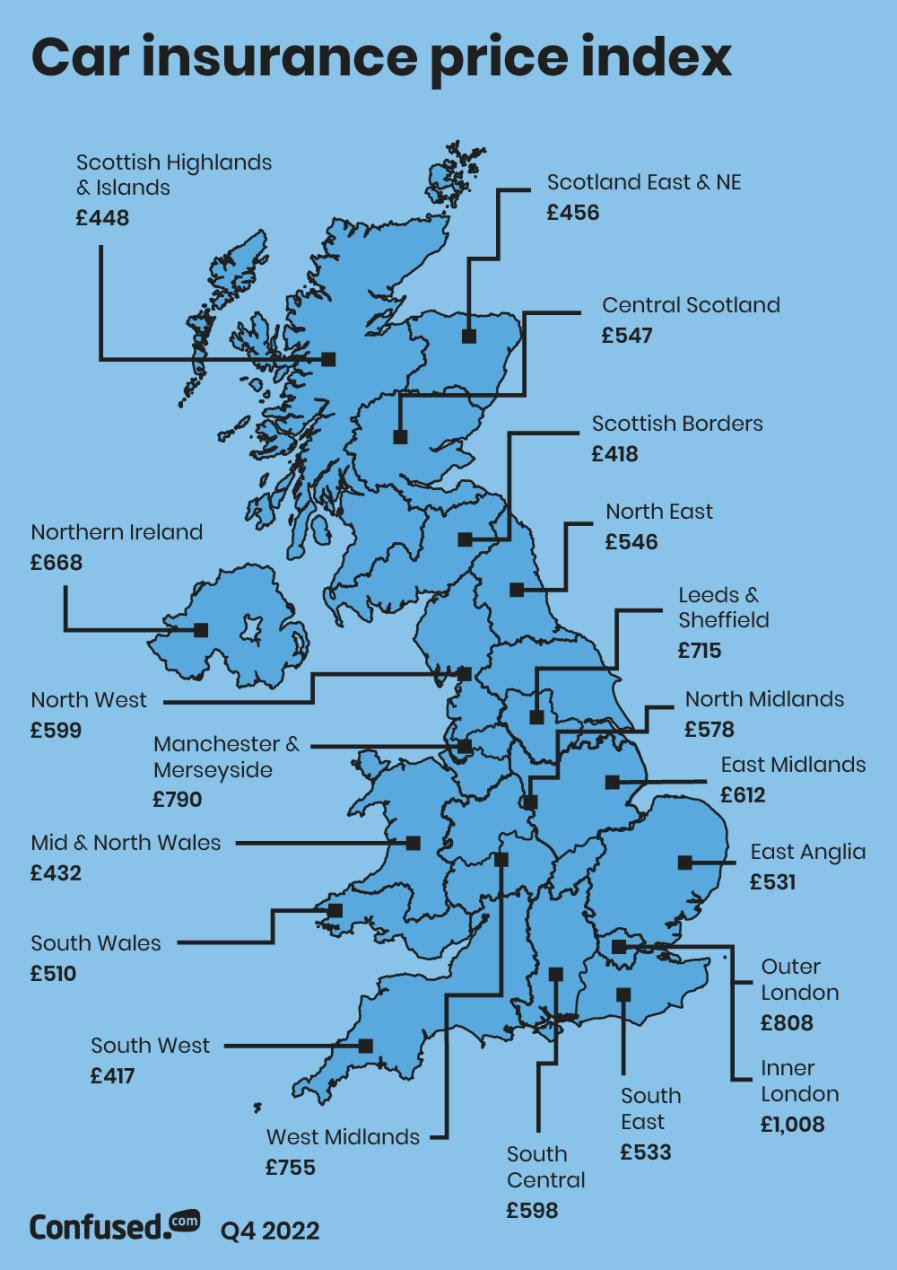
Some drivers in Central Scotland and in East and North East Scotland are paying more than ever before for their car insurance. That’s as costs in areas such as Edinburgh and Dundee hit record-breaking figures.
However, Glasgow is the most expensive area in all of Scotland. Drivers can expect to pay £601, following an annual increase of £107.
And it’s a similar picture in the UK. That’s as prices increase by £100 to £629, on average.
Louise Thomas, car insurance expert at Confused.com reminds drivers shouldn’t give in to auto-renewal quotes from their insurer. That’s as further research shows UK drivers are saving £59, on average, when shopping and switching(2)
How can I save money on my car insurance? Confused.com provides top tips for getting cheaper car insurance, as cost of living crisis continues to impact theUK
The average cost of car insurance in Scotland has grown by 22% in just 12 months. That means drivers in the region are now paying on average £89 more than they did this time last year, new data reveals.
The increase means that drivers in Scotland are now paying £497 for their car insurance, on average. That’s according to the latest Confused.com car insurance price index, powered by WTW. Based on more than 6 million quotes over the quarter, it’s the most comprehensive car insurance price index for new business in the UK.
But some areas in Scotland might be pricier than others. The average cost of car insurance in Central Scotland is now £547, on average, following a £100 (22%) annual increase. This also makes it the most expensive region of Scotland overall.
For drivers in the East and North East, prices have increased to £456, on average, as insurance grew by £80 (21%) year-on-year.
And the latest data also reveals that these areas of Scotland are seeing record-breaking figures since Confused.com’s price index first began in 2006, so drivers might have noticed a recent spike in their premiums.
In Central Scotland, car insurance prices in Motherwell, Kilmarnock and Edinburgh all saw the highest costs recorded.
This means drivers were paying as much as £556, £483 and £488 respectively for their car insurance, on average. And for those living in the East and North East of Scotland, Dundee and Kirkcaldy also saw prices soar higher than years previously. These costs hit £472 and £453 respectively, on average.
Drivers in the Highlands and Islands have also seen rising costs. That’s as the average cost of car insurance in this part of the country has increased by 21%, to £448 on average. But the Scottish Borders is the cheapest overall. Despite a £70 (20%) annual increase, prices are £418, on average.
Despite some of the highest prices recorded in Scotland this quarter, these aren’t necessarily the steepest costs. In Glasgow, prices grew by £107 (21%) in 12 months, on average. That means prices are now £604 for drivers, on average, and the most expensive area in Scotland.
This quarter, Paisley also tops the list as one of the highest areas in Scotland, with a £95 (23%) annual increase. Drivers can now expect to pay around £501, on average. The cheapest area in Scotland is the Hebrides. Despite a 21% annual increase (£66), the cost of car insurance is £388, on average. This is 36% cheaper than Glasgow, the most expensive area in the country.
And it’s not just the annual increases that have packed a punch when it comes to insurance prices. In the past 3 months alone, the average cost of car insurance across Scotland has grown by 7%. That’s a £34 increase in premium costs, compared to motorists who took out insurance between July and September last year (Q3 2022). Here’s how the figures currently stand in each area:
Central Scotland:
Postcode area
Average premium
Annual change (%)
Annual change (£)
Edinburgh
£488
+22
+87
Glasgow
£604
+21
+107
Kilmarnock
£483
+25
+97
Motherwell
£556
+24
+107
Scottish Borders:
Postcode area
Average premium
Annual change (%)
Annual change (£)
Dumfries
£416
+20
+69
Galashiels
£421
+21
+72
East & North East Scotland:
Postcode area
Average premium
Annual change (%)
Annual change (£)
Aberdeen
£449
+20
+73
Dundee
£472
+24
+91
Kirkcaldy
£453
+22
+82
Scottish Highlands and Islands:
Postcode area
Average premium
Annual change (%)
Annual change (£)
Falkirk
£449
+21
+76
Hebrides
£388
+21
+66
Inverness
£417
+22
+74
Kirkwall
£393
+17
+57
Paisley
£501
+23
+95
Perth
£422
+22
+75
Shetland
£488
+10
+43
But what’s causing the price hikes? The current UK average of car insurance prices shows the highest in 3 years, following a £100 (19%) increase over the past 12 months.
The UK average now sits at £629, one of the most expensive since before the coronavirus pandemic. And while insurers had to readjust their pricing in recent years to reflect the return of normal driving habits, this past 12 months has also seen a real shake up in the insurance industry.
Last January, the Financial Conduct Authority (FCA) introduced new regulations to prevent insurers from overpricing loyal customers(1). This meant that all prices offered had to be fair and purely based on a driver’s profile. With companies no longer able to inflate returning customer costs, insurers have also had to readjust their pricing to make up for this. But, as a result, new business prices are likely to have increased.
For this reason, Louise Thomas, car insurance expert at Confused.com reminds drivers why they shouldn’t give in to the ease of auto-renewal. Even if the offer does look good. That’s as further research shows how drivers are still saving money, even if their renewal works out cheaper than the previous year.
To investigate, Confused.com conducted a survey of 2,000 UK drivers(2) that had their renewal in the last quarter. And the results show that 1 in 2 (50%) found their renewal price had increased compared to the previous year, by £46, on average.
Of these, 2 in 5 (40%) went on to shop around and switch insurers and save £55, on average. This goes to prove that shopping around could save money, even when prices appear to be increasing. However, 1 in 5 (20%) also found their renewal to be £38 cheaper, on average. Of these, more than 1 in 3 (34%) went on to shop around and switch insurers, saving £59 on average.
These savings are also being seen by customers, with significant savings being reported, even when renewal prices have been cheaper.
For example, Mr Allen saw his premium drop from £306 to £285. But, by shopping around he was able to secure a new price of £248. However, in most cases, customers have seen their renewal increase significantly, with shopping around saving a staggering £240 for one customer. In this case, the insurer increased their renewal by £200 to £720. However, shopping around saw them reduce their premium to £480.
While all drivers across the UK are seeing price increases this quarter, they’re impacting drivers differently. For example, male drivers are now paying £672, which is a 19% increase year on year – in line with the UK average. In terms of monetary value, this equates to a £44 increase in 3 months, and £105 year-on-year. Meanwhile, female motorists are now paying £557, following a 19% increase year on year. This means prices are now £90 more expensive, on average(3).
It’s a similar picture for UK drivers of different ages, with some facing major hikes in their insurance costs compared to others. Typically, younger drivers pay the most for their insurance, so it’s no surprise that their increases are above £200 for some. Although, 18-year-olds have been hardest hit, as their premiums soar by a staggering £307 (22%) over the past 12 months. This puts the average premium for drivers this age at £1,715, making it the most expensive age for car insurance.
This isn’t the highest price recorded for drivers of this age. Recent increases, however, has made this the case for both 28 and 33 year olds. A £130 (17%) increase for drivers aged 28 puts the average premium at £912 – the most expensive price on record for this age. Similarly, 33-year-olds are now paying £786, following a £123 price increase, to make it a record-high for this age group.
These increases are significant. But much like any other cost increases people are facing in the current climate, it’s also clear that there are savings to be made. Shopping around is likely to help drivers save against their renewal price, which is no doubt a welcome saving as the cost of living crisis continues. But there are also ways in which drivers can make changes to their policy in order to save money.
This includes:
Paying annually instead of monthly – insurers often put an interest charge on monthly payments, so making a one-off payment avoids this
Being accurate with your mileage – choosing a lower mileage may in fact work out more expensive, as this could be seen as a less experienced driver. Similarly, if you’re no longer travelling the UK every week, be sure to let your insurer know!
Enhancing car security – anything that reduces the risk of your car being stolen will reduce the risk of claim, and this should be reflected in your price.
Louise Thomas, car insurance expert at Confused.com comments:“The current financial climate is difficult for everyone right now, in all aspects of their life. With costs on the increase all around us, it can seem overwhelming at times to even know where to begin when it comes to cost-saving.
“Some costs can’t always be avoided, but one thing for sure is that the price we pay for car insurance isn’t a fixed cost. Choosing to automatically renew your car insurance with your current insurer might feel like the most stress-free and easy option, but financially you might not be better off. There’s lots of insurers in the market right now, so it’s likely that there could be better and more affordable options out there for you.
“But how will you know for sure? The best advice I can give is to shop around before you need to renew. This is the only way you can ensure that you’re paying the best price out there. In fact, we’re so confident that motorists can find cheaper deals by shopping around, that we guarantee to beat your renewal quote. And if we can’t, we’ll give you the difference, plus £20(4)! Either way, it’s a win-win for motorists!
“We also understand that things happen throughout the year, which could affect policies from time to time. But our tips on how to get cheap car insurance advises how you can ensure prices remain as low as possible. Things like multi-car policies or having a no-claims bonus are just a few ways in which you could save.”
Blackhall Mosque – Sunday 29 January House O’Hill Rd, Edinburgh EH4 2AJ
Islamic Relief UK is partnering with community pillars including Blackhall Mosque, Crookston Community Group and Masjid Al Hikmah to distribute 500 essential food hampers and supermarket vouchers to vulnerable families.
The new year continues to see the cost of living crisis pushing families into poverty and Scotland has seen an alarming rise in food insecurity and the need for financial assistance, fuelling the need for food banks across the city.
Islamic Relief UK will continue to support the most affected through food banks, mosques and other organisations but are calling on the UK government to ensure people have adequate incomes to cover the essentials.
A new report by the Resolution Foundation finds that there are large increases in people unable to afford essentials compared to the pre-pandemic period. In November 2022, 28 per cent (up from 9 per cent pre-pandemic) of adults say that they could not afford to eat balanced meals, and 11 per cent or 6 million adults (up from 5 per cent pre-pandemic) reported being hungry in the past month but they didn’t eat as they lacked enough money to buy food.
These very alarming outcomes are more common among groups known to experience disadvantage. This includes low-income families, those suffering from domestic abuse, the homeless, asylum seekers and refugees who were already struggling to feed themselves.
Many families in Scotland have been hit hard by the pandemic and suffered a cold Winter of choosing whether to heat or eat.
To help some of the most vulnerable, hampers will be packed with essential food by staff and volunteers, before delivery to locations across the city and residents.
The food packs will contain essential items such as bread, pasta, tea, biscuits, oil, sugar and others.
Tufail Hussain, Director of Islamic Relief UK said:“Food banks are not a sustainable or dignified way to help people who are struggling to survive because they do not have a sufficient or reliable income. We will continue to support the most vulnerable through our programmes, but food banks should not exist in one of the wealthiest countries in the world.
“The current cost of living crisis has revealed just how much the UK’s benefits system is failing to support those on the lowest incomes. Only long-term structural change will give people the best chance of escaping poverty and living with dignity.
“The UK government must do more to deal with the immediate impacts of the cost of living crisis, but also undertake a fundamental review of the UK’s social security system with a view to ensuring benefits provide people with an adequate income to cover their essential needs.”
About Blackhall Mosque and Association of Scottish Muslims
Association of Scottish Muslims (formely CEPA) is a registered charity founded in 2001 by concerned Muslims from Edinburgh. Its purpose is to work with the Muslim community and statutory organisations to build an infrastructure to provide a range of services to promote the inclusion, the development and the welfare of Muslims, enabling them to become a responsible and thriving part of civic life.
Locations:
Masjid Al Hikmah – Saturday January 28 2023 11am – 4pm 31-33 St Clement Street, Aberdeen, AB11 5FU
The bodies say interfering with electricity and gas meters can have a “disastrous effect” on perpetrators and innocent people nearby – and have urged anyone coming across tampering to report it and avert disaster.
In a joint statement, Alan Wilson, Managing Director of SELECT, and Fiona Hodgson, Chief Executive of SNIPEF, said: “It is a distressing sign of the times that an increasing number of consumers are resorting to tampering with their electrical and gas meters in an effort to reduce their energy bills.
“Stealing energy in this way is a worrying and illegal practice, often encouraged by widely shared footage on social media. But it risks lives and can have fatal consequences for innocent people close by.
“Such services are often offered by unscrupulous individuals who will bypass services or devices for a fee. But often the methods they use are often extremely dangerous and they can have no, or very limited, knowledge of what they’re doing.
“Like all gas and electrical work, interrupting the supply is something that should only ever be dealt with by fully-trained and qualified professionals.
“We are urging all householders and tradespeople to immediately contact the relevant energy company if they suspect meter tampering has occurred.”
Sean Smith, Fire Investigation Officers Watch Commander with SFRS, said: “SFRS is now seeing meter tampering and removal services with increasing frequency and, sadly, we have first-hand experience of the tragic circumstances that they can cause.
“We are now engaging with communities to discourage this dangerous act and make people aware of the significant risks from energy theft and meter tampering.”
The renewed alert follows a warning last year from energy regulator Ofcom, who flagged the danger of social media posts claiming gas and electricity meters could be removed as an “energy-saving hack”.
It also coincides with the current high-profile Stay Energy Safe campaign from Crimestoppers, urging contractors and consumers to contact them anonymously at 0800 023 2777 if they think a meter has been tampered.
“I’m not giving my house to an African”: – Scottish Parliament Roundtable exposes the harsh reality of the student housing crisis in Edinburgh and the Lothians.
Responding after hosting a Student Housing and Cost-of-living roundtable in the Scottish Parliament yesterday (25th January 2023), Foysol Choudhury MSP said: “Our students are at breaking point.
“Today in the roundtable I hosted at the Scottish Parliament, we heard again and again, from students all across the packed room, about issues such as a lack of housing, unsafe conditions, unscrupulous landlords, sofa surfing and extortionate prices.
“In Edinburgh and the Lothians, we heard about how this student housing crisis has been impacted even more by Edinburgh’s crisis-hit housing market.
“For students facing these problems, it can cause significant mental health difficulties during what is already a very stressful time.
“For international students, this stress can be compounded as landlords are taking advantage of newcomers to the city, charging extortionate rents and asking for unreasonable deposits.
“A student talked about the anxiety felt by Ukrainian students trying to find a safe home in Scotland.
“Another student told of how a landlord told them “I’m not giving my house to an African”.
“Another told of how “my friend was living in a five bedroom flat sharing with 10 other students”
“These few examples are totally unacceptable and they are sadly a reflection of wider issues being felt by students across Edinburgh and Scotland.
“What was clear from the roundtable is that students feel the urgent need for a Student Housing Strategy, more regulation of purpose-built student accommodation and more rights afforded to those who are tenants in these accommodations.
“Students are also calling out for more funding for support with transport, mental health, damp and the cost-of-living.
“We need an urgent solution, now.
“I was glad to see many MSPs in attendance to listen to students’ concerns, as well as representatives from local universities and organisations such as the Edinburgh Student Housing Co-operative, Living Rent and NUS.
“It is important that moving forward, students, universities, local authorities, the private sector, the Scottish Parliament and the Scottish Government all work in partnership.
“I will be raising a motion in the Scottish Parliament and asking for a Member’s debate. Now is the time for action, not just words”


 PY Lunches are back