Investment to help children and families access support
Children, young people and their families will benefit from £7.6 million funding to strengthen and expand local neurodevelopmental support.
The Scottish Government funding, which will be distributed to local councils, will mean more flexible support is provided to children, young people and their families to get the help they need, when they need it, informed by local circumstances.
It is part of wider work by the Scottish Government, local authority body COSLA and partners to improve neurodevelopmental support for young people across health, education, local government and the third sector, as set out in the new Programme for Government.
This includes the work of the Children and Young People’s Neurodevelopment Taskforce, alongside other action to improve support and services.
Announcing the funding on a visit to Windygoul Primary School in East Lothian, Minister for Mental Wellbeing Maree Todd said: “Demand for neurodevelopmental support has increased significantly in recent years and I want families to access the help they need, when they need it.
“This £7.6 million investment will help local areas build on existing services and further invest in the support that works for their communities.
“There is no single action that will solve all the challenges people face in getting timely and consistent support. This investment is just one part of the wider work to improve neurodevelopmental support.
“Through our continued partnership with local government, health services and the third sector, we will ensure a more joined-up, sustainable system of support for neurodivergent children, young people and their families.”
COSLA Spokesperson for Children and Young People, Councillor Tony Buchanan said: “Along with our wider partners, Local Government has seen rising demand for support for children and young people’s neurodevelopmental needs both pre, post and regardless of diagnosis.
“We very much recognise the value of early, neuro-affirming support for children, young people and their families in preventing the negative impacts caused where children’s needs are not met and helping them achieve their full potential.
“A whole system response is essential to support children and young people with neurodevelopmental needs and their families . We look forward to continuing to work with our cross sector partners to deliver improved outcomes as this work progresses.”
Neurodevelopmental conditions include autism and ADHD.
Camera Obscura & World of Illusions is offering free entry for Edinburgh children throughout September, helping local families enjoy a day out in the capital for less.
The offer is available as part of Forever Edinburgh’s Resident Rewards programme, which gives EH postcode holders access to exclusive offers across the city.
From Sunday to Friday, EH postcode holders can receive one free child ticket with each full-paying adult ticket booked online using the code EHREWARD26.
Edinburgh residents visiting without children can also benefit from its ongoing 20% off off-peak tickets from Sunday to Friday. The discount is available online using the code RESIDENTRATE20.
The offers follow Camera Obscura’s participation in the Government’s Great British Summer Savings Initiative, which saw the attraction pass on the full VAT reduction across advance and walk-up tickets during the peak summer season.
Located at the top of the Royal Mile, Camera Obscura features more than 100 interactive exhibits across five floors, from optical illusions and mind-bending installations to panoramic views of Edinburgh from its rooftop.
The attraction also welcomes families of all needs. Visitors with sensory needs can borrow Sensory Backpacks containing ear defenders, sunglasses, a torch, an activity sheet and sensory toys. A sensory map of the building is also available to help families plan their visit.
Andrew Johnson, General Manager of Camera Obscura & World of Illusions, said:“September is a brilliant time for Edinburgh residents to rediscover what is on their doorstep, once the busiest weeks of the summer have passed.
“We know the cost of a family day out can quickly add up, so we hope our child-goes-free offer will make it easier for local families to visit. We also wanted to ensure residents visiting without children could benefit, with 20% off off-peak tickets available throughout the month.”
Council Leader Jane Meagher said:“Our Resident Rewards programme, delivered by Forever Edinburgh, is all about giving the people who live in Edinburgh more opportunities to discover, enjoy and experience their own city for less.
“Camera Obscura is one of the capital’s most loved attractions, and I hope that residents will be able to make the most of this offer.”
Both offers are available to EH postcode holders from Sunday to Friday throughout September and must be booked online. Only one discount can be used per booking.
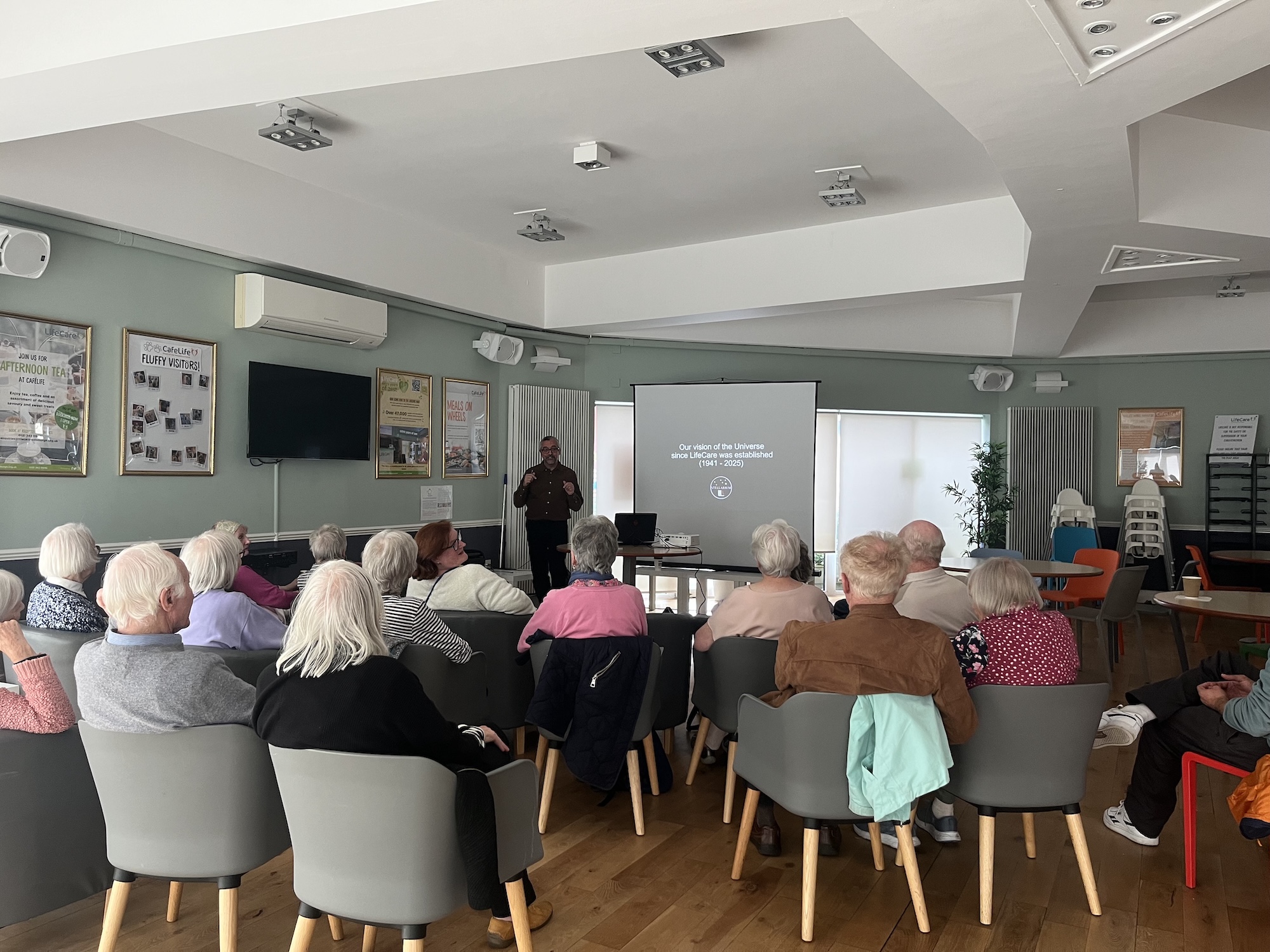
Local charity LifeCare is inviting parents, grandparents and carers to join a free, practical paediatric first aid session at its Stockbridge hub this Friday (11th September).
The session will cover basic first aid for infants, including how to deliver CPR and what to do in the event of choking. It is designed to give people who care for young children the confidence and practical knowledge to respond calmly in an emergency.
Taking place from 3pm to 5pm at CafeLife, LifeCare, 2 Cheyne Street, Stockbridge, EH4 1JB, the informal session is open to anyone who looks after children and would like to learn some essential first aid skills.
There is no need to book, and the session is completely free to attend. Tea and coffee will also be available, with donations welcome to support LifeCare’s work.
Set up in September 1941, the charity is celebrating its 85th anniversary of delivering transformative support within our local communities this month.
Sarah Duckmanton, Activities Coordinator at LifeCare said: “We want to make it as easy as possible for families and carers to access useful, practical information in a friendly and welcoming setting. Knowing what to do in an emergency can make a real difference, and this session is sure to be a great opportunity to learn some important skills.
“This event forms part of our free Talks at LifeCare programme, where we have covered everything from Edinburgh Street Style to the Water of Leith. Everyone is welcome. Thanks to everyone at the National Lottery Community Fund Scotland for helping make these free talks possible!”
CafeLife is fully accessible with lots of space for buggies, prams and wheelchairs. If you’re interested in getting involved or would like to learn more, please get in touch sarahduckmanton@lifecare-edinburgh.org.uk.
Event details
What: Paediatric First Aid – including choking and CPR When: Friday 11 September, 3pm–5pm Where: CafeLife, The LifeCare Hub, 2 Cheyne Street, Stockbridge, EH4 1JB Free but donations are always welcome
Millions wrongly believe they have ‘nothing worth leaving’
A solid majority of adults in Edinburgh risk leaving loved ones without clear instructions about their final wishes, new research has revealed.
A new poll commissioned by charity Will-writing campaign Will Aid has found 63% of adults in Edinburgh either do not have a Will or admit the one they have is out of date.
The research, released to mark the opening of appointments for the Will Aid 2026 campaign, found 57% of people in the city have never made a Will, while a further 6% admit their existing Will no longer reflects their current circumstances or wishes.
Nationally, the picture is similarly concerning, with 67% of UK adults either without a Will or with one that is out of date – 57% have never made one and 10% admit theirs is no longer up to date.
And despite the potential consequences for the people they leave behind, 44% of UK adults say they are unlikely to write a Will within the next year.
Will Aid is warning that misconceptions about who needs a Will could be leaving millions of families unnecessarily exposed.
Peter de Vena Franks, Campaign Director at Will Aid, said: “The fact that 63% of people in Edinburgh either don’t have a Will or have one which is no longer up to date should concern all of us.
“A Will is about far more than the value of the money or property you leave behind. It is about making your wishes clear, protecting the people you care about and making incredibly difficult decisions easier for those you love at what will already be a distressing time.
“You may have children whose future you want to protect, possessions with enormous sentimental value, pets you want cared for or very clear wishes about who should – and should not – benefit from your estate.
“Without a valid Will, you lose the opportunity to make many of those decisions yourself.”
The national research revealed that one of the biggest barriers to making a Will is the belief that people simply do not have enough to leave behind.
Of the 1,151 UK respondents surveyed who had not made a Will, the most common reason – cited by 29% – was the belief that they did not have anything worth leaving.
Cost and simply not finding the time were each cited by 19%, while 18% said they felt uncomfortable thinking about death and 14% were put off by the perceived complexity of the process.
Peter added: “Perhaps one of the most striking findings from our national research is that almost three in ten people without a Will believe they simply don’t have anything worth leaving.
“But Wills are not just for people with substantial wealth or property. They are about giving you a say in what happens after you die and making your wishes clear for the people you leave behind.
“We want people to recognise that making a Will is relevant to them, whatever their circumstances.”
The national research also revealed some of the life events that finally prompt people to act.
Among 857 respondents who had made a Will, 23% said they wanted the reassurance of knowing their children would be looked after if they died, while the same proportion said having children had prompted them to make one.
More than one in five (22%) said hearing stories about people who had died without a Will encouraged them to act, while 18% made theirs after buying a house.
Will Aid is also urging people in Edinburgh who already have a Will not to assume the job is finished.
With 6% of local respondents admitting their Will is out of date, the campaign is reminding people that a document written years ago may no longer reflect their family, relationships, assets or wishes, particularly following significant life changes.
Peter said: “Making a Will is not something you should do once and then forget about for the rest of your life.
“Families change. Relationships change. People marry, separate and divorce. Children and grandchildren are born. People buy homes, build businesses and acquire assets. Sadly, people we intended to include in our Wills can also die before us.
“If you know your Will no longer reflects what you want to happen, it is important not to keep putting off reviewing it.
“There may never feel like a perfect time to think about death, but making or updating a Will is ultimately about looking after the people you leave behind.”
The findings have been released as Will Aid 2026 opens for appointments, giving people in Edinburgh and across the UK the opportunity to have a basic Will professionally prepared by a participating solicitor while supporting good causes.
Every November, participating solicitors volunteer their time and waive their usual fee for writing a basic Will. Instead, clients are invited to make a voluntary donation to Will Aid, with the money raised supporting the campaign’s charity partners.
Since it was founded, the campaign has brought together the legal profession and some of the UK’s best-known charities, helping people put their affairs in order while raising millions of pounds for vital charitable work.
Donna Imrie, Partner at Rollos Law, said: “One of the biggest misconceptions we hear is that Wills are only for people who are wealthy or own significant assets.
“That simply isn’t the case. A professionally drafted Will gives you control over what happens after your death and allows you to make your wishes clear rather than leaving important decisions to chance.
“It is particularly important for parents and for people whose family circumstances may not be straightforward.
“We would also encourage anyone in Edinburgh who already has a Will to think about when they last looked at it. If your life has changed significantly since it was written, your Will may need to change too.
“Will Aid is an opportunity to sit down with a professional solicitor, talk through your circumstances and make sure your wishes are properly recorded – while at the same time helping charities carrying out extraordinary work in the UK and around the world.”
Appointments for Will Aid 2026 are now open and can be made with a participating firm either in person, where available, or remotely.
To find a participating Will Aid solicitor and book an appointment, or for more information about Will Aid, visit willaid.org.uk
Edinburgh Leisure has released it’s latest Impact Report.
Edinburgh Leisure Chief Executive Jen Holland said: “I am delighted to share Edinburgh Leisure’s Impact Report for 2025–26, a story of progress, resilience and people working together to help Edinburgh be active and well.
“This year’s report marks an important turning point, with stronger financial foundations, growing participation and continued investment in places and programmes that help more people feel active, included and connected.
“From expanding health and wellbeing programmes such as Balanced Life, to widening access through community facilities, subsidised provision and inclusive opportunities for people facing barriers, our work continues to support a healthier, happier and more active Edinburgh for everyone.
“One of this year’s Victorian Pool Crawl participants, Eileen Ingram, summed up that purpose when she told us: “I think it’s important for everyone, regardless of wealth, health or age, to be able to have access to facilities to enable them to live an active life. Regular exercise is really important for improving all aspects of our life.”
“Thank you for your ongoing support and partnership.
“I hope you enjoy reading the report and celebrating what we continue to achieve together for Edinburgh and its people.”
We are pleased to invite you to ‘Knots, a community walk for all the family’ on Saturday 26th September, 1:45pm-3.00pm. It is part of the Granton:hub / Madelvic House Doors Open Day.
We will walk, play, do an art activity, and learn about nature too. This event relates to our neighbour, United Wire, and one of our other historical and contemporary industries, fishing. You will learn some basic knotting practices (appropriate for children and adults), making a joint artwork, and also something to take home with you to help you remember the walk and what you have seen.
Starting and ending at the Granton Hub / Madelvic House.
Places are limited for participants’ safety and enjoyment. Suitable for those with wheels / sticks. Dogs on leads are welcome.
Tamsin Grainger is a Paths for All walk leader. In 2024/5, she was the Granton Archive Community Development Worker, and she is an experienced pedestrian.
This event is free to attend but booking is required via Eventbrite.
Children with life-shortening conditions from across Scotland and their families enjoyed a day to remember at Glasgow Airport on Saturday, taking to the skies for a spectacular scenic flight over Scotland’s west coast, courtesy of the UK’s leading regional airline, Loganair, and its charity partner, Children’s Hospices Across Scotland (CHAS).
Six families received VIP treatment onboard one of Loganair’s ATR 72-600s, which flew under flight number LM1996, marking the year CHAS’s children’s hospice, Rachel House, opened its doors.
Before take-off, families enjoyed a morning of fun in Glasgow Airport’s Campsie Lounge, with character meet-and-greets, singalongs and soft play. Even Police Scotland joined in the fun, making a beeline for the ball pit.
There was plenty of magic on board too. With support from Glasgow-based Wish Upon a Star Kingdom, Princess Merida and Spider-Gwen joined the families for the round trip across the Highlands and Islands to the delight of the young flyers, before the aircraft returned home to Glasgow Airport.
After the aerial adventure over Scotland’s west coast, the flight was then welcomed back in style with a water cannon salute from the Scottish Fire and Rescue Service
Among the excited flyers was four-year-old Isla Johnstone from Glasgow. Isla lives with acute myeloid leukaemia (AML), and she and her family have been supported by Robin House and CHAS at Home service for the past year.
Isla’s mum, Georgeta, said:“This flight was so special for us as Isla hasn’t been on a plane since she was a baby and she was always asking me when she can fly again, but because of her condition, it just hasn’t been possible until now.
“Isla was so excited flying over all the islands and loved every single minute of this wonderful experience. We are incredibly thankful to Loganair and CHAS for making Isla’s dream come true.”
Isla said: “My favourite thing about the flight was being up in the air and flying! I also loved meeting Merida and Spider-Gwen.”
Luke Farajallah, chief executive officer at Loganair, said:“This flight has become one of the moments we look forward to most each year.
“Connecting Scotland’s communities is at the heart of what we do every day, but there is something especially meaningful about using our aircraft to create happy memories for children and families who are facing incredibly difficult circumstances.
“CHAS is there for families when they need support most, and the generosity of the businesses and people across Glasgow Airport is what makes days like this possible. Five years into our partnership, our commitment to CHAS has never been stronger.
“We’re incredibly proud to play our part, and we’ll continue to find new ways to raise vital funds, support the charity and, most importantly, help families make memories together.”
The flight marked the fifth year of the partnership between Loganair and CHAS, supported by AGS, ground handling team Menzies, ABM, Wish Upon a Star Kingdom and the Scottish Fire and Rescue Service.
In 2024, Loganair added a voluntary £2 donation option to online bookings, raising further funds for CHAS, and the airline also supports CHAS at Home, the charity’s outreach service that flies nurses to families in remote island communities. The service made 1476 visits in the last year. Since 2021, Loganair has raised over £100,000 for CHAS, supporting its work with families across Scotland.
Aimee Russell, senior partnership executive at CHAS said: “For many families supported by CHAS, it is often difficult to fly or use other forms of transport because of their child’s complex needs. Our important partnership with Loganair means we can bring smiles to children and help create special memories for families to always treasure.
“Experiences like this mean so much to the families we support, and we would like to say a huge thank you to Loganair and their partner organisations for making this incredible flight possible once again.”
Loganair operates more than 70 routes across the UK and Europe, proudly serving communities across Scotland and further afield for over 60 years with initiatives including its GreenSkies Community Fund, which has seen Loganair donate over £120,000 to sustainable projects since its inception in 2021.
NSPCC’s Read, Write, Relationships campaign says children in Scotland are missing out on vital learning which could protect them from abuse
MSP has lodged a parliamentary motion to call for all children and young people across Scotland to have guaranteed access to consistent and relevant Relationships, Sexual Health and Parenthood (RSHP) education.
The NSPCC, young people and partner organisations gathered outside Scottish Parliament on Thursday to urge the Government to act now to ensure every child receives the relationships education they need to stay safe.
This move was part of the charity’s ‘Read, Write, Relationships’ campaign, which it launched due to the patchy delivery of Relationship, Sexual Health and Parenthood (RSHP) education across Scotland.
This week Scottish Green Party MSP, Laura Moodie, lodged a parliamentary motion, with cross party support, calling on ministers to guarantee all children and young people in Scotland have access to high-quality healthy relationships education. And on Tuesday, First Minister John Swinney made a commitment in the Programme for Government to tackling violence against women and girls.
On Thursday, campaigners outside Holyrood held a giant school timetable with a glaring gap to highlight that this crucial learning was still not guaranteed for every child in Scotland.
The charity also delivered Back to School packs to MSPs explaining why action is urgently needed and outlining the campaign’s calls for change.
The NSPCC launched the campaign last December following extensive engagement with young people across Scotland through its local campaigns work with a variety of partners including Young Women Know and the Scottish Youth Parliament. [WA1]
Many young people told the charity that the RSHP education they received was inconsistent, outdated and failed to reflect the realities of growing up today.
Ruth (15) a member of the NSPCC Young People’s Board for Change, said: “All children and young people should have access to education about healthy relationships because, without it, they may enter abusive or unhealthy relationships and not realise that this behaviour is unacceptable or harmful.”
Carla Malseed, NSPCC Influencing Campaigns Manager, said: “Every child deserves the knowledge and skills to recognise healthy relationships, spot harmful behaviour and stay safe, both online and offline. Yet right now, whether a young person receives that education can depend on which school they attend.
“Young people have told us clearly that what they’re being taught is, too often, inconsistent, out of date and disconnected from the challenges they face today. That simply isn’t good enough.
“While ministers delay, children are missing out on learning that could help protect them from abuse and navigate relationships safely.
“Healthy relationships education should be treated with the same importance as reading and writing. We’d like to see the Scottish Government act now to make high-quality RSHP education a right for every child, regardless of where they live or go to school.”
A YouGov poll commissioned by the NSPCC found that over two-thirds (67 per cent) of adults in Scotland believe that RSHP education should be made compulsory, while one in four believe it does not currently help children understand online abuse.
Scotland is now the only nation in the UK where this crucial area of education is not underpinned by a legal requirement. Although RSHP sits within Curriculum for Excellence, schools have discretion over what is taught and when, resulting in significant variation in children’s experiences.
NSPCC Scotland wants to see a stronger recognition of children and young people’s right to this education in line with the UN Conventions of the Rights of the Child and is calling on the Scottish Government to legislate to make it a guaranteed entitlement.
The charity is also calling for the introduction of clear national practice-based guidance, dedicated funding, professional training, time and resources for teachers, and robust monitoring by Education Scotland to ensure consistent delivery across the country.
People can sign a petition to support Read, Write, Relationships, by visiting: NSPCC
Young people looking for support on any of the issues mentioned, can contact Childline on 0800 1111 or visit Childline.org.uk. Childline is available to all young people until their 19th birthday.
Adults who are concerned about a child or young person can contact the NSPCC Helpline by calling 0808 800 5000, or email: help@NSPCC.org.uk.