Full steam ahead for Borders Railway

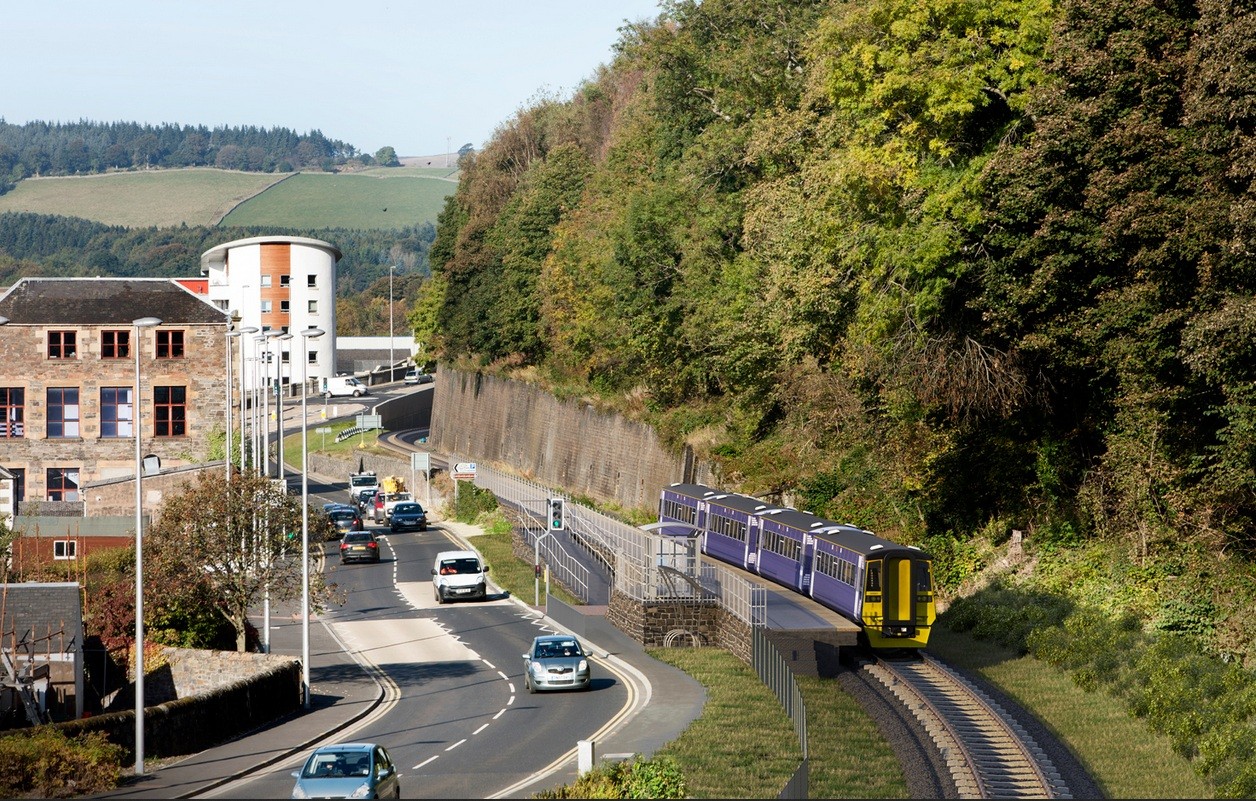
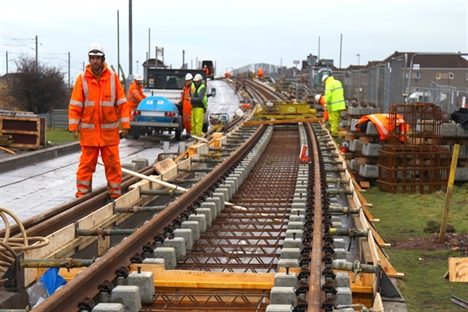
train3All aboard! Trains will be operational on the Borders Railway from September 6, 2015, First Minister Alex Salmond said yesterday. The news has been warmly welcomed – the new thirty mile rail route is expected to be hugely popular and will give a significant boost to the local economy.

The First Minister also announced a feasibility study, led by Scottish Enterprise in partnership with VisitScotland, Scottish Borders Council and Transport Scotland, to look at how the Borders Railway will transform the tourism potential of the region.

The study will also look at tourist opportunities from any future development of the line, including the potential for a turntable and the creation of a permanent home at Tweedbank Station for the Great Tapestry of Scotland, the world’s longest embroidered tapestry, reflecting the textile heritage of the area.

rail1

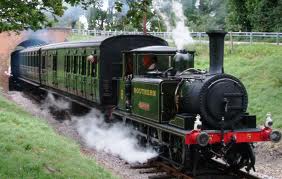
Mr Salmond went on to announce plans to maximise the tourist potential of the line by introducing a steam train experience – which could benefit the local economy by many millions of pounds a year. The steam train experience will start in September next year.

The First Minister met with members of Scottish Borders Council, Great Tapestry of Scotland trustees, members of the Borders Tourism Industry and members of the Waverley Route Heritage Association in Tweedbank yesterday.

Speaking from the site of Tweedbank Station, the First Minister said: “From September 2015 – for the first time in almost half a century – there will be passenger train services running on this track.

“For commuters and tourists alike, the reopened line will provide opportunities to enjoy the many fantastic attractions and experiences on offer in the Borders.

“We can expect the Scottish economy to benefit by tens of millions of pounds from the regular train line. The feasibility study will look at how the area can benefit from the railway. With a dedicated tourist service and the attraction of the Great Tapestry of Scotland to be based at Tweedbank, more people than ever will get to visit and enjoy Scotland’s stunning Borders.

“There will be few railway journeys anywhere in Europe to match the outstanding scenery along the route of the new Borders Railway. I have no doubt that Borders Railway will be profoundly successful and I will be one of the first in line for a ticket when the trains are running in September next year.”

rail2

Other measures have also been announced to help boost the tourism potential of the new railway. These include:

  • The platform at Galashiels Station will be extended to accommodate longer tourist train, allowing passengers to alight and enjoy the town centre
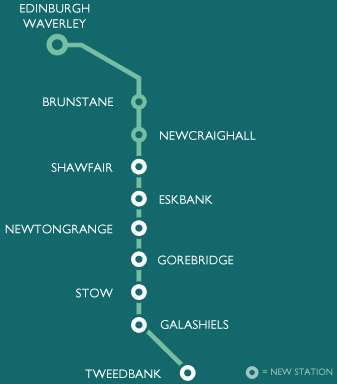
  • A new footpath will be constructed at Newtongrange Station to enable direct access for users of regular rail services to the award-winning Scottish Mining Museum
  • Wifi connectivity will be available at all seven stations on the route of the railway
  • A train will be covered in special livery advertising the tourist potential of the Borders.

Cllr. David Parker, Leader Scottish Borders Council said:  “I am delighted that the First Minister is able to come to the Borders today and announce significant plans to further strengthen the tourism potential of the Borders railway. The Scottish Government’s commitment to steam and charter trains is extremely welcome and will be a fantastic boost to the Borders economy.

“The First Minister’s pledge to work jointly with the Council to deliver the Great Tapestry of Scotland visitor centre and other improvements is fantastic news. This underlines the very substantial support that the Scottish Government have shown to the Borders Railway project.

“I truly believe that this is going to be a very special railway line that will attract a great many visitors as it is an outstanding scenic journey.

Having the Great Tapestry of Scotland situated at the Tweedbank terminus telling the 420 million year history of Scotland is something that will be very special indeed. A great many people will take the ‘Train to the Tapestry’ and also visit the Borders and our many other attractions.”
lead-route-mapMike Cantlay, Chairman of VisitScotland said: “The new Borders Railway presents a huge opportunity for Scottish tourism. The scenery from Edinburgh through Midlothian down to the Scottish Borders and back again is remarkable and I have no doubt that visitors will make the journey just for the experience as well as to visit the many attractions along the way, including the National Mining Museum Scotland at Newtongrange and Abbotsford House.

“The romanticism captured by steam trains will give the route added value, following in the tracks of the Jacobite steam train journey from Fort William to Mallaig which welcomes thousands of visitors every year.

“We are excited that we are moving ever closer to the launch of this magnificent new line and will be working with partners over the coming months to ensure the tourism potential of the Borders Railway is fully realised, encouraging visitors to explore yet more of Scotland’s beautiful urban and rural landscapes.”
rail3Alistair Moffat, co-chairman of the GTS Trustees said: “Four years ago, work on the Great Tapestry of Scotland began – in the Borders. When Sandy McCall Smith had the idea and asked me to start working on the narrative, I did that work at my house near Selkirk. And it is very fitting and satisfying that a work of art that has been made all over Scotland, stitched by a thousand Scots, should come back home to the Borders, the place where Scotland’s textile industry saw its fullest flowering.

“As Co-Chairman of the trustees I want to thank David Parker, the Leader of Scottish Borders Council and the First Minister, Alex Salmond, for their vision and imagination in creating a partnership to give this great work of art a permanent home in the Borders. And for knowing a good thing when they see it. I also want to thank my wife, Lindsay. When she came up with the phrase ‘a train to the tapestry’, I knew it would happen.

“This is a unique project, a history of Scotland made by a thousand Scots who, from Caithness to Galloway, stitched our national story. I find myself immensely moved and proud to be a citizen of a nation that is capable of producing such a stunning account of its history. It is done with pride, certainly, but also with passion and love. And that is what gives it such power. When the tapestry makes those who see it glow, they are glowing because they intuit that it was made with love, the love of Scotland.”
rail6Midlothian Council leader, Councillor Owen Thompson welcomed the news that Transport Scotland is to fund a path directly from the new station at Newtongrange into the National Mining Museum Scotland.

He said: “The 5 star mining museum is just one of scores of attractions here in Midlothian. We sit just 10 miles south of Edinburgh city centre and the county is steeped in history, picturesque villages and wonderful scenery.

“The station itself will potentially bring enormous economic benefits to the area and to hear Transport Scotland is now funding a path straight to one of our most fascinating museums is great news for the museum in particular and tourism in general.

“I am looking forward immensely to the re-opening of the railway when the museum and lots of local businesses will be making visitors, new and old, very welcome.”
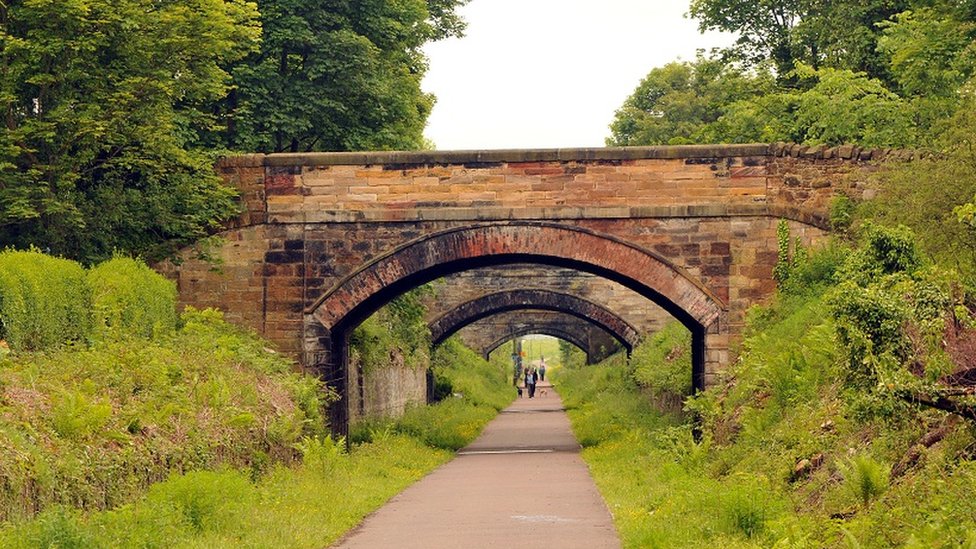
rail5Catherine Maxwell Stewart, Tourism Business representative on the Scottish Borders Community Planning Partnership said: “The Borders Railway offers a fantastic opportunity for local tourism businesses to attract new visitors to the area and to offer them exciting, new experiences.

“The Scottish Borders has so much to offer visitors, whether they are here for a day, or for a week. I am sure that this new link from the heart of the city to the heart of Scott’s Country will be a catalyst for our local tourism sector, with benefits rolling out across much of the area. Today’s announcement will really help to put the Borders on the map as a tourist destination for all. ”


Government announces more cashback for youth groups

Minister for Young People welcomes £533k investment in 161 projects across Scotland

youthlinkThousands of young people across Scotland will benefit from CashBack for Communities youth work grants totalling half-a-million pounds which have been announced today for 2014-15.

Sixteen Edinburgh youth projects will receive a share of almost £46,000 this year – local beneficiaries include Pilton Youth & Children’s Project (PYCP), Leith’s Pilmeny Development Project, The Yard in Stockbridge and Granton Youth Centre,

Allocations from the CashBack for Communities Youth Work Fund for the first year, administered by YouthLink Scotland, have been made to 161 community groups supporting young people the length and breadth of Scotland. Between them, they are sharing an initial £533,036, which marks the first awards from a £2.094 million fund over the next three years.

Minister for Children and Young People Aileen Campbell welcomed today’s announcement. She said: “Since Cashback for Communities was introduced by this Government in 2007, thousands of young people have benefited from more than 1.5 million sporting, cultural and educational activities and opportunities, all funded from ill-gotten cash seized from crooks. I am delighted to see so many great organisations are receiving this latest funding, which will help them take their important work even further.

“The average CashBack youth work funding award for each organisation is around £3,310 and that is an investment that will go a long way in supporting activities for young people. I have seen for myself many examples of the excellent work these organisations do, and wish them well as they turn exciting plans into reality.”

One organisation to have benefited is Strathmore Centre for Youth Development, which provides information and services for young people in the Strathmore area of Perthshire. It has received £2,182 to support its programme of activities, which includes organising trips for local youngsters.

Craig Cantwell, Centre Manager, said: “CashBack funding is extremely important to us as it allows us to give opportunities to young people who would otherwise never access such trips or learning opportunities. They are open to ideas and projects that are a bit different than the norm.

“As a retired Police Officer, I am grateful that this money is being put to good use and is being fed back into communities across Scotland.”

Another of the recipients to have benefited is Mid Argyll Youth Development Services, which has received £1,740 to support a dance program offered to young people throughout the region. Fiona Kalache, the Services’ Manager, said: “We are delighted to have been awarded a CashBack grant. This money will allow us to continue to run our diversionary dance program over the coming year. This is a very popular project which could not have carried on without this donation.”

Jim Sweeney, Chief Executive of YouthLink Scotland, said: “Our young people are the future of this nation so it is crucial they all have the opportunity to flourish. Putting the cash from criminals back into communities has offered thousands of young people the chance of a more positive path in life. Investing in youth work changes young people’s lives. It is an investment in all our futures as it helps create young people who are confident, engaged and a credit to society.”

Since the inception of the CashBack for Communities in 2007, over £74 million recovered from criminals has been invested in the Cashback Programme to provide over 1.5 million free activities for children and young people throughout Scotland.

cashback logo


Curriculum for Excellence report card: Russell must try harder

Less assessment would benefit pupils and teachers, say Greens

teacherGreen MSP Alison Johnstone says lower levels of assessment in schools would benefit pupils and reduce the massive workload of teachers.

A report published today looking at the first year of the Curriculum for Excellence qualifications (see below)  says that the new qualifications have been a success overall, but highlights ‘significant and unsustainable level of over‑assessment in many parts of the system’ and a ‘higher level of assessment than was necessary or desirable’.

Alison Johnstone, Green MSP for Lothian and education spokesperson for the Scottish Greens said: “I congratulate every teacher who has worked hard to make a success of this last year with the new qualifications. We need to get the balance right between learning and assessment and this report reflects my concern that the system is still too heavily weighted towards exams, which doesn’t always lead to better educational outcomes.

“Workloads in the teaching profession remain far too high and the Scottish Education Secretary must address this as one of his top priorities. I believe the Curriculum for Excellence has set us on the right path in Scotland but there is more work to do to achieve a school system that is sustainable and rewarding for both pupils and teachers.”

MBReportOnFirstYearofNewQuals_tcm4-837160

classroom

Council seeks your views on Community Payback Orders

Edinburgh residents are being asked to comment on a scheme that requires offenders to carry out unpaid work in the community as part of their sentence.

commpaybackCommunity Payback Orders can be imposed on offenders by the courts as an alternative to a short prison term, and can last between six months and three years. They give those involved the chance to address their behaviour and also to repay communities by carrying out unpaid work.

The public consultation has been launched by the City of Edinburgh Council, which administers the scheme in the city. Views are being sought on offenders working in communities and the effectiveness of community payback as a way to reduce re-offending.

Examples of unpaid work carried out by the scheme include:

  • Refurbishing rundown gravestones, including a memorial in Craigmillar to an abandoned baby;
  • Maintaining the Vat Run mountain bike trail in South Queensferry;
  • Clearing overgrown paths in Figgate Park;
  • Building and filling flower planters for the Queen’s Baton route.

As well as using the questionnaire to comment on the community payback scheme, individuals and community groups can also recommend projects that may benefit from unpaid work through the online suggestion form.

All local authorities are legally required to carry out an annual consultation on the unpaid work aspect of community payback orders.

Community Safety Leader, Councillor Cammy Day, said: “We’re really keen to hear what people think about community payback orders, and the work carried out by the people subject to them.

“They are an excellent way for organisations such as charities to get practical help, and they give offenders the chance to repay communities for their offences.”

payback1

Anyone for coffee?

coffeemorningThe World’s Biggest Coffee Morning, held on Friday September 26, is a great excuse to catch up with your favourite people and raise some money for a good cause. And it’s really easy too – just ask your guests to make a donation for the coffee and cake you serve.

Whether it’s steaming mugs and biscuits, or homemade cakes and your best cups, it really doesn’t matter how simple or fancy you make it. The only thing that really matters is the treat of getting everyone together and knowing that every coffee and cake you share with your friends will help someone affected by cancer get the support they need to feel more in control of life.

CarrotCakeThumbLast year 3,642 people living in Central Scotland called the Macmillan Support Line for cancer information, advice or simply a chat. And so far, there are 208 Macmillan nurses in the region providing expert support for people affected by cancer, and their families. But there’s still more needed and that’s where your coffee morning comes in. Every pound you raise will mean more people can get the Macmillan support they need.

So come on, let’s make time for a treat this September. It all starts with ordering your free Coffee Morning Kit, bursting with goodies to make raising money really simple and fun.

The World’s Biggest Coffee Morning takes place on Friday 26 September – but you can hold yours whenever suits you best.

Send for your free kit today – www.coffee.macmillan.org.uk

call 0845 602 1246 or text SHARE to 70550

WBCM-smile-100x100

Oldies fly the flag for fuller working lives

Watford, north Dorset and the Shetland Islands lead the way against outdated stereotypes of older workers …

older workersNew figures reveal areas as diverse as Watford, north Dorset and the Shetland Islands to be leading the charge against outdated stereotypes of older workers and flying the flag for fuller working lives.

They are among local authority districts across Great Britain with the highest rates of employment amongst older workers, according to new information collated by the Department for Work and Pensions (DWP).

Older-workers-table-200814

Watford – home to the headquarters of several major companies – boasts the highest estimated employment rate amongst 50 to 64s.

Latest figures for April 2013 and March 2014 show Watford recorded 89.5% of this age group in work. The Shetlands followed closely on 88.3% and north Dorset on 87.2%.

Other high-performing areas include Stroud in Gloucestershire (85.3%), south Northamptonshire (84.6%), Horsham in Sussex (84.2%), and Tandridge in Surrey (84.2%). The remainder of the top ten is made up by east Northamptonshire (84.1%), Broxbourne in Hertfordshire (83.2%) and Stevenage in Hertfordshire (83.0%).

The City of Edinburgh is upper mid-table (72.7%), slightly ahead of East Lothian (72.5%) and Midlothian (71.7%) with Dundee (53.9%) and Glasgow (53.8%) trailing further behind.

oldie workingDWP Minister Steve Webb said: The business case for ignoring outdated and inaccurate stereotypes and giving older workers a chance to thrive is absolutely compelling, and these figures show that in some parts of the country that message is being received loud and clear. What we must do now is extend the positive record we’re seeing in counties like Hertfordshire across the whole of the UK.

“If we want to ensure people have comfortable retirements, that business thrives and that our economy continues to recover, then equality of employment opportunity for older workers isn’t just a ‘nice to have’, it is essential.

“Another crucial point is that a person dropping out of the workforce early can have a devastating effect on their retirement income. We owe it to people to do everything possible to ensure they can benefit from a full working life.”

Dr Ros Altmann, the government’s Business Champion for Older Workers, said: “Older workers have a huge amount to offer any workforce. They generally have unrivalled life and work experience, often boast a broad range of skills and, according to many employers I’ve spoken to, tend to display great attitude and work ethic.

“Of course, there can be unique challenges faced by older workers – particularly in manual or strenuous jobs – but there is no reason why a person in their 50s or 60s cannot re-train to take on a different role with their existing employer, cut down their working hours, or even opt for a complete career change.

“We need to get rid of the traditional stereotype which suggests that people over 50 are too old to learn or change and are expected not to work, even if they want to. There can be a world of opportunities for older workers which can enrich their lives and also boost our economy.”

older workerAs well as highlighting the areas with the best records, the figures also show those places with the furthest to go to develop a labour market which makes full use of the skills and experience of their older working age population.

Areas in which around half of older workers are out of work include Hyndburn in Lancashire (48.1%), Rossendale in Lancashire (48.2%), west Somerset (49.2%), Tower Hamlets in London (50.6%) and Barrow-in-Furness in Cumbria (51.7%).

The prevalence of particular industries can make the challenge of providing equal opportunities for older workers more difficult in some areas of the country than others.

In types of work where this is the case, the government is keen to encourage employers to consider the benefits of retraining or altering the role of older employees, in order to keep their skills and experience on board.

Earlier this year, the government launched Fuller Working Lives, a piece of research and analysis highlighting the vast benefits that could be reaped by individuals, industry and the overall economy by tackling unemployment and economic inactivity amongst the over-50s. It also set out some of the specific factors which can often lead to older workers being forced out – or kept out – of employment early, before they reach State Pension age.

This followed landmark changes previously brought in by the coalition government to abolish the default retirement age – which previously forced many people to give up work before they felt ready – and extend the right to request flexible working to all employees.

The DWP is also promoting retraining opportunities available to older jobseekers through the Jobcentre Plus network.

There are around 650,000 vacancies waiting to be filled in the UK economy at any one time, with continuing economic growth creating new ones every day.
dwp

Blue badge Bill gets green light

disabled-badgeNew laws to clamp down on drivers who abuse disabled parking have been passed by the Scottish Parliament. The legislation aims to deal with drivers said to be misusing blue badges by giving councils powers to seize and cancel them.

Similar legislation was introduced in England last year, where the Department for Transport cracked down on a what is becoming a lucrative black market in the parking permits – with free on-street parking almost impossible to find and parking fees high, the permits are becoming increasingly valuable and a blue badge could be worth over £1,000 on the black market.

According to the latest official statistics as many as a fifth of the 2.62 million badges in circulation across the UK could be being misused.

Holyrood’s Disabled Persons’ Parking Badges Bill was brought forward by SNP MSP Dennis Robertson, who said abuse of the system was a growing problem and had become “unacceptable”.

There are 245,000 legitimate blue badge holders in Scotland, and Holyrood’s local government committee said misuse of the blue badge scheme was having a major impact on the lives of people who rely on disabled parking spaces.

Research by agency Transport Scotland said 83% of legitimate badge holders had encountered misuse.

One Craigleith blue badge holder, who asked not to be named, welcomed the news. “You see it all the time. Drivers who pretend to be disabled to get free parking are a nightmare because they prevent genuine blue badge holders from using parking bays that are there especially to make things like shopping easier and more accessible.

“Some of those who abuse the system are quite brazen about it and I’ve lost count of the number of inconsiderate drivers I’ve seen who will use a disabled persons parking space in a supermarket car park just to be nearer the shop!

“It’s infuriating – there are a lot of selfish and thoughtless drivers out there and I’m sure genuine blue badge holders will be happy to hear that something is going to be done about it.”

Misuse of a blue badge is already an offence, but enforcement powers currently lie with the police. The new legislation will come into force next year.

bluebadge

Governments ‘must do more’ to address poverty’

Largest UK poverty study calls on governments to tackle rising deprivation

pov

The percentage of households who fall below society’s minimum standard of living has increased from 14 per cent to 33 per cent over the last 30 years, despite the size of the economy doubling. This is one of the stark findings from the largest study of poverty and deprivation ever conducted in the UK.

Other key figures reveal that almost 18 million people cannot afford adequate housing conditions; 12 million people are too poor to engage in common social activities; one in three people cannot afford to heat their homes adequately in the winter and four million children and adults aren’t properly fed by today’s standards.

The Poverty and Social Exclusion in the United Kingdom (PSE) project, led by the University of Bristol and funded by the Economic and Social Research Council [ESRC], has shown that full-time work is not always sufficient to escape from poverty and calls on the Scottish and UK governments to take action.

The report’s findings will be discussed at a conference in Edinburgh.

Researchers from the University of Bristol, Heriot-Watt University, the Open University, Queen’s University Belfast, University of Glasgow, University of Oxford, University of Birmingham, University of York, the National Centre for Social Research and Northern Ireland Statistics and Research Agency found that:
• About 5.5 million adults go without essential clothing.
• Around 2.5 million children live in homes that are damp.
• Around 1.5 million children live in households that cannot afford to heat their home.
• One in four adults have incomes below what they consider is needed to avoid poverty.
• One in every six (17 per cent) adults in paid work are poor.
• More than one in five adults have had to borrow in the last year to pay for day to day needs.

The PSE standard of living survey results show that more than one in every five (22 per cent) children and adults were poor at the end of 2012. They had both a low income and were also ‘multiply deprived’ – suffering from three or more deprivations such as lack of food, heating and clothing due to a lack of money.

povertyMore than one in four adults (28 per cent) have skimped on their own food in the past year so that others in the household may eat. Despite this over half a million children live in families who cannot afford to feed them properly.

In 93% of households where children suffer from food deprivation, at least one adult skimped on their own food ‘sometimes’ or ‘often’ to ensure others have enough to eat. Women were more likely to cut back than men – 44 per cent of women had cut back on four or more items (such as food, buying clothes and social visits) in the last 12 months compared to 34 per cent of men.

Professor Jonathan Bradshaw, from the University of York, said: “The research has shown that in many households parents sacrifice their own welfare – going without adequate food, clothing or a social life – in order to try to protect their children from poverty and deprivation.”

payday loansWages are low and working conditions are bad in many parts of the UK. One in every six (17 per cent) adults in paid work are poor – they suffer from both a low income and cannot afford basic necessities.

For a large number of people, even full-time work is not sufficient to escape from poverty. Almost half of the working poor work 40 hours a week or more. One third of adults currently in employment (35 per cent) are in ‘exclusionary work’ – in poverty, in low quality work and/or have experienced prolonged periods of unemployment in the last five years.

Nick Bailey, from the University of Glasgow, said: “The UK government continues to ignore the working poor; they do not have adequate policies to address this growing problem.”

Although more people today see a range of public services as ‘essential’ than in 1999, including libraries, sports centres, museums, galleries, dentists and opticians, the use of many services has declined since 1999 primarily due to reduced availability, cost or inadequacy.

Professor Glen Bramley, from Herriot-Watt University, said: “It is worrying that in the 21st century more than 40 per cent of households who want to use meals on wheels, evening classes, museums, youth clubs, citizens’ advice or special transport cannot do so due to unavailability, unaffordability or inadequacy.”

The findings will be discussed at an Edinburgh conference which has been jointly organised by the PSE team and the Scottish government.

pse_logo

Is twenty plenty? Have your say!

The City of Edinburgh Council proposes to introduce 20mph speed limits for large parts of the city centre, main shopping streets and other residential streets.

20mph consult

You can find out more – and give your opinions – at an information session in North Local Office, West Pilton Gardens, on Wednesday 3 September from 10am – 1pm.

Alternatively, you can express your views online at www.edinburgh.gov.uk/20mph

Maps detailing the proposals will be on display in local libraries from 1 September, and if you need more info you can also email 20mph@edinburgh.gov.uk

All comments must be received by 17 October – so don’t put it off!

20mph Leaflet

20 xone