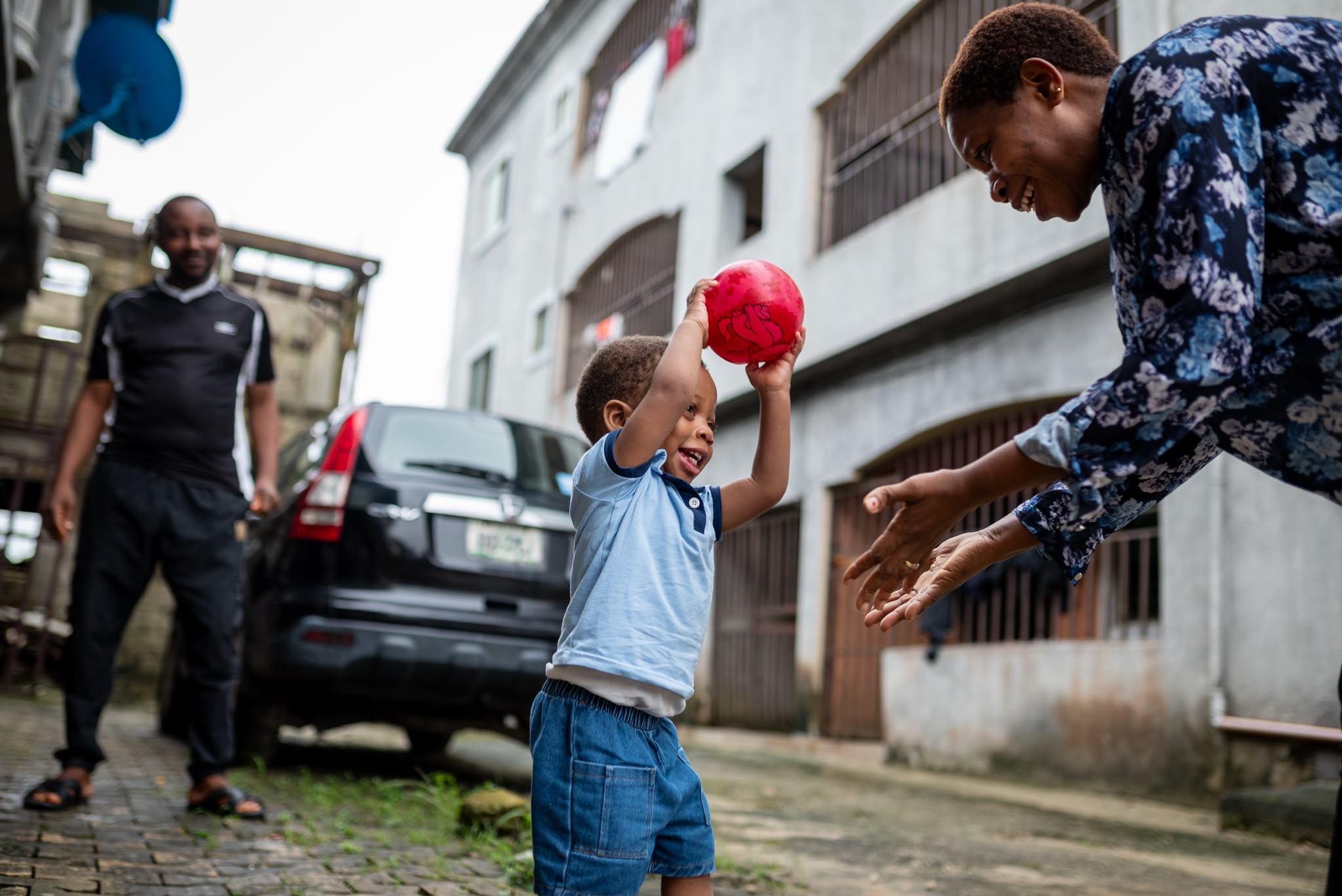
Kids Operating Room reaches major global surgery milestone and sets ambitious 2035 goal
A SCOTTISH charity has hit a major milestone, helping create capacity for one million life-changing operations around the world.
Kids Operating Room, founded by Garreth and Nicola Wood MBE, has created over 135 dedicated children’s operating rooms in 39 countries, from Ukraine and Bangladesh to Peru and the West Bank and supported the training of more than 70 surgeons.
The couple marked the achievement at Murrayfield Stadium, returning to an early ambition to one day help enough children to fill its 67,000 seats.
Garreth Wood MBE, co-founder, said: “Standing here today is quite surreal. In the early days, Nicola and I talked about whether we could ever help enough children to fill Murrayfield. Looking around at 67,000 seats, even that felt like an enormous ambition.
“Today, 728 operations take place every day in operating rooms created by Kids Operating Room. That’s enough to fill Murrayfield again every three months.
“It’s incredible to think about, but every one of those operations is about much more than a number. It’s a child getting the surgery they need and the chance to get back to being a child. That’s what this milestone means to us.”
The landmark achievement, and ambitious new goal, follows a review of the charity’s strategy and a new brand built around the idea “Make anything possible”, reflecting what safe surgery means for children: the chance to grow up and live their life to the full.
Nicola Wood MBE, co-founder, said: “We started with one surgeon, one operating room and one country. To now be talking about a million operations is something we could never have imagined.
“The real heroes of this story are the surgical teams we support, working in some of the toughest conditions on earth and doing incredible things every single day. This milestone is theirs as much as ours.”
David Cunningham, Chief Executive of Kids Operating Room, said: “Reaching one million children proves the model works. But there are still millions more waiting for surgery that could change their lives.
“That’s why we’ve sharpened our focus, backing local surgical teams, investing in innovation like solar-powered operating rooms and making children’s surgery a core part of every country’s health system.
“One million operations a year by 2035 is a big ambition, but that’s what it takes and we can only get there with governments, funders and partners behind us.”
The charity’s story began in 2015, when the Woods learned about Dr John Sekabira, Uganda’s only paediatric surgeon, working in Kampala to care for a population of 20 million children without a dedicated children’s operating room. After that first room opened, requests for more poured in, and the couple formally launched Kids Operating Room in 2018.
By 2021, the charity had created 50 operating rooms. Today, it has 136.
The charity transforms unused or derelict spaces, usually in public hospitals, and fits each room with 3,300 pieces of specialist equipment, shipped from its global operations centre in Dundee. Solar technology keeps the lights on during power cuts and bright, colourful artwork helps children feel safe before surgery.
Unlike “fly-in” medical missions, Kids Operating Room never sends in medical professionals from richer countries. Instead, it backs local surgical teams, funds specialist training in partnership with ministries of health, and works with local engineers to keep every room running, with the aim of handing each one over to the local health system as soon as possible.
The charity’s own data, drawn from their paediatric surgical database, shows the difference a dedicated operating room makes.
At one partner hospital in Nigeria, the rate of sepsis after surgery fell from 19.1% to 3.8%, and children’s average hospital stay dropped from 12 days to three. Surveys of school-age patients found that more than half of those missing school were doing so because of their surgical condition.
The charity estimates the operations made possible by its rooms will generate more than £23billion in economic benefit, as children who might otherwise have died or lived with lifelong disability grow up to work, earn and contribute to their communities.
Garreth Wood MBE, said: “Every one of those million is a child who can now run, play, go to school and grow up. Behind every number is a family who didn’t know if their child would make it, and a childhood that hasn’t been stolen by a treatable condition.”
An estimated 1.75 billion children still live in areas without reliable access to safe surgery . You can learn more about Kids Operating Room and help them reach these children here.
Garreth and Nicola Wood were both awarded MBEs in 2025 for services to international health and children’s surgery.
Members of the University and College Union (UCU) Scotland at Edinburgh University will strike for 25 days over five weeks from today (28 September) in a long running dispute over £140m cuts and 1,800 job losses.
Staff at Edinburgh have already taken multiple days of strike action and participated in a marking and assessment boycott because of the refusal of management to rule out compulsory redundancies. The latest action starts today and will continue through to 30 October.
The dispute centres on £140m cuts announced by the principal, Professor Sir Peter Mathieson, in early 2025 and an estimated 1,800 job losses. The scale of cuts are the largest cut in staff seen in Scottish higher education and is happening at one of the wealthiest institutions in the country and which, earlier this year, confirmed that there was no deficit.
Hundreds of staff have already lost their jobs through hidden redundancies including by fixed term contacts not being renewed as would normally happen and hourly-paid staff having their hours reduced.
Despite 18 months of campaigning and industrial pressure, including three ballots and strikes, the threat to jobs and student education remains while staff continue to face increased workloads because of ongoing restructures.
UCU members voted to undertake the five-week strike earlier in the summer. Since then the union has been pressing senior management to make a serious proposal that could avoid the strike.
The union has called for management to commit to no compulsory redundancies; to address hidden redundancies and workloads; engage in meaningful negotiation to avoid redundancies; and to reconsider the balance between staff and non-staff cuts.
UCU Edinburgh branch co-president Lena Wånggren said: “Our members have been clear that compulsory redundancies must not be the university’s answer to its financial challenges.
“Five weeks of strike action is not what anyone wants, but members are prepared to take action to protect jobs. UCU members are prepared to take action for our colleagues and our students – we want to safeguard students’ education not just for five weeks in Autumn but for the future.”
UCU Edinburgh branch co-secretary Nik Matheou said: “Staff are facing increased workloads, the threat of redundancies, and continuing uncertainty created by restructures and cuts.
“We have given management another opportunity to avoid the strikes. We need a commitment to no compulsory redundancies, meaningful consultation and action to address hidden job losses and increased workloads. We are ready to continue to negotiate and hope management will now come forward with a serious proposal.”
UCU general secretary Jo Grady said: “The unprecedented cuts and job losses at Edinburgh are forcing members to take five-weeks of strike action.
“I previously called the cuts at Edinburgh ‘academic vandalism’ and nothing I’ve seen during this dispute gives me any reason to change that view. Even at this late stage, it’s not too late for the principal to rule out compulsory redundances, engage meaningfully with the union and take action to end this dispute.”
The Scottish Landscape: Romance to Reality Dovecot Studios, 10 Infirmary Street, Edinburgh, EH1 1LT Friday 5th February – Saturday 22nd May 2027
Dovecot Studios and The Fleming Collection present another major new exhibition that unpacks public and private images of Scotland from the 16th century to the present day. Through painting, print, photography, sculpture and textile, The Scottish Landscape: Romance to Reality explores the role artists have played in creating, challenging and changing perceptions of the Scottish landscape.
At a time when 70% of tourists say Scottish scenery is a key reason for their visit, this exhibition brings together more than 80 key works and looks beyond the picturesque to question how contemporary artists are highlighting the impact of capitalism and the climate emergency on the landscape for future generations.
The exhibition features work by Pieter Bruegel, Alexander Nasmyth, J.M.W. Turner and Joan Eardley with contemporary artists Peter Howson, Frances Walker, Thomas Joshua Cooper and Victoria Crowe, among others.
It is the third exhibition in a highly successful partnership between the world-renowned Dovecot Studios in Edinburgh and The Fleming Collection, the finest collection of Scottish art outside public institutions, which saw record breaking visitors to the exhibitions Scottish Women Artist in 2023 and The Scottish Colourists in 2025.
Theo Albano, Director of the Fleming Collection comments: “Few nations have shaped the artisticlanguage of landscape as profoundly as Scotland. From the Enlightenment and Romanticism tocontemporary environmental practice, this new exhibition is an opportunity to question and explore how far artists have created a myth of Scottish beauty or a compelling vision of how ourfuture landscape might evolve.
“The exhibition is organised in six sections: The Birth of a Myth; The Romantic and the Sublime;Whose Land; Changing Tides; Scotland Abroad; and Our Changing Landscape.
“Visitors will beencouraged to bask in the beauty of the Scottish landscape while questioning whether artistshave played, and whether they continue to play, a responsible or a dangerous role in promotingScotland’s untamed beauty.
“Within each broadly chronological section, the curators TheoAlbano and Heather Carroll, Dovecot Exhibitions Manager, juxtapose one or more works fromother periods to highlight recurring themes of environmental change, artistic intervention,political memory and cultural imagination.”
Celia Joicey, Director of Dovecot Studios, comments: “The Scottish Landscape: Romance toReality exhibition is a rich opportunity to look through the eyes of artists at the detail of our physical surroundings and, through the process of looking, to develop our own imaginative and emotional response.
“This collaboration with the Fleming Collection is an urgent call forengagement with art and landscape, comparing artwork across four centuries and in a range ofmedia, to protect them for future generations.”
The Scottish landscape has seen itself play a starring role in the arts for over 400 years.
From Pieter Breughel’s idealised engraving of the Bass Rock in 1560 to the Highlands setting for the latest reality series of Celebrity Traitors, Scotland’s natural beauty is a calling card to artists, tourists and cinemagoers the world over.
The Scottish Landscape: Romance to Reality exhibition will be accompanied by an events program featuring curator-led tours and talks by artists and historians including James Knox, andAlice Strang.
A fully illustrated book accompanying the exhibition will also be available.
Derelict high street buildings will be transformed into shared workspaces, cafes and community hubs, to bring people back into town centres as part of a £210m package announced on Friday (25 September).
People are proud of where they live, but too many have watched their high streets be hollowed out, with shops shuttered, buildings boarded up and once-busy hubs left empty.
Now the UK government is putting that right, by revamping vacant shopping centres, disused cinemas and abandoned local eyesores.
Through the new £125m Derelict Buildings Fund, government will support local authorities to transform these buildings into what their communities need, from health centres to civic spaces.
An additional £65m will be invested in helping communities right across England rescue and revamp beloved buildings and businesses at risk of closure, like pubs and sports clubs. This builds on existing schemes like the Pride in Place programme, which has helped locals take over the youth centre in Ramsgate and redevelop the former Brunswick Shopping Centre in Scarborough.
And a further £20 million will be split equally between High Street Rental Auctions, letting out properties vacant for 12 months or more, and a new Co-operative Development Programme so local people share in their high street’s success.
This drives forward the Prime Minister’s mission to shift power back to communities, from letting mayors keep a share of income tax to reinvest in local priorities, to supporting the establishment of strategic authorities in every part of England.
Prime Minister Andy Burnham said: “People don’t measure growth by looking at a spreadsheet. They measure it by looking at their local high street. Are shops opening or are the shutters down? Does the place feel like it’s moving forward or being left behind?
£The truth is that too many high streets have been left to hollow out, leaving town centres a shell of what they once were. That must change, and today’s funding will help put power back into the hands of locals who know their area best.
“That’s how we restore pride and bring hope back. Not by telling people things are getting better, but by giving them the power to see and feel the difference where they live.”
Secretary of State for Housing, Communities and Local Government Angela Rayner, said: Nobody knows a high street better than the community that it belongs to. That’s why this money puts power directly into their hands.
“We’ll see boarded-up buildings that have been left to rack and ruin turned into places people are proud to visit again, the pubs and clubs that mean so much to them thriving once more, and local businesses growing and creating jobs that put money back into their own community.
“That’s what this government is about. Backing the people who know their communities best, and giving them the tools to shape their own future and breathe new life into their high streets.”
First Secretary of State, Louise Haigh said: “For too long, places in every part of the country have been overlooked by Westminster. High streets neglected, town centres left in decline and local assets left to decay.
“This investment will help to regenerate and breathe new life into our communities – giving local people the resources and powers they need to make a real change.
“This is what devolution means in practice – empowering local leaders to fix things that are broken and protect the things that matter most to people.
“This is what a rewired state looks like: a Government focused on delivering for the people of the country and empowering communities in the hands of the people who live in them.”
The £10 million regional Co-operative Development Programme will help mayors and strategic authorities set up more co-operative businesses, owned and run by the staff, customers and communities who use them, so local people share directly in their high street’s success.
Work forms part of a broader programme coordinated through the Place Regeneration taskforce, spearheaded by the First Secretary of State along with departments, ministers and local government to deliver a roadmap to rebuild Britain. This work will regenerate communities, breathe new life into our high streets and deliver maximum benefit to the people who live there.
Later this year, the government will go further still, publishing a full high streets strategy to transform town centres across England and bring lasting pride back to Britain’s communities.
The £210m package confirmed today is from MHCLG funding already earmarked for high street support and regeneration.
Two inspirational young professionals from Scotland began the most momentous weeks of their lives when they walked out on the global stage this week in Shanghai.
Stuart Lyons and Charlie Priestley, who face the toughest tests imaginable have been preparing for years to take on the world at the ‘Skills Olympics’.
The are part of a Team UK, selected, trained and honed by WorldSkills UK, young apprentices and professionals taking on 1,400 of their peers to decide gold, silver and bronze medal positions.
Charlie Priestley, aged 21, from Aberdeen, an IT Network Systems Analyst and Mechanical Engineer, Stuart Lyons, also aged 22 from Lanarkshire, have been cheered on by UK Minister for Skills Jacqui Smith, who flew to China to support the team and meet with Chinese officials.
This momentous week in the global spotlight is the culmination of months and years of regional rounds, national finals and exacting team selection processes to ensure that the very cream of the crop rose to the top.
The 28 strong team, are exponents of a wonderfully wide range of different skills disciplines, from Painting & Decorating and plumbing to robotics and renewable energy – essential in the bid to drive efficiency and growth.
Pearson, the lifelong learning company, is the official partner of Team UK for WorldSkills Shanghai 2026.
An Olympic style Opening Ceremony took place on Tuesday night, with honoured guest Premier Li, with the competition reaching a climax on Sunday September 27th, which will be streamed live on YouTube.
More than 600,000 spectators are expected to attend the 4-day event among them dozens of government representatives from around the World.
New report highlights health impact of deprivation
SCOTS living in the country’s most deprived areas are 28 per cent more likely to develop cancer than their counterparts in the least deprived postcodes, according to new analysis published today by Cancer Research UK.
Today’s figures reveal there are around 4,100 cancer cases associated with deprivation in Scotland each year – that’s around 1 in 8 of all cases.
Socioeconomic deprivation exists across Scotland, with substantial variation even within towns and cities. If all areas of Scotland experienced the same cancer rates as the most affluent areas, researchers estimated that around 80 cancer cases per week could be avoided. The charity is calling on the Scottish Government to urgently close the cancer inequality gap.*
The complex mix of factors driving the deprivation gap includes:
Greater exposure to cancer risk factors, including smoking and obesity, meaning people in more deprived areas are more likely to develop cancer
Lower uptake of HPV vaccination and lower participation in bowel and cervical screening programmes, reducing the opportunity to prevent cancer
Clear evidence that people from deprived areas face barriers to accessing timely care, which contributes to inequalities across the cancer pathway.
The charity is urging the Scottish Government to do more to close the cancer deprivation gap through bold action on prevention, including policies to tackle smoking and obesity.
To deliver long-term improvements in cancer diagnosis and care in every postcode, targeted campaigns would help break down barriers to seeking help, and providing support for people to participate in cancer screening programmes would be crucial in reducing the inequalities revealed in today’s analysis.
Cancer Research UK’s chief executive, Michelle Mitchell, said:“These figures are not only unacceptable but avoidable. Everyone in Scotland deserves to live in an environment that gives them the best chance of a long and healthy life, free from cancer, yet stark health inequalities persist.
“To help end the cancer postcode lottery, the Scottish Government must step up prevention efforts and ensure everyone can access high-quality cancer care wherever they live.”
Beyond the physical and mental toll of a cancer diagnosis, people also face financial pressures, including loss of income and increased travel costs for treatment. With higher cancer rates occurring in the most deprived areas, these costs are more likely to impact people already struggling financially.
Today’s report also revealed that the largest inequalities are in rates of smoking-related cancers, with lung cancer contributing around 2,500 cases linked to deprivation in the Scotland each year.
Despite progress in tackling the harms of tobacco, the latest Health Survey for Scotland shows smoking prevalence is much higher among adults living in the most deprived areas in Scotland (23 per cent) than among those living in the least deprived areas (seven per cent).
The charity is calling for the Tobacco and Vapes Act to be implemented swiftly in Scotland alongside increased funding to ensure everyone can access local, free stop smoking support as well as accelerating progress to implement a national targeted lung cancer screening programme.
Picture by Lesley Martin Dr Sorcha Hume, Cancer Research UK public affairs manager in Scotland.
Cancer Research UK’s public affairs manager for Scotland, Dr Sorcha Hume, said:“It is unacceptable that cancer rates remain significantly higher in Scotland’s most deprived areas.
“While the causes are complex, early diagnosis is key to closing the survival gap. We must improve symptom awareness, remove barriers to seeking help, and support informed screening uptake in these communities. Long-term, funded national awareness campaigns targeted at those most affected are also essential.
“One of the report’s most stark findings is that lung cancer contributes more than 6 in 10 deprivation-associated cancer cases in Scotland. Smoking remains the leading cause, and lung cancer is often diagnosed too late for effective treatment.
“To address this, we must see the timely implementation of the Tobacco and Vapes Act, properly funded stop smoking services, and the introduction of a national lung cancer screening programme in Scotland.”
Heriot-Watt University has achieved an Athena Swan Silver Award in recognition of its significant progress in advancing gender equality for staff and students across its global community.
The award acknowledges the University’s sustained commitment to creating a more inclusive and supportive environment, building on more than a decade of work under the Athena Swan Charter. Heriot-Watt has held an institutional Bronze Award since 2013 and has engaged with the Charter since its launch in 2005.
Athena Swan is a globally recognised framework that supports universities and research institutions to advance gender equality and tackle structural barriers. The Silver Award recognises institutions that can demonstrate measurable progress and lasting impact.
Over the past six years, Heriot-Watt has delivered a range of initiatives through its Athena Swan action plan, including increasing the representation of women in senior academic roles, reducing the gender pay gap, strengthening support for staff and students with caring responsibilities, and enhancing governance and accountability for gender equality.
Professor Richard A Williams, Principal and Vice-Chancellor of Heriot-Watt University, said: “Achieving Athena Swan Silver status is an important milestone for Heriot-Watt.
“It recognises the sustained progress we have made in advancing gender equality and creating an environment where people can succeed and thrive.
“While there is more work to do, this achievement provides a strong platform for the future. Through our Strategy 2035 ambitions, we will continue to champion equality, inclusion and opportunity for all members of our global community.”
Associate Principal (International and Partnerships) and Athena Swan Programme sponsor, Professor Mark Biggs, said: “This Silver Award is a tremendous achievement for Heriot-Watt and reflects the commitment and hard work of colleagues and students across our University community.
“It recognises the significant progress we have made over recent years and our shared ambition to advance equality, diversity and inclusion.”
The University has identified a number of priorities for the next phase of its Athena Swan work, including embedding gender equality across its strategic goals and governance structures, supporting equitable recruitment and career progression, strengthening global engagement with equality, diversity and inclusion, and fostering inclusive learning and working environments.
The institutional Silver Award builds on success across Heriot-Watt’s academic schools. The School of Mathematical and Computer Sciences and the School of Engineering and Physical Sciences currently hold Athena Swan Silver Awards, while the School of Energy, Geoscience, Infrastructure and Society and the School of Business, Design and Social Sciences hold Bronze Awards.
The recognition highlights Heriot-Watt’s long-term commitment to creating a more equitable and inclusive university for staff and students across all its campuses.