
ENERGY


ENERGY
Free family circus skills session! with Think Circus

“ Cirque Du Cycle is bringing circus to your community this October


We bring circus skills and creative play to parks and community spaces around Edinburgh using our custom built e-Cargo bike.
Our experienced team of tutors and volunteers make circus skills accessible to people of all ages through skill sharing, play and a little bit of circus magic. 
So come along and throw, catch, twist, twirl and have fun with us! 
Everyone is welcome, no experience needed, just come ready to play.”

Leith’s Utilita Hub welcomed local families, football fans and community partners for a successful National Football Rebooted Day 2026 event, helping to promote access to grassroots football through the donation and redistribution of pre-loved boots.
Hosted by Hub Supervisor Natasha Baillie and Energy Expert Finn Salisbury, the event attracted strong community interest, with 12 additional visitors attending specifically for Football Rebooted Day and total Hub footfall reaching almost 70 people throughout the day.
The event saw eight pairs of football boots donated, adding to the growing number of boots already collected through the Hub. In addition, representatives from the Hibernian Community Foundation collected a bag of previously donated boots, ensuring they can be redistributed to those who need them most across the local community.
Visitors were also delighted to meet Sunshine, Hibernian FC’s much-loved mascot, who proved a huge hit with children and adults alike. Families took the opportunity to pose for photographs, creating memorable moments throughout the day.
Further excitement came later in the event when Hibernian FC Women players Tiree Burchill and Scarlett Herron visited the Hub, meeting supporters and local residents. The players were warmly welcomed by fans, including season ticket holders John Paul and Amanda (pictured above), who were thrilled to meet some of their footballing heroes.
With a Football Rebooted gazebo positioned outside the Hub, the team was able to engage passers-by and answer questions about the initiative, raising awareness of how donated boots can help remove financial barriers to participation in sport.

Natasha Baillie, Supervisor at Leith Utilita Hub, said: “We had a fantastic day celebrating the National Football Rebooted Day in Leith. There was a real buzz throughout the event, with families stopping by to meet Sunshine, donate boots and learn more about how Football Rebooted supports people in our community.
“It was wonderful to see the smiles the mascot brought to visitors of all ages, and we were especially pleased to welcome Tiree and Scarlett from Hibernian FC Women. Events like this help spread awareness of the importance of making football accessible to everyone, while ensuring unused boots find a new home with someone who can benefit from them.”
Football Rebooted is a nationwide campaign that encourages families to donate unwanted football boots so they can be cleaned, redistributed and reused by players who may otherwise struggle to afford the equipment needed to play.
Through partnerships with clubs, community organisations and Utilita Energy Hubs, the initiative aims to make football more accessible while reducing waste and supporting sustainability.
National Football Rebooted Day took place at Utilita Energy Hubs across the UK, bringing communities together to celebrate the positive impact that sport can have on people’s lives while helping thousands of football boots continue their journey on pitches across the country.
If people couldn’t make it to Saturday’s event, they can still donate football boots throughout the year; many local schools, colleges and sports clubs also have collection boxes.
A full map of collection points can be found on the Football Rebooted website: www.footballrebooted.co.uk

Falling salt levels in seawater could be contributing to driving blue mussels from parts of the Firth of Forth, researchers say.
Scientists at Heriot-Watt University found that baby mussels are especially sensitive to fresher water, with their growth and development badly affected when the seawater becomes diluted.
The lab-based study was sparked by the sharp drop in mussel beds that were once common around Musselburgh and Cramond.
The team says their findings, published in the academic journal Frontiers in Ocean Sustainability, could also help explain falling blue mussel numbers across northern Europe.
“Now there’s nothing there”
Dr Mark Hartl, from Heriot-Watt’s School of Energy, Geoscience, Infrastructure and Society, said the university’s marine science researchers had worked with mussels from the Firth of Forth for over 20 years and had observed the disappearance of the local populations.

Dr Hartl said: “We noticed them disappearing from Cramond at first, where we used to be able to easily find and collect mussels.
“At Musselburgh, you could walk for a mile out at low tide and it would be full of mussels, even as recently as 2018.
“It used to take me just a few minutes to find the mussels I needed. Now there’s nothing there.”
The researchers stressed that the experiments were carried out under controlled conditions in a laboratory and that long-term field work is required to conclusively show that changing local salinity has been a significant driver of the loss of mussels in the Firth of Forth.
However, they said the findings could help explain the absence of younger mussels that would normally replace older and larger adults.
Dr Hartl said: “We had noticed in Musselburgh that the mussels were big, and old. There weren’t any smaller ones.
“They were reproducing and producing larvae, but the larvae didn’t seem to be developing properly.”
Wetter winters mean less salty estuaries
Isabella Jackson is undertaking the research as part of her PhD at Heriot-Watt University.
Working with Dr Mark Hartl, Isabella looked at how pollution, temperature and salinity interacted during the first stages of mussel development.
Mussel embryos and larvae were exposed to different conditions in the laboratory over 48 hours.
Lower salinity had one of the clearest detrimental effects on the mussels: reducing salinity from optimal conditions cut normal larval development by almost 29%.
Isabella said: “Mussels in the Firth of Forth experience multiple stressors: pollution, temperature change and changes in salinity among them.
“We found that they are highly susceptible to changes in salinity, but pollution compounds the problem and amplifies the effects we saw under lower-salinity conditions.”
“Reduced salinity is likely to happen as wetter winters bring more freshwater into estuaries, and it is not something that can easily be fixed.
“But if we tackle some of the other problems, such as pollution, we may be able to alleviate the pressure on mussels.
“We may not be able to address every stressor at once, but reducing one of them could still make a difference.”
Isabella said the research also highlighted the importance of studying the early life stages of marine organisms.
“The early life stages are often the most sensitive to environmental stressors, but they are also easily overlooked, particularly in studies looking at multiple stressors,” she said.
“If larvae are not developing properly, this can create a bottleneck where a population is unable to sustain itself.
“Understanding what happens at this critical stage is an important piece of the puzzle when investigating why blue mussel beds are declining.”
Impact on biodiversity
Blue mussels, Mytilus edulis, were once widespread in estuaries around northern Europe.
Declines have been observed elsewhere in Scotland but some areas, like Orkney, still have healthy populations containing mussels of different ages.

Dr Hartl said: “A decline in mussel beds could have several potential impacts. It could reduce biodiversity, as mussel beds act as habitat for lots of other species. And, as mussels clean the water by ingesting contaminants, it could have an impact on water quality.
“Ideally we would set up field experiments to replicate what we did in the lab, and definitely determine that salinity levels are behind their decline.
“The Firth of Forth’s health has improved dramatically over the past few years, we’re seeing large mammals like humpback whales return now. But there are locations where a decline in biodiversity is happening, as witnessed by the disappearance of mussels, and we should monitor and try to resolve this.”
This research was funded by NERC Scottish Universities Partnership for Environmental Research (SUPER) Doctoral Training Partnership (DTP)
(Grant reference number NE/S007342/1 and website https://superdtp.standrews.ac.uk).
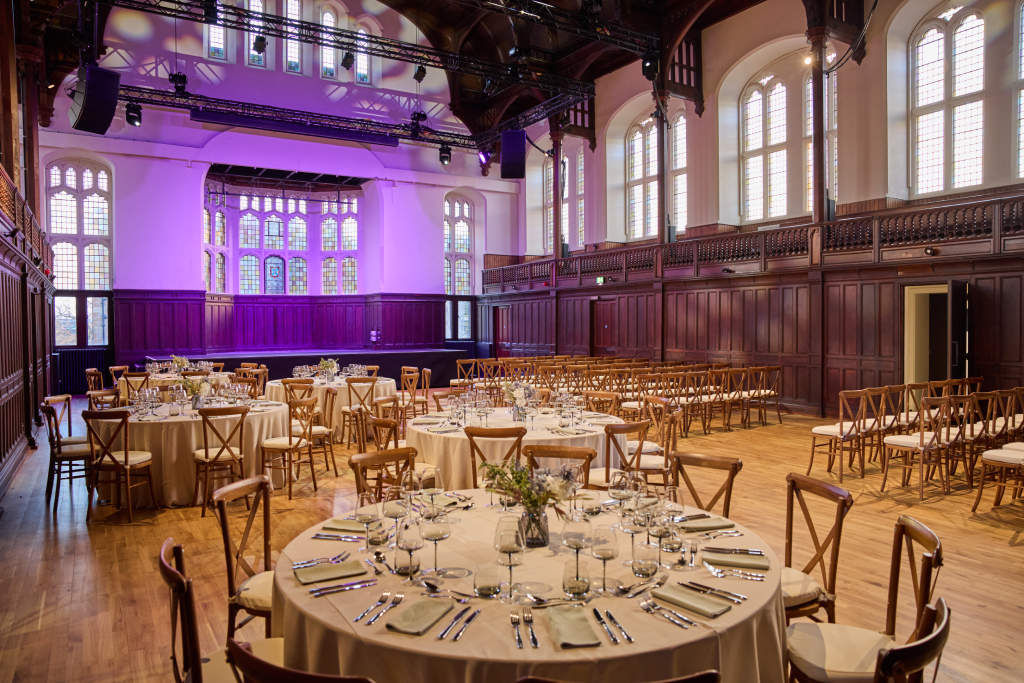
One of Edinburgh’s best-known historic venues is preparing to host Christmas celebrations for the first time since reopening following a major refurbishment.
Teviot reopened its doors in March after a two-and-a-half year refurbishment, marking a new chapter for the 137-year-old building in the heart of Edinburgh.
First opened in 1889 and known as the world’s oldest purpose-built students’ union, Teviot has been part of Edinburgh life for generations – from student events and celebrations to performances and the Edinburgh Festival Fringe.
Its refurbishment has introduced improved accessibility, facilities and energy efficiency while retaining much of the character of spaces including the Debating Hall and Library Bar.

This December marks another milestone for the venue as Teviot hosts its first Christmas season since reopening.
Edinburgh University Students’ Association is opening the venue to businesses, organisations, university departments, societies and groups from across the city, with Christmas events available from 1–20 December 2026.
While Teviot may be best known as a home for generations of Edinburgh students, its event spaces are open to everyone and are managed by an experienced events team, who are available to look after food, drinks, décor and entertainment.
Some of the building’s most recognisable rooms, including the West Reading Room for groups of 40–80 and the Debating Hall for larger celebrations up to 140 guests, are available for Christmas celebrations.
The return of Christmas events follows a busy year for Teviot, which has welcomed people back into the building since its reopening and returned as a major Edinburgh Festival Fringe venue over the summer.

Vice President Activities & Services 2026/27, Vasil T, said: “Teviot means a lot to generations of people in Edinburgh, so it feels really special to be welcoming Christmas parties back into the building this year.
“A lot of people will remember Teviot from their own student days, while others may never have had a reason to step inside before.
“We want people to know that you don’t have to be a student or connected to the University to celebrate here – our venues are open to everyone.”

Every booking helps support the charitable work of Edinburgh University Students’ Association. Income generated through Teviot supports our work to enhance student experience and services at the University of Edinburgh.
With Teviot now entering its first full festive season since reopening, the team hopes Christmas will give businesses and groups from across Edinburgh another reason to rediscover one of the city’s most distinctive buildings.

Aldi Scotland is calling on sports clubs in Edinburgh & the Lothians to apply for its annual Sports Fund initiative, with £50,000 up for grabs nationwide.
Now in its eleventh year, the fund offers local clubs the chance to secure vital funding, including a top prize of £3,000, helping them continue to grow and thrive within their communities. Additional funding packages of £1,250 and £750 will also be distributed.
Launched in 2016, Aldi Scotland’s Scottish Sport Fund has spent the past decade championing grassroots sport, supporting more than 650 clubs and distributing over £500,000 to date. From improving facilities to providing essential kit and equipment, the fund has played a key role in widening access to sport across Scotland.
Aldi’s Scottish Sport Fund welcomes applications from all sporting organisations that meet the specified criteria. Last year’s Sports Fund saw the retailer support an array of sports clubs across the region, including Bonnyrigg Rose Community Football Club, Currie Chieftains Girls and Castlevale YDC.
This year, the top three shortlisted clubs in each region will be selected by an Aldi Scotland judging panel before going to a public vote on social media. The winning club will receive £3,000, with the two runners-up each awarded £1,250.

Tom Brearey, Regional Managing Director at Aldi Scotland, said: “Over the past decade, we have seen the real impact this funding has on clubs and communities across Scotland. Through the Scottish Sports Fund, Aldi has helped clubs invest in the equipment, resources and spaces they need to grow and succeed.
“In what is a monumental year for sport globally, we are proud to continue playing our part in supporting sports clubs here in Scotland and remain committed to making sport more accessible nationwide.
“The response each year is incredibly positive and we look forward to working with even more clubs in 2026. I encourage clubs in Edinburgh & the Lothians to apply and take advantage of this opportunity.”
Sports clubs located across Edinburgh & the Lothians have from Monday 28 September to Sunday 25 October to apply for funding.
One applicant will be selected to receive £3,000 of funding, two applicants will each receive £1,250 and one club will each receive £750. Applications can be made via the application form found on https://www.aldi.co.uk/scottishsportfund.
The Aldi Scottish Sport Fund is open to any sporting organisation in Scotland that meets the application criteria. All applications will be considered by the Aldi judging panel and entrants will be notified of the outcome of their funding application within six weeks from the region’s deadline.
Please see the Aldi Scottish Sport Fund FAQs and Terms & Conditions for more information.

Amazon Prime Big Deal Days returns on 6 and 7 October, with shoppers across the UK preparing to hunt for discounts. But consumer scam protection experts at TrendLife are warning people not to let the rush for a bargain cloud their judgement.
With shoppers expecting more promotional emails and delivery updates than usual, scammers can use the noise around Prime Day to make fake messages and offers feel more convincing. TrendLife’s Scam Hunting team found that around the previous Prime Day event in June, 89.7% of the Amazon-related scam activity it detected in the UK appeared just before the event began.
The rise of generative AI is adding to the challenge. Fraudsters can now create realistic fake websites and promotional content faster and at greater scale. With 47% of UK adults struggling to tell genuine online offers from AI-generated fakes, shoppers face an increasingly difficult task of spotting what is real.
TrendLife’s Scam Hunting team has identified the following scams for consumers to look out for this Prime Day:
“Prime Day is a great opportunity to pick up a bargain, but where there’s excitement, urgency and lots of people ready to spend, scammers won’t be far behind,” said Parker.
“Fraudsters know shoppers are looking for limited-time deals and expecting more emails and delivery updates than usual, and they will use that to their advantage. A fake payment warning, missed delivery text or account alert can look completely believable when you’re already waiting for an order.
“The best way to stay safe is to slow down, stick to official sources and take a few moments to verify before you click. If something doesn’t look right, go directly to Amazon or the delivery company rather than following a link in a message.
“A little caution can make the difference between grabbing a bargain and handing your details to a scammer.”

New research conducted by Carers Trust and policy and research consultancy Public First predicts a shortfall of up to ONE MILLION unpaid carers within a generation.
The expected shortfall is calculated from new projections that draw on current trends and future forecasts. It highlights how intense demand for care from an ageing society is set to outstrip the supply of care available unpaid, from family members and friends at an ever-increasing rate over the next two decades.
The shortfall is the difference between the projected ‘demand’ for carers based on the rising number of people with care needs (7.8 million carers needed by 2050) and the ‘supply’ of carers based on the profile of people who care today (6.7 million carers available by 2050).
Under this projection, the number of people able to provide unpaid care will fail to keep pace with ever-greater need, while paid social care – including care homes and home care – will not expand in line with need. this leads to a shortfall of 600,000 unpaid carers by 2035, and an even more alarming one of one million by 2050.

Such a shortfall would have a crippling impact on the provision of care across the UK: a greater number of people would be left with unmet care needs; overall capacity to provide care would be further stretched; and more families and friends would need to step in to fill gaps – from providing sporadic hours of care to caring for multiple people at once.
These changes would have a potentially devastating knock-on effect on unpaid carers’ wellbeing, employment, and the economy.
With care pressures expected to increase across the board in coming years, the research also found that:
The research predicts that the number of people in need of care will have soared by almost two million between 2025 and 2050. Over the same period, without action, the supply of both paid and unpaid care will grow at a much slower rate, thereby failing to keep pace.
These changes are already taking place in society. Over the last 10 years the supply of carers has not increased with rising need, and the average burden on each carer has increased. In the absence of action, the rate at which the gap opening up between supply and demand for care will only quicken over time.
The research comes at a time when Baroness Casey is running her ‘Big Conversation’ amongst the public into the future of social care and follows the announcement by the Prime Minister that he will use what ‘political capital he has’ to reform the system.
Louise Casey has already identified that the work of unpaid carers is one of the main reasons the system continues to function. This research shows that, if nothing changes, this will cease to be the case, with knock on effects on the NHS, public services and the economy.
Carers Trust, as the largest UK charity supporting unpaid carers through its network of 130 local services, is also highlighting the impact on unpaid carers of the current levels of care they are undertaking:
Around three in five people in the UK will become carers at some point in their lives. This can happen overnight, often through circumstances that are impossible to predict or plan, such as a family member being diagnosed with a long-term illness or the birth of a child with a disability.
Kirsty McHugh, Chief Executive of Carers Trust, said: “Almost all of us will either care for a loved one or be cared for in turn at some point in our lives. However, as a society, we’re simply not facing up to that fact.
“The gap between soaring demand and shrinking supply of care is opening up like a crocodile’s jaws and, unless we act now, it’s unpaid carers, those they care for, and the system itself that will be swallowed whole.
“This grim future is on the horizon, but there is still time to avoid it if we are willing to do the political hard yards now. The Prime Minister’s commitment to fixing our broken social care system is encouraging, but reform needs to focus on more than care home beds, budgets, and the paid workforce. It has to reckon frankly and fairly with the millions of unpaid carers that are holding the system together – at huge personal cost.
“It could be you, your mother, brother, or child who needs care in the future, or who becomes a carer in turn. We cannot go on asking unpaid carers to absorb yet more pressure, and we cannot let the worst-case scenario set out in this research become our reality.
“We need well-funded local support that reaches carers before they hit crisis point, real, comprehensive financial and wellbeing support, and a system that recognises carers as essential and equal, not invisible and expendable.”
Andrew Harrop, Director at Public First, said: “Today family carers provide the lion’s share of support for people with care needs. But Public First’s projections show that the future supply of carers may not keep up with the demand. In 10 years’ time the UK may need 600,000 more people to care than are in a position to do so.
“The number of people with care needs is rising quickly, because more people are reaching late old age. Meanwhile the number in the generation below who typically provide care is barely increasing.
“The shortfall in carers will mean that more people’s needs go unmet and more intensive pressures on those who are able to care.”
SOCIAL SECURITY


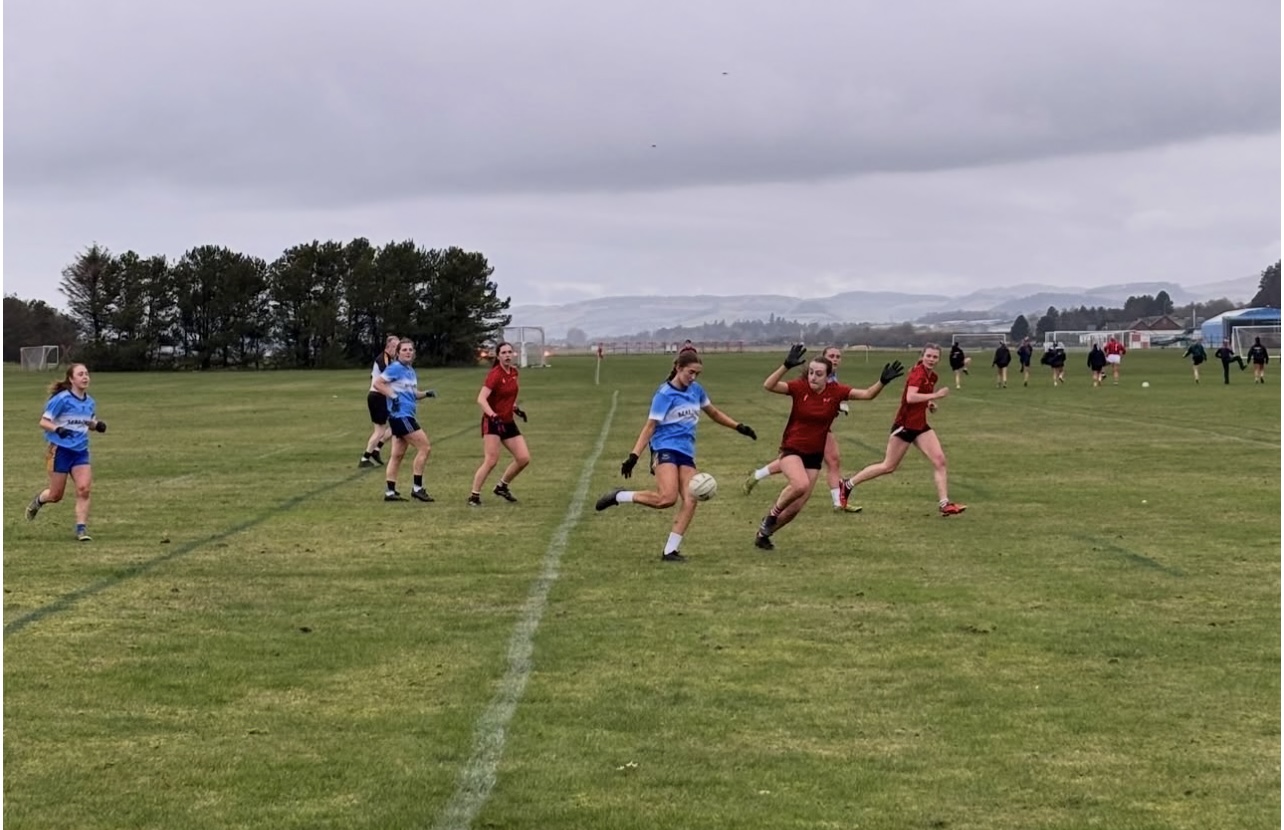
Queen Margaret University’s growing reputation for Gaelic football is helping create a strong sense of community for students from across the UK and Ireland, with the University’s successful teams offering a welcoming home away from home alongside opportunities to compete at a high level.
The 2025/26 academic year has been another successful season for QMU Ladies Football Club, with the club growing to more than 70 members and securing its fifth consecutive Scottish Championship League title.
The team also celebrated winning the British Championship Shield in Birmingham in 2025, competing against university teams from across the UK.
The men’s Gaelic football team has also enjoyed significant success in recent years, winning the Scottish University Championship in both 2023/24 and 2024/25 and finishing both seasons as unbeaten champions.
Following some time away from competition, the team’s re-establishment has been supported by the large Irish community studying at QMU, while also providing an opportunity for students from Scotland and elsewhere to get involved in the sport and Irish culture.
The success of QMU’s Gaelic football clubs is also helping attract prospective students, particularly those from Ireland who are looking to continue playing the sport while studying in Scotland.
For some students, the opportunity to join a successful Gaelic football club is an important factor when choosing where to study.
Nicki Carr, an MSc Speech and Language Therapy student from Dublin, said: “The QMU Gaelic Football team has been a big part of my first year at QMU and has really helped me settle into university life.
“Moving to a new country and starting a busy postgraduate course was a big change, so being part of the club gave me a great way to meet people, make friends and feel more settled.
“I really enjoyed being able to continue playing a sport I love without there being too much pressure around performance. The team was a good balance of football and socialising, and I got to meet people from different courses and years that I probably wouldn’t have met otherwise.
“Having a thriving Ladies Gaelic Football Club team was actually one of the things that attracted me to QMU when I was applying, as I knew it would be a good way to meet people and get involved in university life. Looking back, joining the team has been one of the best parts of my first year and has given me so many good memories and friendships that I’m really grateful for.”
Although Gaelic games are deeply rooted in Irish culture, QMU’s clubs welcome students from all backgrounds and experience levels. Whether students have played Gaelic football or camogie (an Irish stick-and-ball team sport played by women) for years, are new to the sport, or simply want to try something different, everyone is encouraged to get involved.
The men’s team has seen first-hand how quickly new players can take to Gaelic football, with students with little or no previous experience able to develop their skills alongside more experienced players. For the 2025/26 squad, creating a “home away from home” has been an important part of the club alongside building on its recent success on the pitch.
Ciara Brady, Social Secretary for QMU Ladies Gaelic Football Club, said: “The inclusive culture created within the clubs means that members quickly become part of a close-knit community, with friendships formed through training sessions, matches, travel and social events throughout the year.
“The success on the pitch reflects the commitment and dedication of players, coaches and committee members, but the clubs’ impact extends far beyond trophies. They provide opportunities for students to grow in confidence, meet new people and create memories that last well beyond graduation.”
The club’s achievements have also been recognised through the QMU Students’ Union Excellence in Sport Award, with the Ladies Gaelic Football Club receiving the award for two consecutive years.
Joe Agnew, QMU’s Student Union President of Activities, said: “Sport plays an important role in the student experience at Queen Margaret University, and our Gaelic football clubs are a fantastic example of how extracurricular activities can help students build connections.
“The achievements of our women’s team, alongside the continued success and growth of our men’s team, demonstrate the strength and enthusiasm for Gaelic games at QMU. The clubs give students the chance to compete at a high level while developing skills and connections that can last throughout their time at university and beyond.”
With both clubs continuing to grow, QMU’s Gaelic football teams are combining sporting success with opportunities for students to try something new, develop their skills and become part of university life.