This year, we provided 1,369 packs of brand new uniform as well as reaching an additional 1,000 children and young people by establishing school and community partnerships across the city.
As we take a break for Christmas we want to thank everyone who supports our work:
Our fabulous team of volunteers, they work so hard
Clare and Siobhan, our operations team – they make it all happen
The Trustees, the service would not run without the work you do quietly in the background.
Our supporters for their donations of uniform, funds and kind words that really keep us going
The local businesses that host our drop off points
The professionals out in the community working with families and ESUB to make sure children have what they need
Our funding partners who help us pay the bills
Thank you for giving children a chance to walk into school with their heads held high, ready to learn and play.
It almost Christmas and for many of us, the festivities are well underway. As Mariah, Elton, and Wham! fill our ears with our favourite festive tunes, there are also certain smells that just give us that warm festive feeling. A recent nationwide survey has revealed exactly what those scents are.
The study found that the majority of us (88%) associate different smells with the festive season. Unsurprisingly, for two thirds (66%) of us it is mince pies, nearly three quarters (72%) say it’s festive candles, 63% state it’s cinnamon sticks and 57% admit that the smell of pine needles is what they need for a room to smell festive. These smells have been proven to make Brits feel festive (35%), nostalgic (26%) and cozy (19%).
However, the study also revealed that it’s not just the aroma of sweet treats and warm spices making us feel Christmas nostalgia.
The survey found many associated the smell of Lynx Africa, proudly the no.1 men’s fragrance brand in the world, with Christmas too. This particularly rang true in major cities like Leeds, Newcastle and Nottingham with almost 20% of people saying they associated the iconic scent with Christmas. I mean, what’s the holiday season without a Lynx giftset or two.
A spokesperson from Lynx, said:“Lynx is a Christmas staple and something we see flying off of the shelves around this time of the year, so it’s no surprise to hear that for many people our fragrances are synonymous with festive scents.
“We actually sell more Lynx gift sets than Christmas trees, here in the UK. With around 23 million being sold each year.”
Lynx product range and giftsets are available to purchase at most leading retailers nationwide including Asda, Boots, Superdrug, Sainsburys, Tesco, Sephora UK and online, making it the perfect choice for those last-minute shoppers.
Daylight is a free app for people living in Scotland. It’s designed to help people who are experiencing symptoms of worry and anxiety. Try it out by going to
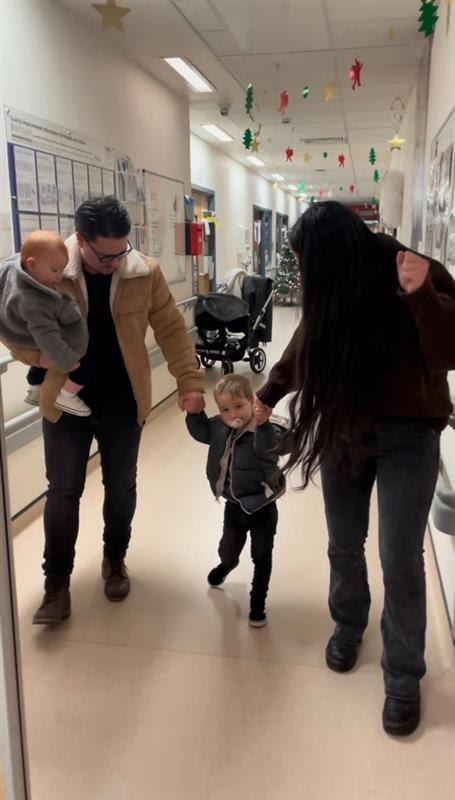
Last week, Elijah Bell (2) from East Kilbride walked out of hospital and is now having festive fun at home with his mum, dad and brother, Issac (1) following almost three months in the Royal Hospital for Children, Glasgow.
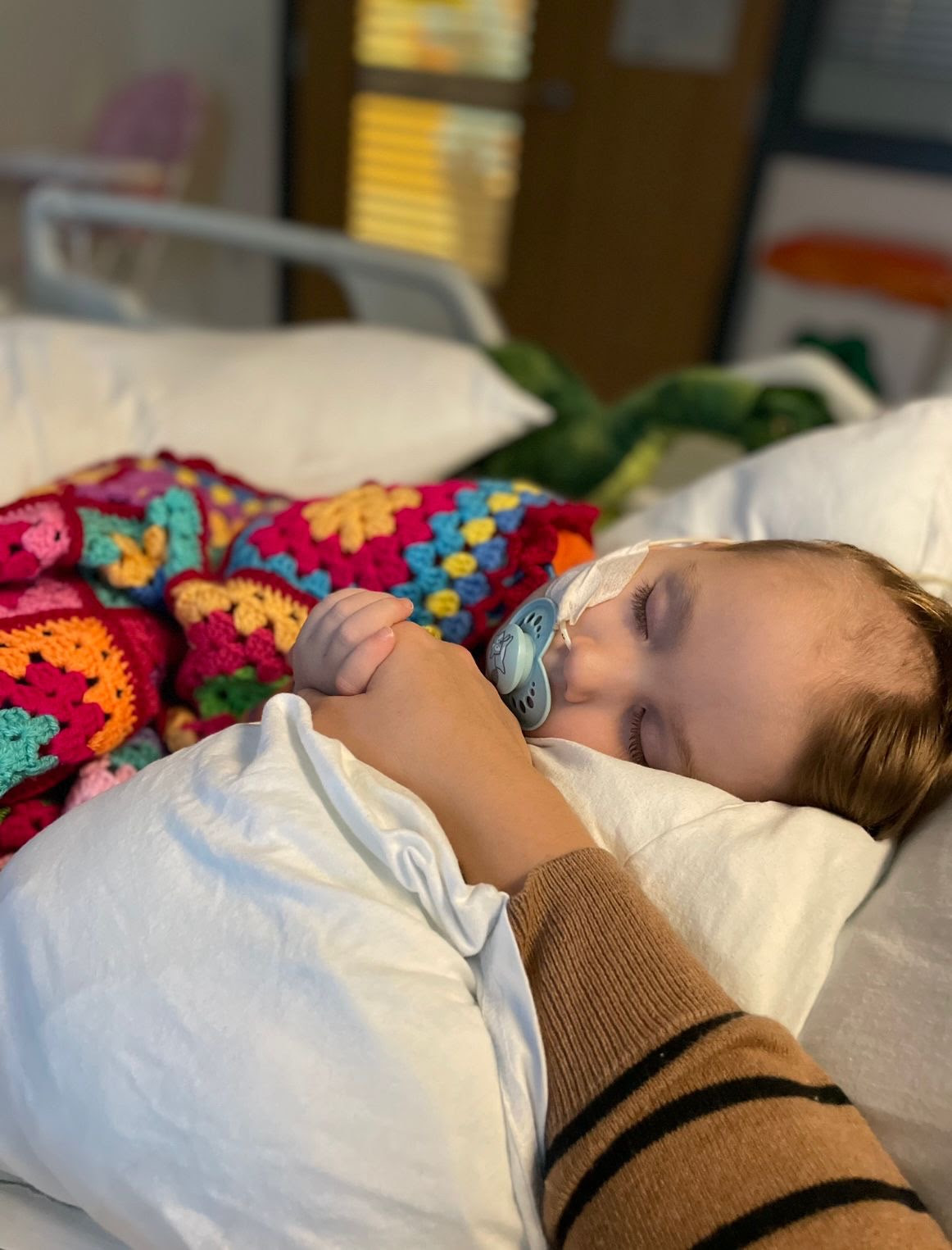
During most of Elijah’s stay, he was unconscious in bed. He had no movement on his right side, and his parents – Natalie and Jamie – had no idea what his future looked like. They didn’t know if he would ever move or talk again.
Elijah first became unwell on the 23rd of September 2023 when he had a spike in temperature. At first, it was suspected that he had a viral infection, followed by tonsilitis due to his symptoms. Elijah quickly began to deteriorate and could barely stand. He was stumbling all over the place. His concerned GP referred him to Wishaw General Hospital.
At hospital, things progressively got worse, and Elijah was sleepy to the point of unconscious. After tests, it was confirmed that Elijah had Pneumococcal Bacterial Meningitis. He was put on antibiotics and after five days, started to show a little bit of progress.
Elijah’s mum, Natalie explained: “He was getting on top of his infection, but then on day six, he completely deteriorated, and he started having seizures. It was at this point we were transferred to the Royal Hospital for Children in Glasgow.
“When we arrived, the team placed him in an induced coma for two days to try and get control of the seizures and prevent any further brain damage. We thought we were going to lose him.
“We had no idea what was going to happen, and we have never been so scared in our entire lives. After a few days, the doctors removed his tubes and he was able to breathe on his own, but he was still very much asleep and unconscious, to the point where he was unable to open his eyes for days in the Paediatric Intensive Care Unit.”
The neurologist advised that Elijah had suspected areas of stroke due to vasculitis as a complication of meningitis. After five days in PICU, Elijah was moved to the Neurology Ward, but he was sleeping about 90% of the day. Another scan showed that he had Hydrocephalus, a build-up of fluid in the brain that increases the pressure.
Elijah then had an external drain fitted to his head to help drain this. Prior to having the surgery, he had right-sided weakness because of the areas of stroke. He couldn’t move his right leg or arm. After he had the fluid drained, he began to move his right leg again. The drain was in for around two weeks, and, on the 31st of October, he had further brain surgery, and a shunt was fitted for life.
Natalie continued: “It was at this point that we saw a big improvement in him. After his post-surgery recovery, he had intense neuro rehabilitation which included daily physio, speech and language, occupational therapy and daily visits from different doctors as well. He made amazing progress.
“At this point we were allowed home for visits and Elijah took a couple of steps unaided in the house which was amazing. We couldn’t believe he was able to walk. The doctor was lost for words.”
The home visits had helped Elijah’s recovery so much that the hospital team decided that he would make more progress at home fulltime. Elijah was officially discharged on the 7th of December 2023, and walked out of the hospital, holding his parent’s hands.
Natalie explained that the family now has the future to look forward to, thanks to Elijah’s treatment, medical team, and determination.
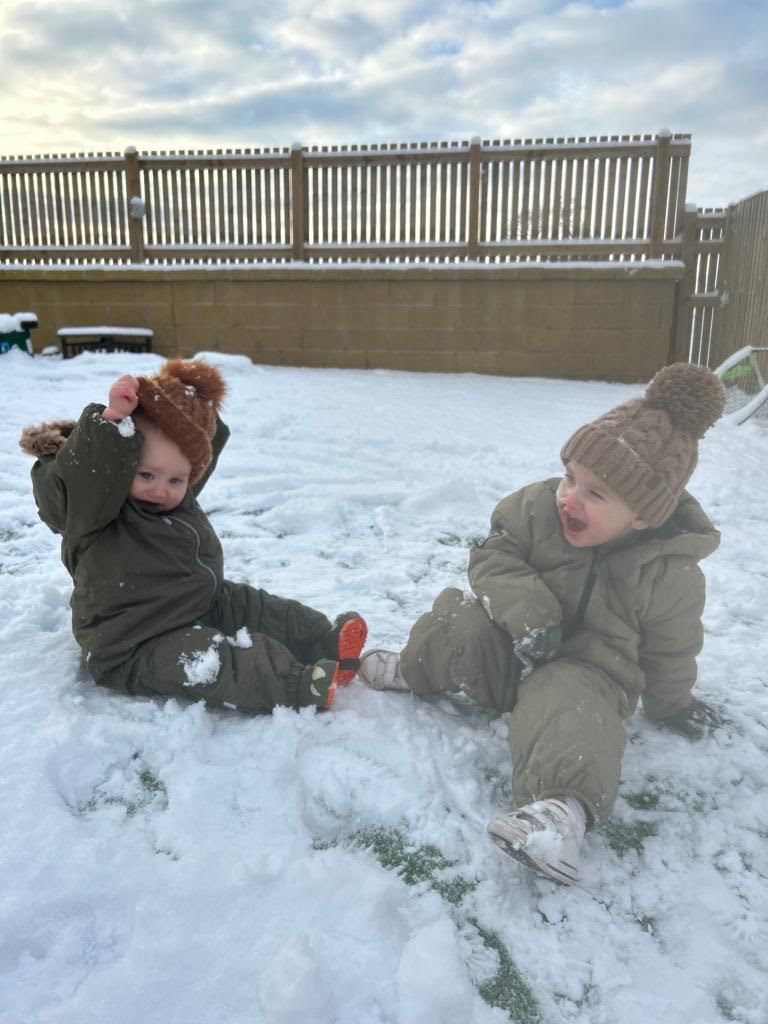
“We have been staying in Ronald McDonald House the last few months. One of us would stay with Isaac and the other with Elijah. We would switch each night. The first weekend we got home, you would have thought it was Christmas Eve in our house. When the boys woke up the next day, our Christmas tree was up, and it was all snowy outside. It really was magical.
“We are looking forward to the next few weeks of Christmas visits and events, followed by a quiet day at home, just the four of us.
“We are so grateful Elijah is here. We owe the medical team at the Royal Hospital for Children. They saved our son. Ronald McDonald as well, the amazing facility helped us so much. Being able to stay on the grounds, was amazing.
“They made us feel so welcome from the moment we arrived. We may not stay miles and miles away, but we had no idea how Elijah was going to be health wise and being able to be only a few minutes from the hospital was truly amazing.
“We also want to say that that we are beyond proud of our brave boy. He has shown the true meaning of strength and courage, and we love him so much. Thank you to everyone who was involved in saving Elijah’s life, we will be eternally grateful to you all,” she said.
Shuko Joseph, Consultant in Paediatric Neurology at the Royal Hospital for Children, Glasgow said: “It was our great privilege to be part of Elijah’s recovery journey as part of the neurology- neurorehabilitation team.
“The family endured such challenging time with incredible resilience, strength, and hope. It is so wonderful to hear the family is getting on well at home especially at such a special time of year.
“Such recovery has been a credit to Elijah and family’s wonderful efforts and excellent engagement with therapy sessions and would not have been possible without the expertise of the PICU staff, ID team, neurosurgical staff, neurology ward staff, nurse specialists and neurorehabilitation therapists.
“We are so grateful for everyone involved in Elijah’s recovery.”
The Lord Provost Robert Aldridge delivers his festive message to the city for 2023:
The spirit of the holidays endures not only in the gifts we exchange, but in the way we treat our neighbours.
Edinburgh’s rich history of traditions and celebrations around the festive season have truly come alive as we mark the end of another eventful year. This has been marked by momentous events such as the Coronation of His Majesty The King, and our ongoing response to helping Ukrainian refugees in Edinburgh to name but a few.
With the holiday season upon us, I would like to take this opportunity to extend the immense gratitude I have for the people of Edinburgh who make our city the peaceful, diverse, and welcoming place it is. I have always been proud to represent our unique and vibrant city and this year is no different.
Regardless of our backgrounds, traditions, and beliefs, we all have the common ground of calling this city our home. The true beauty of Edinburgh lies in our ability to embrace our diversity as our strength so as we exchange gifts, share meals, and spend time with loved ones.
Let’s remember that Christmas, at its core, symbolises unity. In a world often marked by division, the holidays are a chance to come together and show kindness no matter what you are celebrating.
On behalf of the City of Edinburgh, I would like to extend my heartfelt well wishes to you and your loved ones. Here’s to a 2024 that’s full of hope, understanding and peace.
An 88-year-old man has died in hospital after a serious crash on the A768 in Loanhead.The incident happened around 7am on Tuesday, 19 December at Knivensknowe Road and involved the man, who was a pedestrian, and a Honda Civic car.
The man was taken to the Royal Infirmary of Edinburgh, where he died as a result of injuries yesterday (Saturday, 23 December).
He was walking his dog at the time of the collision which has also since passed away.
The male driver of the car did not require medical treatment.
Sergeant Grant Hastie of Police Scotland’s Road Policing Unit said: “Our investigation into the circumstances of this collision are ongoing and our thoughts are with the man’s family and friends at this difficult time.
“We would urge anyone who may have information which not yet been passed to police to come forward.
“In particular we are working to identify two people who were at a bus stop near where the incident happened at the time and would urge them to come forward.
“Anyone with information is asked to contact Police Scotland through 101 with reference number 0499 of 19 December.”
Retail trade union Usdaw is disappointed with the response of Scotland’s First Minister, Humza Yousaf, to a question from Scottish Labour Deputy Leader Jackie Baillie about closing large retail stores on New Year’s Day 2024, so that retail workers can spend the day with their loved ones.
The exchange took place in the Scottish Parliament at today’s First Minister’s Questions. The Christmas Day and New Year’s Day Trading (Scotland) Act 2007 barred large stores from opening on Christmas Day and gave the Scottish Government powers to introduce a similar ban on New Year’s Day. However the SNP Government continues to refuse to use that power to give shopworkers a proper festive break.
Tracy Gilbert – Usdaw’s Regional Secretary for Scotland says:“The First Minister’s warm words about ‘fair work’ and taking another look at this issue is too little too late.
“It won’t mean much to our members while the Scottish Government continually refuses to enact their power to stop the opening of large stores on New Year’s Day. They have persistently not listened to the 98% of Scottish shopworkers who want stores to close. Too many will now being going to work on 1 January next year when they’d rather be somewhere else.
“Our members are deeply disappointed with the attitude of the Scottish Government. Retail staff have work every day to keep our communities fed and healthy, face high levels of abuse and are now dealing with a very busy run up to the festive season. The very least these key workers deserve is that the Scottish Government shows their appreciation for the essential work they do by giving them a proper festive break.”
Lothian Labour MSP Sarah Boyack has expressed her deep disappointment in Edinburgh City FC’s decision to scrap their women’s team and their development teams.
This decision follows weeks of financial turbulence for the team.
Ms Boyack has expressed her dismay that the burden of stabilising the club’s finances has fallen on the Women’s Team.
It will be a huge blow on the drive to get women more represented in sport.
The team have indicated that they hoped this decision would be temporary but have provided no timeline for when the teams may be reinstated.
Commenting on the decision, Sarah Boyack said: “I am extremely disappointed by Edinburgh City FC’s decision to scrap their women and development team.
“I acknowledge the financial difficulties of the team but at a time when women’s football is finally getting the audience it deserves, to scrap the Women’s Team sends entirely the wrong message.
“We should be doing more to encourage women into football and sports more generally.
“Women’s’ teams represent the best opportunity to showcase the talented female footballers we have here in Scotland.
“If Edinburgh City FC are serious about this being a temporary decision, they need to lay out a clear timetable for when the Women’s and Development teams will be restored.”
World’s Loneliest Sheep – Ambaasador for Mental Health Message
A sheep which shot to stardom last month when she was rescued after two years living at the bottom of some remote cliffs, is now helping to encourage steps to prevent loneliness in the agricultural community.
The Scotch Mule cross Charollais ewe was named Fiona by the team of friends; Graeme Parker, Als Couzens, Ally Williamson, James Parker and Cammy Wilson of The Sheep Game, who rescued her after she became known as the “world’s loneliest sheep” when Jill Turner spotted her while kayaking near the base of the cliffs.
The story of Fiona’s rescue attracted interest from the media around the world, with numerous TV stations and newspapers running the story – from CNN and the New York Times to the Sydney Herald.
She is now enjoying life – and lots of company – at Dalscone Farm, Dumfries where she is now helping to raise the profile of RSABI’s #KeepTalking campaign and the Scottish Association of Young Farmers Clubs’ AreEweOK? mental health message.
“Fiona settled in here straight away and she’s doing really well,” said Ben Best, who runs Dalscone.
“We’re delighted that not only has she helped to raise £11,000 for RSABI and the Scottish SPCA, thanks to donations from people keen to help, she is now also helping to spread the word about such an important message at this time of year.”
Carol McLaren, Chief Executive of RSABI, said: “We know there can be a lot of loneliness in the farming community, particularly at this time of year, and the #KeepTalking campaign highlights how important it is for people to keep in touch and keep an eye out for anyone who could be feeling low or lonely.
“We know that just a little kindness can make a massive difference for someone who is struggling.”
RSABI offers free practical, financial, and emotional support including counselling services, delivered quickly after receiving the initial enquiry.
Its free confidential support service is available 24 hours a day, every day of the year, by calling 0808 1234 555 (calls won’t show up on phone bills) or through a confidential webchat service, available on RSABI’s website www.rsabi.org.uk.
You can find further information on the RSABI website www.rsabi.org.uk.
Public encouraged to propose festive traditions, such as Christmas pantomime and Hogmanay, for formal recognition alongside other mainstays of UK culture
Communities across Scotland will be able to nominate their most cherished traditions to be included in a new register of cultural heritage in the UK.
Festive favourites, such as pantomime, Hogmanay and pagan Yuletide traditions could all be formally recognised.
Seasonal celebrations taking place at St Andrew’s Day, Burns Night, Edinburgh Fringe Festival and Up Helly Aa in the Shetlands could also be included.
Traditions that are central to Scottish culture, identity and communities, from Highland dancing to bagpipe playing, cèilidhs and commons riding are expected to also be put forward for a UK-wide official inventory.
Artisanal crafts such as kilt-making, tweed-weaving and the art of making the perfect haggis, together with the practitioners of these traditions, will also be considered.
The selected Scottish traditions will sit alongside valued traditions from across the rest of the UK, from the male voice choirs of the Welsh Valleys to cheese-rolling and the art of basket-weaving.
It comes as the UK Government has confirmed its intention to ratify the 2003 UNESCO Convention for Safeguarding of the Intangible Cultural Heritage, which seeks to protect the crafts, practices, and traditions which are recognised as being key part of national life and providing a sense of identity to communities.
These practices are often also referred to as ‘intangible cultural heritage’ or ‘living heritage’ and are inherited from our ancestors and passed on to our descendants.
Arts and Heritage Minister Lord Parkinson of Whitley Bay said: “The UK is rich in traditions which have been passed down from generation to generation, and so many of those which are best known around the world – from bagpipe-playing to the Highland games – are Scottish.
“These crafts, customs, and celebrations have helped to shape our communities and bring people together, who continue to shape them in turn.
“By ratifying this Convention, we will be able to celebrate treasured traditions from every corner of the country, support the people who practise them, and ensure that they are passed down for future generations to enjoy.”
By ratifying the Convention, the UK Government will be able to recognise Scotland’s most important crafts and traditions in the same way as we have considered physical heritage sites such as New Lanark, Edinburgh Old Town, and the Heart of Neolithic Orkney.
UK Government minister for Scotland, John Lamont, said: “Hogmanay, Burns Night and ceilidh dancing are Scottish traditions celebrated across the world and now we will be able to give them recognition alongside those from around the UK as part of this international convention.
“I encourage communities across the country to nominate their local traditions that will be ratified and help to preserve them for generations to come.”
As intangible cultural heritage can only be considered as such when it is recognised by the communities, groups or individuals that create, maintain and share it, it will be these groups and people from across Scotland who will be able to nominate the UK’s favourite traditions to be formally recognised.
A public consultation launched today will seek the public’s views on the UK Government’s proposed approach to implementing the Convention across the UK to safeguard valued traditions. This will include the approach to how people will be able to nominate traditions, how they will be adjudicated, and any criteria that the nominated practices will need to meet before they are considered.
The UK Government has been working closely with the Devolved Administrations, the Crown Dependencies and Overseas Territories in the run up to this decision and will continue to do so in order to implement the Convention and collate the UK-wide inventory, which is expected to launch for nominations next year.


 Our fabulous team of volunteers, they work so hard