A cafe classic of baked tatties for lunch, and we’re still planning dessert, so it’ll be a surprise! Check our page on Monday to find out what we’re making.
We welcome everyone along to our community cafe – so hope to see you there!
We are publishing this report at a critical crossroads in Scotland’s journey to a possible future, one free from poverty.
In this year’s election campaign and programme for government, we have consistently heard the First Minister describe eradicating poverty as his defining mission (Scottish Government, 2026a). This commitment is welcome, but there is an increasing disconnect between the Scottish Government’s rhetoric and the reality of life for families in poverty across Scotland.
New data for 2022–25 shows that:
17% of people in Scotland were in poverty, 11% in deep poverty and 7% in very deep poverty. Around 2 in 5 people in poverty in Scotland are in very deep poverty
relative child poverty sits at 21%
over 9 in 10 children in poverty are in one or more of the Scottish Government’s priority families.
Despite some progress, the legal target to reduce relative child poverty to 10% by 2030/31 is set to be missed by a wide margin. Interim targets have been missed, and the Scottish Government’s current plans will not deliver the scale of change needed to shift the dial.
We want a better start for all children in Scotland, and there is clear evidence of overwhelming public support for more, and more effective, action on child poverty.
The Scottish Government’s plan to review Scotland’s landmark statutory child poverty targets risks delaying action and lowering ambitions. New targets need to be genuinely stretching, grounded in income as a central measure of poverty, and have teeth to hold the Scottish Government and the Scottish Parliament to account for meeting them.
In parallel, the Scottish Government needs a new, much bolder and properly funded plan to reduce poverty in Scotland. Only 1 in 4 people (26%) somewhat or strongly agreed that the Scottish Government is doing enough to tackle child poverty in Scotland (Birt, 2026a).
This year, as well as assessing the national picture, we have focused on the vital role of local government in reducing poverty, backed by new public attitudes data and engagement with people with lived experience.
In findings that must shape live discussions about the future of local governance and public service reform in Scotland, we have heard that:
people think councils are too underfunded to provide the services needed in their area
there is significant public disaffection with councils, regardless of people’s backgrounds and across Scotland’s different communities
councils are not doing enough to tackle poverty, with people on low incomes and living in more deprived areas reporting worse experiences of services and higher levels of disaffection.
To fix this, the Scottish Government and local government will need to work more effectively – in their own right and in collaboration.
Every council needs to ask itself, just as the Scottish Government should do, whether they have genuinely prioritised child poverty reduction and if their services are best where they are needed the most.
Fundamentally, these should be the core questions of public service reform; otherwise it simply becomes a numbers game of reductions in the number of councils and/or budgets. It is also clear that public service reform needs to go hand in hand with a fundamental rethink of local government funding to rewire our services and tax system to radically reduce poverty.
It is also vital that national and local government’s bandwidth across this parliament is not consumed by bureaucratic strife; families in poverty need to see rapid progress in the immediate term.
We want the Scottish Government, as part of its renewed drive to reform local government in Scotland, to:
provide local government with a more stable platform for anti-poverty work — avoiding single-year funding settlements and allowing councils greater freedom to adapt to their communities’ needs
take steps to fundamentally reform local government finance in Scotland
ground public service reform in 2 key questions: would the changes reduce child poverty and will they make services best where they are needed the most?
We want all councils to:
prioritise preventing poverty in their communities, and make full use of their levers including economic development, childcare, employability, transport, housing and schools
provide better-quality and more joined-up local services to support families in or at risk of poverty, with genuine partnership with the third sector, co-location of services, a ‘no wrong door’ approach and better use of data
significantly improve day-to-day communication with the public, underpinned by deeper and more meaningful work to involve people with lived experience of poverty in local decision-making.
Joseph Rowntree Foundation: Poverty in Scotland 2026 report
Executive Summary
COSLA Resources Spokesperson Cllr Kelly Parry has responded to ‘Poverty in Scotland 2026′ by @jrf_uk :“This report is a stark reminder that far too many children and families in Scotland are still being denied the security and opportunities they deserve.”
Edinburgh’s Christmas Polar Ice Bar on sale now, with new Viking theme from Hamilton Ice Sculptors
The Polar Ice Bar with Icelandair– a bar where everything from the tables and chairs are sculpted from ice by experts Hamilton Ice Sculptors – returns with a brand-new theme for 2026, with spellbinding hand-carved Viking themed ice sculptures in the magical Edinburgh’s Christmas attraction on George Street.
The hugely successful Family Ice Experience with Icelandair is back by popular demand, with more family-friendly sessions in the Polar Ice Bar this year than ever before. This year’s ice bar, which sits at a cool minus 8 degrees, will be Viking themed, featuring dazzling hand carved sculptures and fire and ice elements.
The Polar Ice Bar welcomes guests with jackets and gloves on arrival and complimentary mocktails or cocktails served in a glass made of ice.
Visitors can enjoy 30 minute slots for frozen festive fun at the coolest bar in town and then warm up at The Coorie Inn just next door – inspired by luxury Highland lodges, the free-to-enter Coorie Inn will serve up piping hot drinks, festive warmers and host a programme of live music, quizzes and craft workshops.
Polar Ice Bar and Family Ice Experience tickets are available from edwinterfest.com.
TO mark the reopening weekend of its newly renovated Palm Houses, Royal Botanic Garden Edinburgh lit up the capital’s skyline with its spectacular Cathedral of glass shining like a precious jewel.
Drone content captured from the air shows the Georgian and Victorian structures aglow with warm light, spotlighting the luscious greenery within.
This weekend the Royal Botanic Garden Edinburgh’s iconic Palm Houses reopened to the public, welcoming visitors from around the world to view its rare collection of plants. Following years of painstaking restoration, the glasshouses are open once again to offer a beacon of botanical wonder in the heart of the city.
Royal Botanic Garden Edinburgh (RBGE)
Founded in 1670 as a physic garden, the Royal Botanic Garden Edinburgh has grown into a world leading scientific botanic institution with over 120 scientists working on research related to its National Botanic Collection comprising of a living collection of 13,500 plant species, a herbarium of 3 million specimens, and a library and archive of rare books, paintings, photography and art related to Botany.
Its mission to explore, conserve, and explain the world of plants is at the heart of national and international efforts to address the impact of the biodiversity crisis and climate emergency and save and conserve as many plant species from extinction as possible, in collaboration with partners from across the globe.
Across our four Botanic Gardens in Scotland – at Benmore, in Argyll, at Logan, in Dumfries & Galloway, at Dawyck, in the Scottish Borders, and at Edinburgh – the Royal Botanic Garden Edinburgh is home to our National Botanic Living Collection of more than 13,500 species of plants.
Together our four botanic gardens welcome around a million visitors every year.
Challenge Poverty Week 2026 runs from Monday 5 October to Sunday 11 October 2026, and is coordinated by The Poverty Alliance in Scotland. We will be running a number of online events for stakeholders during that week to help ensure you have information you need about the benefits we deliver.
Our session on Monday 5 October will provide a general overview of who we are and the how to apply for the range of benefits we deliver. Places are nearly all gone at this but you can reserve a ticket here.
Later in the week we will also be delivering an event focused on our Five Family Payments, which includes Scottish Child Payment and our Best Start Grants.
We will have more events throughout the month, including more on our Five Family Payments, as well as a focus on Funeral Support Payment. You can find links to all our events below.
You can also keep an eye on our social media pages throughout the week where we will be sharing relevant content across the daily themes.
JOIN US for our next Climate Bites at Bridgend Farmhouse
We’ll be spending lunchtime exploring the farm, hearing the story of this brilliant community space and meeting some of the people growing food, connection and climate action there.
There’ll be a chance to look around, learn more about what happens at Bridgend and, of course, share a free lunch together.
Thursday 8th October
12:30–2pm
Bridgend Farmhouse
Free
Spaces are limited and first come, first served, so book your place through the link in our bio.
Come along, have a wander, meet new folks and share some good food with us!
Drag Queen Mystika Glamoor surprised visitors to National Galleries Scotland: National to celebrate the launch of Pay What You Can for Catherine Opie: To Be Seen at the Royal Scottish Academy building, with tickets from £5.
Handing out moustaches and offering playful commentary on Scotland’s art, they helped spread the word about this must-see exhibition by one of the world’s greatest living photographers.
Open now, Catherine Opie: To Be Seen celebrates the LGBTQ+ community, telling stories of identity, family, love, belonging and community.
Featuring 80 striking portraits the exhibition places Opie’s powerful photographs alongside historic works from the national art collection, creating new narratives and challenging audiences to consider who is seen, celebrated and overlooked in art.
Limited Pay What You Can tickets from £5 are available now for 5-7 and 12-14 October dates only.
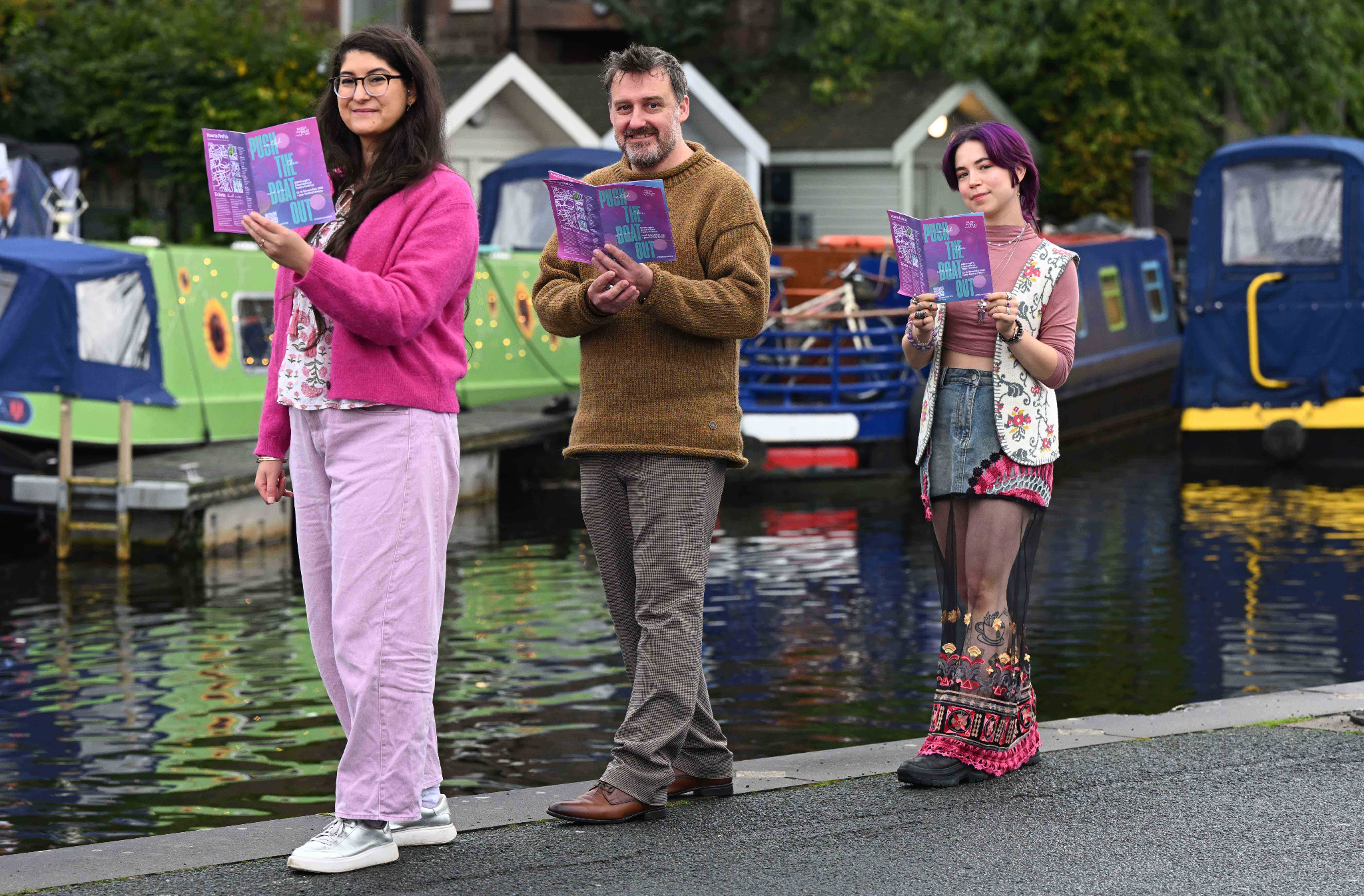
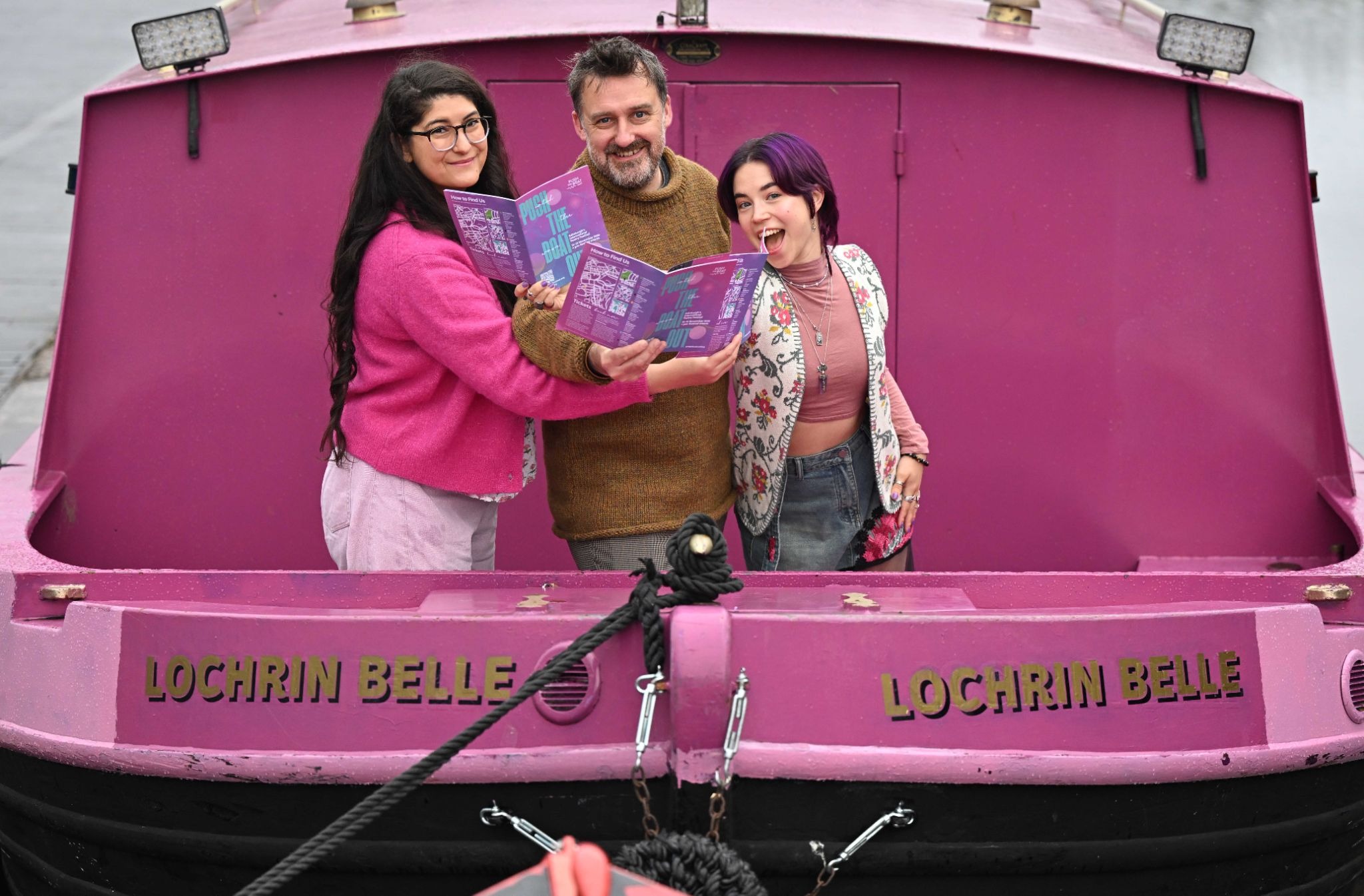
Push the Boat Out (PTBO), Edinburgh’s international poetry festival, has launched its 2026 programme bringing together over 120 artists for 75 events spanning poetry, performance, music, workshops and creative collaborations. Tickets went on sale on Thursday 1st October, National Poetry Day 2026.
The festival runs 12–15 November at the Pleasance and in satellite venues across the city. Ahead of the main festival, audiences can enjoy a special preview event with former national Makar Jackie Kay aboard Edinburgh’s luxury floating hotel, The Fingal on 31 October.
This year’s festival explores The Space Between, the liminal and transitional spaces both physical and metaphorical and also considers our Shorelines: their cultural significance, their hold on our imaginations and the current threats posed by climate crisis.
The festival’s commitment to new work culminates in The Space Between, a major showcase of three new poetry-led performance commissions created in association with the National Theatre of Scotland.
Featuring new work by Gray Crosbie and Guy Woods, Catherine Street and Nancy Burns and Sunnah Khan. Khan’s Terror Error interweaves poetry and archiving to respond to the events of 12 June 2026, when four activists were sentenced as terrorists for the first time in British history. Tits, by Gray Crosbie and Guy Woods, combines spoken word with birdsong and sound design, whilst Spatial Murmurs by Catherine Street and Nancy Burns brings together poetry, voice and film to explore a wordless experience.
The festival also features a new work from poet Iain Morrison and visual artist Corin Sworn, created through PTBO’s first residency programme in partnership with Little Sparta whilst the closing event in this year’s programme sees a striking new collaboration, especially commissioned for the festival, between musician Aurora Engine and writers JL Williams, Dean Atta and Kirsty Logan – combining music, electronica, poetry, voice and performance, promising a powerful finale to PTBO26.
GUINNESS WORLD RECORDS (GWR), the global authority on record-breaking achievements, has officially recognised British chess prodigy Bodhana Sivanandan, 11, as the youngest chess player to achieve the Woman Grandmaster (WGM) title, following her history-making performance at the 46th Chess Olympiad, which took place in Samarkand last month.
Bodhana secured the final requirement for the WGM title during the Olympiad, adding another extraordinary milestone to a record-breaking chess career that has already seen her achieve two Guinness World Records titles aged just 10.
The new title gives Bodhana three Guinness World Records titles, with her two earlier record-breaking achievements already featured in the new GUINNESS WORLD RECORDS 2027 book, available now.
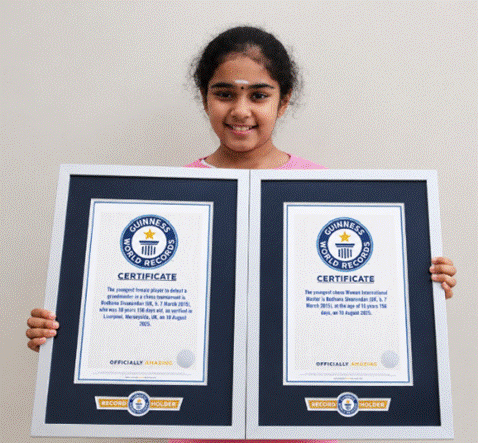
Those earlier titles are youngest chess Woman International Master and youngest player to defeat a grandmaster in a chess tournament (female), both achieved aged just 10.
Bodhana has now also received her first official Guinness World Records certificates recognising those two earlier achievements.
Bodhana’s latest achievement took place after GUINNESS WORLD RECORDS 2027 had gone to print, meaning her new title does not appear in this year’s book. Her two earlier record-breaking achievements are, however, featured in the new edition.
Speaking about seeing herself in the new book, Bodhana said: “It is an absolute honour to be featured in Guinness World Records 2027, which gives me huge encouragement and a real morale boost.
“It motivates me to keep pushing myself and achieve even more.”
FROM THE “HORSEY” PIECE TO CHESS HISTORY
Bodhana’s journey into chess began not with dreams of records or championships, but with a fascination for one particular piece on the board: the knight.
She first became interested in the “horsey” piece as a young child and wanted to treat it like any other toy. Her dad explained that if she took only the knight from the chess set, nobody else would be able to play the game. Bodhana began learning chess at five years and eight months old and started competing at six.
Asked what she would say to another young person who wants to become really good at something they love, she said:“Enjoy what you’re doing and keep playing the game you love.”
Craig Glenday, Editor-in-Chief, Guinness World Records said:“Bodhana’s story is a brilliant example of how a child’s curiosity can lead to something extraordinary.
“These are exceptional achievements, but what makes Bodhana so inspiring is the joy and determination that she continues to bring to the game.
“We’re delighted to officially recognise this latest milestone and to celebrate Bodhana’s earlier record-breaking achievements in Guinness World Records 2027. We hope her story encourages other young people to follow what fascinates them and see just how far their passion can take them.”
Guinness World Records opens a new chapter of record breaking with the latest edition of their famous annual. Amongst the records are an array of new, talented individuals that GWR hope will inspire readers to be part of it and start their own record-breaking journey.
• The new GUINNESS WORLD RECORDS 2027 edition includes over 3,000 mind-blowing record achievements from around the world, with over 80% new and updated for this year
• Meet eight incredible young achievers – under 16s who are defying their age to break remarkable records
• The newly selected GWR ICONS are unveiled – record holders who embody the spirit of record breaking and are rewriting the rulebook in their respective fields


 Thursday 8th October
 12:30–2pm
 Bridgend Farmhouse
 Free