New project follows the signing of a Memorandum of Understanding between Edinburgh UNESCO City of Literature and the City of Edinburgh Council
Edinburgh UNESCO City of Literature and Edinburgh Trams have launched Tramlines, a new partnership bringing poetry and literature into everyday public spaces across the city.
The initiative will see poems displayed throughout Edinburgh’s tram network, celebrating the city’s literary heritage while introducing thousands of passengers to poetry as part of their daily journeys.
The project features a selection of work by established, emerging and historic poets connected to Edinburgh. The project was partially inspired by London’s Poems on the Underground project, which is currently celebrating its 40th anniversary.
The project includes the winning poem from the inaugural Tramlines Poetry Competition, which invited emerging poets to create work for public space and everyday readers. The winning entry, Timelines by Stephen Deazley, was selected by a panel for inclusion.
Other poets featured in this iteration include: Norman MacCaig, Robin Robertson, Stephanie Green, Zain Rishi, Hannah Lavery, Jess Brough, Bridget Khursheed, Valerie Gillies, Wilfred Owen, Carolina Oliphant, Robert Burns, Dorothy Lawrenso, Jeda Pearl, Medha Singh, Vicki Feaver, Màrtainn Mac an t-Saoir/Martin MacIntyre and Theresa Muñoz.
Tramlines is also a celebration of a new Memorandum of Understanding between Edinburgh City of Literature and City of Edinburgh Council. Signed as Edinburgh celebrates more than two decades as the world’s first UNESCO City of Literature, the Memorandum of Understanding recognises this vital partnership.
It reaffirms a shared commitment to maintaining Edinburgh’s UNESCO designation, nurturing the city’s literary life, raising the profile of literature across communities, and strengthening Edinburgh’s reputation as a leading international city of culture and ideas.
The Rt Hon Lord Provost of Edinburgh, Robert Aldridge, said: “Edinburgh’s reputation as a City of Literature has been built over generations by writers, readers, publishers, libraries, festivals and communities across the city.
“This partnership is about building on that remarkable legacy and creating the conditions for our literary life to continue to flourish. Projects like Tramlines show how literature can be part of everyday life, reaching people in unexpected places and reminding us that stories belong to all of us.”
Dr Harriet MacMillan, Director of UNESCO Edinburgh City of Literature, commented:“We are delighted to formalise our longstanding relationship with the City of Edinburgh Council through this Memorandum of Understanding.
“It reflects our shared ambition to embed literature and storytelling across the life of the city and to ensure that Edinburgh continues to lead internationally as a UNESCO City of Literature.
The launch of Tramlines is a wonderful example of that ambition in action, bringing poetry directly to residents and visitors as they travel through the city. We’re thrilled to see the insightful, inspiring and moving words of some of Edinburgh’s outstanding poets appearing across the tram network, and we hope they encourage moments of reflection, connection and discovery for everyone who reads them.
“We hope that this will be the first of many iterations of Tramlines – we have so many wonderful Edinburgh poets to celebrate!”
Sarah Boyd, Chief Executive of Lothian Buses and Edinburgh Trams, said: “We are proud to support this initiative in partnership with Edinburgh UNESCO City of Literature.
“We hope these poems, including Stephen Deazley’s winning entry, inspire moments of reflection, creativity and enjoyment for our tram customers as they travel across the city.
“Edinburgh’s rich literary heritage deserves to be preserved, celebrated and shared with future generations.”
A transformational mental health hub will open in Edinburgh next year, bringing free, accessible mental health support to anyone in the capital and its surrounding areas.
The Nook, a groundbreaking initiative from SAMH (Scottish Action for Mental Health), will launch on Lothian Road in early spring 2027.
The Nook in Edinburgh will be a flagship service for SAMH, which operates more than 70 services across the country, and is the charity’s response to the national mental health crisis, which sees tens of thousands of people wait too long for the help they need.
Designed to be a welcoming, friendly and accessible space, The Nook operates on a walk-in basis, removing the need to book appointments or receive a referral from a GP.
It will offer non-clinical, stigma-free mental health support for adults, young people and their families, so that anyone can ask once and get help fast with their mental health.
Scotland’s national mental health charity has a unique relationship with the capital, which was home to SAMH’s first ever service, a horticultural project that opened in 1983.
This legacy is continued by longstanding SAMH services including Redhall Walled Garden, based on Lanark Road, and the Hive Activity Centre at the Royal Edinburgh Hospital.
The choice of location for The Nook, at 142 Lothian Road, will make mental health and wellbeing support available in the heart of the city, and easily accessible to people across Edinburgh and beyond.
David Arbuthnott, 60 from South Queensferry, who attended SAMH’s The Changing Room at Tynecastle Park after experiencing the loss of his sister, said:“Deciding you need help and asking for it can be the most difficult things for people suffering from mental health challenges.
“Barriers can make people feel like they aren’t worthy of help and that they don’t deserve it, pushing them further away. Accessing help easily in Edinburgh, without having to jump through hoops and overcome barriers, will help so many people.”
Shona Littlejohn, Chair of SAMH, said:“The Nook will bring innovative, accessible mental health support to anyone in and around Edinburgh.
“As I know from experience, mental health challenges can happen to us all and have a devastating impact on individuals, families, communities and workplaces.
“Scotland’s mental health system is in crisis, with too many people failed by long waiting lists and the need for referrals. Change has been too slow, and lives are being lost and blighted. The Nook brings hope, compassion and practical support designed and delivered by Scotland’s leading mental health charity.”
The Nook is the largest mental health charity initiative in Scotland’s history and is funded by SAMH’s first major appeal, which seeks to raise £10 million to revolutionise mental health support across the country.
The Scottish Government has also committed to supporting some of The Nook’s operating costs and SAMH is working closely with government officials to clarify the level of support.
June Pennykid, Managing Director at insurance broker Keegan & Pennykid, and a longstanding supporter of SAMH, said: “The Nook is by far the most ambitious undertaking by SAMH in its 103-year history. It is also arguably the most essential one.
“Poor mental health is increasing at a higher rate than any other health condition, including among children and young people. That in itself is reason enough for delivering The Nook throughout Scotland, to ensure that everyone can access the mental health support they need, when they need it.
“As The Nook comes to Edinburgh, I’d urge my fellow business owners to get on board and support the appeal. After all, you never know when you or someone you love might need it.”
This will be the third Nook in Scotland’s first national network of walk-in mental health hubs, with the first Nook opening in Glasgow last year and the second in Aberdeen in June.
Last week, it was announced that 10,000 people have already visited the two existing Nooks, demonstrating clear demand and trust in the walk-in model.
Billy Watson, Chief Executive of SAMH, said:“The Nook is the largest charitable mental health initiative in Scotland’s history and we’re thrilled to be able to bring it to Edinburgh.
“With more than 10,000 people having already visited Nooks in Glasgow and Aberdeen, we already know that The Nook is needed, and that it’s giving people the help they need, fast.
“We hope The Nook will quickly become the go-to place for immediate mental health support in Edinburgh, while working closely with local partners in the mental health system and beyond.”
In response to local complaints about drivers failing to adhere to the no entry signs/one way system on Silverknowes Avenue, police officers carried out patrols in the area on Tuesday and Wednesday.
This resulted in two charges for failing to adhere to the no entry signs, a motorcyclist being issued with a police warning and a driver being arrested and reported for drink driving.
Officers will continue to patrol in the area to deter similar behaviour in future.
With one week to go until the reopening of Royal Botanic Garden Edinburgh’s historic Palm Houses on 2nd October, some of the organisation’s students and partners have brought back to life archive photographs of staff working in the Garden and Palm Houses in the early 1900s.
Digging into the Garden’s historic archive, they retraced the images by stepping into the same spaces where their predecessors once tended and studied the Garden’s rare and exotic collection over a century ago. As the new generation of horticulturists and scientists, they are ready to care for and research nearly 600 plant specimens returning to the Palm Houses.
The photo series is a fitting tribute as the Palm Houses near completion of the most ambitious restoration and development programme in the Garden’s 356-year history.
The original Georgian and Victorian structures have undergone five years of meticulous restoration as part of the £58 million Edinburgh Biomes project, including funding from the Scottish Government and The National Lottery Heritage Fund amongst others.
Scotland Chair of The National Lottery Heritage Fund, Dr Heather Reid, joined the collective of students to celebrate the history of the Palm Houses, recreating an image featuring a sunshine recorder positioned on the outer balcony.
Restoring the Palm Houses to their former glory has involved replacing all 5,750 panes of glass, fully restoring or replacing 600 m² of ironwork, and carrying out 500 m² of sandstone repairs.
Photograph 1 –
Then: James Douglas McKenzie worked in RBGE’s Glass Department as a probationer gardener between 1903 and 1907.
Now: Liam McMenemie (HN in Horticulture (Plantsmanship) tends to the newly rehomed plants within the renovated Palm Houses.
Photograph 2 –
Then: David Sydney Fish on the roof of the Temperate Palm House checking the Campbell-Stokes sunshine recorder, captured around 1904 – 1906. The recorder works to record sunshine, with any direct sunlight being magnified by the sphere and scorching a recordable trail on the card behind it.
Now: Still in use today, Dr Heather Reid, Scotland Chair of The National Lottery Heritage Fund, checks on the sunshine recorder on the roof of the newly renovated Palm Houses, which have now been unified as one temperate zone.
Photograph 3 –
Then: An unnamed gardener tending to RBGE’s Order Beds in front of the Glasshouse Range. Taken around 1905.
Now: Chase Mathey (MSc in Biodiversity and Taxonomy of Plants) tending to the paths outside the research glasshouses and renovated Palm Houses, preparing the walkway for guests to once again experience this area of the Gardens.
Photograph 4 –
Then: An unnamed member of the Herbaceous Department attending to an errand in the potting shed around 1905.
Now: Jessica Thomson (HN in Horticulture (Plantsmanship)) working in the modern-day potting shed. Jessica is one of many female students and staff members employed in the Gardens nowadays, whereas the first female horticulture students only began their studies in 1897.
Photograph 5 –
Then: Andrew R. Cosh was a probationer gardener at RBGE between 1907 and 1910, before emigrating to work at an estate in Massachusetts.
Now: Charlie Smith (MSc in Biodiversity and Taxonomy of Plants) watering the various palms and ferns that have been planted within the renovated Palm Houses.
Providers of apprenticeship places will see their funding rise 10% in 2027-28, giving greater stability to those that offer training.
Modern Apprenticeship contribution rates support the training and assessment of the next generation of skilled workers, applying to new apprentice starts and apprentices in training from 2027/28.
The £8.8 million uplift applies to all types of apprenticeship frameworks, following phase one of the Scottish Government’s contribution rates review.
Minister for Innovation, Technology and Tertiary Education, Alyn Smith, said: “Apprenticeship training providers play a profoundly important role in equipping people with the skills they need to have successful careers. In doing so they make a significant contribution to a healthy economy.
“This funding increase demonstrates our commitment to Scotland’s apprenticeship system and to developing our future workforce. It will also provide greater stability for training providers within the context of a challenging financial environment.
“We want to see more high-quality apprenticeships to meet our skills needs and to support our vital public services. We look forward to expanding our modern and graduate apprenticeship offer in the future.”
Thirty-six people have been arrested, and 14 cannabis cultivations have been discovered following the biggest and most coordinated human trafficking operation that Police Scotland has ever carried out.
The nationally coordinated operation, which took place on Wednesday, 23 September, was targeting a Vietnamese crime group suspected of human trafficking and exploitation and organised immigration crime.
Around 300 officers were engaged in the enforcement action with simultaneous deployments across Scotland, targeting 47 addresses in Aberdeen, Dundee, Falkirk, Edinburgh, Glasgow, Ayrshire, Lanarkshire, Midlothian and the Scottish Borders. Arrests were also made in Birmingham.
There were 35 warrants served and a number of potential trafficking victims were also recovered from several of the addresses.
Officers from across Police Scotland, led by the National Human Trafficking Unit, worked alongside Home Office Immigration Enforcement and HMRC. Enforcement action took place in Northern Ireland earlier this week.
Detective Superintendent Stevie Bertram, Head of Police Scotland’s National Human Trafficking Unit said: “This enforcement action is the biggest and most coordinated human trafficking operation that we have ever carried out, and was the result of a lengthy investigation, working closely with our partners. We took a coordinated approach and the arrests and seizures are the result of this work.
“Human Trafficking is the illegal trade in human beings for the purpose of commercial exploitation, and it has no place in Scotland. It exists in many of our communities and can involve people who are resident legally in the country. The industry of trafficking people has become so sophisticated that it often goes unnoticed.
“We will target criminals who abuse, control and exploit people, working with partners nationally and internationally to bring offenders to justice, and to raise public awareness to help identify victims and ensure they get the support they need.
“I want to thank all of the officers involved who have worked tirelessly to get to where we are today.
“We will continue to use focused days of action to disrupt and identify those who control, abuse and exploit others to bring them to justice.”
Justice & Care deployed two Victim Navigators, based in Scotland, to assist in Operation Kendrew. The Victim Navigator programme provides independent, specialist support. As a result of their training and professional expertise, the Navigators provide trauma informed support at the point of rescue and beyond, recognising that every victim has lived through a different experience.
Debi Lloyd, Head of Counter-Trafficking at Justice & Care, adds ”Trauma-informed support is ultimately about recognising the person before the process.
“When somebody begins to trust again, to make their own choices and believe that people will do what they say they will do, that can be incredibly powerful.”
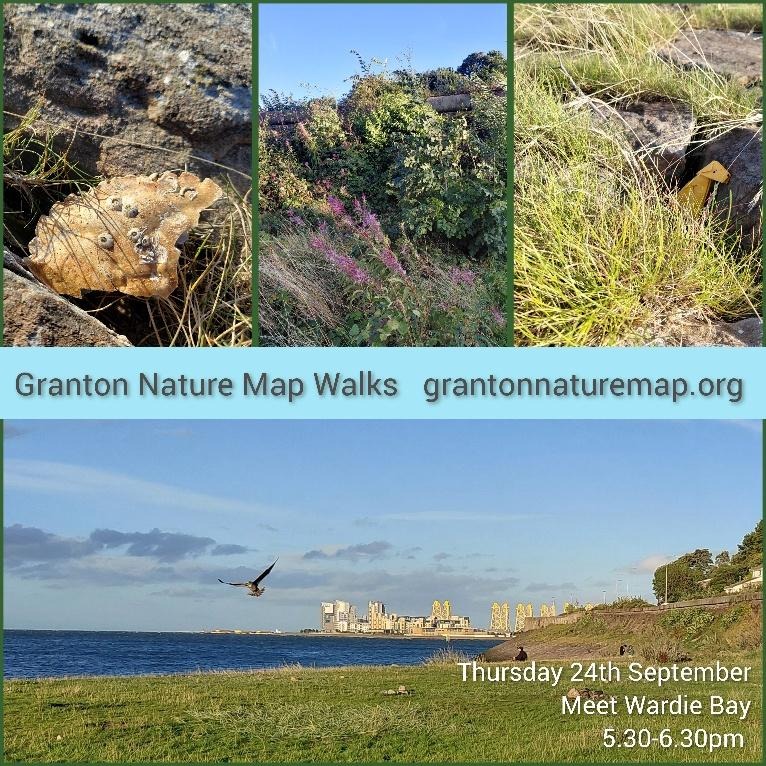
Walking along the beach; noticing what grows, flies and crawls, and the opportunity to sketch a design for your stitched contribution to the Granton Nature Map.
With Katie Smith from the Granton Community Gardeners and Tamsin Grainger, Community Artist
Alcohol and Drugs Minister Maree Todd has raised concerns about an ‘increasingly toxic and unpredictable drugs supply’ in Scotland and has said the government will continue to prioritise a public health response to drug deaths.
It comes as new figures from National Records of Scotland show there were 1,133 drug use deaths in 2025, an increase of 11% compared with the previous year.
Cocaine was implicated in over half of all drug use deaths in 2025 (52%, or 589 deaths), an increase of 23% compared with 2024. Nitazenes, a group of highly potent synthetic opioids , were implicated in more than one in five drug use deaths (22%, 247 deaths).
Speaking during a visit to In Cahootz, an initiative in Glasgow which supports people affected by substance use through creative activities and building community connections, Ms Todd said: “My heartfelt condolences go out to everyone who has lost a loved one to drug use. Each and every death is a tragedy, and even more so because every life lost to drug harms is preventable.
“Against an increasingly toxic and unpredictable drugs supply, this rise is deeply concerning and unacceptable. The increase in deaths involving cocaine, and the continued threat from dangerous synthetic opioids like nitazenes, must drive more coordinated action across the country.
“We have taken important steps forward, including funding more than 1,100 residential rehabilitation placements last year and widening access to treatment and life-saving naloxone. However, despite these policy interventions, and the actions of our valued frontline workers, it is clear we need to do much more to reduce this tragic loss of life.
“Our new Alcohol and Drugs Strategic Plan will strengthen surveillance, deepen links between treatment, housing and other services, and target support at the communities most at risk. I have also announced today that Scotland’s first local drug-checking service will open in Glasgow this October – building on the UK’s first safer drug consumption facility.
“Whilst we are using every lever available through our devolved powers, it is clearly now vital that the UK Government work with us to transfer the greater powers over drugs policy that we require to treat drug harms fully as a public health issue.”
In Cahootz Creative Director Kate Black said: “The National Mission funding has allowed us to expand the range of activities available through our Creative Citizens Project.
“Taking part in creative activities can increase confidence and give people a sense of purpose and belonging. Building connections and becoming an active part of a community can play an important role in recovery.
“Our project helps people develop those connections and supports them to build a better quality of life.”
THE POVERTY ALLIANCE commented: “In a just Scotland, no-one would lose their life to drug addiction and everyone would have quick and efficient access to addiction treatment that works for them.
‘People living in the most deprived communities in Scotland are around 15 times more likely to experience problem drug use, compared to people in the least deprived communities. Reducing drug deaths means reducing poverty.
‘That means redesigning our economy so that people are able to access decent work, and investing in our social security system and public services, so that people have the income they need to live in dignity and security.
‘Above all, we need to treat people with the dignity, respect, and compassion they deserve.’
As part of recovery month, COSLA’s Spokesperson for Health and Social Care, Cllr Paul Kelly, reflects on the key role local authorities play in preventing harms from drugs and alcohol and supporting people to recover:
Across Scotland, unacceptably high levels of drug and alcohol related harms continue to have profound impacts on our communities. Behind each life lost is a person, their family, friends and colleagues. As a small but diverse country, many of us will know personally how the effects of drug use pervade our lives and affect whole communities.
Earlier this year, COSLA Leaders agreed the new Strategic Plan for alcohol and drugs, Preventing Harm, Promoting Recovery – the first time Local and Scottish Government have agreed shared ownership over this critical challenge we face as a nation. The Strategic Plan builds on progress made during the National Mission but recognises that we need sustained leadership to tackle ongoing and emerging harms from alcohol and drugs.
While a shared policy direction at a national level is important, ultimately it is the local delivery of support that will make a difference to people’s lives. These solutions will lie in our communities, shaped by people, and delivered through trusted local services.
At the launch of the strategy at a rehabilitation facility in Inverclyde, I met with people in recovery and who told me how important it is to have pathways of care that bridge different services, bringing together specialist care with appropriate housing and ongoing wellbeing support.
Councils are well placed provide wrap-around support for people affected by drugs and alcohol and their families which fosters sustained recovery. Housing, social work and social care and community justice support some of the most vulnerable in our communities. This holistic support, meeting the needs of the whole person, act as the foundations for more specialist care. Meanwhile, our partnership working third sector organisations enable greater reach into communities, including outreach with people who face additional barriers to accessing services.
If we are serious about reducing harm from alcohol and drugs, we need strong local knowledge to understand why communities in Scotland continue to be deeply affected by drugs and alcohol. The stark reality is that the harms are not evenly distributed; rather, they are closely aligned to the prevalence of deprivation. Experiences of poverty and trauma can act as an underlying driver of harms, while drug and alcohol issues can perpetuate deprivation.
COSLA has long championed this preventative approach which tackles these root causes because our councillors witness firsthand how interconnected these inequalities are with wider outcomes. As much as 80% of what determines our mental and physical health comes from outside of health and care services. Our health and wellbeing starts long before a person speaks to their GP. It starts with a warm, safe home, with whole-family support in the critical early years and access to opportunities through high-quality education and secure local jobs.
As set out in the Population Health Framework, these are the wider determinants of health, the underlying social, economic and environmental factors that have a greater impact on our health outcomes that access to health and social care services. The preventative and universal services that councils deliver every day are the embodiment of these determinants: our schools, transport networks, leisure and culture facilities.
Indeed, no other part of the public sector has such depth or breadth in people’s daily lives. Our joint approach to reducing harms from alcohol and drugs rightly places prevention at its heart, maximising these local opportunities to shape healthy, resilient communities.
As the form of government which is closest to people, councils have the local knowledge to understand where services are working well, where gaps exist and how to make the best use of a community’s strengths. Differing demography and geography mean that our communities can vary. Post-industrial communities in the central belt have different challenges and opportunities to remote, rural and island communities. Flexibility in the delivery of services is vital to meet the needs in a range of local contexts.
Key to developing place-based solutions are the insights from people with lived and living experience of drug and alcohol issues, so services are developed with people, not for them. Last year, COSLA Leaders endorsed the Charter of Rights for People Affected by Substance Use which empowers people to know the human rights that belong to them.
Since publication, a range of emerging local practice has focused on meaningful engagement and participation, promoting more inclusive and accessible services, and enabling people to shape services through what matters most to them.
As we move forwards with this preventative, rights-based approach, I recognise the significant pressures that the system is under. Alcohol and Drug Partnerships, which coordinate a range of services to meet local need are often led by very small teams of committed individuals working to tight budgets. The wider workforce is delivering preventative, wrap-around and specialist support in challenging circumstances due to high and complex levels of need in communities.
Many of us continue to feel the effects of drugs and alcohol issues in our communities – in the unacceptably high numbers of lives lost and the families affected, and through the wider impacts of organised crime, including trafficking. New substances, increased toxicity and changing patterns of drug use add further challenges which require expertise and bespoke solutions.
Strong leadership in all parts of the system is essential to recognise the role that we all have to play to promote good health wellbeing and reduce harms. This will involve culture change, tackling stigma and promoting human rights in everything we do. We have already clarified the governance arrangement for Alcohol and Drug Partnerships through the Partnership Delivery Framework. This affirms the importance of a range of statutory services, not just local authorities, but also health boards, police and the prison service. Further work is required to ensure all partners understand their roles and responsibilities.
At a national level, our joint approach with Scottish Government will enable local and national leaders to work together to prioritise action that will make the greatest impact and hold each other to account.
Working with the Minister for Public Health, Mental Wellbeing, Sport, Alcohol and Drugs, I look forward to inviting a diverse range of individuals and organisations, including third sector colleagues, clinicians and people with lived and living experience, to provide advice, insight and challenge to support the delivery of the Strategic Plan.
By combining a shared national ambition with strong local leadership, we can consider drugs and alcohol not in a siloed fashion but across the broad range of services that councils and their partners provide.
We can deepen partnership working, build a culture of learning, listening to those most affected. Through a collective commitment to prevention and wrap-around support, to reducing inequalities and to improving outcomes, we can create resilient communities and support people to live longer, healthier and more fulfilling lives.
National roll-out of Nurse Sexual Offence Examiners
Specialist nurses trained to examine survivors of sexual assault will be available across Scotland as part of a national roll-out.
Nurse Sexual Offence Examiners (NSOEs) support and examine survivors of sexual violence, providing trauma-informed care and gathering forensic evidence.
Following a test of change backed by over £700,000 of Scottish Government funding, the Lord Advocate approved the national roll-out of the role in March 2026
The change means specialist nurses will now be able to undertake forensic medical examinations and give opinion evidence in court, subject to continuing review of progress.
The expansion will particularly benefit islands and rural areas, which have previously relied on private forensic doctor services to deliver this care.
Public Health Minister Maree Todd said: “It is crucial for any survivor of rape or another sexual offence to be able to access the support they need, in the way they need it.
“The hours after a sexual assault are some of the most difficult a survivor will face. Expanding this specialist nursing role means more survivors will be cared for by compassionate, highly trained professionals. It also means these specialist nurses will be able to give opinion evidence in court.
“This is a significant milestone for Sexual Assault Response Coordination Services throughout Scotland, and I want to thank everyone involved for their dedication and work to make this possible.”
Sexual Assault Response Coordination Service (SARCS) Network Patient Advocate Kirsty Arnaud said: “Disclosing sexual assault is one of the hardest things a person can do. It takes a considerable amount of courage and strength to attend a SARCS.
“Every survivor who has taken that step deserves timely, compassionate and trauma-informed care. This includes being able to exercise their right to request the preferred sex of the examiner.
“The quality of care a survivor receives post-assault can determine their future mental and physical wellbeing. More survivors should have access to the passionate and dedicated nurses I have been so fortunate to have met during my time as the lived-experience representative for the SARCS Network.
“The role of Nurse SOEs will further enhance this access across SARCS in Scotland. This development reflects the ways the SARCS Network is strengthening its commitment to delivering high-quality support to survivors across Scotland.”
This change will also mean people will be able to exercise their right to be examined by someone of their chosen sex.