Britain’s toy shop, The Entertainer, has officially opened a brand-new store at The Gyle Shopping Centre.
The 2,225 sq ft store, located at The Gyle Shopping Centre, is officially open and is inviting local shoppers to enjoy a series of exciting in-store celebrations on Saturday (6th December).
The brand-new space brings the world’s most popular toys and collectables to the city centre, many for the first time, including Pokémon, LEGO, Monster High, Disney, POP MART and Wicked 2, as well as its exclusive Meccano, Early Learning Centre and Addo private label ranges.
To celebrate the official opening, The Entertainer is hosting an exciting in-store celebration on Saturday (6th December) for shoppers to enjoy. Fan-favourite Bluey will be visiting the brand-new store between 11am – 3:30 pm, offering families a fun-filled opportunity to meet and take photos with the popular puppy.
Plus, the first 100 customers through the doors of the new store on Saturday will get the chance to pick up an exclusive sealed envelope containing a surprise gift voucher valued between £5 – £50. What’s more, the first 100 shoppers to spend £15 or more in-store will take home a complimentary Bluey Aqua Drawing Pad worth £6.
Located at The Gyle Shopping Centre, The Entertainer joins a host of other leading retailers, leisure providers and restaurants, including JD, NEXT and M&S.
The news follows The Entertainer’s successful recent openings at Dalton Park and Rusden Lakes, as well as the highly anticipated release of its top 10 toy predictions for Christmas, featuring much-loved names such as LEGO, Disney, and heritage brand Meccano, alongside exciting newer brands like Gui Gui and Fugglers, with prices starting from just £8.
Andrew Murphy OBE, Group Chief Executive Officer of The Entertainer, said: “As the UK’s largest toy retailer, we’re thrilled to announce the opening of our new store at The Gyle Shopping Centre, and the exciting activities planned to celebrate with local shoppers.
“Our new The Gyle Shopping Centre store offers everything we’re proud of at The Entertainer – an exciting range of toys for every budget, the introduction of a huge range of global brands and products to Edinburgh, and our market-leading 30-minute click and collect service.
“Across our 160 shops, we’re proud to be famous for our friendly, helpful and knowledgeable colleagues, as well as our support of local charities and communities. Like all our UK stores, our new Edinburgh location also offers a ‘Quiet Hour’ to support customers with sensory difficulties during the first hour of every shopping day.
“We’re confident that local Edinburgh shoppers will enjoy discovering our brand-new toy shop – especially with the festive season just around the corner.”
For more information on The Entertainer and to shop online, visit:
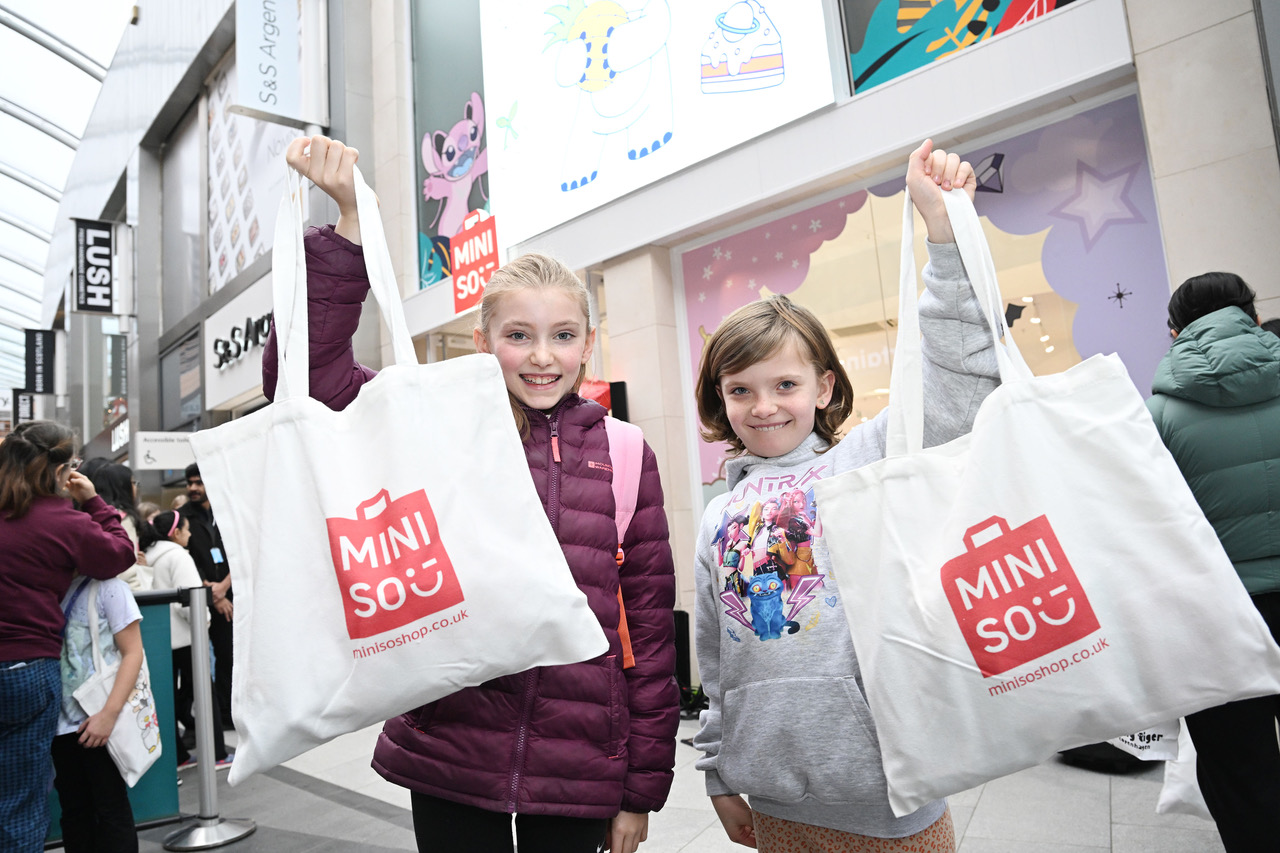
Over 300 people turned up in their droves to The Centre, Livingston at the weekend, (29th November), for the opening of the pop culture retailer, MINISO, over four hours before the store opened, including the first customers, mum Helen Cornwell from Linlithgow and her daughters, Bonnie, (10) and Andie, (8) who are big fans of the brand.
The opening was marked with a celebratory ribbon cutting at 12noon, live music and a visit from MINISO’S mascot PenPen. The first 200 shoppers who spent £5 also received a goody bag worth £25.
The brand is known for its colourful and trendy design-led lifestyle products, including unique collectables, fun stationary, plush toys and figurines from brands like Hello Kitty, Harry Potter and Friends, and its beauty and homeware range.
Mum Helen who was in the queue before 8am, said: “My daughters love everything about MINISO, including the soft toys and keyrings, so I thought I’d make their day and start queuing up early with them to get a first peek and the wait was well worth it!
“They both loved browsing the store and getting a goody bag too. I have a feeling we’ll be regular visitors!”
The opening of MINISO follows on from three other launches at the shopping centre over the past three weeks, including the Danish global brand, Flying Tiger on Friday 28th November, where over 200 people queued for over an hour and The Works the day before.
The opening of Wingstop on the 10th November also attracted huge crowds, with over 200 fans queuing for over two hours to be first in line to get their hands on the famous wings.
The new arrivals follow on from additional recent openings, including the jewellers, F.Hinds at The Centre, Livingston,
The shopping centre, which is one of the largest in Scotland, is owned by LCP UK, part of M Core, one of Europe’s leading privately owned commercial property development and management companies and welcomes over 14.8m visitors a year.
It has over 150 shops and restaurants, all under one roof, including River Island, Flannels, H&M, Pandora, Hotel Chocolat, wagamama and Nando’s, and 7,000 parking spaces.
Simon Eatough, Director at LCP UK, part of M Core and Asset Manager of The Centre, Livingston, said: “This has been a really exciting time for us and our shoppers at The Centre, Livingston as we welcome four new brands to the shopping centre, including MINISO, Flying Tiger, The Works and Wingstop.
“There was such a fantastic buzz in the air at the weekend, not only with shoppers turning up to get a first glimpse of the new stores but also to enjoy some of the Black Friday sales.
“Our new openings continue to further enhance our offering for visitors to enjoy a great day out shopping and dining out at their favourite stores and restaurants in the run-up to Christmas.”
The Eric Liddell Community, an Edinburgh-based care charity, has launched its 2025 Christmas Appeal to raise essential funds for its befriending programme, which supports unpaid carers.
This year’s campaign invites the public to “give the gift of friendship,” helping reduce loneliness and isolation among carers. Any donation to the Eric Liddell Community will help the charity reach more unpaid carers, offering relief, connection, and stability as many navigate turbulent transitions and mental health challenges.
With over 1.7 million of Scotland’s adult population having provided unpaid care at some point, and 700,000 currently doing so, the demand for reliable and relieving support continues to grow. Many unpaid carers struggle to access long-term and meaningful help, which is where the Eric Liddell Community steps in. Its befriending service already delivers more than 2,500 hours of companionship each year, and with your support, it can extend this vital lifeline even further.
From today – Tuesday 2nd December at 12pm, to Tuesday 9th December at 12pm, donations to the appeal will be matched by The Big Give thanks to its ‘Christmas Challenge’. By donating directly to The Eric Liddell Community’s Big Give page, all donations will be doubled, enabling the charity to support even more people who urgently need help.
Hannah Rees, Fundraising Relationships Officer at The Eric Liddell Community, highlighted the importance of the Christmas Appeal:“With around 700,000 unpaid carers in Scotland providing caring support, full-time for loved ones with dementia, disabilities, or long-term illnesses, we are looking for your support in extending the reach of our essential befriending services.
“82% of unpaid carers report dealing with mental health struggles, and during the season of giving, we ask you to consider a donation via our Big Give page to help double the impact of your support.”
John MacMillan, CEO of The Eric Liddell Community, added:“We are proud to welcome thousands of monthly visitors through the doors of The Eric Liddell Community, and with your support, we are excited to expand our offerings as we move into 2026.
“The match funding provided by The Big Give will make a significant difference, enabling us to reach and support even more unpaid carers facing daily challenges.”
To donate to The Eric Liddell Community’s Christmas Appeal via The Big Give, please visit the donation page between 12 PM on the 2nd and 9th of December 2025.
Visitors captivated by moving immersive experiences on opening weekend at the Royal Highland Centre
Art lovers have flocked to the opening weekend of two atmospheric multimedia experiences which plunge viewers into the colourful worlds of a pair of iconic artists.
Beyond Van Gogh and Beyond Monet are being staged at the Royal Highland Centre until Friday, 2 January 2026 – with Edinburgh hosting the Scottish premiere of Beyond Monet which celebrates the life and work of the ‘Father of Impressionism’.
The two experiences were officially opened on Friday evening during a special press and VIP launch event at the prestigious Edinburgh venue.
They will run on different days throughout the five-week residency, and tickets for both are being sold separately. The attraction is closed on Christmas Eve and Christmas Day.
Along with the stunning 360-degree visual and audio experience in the 10,000sq ft main space, each experience will include the chance to linger in captivating new reflection room which extends the magical world of both artists.
Produced by Annerin Productions and Paquin Entertainment Group, Beyond Monet: The Immersive Experience celebrates the groundbreaking work of the French artist in mesmerising and colourful fashion.
In the immersive impressionist extravaganza, cutting-edge technology breathes new life into more than 400 of the legendary French painter’s canvases, taking visitors on a spectacular and unforgettable audio-visual journey through his captivating and colourful world.
Beyond Monet brings together some of the artist’s most famous paintings – including Poppies, Impression: Sunrise and his exquisite Water Lilies series – with lesser-known works which all swirl around the space, offering a fresh and exciting new look at much-loved masterpieces and a deeper connection with Monet, his subjects and his innovative technique.
Taking inspiration from Musée de l’Orangerie in Paris, the designated home of Monet’s works, visitors can freely roam the Infinity Room where they are transported inside the paintings themselves to the accompaniment of a moving original score.
Meanwhile, Beyond Van Gogh: The Immersive Experience brings together more than 300 of the Dutch post-Impressionist icon’s paintings blended with cutting-edge technology and a specially curated musical soundtrack to tell the story of one of history’s most influential artists, with people able to wander through iconic works – including The Starry Night, Sunflowers and Terrace of a Café at Night – as they came alive around them.
The visit is also enhanced by the addition of a new ‘reflection’ room. All art lovers will be able to enjoy walking through Waterlily Alley, an enchanting recreation of Monet’s gardens at Giverny, and a bloom-flanked Sunflower Alley paying tribute to Vincent Van Gogh.
Edinburgh visitors are only the second to experience the new space which received its world premiere in Liverpool this summer.
In addition, the residency at the Royal Highland Centre includes two bespoke Relaxed Sessions, designed with support from Scotland’s We Too! Inclusive events charity, to enable neurodivergent visitors to enjoy both experiences to the full.
The Beyond Monet Relaxed Session will be between 11am and 2pm on Tuesday, 16 December and the Beyond Van Gogh Relaxed Session on Wednesday, 17 December from 2.30-4.30pm.
And a special Lothian Service 98 shuttle will run to the venue on Saturdays and Sundays, departing from the Assembly Rooms in George Street, with stops at Shandwick Place and Haymarket and then following the same route as the number 31 bus.
The shuttle will operate every half an hour outbound from 9.15am to 4.45pm, and will make the return journey from 11.10am to 5.40pm. Full details of the exact route and fares are available from www.lothianbuses.com
This is Annerin Productions’ third visit to Scotland following Beyond Van Gogh at Glasgow’s SEC in2024 – where it won critical acclaim and was seen by 50,000 visitors, and at the P&J Live in Aberdeen this summer.
It is the first time the entertainment company has staged anything in Edinburgh.
The Royal Highland Centre is Scotland’s biggest indoor and outdoor venue. Located at Ingliston to the west of the city centre, with good transport links including the A8, motorway network and Edinburgh Airport, it welcomes more than one million visitors a year and delivers some of the biggest events in Scotland.
It makes it the perfect location for Beyond Monet and Beyond Van Gogh.
Anna Parry, UK Business Development at Annerin Productions, said: “What a wonderful opening weekend in Edinburgh – I’m absolutely thrilled with the response to Beyond Monet and Beyond Van Gogh that we’ve enjoyed here in the Scottish capital.
“Visitors have been enchanted and many have also been moved by being immersed in the wonderful worlds of these two visionaries with a paintbrush and palette.
“The way in which both experiences have been designed means they are completely accessible to people of all ages, making it the perfect family-friendly activity for the festive season. And I’m delighted we’re also able to offer special relaxed sessions at the Royal Highland Centre with the support of We Too!”
VENUE: Royal Highland Centre, Ingliston, Newbridge, EH28 8NB.
DATE: Saturday 29 November – Friday 2 January 2026 (closed Christmas Eve and Christmas Day)
TIME: Starting from 10am
PRICE: From £23.94 for adults (Concessions are available). VIP entrance from £41.47
Family Ticket and VIP Experience tickets available
Three and under go Free
(Booking fees not included). | Flexible entry ticket types available
Entry is by timed ticket. No change of date or time is permitted unless you have purchased flexible ticket add on. Please arrive 15 minutes before your entrance time.
VIP Experience includes flexibility to arrive at any point until 4pm on your selected date, fast track entry and choice of selected merchandise package.
It’s illegal in Scotland, and immediate roadside testing can be carried out at any time.
Drugs can slow down your responses, making it more likely you’ll have a collision on the road. This can lead to severe injuries and even death.
The effects of drug driving can seriously ruin lives. Not just yours, but other road users and their families too.
If you’re caught and convicted of drug driving, here’s what you can expect to face as a minimum:
12-month driving ban
3 to 11 points on your licence
Up to six months in prison
Up to £5,000 fine
An offence that stays on your licence for 11 years
Causing death carries a maximum 14-year jail sentence
You could lose your car and even your job.
THE LAW IN SCOTLAND
It’s illegal to take drugs and drive in Scotland – and the punishments are severe
The law also includes prescription and over-the-counter drugs that you’re not meant to use whilst driving
The penalties for driving while on these drugs are exactly the same as having illegal substances in your system.
THE EFFECTS CAN LAST A LIFETIME
A drug driving conviction can change your life for years to come.
You could:
Lose your job, or business, if you can’t drive
Struggle to get another job because of your criminal conviction
Face a significant increase in your vehicle insurance
Have difficulty travelling abroad – especially to the USA
HOW YOU CAN BE CAUGHT
It’s easier than you think to get caught drug driving.
You could be:
Stopped by the police for a routine check
Stopped for another traffic offence – like not wearing a seatbelt or a faulty light
Involved in a crash, even one which is not your fault
Reported by someone who suspects you’ve been taking drugs
WHAT HAPPENS WHEN YOU GET CAUGHT
If an officer reasonably suspects that you have taken or are under the influence of drugs whilst driving you may be arrested or required to carry out a roadside drug wipe test
You may also be required to carry out a preliminary impairment test
If the drug wipe is positive or the preliminary test indicates drugs in your system, it is likely you will be arrested and taken to a police station
At the station you will be required to provide a blood or urine sample which will be sent for testing. The result of this test will be used to make a decision about any prosecution
HOW DRUGS CAN AFFECT YOUR DRIVING
Depending on what’s been taken, drugs have different effects on driving ability
Many impair awareness, judgement and reaction times
Drugs can still be detected in your system quite a few days after they’ve been taken
Many prescription drugs can also make you drowsy and affect vision, coordination and concentration
There’s plenty for fans of South Asian cinema to enjoy at Vue Edinburgh Ocean this month, with a number of titles heading to the big screen.
Kicking things off on 5 December is Hindi film Dhurandhar, a star-studded saga inspired by incredible true events. From director and writer Aditya Dhar, Dhurandhar is set in the gritty criminal vein of the underworld and features gripping action, Shakespearean betrayals, and espionage – all set to the backdrop of Indian patriotism.
On Boxing Day, film fans can enjoy some light-hearted watching Hindi romantic comedy Tu Meri Main Tera Main Tera Tu Meri, which tells the story of two people fall in love while finding themselves. However, when family pressures challenge their relationship, they reluctantly part – promising each other they’ll meet again.
For those seeking something a bit more supernatural on Boxing Day, Malayalam horror comedy film Sarvam Maya tells the story of a movie fanatic, who is the son of a famous musical instrument maker, and their decision to become a musician themselves after delivering an instrument to a famous player.
For fans of Telugu cinema, fantasy epic Akhanda 2 can be viewed from 5 December. Following the massive success of the first film, Akhanda 2 reunites audiences with another heartwarming journey explores the connection the natural world, and spiritual faith.
Meanwhile, fans of action and comedy can enjoy the Malayalam-language film Bha Bha Ba from 19 December. Directed by Dhanajay Shankar, this story follows a fraudulent astrologer who gains the magic ability to travel through time.
Other South Asian films heading to the big screen this December includes the Tamil language film L.I.K. on 19 December and Malayalam film Vrusshabha on 26 December.
Humberto Michelacci, Screen Content Manager (International Film) at Vue, said: “At Vue we pride ourselves on celebrating cinema from across the globe and we couldn’t be happier to be showing some of the most exciting South Asian films this December.We would encourage film lovers from all cultures to check out this fantastic selection of films.”
South Asian screenings at Vue
–Dhurandhar (Hindi) – 5 December
–Akhanda 2 (Telugu) – 5 December
–Bha Bha Ba (Malayalam) – 19 December
–L.I.K. (Tamil) – 19 December
–Tu Meri Main Tera Main Tera Tu Meri (Hindi) – 26 December
A Leith shop will be transformed into a magical Santa’s grotto this week – providing gifts to local children for free
Who: Santa Claus
What: A free event to meet Santa, take photos, and receive a small gift if on the nice list
Where: Utilita Energy Hub, 41 Newkirkgate, Edinburgh, EH6 6AA
When: Friday, 5 December 2025, from 11:30am to 3:00pm
Cost: Free, but please bring a food donation for a local food bank
Energy supplier, Utilita, will provide a different kind of energy this winter, transforming its Leith shop into a sparkling Christmas grotto on Friday, 5 December between 11:30am and 3pm.
The free event at the Utilita Energy Hub in Newkirgate aims to deliver relief to families facing a tough winter ahead, providing free presents to children as many families struggle with the cost of living crisis. Guests attending the festive day out are asked to bring one food item that will be donated to a local foodbank.
Gifts are aimed at young children up to the age of 10, but anyone is welcome to meet and take a photo with Santa Claus. There will be one gift per child, free of charge, while stocks last.
Natasha Baillie, Supervisor at the Leith Hub, said she is hoping the grotto will spread some festive cheer: “We’re looking forward to welcoming families and children to our Energy Hub this Friday, 5 December. Excited youngsters will get an opportunity to take photos with Santa Claus and receive a free gift between 11.30am and 3pm.
“There’s plenty on offer for visiting adults too – you will be offered a cuppa, as well as free and simple energy advice to help make your energy spend go further this winter. Visitors are encouraged to bring a non-perishable food item – if they can – which will be distributed to our local Food Bank.”
Utilita’s high street hubs make it super simple to manage your energy – no phone lines or online dashboards, just a friendly face to speak to. Whether you’re looking for account support, help to manage your spend or energy-saving advice, Utilita’s Energy Experts are on hand to help.
Utilita began a roll out of Energy Hubs in 2018 across the UK to provide a personal touch to their customer service, opening their Edinburghbranch in 2020. The hub has helped thousands of locals better control their energy usage as well as supporting various community initiatives.
The hub’s Community Room provides local groups and charities with a free, warm and safe space for them to hold meetings or community events, with complimentary WiFi and refreshments available.
The Utilita Leith Energy Hub is open from Monday to Saturday at 41 Newkirkgate, Edinburgh, EH6 6AA and anyone interested in using the hub’s dedicated community space free-of-charge can book a session by emailing edinburgh@utilita.co.uk.
The Prime Minister hosts Christmas market-style showcase at Downing Street, celebrating small firms, frontline workers and community champions at the annual lights switch-on
PM hosts Christmas market-style showcase at Downing Street, celebrating small firms, frontline workers and community champions at the annual lights switch-on.
Small businesses are set for a bumper festive season, with spending up 19% on last year – which could provide an extra £5 billion boost.
Budget 2025 delivered key support, including extended Rates Relief, full funding for under-25 apprenticeships, and wider enterprise tax incentives.
Small businesses from across the UK were celebrated at the annual Number 10 Christmas lights switch-on last night, as the PM brought the high street to Downing Street ahead of Small Business Saturday.
Small businesses are the lifeblood of our economy, making up the vast majority of jobs across the country, and serving every community on our high streets, in our markets, as traders and family businesses. Data from Small Business Britain shows they could see a £5 billion boost this Christmas with 19% more spending than last year.
They are being joined by NHS staff, military personnel, firefighters and police to thank them for their service during the busy Christmas period, alongside community champions who represent the very essence of the government’s Pride in Place programme – including 14-year-old litter picker Samuel Salamone, who will switch on the lights.
Prime Minister Keir Starmer said: “Small businesses are the beating heart of our economy and the backbone of our communities.
“This Christmas, we’re not just switching on the lights – we are shining a spotlight on the incredible entrepreneurs, traders and family firms that keep our high streets thriving.
“From extending rates relief to funding apprenticeships, this government is backing small businesses every step of the way, because when they succeed, Britain succeeds.”
The showcases take place ahead of Small Business Saturday, which celebrates the UK’s much-loved 5.6 million small businesses and encourages the nation to show their support by shopping small.
From artisan food producers to creative retailers, among the businesses who took part were:
Wakuda – Co-founded by Albert Larter, this retail and textiles brand champions Black-owned businesses and unique designs.
Candle Wise – Isabella Beeler (Bella) crafts beautiful candles from Kent, perfect for cosy winter nights.
Young Blooms – Grace Farrimond brings floral artistry to life with wreath-making workshops and seasonal arrangements.
The Halfway at Tal-Y-Coed – A welcoming pub in Wales run by Rhiannon Metters, tackling isolation and loneliness through arts and crafts sessions for the local community.
Grasmere Gingerbread – Joanne and Andrew Hunter will bring their award-winning rum butter and ginger-themed treats from the Lake District.
Rumsey’s Handmade Chocolates – A family-run chocolate business led by Kate Rumsey, offering indulgent festive flavours.
Michelle Ovens CBE, Director, Small Business Saturday UK, said: “The UK’s 5.6 million small businesses are absolutely vital to the UK, powering economic growth, bringing tremendous value, heart and soul to communities and innovation and impact across broader society.
“It is so crucial that the nation shows support for their favourite small firms this Small Business Saturday and beyond. We are so delighted to be at Downing Street ahead of the campaign to celebrate the phenomenal contribution of small businesses.
“A spotlight like this as the festive season kicks off is such a powerful reminder to the nation to take a moment to support their local small businesses this Saturday.”
Albert Larter, Co-founder of Wakuda, said: ““Being a part of the small business festive market at No.10 is a real honour.
“It’s a great way for us to showcase what we are building at Wakuda and the amazing small businesses within our community.
“Small businesses play an important role in driving culture and economic growth and opportunities like this help us keep building, keep growing, and keep empowering the community we serve.”
Rhiannon Metters, publican at The Halfway in Tal-Y-Coed, Wales, said: ““It has been a fantastic experience to attend this Small Business Showcase and highlight the important role that pubs have in bringing people together and creating human connections.
“From a pint by the fire to wreath-making in the marquee, from the village shop to live music and shared skills, everything we do is about bringing people together, tackling loneliness and social isolation, supporting local makers and giving our little corner of Monmouthshire a place to gather, laugh, learn and belong.”
The festive season is a critical time for small businesses. UK households are expected to spend £23 billion across Christmas – a 16% year-on-year rise.
Of this, an estimated £5.3 billion could go to small firms, delivering a much-needed boost of 19% year-on-year growth. Public support remains strong, with 84% of people saying it’s important to support small businesses, and 95% believing they add local value.
This celebration comes as the Government sets out new measures in Budget 2025 to back British business:
A £4.3 billion business rates support package to cap bill increases for sectors hit hardest by revaluations.
Continued Annual Investment Allowance of £1 million and a new 40% First Year Allowance for main rate assets – giving businesses strong incentives to invest.
Targeted reliefs for smaller businesses and high street firms, ensuring the system is fair and competitive.
Extended fuel duty cut to keep van and lorry journeys affordable for businesses.
Doubling eligibility for enterprise tax incentives to help fast-growing firms attract investment and talent.
It also comes after the government launched its flagship Small Business Plan earlier this year, which committed to the biggest reforms to late payments in 25 years to make sure businesses get paid on time.
This included decisive action to boost access to finance for entrepreneurs, address the impact of ‘personal guarantees’ on small business owners, and slash red tape to boost our pubs, bars and arts venues.
As part of the plan, the government also launched Business Growth Service last week which makes it easier for SMEs to get the help they need, saving them time and money to spend growing their business.
Over 16,000 people enjoyed free community and music events at Ross Bandstand over the St Andrew’s Day weekend celebrations, presented by Edinburgh’s Christmas.
Edinburgh Christmas, Red Hot Chilli Pipers
Among many others, audiences danced to the famous Red Hot Chilli Pipers (pictured) and whirled-away to The Sensational Jimi Shandrix Experience, renowned as one of the top ceilidh acts in the world!
Edinburgh’s Christmas events and activities continue until 4 January!