Union Theatre presents Pride and Prejudice by Kate Hamilladapted from the novel by Jane Austen
Tue 17 – Sat 28 November 2026Norton Park, Edinburgh
Union Theatre Company concludes its inaugural season with Pride and Prejudice by Kate Hamill, adapted from the novel by Jane Austen. The joyful, big-hearted adaptation will enjoy a two week run at Norton Park, selected dates Tuesday 17 – Saturday 28 November 2026.
Early 19th century. Regency England. The Bennet family live on Longbourn estate in Hertfordshire. The estate must pass to a male heir, of which the Bennets have none. In order to save the family from destitution upon the death of Mr Bennet, at least one daughter must make an advantageous match.
Despite this grim outlook, the clever and outspoken second daughter, Lizzy, is determined to never marry. But her plans for independent spinsterhood are put to the test when the wealthy, mildly handsome, vaguely amusing and entirely irritating Mr. Darcy arrives in Hertfordshire with his best friend, Mr. Bingley.
Bold, surprising and boisterous, Kate Hamill’s Pride and Prejudice brings the satire and playfulness of Austen’s novel to the fore, creating a timely new take on a classic love story. Originally premiered at the Primary Stages and Hudson Valley Shakespeare Festival in New York in summer 2017, the play went on to critical acclaim and was selected by the Wall Street Journal and Huffington Post as one of the best theatre pieces of the year.
Kate Hamill is an actor/playwright, and one of the most produced playwrights in America for the last nine years (2017 – 2026). Hamill has adapted a number of Austen’s and other classic works, including Sense and Sensibility (2014), Little Women (2018), Dracula (a feminist revenge fantasy) (2020), and The Scarlet Letter (2024).
Her work has been produced in all 50 US states and internationally, including Australia, Canada, Indonesia, Ireland, Japan, Kenya, Norway and the UK.
Union Theatre’s production of Pride and Prejudice will be directed by Hannah Fitzpatrick, and performed for selected dates Tuesday 17 – Saturday 28 November at Norton Park in Edinburgh’s Leith neighbourhood.
For further information about Union Theatre Company, its production of Pride and Prejudice and to book tickets visit www.uniontheatre.co.uk.
Pride and Prejudice by Kate Hamill Adapted from the novel by Jane Austin
Children as young as three are learning Mandarin and Spanish through outdoor play at an Edinburgh nursery and junior school which is challenging the idea that learning has to happen sitting behind a desk.
At The Forest at Merchiston, Mandarin lessons can involve games of hide-and-seek, with children learning to count and call out in the language as they play outdoors.
The co-educational nursery and junior school, which opened at Merchiston Castle School in 2024 for children aged three to 10, has introduced weekly Mandarin and Spanish lessons for every child from nursery upwards.
Mandarin, which has more native speakers than any other language in the world, and Spanish were chosen for their global reach, introducing children to languages from an early age and preparing them for an increasingly international world.
Families will have the chance to experience the approach for themselves at The Forest’s Open Morning on Saturday 31 October, when children will be able to try Mandarin through play alongside exploring the school and its outdoor learning environment.
The language programme forms part of a wider approach at The Forest, which combines a strong academic curriculum with extensive outdoor learning. Mud play, hikes, building, growing and exploring the natural world all become opportunities to learn, with the school’s extensive grounds used as an extension of the classroom.
Davina Bowers, Head of The Forest, said:“Children at this age are like sponges. It is the best time to start a new language because they absorb it naturally and don’t yet have that sense of something sounding different or unfamiliar.
“Mandarin and Spanish are two of the most widely spoken languages in the world, and introducing them from nursery is about preparing children for an increasingly international future.
“Everything we do is through play, movement and experience, so during Mandarin that can mean learning numbers and words while playing hide-and-seek outside.
“We are still absolutely a school and have high academic expectations for every child. What is different is how we deliver that education. Children learn incredibly well when they are active, engaged and interested in what they’re doing.”
The Forest is also planning immersive language and culture days across its junior school, using activities including mock restaurants, food and national dress to bring languages to life.
Ms Bowers added: “There is huge demand from parents for outdoor nursery provision, but too often that approach stops when a child starts school. We couldn’t see why something that works so well for young children should suddenly disappear.
“Our children still learn the curriculum, but the outdoors becomes another classroom. The aim is that they develop academically while also building confidence, independence and the ability to solve problems for themselves.”
Families can meet the team, explore The Forest and take part in Mandarin and outdoor activities at the Open Morning on Saturday 31 October.
The Institute for Health Equity’s new report A Fairer, Healthier Scotland: The Collaboration for Health Equity reinforces that health inequalities are largely driven by the conditions of daily life that shape health, including income, housing, work and education, rather than access to health services alone.
The Collaboration for Health Equity in Scotland (CHES) is a partnership between Public Health Scotland, University College London’s Institute of Health Equity (directed by Professor Sir Michael Marmot) and three collaborating areas: Aberdeen City, North Ayrshire and South Lanarkshire.
Each area utilised local evidence to develop their own priorities to reduce inequalities, with a shared emphasis on prevention and working in partnership.
COSLA’s Spokesperson for Health and Social Care Cllr Paul Kelly commented: “Through our unique position close to communities, Local Government already has a strong understanding of the wider social, economic and environment determinants which act as the building blocks of health.
“This report reaffirms that empowering local authorities to develop place-based solutions makes a positive difference to people, families and communities, preventing issues before they arise and reducing inequalities in outcomes.
“As a joint sponsor of Public Health Scotland, COSLA will explore how we can build on this successful approach, creating the conditions for more people to live longer, healthier and fulfilling lives.”
A Fairer, Healthier Scotland: The Collaboration for Health Equity is an independent assessment authored by University College London’s Institute of Health Equity outlining progress and opportunities arising from the Collaboration for Health Equity in Scotland.
The first phase of the programme ran from 2024 to 2026 and aimed to better understand barriers to reducing health inequalities and to test practical approaches for improving health equity.
Of the many thousands of people that have walked through the doors of Edinburgh College, few can claim to have a more interesting story than that of Aimee Friel.
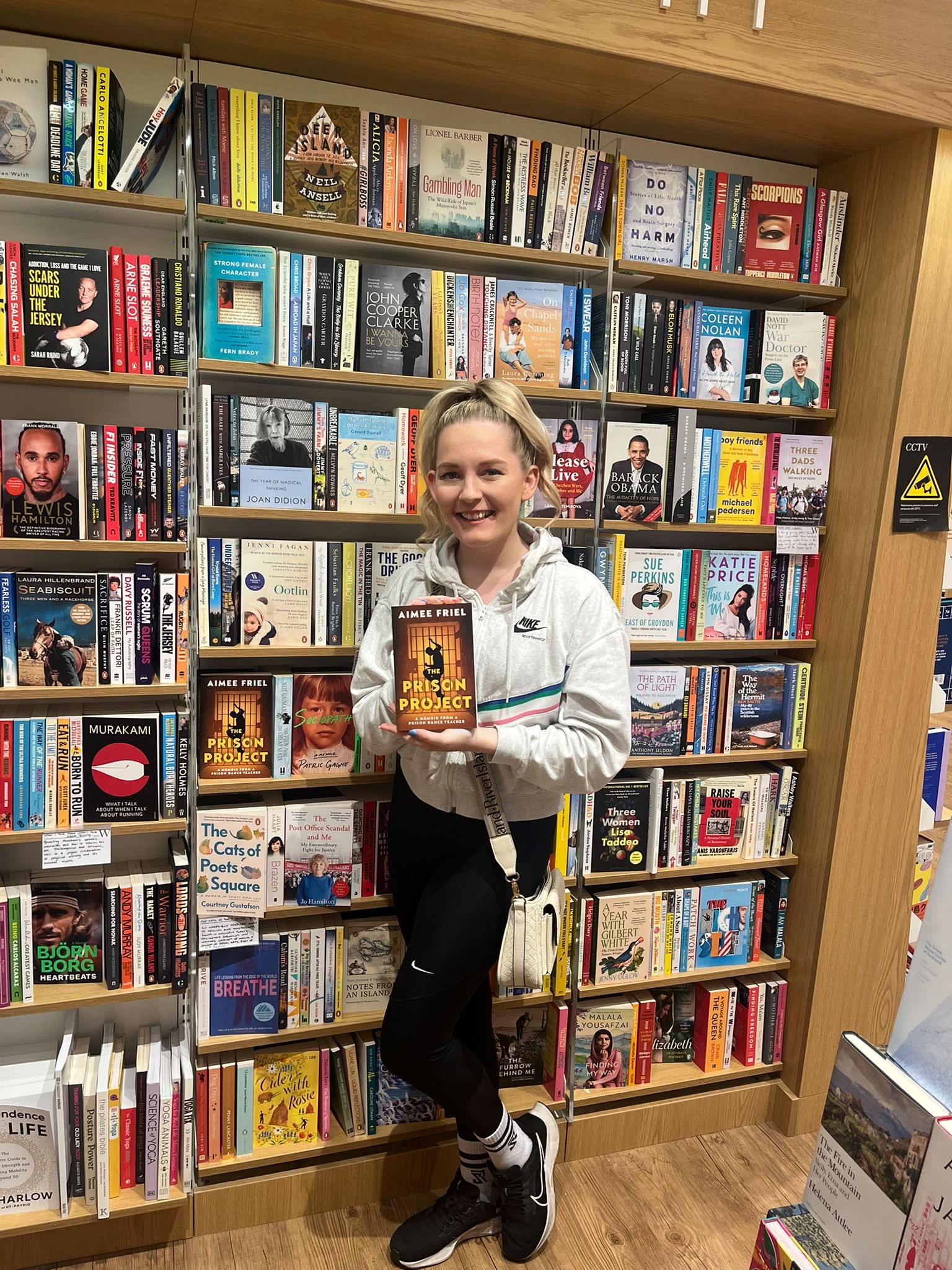
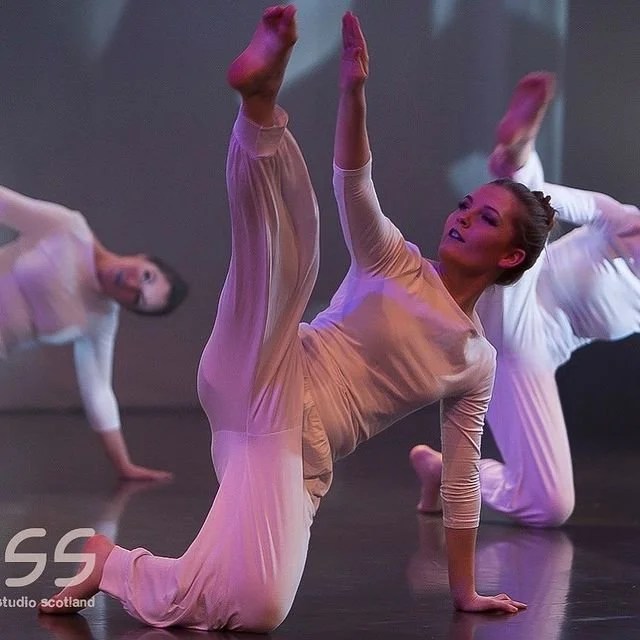
Now a published author and primary school teacher, the 30-year-old Kirkintilloch native, who studied Dance & Drama BA Hons (Dance), has enjoyed a unique journey since her graduation, including a period teaching dance classes to male prisoners, helping to break down misconceptions about the artform, and giving them a platform to express themselves.
To find out a bit more about how Aimee’s time at the College influenced her, and how she still reflects on some of the lessons she learned there today, she sat down for a chat:
Hi Aimee, thanks very much for joining us. To start off, could you give me a bit of an overview of what you’ve been up to since you graduated from the College?
“After I completed the BA Dance course, I managed to find work with several different dance companies. Teaching dance in community settings, in schools, in schools for children and adults with additional support needs, and in prison. I did that for around 6 years, before going back to do a post-grad in primary teaching. And in the middle of all that, that was when I got my book published about my experiences teaching in prison!”
It’s obviously an interesting hook, and something people probably don’t expect, teaching men dance in prison. What was the reality of it like?
“It’s maybe not somewhere you’d expect to wind up if you’re on a dance course, but for me I’ve always been really passionate about using the arts to help people. Dance can improve social skills, mental health, physical health, so I wanted to use that to help those that needed it most, people that had experienced trauma, or adverse childhood upbringings, or mental health issues.
“It just so happened that the dance company I was working for at the time was putting on classes in the prison, so to start with I went along and shadowed, watched the other teachers doing their thing, but nothing really prepares you until you go in and do it yourself.
“I did a teaching skills unit at Edinburgh College which was really helpful and impactful, and that alongside my previous experience meant I was in a good place to go in and give it a shot.”
What sort of impact did the classes have on the prisoners you worked with, and what was it like for you as the teacher in that environment?
“I really loved it. I can’t speak for everyone, but I think some people that have experienced trauma, or had a difficult time growing up, come from a tough background, can struggle to be present in the moment, and dance really encourages that. They were focusing on their breath, certain movements, muscle groups.
There’s also the social side of it, they worked on lots of transferrable communicative skills, it might be that they’re doing a lift, or a counter-balance, and that requires you to really be communicating properly with whoever you’re dancing with.
“It was really about getting to know them as people, seeing them every week, it wasn’t just about the dance. It was letting them know it was a safe space, that we saw them as individuals, that they had talent.
There were the usual biases that we had to break down, men thinking dance is effeminate etc, but then they get involved and see how much strength and coordination it requires, and how athletic it is. It also releases all sorts of helpful endorphins, but I could talk about that for ages!”
And when did you decide it was time to write down your experiences?
“It was during Covid, I’d been doing it for a few years at that point, and I was no longer an apprentice so I was sort of taking more ownership of the class. I was teaching it as usual and I just realised there were so many big personalities, so much humour, so much laughter, as well as the more heartfelt moments where someone would open up about a difficult experience, and I knew I didn’t want to forget any of it, so I started writing it down. It started as a journal purely for myself, a bit of a hobby, then I thought I had some good material there.
“I let my wee granny read it, and she’s a really harsh critic so she would have told me if it was rotten, but she thought it was really strong, and she encouraged me to try and get it published and gave me a lot of confidence. So, I sent it out to lots of publishers and agents, and it took a little while, but eventually it got picked up! Now you can find The Prison Project in places like Waterstones and Amazon, so it’s been pretty amazing.”
Do you still find yourself reflecting on your time at College even now?
“It’s quite funny actually, I remember when I was doing my dissertation, you could choose between a written piece, or choreography, and I chose the written piece (because I love writing!). My lecturer, Jo, she was supporting us at the time, and she really encouraged me to look into writing about the use of dance as a tool in primary schools.
“After I graduated, I wound up working with a dance company that was involved in a project which saw us collaborating with teachers to use dance to help teach kids the curriculum. We taught loads of things, maths, speech, technology, all through practical dance lessons, and I would always draw on the things Jo helped me with, and now working as a primary school teacher it all feels very full circle.”
What would you say to someone who’s considering coming to Edinburgh College to study dance?
“I’d absolutely recommend it. Having that degree opens so many doors, and will allow you to do so many things. You might want to go on and do another course, which is what I ultimately did, but having been to Edinburgh College meant I only had to do a one-year post-grad, rather than a full four-year degree.
“If you fancy a career change, it gives you so many options.”
A new report from Healthcare Improvement Scotland has found that nearly three-quarters of Scots surveyed support the opt-out system for organ and tissue donation in Scotland.
The statistics were revealed in the 18th Citizens’ Panel report, which gathered views from 646 people. They were asked about their attitudes to organ and tissue donation after death.
A large majority of respondents (76%) were in favour of the current system. Scotland uses an opt-out system for organ and tissue donation, meaning people are considered willing to donate their organs when they die, unless they have chosen to opt out or belong to an excluded group.
Family or loved ones will always be consulted and asked about known views, faith, and beliefs before any donation goes ahead.
A large majority of respondents were aware of the opt-out system of organ and tissue donation in Scotland (88%), and understood that the opt-out system means that they may be presumed to be willing to donate unless they have stated that they do not wish to do so (86%).
The majority of respondents (82%) also feel that they have enough information to make an informed choice about their organ and tissue donation.
Three quarters of respondents (73%) felt that their family or close friends know what their wishes are regarding organ and tissue donation, including 46% who felt that their family or friends “definitely” know their wishes.
However, respondents were less likely to know how to register their organ and tissue donation decision (55%).
One person who responded noted: “More advertising is needed to explain how to donate, how this affects your end of life and how your family is involved.”
And another noted: “It would be good if more information was available to help people decide and discuss with family and friends.”
Others were unsure if they would be able to donate due to concerns about their age, health conditions and eligibility to donate.
Diana Hekerem, Healthcare Improvement Scotland’s Associate Director of Transformational Change, said: “The issue is a very sensitive one, but the findings from Citizens’ Panel 18 clearly show strong public support for organ and tissue donation in Scotland.
“Three-quarters of those who responded supported the current opt-out system. Most who replied felt they had enough information to make an informed decision, although understanding of some aspects of the donation system aren’t always clear.”
There was positive feedback to the idea of organ and tissue donation.
One respondee said: “I’m in favour of a system that makes as many organs available as possible and minimises decisions for family.’
Another added: “If someone else could benefit from my death, it will not matter to me but could matter a huge amount to the recipient.”
And another concluded: “To give another person the gift of life is a privilege not to be missed.”
The report has six conclusions, including that there should be more communications on how the opt-out systems works, the need for an awareness campaign, and encouraging people to talk about their decision to donate or opt-out.
Chancellor announces Edinburgh as host city for 2027 G20 finance meeting
Finance Ministers and Central Bank Governors from across the world will gather at the Edinburgh International Conference Centre from 8 to 9 July 2027
The UK will host the twenty-second G20 Finance Ministers and Central Bank Governors’ meeting in Edinburgh next year. The gathering will take place on 8 and 9 July 2027 and will be a core feature of the UK’s programme of events across its Presidency year.
Speaking at the IMF in Bangkok today, Chancellor of the Exchequer John Healey expressed pride at the prospect of hosting counterparts in Scotland’s capital.
The work of the G20 and our relationship with G20 partners has real impact in the UK. In recent years G20 members have brought thousands of investment projects into the UK, creating hundreds of thousands of new jobs.
The G20 Finance Ministers and Central Bank Governors’ meeting will be held at the Edinburgh International Conference Centre (EICC). This is the second time the Finance Ministers and Central Bank Governors G20 meeting has been held in Scotland. In 2009, the group met in St Andrews where they coordinated responses to the 2008 financial crisis to drive economic recovery.
The G20 Leaders’ Summit will take place in Manchester on 27 and 28 November 2027. As well as this event, and the Finance Ministers and Central Bank Governors meeting in Edinburgh, a range of locations across the UK will host further high profile ministerial meetings.
The UK Government is determined to ensure the Summit and the year-long Presidency will benefit people in every part of the UK – bringing the G20 to nations and regions across the UK.
The Prime Minister set out his intention to put AI at the heart of the UK’s G20 Presidency at UNGA last month. He detailed how the UK will bring the right people together on the key issues: delivering on the potential of AI for good and dealing with the risks to ensure that AI development is safe.
Chancellor of the Exchequer John Healey commented:“As the UK’s second financial centre, Edinburgh is a fitting host for the G20 finance meeting.
“Alongside the Leader’s summit in Manchester, and other meetings around the nations and regions, the G20 is a real opportunity for the whole of the UK.”
Secretary of State for Scotland Douglas Alexander commented:“The UK’s presidency of the G20 is a huge opportunity for the whole of the country.
“Bringing the world’s finance ministers to Edinburgh recognises our capital’s reputation as a global financial centre.
“This is a significant moment for Edinburgh and the whole of Scotland – the event showcases Scottish innovation and ambition to a global audience.”
EICC board chair, Cllr Lezley Marion Cameron, said: “I am delighted the Edinburgh International Conference Centre is again hosting world leaders and economic decision makers.
“To do so is a privilege and a responsibility. It also boosts Edinburgh’s offering as a business events city and shows confidence in the EICC’s facilities and track record of delivering international political and financial gatherings to world class standards.
“Our excellent EICC team, led by CEO Amanda Wrathall, will work closely with partners to ensure all aspects of this G20 Finance Ministers and Central Bank Governors business meeting is executed with the necessary care, precision and expertise for which the EICC is warmly and widely respected and renowned.”
Preparations are already underway, with EICC working closely with international, national and local partners to ensure world-class facilities, technology, delegate services and security arrangements are in place ahead of the meeting.
Council Leader Jane Meagher said: “We’re pleased to have been chosen to host the G20 Finance Ministers and Central Bank Governors meeting in Edinburgh next Summer and look forward to welcoming the world’s most prominent financial decision makers to our capital city.
“Edinburgh has long earned its global status as a major centre for financial services, with our history in the sector spanning over three centuries. We’re proud to be the UK’s second largest financial centre outside of London and of our longstanding reputation, expertise and innovation in the finance sector.
“With a strong track record of delivering events on the world’s stage, we look forward to having all eyes on us next year – and working with partners at both a Government and local level to showcase the very best of what Edinburgh has to offer.”
Hosting the G20 finance meeting will be a significant operation and Edinburgh has experience hosting major events such as sporting fixtures, the arts festival, national and international conferences.
The G20 brings together 19 of the world’s largest economies and the European Union and the African Union.
Together, it makes up 85% of global GDP, 75% of international trade, and two-thirds of the world’s population and is the main international forum for coordinating the world’s largest economies.
Behind every project is a person making a difference. Read how, together, we’re supporting NHS Lothian through innovative research, improved environments and better experiences for patients, families and staff.