RoSPA: 8,000 people a day die in accidents worldwide 

Accidental deaths and life-changing injuries: A global tragedy

  • 1 in 20 deaths worldwide are due to accidents – making them the sixth biggest cause of death globally 
  • People in lower- and middle-income countries are much more likely to die in accidents 
  • RoSPA calls for greater investment in accident prevention to save lives, reduce inequalities and promote economic growth 

Accidents are the sixth leading cause of death worldwide, claiming over 3 million lives a year, and people in developing countries are far more likely to be killed in an accident than those in richer nations. 

That’s the shocking truth exposed by the Royal Society for the Prevention of Accidents’ (RoSPA)’s new report Accidental deaths and life-changing injuries: A global tragedy, in partnership with L’Oréal and Xylem. 

This groundbreaking study of international accident rates, based on analysis of data from the World Health Organization (WHO) and other sources, reveals that:  

  • Accidents are now the sixth biggest cause of death worldwide 
  • 3.1 million people lost their lives in accidents in 2021 alone: over 8,000 every single day 
  • 1 in 20 deaths worldwide is the result of an accident. 
  • In addition, RoSPA’s research reveals enormous inequalities across the globe:  
  • 1.2 million people are killed in road collisions every year
  • 92% of road deaths happen in low- or middle-income countries – even though they have only 60% of the world’s vehicles 
  • 315,000 people are killed at work 
  • 94% of workplace deaths occur in lower- and middle- income countries 
  • Workplace deaths are highest in Africa and Asia 
  • Workers are almost three times more likely to die of a workplace accident in Asia than in Europe, and nearly four times more likely in Africa 
  • Agriculture has the highest number of deaths of any sector. 

Many of these inequalities may be explained by poor infrastructure, weaker regulations and inconsistent enforcement in developing nations. RoSPA has also found that 80% of deaths in working age adults take place outside of work, with road traffic collisions, falls, drownings and fires being particularly deadly.  

Together with the tragic human toll, with millions left unable to work or having to financially manage after a loved one has passed away, accidents also put an immense burden on economies, through a combination of lower productivity and the cost of medical care. 

In developing countries in particular, accidents can create a vicious cycle of lower growth leading to lower incomes and thus lower investment in accident prevention.  

With over 100 years of experience developing evidence-based solutions that have saved millions of lives on roads, in work and at home, RoSPA is campaigning for much greater investment in accident prevention across the world to drive growth, improve productivity, foster social justice and – most importantly – save lives.


Rebecca Hickman, Chief Executive at RoSPA, said: “Every day, thousands of people around the world are killed or seriously injured in preventable accidents. Each death or injury devastates families and communities. At RoSPA, we believe safety is a fundamental human right – one that should not depend on where you live. 

“These findings are stark: accidental deaths remain a major public health challenge, with lower- and middle- income countries facing the heaviest burdens. 

RoSPA’s vision is an accident-free world. This report provides a foundation for global action by governments, businesses, NGOs, and international institutions to act, because a safer world is not only possible, it is essential.” 

Malcolm Staves, Global Vice President of Health and Safety at L’Oréal, said: “Each year, millions of individuals tragically lose their lives, sustain permanent injuries, or develop long-term diseases due to unsafe and unhealthy environments, both within and outside the workplace.

“These perilous conditions often stem from a complex interplay of underlying causes, including governance gaps, deficient legislative frameworks, a pervasive lack of awareness or knowledge, insufficient resources, and a weak culture of prevention, both within workplaces and across society at large. 

“Our game-changing partnership with RoSPA, which provides health, safety, and wellbeing information and support to a wider community, epitomizes our values and our commitment to protecting people.” 

Autumn Crum, Director of Environment, Health, and Safety (EHS) at Xylem, said: “True safety leadership is caring for people and proactively addressing risk wherever it exists.

“With RoSPA’s Global Accident Data Initiative, we’re helping turn data into action to better protect people, families, and communities around the world.”  

Access the full report here 

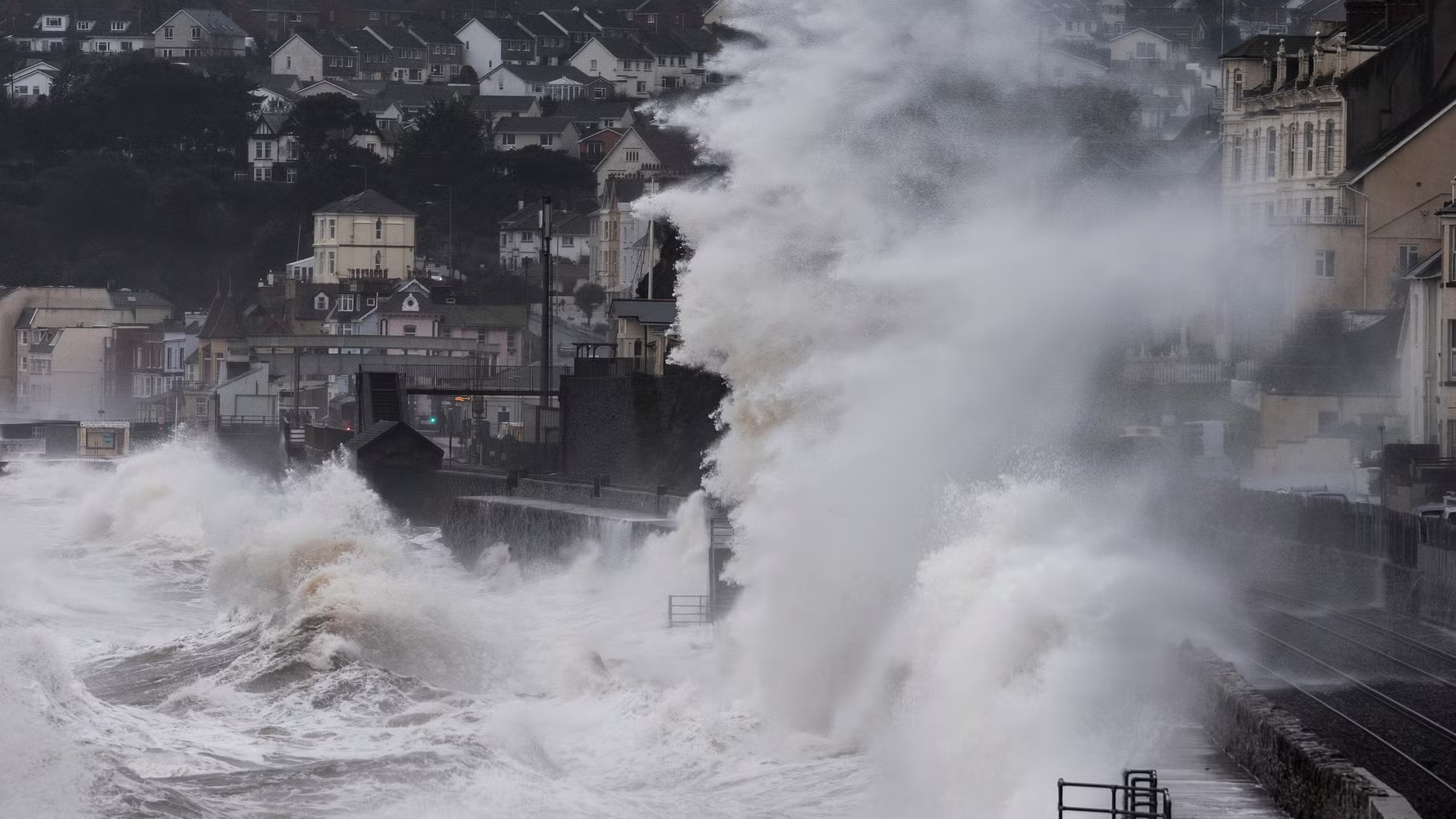
Storm Bram: Safety warning issued amid amber flood, heavy rain and wind warnings  

The Royal Society for the Prevention of Accidents (RoSPA) is urging the public to take extra precautions ahead of Storm Bram, which is set to lash the UK with torrential rain and fierce winds.

Storm Bram is set to hit the UK on Tuesday and Wednesday, bringing severe winds and heavy rain. An amber warning for north-west Scotland predicts gusts up to 90mph, while saturated ground in Wales and south-west England increases the risk of flooding. These conditions could cause building damage and major transport disruption. 

Yellow warnings will also cover large parts of the UK, including Wales, south-west England, Northern Ireland, and Scotland, with gusts of 50-60mph and locally over 70mph. Combined with heavy rain, this poses significant safety risks, including hazardous travel, delays, and cancellations.   

RoSPA advises the public to take immediate steps to reduce the risk of injury and disruption:    

  • Avoid unnecessary travel, especially in areas under Amber warnings or where flooding is likely.  
  • Keep mobile phones and essential devices fully charged in case of power cuts.  
  • Monitor official weather updates and follow instructions from local authorities.  
  • Secure outdoor items such as bins, signage, and garden furniture to prevent damage.  
  • Prepare a basic emergency kit with torches, batteries, and non-perishable food.  
  • Stay indoors during periods of severe weather and ensure windows and doors are shut.  
  • Check in on vulnerable neighbours, particularly those living alone or in rural areas.  
      

Driving safety tips during heavy rain and flooding  
  

  • Rain reduces visibility and doubles stopping distances: slow down and plan manoeuvres early.  
  • Use windscreen wipers, washers, and dipped headlights at all times.  
  • Aquaplaning happens when tyres lose grip on surface water: reduce speed, maintain correct tyre pressure and tread depth. If it occurs, ease off the accelerator and brakes until grip returns.  
  • On flooded roads: avoid deep water near kerbs, don’t cross if depth is uncertain, and if you proceed, drive slowly in first gear, keep engine speed high, and test brakes after exiting water.  
  • Avoid flooded areas wherever possible.  

Steve Cole, Policy Director at RoSPA, said:  “Storm Bram isn’t just a risk outdoors; homes may be vulnerable too. Secure garden furniture, bins, and anything that could blow away or cause damage. Indoors, make sure windows and doors are firmly shut and keep an emergency kit ready.”  

“On the roads, your regular journey may be difficult. Rain doubles stopping distances and aquaplaning can happen in seconds. Slow down, keep your distance, and never attempt to drive through floodwater. These simple steps can help protect your home, your journey and keep communities safe.”  

Bonfire night safety fears after 42% rise in fireworks-related incidents

  • Home Office data shows 2024/25 saw 42 per cent increase in firework incidents compared to 2023/24 
  • 3,500+ incidents linked to human error since 2010 
  • Organised displays remain the safest option   

As an increasing number of organised fireworks displays across the UK are cancelled this year, safety charity the Royal Society for the Prevention of Accidents (RoSPA) is warning of increased risks from home-based celebrations.

Cancellations in London, Edinburgh and other locations come amid a 42 per cent rise in fireworks-related fire incidents, prompting urgent calls for caution ahead of Bonfire Night. New data shows 264 incidents occurred in 2024/25, up from 185 the previous year.   

The figures, drawn from Home Office statistics, highlight a worrying trend in unsafe firework use. Most incidents involved “other primary fires,” which include outdoor fires in bins, grassland, and vehicles, likely caused by improper handling or disposal of fireworks.  

Fireworks are a leading cause of seasonal fire injuries and property damage in the UK. Despite ongoing safety campaigns, human error remains the primary factor in over 75 per cent of incidents.  

Organised events offer safer – as well as more spectacular – displays.  However, anyone intending on using fireworks at home should remember the following important safety tips:   

  • Only adults should handle fireworks  
  • Avoid alcohol if you are lighting fireworks  
  • Store fireworks in a closed box  
  • Always light fireworks at arm’s length with a taper  
  • Never return to a firework after lighting   
  • Direct rockets well away from spectators.  
  • Always buy fireworks with a CE or UKCA mark  
  • Sparklers burn at extremely high temperatures and must be handled with care.  

Rebecca Guy, Senior Policy Manager at RoSPA, said: “Fireworks are powerful explosives, not toys. Only adults should handle them and never mix alcohol with lighting fireworks.

“Store them safely in a closed box, light at arm’s length with a taper, and never go back to a lit firework. Always buy CE or UKCA-marked products, aim rockets away from people, and remember sparklers burn at extremely high temperatures — treat them with care.   

“The shocking rise in incidents over the past year is a stark reminder of the dangers they pose when misused. We strongly advise families to attend organised displays wherever possible, as they are far safer than home-based celebrations.”    

Find more firework safety advice on the RoSPA website.  

RoSPA: Hidden horrors of Halloween

Over 80% of children’s costumes fail safety tests

The Royal Society for the Prevention of Accidents (RoSPA) is urging families to take extra care this Halloween after new government testing revealed widespread safety failures in children’s costumes.

The warning follows findings from the Office for Product Safety and Standards (OPSS) in 2024, which showed that more than 80 per cent of costumes tested failed basic safety checks.

Tests carried out by OPSS on 128 costumes—mostly purchased from online marketplaces—found serious issues including flammability risks and strangulation hazards. RoSPA is advising parents to only buy costumes from trusted retailers and to check for the UKCA or CE mark to ensure products meet UK safety standards.

The OPSS investigation found that 28 costumes failed flammability tests, while 59 featured cords or drawstrings that posed a strangulation risk. In addition, 98 costumes lacked essential safety labelling, making it harder for parents to assess risk.

Adrian Simpson, Head of Policy at RoSPA, said: “These results are deeply concerning. Parents need to be vigilant and check for safety markings before buying. A UKCA or CE mark means the costume has passed critical safety tests, including for fire resistance.”

Graham Russell, Chief Executive at the Office for Product Safety and Standards, said: “Fancy dress can be an enjoyable part of Halloween, but our tests showed many costumes for sale, particularly those online, pose serious risks to young children. Please take extra care before you buy.”

RoSPA is also reminding families to follow basic safety precautions during Halloween celebrations:

  • Avoid open flames such as candles and fireplaces.
  • Ensure children are supervised while trick-or-treating.
  • Make costumes visible with reflective strips or torches.
  • Avoid homemade costumes, which may not meet fire safety standards.
  • Check the OPSS website for product recalls before use.

RoSPA continues to work with government and industry to improve product safety and raise awareness among consumers.

Storm Amy: safety charity issues advice as severe wind and rain to hit Scotland

The Royal Society for the Prevention of Accidents (RoSPA) has issued a public safety warning ahead of Storm Amy, which is forecast to bring very strong winds and heavy rain to northern Britain from Friday afternoon through Saturday.

Winds are predicted to strengthen from the west on Friday, spreading eastward overnight. Gusts of 50–60 mph are expected, with some areas reaching 70 mph and exposed coastal and hilltop locations exceeding 80 mph. The strongest winds are likely over northern Scotland, with heavy rain expected across western Scotland.

RoSPA advises the public to take immediate precautions to reduce the risk of injury and disruption. These include:

  • Keeping mobile phones and essential devices fully charged in case of power cuts.
  • Avoid travelling unless absolutely necessary, especially on high or exposed routes.
  • Monitoring official weather updates and follow instructions from local authorities.
  • Secure outdoor items like bins, signage, and garden furniture to prevent damage.
  • Prepare a basic emergency kit with torches, batteries, and non-perishable food.
  • Stay indoors during periods of strong wind and ensure windows and doors are shut.
  • Check in on vulnerable neighbours, particularly those living alone or in rural areas.

Adrian Simpson, Head of Policy at RoSPA, said: “Storm Amy may be a serious weather event and we urge everyone to take sensible precautions.

“Securing loose items, staying off the roads during peak wind periods, and looking out for neighbours can help prevent accidents and keep communities safe.”

Most common accidents that kill or seriously injure people at home – and how to prevent them 

  • Hidden dangers at home: Over half (55 per cent) of all accidental deaths occur at home, with falls, poisonings, and burns being the most common. 
  • Garden and DIY safety tips: Use a residual current device (RCD) with electrically powered tools, store chemicals securely, and ensure play equipment is safe and well-maintained. 
  • Personal warning about serious consequences: Brian’s story underscores the importance of caution and proper safety measures when using garden equipment, as accidents can lead to severe injuries. 

As the nation looks for inspiration at the Chelsea Flower Show, many will head into their own gardens to dig, plant, and improve their outdoor spaces. But while gardening and DIY can be rewarding, they also come with hidden risks that are often overlooked.

According to the Royal Society for the Prevention of Accidents recent Safer Lives, Stronger Nation report, over half (55%) of all accidental deaths occur at home, compared to just 0.6% at work. The most common causes include falls, poisonings, and burns, all of which are preventable with the right precautions. 

Therefore, RoSPA is urging households to be aware of the dangers that lie within the home and garden—especially ahead of the May Bank Holiday, when many people take on home improvement projects.
 
The report also revealed that accidents cost the UK £12 billion annually, including £6 billion in NHS medical care. 

The most common domestic accidents are:  

  1. Falls: 3,148 (40 per cent) 
  1. Accidental poisoning: 2,686 (34 per cent) 
  1. Other accidental threats to breathing (e.g., suffocation, strangulation, and choking): 259 (3 per cent) 
  1. Exposure to smoke, fire, and flames: 142 (1 per cent) 
  1. Exposure to inanimate mechanical forces (including being struck by an object, crushing, and cutting injuries): 46 (1 per cent) 

Brian’s Story 

Brian, 50, a sales manager, has shared his experience to highlight the importance of safety in the home setting.

On a warm Sunday, while using his Flymo lawnmower, Brian stepped backwards and tripped over his grandson’s trampoline stairs.  

He slipped on water from a paddling pool, causing him to fall and accidentally bring the lawnmower towards himself. Brian suffered severe injuries, losing two toes and requiring multiple surgeries. His story underscores the need for caution and proper safety measures when using garden equipment. 

Speaking of his accident, Brian said: “I’m so careful now doing anything remotely risky around the house.

“We tend to do things like mow the lawn or climb on chairs or ladders on autopilot, but every task is done now with a lot of thought and consideration. I was very lucky that I didn’t chop off my entire foot.” 

Adrian Simpson, Head of Policy at RoSPA, said: “Brian’s story is just one example of the thousands of accidents that occur in homes across Britain every year.

“Whilst we rally the government to take on board the asks in our recent Safer Lives : Stronger Nation report , we advise anyone looking for tips on staying safe – be it in the home, at leisure or at work – to get to grips with our learning resources and advice that can be found online.” 

RoSPA’s key tips for having a safe Bank Holiday 

Falls  

  • Use stable ladders and step stools: When working on DIY projects or gardening tasks that require reaching high places, ensure ladders and step stools are in good condition, and placed stable on level footing. Avoid overreaching and always maintain three points of contact whilst up ladders. 
  • Clear pathways: Keep walkways and stairs free of clutter, tools, and garden equipment to avoid tripping. Regularly check for uneven surfaces and repair them promptly. 
  • Install handrails: For outdoor steps and garden paths, install handrails to provide support and reduce the risk of falls. 
     

Accidental poisoning  

  • Store chemicals safely: Keep all gardening chemicals, pesticides, and cleaning products up high in a secure, locked cabinet, out of reach of children and pets. Clearly label all containers. 
  • Enviro-friendly options: Consider replacing toxic/corrosive substances with products that can do the same job but are less harmful to humans and corrosive substances with products that can do the same job. But are less harmful to humans / animals and kinder to the environment. 
  • Follow instructions: Always read and follow the manufacturer’s instructions when using chemicals and pesticides. Wear appropriate protective gear, such as gloves and masks, to avoid exposure. 
  • Dispose of chemicals properly: Dispose of unused or expired chemicals according to local regulations to prevent accidental poisoning. 
  • Poisonous plants: Check the garden area for any plants that may be poisonous to children 

Using tools and electrical equipment 

  • Use protective gear: When working with power tools or performing DIY tasks, wear protective gear such as safety goggles, gloves, and ear protection to prevent injuries from flying debris or loud noises. 
  • Check equipment: Regularly inspect garden tools and DIY equipment for damage or wear. Replace or repair faulty items to ensure they are safe to use. 
  • Use tools correctly: Always use tools as intended and follow safety guidelines. For example, use long-handled tools for barbecues and avoid risky manoeuvres on trampolines. 
  • Be mindful of weather conditions: Avoid using electrical equipment in wet conditions to prevent electrocution. Store tools and equipment in a dry place. 
     

Smoke and fire risks 

  • Safe barbecue practices: Place barbecues on level ground, away from flammable materials. Never use accelerants like petrol or meths to light the barbecue. Ensure it is fully extinguished before disposal. 
  • Fire safety equipment: Keep a fire extinguisher or bucket of sand nearby when using fire pits or barbecues. Ensure smoke detectors are installed and functioning in your home. 

Other threats to breathing  

  • Avoid dust and fumes: When sanding, painting, or using chemicals, ensure the area is well-ventilated. Use masks to protect against inhaling dust or fumes. 
  • Keep small objects away from children: Store small DIY items like screws, nails, and other hardware out of reach of children to prevent choking hazards. 

Play safety 

  • Secure equipment: Ensure play equipment and garden structures are securely anchored and regularly inspected for wear and tear to prevent accidents.

Most common accidents that kill or seriously injure people at home – and how to prevent them

  • Hidden dangers at home: Over half (55 per cent) of all accidental deaths occur at home, with falls, poisonings, and burns being the most common.
  • Garden and DIY safety tips: Use a residual current device (RCD) with electrically powered tools, store chemicals securely, and ensure play equipment is safe and well-maintained.  
  • Personal warning about serious consequences: Brian’s story underscores the importance of caution and proper safety measures when using garden equipment, as accidents can lead to severe injuries. 

As the Bank Holiday approaches, the Royal Society for the Prevention of Accidents (RoSPA) has released a range of tips to prevent accidents for those planning on taking up DIY, gardening or general household chores over the long weekend.  

RoSPA’s recent ‘Safer Lives, Stronger Nation’ report revealed that over half (55 per cent) of all accidental deaths occur at home, compared to just 0.6 per cent at work, and contribute to costing the UK £12 billion annually, including £6 billion in NHS medical care. 

The most common domestic accidents are: 
 

  1. Falls: 3,148 (40 per cent) 
  1. Accidental poisoning: 2,686 (34 per cent) 
  1. Other accidental threats to breathing (e.g., suffocation, strangulation, and choking): 259 (3 per cent) 
  1. Exposure to smoke, fire, and flames: 142 (1 per cent) 
  1. Exposure to inanimate mechanical forces (including being struck by an object, crushing, and cutting injuries): 46 (1 per cent) 

Brian’s Story 

Brian Whitnall, 50, a sales manager for a printer and photocopier company, has shared his experience to highlight the importance of safety in the home setting. On a warm Sunday, while using his Flymo lawnmower, Brian stepped backwards and tripped over his grandson’s trampoline stairs.  

He slipped on water from a paddling pool, causing him to fall and accidentally bring the lawnmower towards himself. Brian suffered severe injuries, losing two toes and requiring multiple surgeries. His story underscores the need for caution and proper safety measures when using garden equipment. 

Speaking of his accident, Brian Whitnall said: “I’m so careful now doing anything remotely risky around the house.

“We tend to do things like mow the lawn or climb on chairs or ladders on autopilot, but every task is done now with a lot of thought and consideration. I was very lucky that I didn’t chop off my entire foot.” 

Adrian Simpson, Head of Policy at RoSPA, said: “Brian’s story is just one example of the thousands of accidents that occur in homes across Britain every year.

“Whilst we rally the government to take on board the asks in our recent Safer Lives : Stronger Nation report , we advise anyone looking for tips on staying safe – be it in the home, at leisure or at work – to get to grips with our learning resources and advice that can be found online.” 

RoSPA’s key tips for having a safe Bank Holiday 

Falls  

  • Use stable ladders and step stools: When working on DIY projects or gardening tasks that require reaching high places, ensure ladders and step stools are in good condition, and placed stable on level footing. Avoid overreaching and always maintain three points of contact whilst up ladders. 
  • Clear pathways: Keep walkways and stairs free of clutter, tools, and garden equipment to avoid tripping. Regularly check for uneven surfaces and repair them promptly. 
  • Install handrails: For outdoor steps and garden paths, install handrails to provide support and reduce the risk of falls.  

Accidental poisoning  

  • Store chemicals safely: Keep all gardening chemicals, pesticides, and cleaning products up high in a secure, locked cabinet, out of reach of children and pets. Clearly label all containers. 
  • Enviro-friendly options: Consider replacing toxic/corrosive substances with products that can do the same job but are less harmful to humans and corrosive substances with products that can do the same job. But are less harmful to humans / animals and kinder to the environment. 
  • Follow instructions: Always read and follow the manufacturer’s instructions when using chemicals and pesticides. Wear appropriate protective gear, such as gloves and masks, to avoid exposure. 
  • Dispose of chemicals properly: Dispose of unused or expired chemicals according to local regulations to prevent accidental poisoning. 
  • Poisonous plants: Check the garden area for any plants that may be poisonous to children 

Using tools and electrical equipment 

  • Use protective gear: When working with power tools or performing DIY tasks, wear protective gear such as safety goggles, gloves, and ear protection to prevent injuries from flying debris or loud noises. 
  • Check equipment: Regularly inspect garden tools and DIY equipment for damage or wear. Replace or repair faulty items to ensure they are safe to use. 
  • Use tools correctly: Always use tools as intended and follow safety guidelines. For example, use long-handled tools for barbecues and avoid risky manoeuvres on trampolines. 
  • Be mindful of weather conditions: Avoid using electrical equipment in wet conditions to prevent electrocution. Store tools and equipment in a dry place.  

Smoke and fire risks 

  • Safe barbecue practices: Place barbecues on level ground, away from flammable materials. Never use accelerants like petrol or meths to light the barbecue. Ensure it is fully extinguished before disposal. 
  • Fire safety equipment: Keep a fire extinguisher or bucket of sand nearby when using fire pits or barbecues. Ensure smoke detectors are installed and functioning in your home. 

Other threats to breathing  

  • Avoid dust and fumes: When sanding, painting, or using chemicals, ensure the area is well-ventilated. Use masks to protect against inhaling dust or fumes. 
  • Keep small objects away from children: Store small DIY items like screws, nails, and other hardware out of reach of children to prevent choking hazards. 

Play safety 

  • Secure equipment: Ensure play equipment and garden structures are securely anchored and regularly inspected for wear and tear to prevent accidents. 

World Sleep Day: Daunting data denotes dread for drowsy drivers

  • For World Sleep Day on Friday March 14, 2025, the Royal Society for the Prevention of Accidents (RoSPA) highlights the serious risks of drowsy driving, with over 430 people killed or seriously injured, and 1,276 collisions, linked to tiredness in 2023
  • RoSPA is working with the Fatigue Group, a non-profit organisation led by award-winning NHS anaesthetists, to provide advice to workers and their employers on managing the risk of fatigue, the importance of regular rest and recognising when people are too tired to drive
  • RoSPA also wants government to take actions including standardised tests for fatigue (similar to breathalyser tests), and public awareness campaigns targeting high risk groups such as shift workers
  • Spokespeople from RoSPA and the Fatigue Group are available for interview
World Sleep Day 2025

“If you’re tired, don’t drive” – that’s the message from the Royal Society for the Prevention of Accidents (RoSPA) ahead of this year’s World Sleep Day on March 14. The charity is raising awareness about the significant risks associated with drowsy driving, after over 430 people were killed or seriously injured, and there were 1,276 collisions, linked to tiredness in 2023.

RoSPA is working with the Fatigue Group, a non-profit organisation led by award-winning NHS anaesthetists, to raise awareness of the dangers of driving after working long hours. The Fatigue Group was formed after tragic incidents in which colleagues were killed while driving home exhausted.

The Group is continuing the work of the #fightfatigue campaign originally designed for NHS staff, although much of the advice will help anyone who works long hours or night shifts keep themselves and others safe.

These include the HALT principles, which advise against driving if you are Hungry, Angry, Late or Tired, and recommendations to take regular rest breaks at work.

Although the issue is particularly serious in the health service – with a recent Medical Defence Union (MDU) survey revealing that 90% of doctors feel sleep deprived at work – fatigue presents a risk across the entire workforce. That’s most apparent in physically demanding industries such as haulage and construction, but can also affect people putting in long hours at an office before driving home.

RoSPA emphasises that anyone who begins to feel tired when they are driving stop as soon as is safe and possible, and ideally try and find somewhere safe to sleep until they feel rested. Although two strong coffees and a 15 minute nap might help in the short-term, this should never be done more than once per journey.

RoSPA is also calling upon employers to ensure their staff are well rested and safe, for example by ensuring workers take regular breaks, and incorporating effective staff fatigue risk management in working patterns.

In addition, RoSPA wants the government to introduce standardised tests for assessing fatigue at the scene of road traffic collisions, similar to breathalyser tests for alcohol, establish a national registry of drowsy driving incidents, and run public awareness campaigns targeting high-risk groups such as shift workers.

The Fatigue Group advocates that healthcare organisations should have the same regulatory requirements for fatigue risk management as exist for all other safety-critical industries.

Caitlin Taylor, Road Safety Manager at RoSPA, said: “Drowsy driving is responsible for many serious and fatal collisions each year. Fatigue impairs driving ability similar to drink or drug driving but gets much less attention. This must change.

“Fatigue slows reaction times, reduces awareness, and affects decision-making, putting everyone at risk. RoSPA calls on employers, policymakers, and the government to act now by improving workplace fatigue management, investing in public awareness campaigns, and collecting better data on fatigue-related crashes. No one should lose their life due to preventable driver fatigue.” 

JP Lomas of The Fatigue Group said:‘We have our own personal experience of the perils of driving while tired, having had colleagues die driving home after night shifts.

“Although not every journey ends in tragedy, the pressure on healthcare staff leads to many feeling forced to take risks, with research showing that 57% of trainees and 45% of consultants had experienced an accident or near miss driving tired post-shift.

“Working long hours without adequate rest breaks not only puts the patients they care for in danger – with evidence demonstrating that surgery performed at night or after hours is associated with higher mortality rates – but also other people outside of hospitals.

“With such a large number of tired employees on the roads all day and night, this is an urgent problem in the healthcare sector. We call for hospitals to provide dedicated rest time and spaces for staff.   

The so-called ‘hero’ culture where people continue working despite being exhausted for fear of looking ‘weak’ or letting others down, needs to be replaced by a safety culture where staff mitigate the impacts of fatigue with power naps and rest breaks.

“Our message is simple – getting enough rest is a necessity not a weakness, and could save lives.”

UK Poverty Report 2025: RoSPA highlights increased accident risk for lowest-income Britons

  • Out of four nations only Scotland will see child poverty rates fall by 2029 – JRF
  • Deprivation increases both the likelihood and severity of accidents – RoSPA
  • A joined-up approach is needed to address uneven level of accidents among deprived Britons

Following the release of the Joseph Rowntree Foundation (JRF), the Royal Society for the Prevention of Accidents (RoSPA) is urging the UK government to adopt comprehensive strategies to tackle child poverty and preventable accidents.

Released this week, the Joseph Rowntree Foundation’s UK Poverty 2025 Report reveals that without significant investment in social security, the UK government will not ease child poverty by the end of this Parliament. It also highlights that child poverty rates are significantly higher in England (30 per cent) and Wales (29 per cent) compared to Scotland (24 per cent) and Northern Ireland (23 per cent).

It emphasises the critical role of specific welfare policies, such as the Scottish Child Payment, in reducing poverty, with Scotland projected to see a decrease in child poverty rates by 2029. The report calls for targeted policy interventions to address these disparities and improve living standards across the UK.

The release follows the recent publication of RoSPA’s ‘Safer Lives, Stronger Nation’ campaign which showed that accidental deaths in the UK have reached an all-time high, with rates increasing by 42% over the last decade.

Accidents are now the second biggest killer of people under 40. In England alone, accident-related hospital admissions for serious injuries have risen by 48% in the past twenty years, hospitalising over 700,000 people annually.

The economic cost of preventable accidents is staggering, amounting to £12 billion every year due to lost working days and NHS medical care.

Dr. James Broun, Research Manager at RoSPA and author of ‘Safer Lives, Stronger Nation’, said:Our major review of UK accident data has already uncovered the full scale and true cost of accidents for the very first time.

“We found that deprivation significantly increases both the likelihood and severity of accidents, compounding existing inequalities and creating a vicious cycle of disadvantage.

“This is why we are alarmed by the Joseph Rowntree Foundation’s findings and support their call for Government action to reduce child poverty, while we reiterate our own call for a national accident prevention strategy to help further reduce economic and health inequalities.”

UK Child Poverty Report 2025

The JRF’s latest UK Poverty shows that under current projections, only Scotland will see a reduction in child poverty rates by 2029, largely due to Scotland-specific welfare policies.

Key findings include:

  • Child poverty rates in Scotland are projected to fall, while rates in England and Wales remain high.
  • If the rest of the UK matched Scotland’s reduction in child poverty, 800,000 fewer children would be in poverty.
  • Specific welfare policies, such as the Scottish Child Payment, are crucial in reducing child poverty.

 Deprivation and accident risk

RoSPA notes that deprivation is often linked to an increased risk of accidents. Factors such as unsafe housing, proximity to busy roads, and hazardous work conditions contribute to this risk. Moreover, economic deprivation is associated with health inequalities, which can exacerbate the severity of injuries from accidents.

Key points include:

  • Deprivation increases both the likelihood and severity of accidents.
  • Health inequalities linked to economic deprivation can compound injury severity.
  • Accidents can further entrench material inequalities by disrupting education and employment, creating a vicious cycle of disadvantage.

A Call for a National Accident Prevention Strategy

RoSPA calls for a National Accident Prevention Strategy to address these issues comprehensively. Such a strategy would focus on improving housing safety, reducing road traffic risks, and ensuring safer working conditions, particularly for those in hazardous jobs.

The Need for Government Action

Both JRF and RoSPA stress the urgency of government intervention. A credible child poverty strategy must include policies that rebuild the social security system, while a national accident prevention strategy is essential to reduce preventable injuries and deaths.

By linking these strategies, the UK can create a more holistic approach to improving public health and social welfare, ensuring that both poverty and preventable accidents are addressed through comprehensive, targeted policies.

Storm Darragh: Red Warning advice issued by safety charity RoSPA

Damaging winds expected

  • Red Weather Warning for Wales and South West England: The Met Office has issued a rare red warning for Wales due to Storm Darragh, with winds expected to reach up to 90 mph, posing significant risks to safety and infrastructure.
  • Amber Warnings for Scotland and Northern Ireland: Scotland and Northern Ireland are also under amber warnings, anticipating severe weather conditions that could lead to widespread disruption.
  • Safety Precautions Urged: Authorities are advising residents to secure loose objects, avoid travel, and prepare for power outages to stay safe during the storm.

The Met Office has warned that gusts of up to 90 mph (144 km/h) or more are possible, particularly over the coasts and hills of west and south Wales. The caution is currently in place from 03:00 to 11:00 on Saturday, December 7th.

Additionally, amber warnings have been issued for Scotland and Northern Ireland, as well parts of the South West of England,  with many events being cancelled across the UK.

The rare red weather warning has been issued for Wales ahead of Storm Darragh, which is expected to bring extremely strong and damaging winds this weekend. 

Here are some important safety tips to help you stay safe:

  • Secure loose objects: Ensure that any loose items outside your home, such as garden furniture, are secured or brought indoors to prevent them from being blown away.
  • Avoid travel: If possible, avoid traveling during the peak of the storm. If you must travel, check the weather forecast and road conditions before setting off. Many events have now been cancelled
  • Stay indoors: Stay inside during the storm, especially during the peak hours from 03:00 to 11:00 GMT on Saturday, December 7th.
  • Prepare for power cuts: Have an emergency kit ready with essentials such as torches, batteries, and non-perishable food in case of power outages.
  • Stay away from windows: Keep away from windows and glass doors to avoid injury from flying debris.
  • Charge your devices: Ensure your mobile phone and other essential devices are fully charged.
  • Check on vulnerable neighbours: If it is safe to do so, ensure that they are secure and have everything they need. .

RAC Breakdown spokesperson Alice Simpson said: “A red weather warning is highly unusual and should be heeded as it can indicate a risk to life.

“With parts of Wales and the South West set to be battered by the wind between 3am and 11am on Saturday, we strongly advise drivers to postpone their journeys if they can. Anyone who must drive should stick to major roads, reduce their speed significantly, always keep a firm grip of the steering wheel and be on high alert for debris in the road.

“Exposed rural and coastal routes will be particularly treacherous. Drivers in these areas should be wary of any high-sided vehicles as they are at risk of being buffeted off course or, worse still, blown over. We also suggest parking well away from large trees due to the danger of falling branches or whole trees being uprooted.”

For more detailed advice on staying safe during strong winds, you can visit the Met Office’s stay safe in winter driving page and the RoSPA website